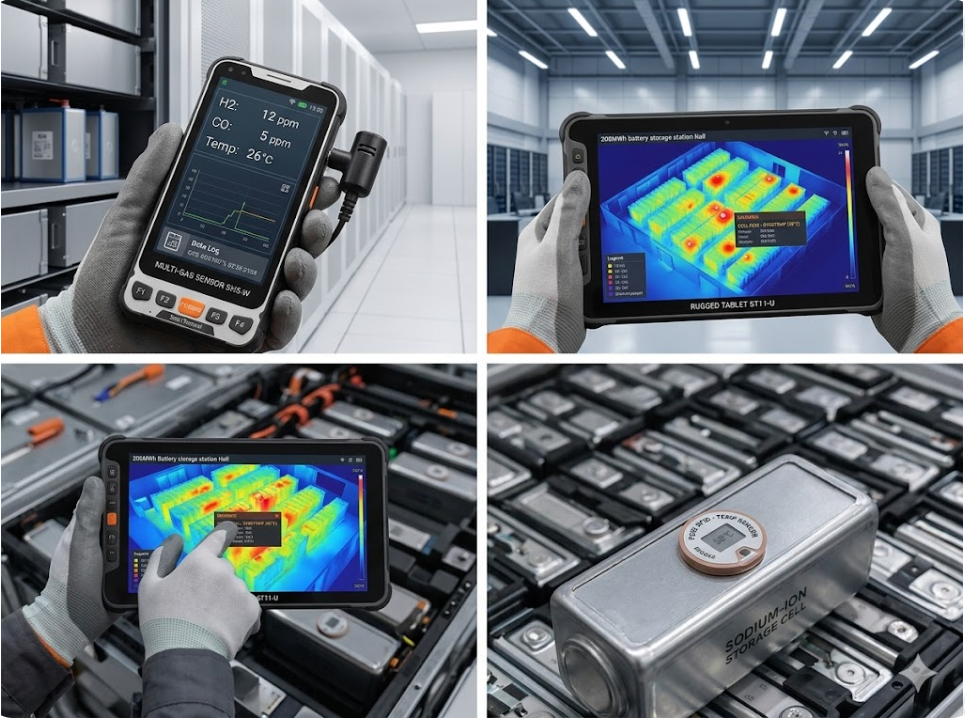
Fig 1 – A field engineer performs a sodium-ion battery inspection using the SH5-W rugged handheld linked to a portable hydrogen detector. The aisle is quiet, but the screen shows live H2 and CO readings from nearby storage cabinets. In large-scale energy storage, the first warning is usually invisible.
Grid-scale sodium-ion battery systems are expanding fast because sodium is abundant and affordable. But many operators are still using lithium-ion safety procedures for a chemistry that behaves differently under stress. Hydrogen accumulation, carbon monoxide release, localized heating, and early gas venting require faster detection and better inspection records. A rugged handheld connected to wireless gas sensors is becoming a core safety tool for utility-scale battery storage facilities.
Sodium-Ion Battery Energy Storage Is Scaling Rapidly — Why Modern Thermal Runaway Prevention Depends on Gas-Aware Rugged Handhelds
By HOTUS Technology | Energy Storage Safety Solutions | May 2026
Utility-scale sodium-ion battery storage is moving from pilot deployments to commercial adoption. Energy providers are attracted by lower raw material costs, reduced lithium dependency, and improved cold-temperature performance. Analysts expect sodium-ion battery production capacity to accelerate sharply over the next several years as renewable energy storage demand increases worldwide.
But the growth of sodium-ion technology also introduces a new industrial safety challenge. Unlike traditional lithium-iron-phosphate systems, sodium-ion batteries can release detectable gases earlier during abnormal heating events. In enclosed battery containers or grid storage cabinets, small concentrations of hydrogen or carbon monoxide may appear long before visible smoke, sparks, or flames.
That changes how inspections must be performed.
Battery storage operators can no longer rely only on thermal cameras, periodic visual checks, or handwritten maintenance records. Early-stage gas monitoring and digital inspection traceability are becoming critical for:
- Thermal runaway prevention
- Battery storage fire risk reduction
- Insurance compliance documentation
- Grid storage safety audits
- Predictive maintenance planning
- Hazardous gas exposure monitoring
- Battery module lifecycle tracking
As energy storage projects become larger, the operational cost of a single undetected thermal event increases dramatically. Even a localized overheating incident can shut down an entire container block, damage neighboring modules, and trigger regulatory investigations.
Why Sodium-Ion Battery Facilities Need Continuous Gas Inspection
Modern sodium-ion storage systems may contain thousands of densely packed cells operating continuously under variable environmental loads. During charging, discharging, or balancing cycles, abnormal temperature behavior can develop gradually and remain unnoticed without active sensor monitoring.
Hydrogen accumulation is especially dangerous because it is invisible, odorless, and highly combustible in enclosed environments. Carbon monoxide exposure also presents serious health risks for maintenance personnel working inside battery storage containers or enclosed energy storage buildings.
Traditional paper inspection workflows create additional operational risks:
- Delayed incident reporting
- Missing inspection timestamps
- Incomplete maintenance history
- No centralized audit trail
- Difficult insurance verification
- Poor trend analysis capability
Energy storage operators increasingly require rugged digital inspection platforms capable of combining gas readings, RFID traceability, thermal history, technician records, and real-time alerts into one connected workflow.
SH5-W Rugged Windows Handheld for Battery Safety Inspection
The Hotus SH5-W Windows rugged handheld is designed for industrial inspection environments where mobility, durability, and live data access are essential.
In sodium-ion battery facilities, the SH5-W connects wirelessly to portable multi-gas detectors measuring:
- Hydrogen (H2)
- Carbon monoxide (CO)
- VOC concentration
- Ambient temperature
- Humidity conditions
During routine inspections, technicians can move through storage aisles while the handheld continuously records gas values, timestamps, rack identification numbers, and inspection locations.
When abnormal gas concentrations appear, the SH5-W immediately generates visual, vibration, and audible alerts. Inspection teams can isolate affected racks before escalation occurs.
The rugged IP-rated housing also supports operation in dusty utility environments, outdoor battery compounds, and high-temperature service corridors commonly found in renewable energy infrastructure projects.
Unlike clipboard-based inspections, the handheld creates a permanent digital maintenance record that can be reviewed by safety supervisors, insurers, and regulatory agencies.
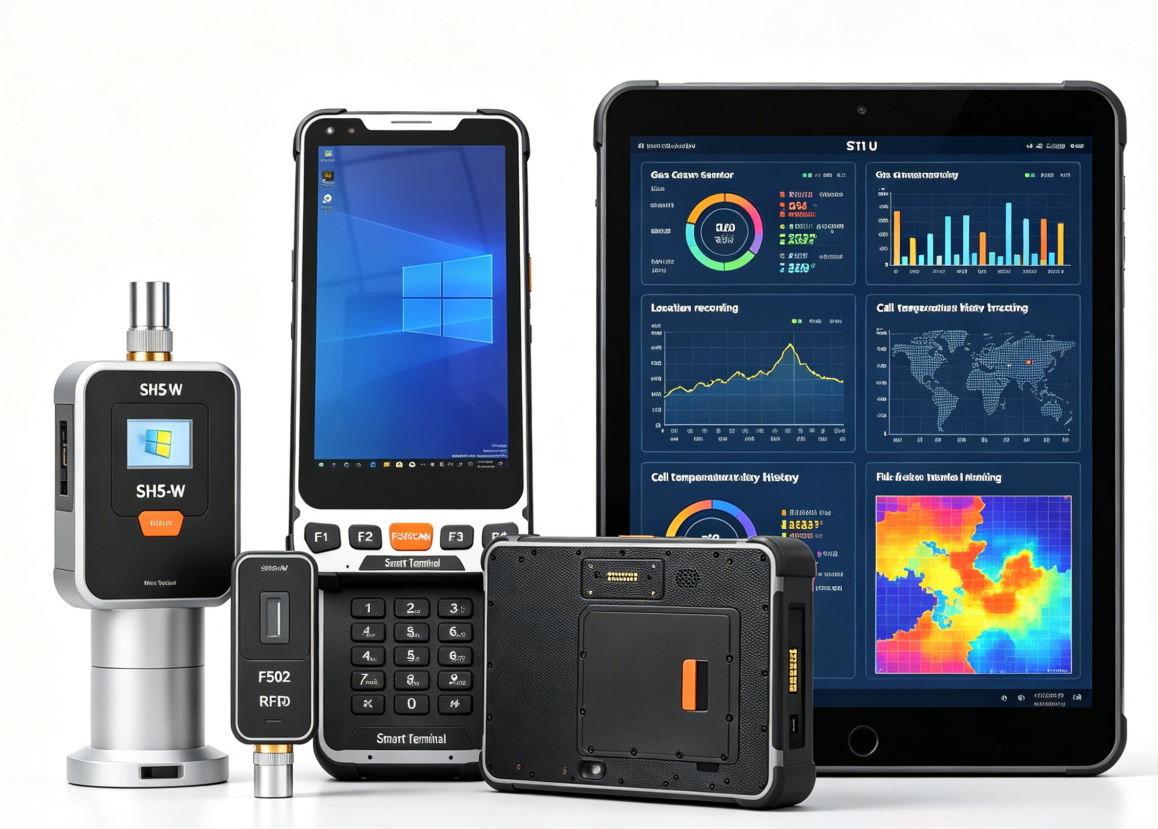
Fig 2 – An F502 RFID PDA retrieves the maintenance history of a sodium-ion battery module. Thermal fluctuation trends, inspection logs, and replacement schedules appear instantly on screen. Predictive maintenance starts with traceable data.
RFID Traceability for Battery Module Lifecycle Management
Large battery energy storage systems require more than gas monitoring alone. Operators also need precise traceability for every module installed inside a storage array.
The Hotus F502 RFID industrial PDA allows technicians to scan battery module RFID tags and instantly access:
- Cell manufacturing batch data
- Thermal history records
- Voltage balancing history
- Maintenance schedules
- Replacement recommendations
- Inspection frequency reports
If certain modules begin showing elevated temperatures or repeated gas anomalies, maintenance teams can quickly isolate affected production batches before a larger system failure develops.
RFID-based maintenance management also simplifies regulatory compliance and improves long-term operational planning for utility-scale battery storage operators.
Real-Time Safety Monitoring with ST11-U Rugged Tablets
The Hotus ST11-U rugged Windows tablet serves as a centralized monitoring dashboard for battery safety supervisors and facility managers.
The tablet provides:
- Live gas concentration dashboards
- Thermal hotspot visualization
- Rack-level alert mapping
- Maintenance team coordination
- Digital evacuation routing
- Historical inspection analytics
Supervisors can monitor multiple battery zones simultaneously and dispatch technicians immediately when abnormal readings occur.
For large utility installations, centralized visibility significantly reduces incident response time and improves operational accountability.

Fig 3 – A rugged tablet displays a live heat map of sodium-ion storage zones, combining gas sensor data with thermal inspection analytics. Early warning systems reduce downtime and improve facility safety management.
Digital Inspection Systems Improve Insurance & Compliance Outcomes
Insurance providers and energy regulators increasingly expect detailed digital documentation for grid battery installations. Facilities that cannot prove inspection consistency or maintenance traceability may face:
- Higher insurance premiums
- Longer incident investigations
- Delayed project approvals
- Increased compliance audits
- Reduced investor confidence
Rugged handheld inspection systems create a verifiable digital audit trail showing exactly when inspections occurred, who performed them, and what conditions were recorded at the time.
For rapidly expanding battery storage infrastructure, digital safety traceability is becoming just as important as the battery technology itself.
Key Applications
- Sodium-ion battery storage inspection
- Grid energy storage maintenance
- Thermal runaway prevention
- Hydrogen leak monitoring
- Battery rack RFID traceability
- Utility energy infrastructure safety
- Industrial gas inspection workflows
- Renewable energy storage compliance
- Battery module lifecycle management
Contact HOTUS Technology to discuss sodium-ion battery storage inspection systems, rugged handheld gas monitoring solutions, RFID battery traceability, and digital thermal runaway prevention workflows for utility-scale energy storage facilities.