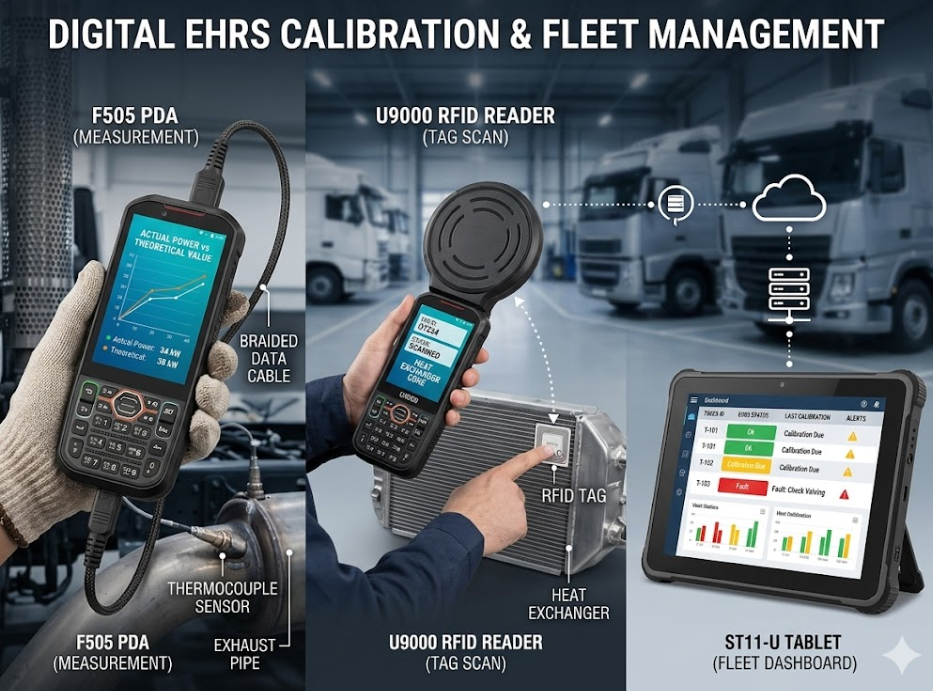
Fig 1 – A mechanic in a grease‑stained jumpsuit leans under a heavy truck, the F505 connected to an exhaust heat recovery unit. The screen shows a live temperature trend – 320°C inlet, 180°C outlet, 140°C recovered. A diesel engine idles in the background. Every joule saved is a gram of CO2 not emitted.
My View: Heavy goods vehicles are now being retrofitted with exhaust heat recovery systems to capture waste heat for cab heating, engine warming, and even thermoelectric generation. But a heat recovery system is only green if it actually works – and proving that requires regular calibration checks. A paper log of “system OK” is not proof. You need a waterproof, dust‑proof Windows PDA that connects to thermocouples, logs efficiency trends, and flags degradation. In trucking, waste heat is free fuel – but only if you measure it.
Heavy Goods Vehicle Exhaust Heat Recovery Deployments Double – Your Calibration Log Needs a Waterproof Windows PDA
By HOTUS Technology | May 2026
The heavy goods vehicle (HGV) industry is adopting waste heat recovery at scale. Exhaust heat recovery systems (EHRS) capture heat from diesel engine exhaust – typically 300‑500°C – to pre‑warm coolant, heat the cab, and in some cases generate electricity via thermoelectric generators (TEGs). The result: fuel savings of 6‑10% and proportional CO2 reduction. Over 100,000 HGVs globally are now equipped with EHRS, and adoption is doubling annually.
However, EHRS performance degrades over time. Soot buildup on heat exchangers reduces efficiency. Thermostat valves stick. TEG modules lose power output. A system that saved 8% fuel when new might drop to 4% after a year of operation without detection. Regular calibration checks – comparing theoretical heat transfer to actual measured temperature differentials – are essential. Yet many fleet maintenance shops still record these checks on paper clipboards that get lost, smudged, or ignored.
The Hotus F505 Handheld PDA is designed for the oily, dusty environment of a truck workshop. Its IP67‑rated case resists grease and grime. The glove‑compatible touchscreen works with mechanic‘s gloves. The F505 connects via Bluetooth to a set of temperature probes (thermocouples placed on exhaust inlet, exhaust outlet, and coolant loop). It calculates the actual heat recovery in kW and compares it to the theoretical value based on exhaust flow rate.
The F505 stores each calibration result in a tamper‑evident log. If the measured recovery drops below 90% of theoretical, the PDA flags the system for cleaning or component replacement. The log is shared with the fleet manager‘s dashboard and, if required, with environmental auditors claiming CO2 credits.
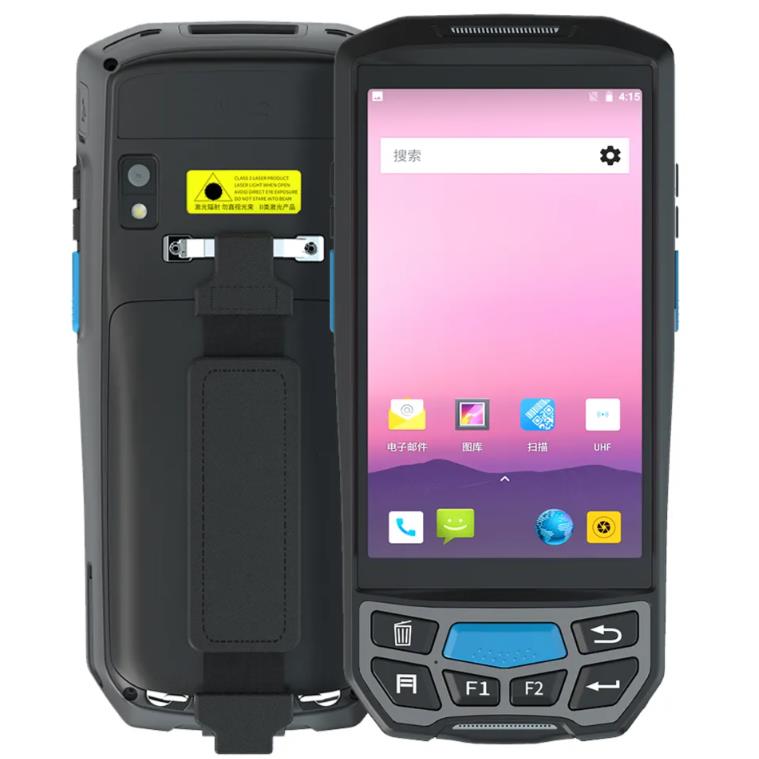
Fig 2 – A fleet technician scans an RFID tag on a heat exchanger module using the U9000. The screen shows the component’s installation date, last cleaning, and current efficiency rating. A yellow “due for service in 500 hours” banner appears. The PDA helps schedule before failure, not after.
For component traceability, the Hotus U9000 Handheld PDA scans RFID tags on heat exchangers, control valves, and TEG modules, linking their maintenance history to performance logs. If a component underperforms, the U9000 traces it back to a bad batch.
The Hotus ST11‑U 10.1″ Windows rugged tablet serves as the fleet manager’s dashboard, showing real‑time EHRS efficiency across the entire vehicle fleet. Green for >95% of theoretical, yellow for 80‑95%, red for<80%. A red flag triggers a service order automatically.
A logistics fleet of 500 HGVs equipped with EHRS deployed 100 F505 PDAs, 80 U9000 units, and 30 ST11‑U tablets. After one year, average EHRS efficiency across the fleet improved from 78% to 92% of theoretical. The fleet saved an additional 5% in fuel – worth $2 million annually – solely from better‑maintained heat recovery systems. A regulator audited their CO2 claims and accepted the digital logs as proof, allowing the fleet to claim carbon credits worth $300,000.
Waste heat is free, but only if you capture it consistently. Paper logs don’t help you track degradation. The F505, U9000, and ST11‑U give you the waterproof, sensor‑connected, trend‑able calibration system that EHRS demands. Don‘t let dirty heat exchangers waste your fuel budget.
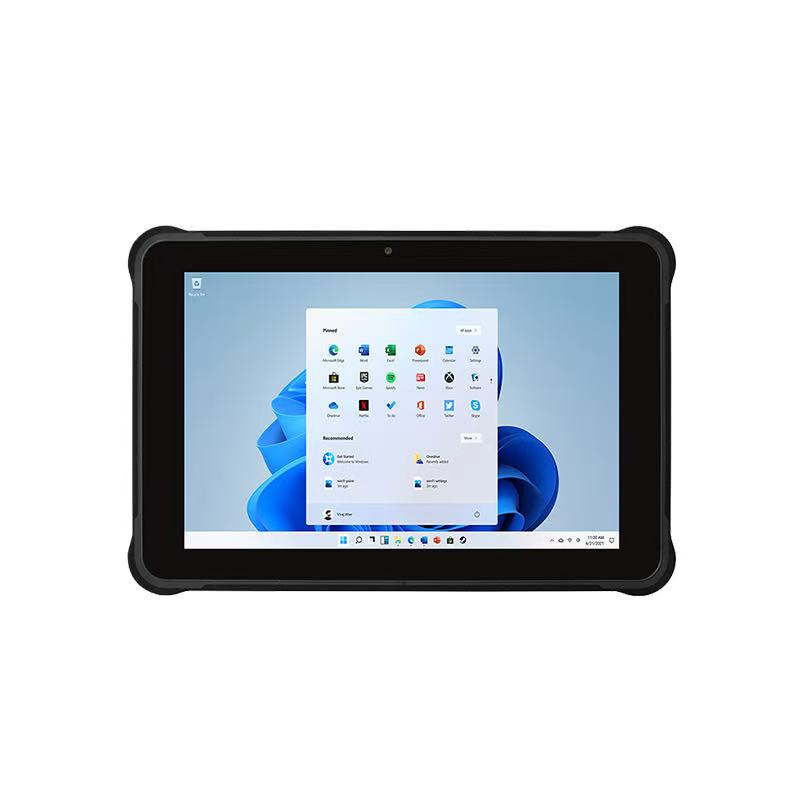
Fig 3 – The ST11‑U on a fleet manager‘s desk, its screen showing a bar chart of EHRS efficiency by truck. Most bars are green; a yellow bar blinks – truck #47, 82% efficiency, cleaning due. The manager taps the bar and schedules a shop visit. The fuel saved pays for the tablet ten times over.
Contact HOTUS Technology to discuss your EHRS calibration digitization, request F505 PDA pilots, or explore U9000 PDAs and ST11‑U tablets for waste heat tracking.