








A clinic buying tablets usually starts with the same shortlist it would use for an office: processor, memory, storage, screen resolution, battery hours. Every one of those specifications is real and almost none of them predict whether the device will still be in service a year later. What kills tablets in clinical settings is not insufficient processing power. It is the disinfection cycle, the gloves, the twelve-hour shift, the drop from trolley height and the fact that patient data is on the screen. Those are the five things a clinical comparison has to answer, and they appear on no consumer spec sheet, which is why clinics that buy on conventional criteria so often end up replacing hardware they chose carefully eighteen months earlier. If you are specifying for a ward or a practice this year, start with medical workstation computing hardware and then read the five failure modes below.
The Disinfection Cycle Nobody Lists
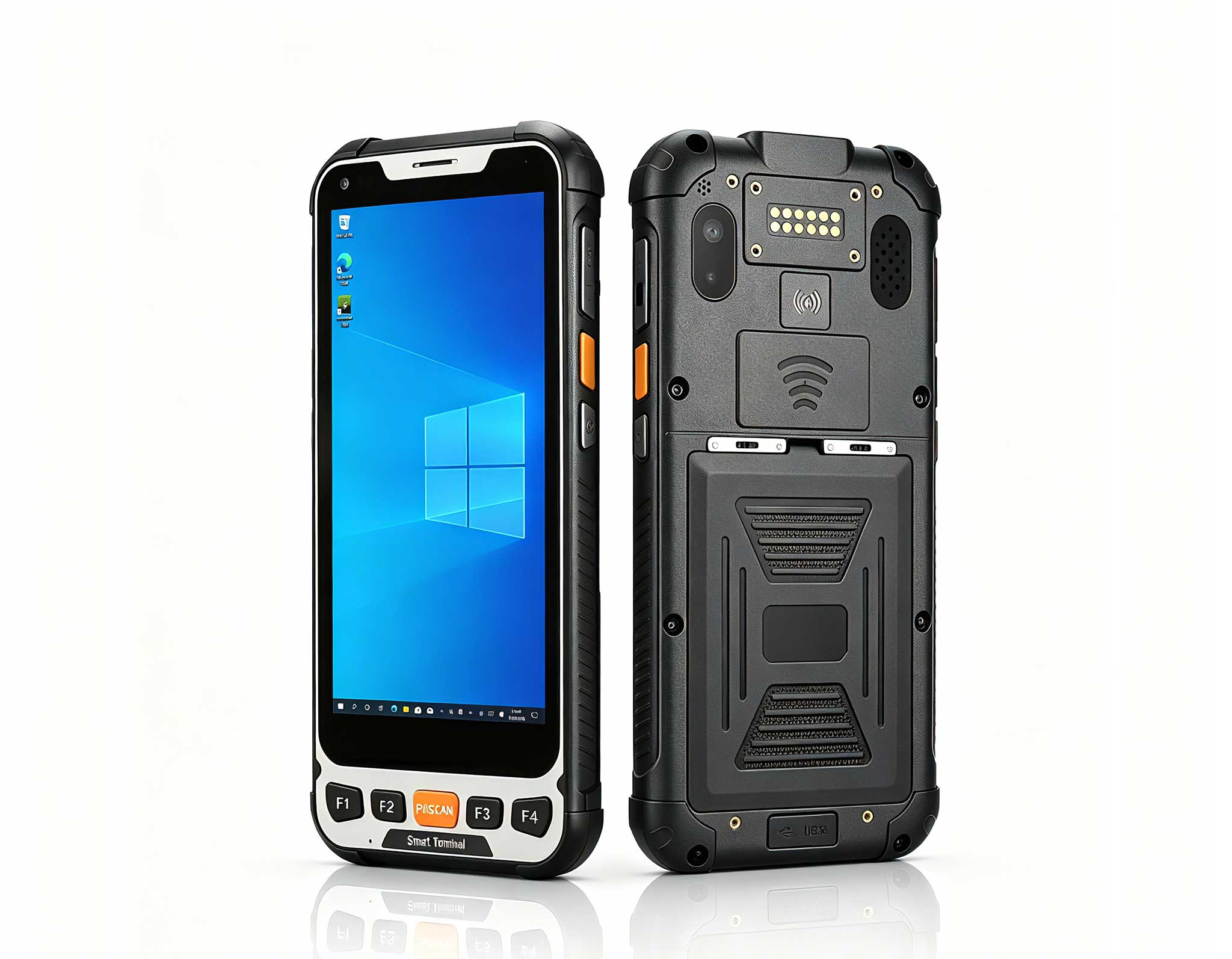
The first and most underestimated requirement is chemical rather than electronic. A tablet in a clinical environment is wiped down with a hospital-grade disinfectant multiple times per shift, every day, for years. Consumer glass coatings, adhesive labels, port covers and plastic bezels are not designed for that exposure: they cloud, they peel, they craze, and eventually the device becomes difficult to read or the ports stop seating properly. The questions worth asking are narrow and unglamorous — which agents has the housing been tested against, how many wipe cycles, and what happens to the touch surface after two years of it. A tablet that survives isopropanol and chlorine-based agents without degrading is worth more clinically than one with a faster processor and a coating that fails. The HTYJ08A Rugged Tablet is specified for exactly this exposure, with a housing and surface treatment chosen for repeated disinfection rather than for showroom appearance.
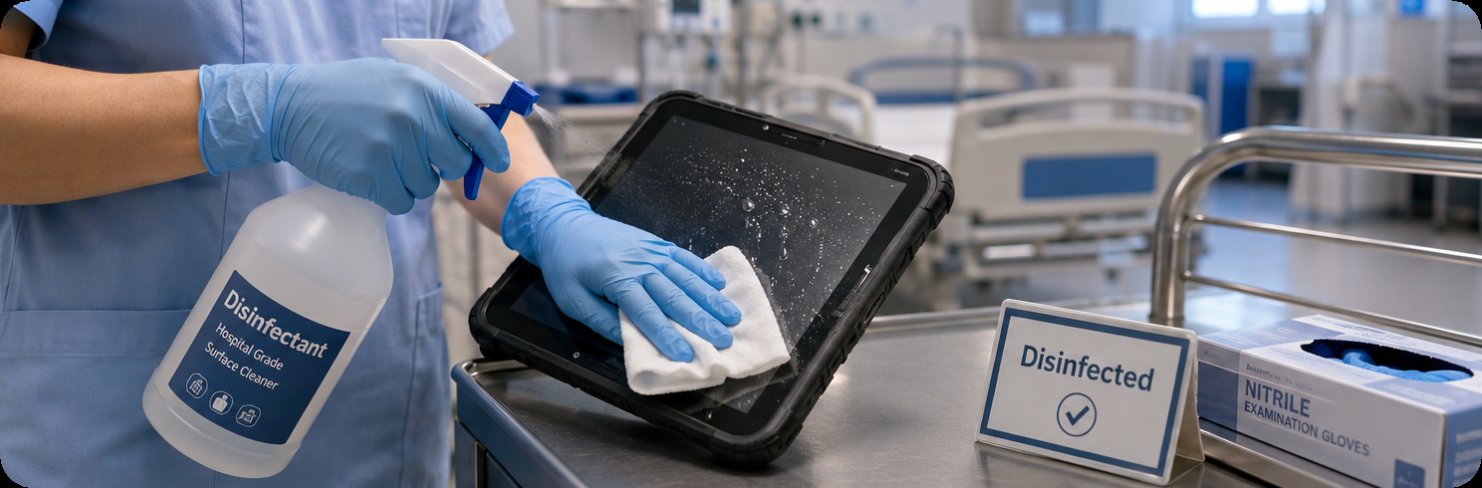
An HTYJ08A being wiped down with a hospital-grade agent between patients, the cycle that determines whether a tablet survives its second year in a ward.
🔍 Gloves, Wet Hands and the Touch Problem
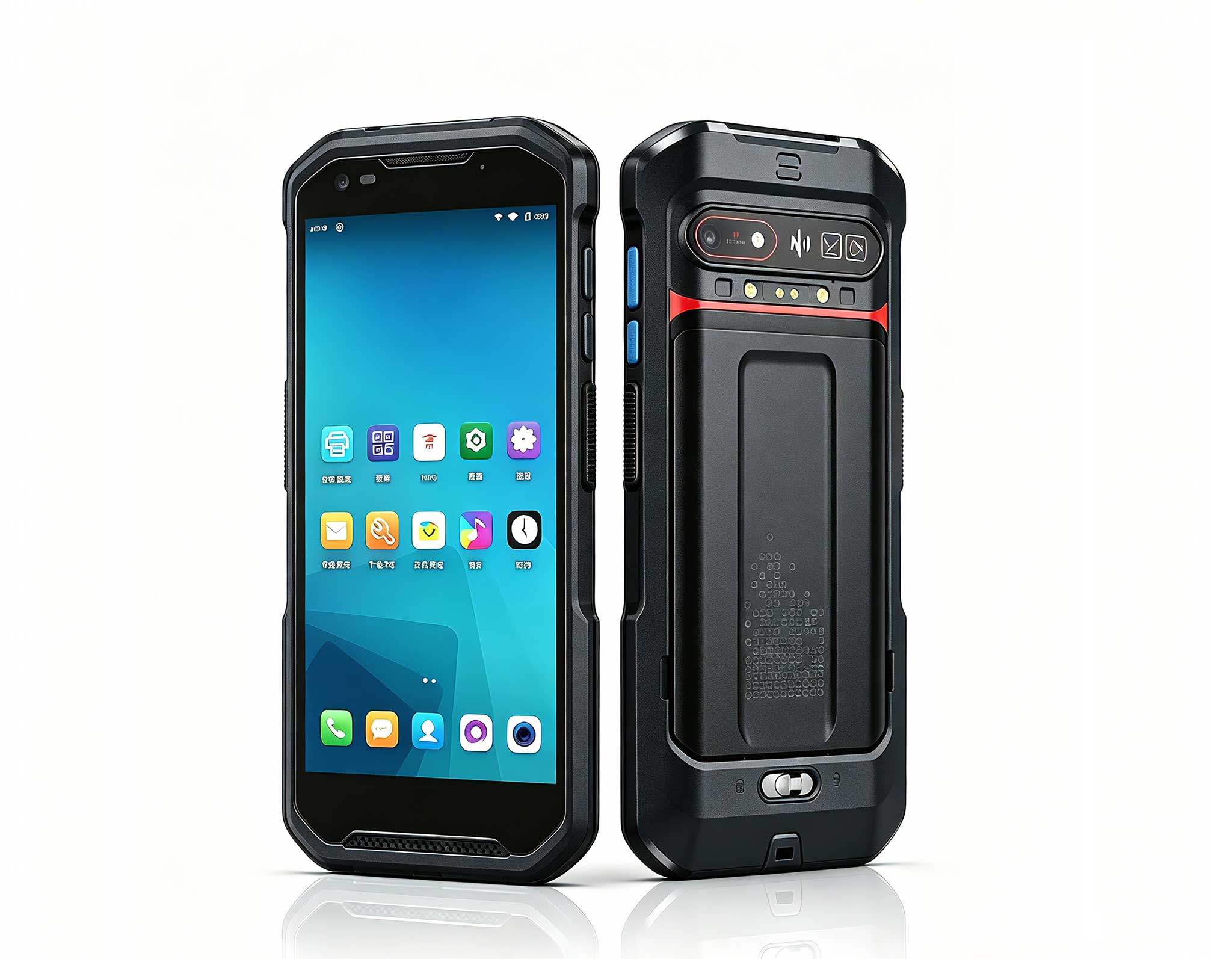
The second requirement is the one that generates the most complaints from clinical staff and the fewest questions at purchase. A capacitive touchscreen tuned for a bare finger behaves erratically under a nitrile glove, and it behaves worse when the glove is damp or the screen has condensation on it. Staff adapt by pressing harder, repeating taps, or removing gloves to operate the device, none of which is acceptable in a clinical workflow. The specification to look for is not screen sensitivity in the abstract but documented glove-touch and wet-touch operation, ideally tested with the glove types the facility actually uses. Where a tablet will be used at the bedside or in a treatment room, this single property determines whether the device speeds up the workflow or becomes the thing staff complain about. The ST11-J is chosen for bedside and treatment positions because its touch stack is specified for gloved and damp operation rather than for ideal conditions.
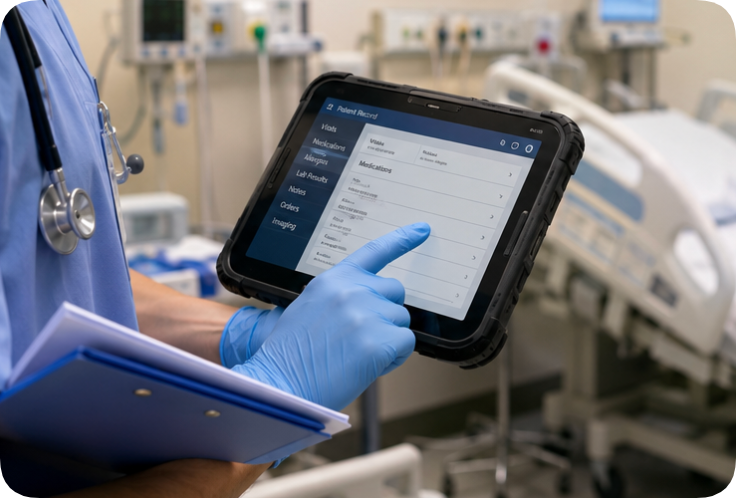
An ST11-J being operated with gloved hands at the bedside, where a screen tuned only for bare fingers would force staff to remove gloves.
🔋 A Twelve-Hour Shift Is the Real Battery Test
The third requirement is that battery claims are measured against the wrong unit. A tablet rated at eight or ten hours is being rated against continuous-light-use laboratory conditions, not against a twelve-hour clinical shift with the screen waking hundreds of times, radios scanning, and the device spending part of the day on a trolley charger and part of it in a hand. The practical question is whether a device gets through a full shift without needing a mid-shift charge, because a tablet that dies at hour nine is a tablet that gets left on a desk, and a tablet left on a desk is a workflow that has reverted to paper. Where devices are shared across shifts, the related question is how quickly a unit returns to a usable charge, since a pool sized for continuous use needs a turnaround shorter than the handover gap.
Carts, Walls and Hands: Where the Device Lives
The fourth requirement is positional, and it is where form factor should be decided rather than assumed. A tablet mounted on a medication trolley has different needs from one carried between treatment rooms, and both differ from one fixed at a reception desk or on a wall arm. The trolley device spends its life connected to power and is read at arm's length, so screen size and mounting robustness matter more than weight. The carried device is held for minutes at a time, often in one hand while the other is occupied, so weight distribution and grip matter more than raw screen area. The fixed device never moves, so cable management and anti-theft provisions enter the picture. Buying one model for all three positions is a common and expensive shortcut, because the compromise tends to serve the least demanding position well and the most demanding one badly.
The Drop That Actually Happens
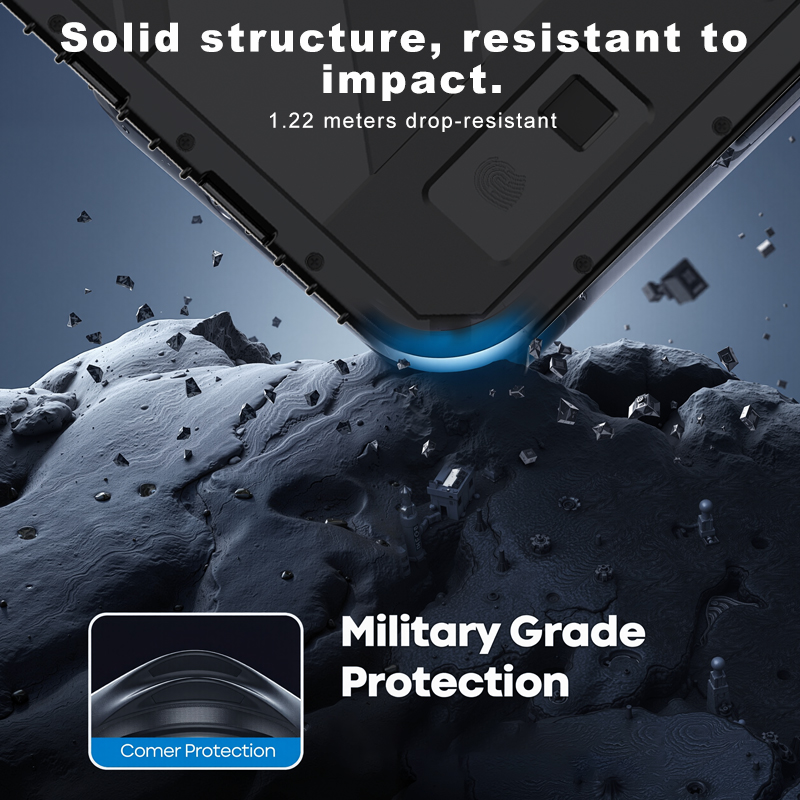
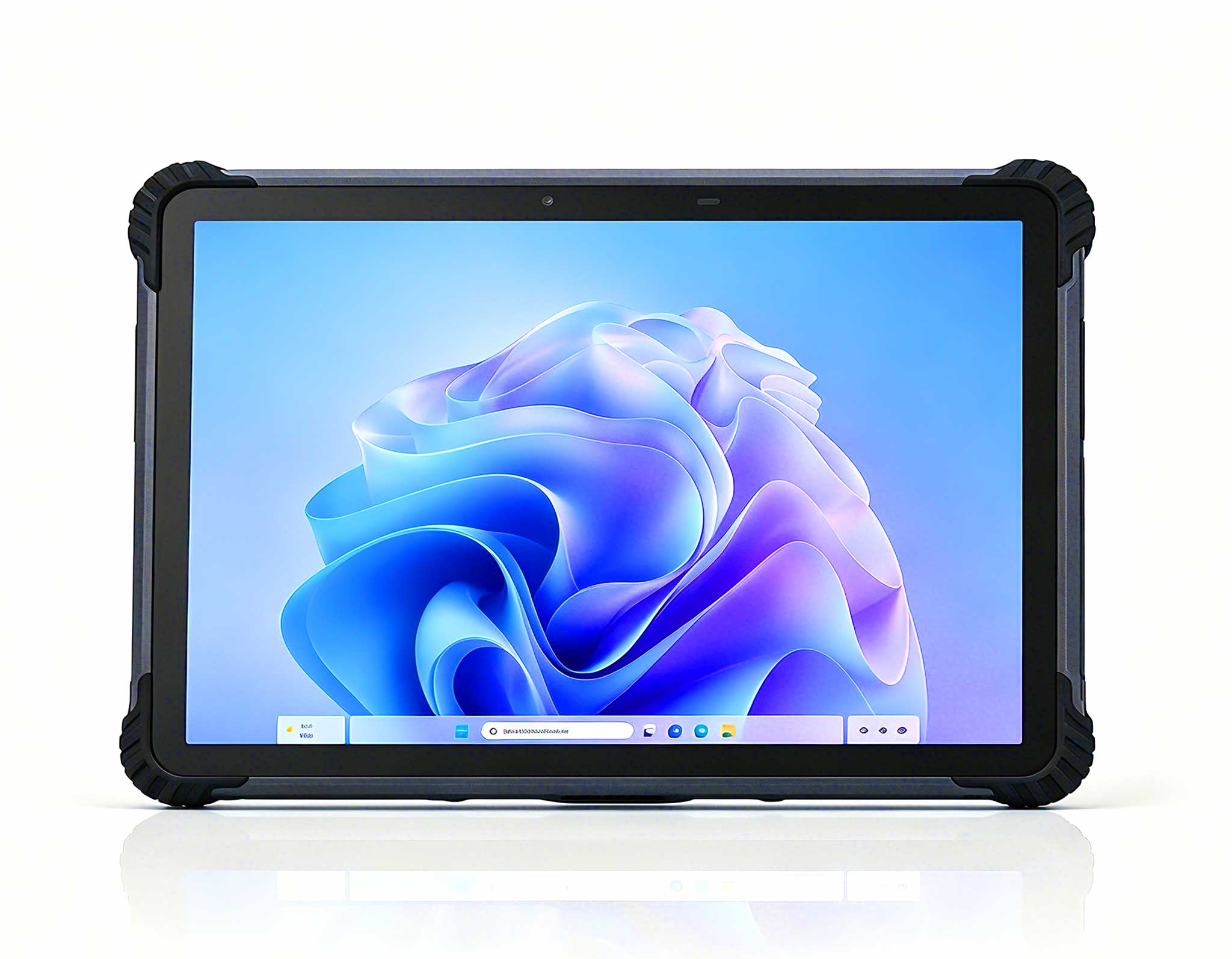
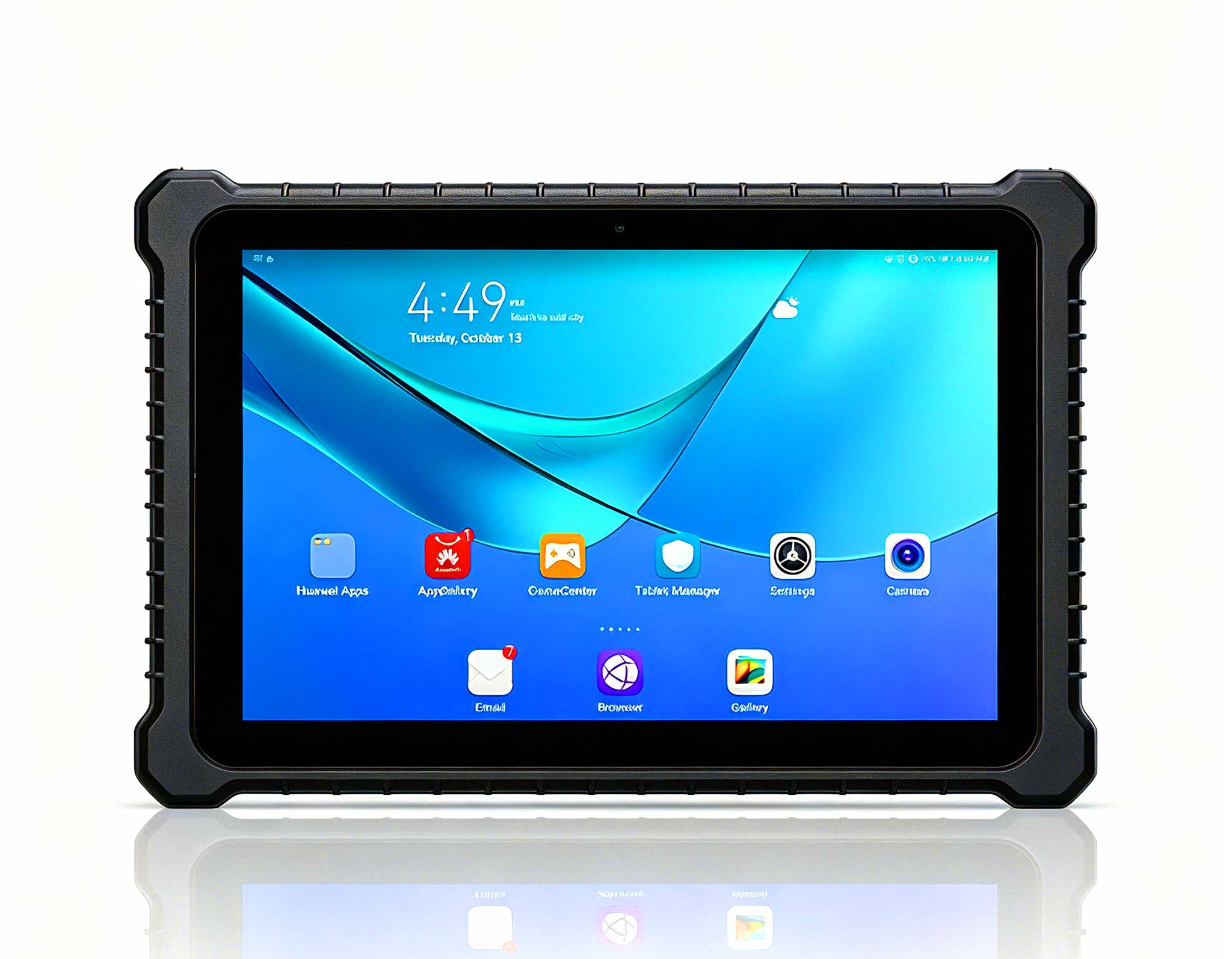
The fifth requirement concerns physical survival, and the mistake here is reading the rating rather than the scenario. An ingress rating tells you a device survived a controlled test, not that it survived being knocked off a trolley onto a hard floor, which is the drop that actually occurs. The height matters, the surface matters, and the corner that takes the impact matters, because a device that lands on a corner concentrates the entire force into the bezel and the glass edge. Clinics that track device losses consistently report the same pattern: the failures cluster at trolley height and at door thresholds, not at pocket height. The HTYJ10A Rugged Tablet is the model specified where that pattern dominates, because its housing and corner protection are engineered around the drop heights and surfaces of a working ward rather than around a laboratory bench test.
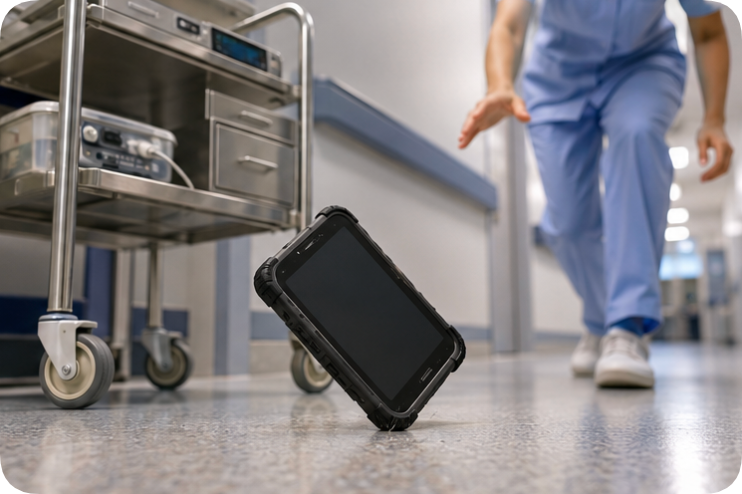
An HTYJ10A built for the drop that actually happens in a ward: from trolley height onto a hard floor, landing on a protected corner.
🏥 Patient Data Does Not Leave the Room
The sixth requirement is the one that turns a hardware decision into a governance decision. A tablet used at the bedside displays patient information, and what appears on that screen after the clinician walks away is a data protection question rather than an IT one. Sessions have to terminate reliably, screens have to be readable only from the intended angle, and the device has to be lockable and remotely wipeable if it goes missing. Consumer tablets handle some of this adequately and some of it not at all, and the gap usually shows up in the least convenient way: during an incident review, when the question is what was visible on a screen at a particular moment and nobody can answer it.
What the Clinical Shortlist Compares
Put together, the six requirements produce a comparison sheet that shares almost nothing with the consumer one. The table below sets out the substitution: what a conventional shortlist asks, what a clinical one should ask instead, and why the conventional question fails to predict service life.
| Conventional question | Why it fails clinically | Ask this instead |
|---|---|---|
| Processor and memory | Clinical apps are rarely the bottleneck | Which disinfectants and wipe cycles is it tested for |
| Screen resolution | Irrelevant if unreadable through a wiped coating | Documented glove and wet-touch operation |
| Battery hours | Rated for lab use, not a twelve-hour shift | Does it survive a full shift and recharge in handover |
| Weight | Matters only relative to the position | Is this a trolley, carried or fixed device |
| Ingress rating | Controlled test, not a trolley-height drop | Corner protection and real drop height |
| Storage capacity | Patient data should not persist locally | Session termination, remote wipe, viewing angle |
Buying for the Shift, Not the Brochure
None of this argues for buying the most rugged device available, which would be as wrong as buying the fastest consumer tablet. It argues for matching the specification to the failure mode, which in a clinical setting means starting from the disinfection cycle, the gloves, the shift length, the position and the drop, and only then looking at performance. Facilities that make this change tend to find their replacement cycle lengthening rather than their budget growing, because the devices stop failing for reasons nobody anticipated. Our rugged handheld tablets are specified against these six questions rather than against a conventional spec sheet, and the deployment side is documented in a practical guide to deploying rugged tablets at medical workstations. The clinics that get this right are not the ones with the most expensive hardware, they are the ones that asked what was actually going to break.