Amine Oxidation Is Killing Your Carbon Capture Efficiency – Your Degradation Log Needs A Sanitizable Windows Tablet
By HOTUS Technology | Industrial Carbon Capture Insights | Published May 2026
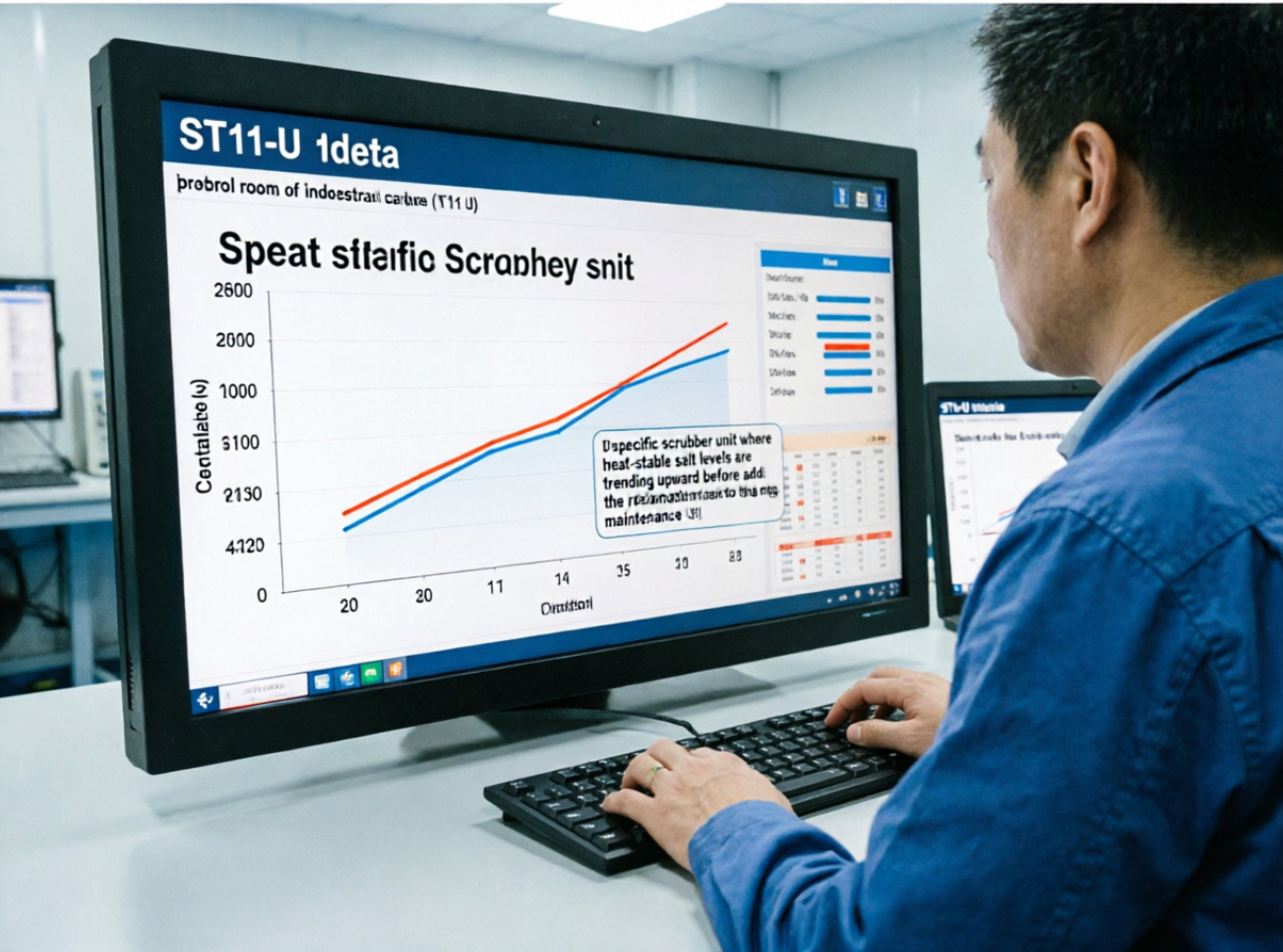
An operator uses a chemical‑resistant HOTUS tablet to log amine oxidation test results at a carbon capture plant.
"Amine oxidation is the silent efficiency killer in carbon capture. Oxidized amines lose CO2 capacity and increase corrosion. The standard test is a titration kit and a paper log – done weekly. You need a sanitizable Windows tablet that records heat stable salt (HSS) concentration, corrosion rate, and amine strength, then forecasts when the solvent needs reclaiming. In carbon capture, a degraded amine is a leaky bucket. Your tablet is the bucket repair."
Industrial post-combustion carbon capture systems are essential for reducing emissions across high-polluting sectors like power generation, cement production, and chemical refining. These complex systems rely heavily on aqueous amine solvents, such as monoethanolamine (MEA) or piperazine, to scrub carbon dioxide from flue gas streams. However, keeping these chemical processes running efficiently requires constant monitoring. When the solvent interacts with residual oxygen, sulfur oxides ($SO_x$), and nitrogen oxides ($NO_x$) present in the flue gas, it triggers an ongoing process of chemical degradation known as amine oxidation.
This oxidation process alters the chemical composition of the solvent, creating a variety of unwanted byproducts, primarily heat-stable salts (HSS). Unlike normal amine-CO2 bonds, these salts cannot be broken by the heat in the stripper column. As a result, active amine molecules get permanently bound up, which directly reduces the solvent's overall $CO_2$ absorption capacity. Over time, the buildup of these heat-stable salts also creates highly corrosive process fluids that damage internal absorber piping, heat exchangers, and structural welds. If left unmanaged, this degradation can cause a 10% to 20% drop in carbon capture efficiency within a single year, increasing operating costs and accelerating equipment wear.
The Dangerous Failure Rates of Manual Solvent Logging
Standard industrial maintenance routines frequently struggle to keep up with these quick-moving chemical changes. Plant teams often rely on manual sampling methods, pulling physical solvent samples once a week and sending them to an on-site or third-party laboratory for acid-base titration and ion chromatography.
This traditional testing method creates significant operational blind spots. The typical 24-to-48-hour delay between taking a sample and receiving lab results means that plant operators only catch solvent degradation after it has already hurt capture efficiency. Furthermore, archiving these metrics on paper data sheets makes it nearly impossible to analyze long-term trends or build predictive models. A steady accumulation of heat-stable salts can easily go unnoticed during routine shifts, leaving operators blind to upcoming system failures until the solvent drops below acceptable performance limits.
Deploying Sanitizable Windows Terminals for Real-Time Analysis
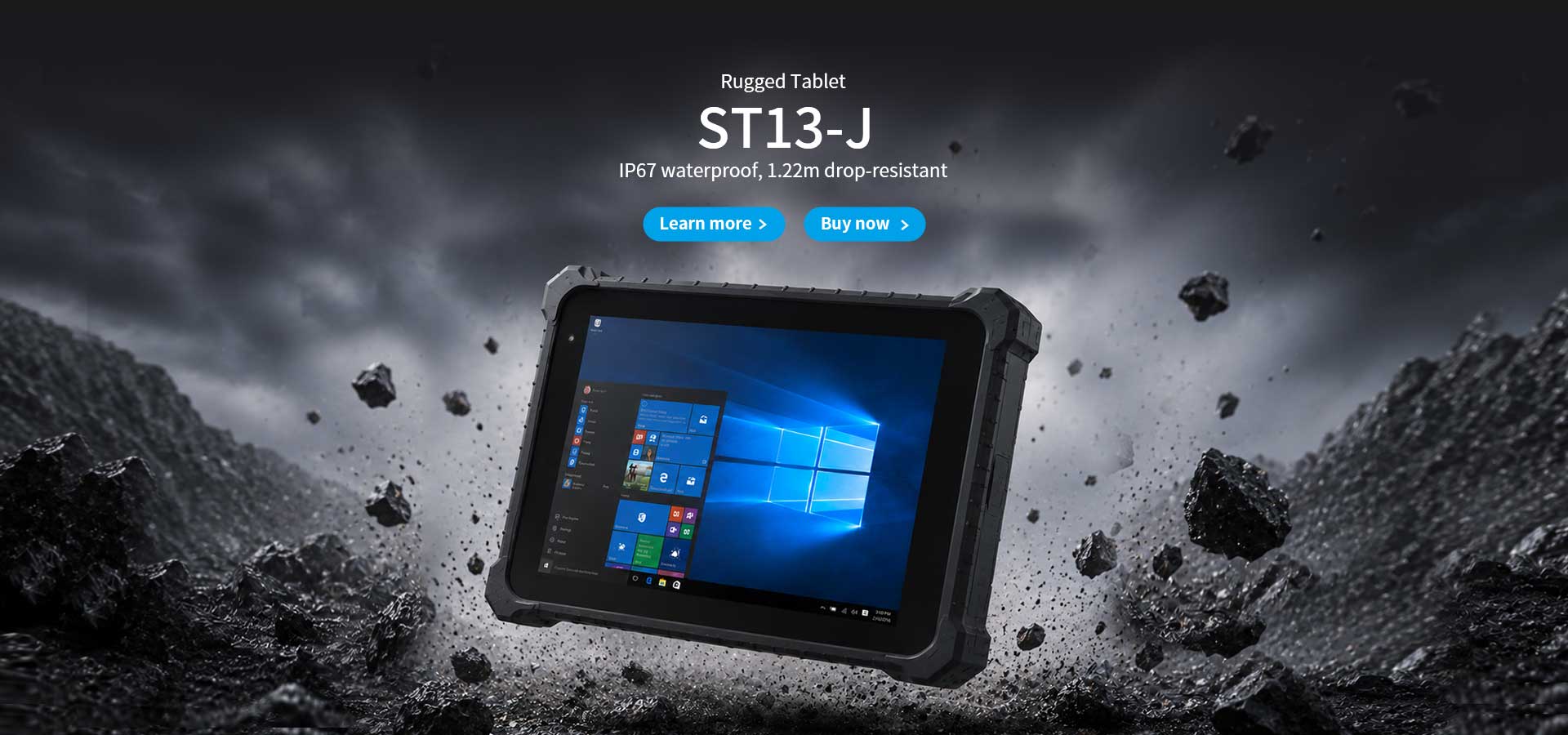
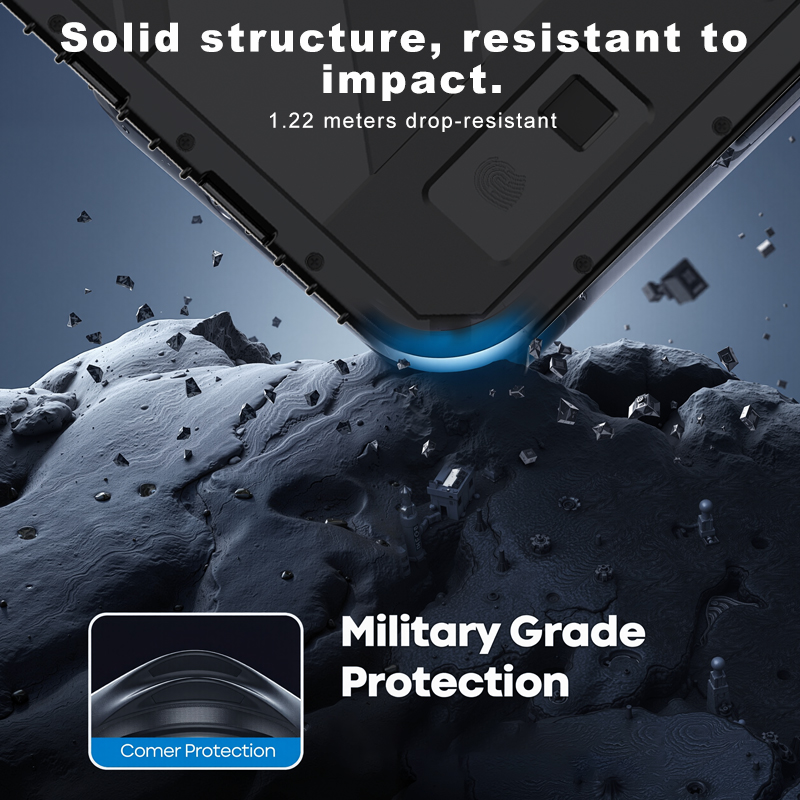
To minimize chemical processing downtime, plant operators are moving away from paper logs and adopting field-ready Rugged Tablets built for harsh environments. The Hotus ST11‑M 10.1″ Windows rugged tablet is engineered specifically to handle these demanding chemical plant conditions. It features a sealed, IP65-rated housing built from industrial-grade, chemical-resistant materials, allowing operators to frequently wipe it down and sanitize it after contact with sticky, corrosive amine compounds.
By pairing the ST11-M with portable fluid analyzers via secure Bluetooth connections, field personnel can run instant point-of-care diagnostics right at the sampling station. This integrated solution provides immediate insights into key solvent metrics without laboratory delays.
Active Analytical Capture Capabilities:
- Total Solvent Mass Percentage: Instantly displays true un-degraded amine concentrations ($wt\%$) to monitor active absorption capacity.
- HSS Concentration Tracking: Measures heat-stable salt concentrations down to exact parts-per-million ($ppm$) values.
- Corrosion Risk Assessment: Tracks dissolved iron concentration values as an indirect proxy for internal system corrosion.
- Predictive Lifespan Modeling: Calculates the remaining useful life of the active solvent lot based on current degradation curves.
Replacing slow laboratory turnaround times with instantaneous data tracking allows plant managers to spot sudden spikes in chemical breakdown early. When heat-stable salt levels approach critical limits, the internal algorithm alerts maintenance teams and provides a specific timeline for when the fluid will need reclaiming. This real-time visibility transforms solvent management from a reactive repair routine into an optimized, predictive maintenance workflow.
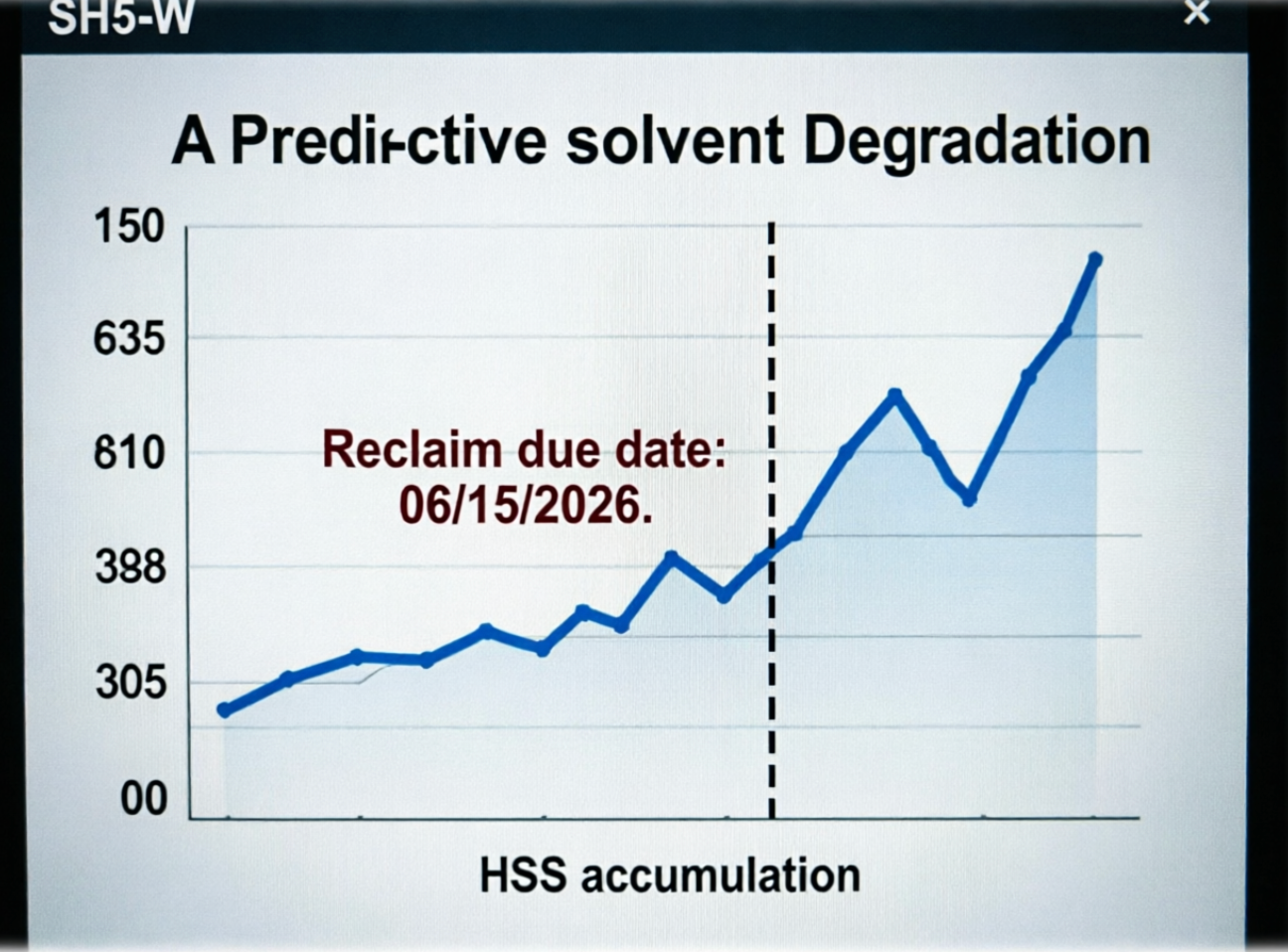
The SH5‑W tablet displays a trend graph of amine concentration and HSS buildup – the HSS line crossing a yellow threshold, predicting reclaiming needed in two weeks.
Fleet-Wide Optimization and Environmental Compliance Logistical Networks
Isolating individual chemical deviations protects local equipment, but managing an entire industrial complex requires linking field testing data with centralized control systems. Field personnel can use the compact Hotus SH5‑W Handheld PDA to scan asset tags at sampling ports, verifying the exact origin point of every data set.
To coordinate these data points across multiple carbon capture lines, operations managers use specialized visualization hardware. The Hotus ST11‑U 10.1″ Windows rugged tablet serves as a central monitoring dashboard. The ST11-U tracks chemical health indicators across all processing columns simultaneously, flagging units with accelerating degradation so engineers can adjust gas flow rates, chemical wash volumes, or thermal profiles to slow down solvent breakdown.
Proven Chemical Plant Performance and Compliance Documentation
The practical financial value of shifting to an integrated digital logging network is demonstrated by a large-scale carbon capture facility processing 1 million tonnes of $CO_2$ annually. To optimize their complex solvent management, the facility deployed 20 ST11-M chemical-resistant tablets, 25 SH5-W handheld terminals for field spot checking, and 15 ST11-U central dashboards.
During its first year of operation, this integrated tracking network predicted solvent replacement and reclamation requirements two full months in advance. This early warning allowed plant managers to schedule solvent cleaning during a planned maintenance outage, completely avoiding an unexpected 12% drop in capture efficiency. By maintaining optimal performance, the facility saved an estimated $2 million in carbon credits that would have otherwise been lost. Additionally, the secure, unalterable digital logs provided the clear compliance documentation needed to satisfy third-party environmental audits.
The ST11‑U dashboard shows solvent health for three capture units – one unit flagged yellow, HSS approaching limit.
Solvent degradation is a manageable chemical process, not an unpredictable mystery. Relying on slow lab results and manual paper records leaves carbon capture plants vulnerable to hidden efficiency drops and unexpected equipment corrosion. Combining portable fluid testing tools with chemical-resistant Windows tablets provides field teams with immediate, actionable visibility into solvent health. Utilizing specialized industrial hardware like the ST11-M, SH5-W, and ST11-U provides the precise data tracking necessary to stop fluid degradation early, maximize carbon capture yields, and safeguard large-scale green energy investments.
Protect Your Carbon Capture Processing Yields
Eliminate chemical tracking blind spots and optimize your solvent management program. Contact our technical engineering team today to review detailed hardware specifications, request ST11-M pilot units, or discuss integrating custom fluid monitoring software with your facility's existing DCS setup.
Contact HOTUS Process Specialists