- Select Language
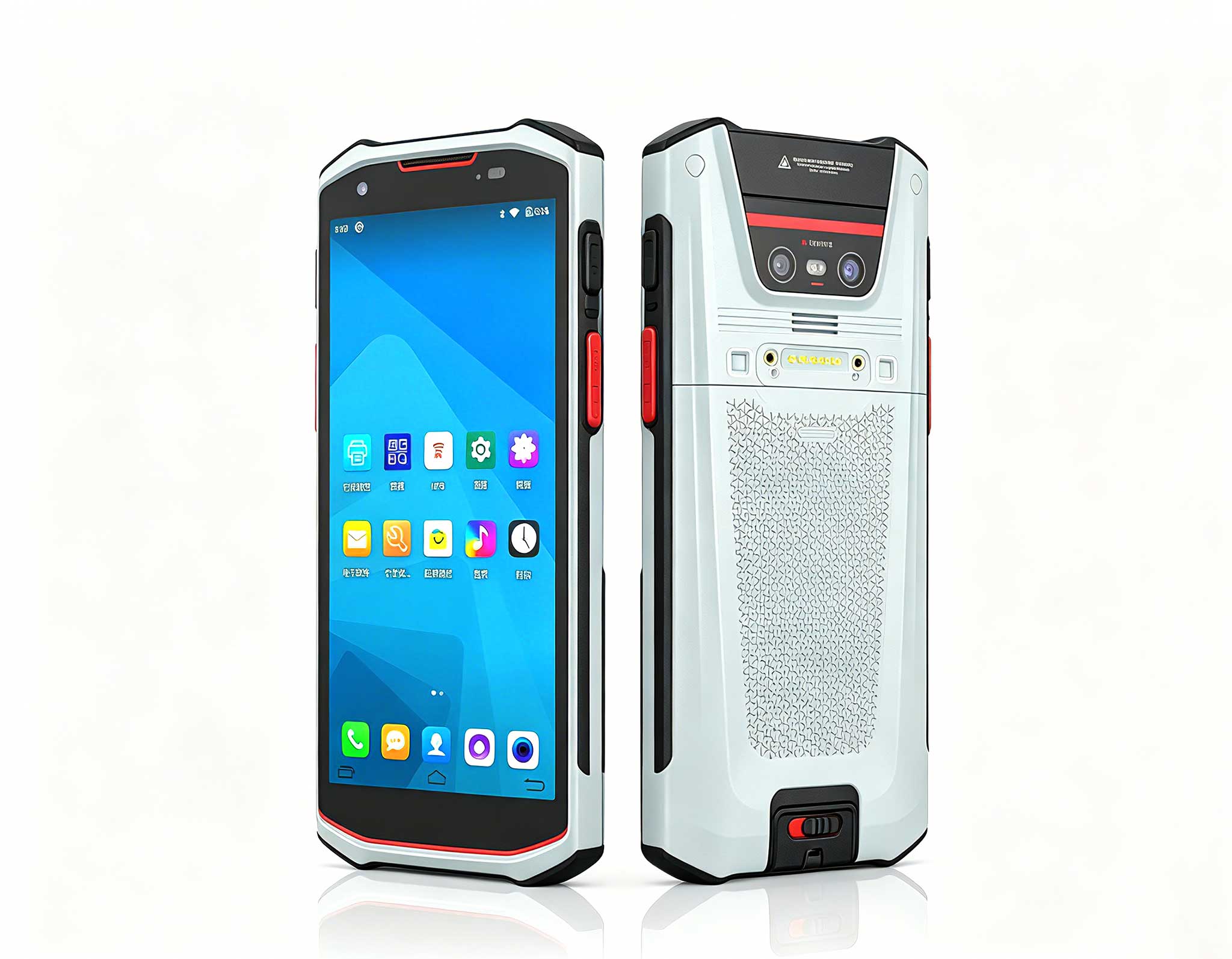
R530C 6.0-inch Industrial PDA | Qualcomm Octa-core...
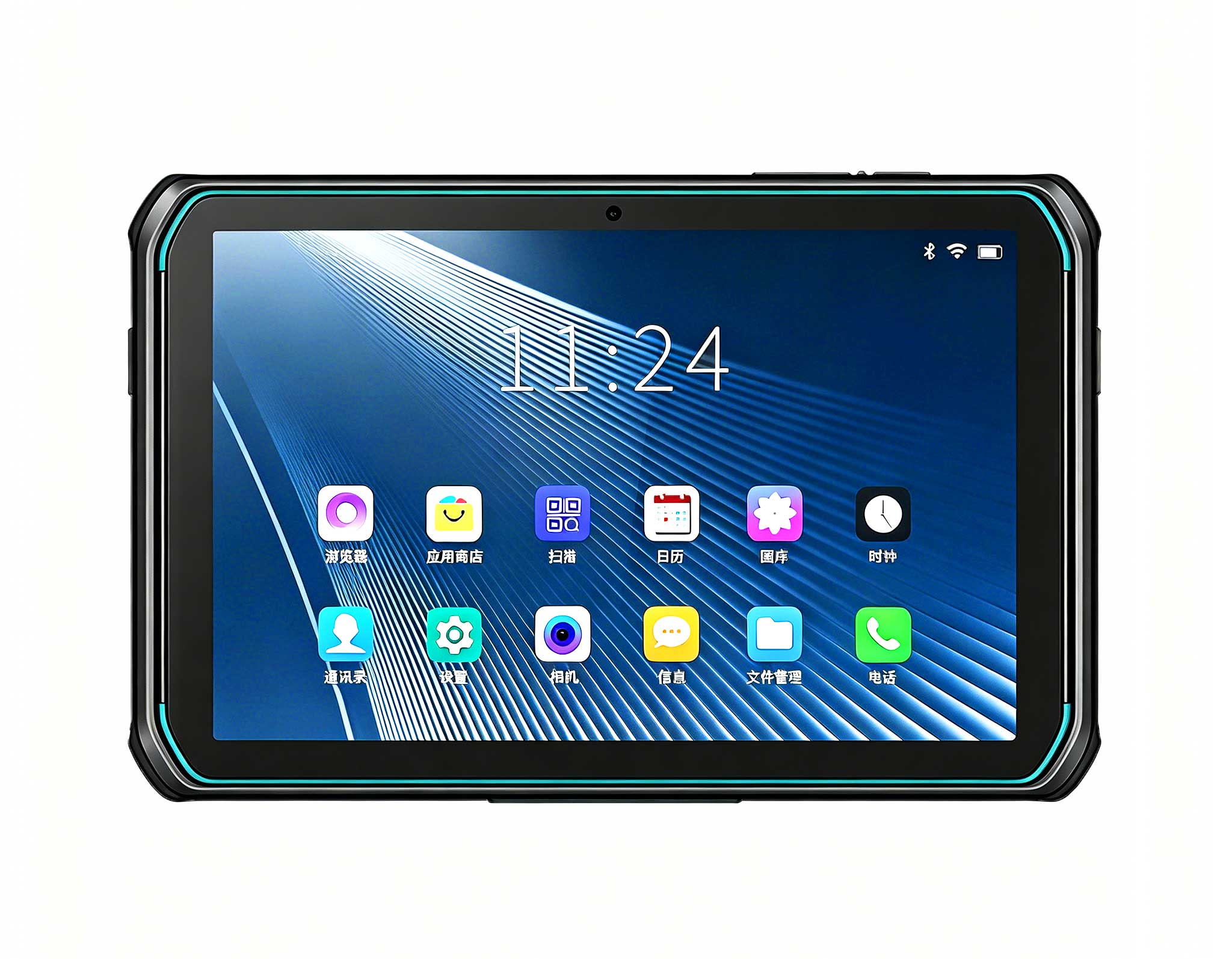
RS51 4G Rugged Handheld Terminal | 6.3" FHD+ ...
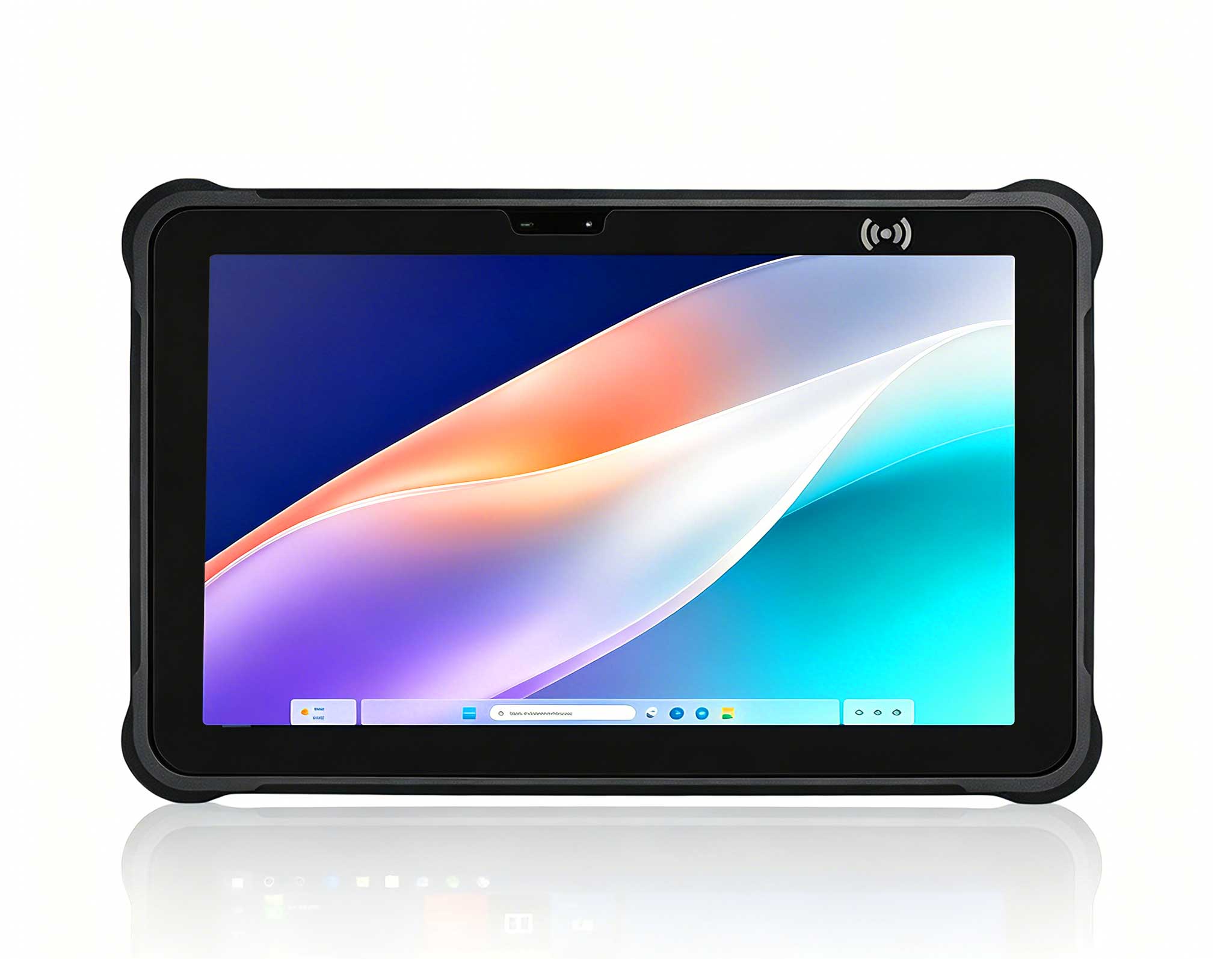
This 10-inch Android rugged tablet is designed for...
Explore our customized PDA designed for versatile ...
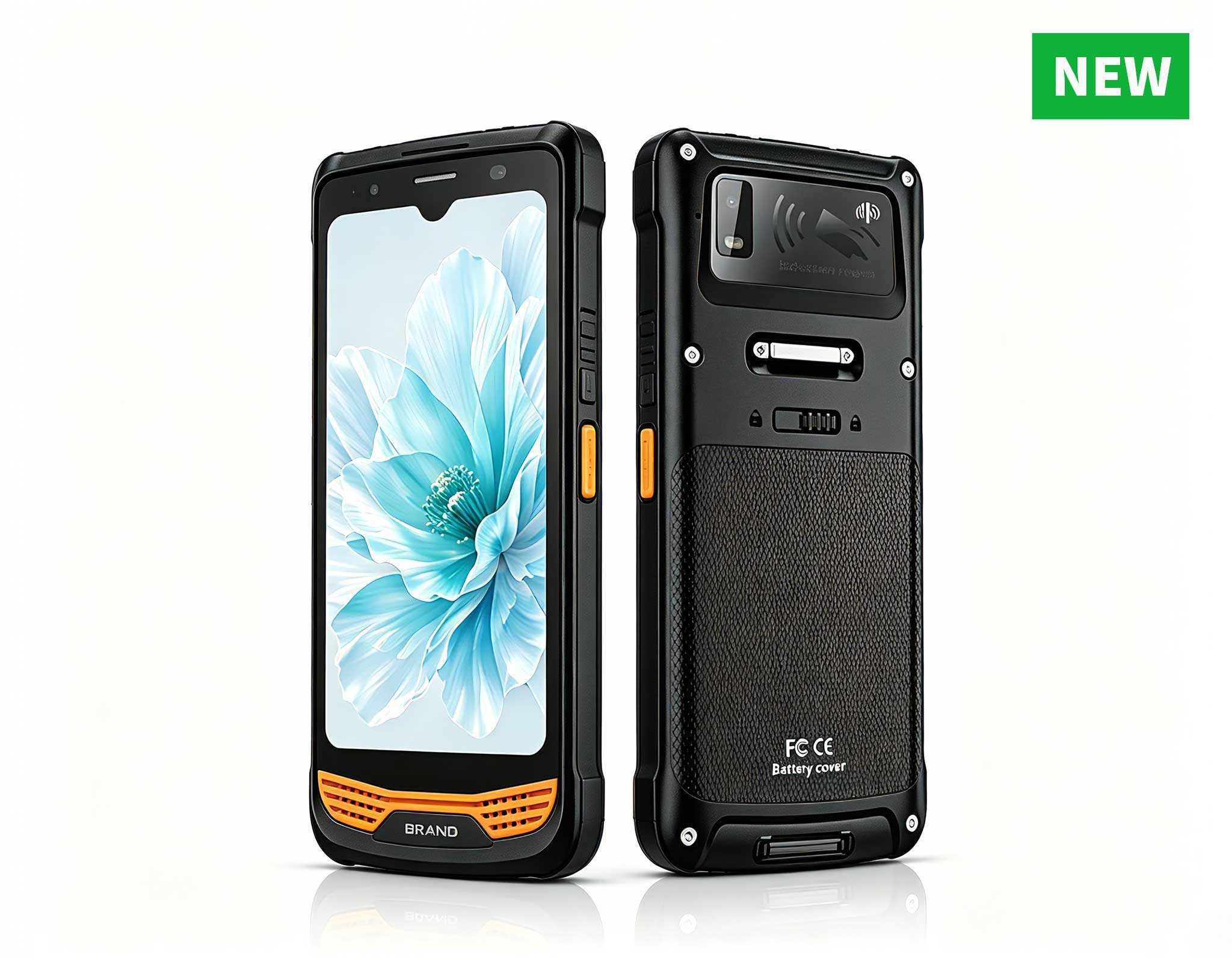
R366-S Thin 5.5-inch Industrial PDA | Qualcomm Oct...
Full SpecificationsModelHotus ST9‑JOSWindows 10 Pr...
After fifteen years deploying devices across distribution centers, cold storage facilities, and third-party logistics hubs, I have one piece of advice that has saved companies more money than any software upgrade: stop buying a "one-size-fits-all" Handheld PDA. The fastest way to burn through your equipment budget is to assume every worker in every zone needs the same device. A cycle counter in a quiet aisle does not need the same tool as a forklift operator bulk-scanning pallets from fifteen feet away. In this guide, I will walk you through three distinct capability tiers from Hotus Technology and show you exactly where each device belongs on your warehouse floor. If you are evaluating a Mini PC for your office or control room, that is a separate conversation—today we focus on rugged handhelds that survive the concrete jungle.
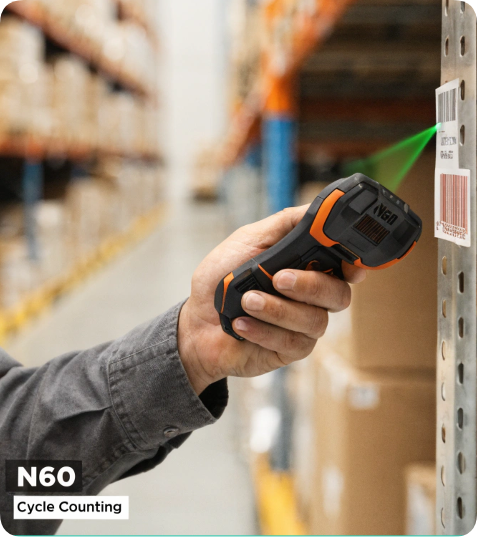
Let us start with the most common role in any warehouse: the inventory cycle counter. This worker walks aisles all day, scanning shelf barcodes, verifying quantities, and reconciling discrepancies. They need a device that disappears in the hand, not one that feels like a brick by hour three. The N60 Inventory Management PDA is purpose-built for exactly this role. It runs Android OS, which means your existing WMS apps will work without custom development. The compact form factor lets operators hold it in one hand while scanning with the other, and the ergonomic grip reduces fatigue during eight-hour shifts.
Where this device excels is straightforward: standard dry warehouse environments with good lighting and organized racking. The barcode scanner is reliable for all common 1D and 2D symbologies you will encounter in cycle counting. You can hand this to a seasonal temp and have them productive in ten minutes. The N60 is also the most budget-friendly option in the Hotus lineup, so you can deploy them across a team without blowing your annual CAPEX.
But here is the honest truth about where you outgrow the N60. If your operation moves into cold storage, the standard battery will struggle in freezer conditions. If you start needing RFID reads for pallet-level tracking, this device does not have integrated RFID. And if your warehouse has multiple zones requiring both scanning and data logging with hot-swappable batteries, you will want something more rugged. I deployed N60 units at a third-party logistics client doing e-commerce fulfillment. They worked beautifully for shelf-level cycle counting in the forward pick area, but when the client expanded into bulk pallet storage with RFID tagging, we had to upgrade the receiving team to a different tier.
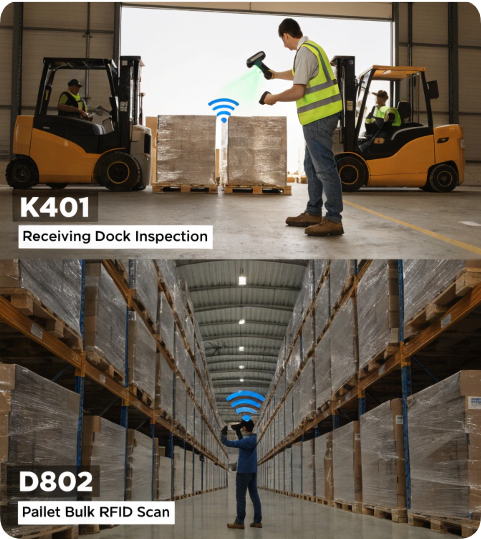
Move up one tier, and you enter the sweet spot for most mid-size warehouses: the K401 Handheld PDA. This device is what I call the "Swiss Army knife" of industrial handhelds. It handles receiving, putaway, picking, and shipping without breaking a sweat. The K401 runs Android 13, so you get the latest OS security patches and app compatibility. But the real story is the integrated RFID reader paired with a barcode scanner in one device. Your receiving team can scan a barcode on the purchase order, then immediately read the RFID tag on the pallet — all from the same handheld.
The K401 is MIL-STD-810G certified and IP68 rated. In plain English: it survives drops from five feet onto concrete, and it keeps working after being submerged in water. I have seen these devices fall off forklifts, get kicked down aisles, and still boot up. The hot-swappable battery is a game-changer for multi-shift operations. When the first shift hands off to second shift, they swap batteries in under ten seconds. No downtime, no waiting for charging cradles.
You will outgrow the K401 when your operation scales into high-volume logistics hubs where you need to read hundreds of RFID tags from a distance of ten meters or more. The K401 reads RFID at a respectable range, but it is not designed for bulk pallet scanning across an entire rack row. I deployed K401 units at a mid-size grocery distributor doing cross-dock operations. The receiving team used them to scan inbound pallet barcodes and verify RFID tags. Pickers used them for case-level picking. The devices handled the abuse of a busy dock environment for three years before we needed to replace batteries.
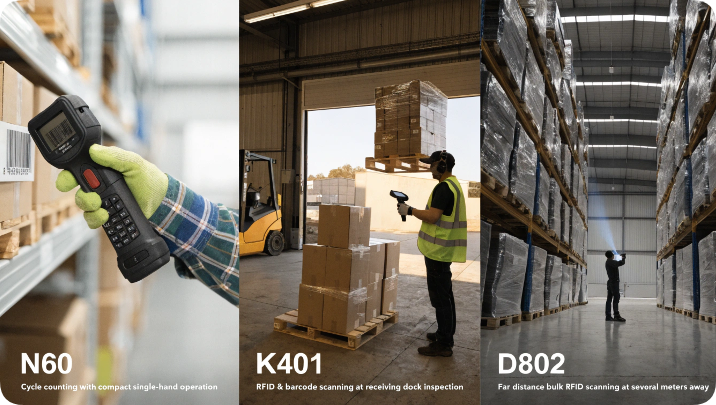
Now we enter the heavyweights. The D802 RFID Industrial PDA is not for the casual scanner. This device is built for logistics hubs, high-volume distribution centers, and any operation that tracks assets in bulk. The headline feature is the UHF RFID read range of up to 10 meters. Your operator can stand at the end of a pallet rack aisle, wave the D802, and read every tag on every pallet in that bay simultaneously. We are talking about reading fifty or more tags in a single pass. This capability transforms inventory accuracy from a periodic chore into a continuous, real-time process.
The D802 is built for the worst conditions you can throw at it. The large battery keeps the RFID reader powered through a full shift of continuous scanning. I have used these devices in freezer warehouses at minus twenty degrees Fahrenheit, in dusty grain storage facilities, and on outdoor lumber yards. The D802 does not care about the environment. It cares about getting the read. The integrated barcode scanner is still there for when you need to scan a single label, but the RFID capability is the star of the show.
Where do you outgrow the D802? Honestly, most operations never will. If you are running a regional distribution center with fifty thousand pallet positions, this device will handle everything you need. The only scenario where I have seen companies move beyond the D802 is when they need fully automated fixed RFID readers at dock doors or conveyor systems. For handheld operations, the D802 is the ceiling. I deployed D802 units at an automotive parts DC that ships to dealerships across five states. The receiving team used them to scan inbound pallets from the staging area ten meters away. The cycle counting team walked the racks and completed a full inventory in under four hours — a process that previously took two days with barcode-only scanners.
Here is the comparison table I use when consulting with warehouse managers. It cuts through the marketing noise and shows you exactly what each device delivers.
| Specification | N60 Inventory Management PDA | K401 Handheld PDA | D802 RFID Industrial PDA |
|---|---|---|---|
| Scanning Type | 1D/2D Barcode | 1D/2D Barcode + Image Capture | 1D/2D Barcode + Long-Range UHF RFID |
| RFID Capability | None (barcode only) | Integrated HF/UHF RFID (short to medium range) | UHF RFID up to 10m read range, multi-tag simultaneous |
| IP Rating | IP65 (dust and water resistant) | IP68 (fully waterproof and dustproof) | IP68 (fully waterproof and dustproof) |
| Battery Capacity | Standard 4000mAh | Hot-swappable 5000mAh | Large 8000mAh (hot-swappable) |
| Drop Spec | 1.2m (4 ft) to concrete | 1.8m (6 ft) MIL-STD-810G | 2.0m (6.5 ft) MIL-STD-810G |
| OS | Android | Android 13 | Android 13 |
| Best For | Cycle counting, shelf scanning, standard dry warehouses | Receiving, putaway, picking, shipping in mid-size warehouses | Bulk asset tracking, pallet-level inventory, high-volume logistics hubs |
Here is the practical advice I give every warehouse manager I work with. Stop looking at device specs first. Start by mapping your workflow zones. Walk your facility and ask three questions for each zone: What is the primary scanning task? How far away are the tags or barcodes? What environmental conditions does the device face? If your cycle counters are scanning shelf labels at arm's length in a dry warehouse, the N60 is your device. If your receiving team needs to scan barcodes and read RFID tags on pallets while working near a loading dock with dust and moisture, the K401 is the right call. If you are doing bulk pallet inventory across tall racking and need to read fifty tags from ten meters away in a freezer or dusty environment, do not waste money on anything less than the D802.
I have seen too many operations buy the most expensive device for every worker because they think "rugged" means "universal." It does not. You will end up with cycle counters complaining about heavy devices they do not need, while your bulk asset tracking team struggles with short-range readers that cannot handle the job. Match the tool to the task. Hotus Technology has built a tiered lineup that covers the full spectrum. Your job is to be honest about what each zone actually requires. Do the audit, pick the right tier, and watch your operational efficiency climb while your equipment costs drop.