The $1.19 Trillion 6G Market by 2035: How Hotus SH6 Windows Handhelds and ST13-J Rugged Tablets Enable the Low-Altitude Economy & Autonomous Drone Operations
By HOTUS Technology | Aerospace & Industrial Communications Division
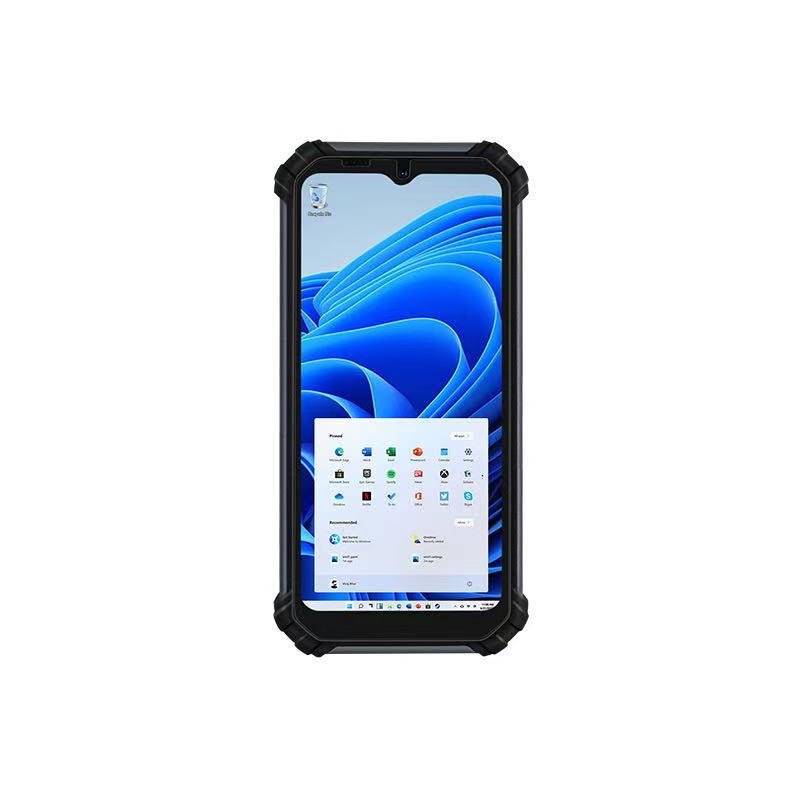
Hotus SH6 — Professional Windows Rugged Handheld for BVLOS Drone Fleet Management & Remote Control
Executive Summary & Market Projections
- Exponential 6G Market Growth: According to CCID Consulting, the global 6G market is projected to surge from $450 million in 2025 to $790 million in 2026, eventually reaching $119.17 billion by 2035.
- Low-Altitude Economy Boom: Unmanned aerial operations—including drone delivery, infrastructure inspection, urban air mobility (UAM), and precision agriculture—are expected to exceed a $140 billion market scale by 2030.
- BVLOS Infrastructure Demand: Scaling autonomous flight operations requires industrial-grade Ground Control Stations (GCS) capable of all-weather durability, high screen brightness, and native desktop software execution.
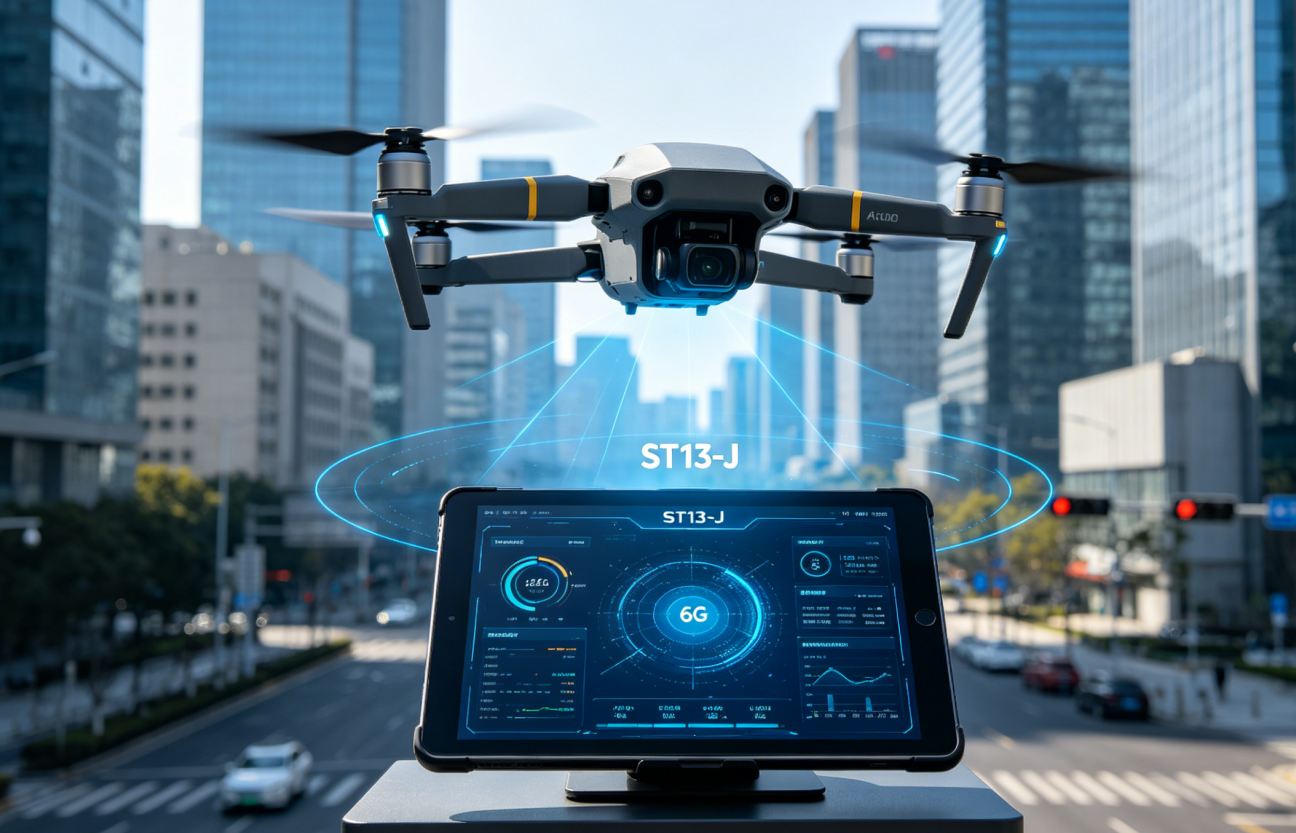
BVLOS Operations: The Tipping Point for Commercial Drone Adoption
The sky is rapidly transforming into the next frontier of global economic expansion. High-tech manufacturing investments in aerospace, embodied intelligence, and advanced electronics are leading industrial growth. The critical catalyst behind this shift is the rapid expansion of Beyond Visual Line of Sight (BVLOS) regulatory approvals.
BVLOS operations—where autonomous drones fly far beyond the operator's direct sightline—are essential for long-range missions like power grid monitoring, pipeline inspection, and medical logistics. Inspecting a 100-mile transmission corridor without BVLOS requires repositioning ground observers every few miles, destroying the ROI of automation. However, managing dozens of long-range BVLOS assets simultaneously demands ground control hardware far superior to fragile consumer smartphones and tablets.
Purpose-Built Ground Control Stations: Hotus SH6 & ST13-J
1. Hotus SH6 6.5″ Windows Rugged Handheld GCS
The SH6 is engineered specifically for field operators and drone pilots demanding full desktop capability in a ultra-portable form factor:
☀️ 1000+ Nits Direct Sunlight Display
Fully readable under intense midday sunlight, ensuring complete situational awareness during outdoor flight operations.
💻 Native Windows 11 Pro OS
Runs enterprise flight planning and mapping software (UgCS, Pix4Dcapture, Mission Planner, DJI Pilot 2) without compromises.
🛡️ IP67 All-Weather Sealing
Fully sealed against heavy dust, rain, and snow; ruggedized housing withstands industrial drop impacts.
🔋 Hot-Swappable Battery System
replace depleted batteries in seconds without shutting down the OS or losing connection to active flight telemetry.
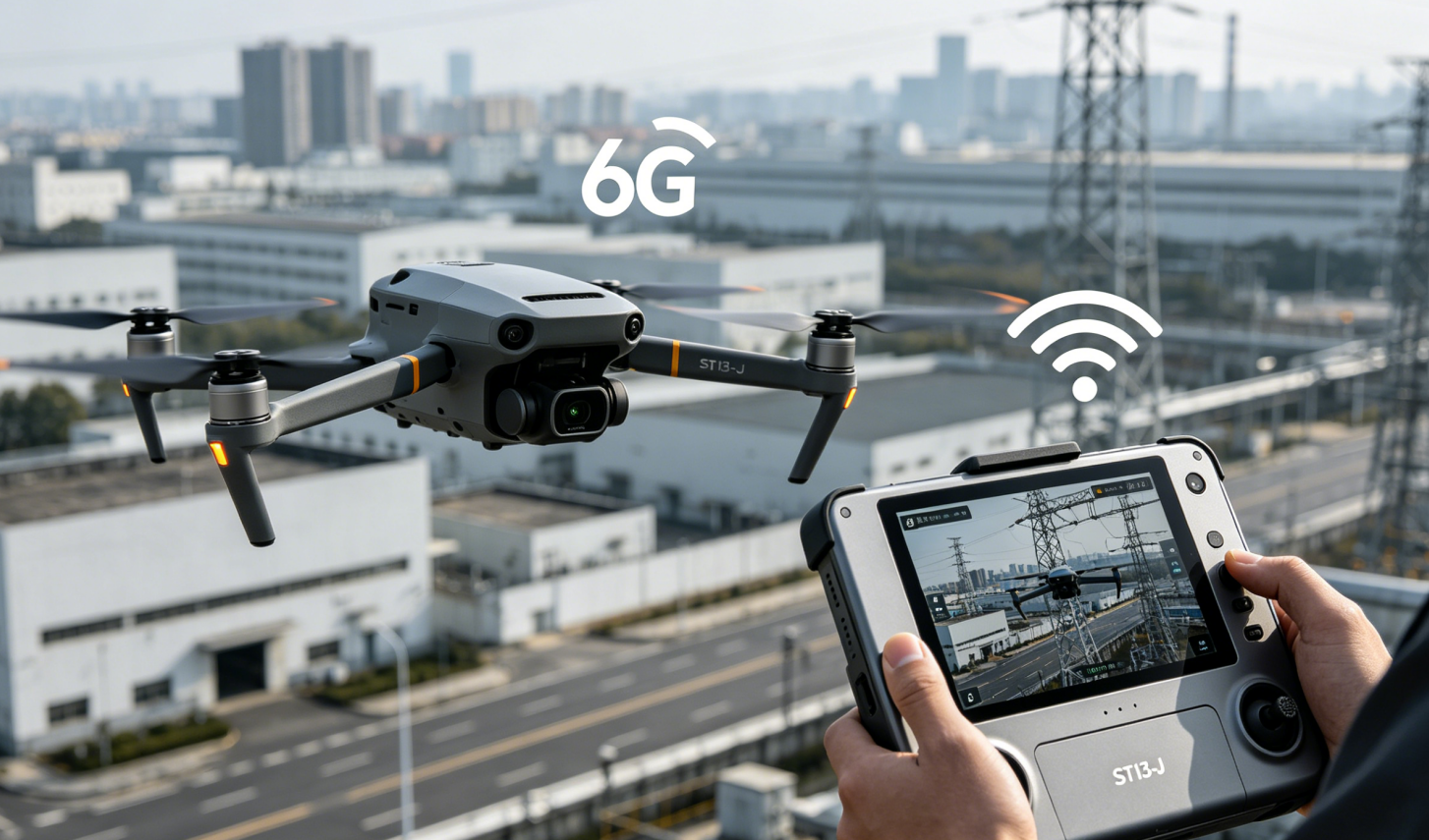
2. Hotus ST13-J 13.3″ Windows Rugged Fleet Command Tablet
Designed as a mobile command station for mission controllers overseeing multiple autonomous drones across vast airspace:
- Multi-Stream Video Display: Large 13.3-inch display handles multiple split-screen HD video feeds, GIS spatial mapping, and telemetry windows concurrently.
- Vehicle-Mountable Infrastructure: Quickly docks into mobile command vehicles, emergency response trucks, or marine vessels for instant field deployment.
- Extended Uninterrupted Operation: Hot-swappable dual battery architecture ensures continuous 24/7 power for round-the-clock security and disaster relief operations.
The Convergence of 6G Networks and Next-Gen Drone Operations
As telecommunications transition toward 6G architecture, drone operations will unlock unprecedented capabilities: sub-millisecond latency, space-air-ground integrated networks (SAGIN), and ubiquitous connectivity. Key advancements will include:
- Ultra-Low Latency Remote Piloting: Direct line control of distant aerial assets from thousands of miles away with zero perceived delay.
- Autonomous Swarm Coordination: Hundreds of drones communicating via 6G network slicing to perform coordinated search-and-rescue or agricultural tasks.
- Real-Time Airspace Deconfliction: AI edge nodes automatically reroute flight paths mid-air to eliminate collision risks without human intervention.
While 6G technology continues its global rollout, today's BVLOS operations rely heavily on robust 4G LTE, 5G NR, and satellite backhaul connections—all natively supported by Hotus SH6 and ST13-J rugged devices.
Case Study: Electric Utility Deploys BVLOS Drone Inspection
A major power utility managing 10,000 miles of high-voltage transmission lines equipped its field teams with 40 Hotus SH6 handhelds and 15 ST13-J command tablets to transition from helicopter patrols to automated BVLOS drone inspections.
| Performance Metric | Legacy Method (Helicopter) | HOTUS BVLOS Deployment | Impact |
|---|---|---|---|
| Inspection Speed per Mile | 8 Hours | 45 Minutes | 91% Time Reduction |
| Defect Detection Accuracy | 72% (Visual observation) | 98% (AI Vision + SH6 sync) | +26% Detection Rate |
| Maintenance Planning Lead Time | 6 Weeks | 3 Days | 92% Faster Workflow |
| Field Hardware Failure Rate | 42% (Consumer tablets) | 3% (HOTUS IP67 Hardware) | 93% Failure Reduction |
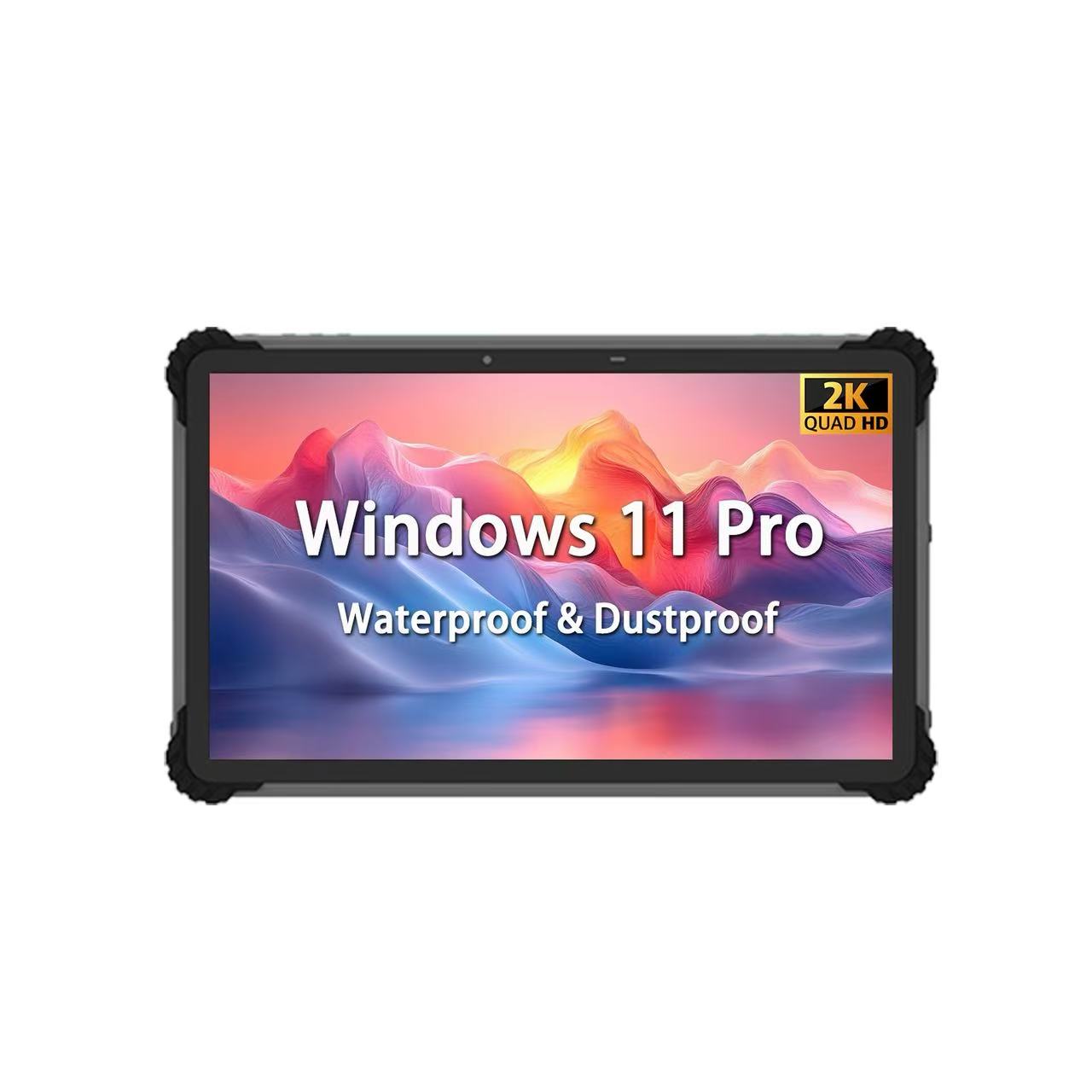
Hotus ST13-J — 13.3″ High-Performance Windows Rugged Tablet for Mobile Drone Command Centers
Frequently Asked Questions (FAQ)
Q1: Why is Windows 11 Pro preferred over Android for industrial BVLOS drone control?
Professional flight planning tools, GIS survey software, and enterprise CAD/CMMS integrations are built natively for x86 Windows platforms. Running Windows 11 Pro on the SH6 and ST13-J eliminates software emulation errors and provides direct hardware peripheral support.
Q2: Can the Hotus SH6 display remain readable in harsh ambient outdoor lighting?
Yes, the SH6 features an ultra-bright 1000+ nits display with anti-glare treatment, specifically optical-bonded to prevent reflections under direct sunlight during field operations.