
Bedside accuracy – HOTUS rugged PDA streamlines medication administration
By HOTUS Technology | April 2026
Healthcare is undergoing a fundamental shift toward point-of-care documentation. The days of paper charts, handwritten medication records, and delayed data entry are ending. Today's hospitals and clinics are equipping nurses and clinicians with rugged PDAs and medical-grade tablets to capture information at the bedside – improving accuracy, saving time, and enhancing patient safety.
The Cost of Outdated Workflows
Studies consistently show that manual medication administration errors occur in 5-10% of doses in hospitals without barcode verification. A single medication error can cost a hospital $5,000-$10,000 in additional care – not to mention the risk to patient safety and potential legal liability.
Beyond medication safety, inefficient documentation workflows consume nursing time that should be spent on patient care. Research indicates that nurses spend up to 35% of their shift on documentation – time taken away from direct patient interaction.
A rugged PDA with integrated barcode scanning addresses both problems simultaneously.
The Five Rights of Medication Administration – Digitally Enforced
The "Five Rights" are the foundation of medication safety:
- Right Patient
- Right Drug
- Right Dose
- Right Route
- Right Time
A barcode-enabled rugged PDA enforces all five rights electronically. The nurse scans the patient's wristband, scans the medication barcode, and the PDA immediately verifies:
- Is this the correct medication for this patient?
- Is the dose appropriate?
- Is it the right time based on the medication schedule?
- Any allergies or drug interactions to flag?
If any check fails, the PDA alerts the nurse immediately – preventing errors before they reach the patient. Hospitals implementing barcode medication administration (BCMA) typically see 40-80% reduction in medication errors.

Mobile patient records – HOTUS medical tablet puts data at clinicians' fingertips
Beyond Medication: The Medical Tablet Advantage
While PDAs excel at scanning and quick data entry, medical-grade tablets provide a larger canvas for:
- Electronic health record (EHR) access – View complete patient histories at bedside
- Telemedicine consultations – High-quality video with remote specialists
- Diagnostic image viewing – Review X-rays, CT scans, and lab results
- Patient education – Show diagrams, videos, and discharge instructions
- Physician rounding – Update notes, order tests, prescribe medications
Medical tablets differ from consumer tablets in critical ways:
- Cleanable housings – Withstand frequent disinfection with hospital-grade cleaners
- Sealed ports and buttons – No crevices for bacteria to hide
- Drop protection – Survive drops onto hard hospital floors
- Long battery life – 8-12 hour shifts without recharging
- Hot-swappable batteries – Continuous operation across shifts
Recommended HOTUS Solutions for Healthcare
HOTUS Rugged PDA Series for Healthcare – Medical-grade housing cleanable with disinfectants, integrated high-performance barcode scanner (1D/2D), long-range scanning up to 15 feet, and HIPAA-compliant security features. Optional glove-compatible touchscreen for use with medical gloves.
HOTUS Medical Tablet Series – 8-inch or 10-inch display, IP67 rating for complete disinfection, antimicrobial housing option, and integration with major EHR platforms (Epic, Cerner, Meditech). Hot-swappable battery for 24/7 operation.
Real-World Impact: Hospital Case Study
A 400-bed community hospital implemented 200 rugged PDAs and 50 medical tablets across nursing units and physician teams. Results after 12 months:
- Medication error reduction: 67% – From 124 to 41 preventable errors annually
- Nurse documentation time: Reduced by 45 minutes per shift – Equivalent to 4+ additional hours per nurse per week
- Patient satisfaction scores: Up 12% – More time with nurses at bedside
- Discharge instruction compliance: Up 35% – Patients received and understood written instructions
- ROI achieved in 11 months – From error reduction and efficiency gains
Infection Control: A Critical Feature
Healthcare environments demand rigorous infection prevention. Consumer devices cannot withstand the repeated cleaning required in clinical settings. HOTUS healthcare devices feature:
- IP67-rated sealed housings – No liquid ingress during disinfection
- Chemical-resistant materials – Withstand bleach, alcohol, and quaternary ammonium wipes
- Sealed buttons and ports – No crevices for microbial growth
- Smooth, non-porous surfaces – Easy to clean thoroughly
This durability means devices remain in service longer – and don't become infection vectors.

Connected care – HOTUS devices keep healthcare teams coordinated
Beyond the Hospital: Ambulatory and Home Healthcare
Mobile healthcare extends far beyond hospital walls. Home health nurses, hospice workers, and visiting physicians face unique challenges: unreliable internet, long drives between patients, and the need to document care in real-time.
For these professionals, a rugged PDA or tablet with 4G LTE connectivity is essential. Features that matter in the field:
- GPS for navigation and visit verification – Document arrival and departure times
- Offline data collection – Work without cellular, sync automatically when back in range
- High-capacity battery – 10-12 hours for full day of home visits
- Sunlight-readable display – View charts and schedules outdoors
- Integrated camera – Document wound care, medication packaging, living conditions
Making the Business Case for Healthcare Mobility
For hospital administrators, the ROI calculation for rugged PDAs and medical tablets includes:
Direct savings: Reduced medication errors (avoided care costs), improved billing accuracy (better documentation = proper reimbursement), decreased length of stay (efficient care coordination).
Indirect savings: Lower IT support costs (fewer device failures), reduced nurse overtime (efficient documentation), improved staff retention (less frustration with technology).
Most healthcare organizations find that rugged medical devices pay for themselves within 12-18 months – and continue delivering savings for years.
Implementation Best Practices
Start with a pilot unit: Deploy 20-30 devices on one nursing unit before hospital-wide rollout.
Involve nurses in selection: Frontline clinicians know what features matter most.
Plan for charging infrastructure: Multi-bay charging stations at nursing stations.
Train on infection control: Proper cleaning procedures extend device life.
Integrate with EHR before deployment: Test barcode scanning and data sync thoroughly.
Getting Started with HOTUS Healthcare Solutions
HOTUS Technology offers pilot programs for healthcare organizations to test rugged PDAs and medical tablets in clinical settings before full deployment. OEM/ODM customization includes hospital branding, custom software images, and specialized accessory configurations.
Volume pricing and leasing options are available for healthcare systems ordering 100+ devices. We understand healthcare budgets and offer flexible acquisition models.
Your patients deserve the safety that technology enables. Your nurses deserve tools that support, not frustrate, their work. HOTUS healthcare mobility solutions deliver both.
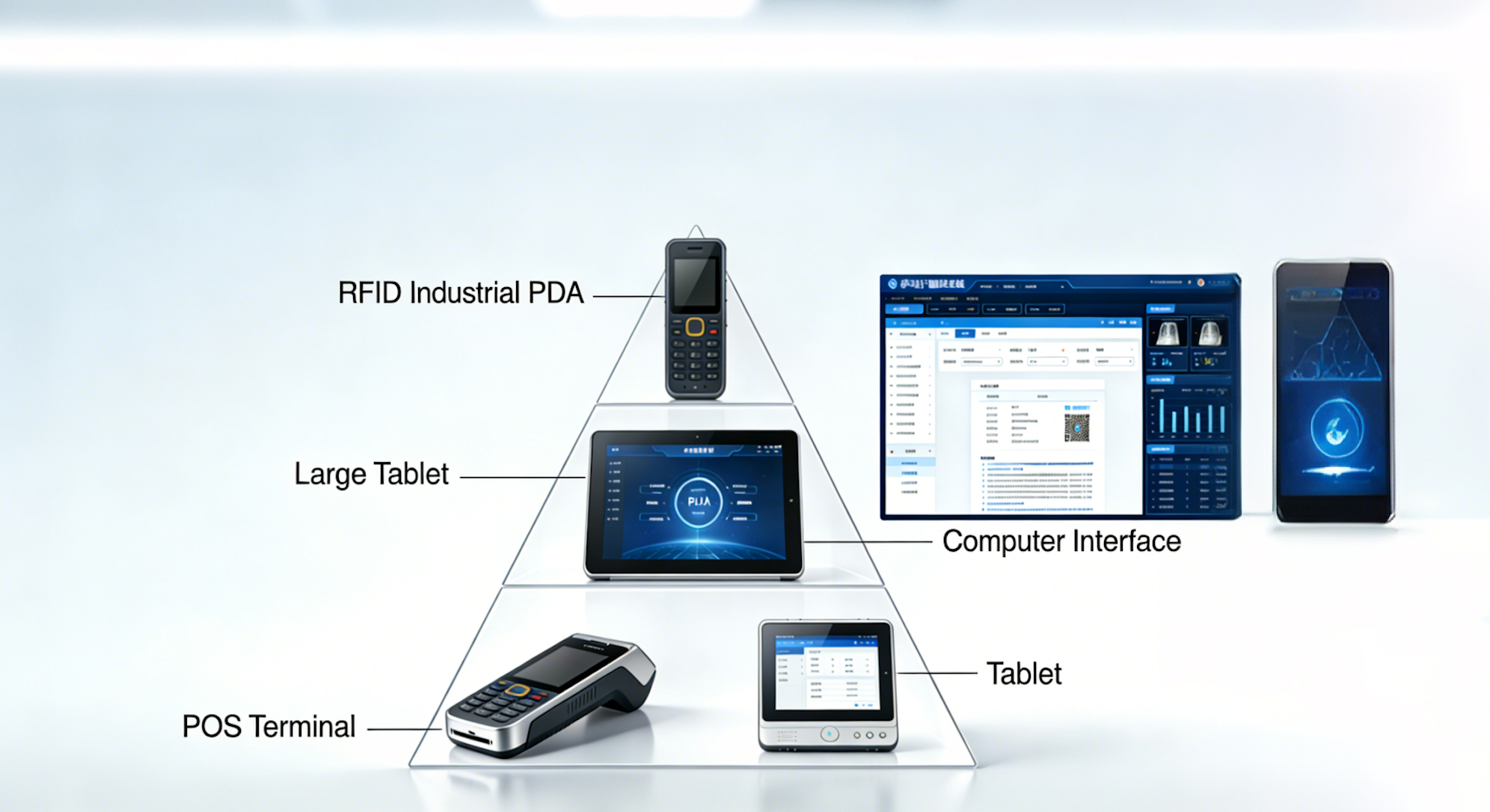
Complete mobility – HOTUS rugged PDA and medical tablet for healthcare
Contact HOTUS Technology to discuss your healthcare mobility needs, request pilot units, or explore clinical workflow solutions with rugged PDAs and medical tablets.