- Select Language
The N40 Android smart PDA features a Cortex-A53 qu...
RT82 5G Rugged Tablet | 10.1" FHD 400nit | Qu...
Full SpecificationsModel Hotus SH5‑WOperating ...
From the unknown so simpleUsed for mobile phones, ...
R366-S 5.5-inch Industrial PDA | Qualcomm Octa-cor...
Explore our customized PDA designed for versatile ...

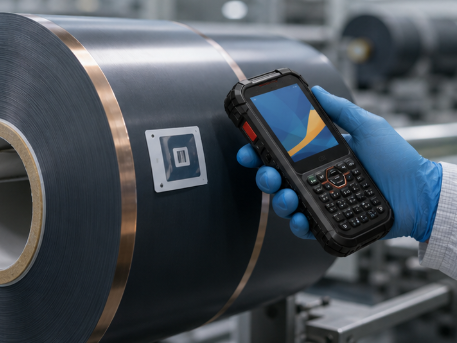
Fig 1 – Electrode coating inspection inside a dry room environment. Digital measurement tools capture micron-level data in real time, ensuring process stability across continuous production.
Manufacturing Insight: In solid-state battery production, precision is not optional. Minor deviations in coating thickness can propagate through the entire cell structure, making early detection and continuous monitoring essential.
By HOTUS Technology | Updated May 2026
Solid-state battery technology is advancing toward commercial-scale production, driven by demand for higher energy density and improved safety. Automotive, aerospace, and advanced electronics sectors are investing heavily in next-generation battery systems, accelerating the construction of pilot lines and gigafactories.
At the core of this transition lies a critical challenge: maintaining consistent electrode quality under extremely tight tolerances. Unlike conventional lithium-ion manufacturing, solid-state processes demand far stricter control over coating uniformity and material distribution.
Electrode coating directly impacts battery performance and safety. Variations at the micron level can lead to:
In continuous roll-to-roll production, even small deviations can affect hundreds of meters of material before being detected if monitoring is not real-time.
Traditional quality control methods rely heavily on manual sampling and paper-based records. These approaches are no longer sufficient for high-throughput manufacturing environments.
As production speeds increase, manual recording becomes a bottleneck that limits both quality assurance and operational efficiency.
The Hotus F505 handheld PDA enables real-time data collection directly from measurement instruments. Designed for cleanroom use, it supports frequent sanitization and operates reliably in controlled environments.
Key capabilities include:
By capturing data at high frequency, the system provides full visibility into coating performance across the entire production run.
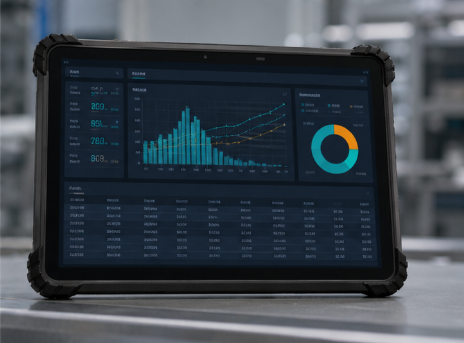
Fig 2 – Digital tracking of electrode rolls ensures full visibility into production history, from coating parameters to downstream processing.
The Hotus F502 RFID PDA provides end-to-end traceability of materials and production batches.
Each electrode roll can be linked to:
This structured data enables rapid root-cause analysis when defects are detected, minimizing waste and reducing investigation time.
The Hotus ST11-M rugged tablet acts as a real-time monitoring interface for supervisors and engineers.
Installed within the production area, it displays:
With a sealed, wipeable surface, the device meets cleanroom hygiene requirements while providing continuous access to critical production data.
Fig 3 – Live visualization of coating thickness distribution allows operators to detect and correct deviations before they impact downstream processes.
Implementing a digital QA system provides clear advantages:
Continuous monitoring transforms quality control from reactive inspection to proactive process management.
As solid-state battery production scales, maintaining consistent quality across high-speed manufacturing lines becomes increasingly complex. Digital inspection and data capture systems are essential to meet these demands.
By integrating rugged handheld devices and real-time monitoring tools, manufacturers can ensure that every layer, every measurement, and every batch meets the required standards.
Contact HOTUS Technology to explore cleanroom-ready data capture solutions, request pilot devices, and build a scalable quality control system for solid-state battery production.