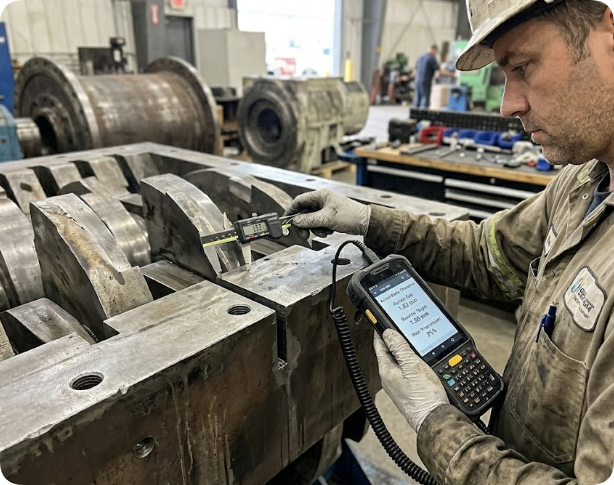
A maintenance technician measures blade gap on an e‑waste shredder using a HOTUS shock‑resistant PDA connected to a digital caliper.
The e‑waste recycling industry is booming, but shredder blade wear is the hidden cost. A blade gap that increases by 0.5 mm reduces throughput by 20% and increases energy consumption. The industry’s log is a manual caliper and a paper notebook – infrequent and inaccurate. You need a shock‑resistant Windows PDA with a Bluetooth caliper that logs gap measurements at multiple positions, flags wear trends, and predicts blade change dates. In e‑waste recycling, a dull blade is not a maintenance item – it‘s a profit eroder. Your tablet is the sharpener.
E‑Waste Shredder Blade Wear Is Accelerating – Your Gap Measurement Log Needs A Shock‑Resistant Windows PDA
By HOTUS Technology | May 2026 | 12 min read
The electronic waste recycling sector is experiencing unprecedented global expansion, with processing volumes now exceeding 50 million tonnes of obsolete hardware, discarded circuit boards, and end-of-life appliances annually. Extracting rare earth elements and precious metals requires aggressive primary size reduction. Industrial shredding plants deploy high-inertia, multi-axis hook systems or high-velocity rotary blades to fracture durable composite casings. This brutal mechanical processing places immense stress on the cutting edges. Due to constant contact with hardened steel fasteners, glass fibers, and ceramic components, localized friction causes immediate blade geometry degradation. As cutting edges dull, the critical clearance envelope separating adjacent knives expands, which severely degrades cutting performance, yields larger non-conforming scrap sizes, and increases electrical power costs per processed ton.
To maintain profitable operations and protect heavy downstream granulators from material jams, operators must monitor cutting tolerances. Processing facilities are moving away from manual logging tools and implementing field-ready industrial hardware. Maintenance teams now rely on a dedicated Rugged Tablets database or mobile data collector to log knife wear metrics on the factory floor.
Traditional maintenance tracking in recycling plants remains slow and reactive. Field mechanics typically measure rotor tolerances once a month during complete plant shutdowns. Using basic mechanical vernier scales, an inspector logs gap dimensions at a few accessible points along the rotor assembly and writes the values down in a paper logbook. This handwritten system fails to detect early wear patterns. A subtle, compounding clearance deviation of just 0.1 mm per operating week remains invisible to paper records, leaving management unaware of the problem until the machine suffers a severe drop in production or an unexpected motor overload.
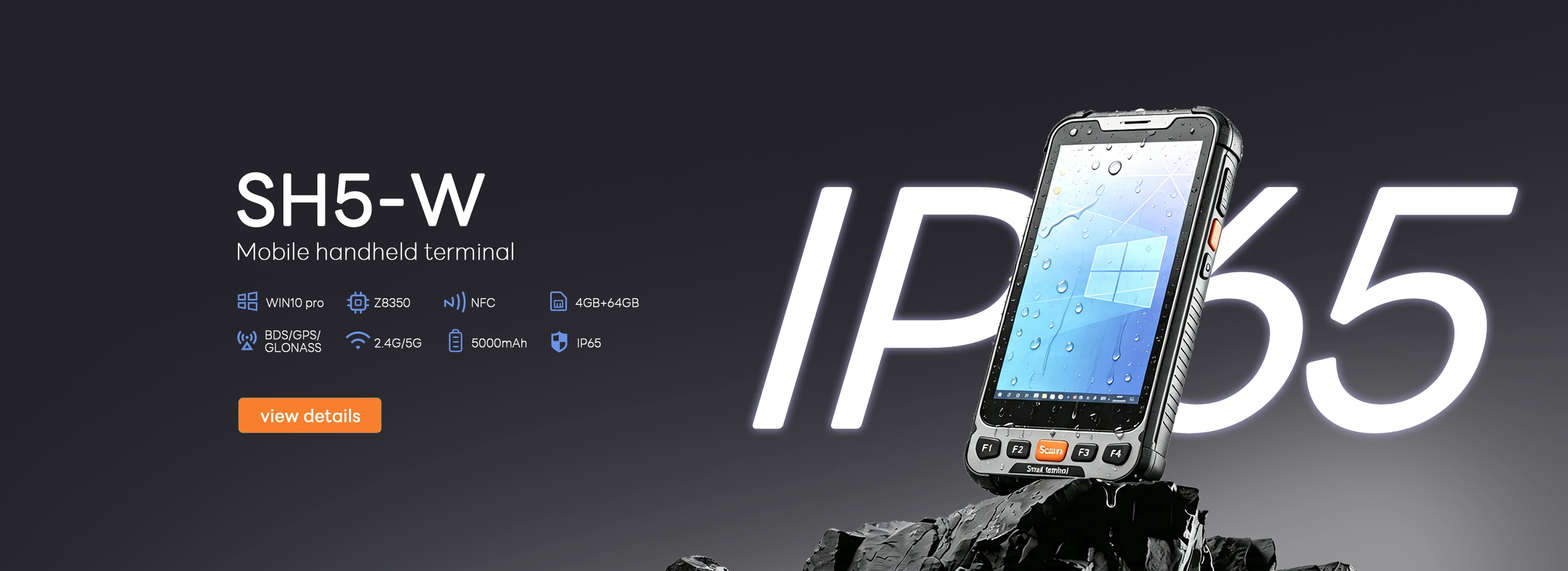
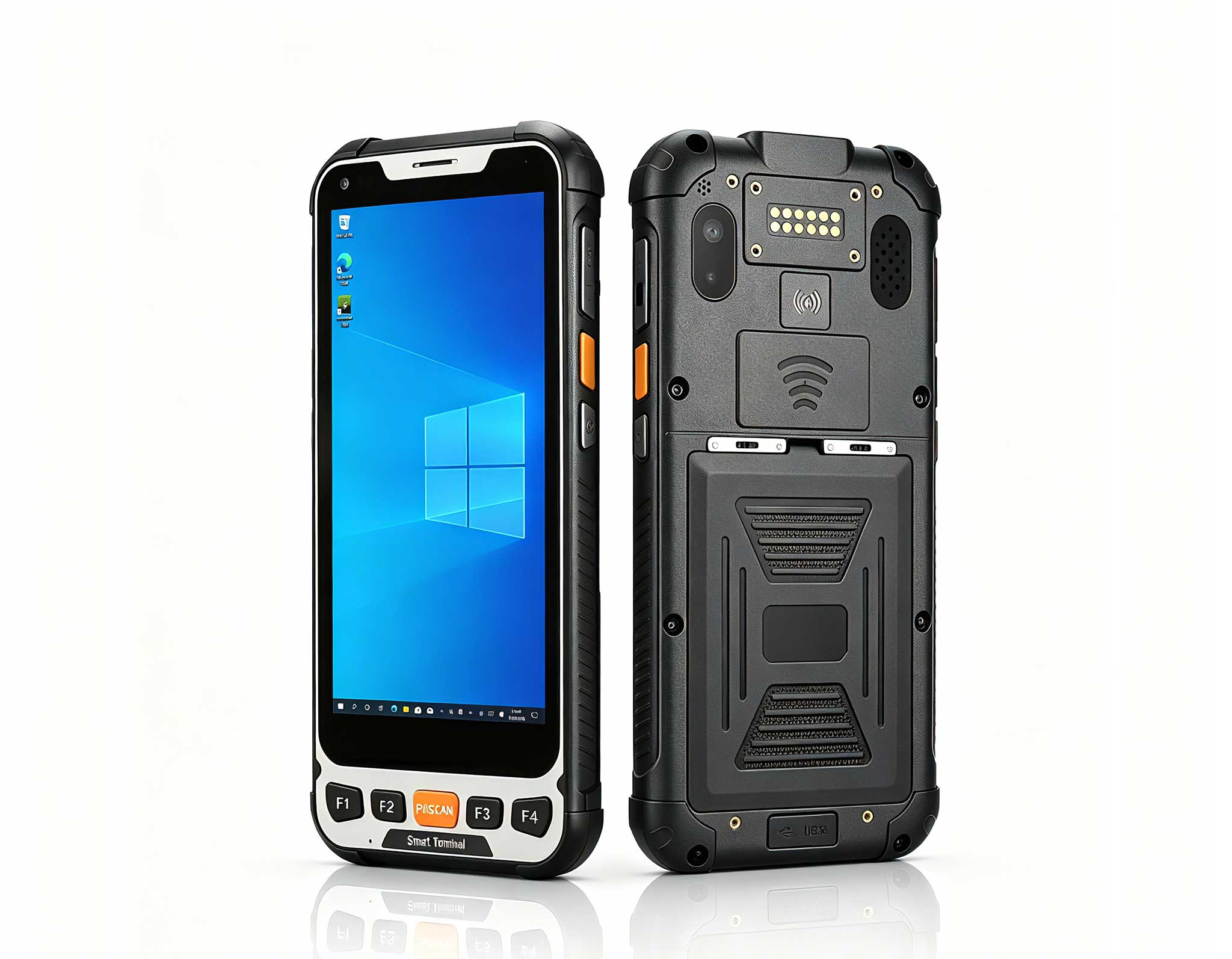
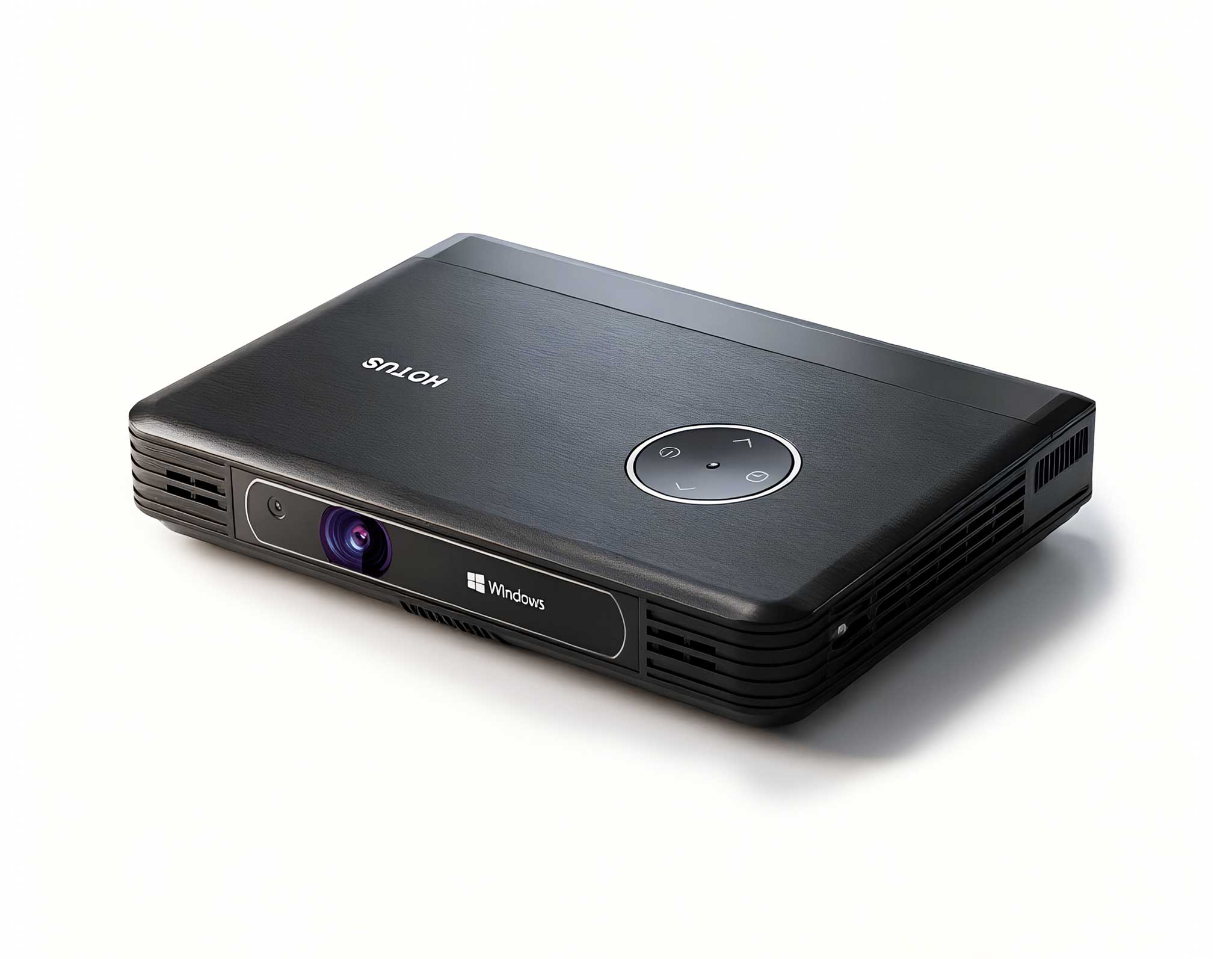
The rollout of the Hotus SH5‑W Windows rugged handheld solves this tracking problem in high-impact recycling environments. Engineered with rubberized drop protection and sealed against airborne conductive particulate matter, the SH5-W connects via encrypted Bluetooth to electronic digital calipers, transforming field data collection:
- It instantly records localized clearance measurements across fixed intervals along the entire rotor axis.
- It maps every measurement to a distinct physical knife position using asset tags or rotor slot indexes.
- It computes running mathematical averages alongside real-time maximum spatial variance values ($\Delta x$).
- It compares active clearance profiles directly against post-installation calibration specifications.
When average clearances expand by 20% beyond original limits, the handheld's integrated software alerts the maintenance team to schedule a blade flip or replacement. By analyzing current wear velocity against historical processing records, the device estimates remaining operational hours before efficiency declines. This predictive forecasting eliminates reliance on guesswork or arbitrary maintenance schedules.
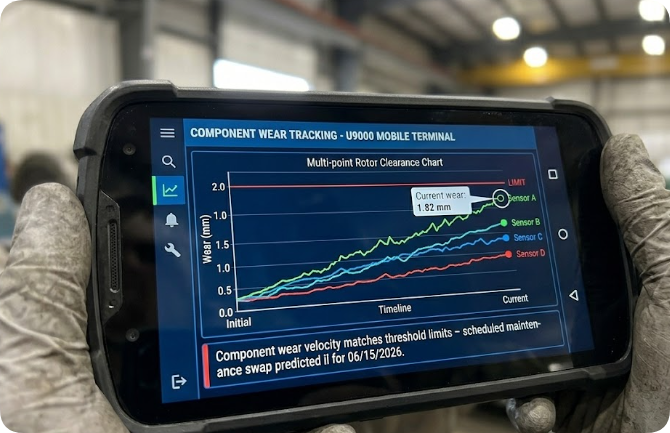
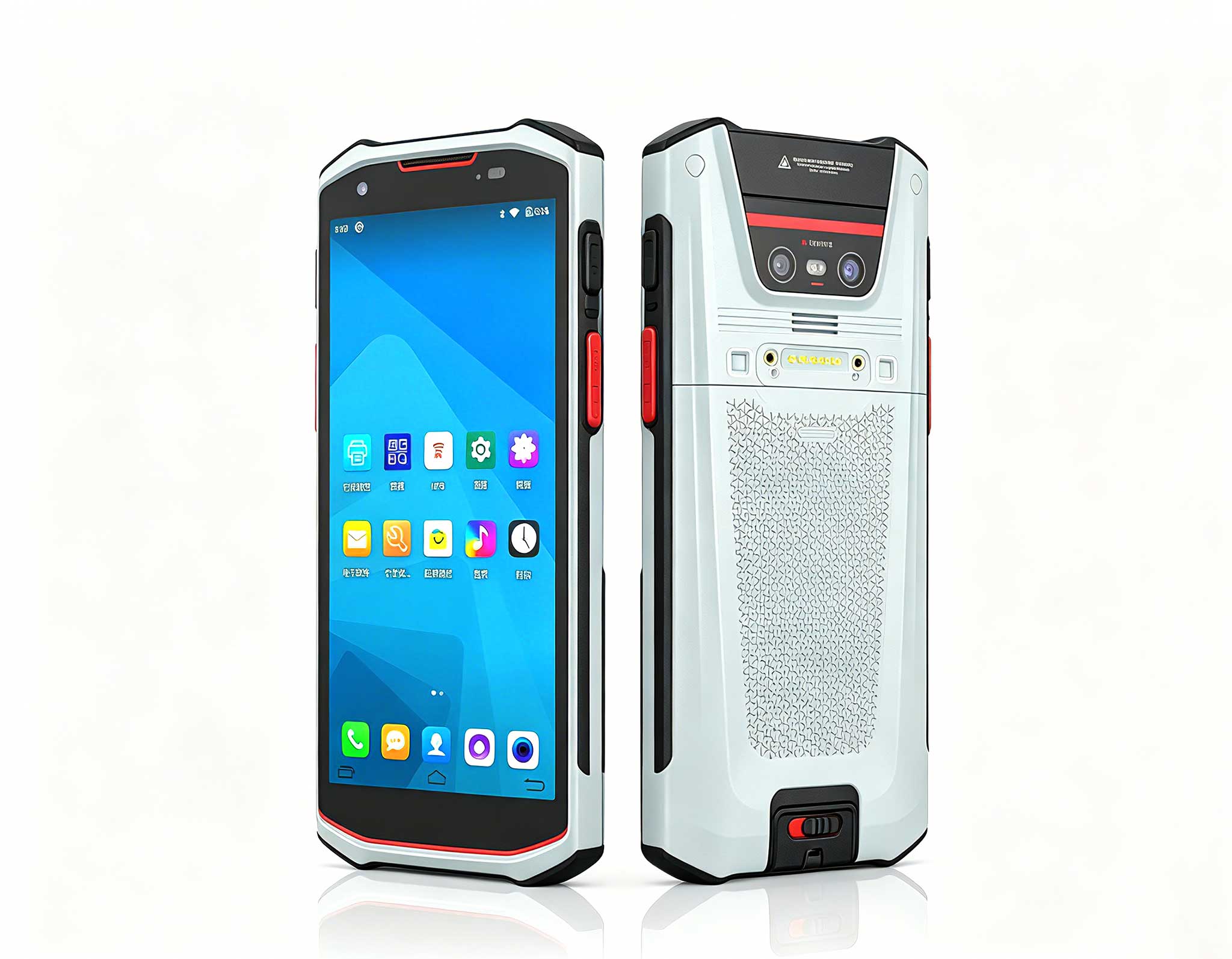
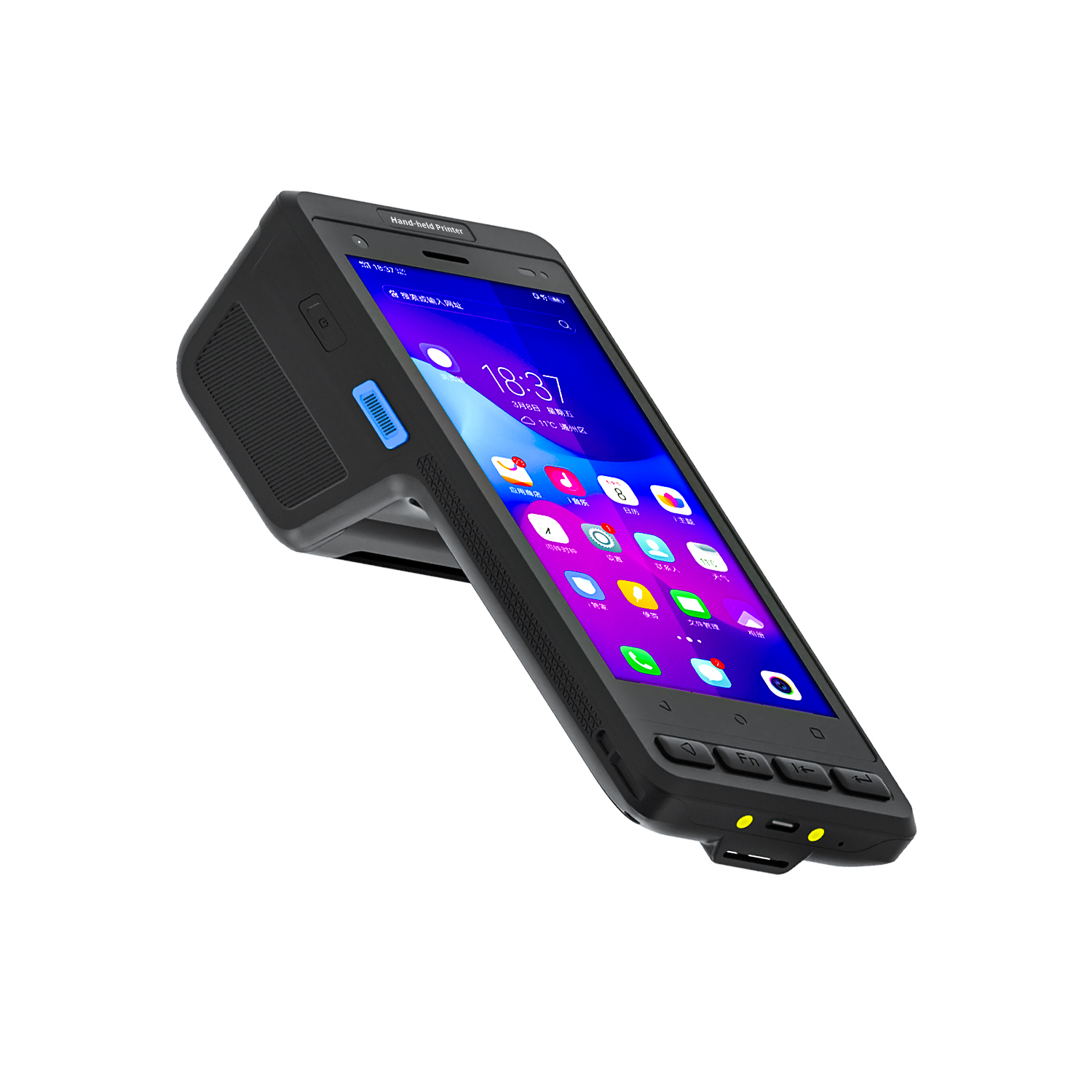
The U9000 PDA displays a trend graph of blade gap over time – a steady increase, now crossing the yellow threshold, recommending inspection.
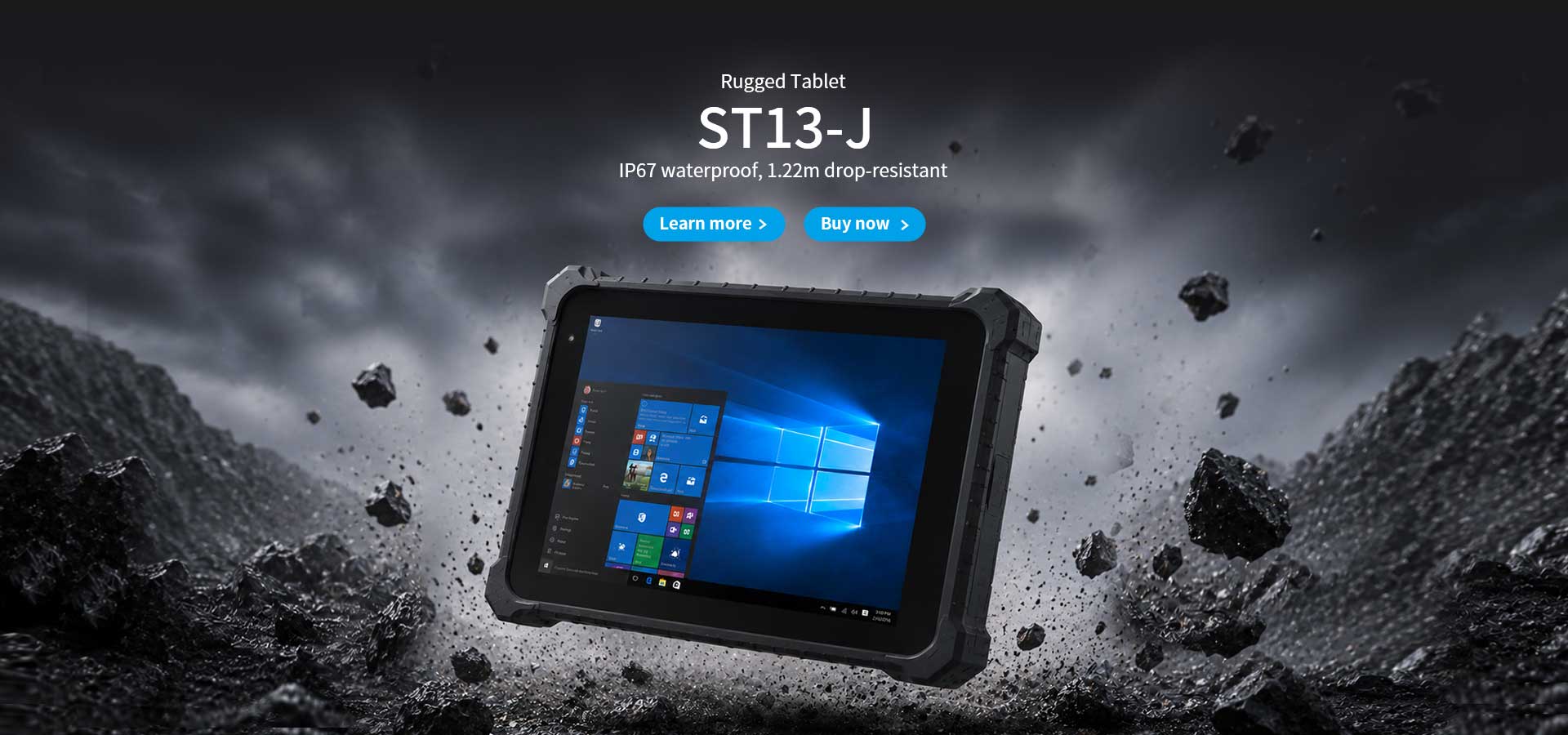
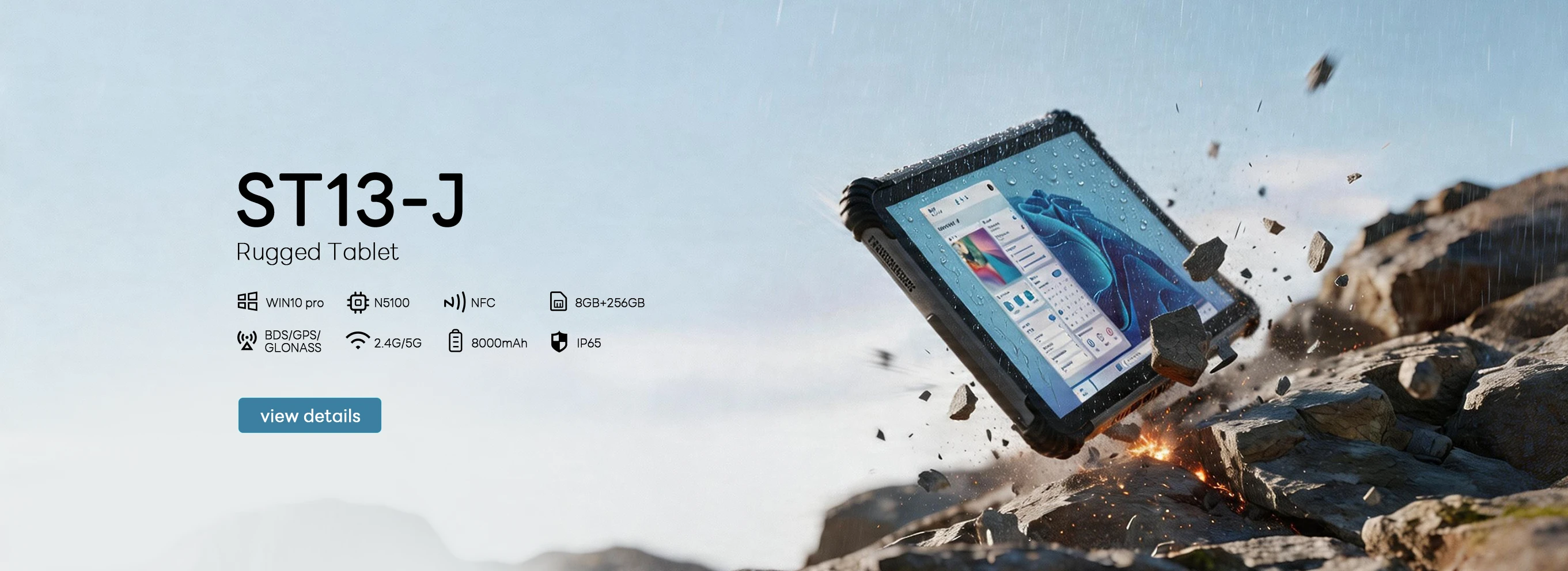
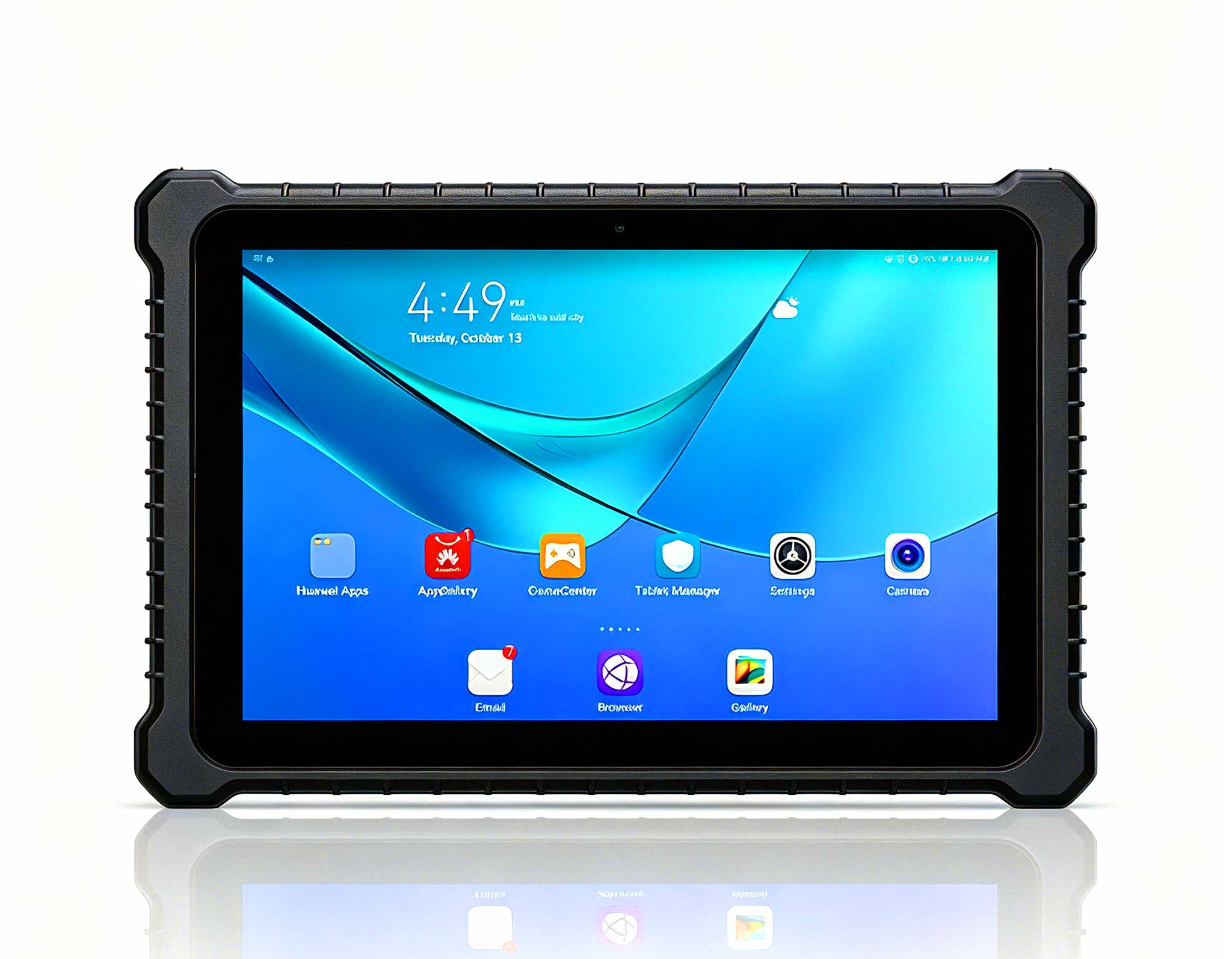
For large facilities with multiple production lines, the ultra-rugged Hotus ST13‑J 13.3″ Windows rugged tablet centralizes processing plant metrics. This enterprise system aggregates telemetry and clearance records from all online size-reduction machinery into an intuitive maintenance interface. When the system detects accelerated wear on a specific machine, it flags the unit and generates a work order for the upcoming shift, keeping maintenance ahead of component failure.
A commercial e-waste treatment facility operating four heavy-duty shredding units integrated this predictive technology into their workflow. The facility deployed twenty SH5-W digital inspection systems, twenty-five U9000 data collectors, and twelve ST13-J operations dashboards. Within the first year, the tracking data showed that two primary cutting lines were wearing out 30% faster than standard manufacturer projections. A deeper review revealed that incoming e-waste batches contained unusually high levels of dense server rack rails and thick structural alloys. Armed with this insight, engineers lowered rotor speeds and optimized the feed blending mix, which successfully extended total knife life by 25%. This optimization saved the facility over $150,000 in annual component costs and prevented two catastrophic rotor jams.
Cutting edge degradation is a gradual, measurable process that depends on material throughput and operating conditions. Traditional paper logs and simple manual calipers cannot forecast remaining component lifespan or track structural variations. This measurement gap is solved by an integrated Windows mobile platform featuring wireless instrument links, durable drop-tested hardware, and automated trend plotting. The SH5-W, U9000, and ST13-J provide recycling facilities with the precision measurement infrastructure required to maintain peak throughput. Protect your material size-reduction equipment from hidden wear and optimize your processing margins.
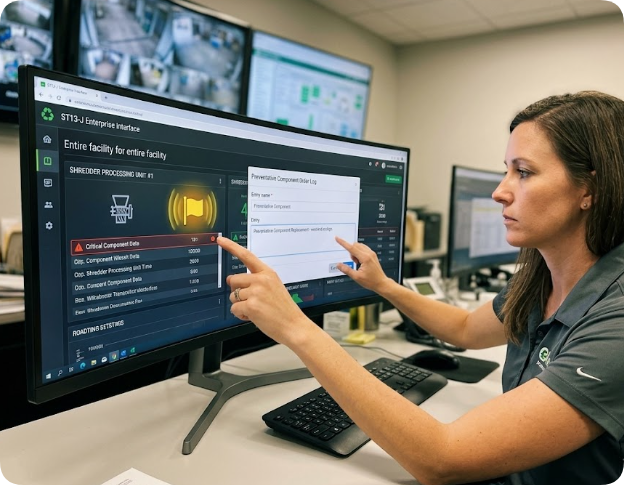
The ST13‑J dashboard displays blade gap status for four shredders – one flagged yellow, predicted blade change due in 2 weeks.
Ready to Digitize Your Shredder Wear Logs?
Contact HOTUS Technology today to speak with an industrial hardware expert, arrange a field evaluation for our SH5-W wireless diagnostic packages, or discover how our U9000 and ST13-J systems can optimize your plant maintenance schedules.
©2026 HOTUS Technology – Industrial Handheld Terminals, Shock-Resistant Processing Electronics.