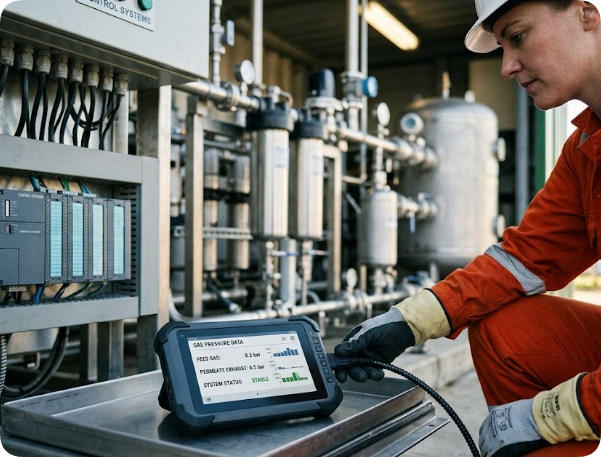
An operator uses a HOTUS chemical‑resistant tablet to log membrane pressures at a biogas upgrading plant.
Biogas upgrading membranes lose performance due to fouling and plasticization. The industry‘s log is a paper sheet and a pressure gauge reading – taken once a week. You need a chemical‑resistant Windows tablet that reads pressure, temperature, and flow rate every shift, calculates methane recovery efficiency, and alerts when efficiency drops below 95%. In biomethane, a membrane is not passive – it’s a profit center. Your tablet is the efficiency watchdog.
Biomethane Upgrader Membrane Performance Degrades Quickly – Your Pressure Log Needs A Chemical‑Resistant Windows Tablet
By HOTUS Technology | May 2026 | 11 min read
Biomethane production, also known as renewable natural gas (RNG) processing, has expanded rapidly as global energy infrastructures transition toward decarbonization. Upgrading raw, low-Btu biogas derived from anaerobic digesters requires a highly sophisticated separation setup to extract pipeline-quality fuel. Central to this process are membrane separation skids houses in heavy industrial processing yards. A typical operational skid contains thousands of highly specialized hollow-fiber polymer membranes arranged in parallel configurations. The raw feed gas matrix, typically containing roughly 60% methane ($CH_4$) and 40% carbon dioxide ($CO_2$), along with trace impurities, is compressed to high pressures. Under this differential force, smaller gas molecules like $CO_2$ rapidly permeate across the selective polymer skin, while the valuable $CH_4$ molecules are retained as high-purity retentate.
However, these intricate polymer barriers face immediate operational hazards. Raw biogas streams carry volatile contaminants that bypass initial scrubbing stages. Over time, these membranes inevitably accumulate trace layers of siloxanes, halogenated volatile organic compounds (VOCs), and aerosolized moisture particles. This accumulation leads to progressive membrane fouling, which reduces surface permeability, causes severe competitive plasticization, and causes methane recovery performance to drop from a baseline of 98% down to a wasteful 85% within months. To reverse this hidden revenue loss, modern renewable energy refiners are actively transitioning toward high-performance computing equipment. They use heavy-duty Rugged Tablets to build real-time field monitoring networks directly at the gas processing lines.
Traditional logging protocols at agricultural and municipal upgrading plants have long suffered from analytical lag. Operators frequently conduct visual system evaluations using basic analog pressure gauges mounted on the exterior metal skids. Plant personnel write these manual metrics onto a paper clipboard spreadsheet once a week, computing estimated gas slip statistics by hand during subsequent office shifts. This intermittent tracking routine fails to provide early visibility into gradual chemical fouling. If a sudden surge of hydrogen sulfide or water vapor reaches the polymer core, the resulting performance drop can remain completely unnoticed for days, resulting in thousands of cubic meters of valuable fuel escaping into the low-pressure waste stack.
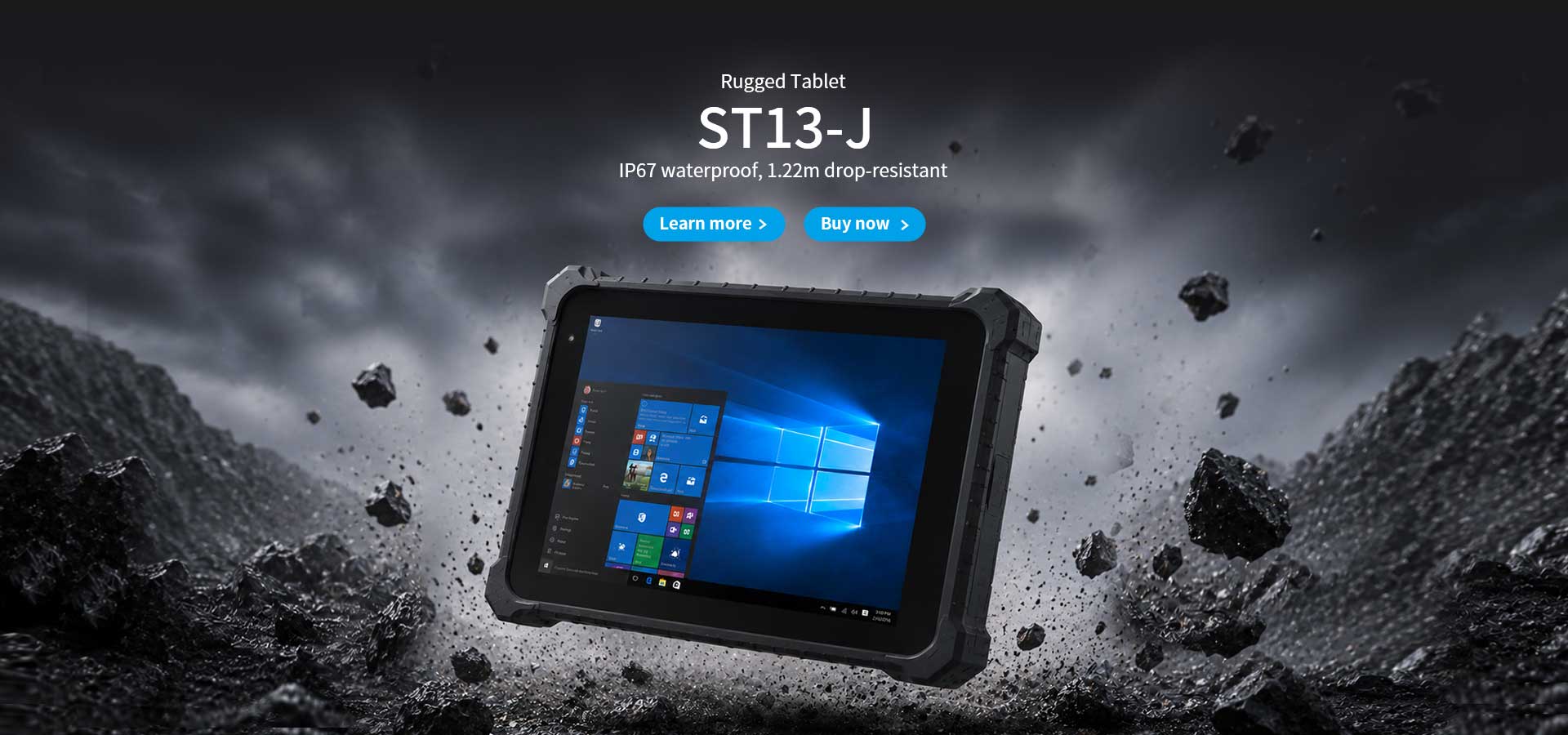
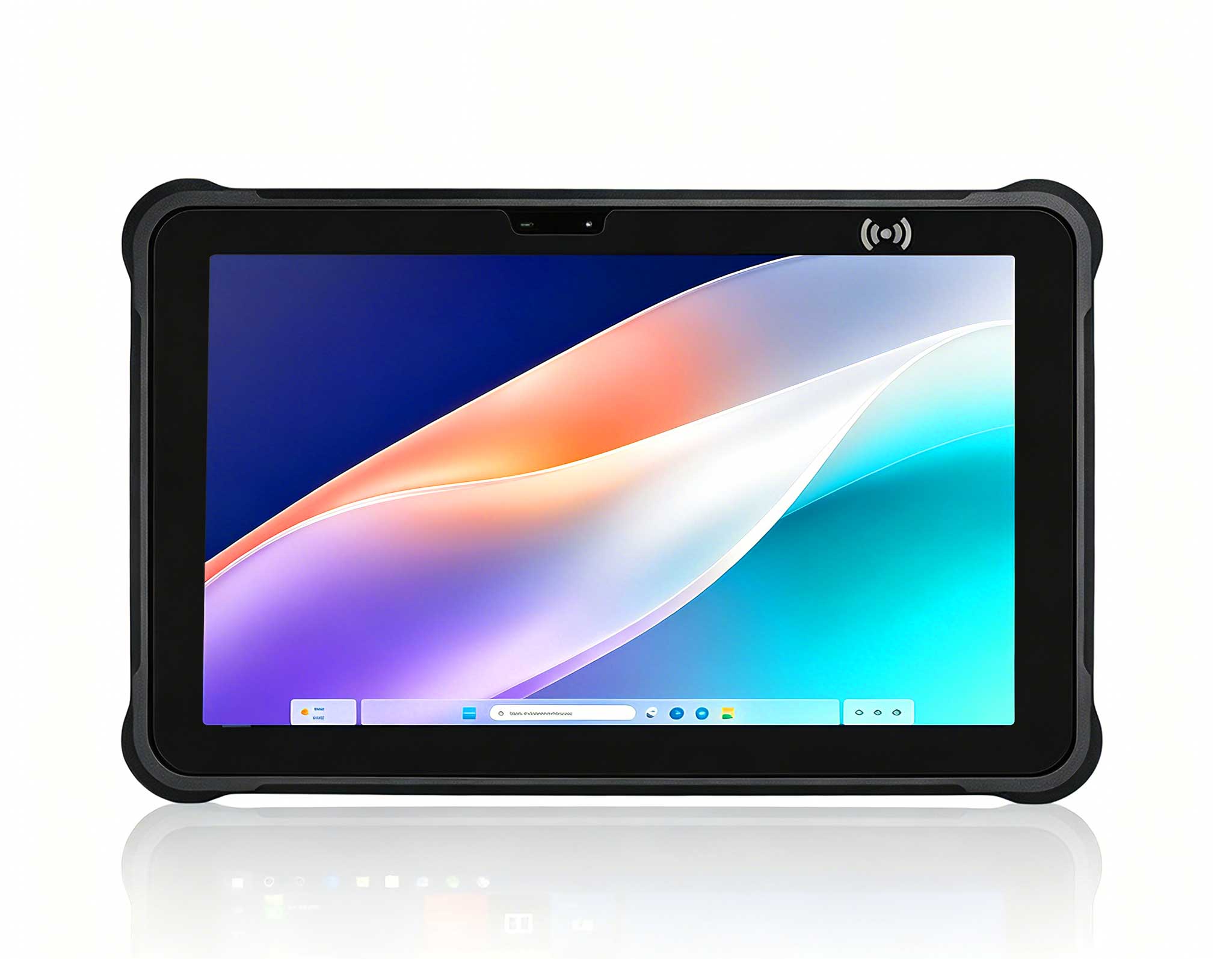
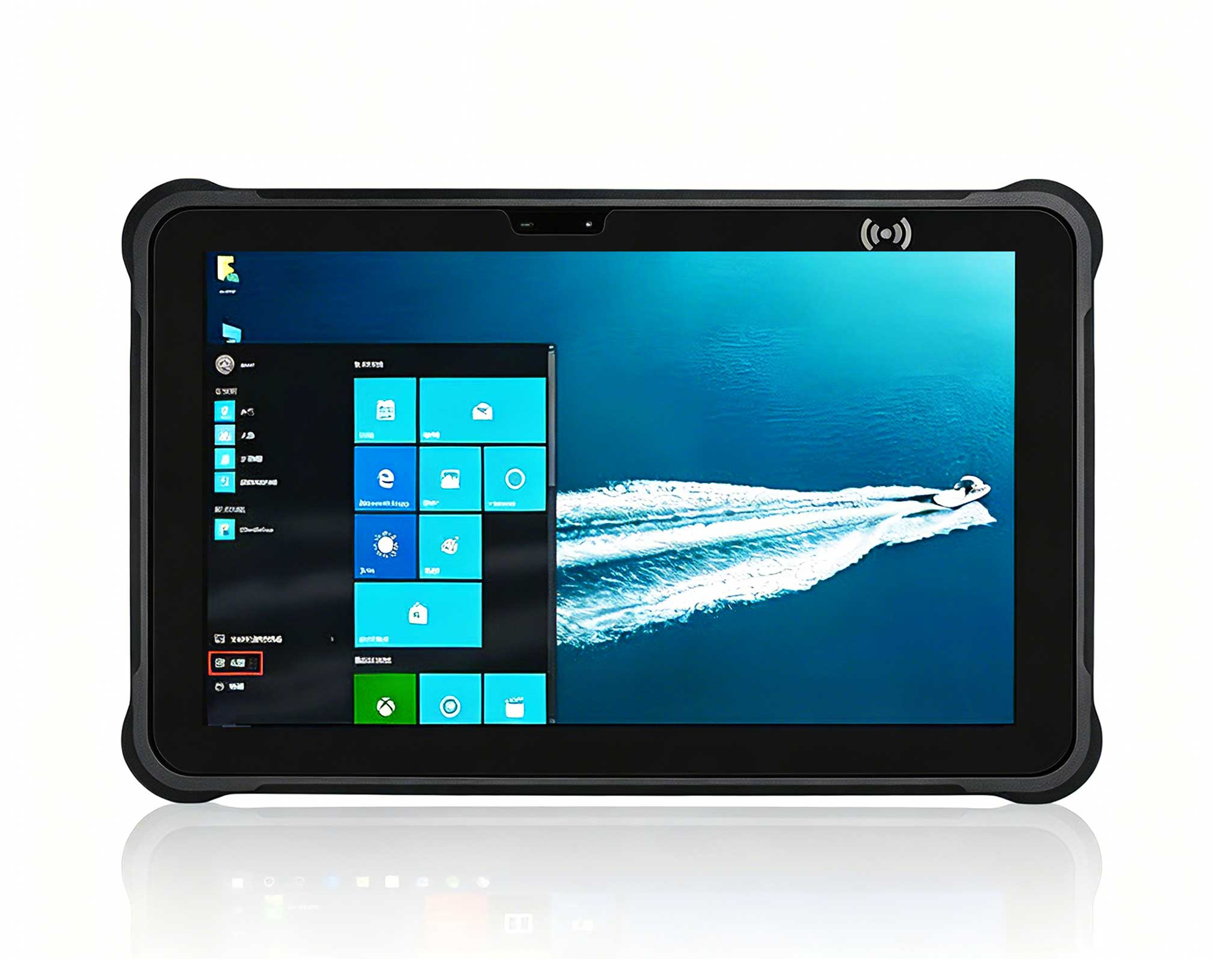
The adoption of the Hotus ST11‑M 10.1″ Windows rugged tablet delivers a robust digital solution tailored for highly corrosive gas upgrading plant environments. Outfitted with specialized anti-corrosive housing composites that resist degradation from airborne hydrogen sulfide ($H_2S$) and acidic vapors, the ST11-M establishes secure communication links with the skid's local PLC systems via industrial Modbus or isolated 4-20mA connections, processing key operational metrics:
- Feed gas arrival pressures and input temperature levels.
- Permeate exhaust pressures within the low-pressure sweep lines.
- Residue methane output volumes and real-time gas quality concentrations.
The field software running on the tablet processes this incoming sensor data to compute real-time methane recovery efficiency curves. Should separation efficiency cross below the critical 95% baseline, the ST11-M issues an automated alert directly across the local facility interface. This live reporting enables shift field technicians to immediately balance feed pressures or adjust counter-current gas sweep rates. By analyzing the tablet's on-board degradation logs, supervisors can accurately forecast fouling velocity and schedule preventative chemical back-flushing or heat-stripping operations before critical performance loss occurs.
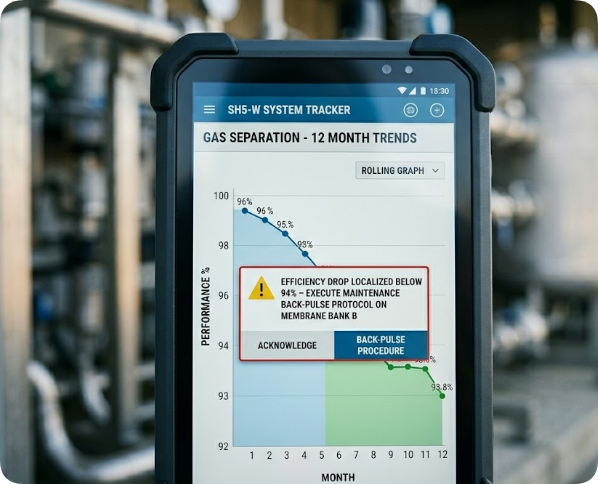
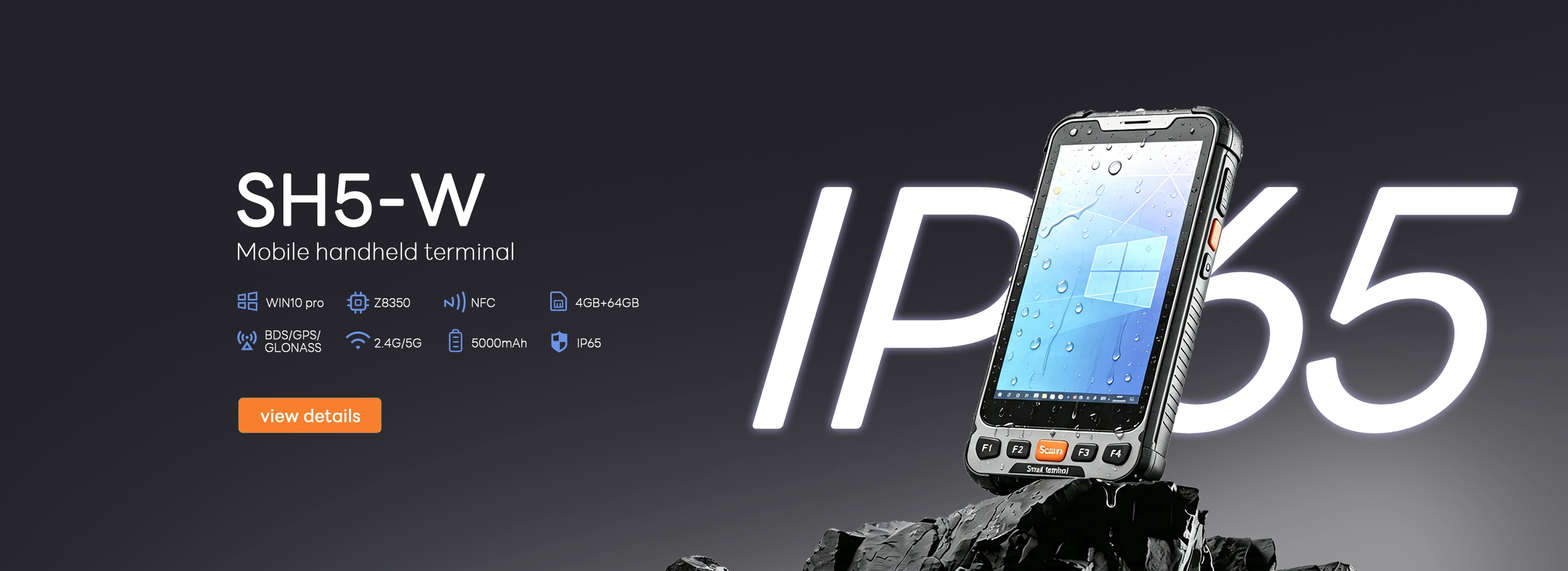
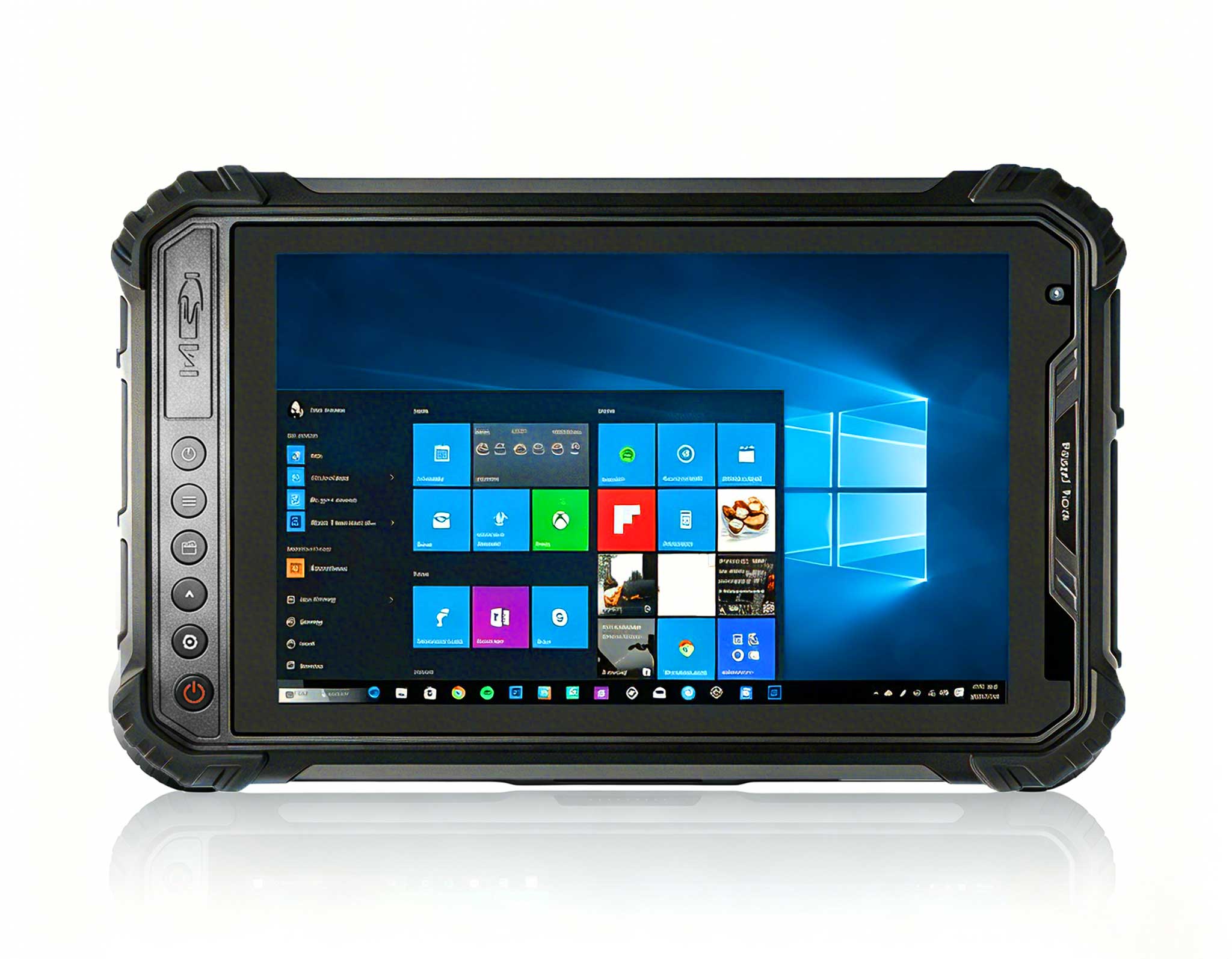
The SH5‑W tablet displays a trend graph of methane recovery efficiency – a steady decline from 97% to 92% over three months, now flagged for cleaning.
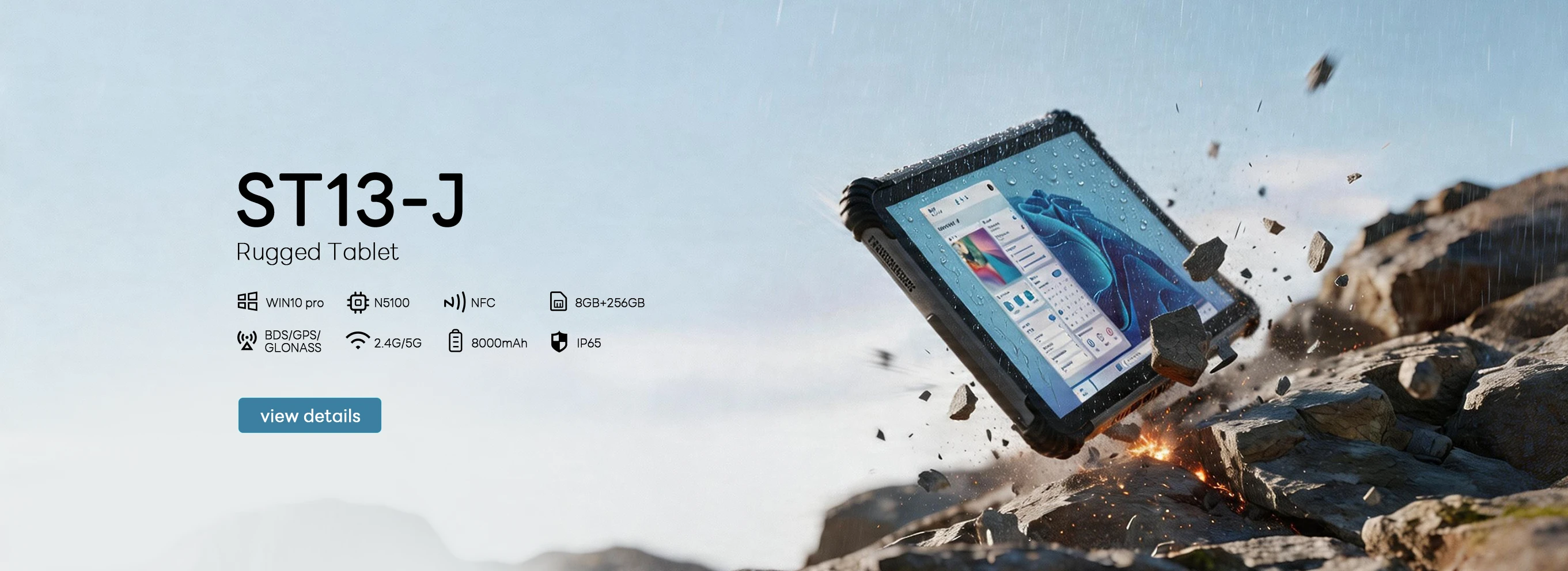
For multi-skid facility optimization, the industrial-grade Hotus ST11‑U 10.1″ Windows rugged tablet functions as a centralized operations dashboard. By compiling high-fidelity performance metrics across multiple remote separation blocks, the ST11-U allows facility engineers to cross-analyze membrane decay metrics across parallel lines, maximizing total plant uptime and extending the working life of expensive polymer assets.
An RNG plant handling a throughput of 1,000 Nm³/h of crude biogas updated its facility monitoring strategy by deploying twenty ST11-M anti-corrosive field terminals, twenty-five SH5-W hand-held diagnostic instruments, and fifteen ST11-U core monitoring dashboards. Within its first operating year, the integrated tracking layout detected an isolated 3% drop in methane recovery over a two-week period on an isolated processing block. Immediate physical inspections prompted by this alarm revealed a faulty upstream siloxane pre-filter cartridge that was bypassing raw gas. Replacing the filter prevented widespread polymer fouling, protecting over $50,000 in clean biomethane sales that would have been lost if the issue had remained hidden under historical weekly manual checks.
Hollow-fiber separation systems rarely fail overnight; rather, they experience steady performance loss due to continuous exposure to heavy trace chemicals. Standard paper logging lacks the resolution needed to trace a minor 0.5% shift change drop. A specialized, chemical-resistant Windows platform featuring automated math parsing, instant telemetry integration, and edge-based warning systems resolves this structural visibility challenge. The ST11-M, SH5-W, and ST11-U provide renewable natural gas refiners with the non-destructive analytical tracking infrastructure needed to run highly profitable plants. Eliminate processing blind spots and protect your facility's daily methane yields.
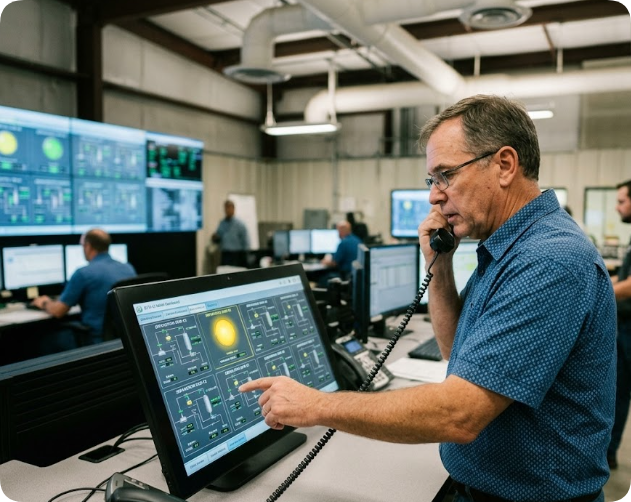
The ST11‑U dashboard shows membrane efficiency for three skids – one skid flagged yellow for efficiency drop, scheduled for cleaning.
Upgrade to Digital Biogas Membrane Monitoring
Contact HOTUS Technology to consult with our alternative energy engineering experts, receive custom specifications for our ST11-M chemical-resistant field series, or discover how our SH5-W handhelds and ST11-U management systems can improve your biogas separation efficiency.
©2026 HOTUS Technology – Industrial Computing Solutions, Chemical‑Resistant Upgrading Systems.