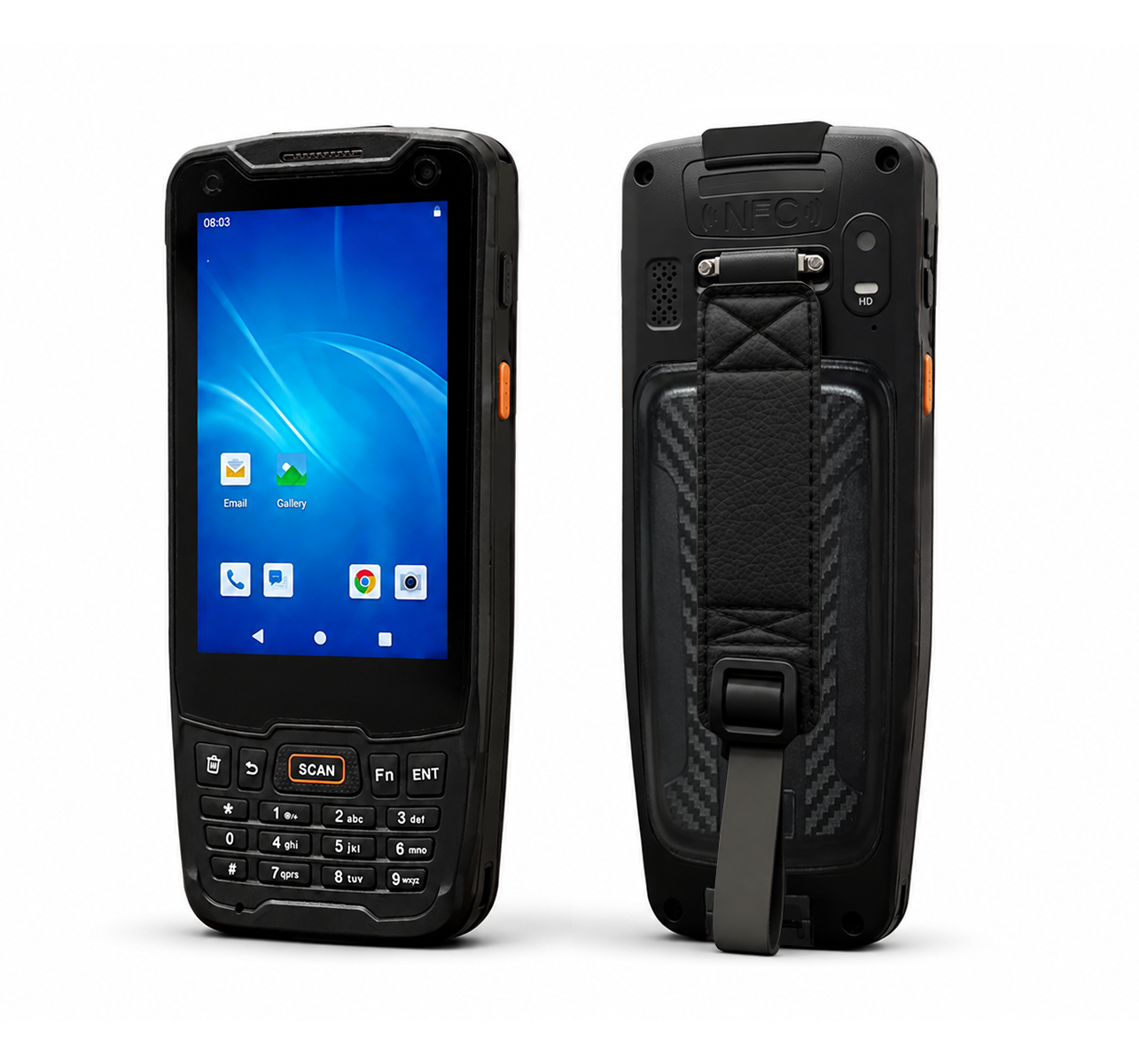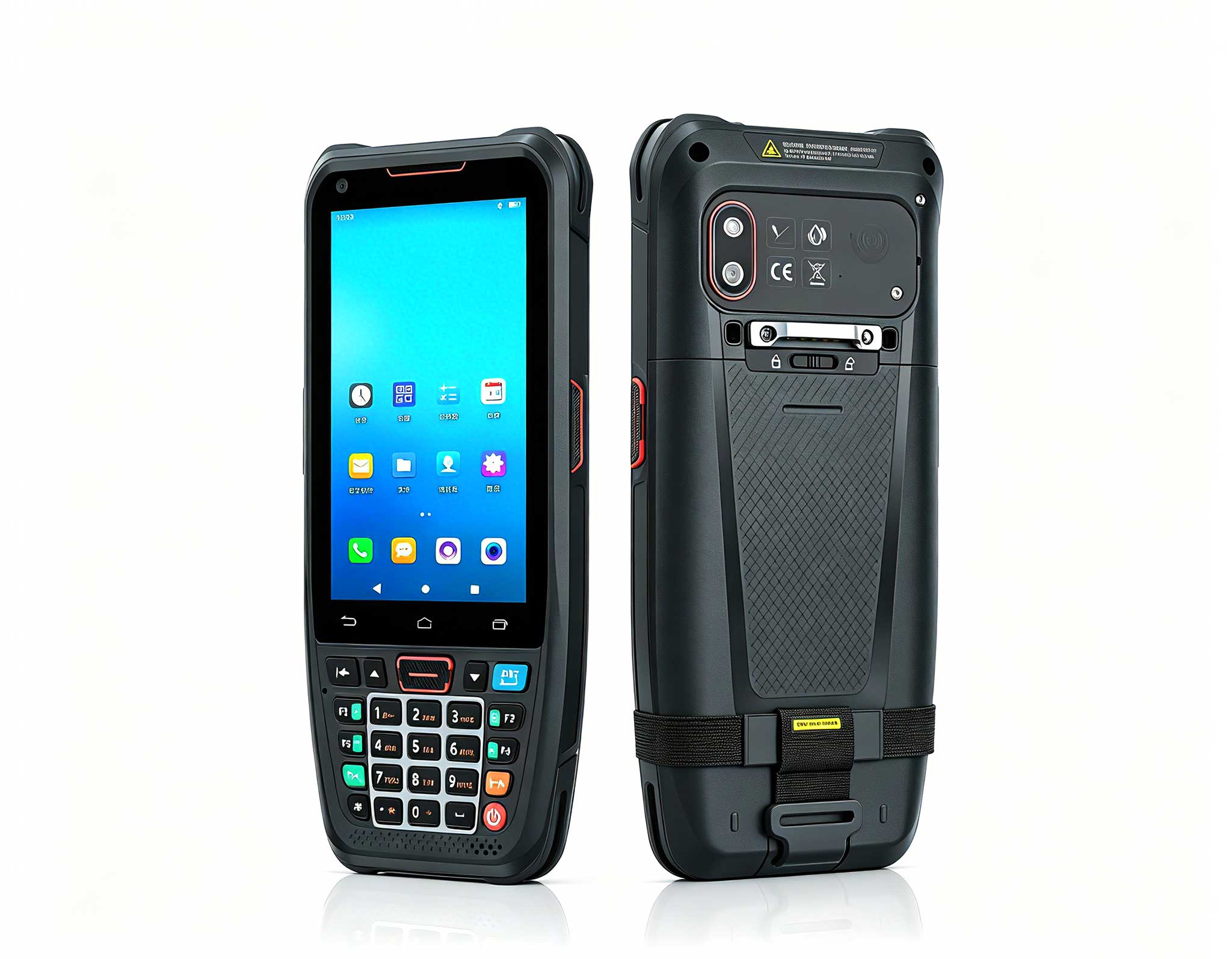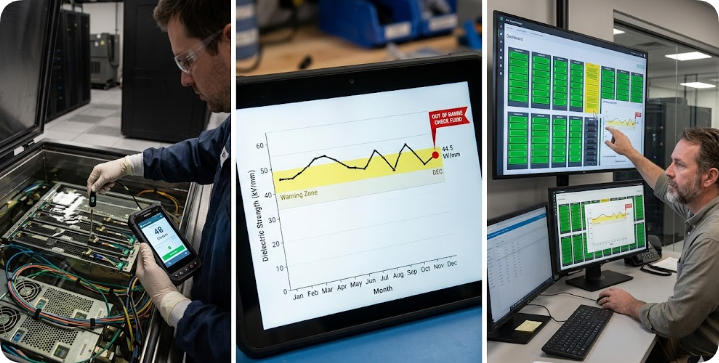
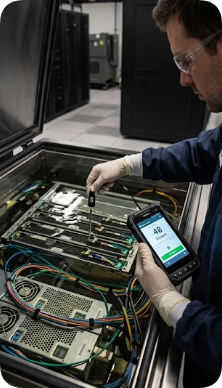
A data center technician uses a HOTUS SH5‑W rugged PDA to log dielectric strength test results for immersion cooling fluid.
I visited a high‑density data center last month where they’d switched to immersion cooling. The IT manager proudly showed me the rack submerged in dielectric fluid – then admitted they test fluid conductivity only once a month, with a paper log. If the fluid‘s dielectric strength drops below 50 kV/mm, a failed server could short through the fluid. You need a rugged Windows PDA that connects to a dielectric strength tester, records results with batch ID, and flags any trend toward the limit. In immersion cooling, a fluid sample is not a quality check – it‘s the difference between a cool server and a smoking short. Your tablet is the electrical safety guard.
Data Center Immersion Cooling Dielectric Strength Testing
By HOTUS Technology | May 2026
High-density data infrastructure is undergoing a massive architectural shift. Enterprise facilities are rapidly deploying single-phase and two-phase liquid immersion cooling systems to manage the intense thermal output of hardware configurations running AI chips, high-performance computing loads, and dense server blades. By completely submerging IT components in specialized non-conductive dielectric fluid, data centers achieve excellent thermal efficiency and drastically lower power usage. However, this dense deployment model introduces a critical point of failure: maintaining the electrical insulation integrity of the cooling fluid itself.
For safe operations, the synthetic or bio-based dielectric fluid must block electrical current entirely while absorbing heat directly from exposed, live circuit boards. Any drop in dielectric strength caused by microscopic debris, chemical breakdown, or moisture ingress can turn an efficient cooling medium into an accidental conductor. If insulation levels drop below critical thresholds—frequently specified between 30 kV/mm and 50 kV/mm—the risk of destructive electrical arcing increases exponentially. A single localized short-circuit can travel through the liquid, destroying entire server blades and causing catastrophic hardware loss.
Despite these high risks, standard facility management often relies on manual fluid testing schedules and paper logbooks. Technicians pull fluid samples, test them with offline equipment, and manually note the results. This delayed testing method completely misses subtle, long-term degradation. A slow drop in insulation performance over months remains invisible on a handwritten checklist, leaving operators unaware of contamination until a critical breaker trips or hardware fails. To safeguard high-density infrastructure, modern facilities are replacing paper logs with specialized industrial mobile hardware linked directly to digital testing sensors.
Real-Time Dielectric Strength Logging via Industrial Field Terminals
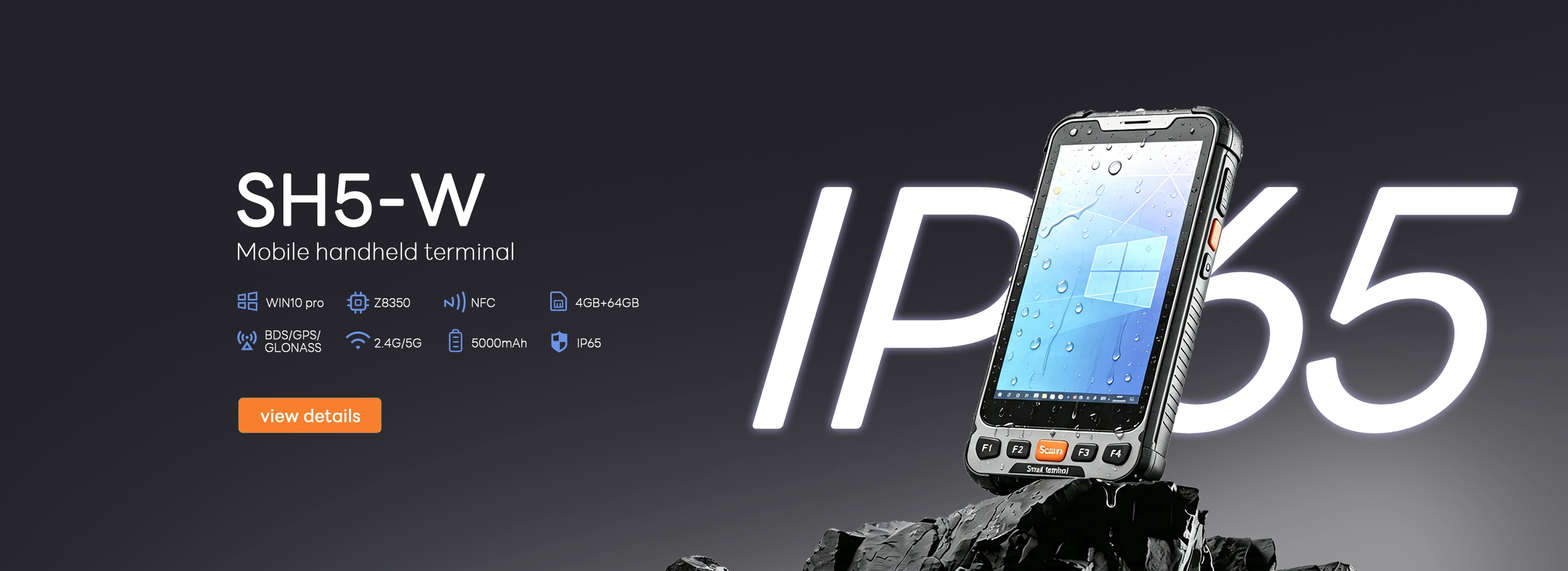
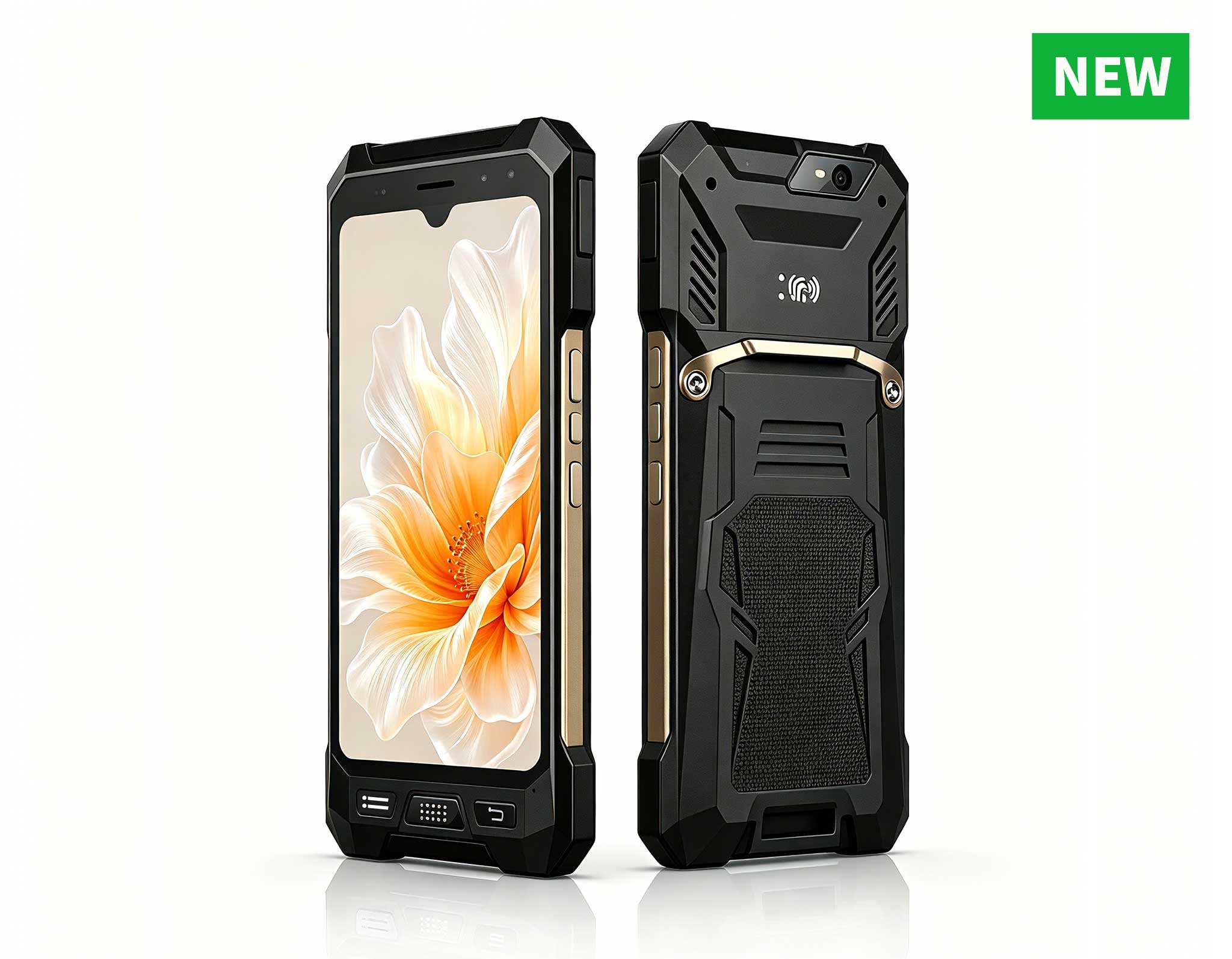
Enterprise data centers require durable mobile computing solutions to safely manage these delicate liquid systems. Field engineers can browse the comprehensive hardware portfolio by visiting the primary index of Rugged Tablets to evaluate field-tested devices optimized for sensitive tech environments. For specialized hands-on monitoring at the server rack, the Hotus SH5‑W Windows rugged handheld PDA provides a highly portable, liquid-resistant field computing option. Featuring an IP67-rated enclosure, it easily survives accidental fluid splashes, drips, and sticky residues common near open cooling tanks.
Equipped with seamless wireless integration, the SH5-W connects directly over Bluetooth to portable fluid testing equipment. This connection establishes a fast, digital data-entry routine for facility maintenance personnel:
- Scans the asset barcode or RFID tag on the specific cooling tank to verify the fluid batch ID.
- Captures real-time insulation telemetry directly from the probe, locking in the exact kV/mm value.
- Timestamps the reading with precise operator identifiers and specific server rack location metrics.
- Saves the data instantly to a secure local database or cloud system for automated historical tracking.
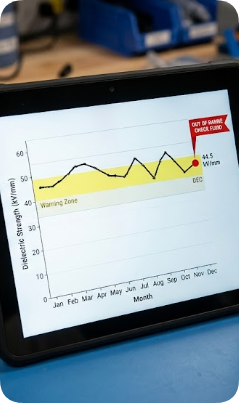
By moving this telemetry into a structured digital framework, the SH5-W builds instant trend visualizations. Instead of analyzing isolated data points, the handheld terminal tracks small, ongoing changes in fluid condition. If a cooling loop shows a steady drop over several weeks, the device immediately alerts the facility manager, identifying potential contamination long before the fluid reaches dangerous operating limits.
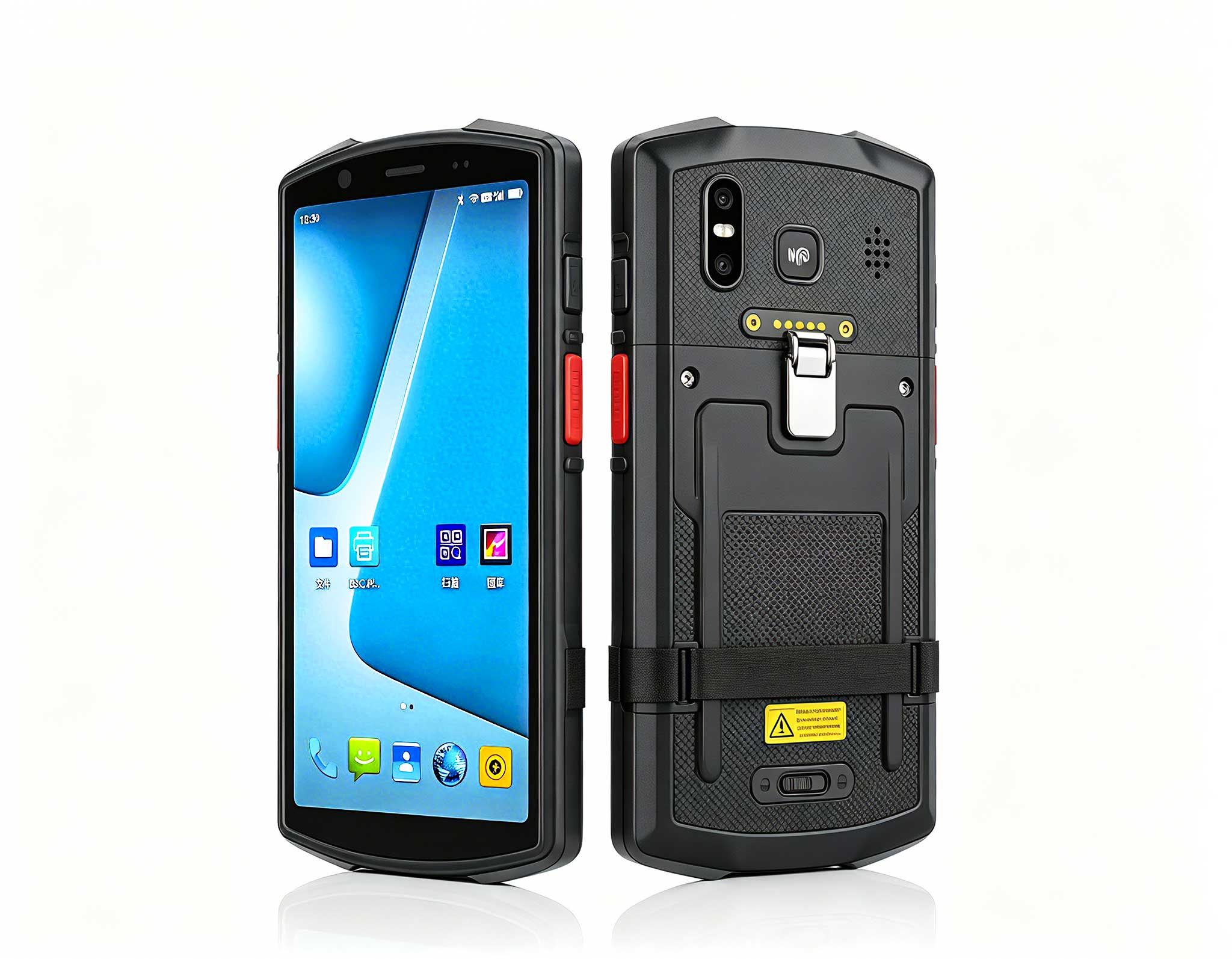
The ST11‑U tablet displays a dielectric strength trend graph for an immersion cooling tank, with a yellow alert as the value approaches the service limit.
Centralized Telemetry Aggregation Across Large-Scale Cooling Loops
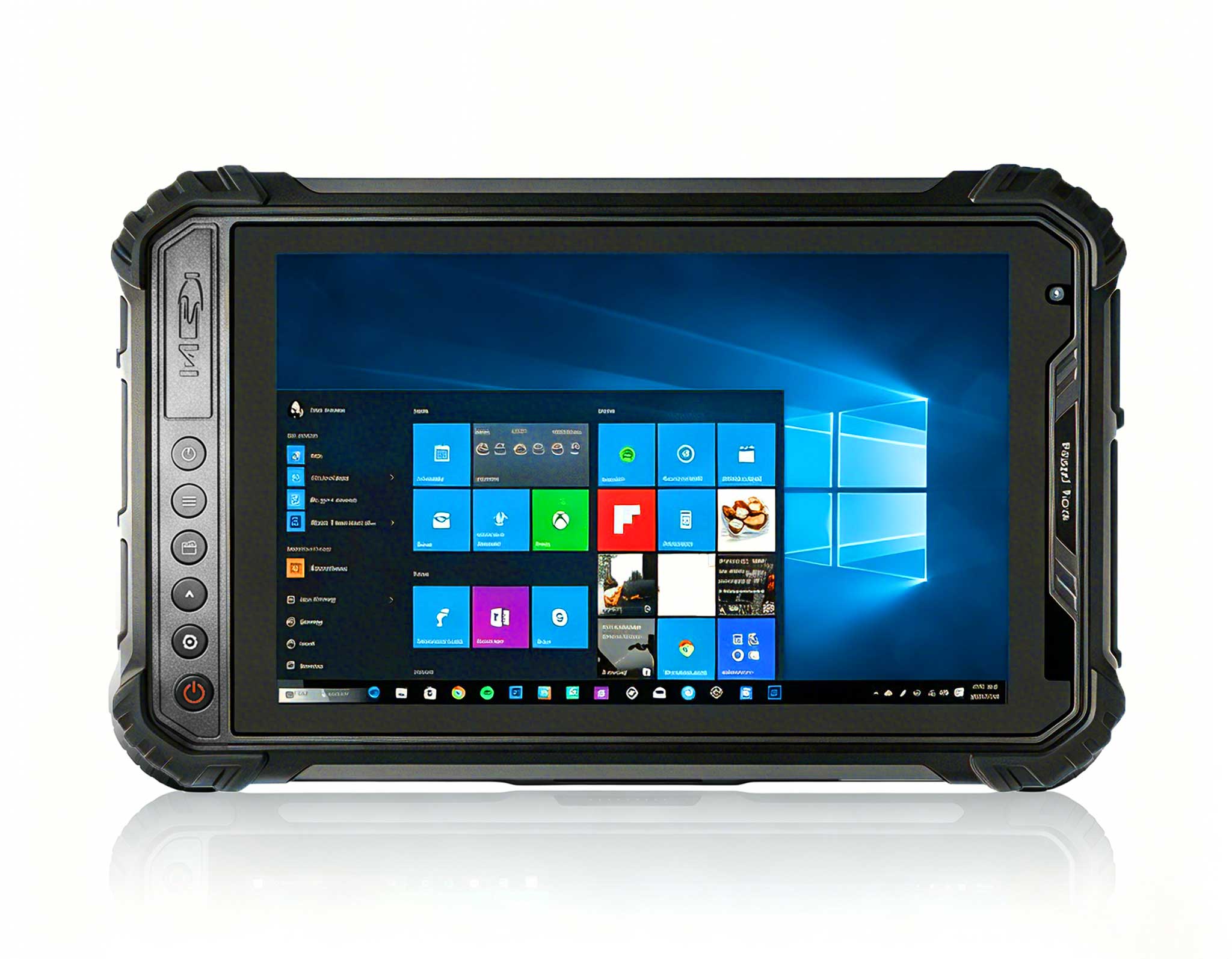
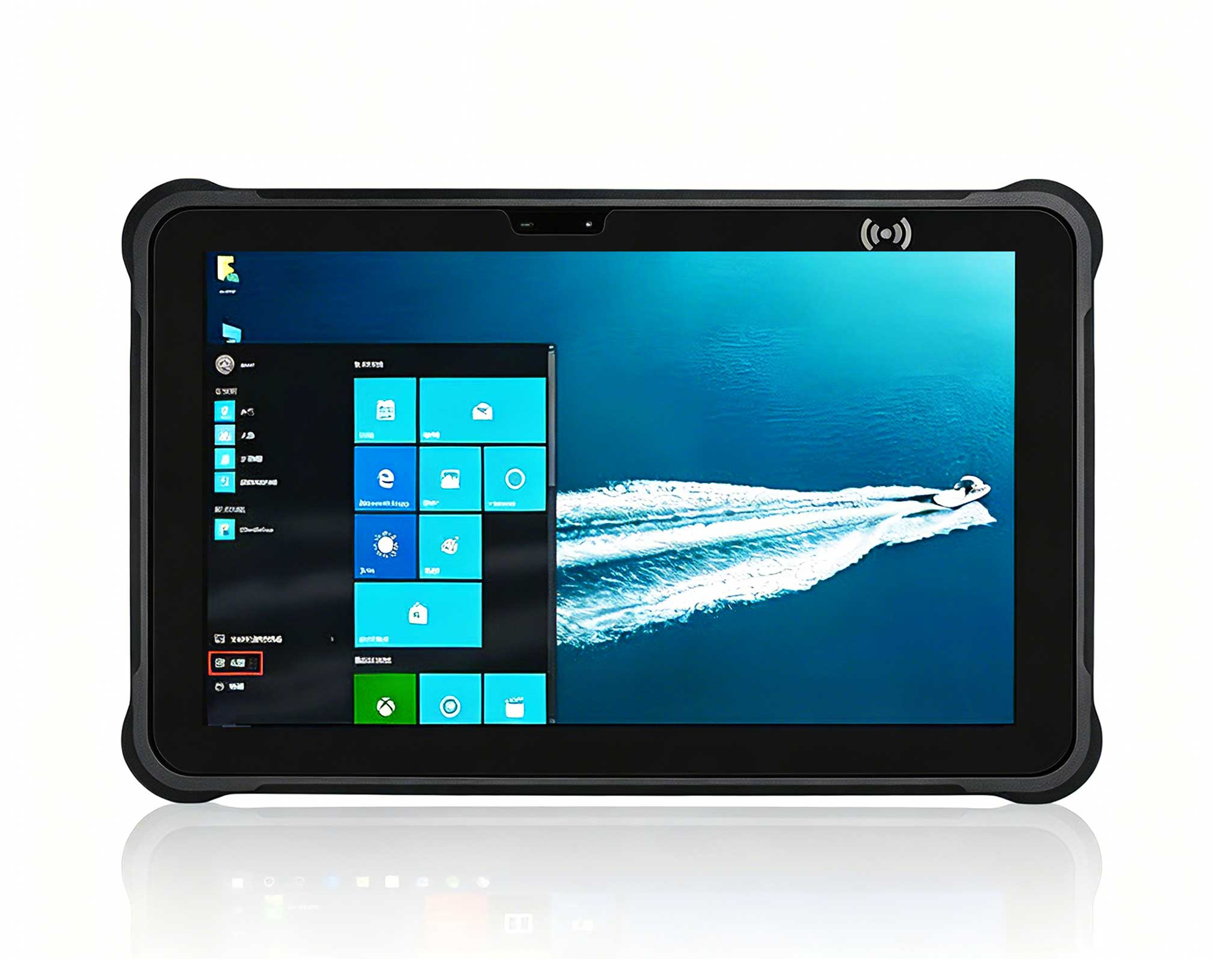
To scale monitoring across massive, multi-megawatt colocation facilities, field data must move smoothly up to supervisor dashboards. The mid-sized Hotus ST11‑U 10.1″ Windows rugged tablet functions as a versatile command console for facility operations. This high-resolution tablet compiles telemetry from multiple field PDAs, providing a complete overview of fluid performance across every active cooling loop in the facility. The system instantly highlights any tank showing rapid degradation, allowing managers to organize filtration schedules or fluid top-offs without interrupting ongoing server operations.
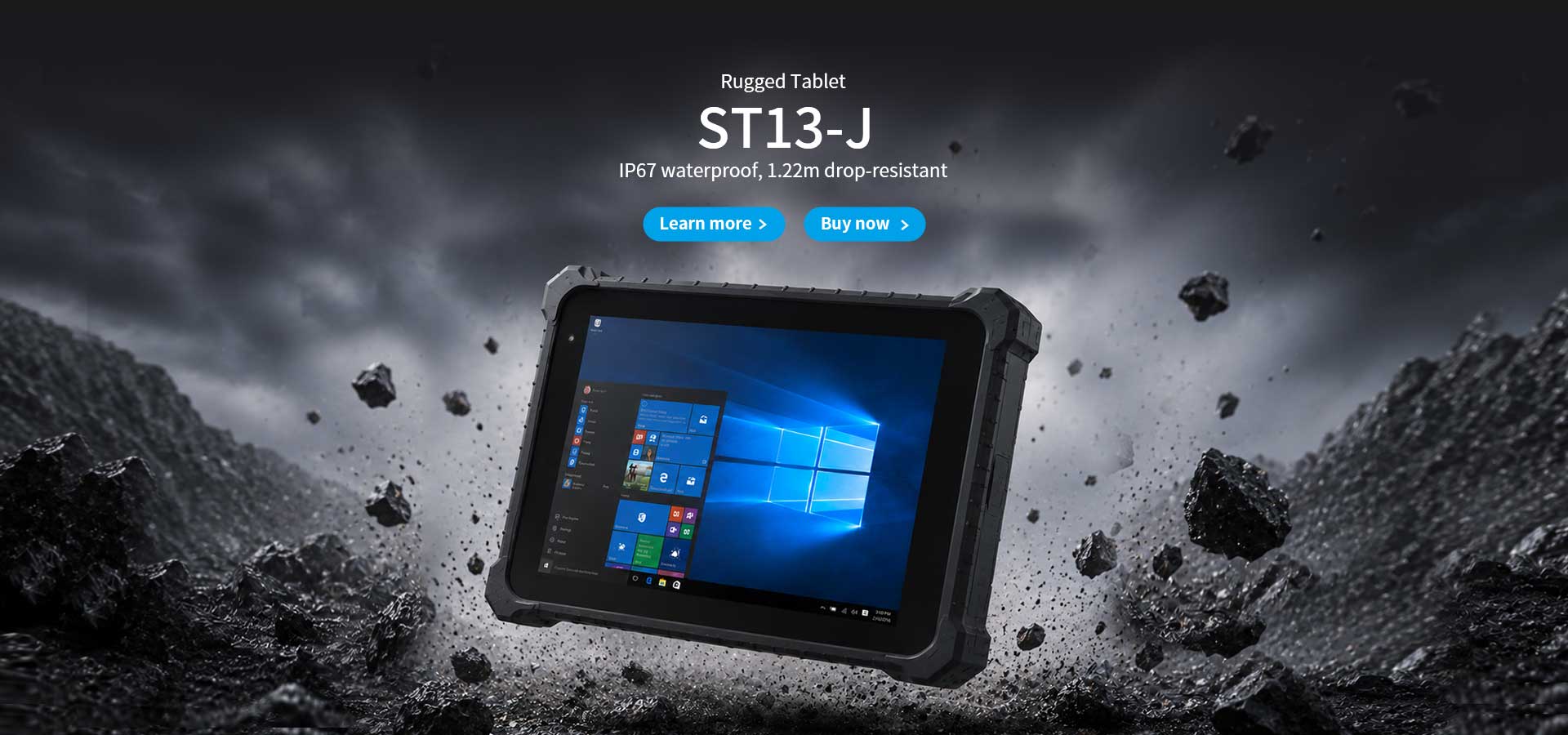
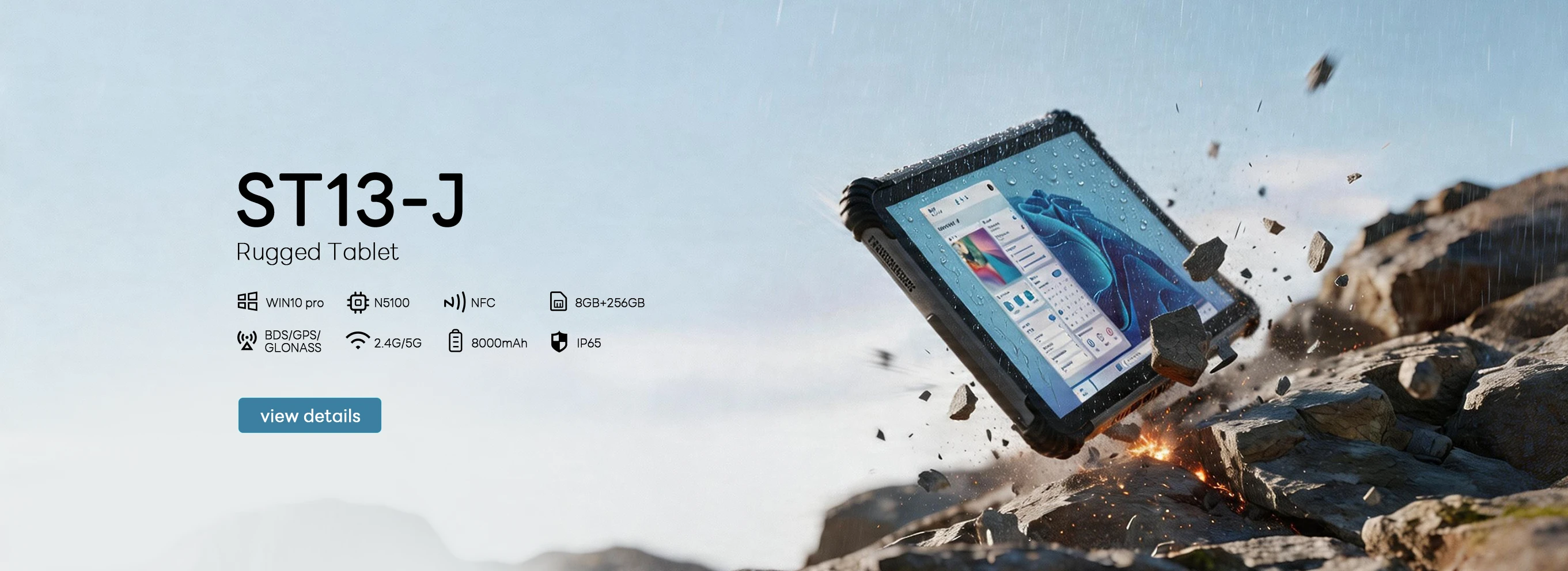
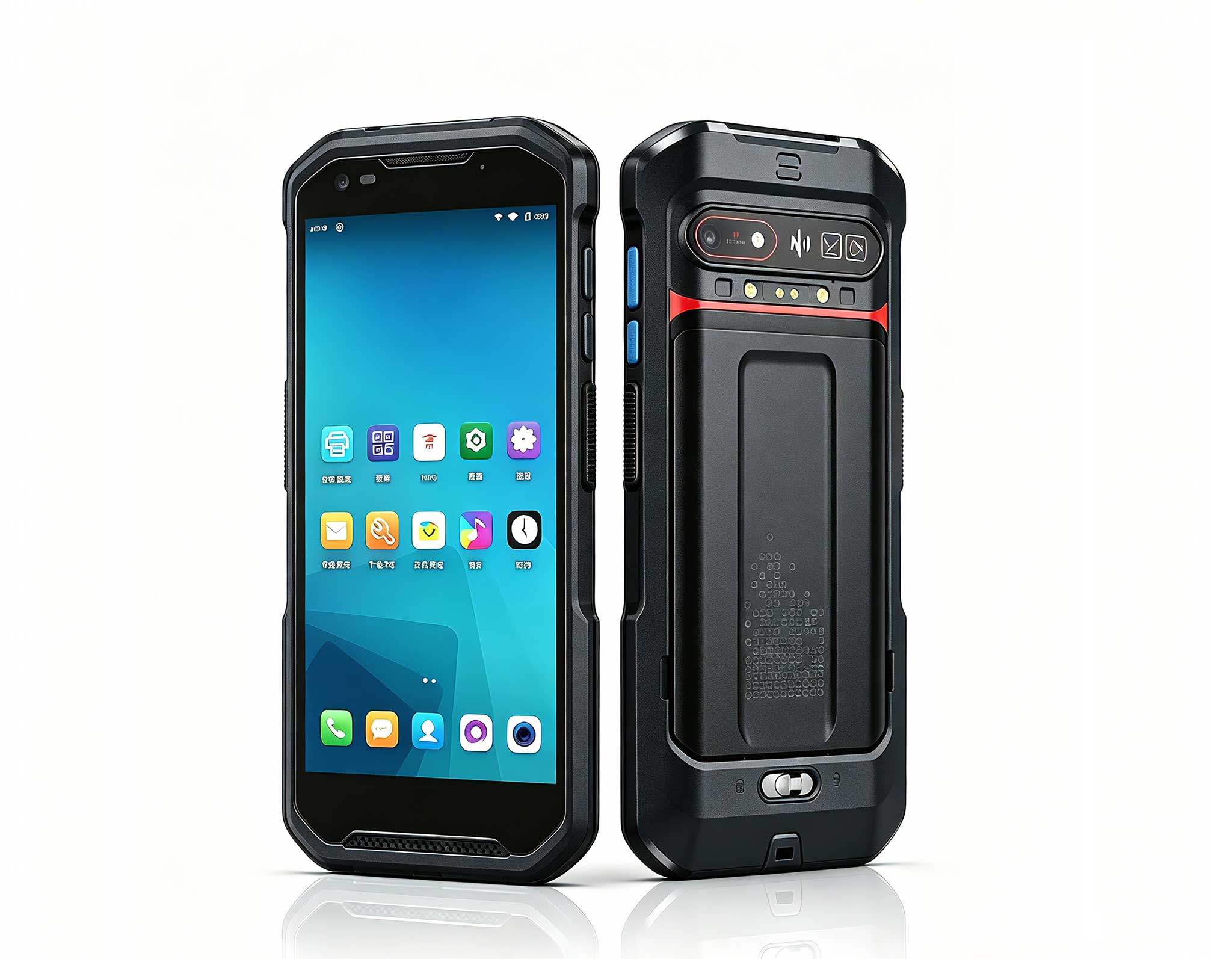
For comprehensive facility planning, the large-format Hotus ST13‑J 13.3″ Windows rugged tablet offers an expansive field-level management interface. Its large screen display handles detailed plant layouts and predictive asset models with ease. When an immersion loop shows an unusual drop in insulation value, the maintenance planner uses the ST13-J to check repair logs, schedule maintenance windows, and issue work orders to service crews before any hardware risks develop.
Preventing Failure: Case Study in High-Density Colocation
The operational benefits of choosing a connected digital hardware ecosystem are clear in demanding server room environments. A large data center operator managing 20 liquid-immersion server racks integrated this predictive maintenance workflow by deploying a coordinated fleet of 15 SH5-W handheld testers, 10 ST11-U master diagnostics tablets, and 5 ST13-J operations dashboards.
During the first year of deployment, the tracking system identified a slow, continuous drop in fluid performance within a specific high-density server rack. Over eight months, the insulation level dropped from an initial 54 kV/mm down to 42 kV/mm. While a standard monthly paper log would have missed this gradual drop, the automated system triggered an early warning alert.
An immediate technical inspection discovered a microscopic crack inside an external fluid heat exchanger, which was allowing trace amounts of moisture to seep into the cooling loop. Maintenance teams quickly isolated the rack, repaired the faulty heat exchanger, and processed the fluid through a standard dehydration filtration system to restore original insulation levels. This early intervention prevented a major short-circuit and arc-flash event, avoiding over $500,000 in hardware damage and protecting the facility from expensive customer downtime.
The ST13‑J dashboard shows a color‑coded status of immersion cooling tanks – green for healthy, one rack flagged yellow for declining dielectric strength.
Building Resilient Fluid Lifecycle Tracking Ecosystems
Adopting advanced immersion cooling helps data centers achieve excellent efficiency, but it requires highly reliable fluid safety tracking. Relying on basic manual entries cannot catch hidden, long-term contamination risks. Using a coordinated ecosystem of rugged Windows tablets and PDAs ensures complete visibility over system health, turning raw electrical telemetry into protective maintenance actions.
Deploying specialized industrial field hardware like the SH5-W, ST11-U, and ST13-J enables infrastructure teams to accurately track fluid quality across all operations. This preventative approach keeps high-density hardware running safely, minimizes sudden operational failures, and protects data center investments from electrical safety hazards.
Optimize Your Facility's Immersion Cooling Safety Protocols
Contact HOTUS Technology today to discuss your specific data center fluid monitoring needs, coordinate a regional field pilot for our SH5-W mobile PDA, or request an in-depth system demonstration of our ST11-U and ST13-J enterprise monitoring solutions.