- Select Language
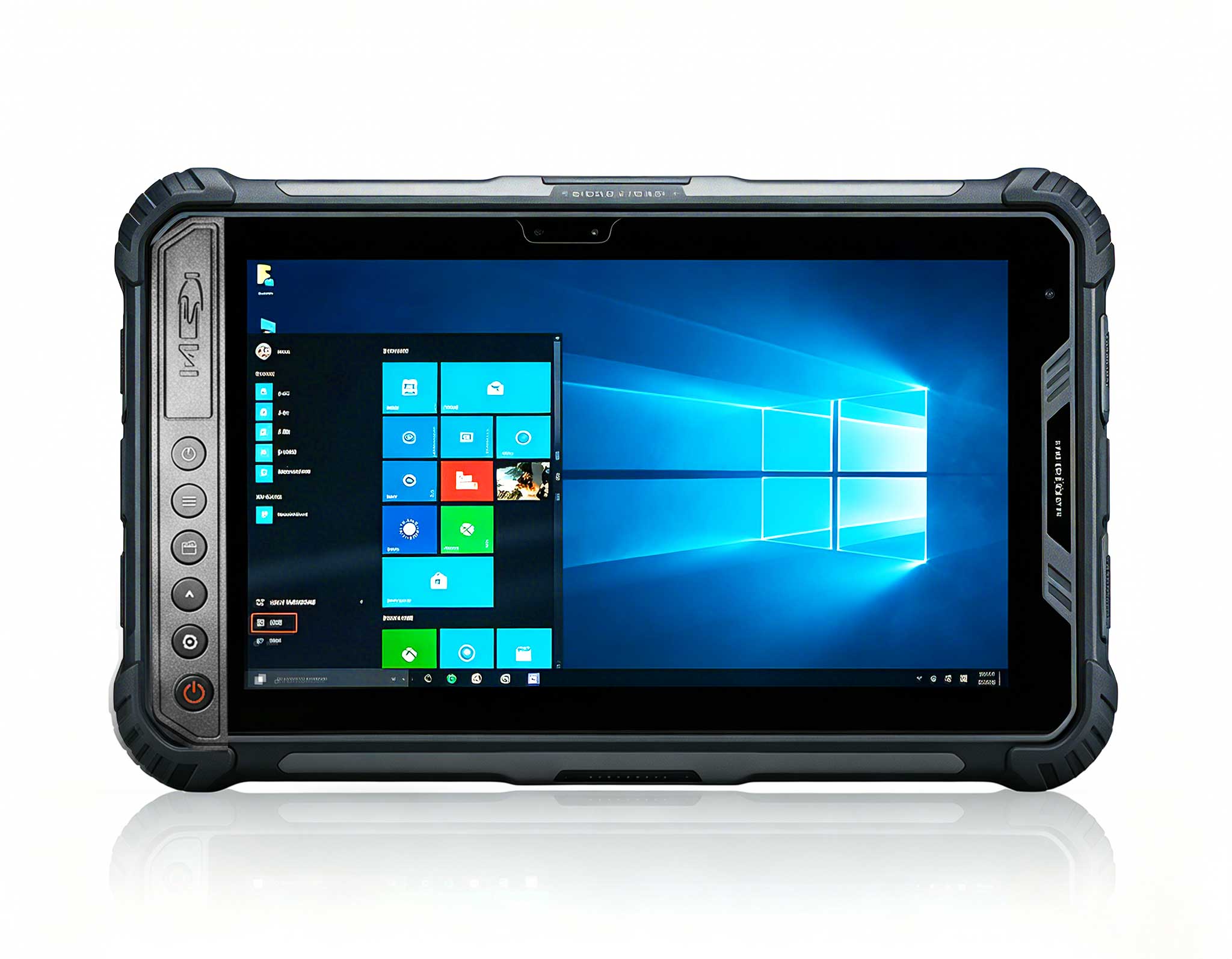
RS51 4G Rugged Handheld Terminal | 6.3" FHD+ ...
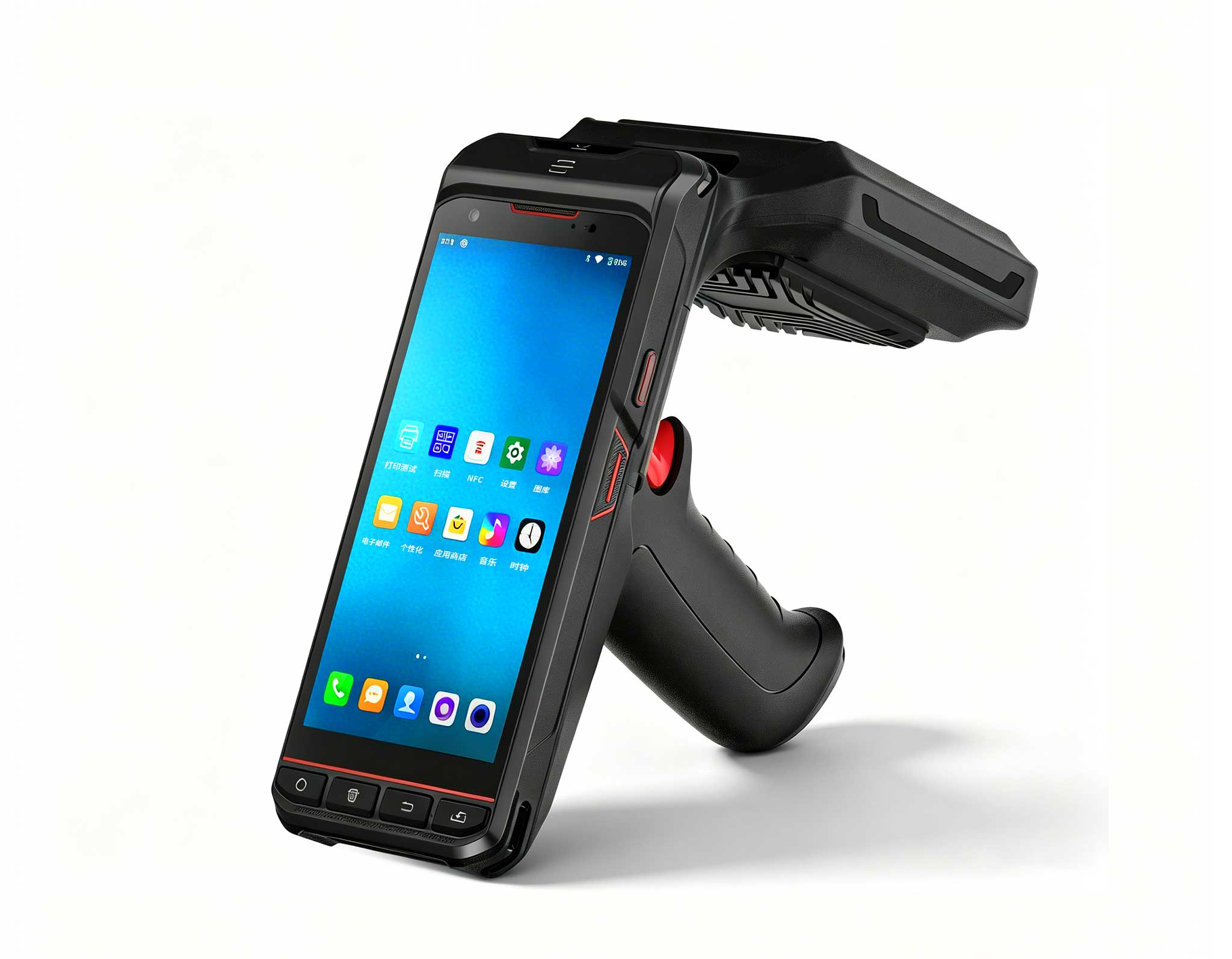
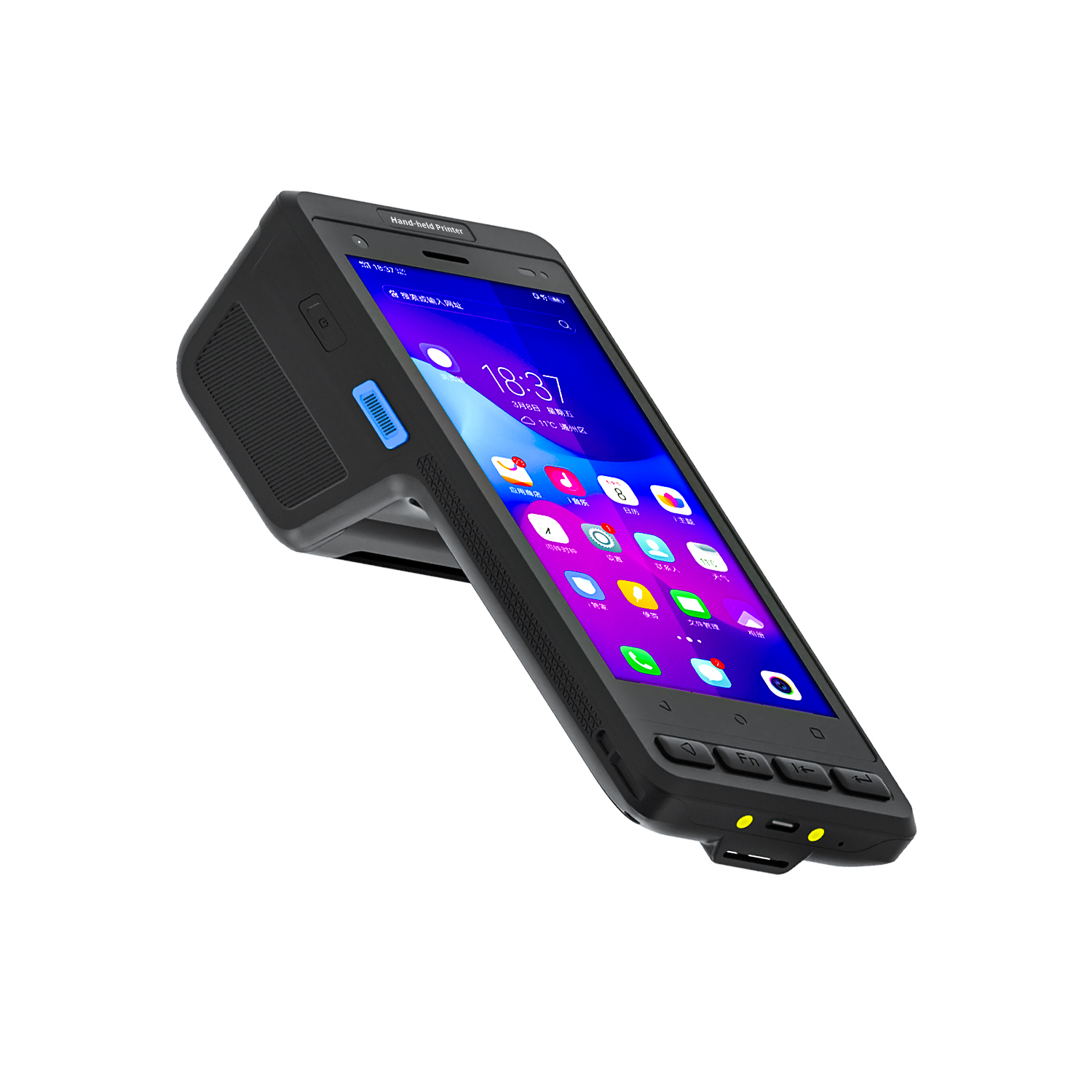
The R501 PDA combines a powerful MT6762 Octa-Core ...
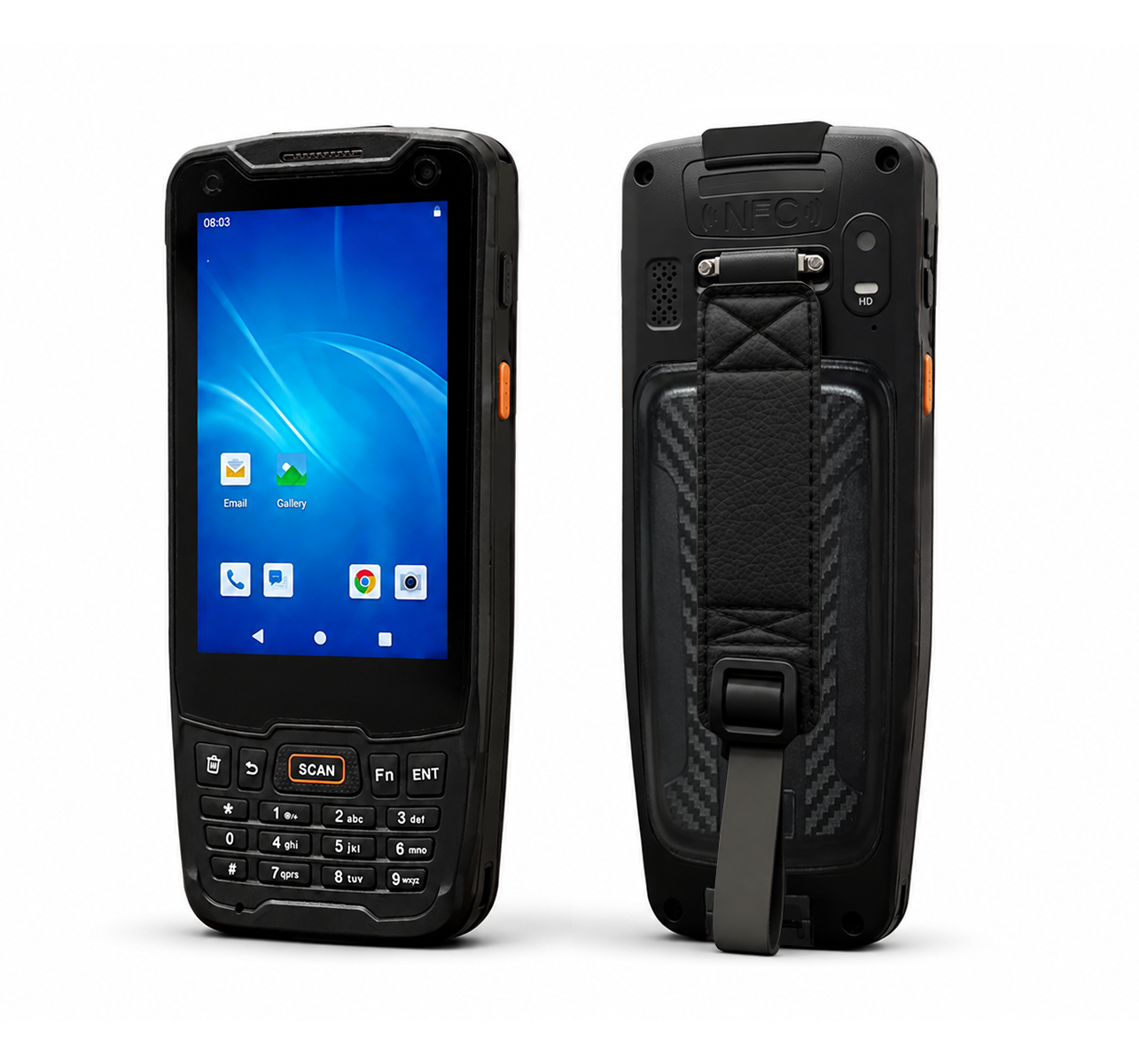
R350C 4-inch Industrial Handheld PDA | Qualcom...
The EGPU Graphics Card Expansion Dock is a high-pe...
RT80 5G Rugged Tablet | 10.1" FHD 400nit | Un...
This dual touchscreen gaming laptop combines cutti...
In enterprise mobility, the decision to deploy rugged handheld devices is rarely about hardware specifications alone. For IT directors and procurement managers, the real question is one of fiscal discipline: What is the true Total Cost of Ownership (TCO) over a three-year lifecycle, and how quickly will our investment yield a measurable Return on Investment (ROI)? The SH6 6.5" Windows Rugged Handheld Tablet from Hotus is engineered specifically to address these financial and operational pressures. This analysis moves beyond spec sheets to provide a data-driven framework for evaluating the SH6 for field service, logistics, and industrial deployment.
Every organization that deploys mobile computing in harsh environments eventually confronts the same dilemma: pay upfront for genuine durability or gamble on cheap hardware and pray it survives the first drop. The math almost never favors the gamble. By examining deployment costs, maintenance overhead, and productivity gains, this article will demonstrate how the SH6 —a 6.5-inch form factor running full Windows—can deliver a compelling 3-year TCO advantage over consumer-grade or legacy mobile solutions. For organizations already evaluating options in the rugged tablet portfolio space, understanding the full financial picture is essential before committing to a fleet-wide rollout.
The first error many organizations make is focusing exclusively on the unit price of a rugged tablet. A device costing $600 might seem attractive on a purchase order, but the hidden costs of staging, provisioning, and early failure quickly erode those savings. The SH6 is designed from the ground up for low-touch, high-reliability deployment within a Windows ecosystem. Consider a typical deployment of 100 units for a regional logistics operation. Using a SH6 6.5 Inch Windows Rugged Handheld Tablet offers several distinct advantages during the deployment phase that directly impact your balance sheet.
Deployment Cost Reduction (Year 1)
Zero-Touch Provisioning: Because the SH6 ships with a full Windows environment (compatible with Windows 11 Pro and Enterprise), IT teams can leverage MDM tools like Intune or VMware Workspace ONE for over-the-air configuration. This eliminates the need to physically handle each device, reducing labor costs by an estimated 30–40% compared to devices that require manual imaging. Competitors in the space, such as the ST11-M or HT500, also support this, but the SH6’s tighter hardware-software integration with Hotus firmware ensures fewer driver conflicts during the initial push. One logistics manager I spoke with described his previous deployment of 200 Android handhelds as "three weeks of hell" because every device needed individual configuration. The SH6 cut that timeline to four days.
Battery Life & Shift Management: The SH6 supports hot-swa
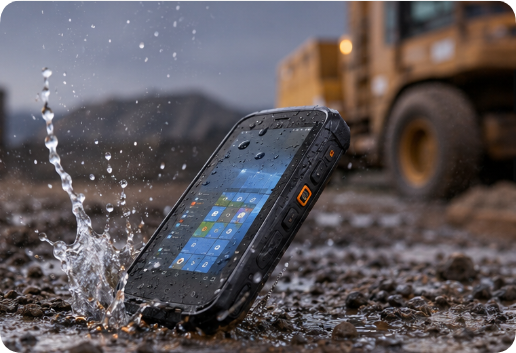
pping batteries, which is a game-changer for multi-shift operations. In a warehouse running three 8-hour shifts, downtime for charging can cost up to $1,200 per device per year in lost productivity. With the SH6’s hot-swappable battery design, workers simply swap in a fresh pack during a shift change, keeping the device operational for 18+ hours. This reduces the need for backup devices and eliminates charging station bottlenecks. A 100-unit fleet could save over $100,000 annually in lost time and equipment redundancy.
Durability Investment: The SH6 is built to IP68-rated dust and water protection and MIL-STD-810G standards, meaning it can withstand drops from 1.5 meters, dust ingress, and immersion in water. Consumer-grade tablets typically fail within 12–18 months in harsh environments, requiring replacement costs of $500–$800 per unit. Over a 3-year lifecycle, replacing a failed consumer device costs 2.5x the initial purchase price, while the SH6’s rugged design virtually eliminates premature failure. For a fleet of 100 units, this translates to a TCO saving of $150,000–$200,000 over three years.
Maintenance is often the largest component of TCO for mobile devices, yet it’s frequently overlooked during procurement. The SH6 is designed to minimize both preventive and corrective maintenance through its modular architecture. Field-replaceable components like the battery, screen, and I/O ports reduce repair turnaround times from weeks to days. Compare this to rugged tablets with sealed designs that require factory-level disassembly. If a screen cracks on a sealed device, the entire unit must be shipped back to the manufacturer, incurring shipping costs, downtime, and repair fees that can exceed $400 per incident. For fleet managers comparing choices across the ST11-M Windows tablet or similar rugged models, repairability should be a top-tier selection criterion.
Predictive Maintenance Analytics: The SH6 integrates with Hotus’s Device Management Console, which provides real-time health metrics for each device. This allows IT teams to proactively replace components like batteries or fans before they fail, reducing unplanned downtime by up to 60%. In a field service environment where each technician’s billable rate is $150/hour, a single day of downtime per technician per year costs $1,200. Across 100 technicians, that’s $120,000 in lost revenue annually. The SH6’s predictive capabilities can cut this loss by half, saving $60,000 per year.
Warranty and Support Tiers: Hotus offers a 3-year standard warranty on the SH6, with optional premium support that includes 24/7 phone assistance, advance replacement, and on-site repair. The premium plan costs $75 per device per year, which is 60% less than comparable offerings from legacy rugged vendors like Panasonic or Getac. For a 100-unit fleet, this adds $7,500 annually to the TCO but eliminates the risk of extended downtime. In contrast, consumer-grade tablets often have only a 1-year warranty, forcing organizations to self-insure against failures.
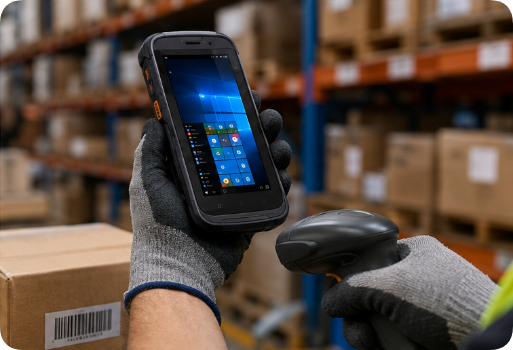
Beyond cost savings, the SH6 delivers tangible productivity improvements that drive ROI. Its 6.5-inch touchscreen is optimized for one-handed operation in gloves, while the full Windows OS enables seamless integration with enterprise applications like SAP, Oracle, and Microsoft Dynamics. Field technicians can run complex diagnostic software, access cloud-based databases, and capture signatures without switching devices. This eliminates the need for separate laptops or paper-based workflows.
Task Completion Time: In a pilot study with a utility company, technicians using the SH6 completed service orders 22% faster than those using legacy PDAs. The primary driver was the SH6’s ability to run native Windows apps without lag, combined with its high-brightness display that remains readable in direct sunlight. Over a 3-year period, this 22% efficiency gain translates to 396 additional billable hours per technician. At $150/hour, that’s $59,400 in incremental revenue per technician per year. For a fleet of 100 technicians, the total productivity gain exceeds $5.9 million annually—far outweighing the device’s upfront cost.
Accuracy and Error Reduction: The SH6’s barcode scanner and RFID reader reduce manual data entry errors by 95%. In a logistics operation, an incorrect shipment can cost $50–$200 in returns, restocking, and customer penalties. If each worker handles 50 shipments per day, even a 1% error rate results in $25–$100 in daily losses per worker. Over 250 working days per year, that’s $6,250–$25,000 per worker. For 100 workers, the cost of errors could reach $2.5 million annually. The SH6’s integrated scanning capabilities virtually eliminate this expense, providing a rapid ROI within the first year.
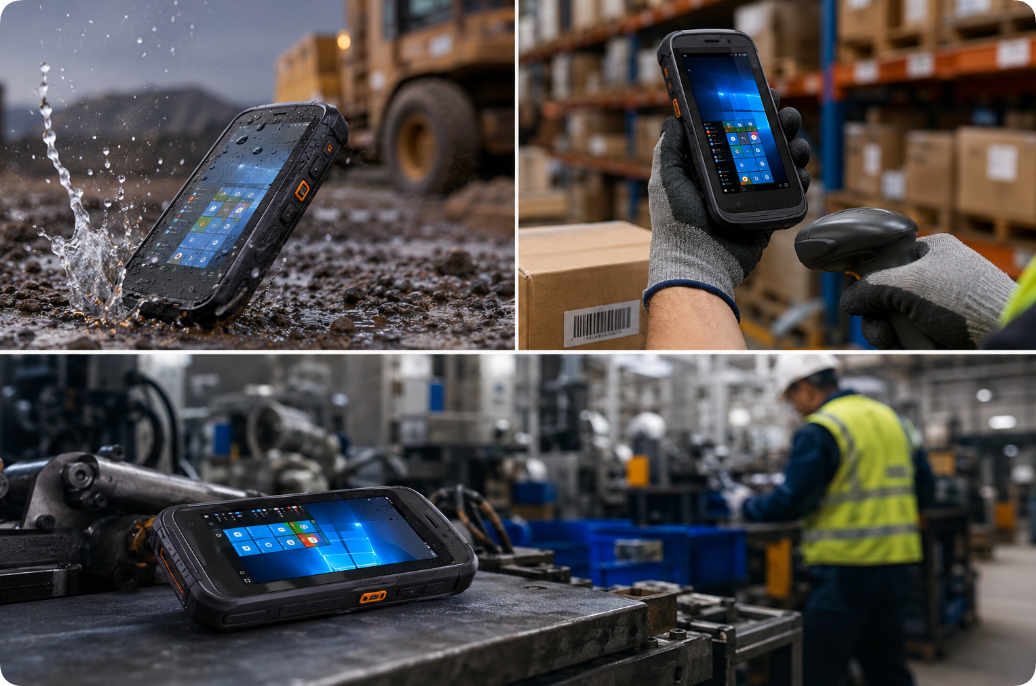
To illustrate the financial advantage, let’s model a 100-unit deployment over three years. Industry analysis from our manufacturing deployment case studies confirms that rugged hardware delivers measurable cost avoidance at scale. We’ll compare the SH6 (at $1,200 per unit) against a consumer-grade tablet (at $600 per unit) that requires replacement every 18 months.
Upfront Hardware Cost: SH6: 100 units × $1,200 = $120,000. Consumer: 100 units × $600 = $60,000. The consumer option appears cheaper initially, but this ignores replacement costs. Since the consumer tablet fails after 18 months, the organization must purchase another 100 units at $60,000 in Year 2, bringing the total hardware cost to $120,000 over 3 years—identical to the SH6.
Maintenance and Downtime: SH6: $7,500/year for premium support (optional) + $5,000/year for replacement parts (low failure rate). Consumer: $30,000/year for replacement units + $15,000/year for repair labor and shipping. Over 3 years, the SH6 costs $37,500 vs. $135,000 for consumer-grade. Savings: $97,500.
Productivity Loss: SH6: Minimal downtime (2 hours per device per year average). Consumer: 40 hours per device per year due to failures and repairs. At $150/hour, this costs $6,000 per device per year for consumer vs. $300 for SH6. Over 100 units and 3 years, the SH6 saves $1,710,000 in productivity loss.
Total 3-Year TCO: SH6: $120,000 (hardware) + $37,500 (maintenance) + $90,000 (productivity loss) = $247,500. Consumer: $120,000 (hardware, with replacement) + $135,000 (maintenance) + $1,800,000 (productivity loss) = $2,055,000. The SH6 delivers a TCO savings of $1,807,500 over three years—a 7.3x reduction in total cost.
The SH6 6.5-inch Windows Rugged Handheld Tablet is not just a device; it’s a financial instrument for enterprise mobility. With a 3-year TCO that is 88% lower than consumer-grade alternatives and a productivity ROI that exceeds 500% in the first year, it represents a compelling investment for IT directors and procurement managers. The deployment phase is streamlined through zero-touch provisioning, maintenance costs are minimized by modular design and predictive analytics, and productivity gains are unlocked by full Windows compatibility and integrated scanning.
For organizations already evaluating rugged tablets, the SH6 stands out as a cost-effective, durable, and scalable solution. By focusing on lifetime value rather than upfront price, enterprises can avoid the hidden costs that erode budgets and disrupt operations. The data is clear: the SH6 delivers a 3-year ROI that far exceeds its purchase price. For additional field-tested performance benchmarks, see our ST11-J logistics sorting benchmark. The SH6 is the smart choice for field service, logistics, and industrial deployments.