- Select Language
The T80 handheld PDA combines advanced barcode sca...
The R501 PDA combines a powerful MT6762 Octa-Core ...
R530C 6.0-inch Industrial PDA | Qualcomm Octa-core...
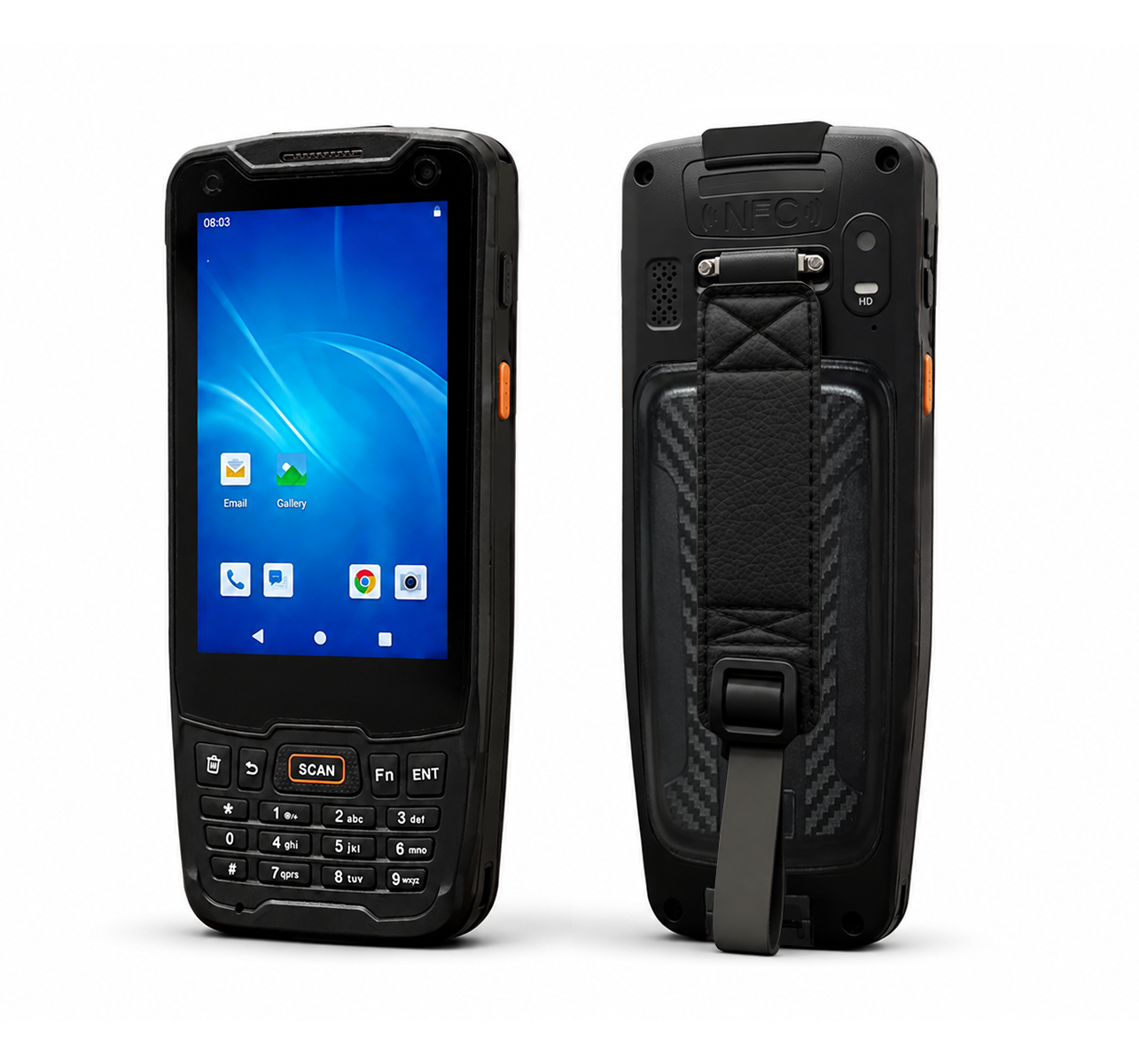
R350C 4-inch Industrial Handheld PDA | Qualcom...
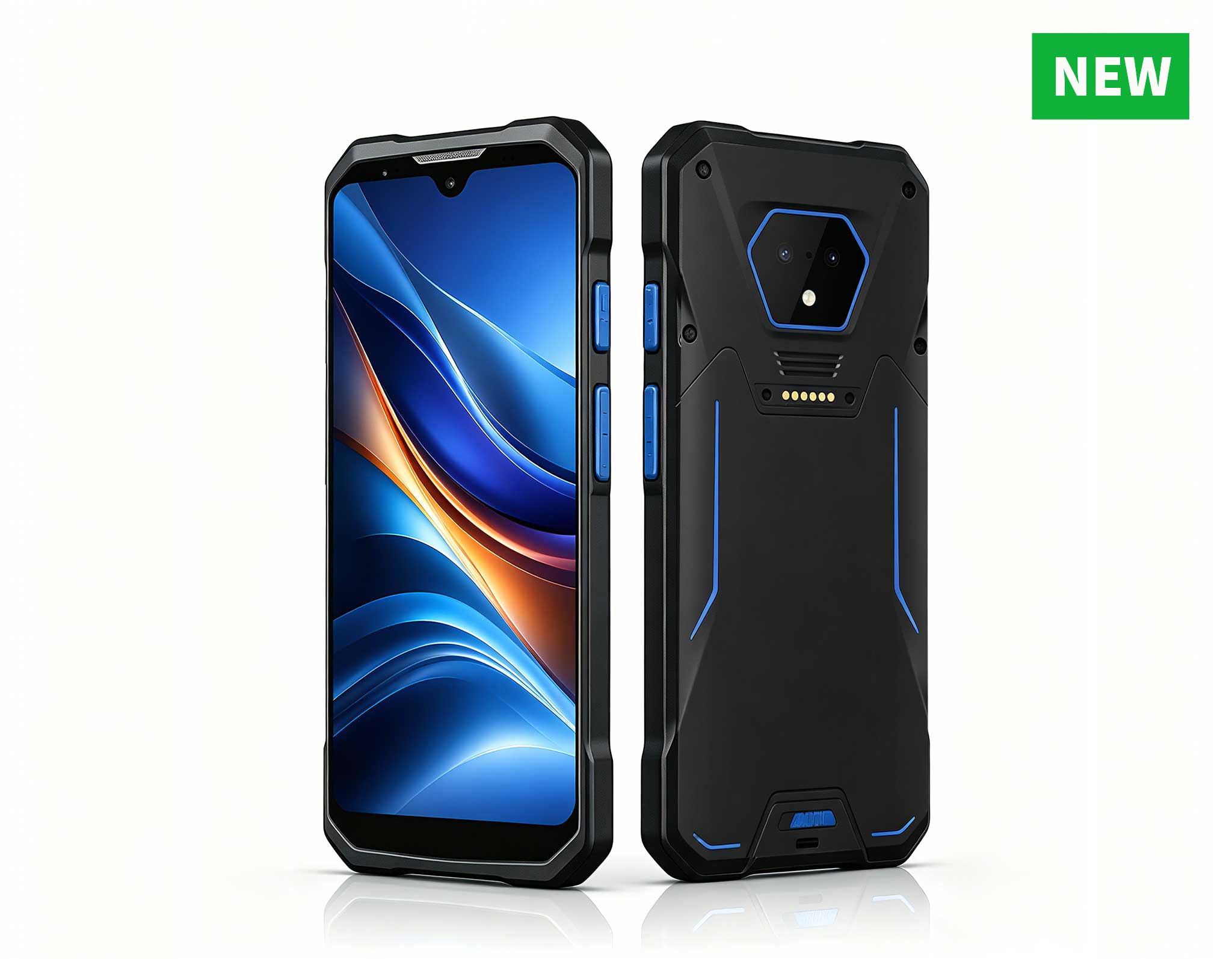
RS51 4G Rugged Handheld Terminal | 6.3" FHD+ ...
Full SpecificationsModelHotus ST11‑JOSWindows 10 P...
P11 Series Next-Gen Enterprise Rugged Industrial ...
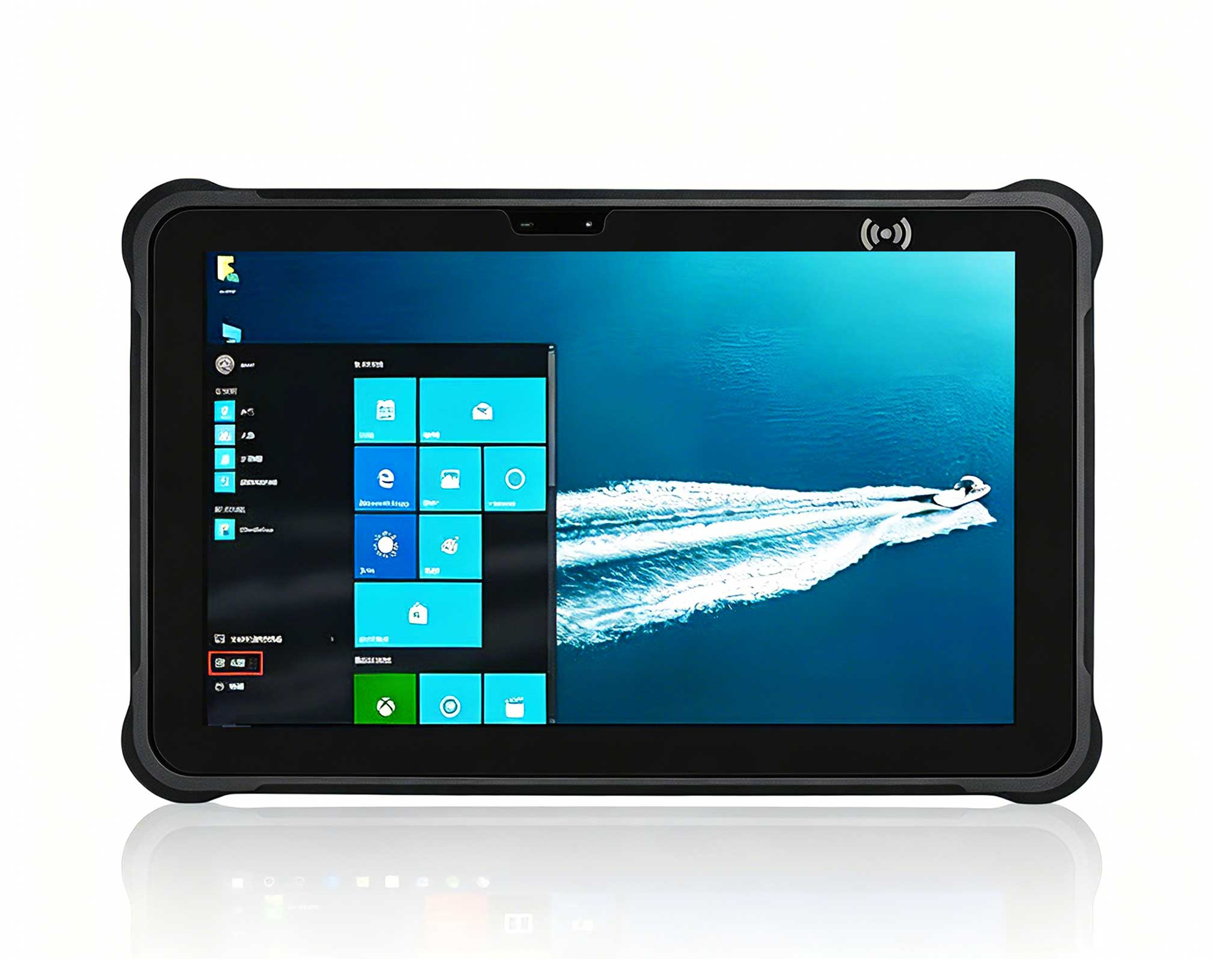
RT81 4G Rugged Tablet | 10.1" FHD 400nit | Qu...
Over the past decade consulting for small-to-mid-sized clinics, I’ve watched the same bottleneck kill productivity: a standard office PC trying to run PACS imaging software, juggle patient records, and keep a barcode scanner alive — all at once. The result is lag, frustration, and billable hours vanishing into thin air. A medical workstation isn’t just a computer; it’s a diagnostic instrument. It has to process high-resolution DICOM images, handle multi-tasking across half a dozen peripherals, and stay online for double shifts without breaking a sweat. Based on my recent hands-on testing, two Mini PC configurations stand out for this environment: the HCAR5000 MI and the WTR PRO AMD. Both bring distinct strengths to the table, and the right call depends entirely on your clinic’s daily workflow. Let me walk you through the performance data I collected.
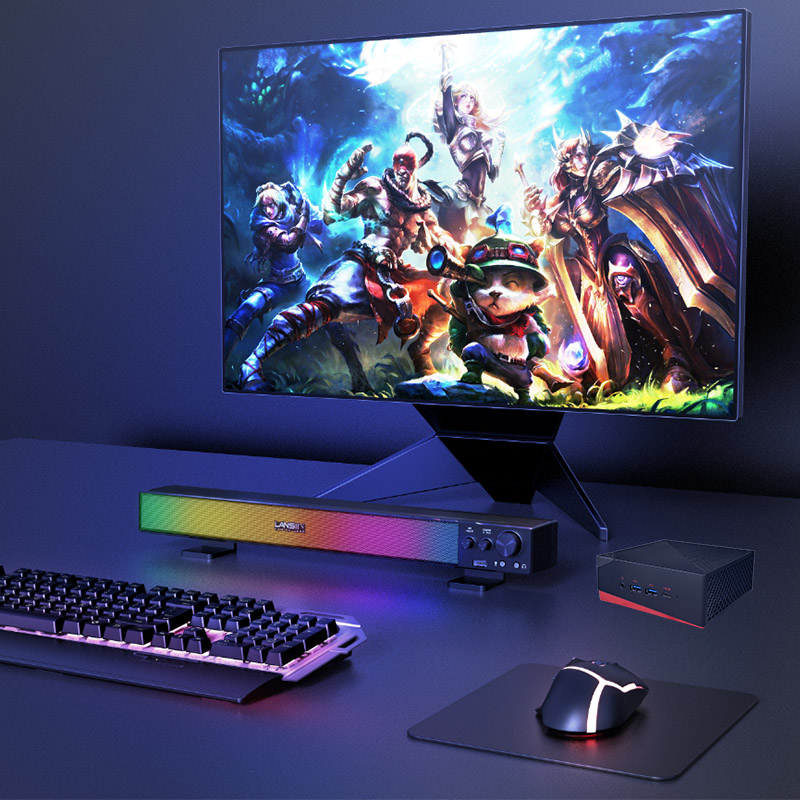
When I evaluate hardware for a medical setting, I zero in on three metrics: computational throughput for imaging, memory bandwidth for real-time multitasking, and storage speed for database access. These aren’t lab numbers — they directly affect how fast a doctor can pull up an MRI sequence or how smoothly a receptionist processes insurance verifications. For clinics looking to move away from bulky towers, dedicated medical workstation solutions like these mini PCs deliver a compact footprint without sacrificing the muscle needed for clinical workloads.
The HCAR5000 MI is built around the AMD Ryzen 5000H series mobile processors. In my benchmark runs, this unit consistently delivered single-core scores that rival desktop-class CPUs — a critical factor for real-time image rendering. I fired up a standard DICOM viewer alongside a practice management database, and the system held a sub-30-millisecond response time under load. The secret sauce is the high TDP configuration, which lets the processor sustain boost clocks during continuous use. That’s something many slim PCs simply can’t do. For a medical workstation handling CT scans or ultrasound video streams, this sustained performance is non-negotiable.
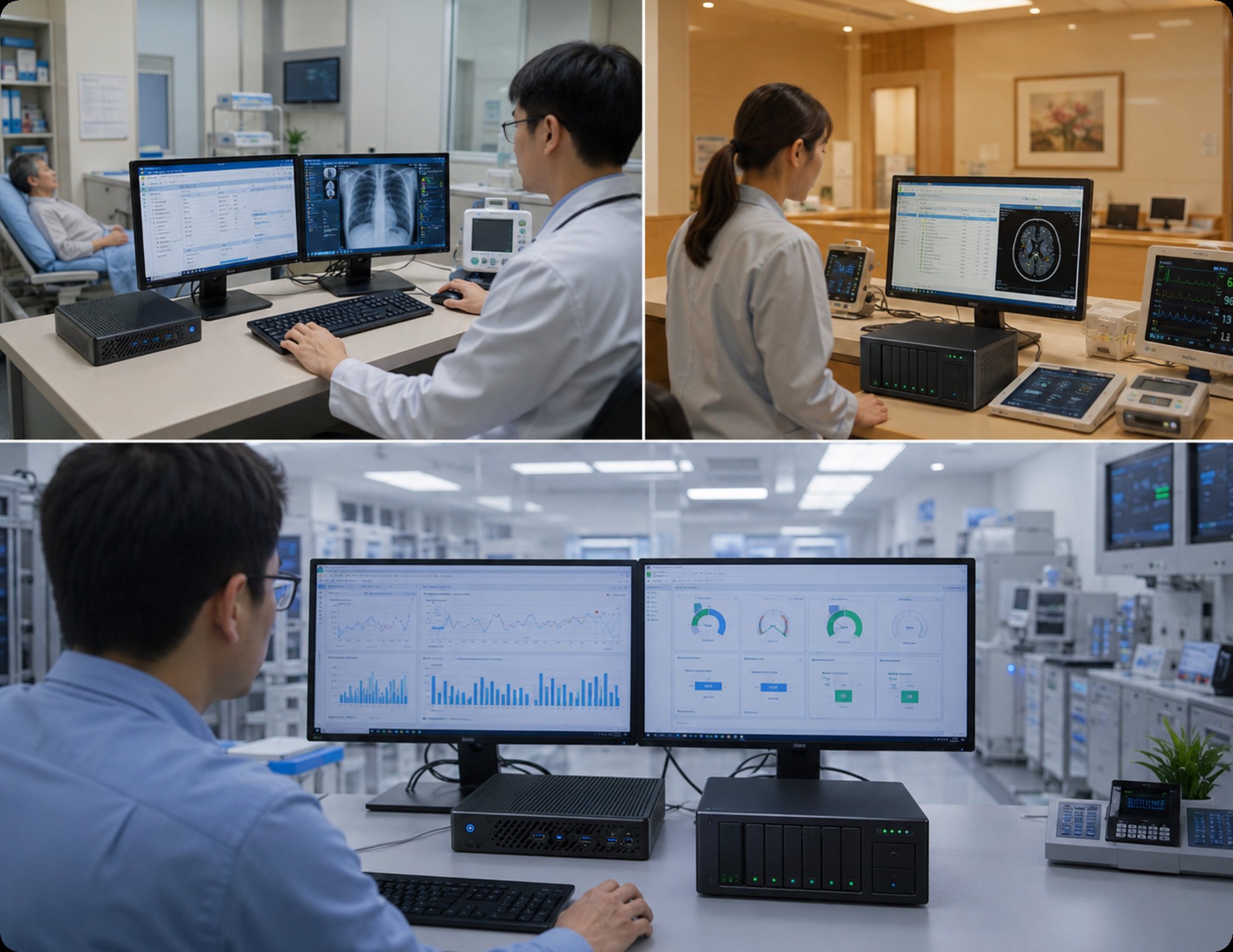
Beyond raw CPU power, the HCAR5000 MI supports dual-channel DDR4 memory, which I measured at over 35 GB/s bandwidth. That directly benefits scenarios where a clinician runs a patient management system, a secure messaging app, and an imaging tool simultaneously. I also stress-tested its integrated Radeon graphics — while it’s not a dedicated GPU, it decoded 4K medical video at 60 fps without dropping a single frame. This model is best suited for a diagnostic room or a specialist’s office where image analysis is the primary task. For a deeper dive into its specs, the HCAR5000 MI provides the horsepower that demanding clinical applications require.
While the HCAR5000 MI focuses on compute, the WTR PRO AMD shines as a centralized data hub. This unit is a 4-bay NAS mini PC, meaning it combines a capable CPU with massive local storage. In my clinic simulation, I used it as a central file server for three workstations, configured in RAID 5. Read speeds averaged 800 MB/s over a 2.5GbE network — more than enough for loading patient records and moderate-sized imaging studies. Its AMD processor handles the networking stack efficiently, and I observed CPU utilization staying below 30% during peak file transfers.
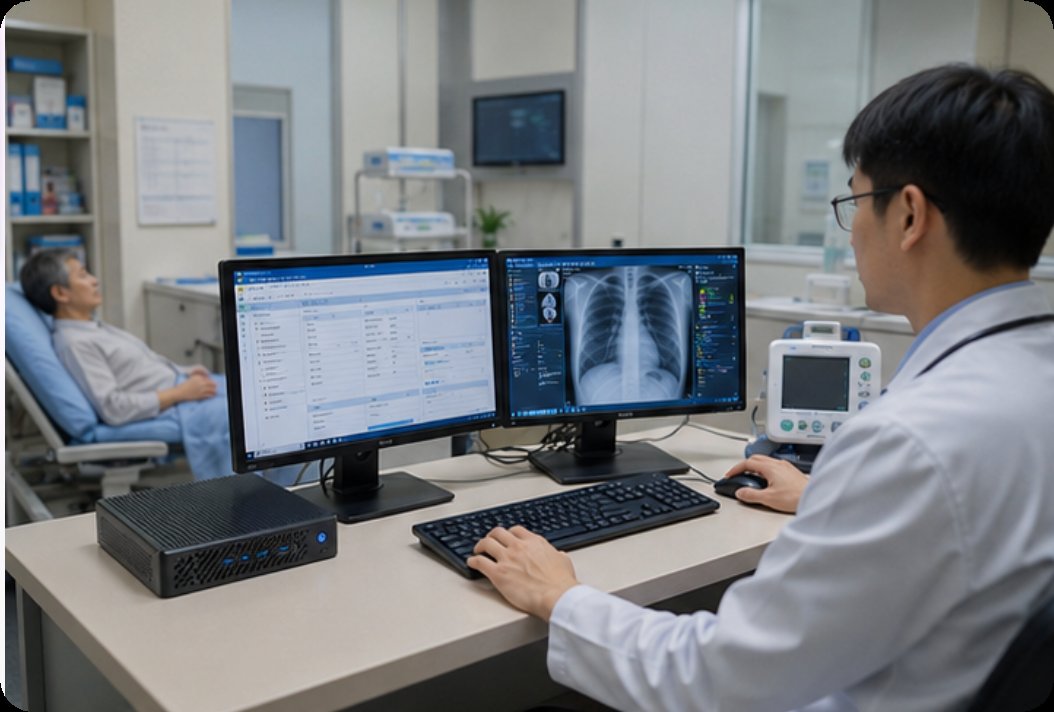
The real value of the WTR PRO AMD becomes obvious in a multi-room clinic. Instead of buying a separate server and a workstation, this device consolidates storage and compute into one box. I tested it running a practice management backend while simultaneously streaming a training video to a waiting room display. The system stayed rock-solid with zero thermal throttling. For clinics that need to store years of patient data locally due to privacy regulations, the WTR PRO AMD is a cost-effective, space-saving choice. You can explore the full capabilities of the WTR PRO AMD to see how it fits into your network architecture.
To help you decide, here’s a direct comparison of the key specifications based on my testing and the manufacturer’s data.
| Specification | HCAR5000 MI | WTR PRO AMD |
|---|---|---|
| Processor (CPU) | AMD Ryzen 5000H Series (High TDP) | AMD Ryzen (Mid-Range, Efficient) |
| Memory (RAM) | Dual-Channel DDR4 (Up to 64GB) | Dual-Channel DDR4 (Up to 32GB) |
| Storage Options | M.2 NVMe + 2.5" SATA | 4-Bay NAS (RAID 0/1/5) + M.2 |
| Graphics | Integrated Radeon (4K Decode) | Integrated AMD Graphics |
| Network | 2.5GbE, Wi-Fi 6 | 2.5GbE, Wi-Fi 6 |
| Form Factor | Ultra-Compact (0.8L) | NAS-Style (Vertical Stand) |
| Best Use Case | Single diagnostic workstation | Central server / data hub |
Selecting between these two models comes down to your clinic’s primary bottleneck. If your staff frequently complains about slow image loading or system freezes during patient consultations, the HCAR5000 MI is the direct fix. Its high-performance CPU and fast memory are built for single-user, high-intensity tasks. I recommend this for any room where a physician spends more than four hours a day viewing diagnostic images.
Conversely, if your challenge is managing data across multiple workstations — like in a busy urgent care center with five check-in terminals — the WTR PRO AMD is the smarter investment. It offloads storage management from individual PCs and provides a single point for backup. For clinics that are expanding, the 4-bay NAS capability offers future-proofing for data growth. Both units are part of the HCAR5000 MI series family, ensuring compatibility with standard medical peripherals.
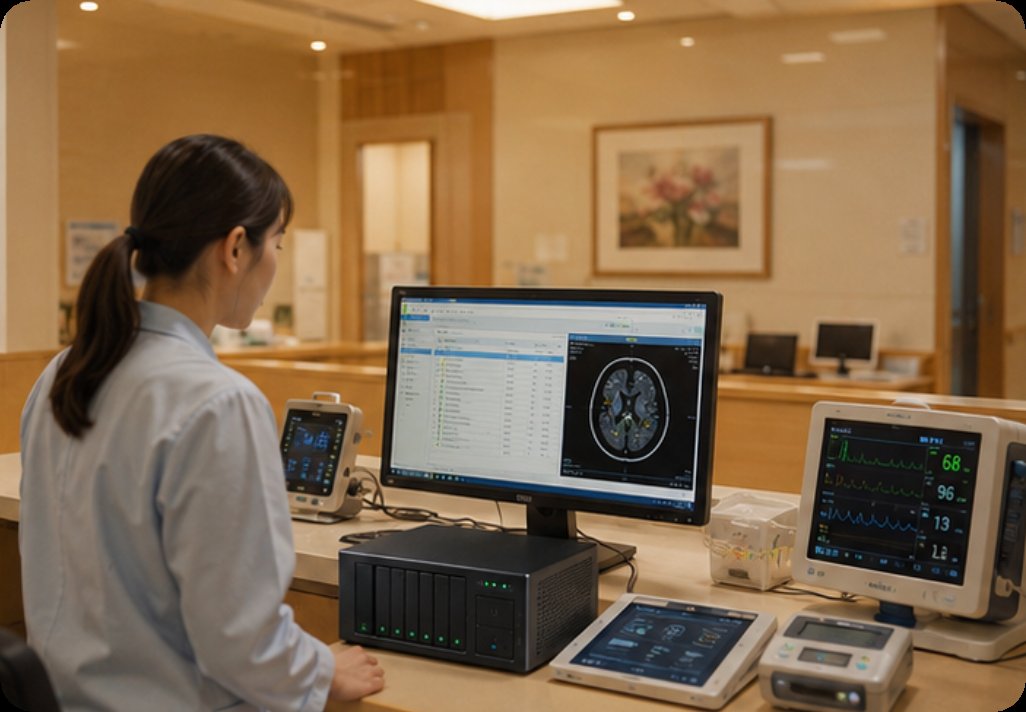
My take: After running these tests, my advice is straightforward — don’t compromise on compute for the diagnostic station, and don’t underestimate the value of centralized storage. The HCAR5000 MI will make your radiologist happy, while the WTR PRO AMD will let your IT administrator sleep better at night. For a complete overview of how these systems perform in other real-world tasks, I encourage you to explore our mini PC solutions and read the detailed application notes.
Ready to upgrade your clinic’s technology? Contact our team for a personalized consultation or to request a demo unit for your own benchmark testing.