- Select Language
P11 Series Next-Gen Enterprise Rugged Industrial ...
R860-S 5.5-inch Industrial PDA with Thermal Printe...
RT82 5G Rugged Tablet | 10.1" FHD 400nit | Qu...
The N40 Android smart PDA features a Cortex-A53 qu...
Maintenance instructions: Store at room temperatur...
In my years working with industrial IoT deployments, I have seen too many predictive maintenance projects fail not because of bad software, but because of fragile hardware. A factory floor is a hostile environment: vibration, dust, temperature swings, and power fluctuations are the norm. You cannot simply bolt a consumer-grade PC to a CNC machine and expect reliable telemetry. The real challenge is processing sensor data at the edge—right where the machine is—to detect anomalies before a breakdown occurs. This demands a compact, rugged, and energy-efficient computing platform that can run 24/7 without a hitch. That is why I believe the shift toward purpose-built, palm-sized industrial edge computers is not a trend; it is a necessity for any serious predictive maintenance strategy. For teams looking to deploy reliable condition monitoring, exploring dedicated industrial edge computing solutions is the first step toward eliminating unplanned downtime. And if you are evaluating hardware for these environments, a Mini PC built for industrial conditions is often the most practical starting point.
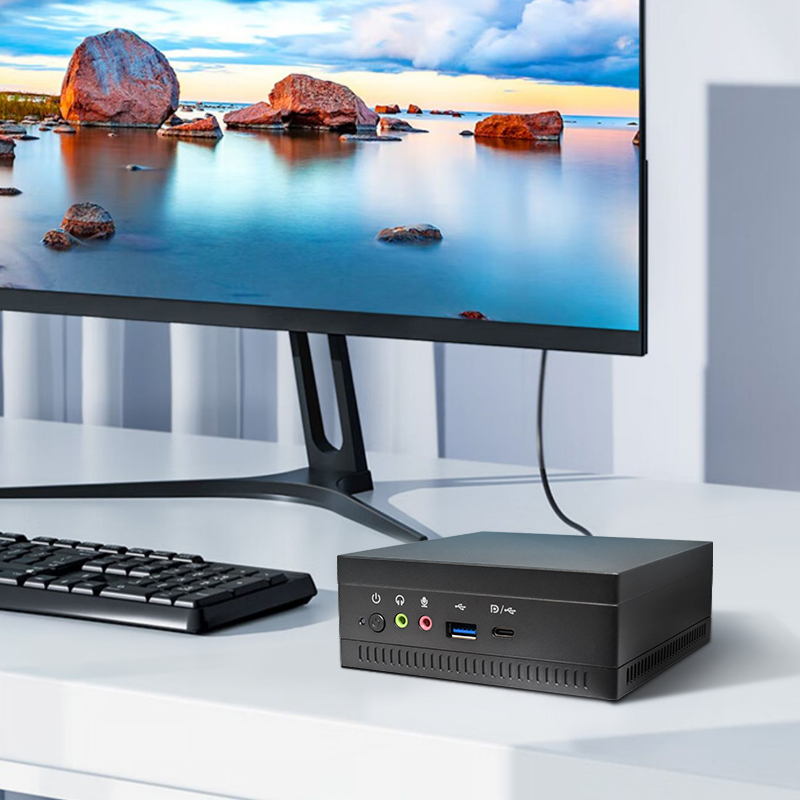
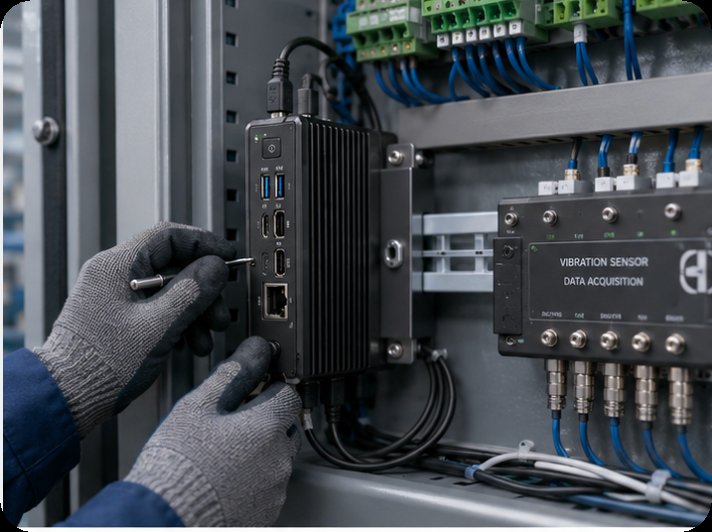
The Palm-sized miniPC is designed for the most space-constrained edge nodes. Its primary role in a maintenance context is to sit directly on or near rotating equipment—motors, pumps, conveyors—and process high-frequency vibration data in real time. With a footprint smaller than a smartphone, this unit can be mounted inside a junction box or strapped to a machine frame without obstructing maintenance access. It features a low-power embedded processor that is passively cooled, meaning zero fan intake for dust. This is critical for industries like cement or grain processing where particulate contamination is a leading cause of hardware failure. The unit supports multiple GPIO and serial interfaces, allowing direct connection to accelerometers and temperature probes without an external PLC. For a technician performing route-based data collection, this device eliminates the need to carry a laptop; it processes and forwards alerts autonomously.
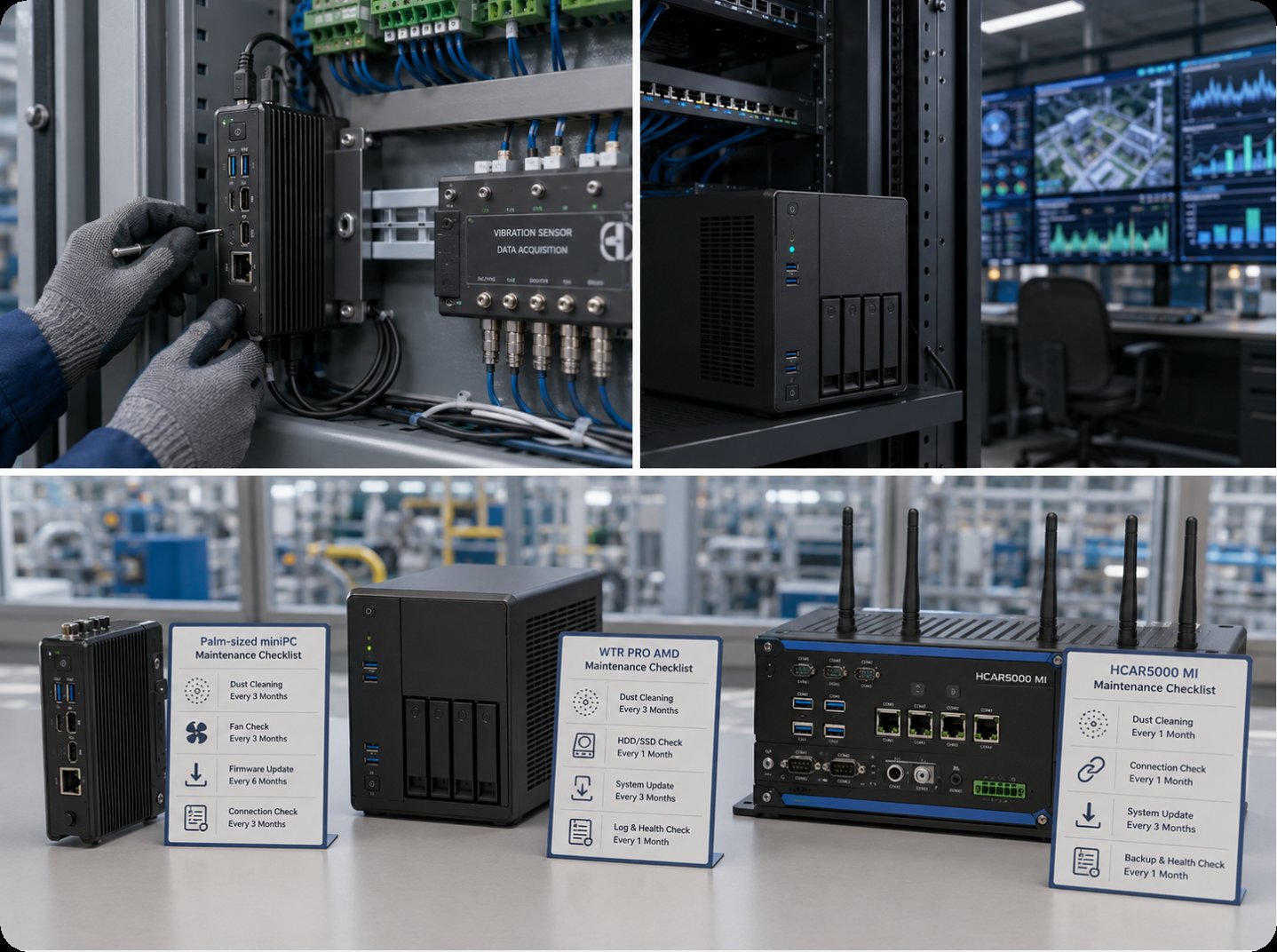
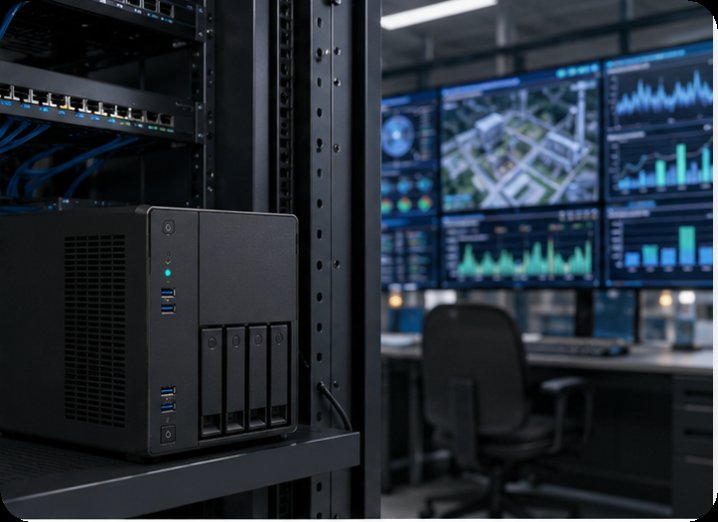
While the palm-sized unit handles real-time sensor fusion, the WTR PRO AMD addresses a different maintenance bottleneck: data storage and log retention. Predictive maintenance algorithms improve with historical data, but many sites lack the local storage to retain months of vibration and thermal logs. The WTR PRO AMD is a 4-bay NAS mini PC powered by an AMD processor, allowing it to serve as both a local data lake and a compute node. It runs standard IoT edge runtimes and can host a local historian database that stores years of time-series data. In a practical scenario, this device is deployed in a climate-controlled electrical room, aggregating data from multiple palm-sized nodes across the factory floor. Its RAID-capable storage ensures that maintenance records are not lost during a power outage. This unit is the backbone of a decentralized maintenance data architecture.
When a maintenance scenario requires deep learning inference—such as analyzing acoustic signatures or thermal imaging streams—the HCAR5000 MI is the appropriate choice. Powered by the AMD Ryzen 5000H series, this mini PC delivers laptop-class CPU performance in a palm-sized chassis. It is suited for tasks like real-time bearing fault classification using convolutional neural networks, or for running digital twin simulations that predict remaining useful life. Unlike the other two units, the HCAR5000 MI is built for compute-intensive workloads that cannot be offloaded to the cloud due to latency or security requirements. In a typical deployment, it is positioned at a supervisory level, processing data from multiple lower-tier edge nodes and triggering maintenance work orders directly into the CMMS. Its high TDP requires active cooling, but the thermal design is optimized for continuous industrial operation.
| Parameter | Palm-sized miniPC | WTR PRO AMD | HCAR5000 MI |
|---|---|---|---|
| Processor | Low-power embedded (e.g., Intel N100) | AMD Ryzen (mobile series) | AMD Ryzen 5000H Series |
| Memory (RAM) | Up to 16 GB DDR4 | Up to 32 GB DDR4 | Up to 64 GB DDR4 |
| Storage Type | M.2 SATA/NVMe | 4x 2.5" SATA (RAID 0/1/5/10) | M.2 NVMe + 2.5" SATA |
| Cooling | Passive (fanless) | Active (low-noise fan) | Active (high-performance fan) |
| Operating Temp | -20°C to 70°C | 0°C to 50°C | 0°C to 45°C |
| IP Rating (typical) | IP40 (with enclosure) | IP30 (indoor use) | IP30 (indoor use) |
| Primary Maintenance Role | Direct sensor fusion at the machine | Data aggregation & historical logging | AI inference & complex diagnostics |
| Best Deployment Location | On-machine or inside junction box | Electrical room / server cabinet | Supervisory control station |
Selecting the correct platform depends on three key factors: environmental exposure, data flow architecture, and computational complexity. If your maintenance program focuses on simple threshold-based alerts from a few sensors on a single machine, the Palm-sized miniPC is the most cost-effective and rugged choice. Its fanless design and wide temperature tolerance make it ideal for direct mounting on vibrating equipment. If your site requires long-term trend analysis and you need to correlate data from dozens of machines, the WTR PRO AMD provides the necessary storage and RAID redundancy. It is the right choice when data retention compliance is a concern. Finally, if your team is deploying advanced machine learning models for fault classification—such as identifying specific bearing defects from acoustic data—the HCAR5000 MI offers the CPU headroom needed to run those models locally without cloud dependency. For a complete overview of the entire product line, you can browse the Palm-sized miniPC series to see all available configurations.
Unplanned downtime is the single largest cost in industrial operations, and the right edge hardware is the foundation of a proactive maintenance strategy. Whether you need a rugged sensor node, a local data historian, or a high-performance inference engine, Hotus Technology has a form factor that fits your environment. I recommend starting with a pilot deployment: choose one critical asset, install the appropriate mini PC, and measure the reduction in unplanned downtime over three months. To learn more about how these systems integrate with your existing IoT stack, explore our mini PC solutions and discover the full range of industrial edge computing products designed for reliability.