- Select Language
Explore our customized PDA designed for versatile ...
Full SpecificationsModelHotus ST13‑UOSWindows 10 P...
The U9000 handheld PDA combines advanced barcode s...
Industry surveys tell a sobering story: warehouse communication errors cost logistics companies an average of $400,000 every year. That single figure helps explain why so many operations are rebuilding how they approach Warehouse Logistics. As fulfillment centers grow larger and order volumes climb, the margin for error shrinks with every peak season, forcing operators to replace paper-based workflows with connected digital tools that capture data at the source. This is precisely what the Palm-sized miniPC, Handheld PDA F505 and R860-S PDA bring to the table: compact, rugged hardware that turns every dock, aisle and cart into a live node in the inventory network.
The global smart warehouse market is projected to exceed USD 41 billion by 2030, expanding at a compound annual rate of roughly 14 percent. Automation adoption has climbed sharply in tandem, with more than 60 percent of large distribution centers now running some form of automated data capture. Barcode scanning and RFID identification have effectively become the default standard for inbound receiving, putaway, picking and cycle counting, while persistent labor shortages across the sector intensify the pressure on every worker to do more with less. In practical terms, the person standing on the floor is only as effective as the tools in their hands.
At the same time, edge computing is moving intelligence closer to the warehouse floor. Rather than shipping every scan and image to a distant cloud server, operators process data locally on compact devices, cutting latency and keeping operations alive even when connectivity fluctuates. For facilities seeking a dependable industrial solution for Warehouse Logistics, pairing a compact edge computer with rugged handheld scanners covers both fixed and mobile use cases inside a single affordable ecosystem. The shift is subtle but powerful: the warehouse stops waiting on the cloud and starts acting on its own data.
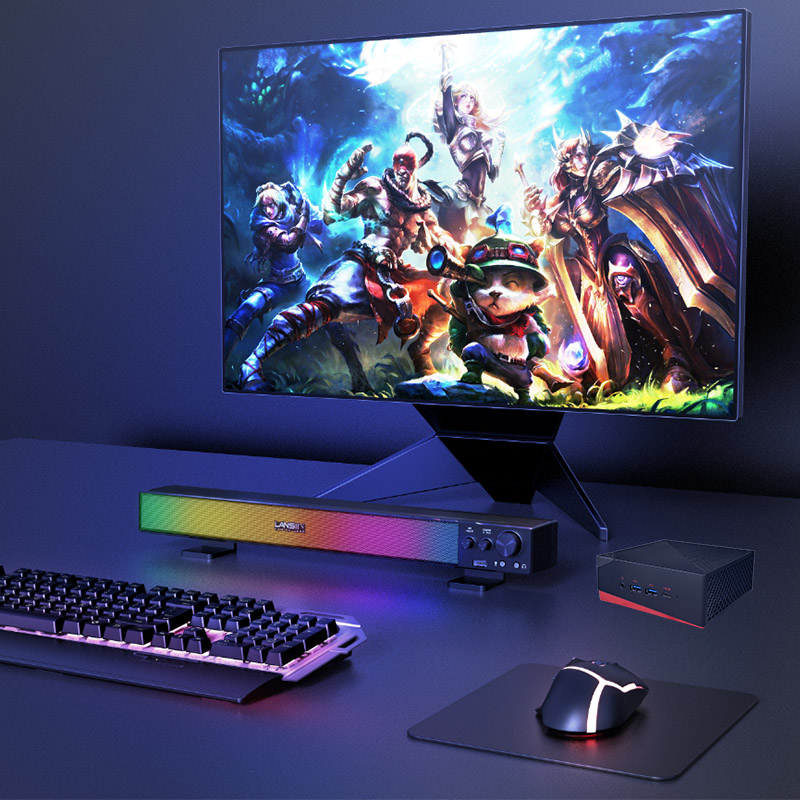
Space in a modern warehouse is measured in racking bays and aisle widths, not in server rooms. The Palm-sized miniPC occupies roughly the same footprint as a paperback book, yet it is powerful enough to run inventory management software, drive digital signage at the loading dock, host a local database mirror, or serve as the gateway for an entire cluster of handheld scanners. Its modest power draw also helps facilities trim energy costs and heat output in confined control rooms, a detail that matters when every kilowatt feeds the bottom line.
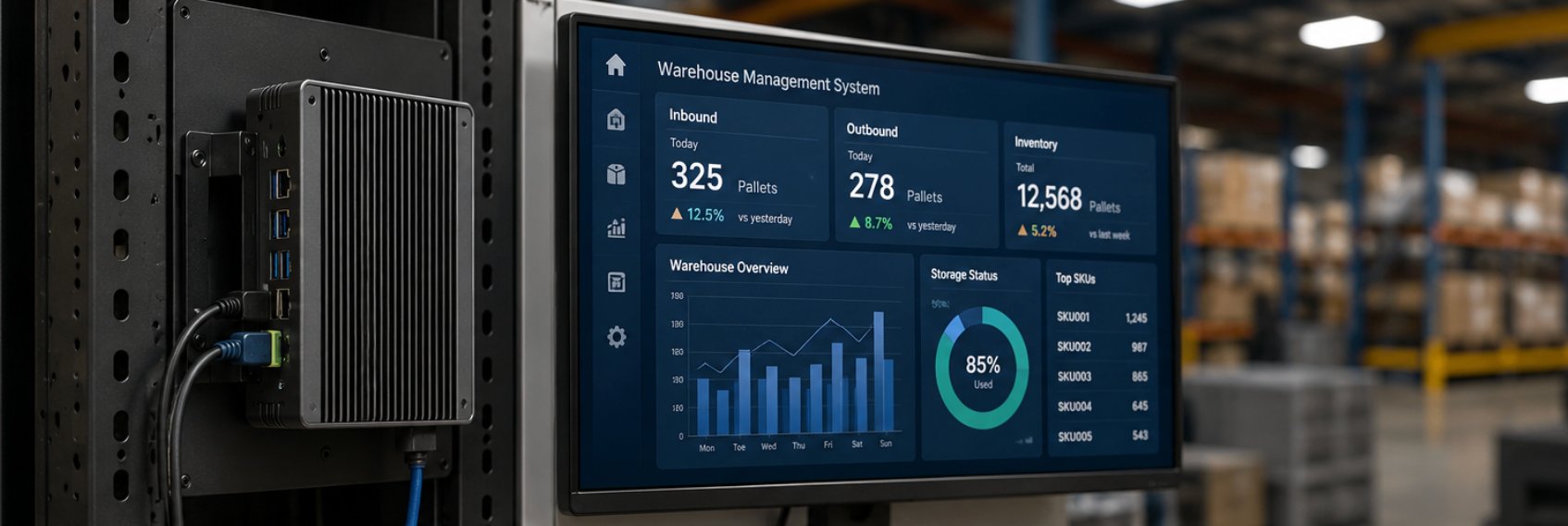
Because the mini PC relies on a fanless, passive cooling design, it contains no moving parts to wear out, which lets it shrug off the dust, vibration and temperature swings typical of a busy loading bay. Operations managers routinely mount it beside a conveyor line or inside a mobile cart, replacing bulky tower PCs that fail under constant movement. This broader trend toward decentralized computing means a warehouse no longer needs one oversized machine; it needs many small, reliable ones distributed exactly where the work actually happens. That distribution is what keeps throughput high and downtime low.
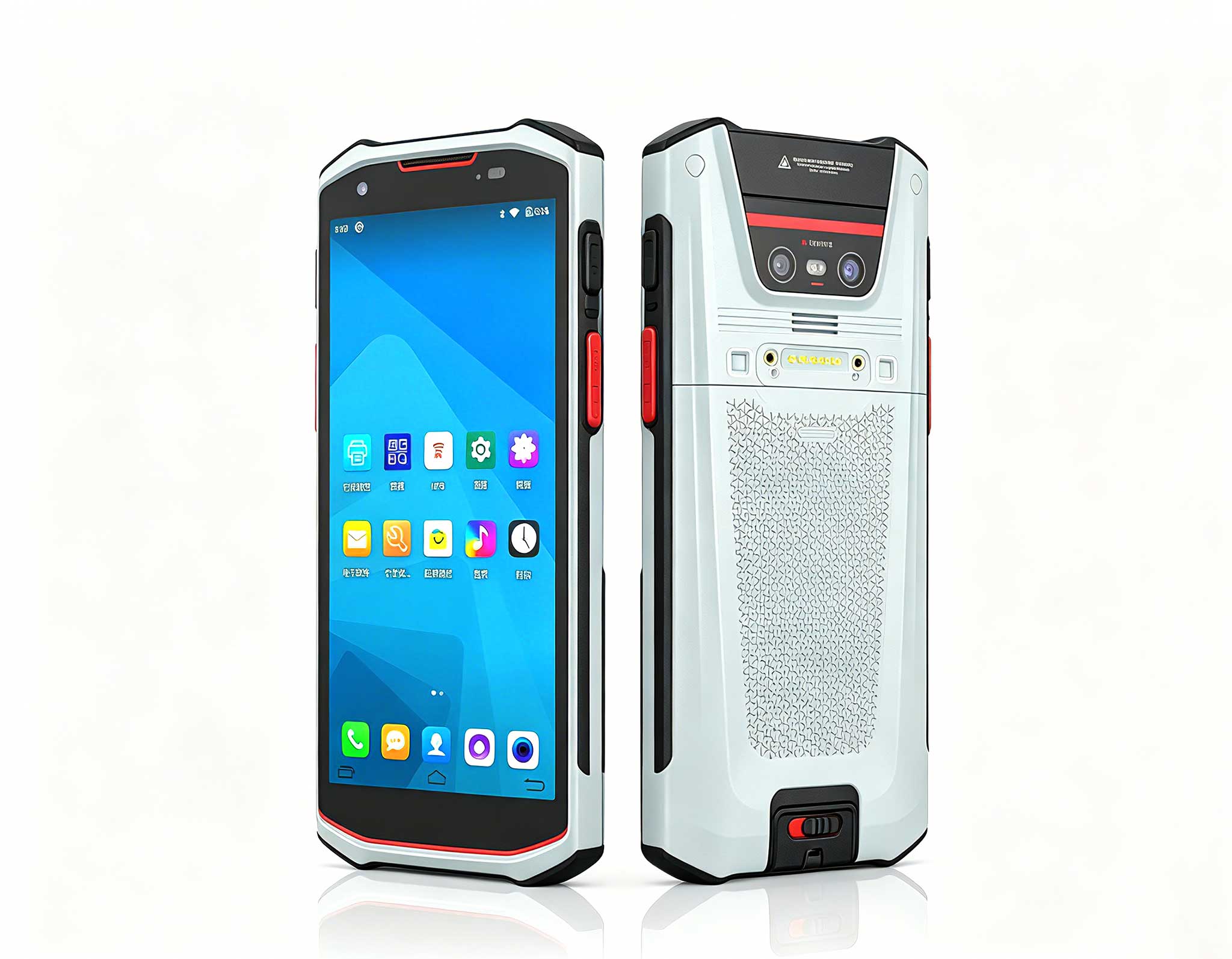
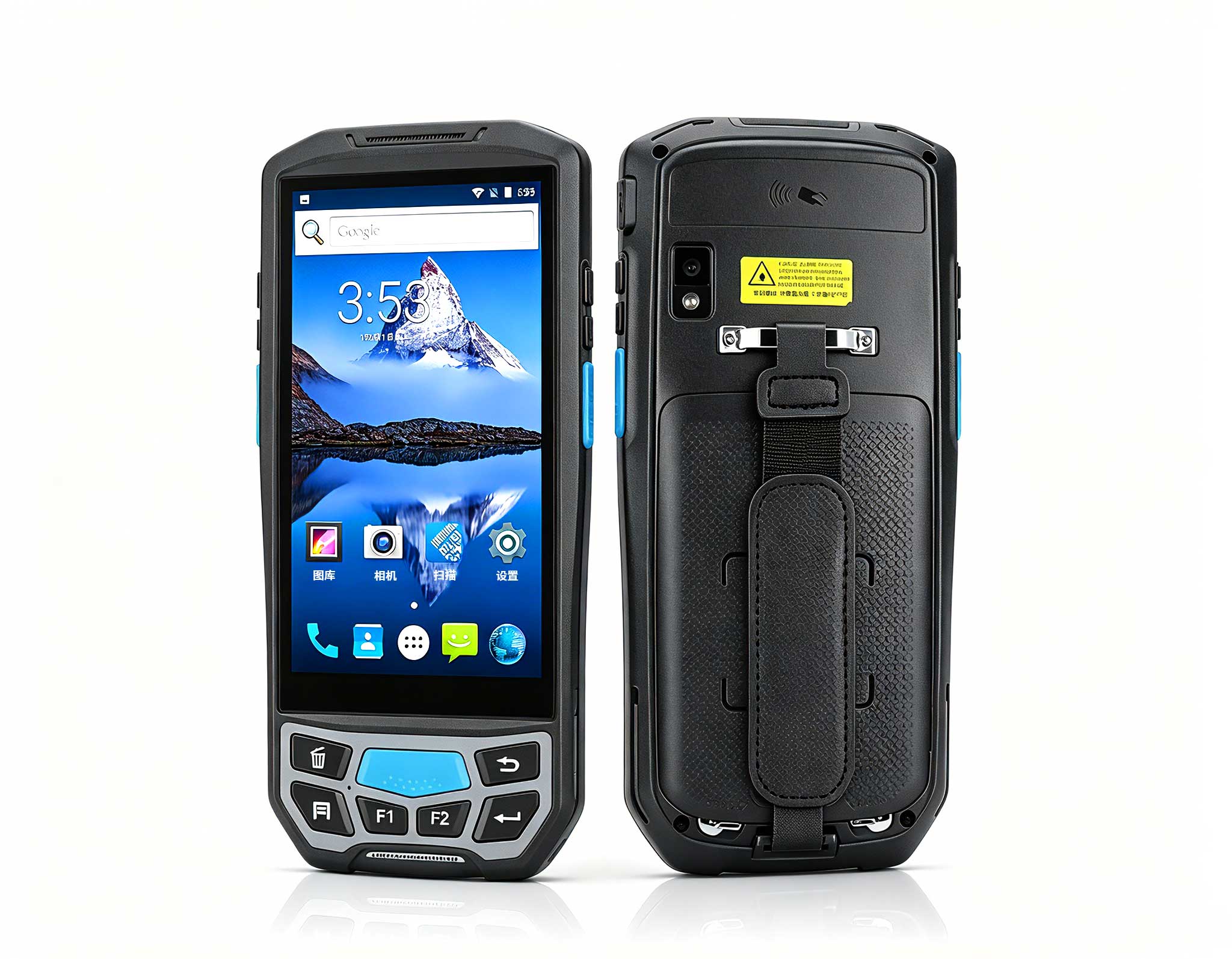
On the mobile side, the Handheld PDA F505 is engineered for pickers, receivers and stock auditors who spend eight hours a day on concrete floors. Its industrial barcode engine reads damaged, wrinkled or poorly printed labels that ordinary consumer phones routinely miss, and its high-capacity battery carries a full shift without a midday recharge. Drop protection and IP-rated sealing mean the occasional fall or dust exposure no longer turns into costly downtime or an unscheduled trip back to the office for a replacement unit.
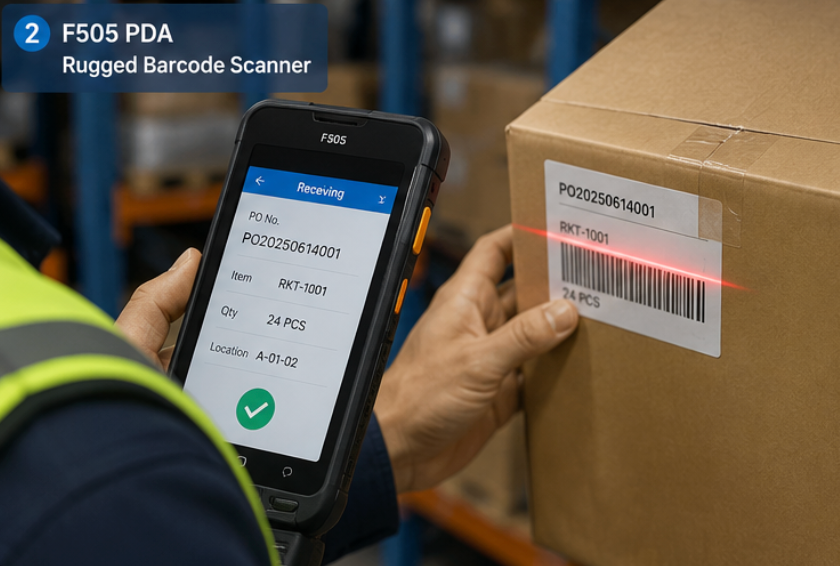
Paired with a warehouse management system, the F505 turns every scan into a live inventory event. Cycle counts that once consumed an entire weekend shrink to a few hours, and picking accuracy improves because each scan is verified against the expected location in real time. For facilities that want genuine mobile capability without handing fragile consumer tablets to warehouse staff, the F505 is a low-risk, high-return upgrade that typically pays for itself within a single inventory season.
For operations that move hundreds of pallets a day, the R860-S PDA brings RFID read rates that batch scanning simply cannot match. A single pass can capture dozens of tagged items simultaneously, which makes dock-door verification, asset tracking and bulk receiving dramatically faster. Pairing the R860-S PDA with existing label-based workflows lets warehouses migrate gradually from manual barcode scanning to fully automatic identification, protecting the investment they have already made in barcodes while adding a new layer of speed.
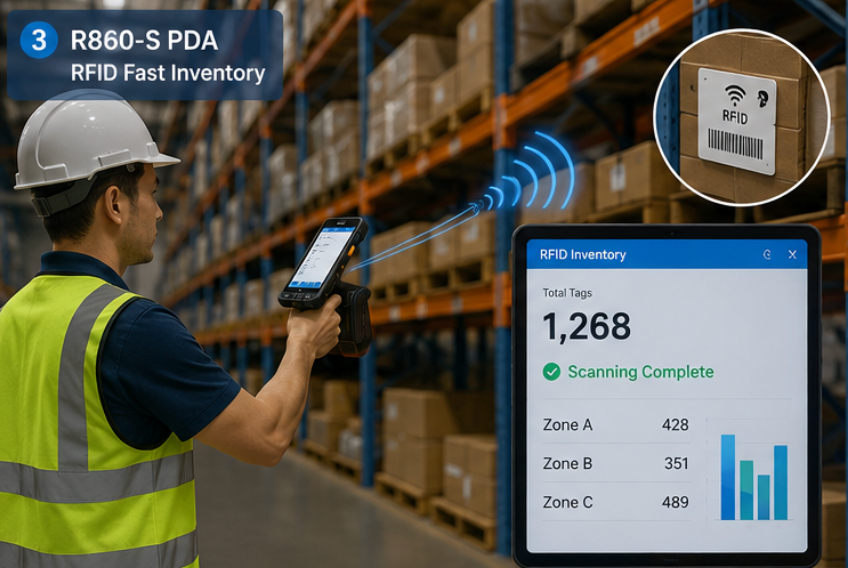
The business case is compelling. RFID-powered inventories can cut counting time by up to 80 percent while pushing inventory accuracy above 99 percent. As tag prices continue to fall, more mid-sized warehouses are adopting hybrid scanning strategies: barcodes for fine-grained, item-level picks and RFID for pallet-level and asset-level events that previously required hours of manual confirmation. The two technologies are not competitors; they are complementary gears in the same inventory engine.
| Attribute | Palm-sized miniPC | Handheld PDA F505 | R860-S PDA |
|---|---|---|---|
| Primary Role | Fixed edge computing station | Barcode scanning on the move | RFID batch reading and asset tracking |
| Form Factor | Palm-sized, fanless mini PC | Rugged handheld computer | Rugged handheld computer |
| Typical Weight | Under 0.5 kg | Light enough for all-day carry | Compact and balanced for one-hand use |
| Best For | Local software hosting and gateway duties | Picking, receiving and cycle counting | Dock-door verification and bulk receiving |
| Key Value | Bridges scanners and cloud systems | Reads barcodes in any lighting | Reads many RFID tags in one pass |
Most warehouses will deploy a mix of all three: a fixed mini PC as the on-premise brain, a fleet of F505 handhelds for daily picking, and one or two R860-S readers for high-volume dock operations. Matching the device to the task keeps hardware budgets lean and workflows fast. Choosing is not about finding a single winner; it is about assembling a balanced team that works as one.
The benefits of Palm-sized miniPC, Handheld PDA F505 and R860-S PDA for Warehouse Logistics go well beyond hardware specifications. Organizations consistently report improved inventory accuracy, fewer overtime hours spent troubleshooting equipment, a lower total cost of ownership compared with older systems, and the flexibility to scale operations as demand grows. For operators comparing options, rugged mini PC solutions give edge computing a compact, dependable anchor, while handheld readers keep the mobile workforce connected to the same stream of live data.
The technology used in Warehouse Logistics has evolved dramatically over the past decade. Early systems relied on simple, manual processes with limited visibility and frequent errors. The transition to digital brought faster and far more reliable connections between devices and management platforms. Today's solutions offer multi-channel capability, ultra-compact designs and features such as automatic channel switching that were hard to imagine just a few years ago, and the pace of change continues to accelerate.
Consider a real example. One company in the Warehouse Logistics industry faced a familiar problem: their existing equipment was too bulky for daily use and prone to interference inside a metal-structured facility. Switching to the Palm-sized miniPC, Handheld PDA F505 and R860-S PDA eliminated the interference issues, cut equipment weight by more than 60 percent, and reduced maintenance tickets by nearly half. Operations ran smoother, and staff could finally focus on moving goods instead of babysitting machines.
As automation rates climb and skilled labor stays scarce, the winning warehouses will be those that digitize every touchpoint. Whether you are modernizing a single dock or an entire distribution network, start small and scale fast, and explore our mini PC solutions to find the computing foundation your next automation project deserves.