- Select Language
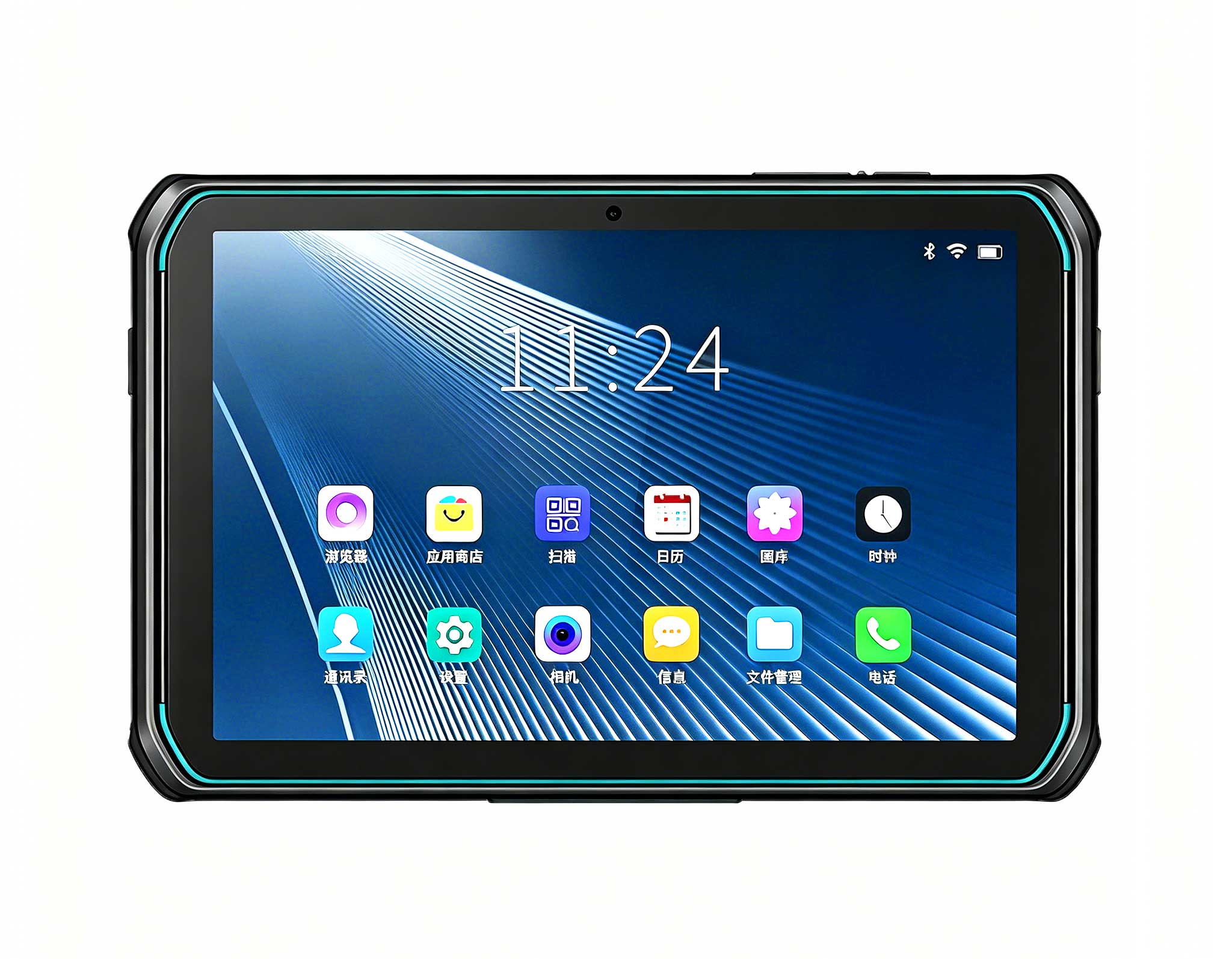
RT80 5G Rugged Tablet | 10.1" FHD 400nit | Un...
RT81 4G Rugged Tablet | 10.1" FHD 400nit | Qu...
RS50 5G Rugged Handheld Terminal | 6.3" FHD+ ...
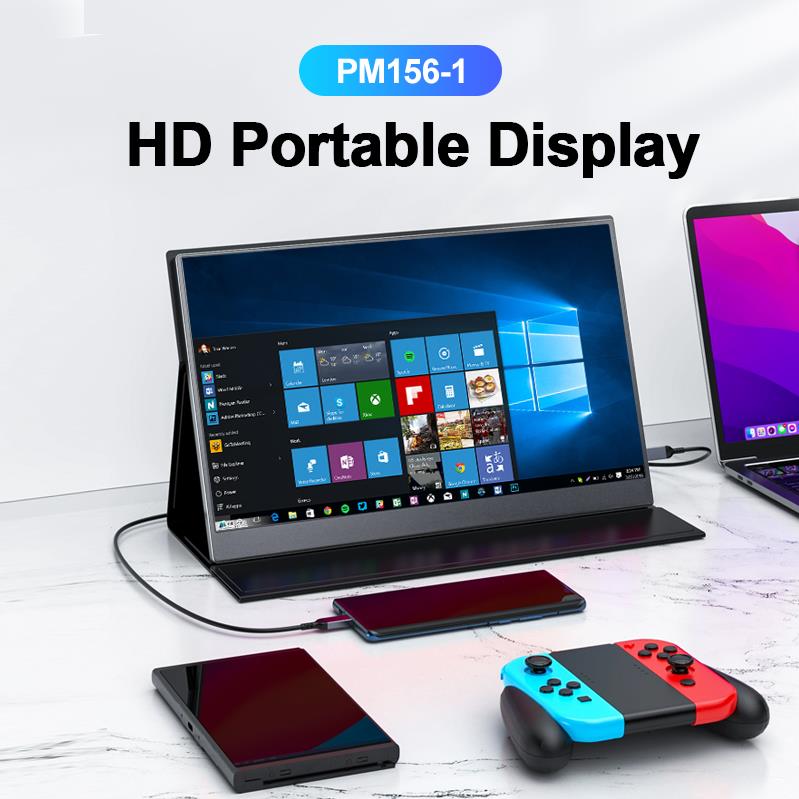
The PM156-1 is a 15.6-inch portable PC monitor fea...
RT81 4G Rugged Tablet | 10.1" FHD 400nit | Qu...
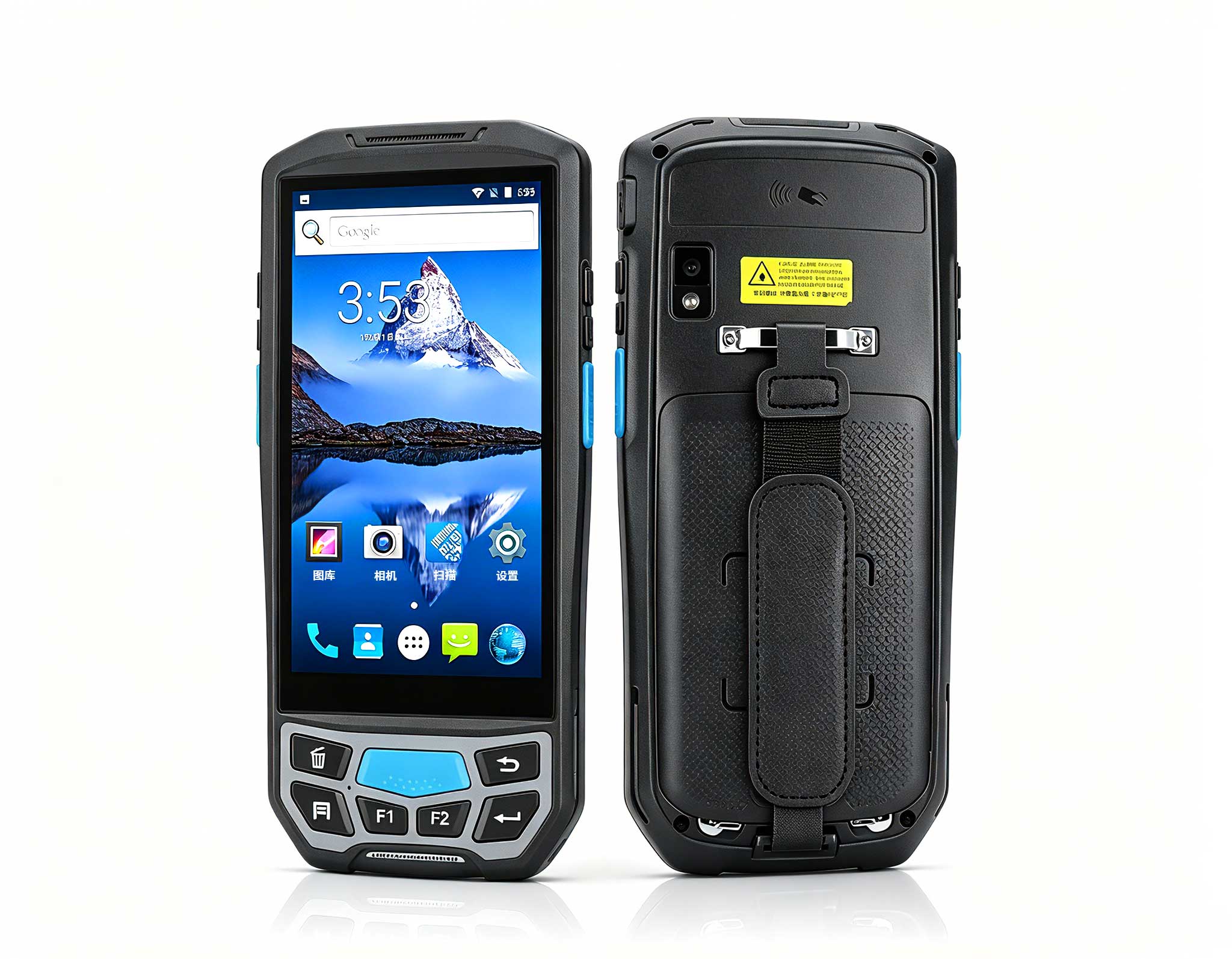
The U9000 handheld PDA combines advanced barcode s...
RT82 5G Rugged Tablet | 10.1" FHD 400nit | Qu...
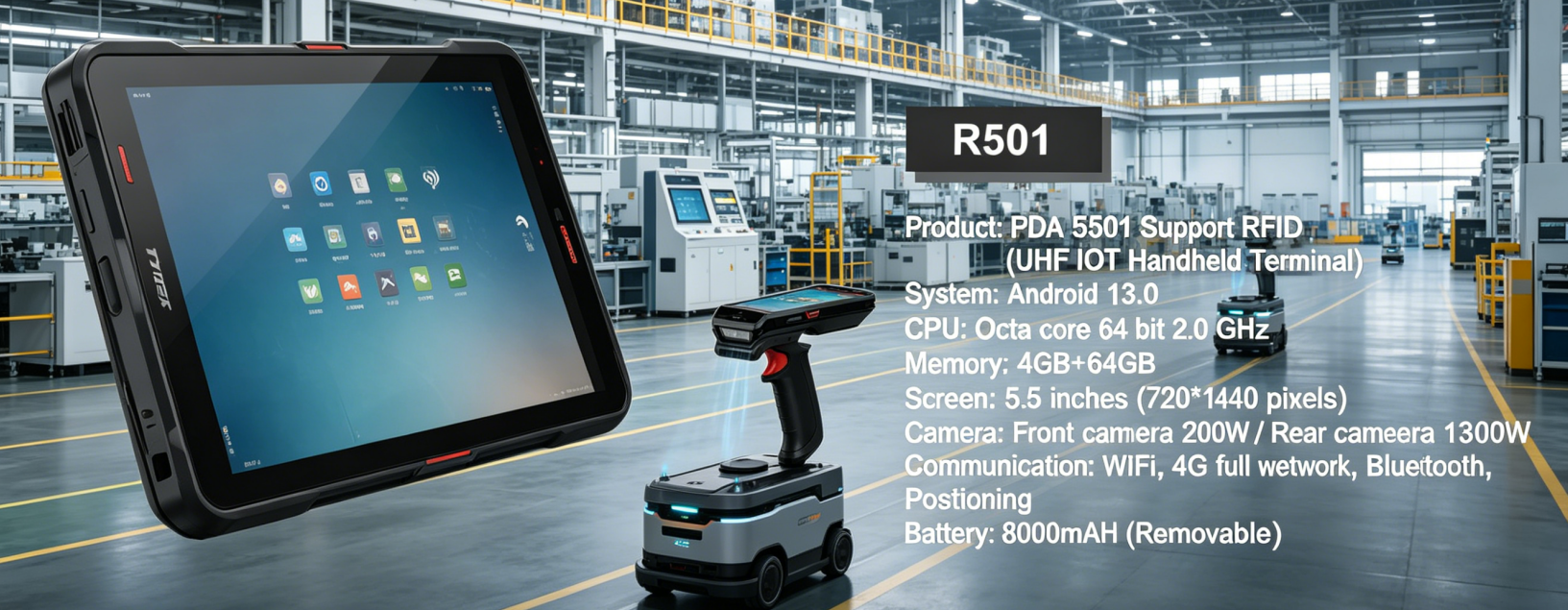
Hotus U9000 — the human interface for China‘s booming AGV/AMR fleet
By HOTUS Technology | April 2026
China‘s warehouse robotics industry is exploding. According to the China Mobile Robot Industry Alliance (CMR), China’s AGV/AMR shipments exceeded 280,000 units in 2025, a year‑on‑year increase of approximately 35%, with the market size reaching approximately 420 billion RMB. In 2026, shipments are expected to exceed 380,000 units, breaking through 550 billion RMB. This extraordinary growth is driven by three major forces: deepening automation in manufacturing, explosive demand for e‑commerce warehouse automation, and large‑scale production expansion in new energy vehicles and components.
Globally, the autonomous mobile robots market tells a similar story. It will grow from $5.79 billion in 2025 to $6.83 billion in 2026 at a CAGR of 18%, with rising warehouse labor shortages and e‑commerce logistics expansion fueling demand. The logistics robots market is even more dramatic — estimated at USD 19.78 billion in 2026, projected to reach USD 68.9 billion by 2033 at a staggering CAGR of 16.9%. Yet amid these breathtaking numbers lies a quiet crisis: who manages the robots when they break down? Who handles the exceptions when the AI gets confused?
Here‘s the paradox that few industry reports discuss. As warehouses add more robots, they don‘t need fewer people — they need different people. The human role shifts from manual labor to robot supervision, exception handling, and fleet coordination. A single AMR might navigate a warehouse autonomously 99% of the time, but when it encounters an unexpected obstacle, a damaged barcode, or a mis‑picked item, a human must intervene. That human needs a device that can talk to the robot fleet, scan problematic items, and log exceptions — all while standing on a busy warehouse floor.
The Hotus U9000 Handheld PDA is designed for exactly this role. With integrated UHF RFID, high‑speed barcode scanning, Android 13 OS, and IP67 rugged protection, it serves as the mobile interface between human workers and the robot fleet. When a robot stops, the worker arrives with a U9000, scans the item, diagnoses the issue, and dispatches the robot back to work — all in under 60 seconds.
The micro‑fulfillment market — small, highly automated warehouses located close to urban centers — is growing even faster than the broader warehouse automation market. It will grow from $9.12 billion in 2025 to $13.13 billion in 2026 at a breathtaking 43.9% CAGR. These compact facilities are densely packed with robots, conveyors, and automated picking systems, operating at extreme speeds to meet same‑day delivery expectations. In these high‑intensity environments, the margin for error is measured in seconds.
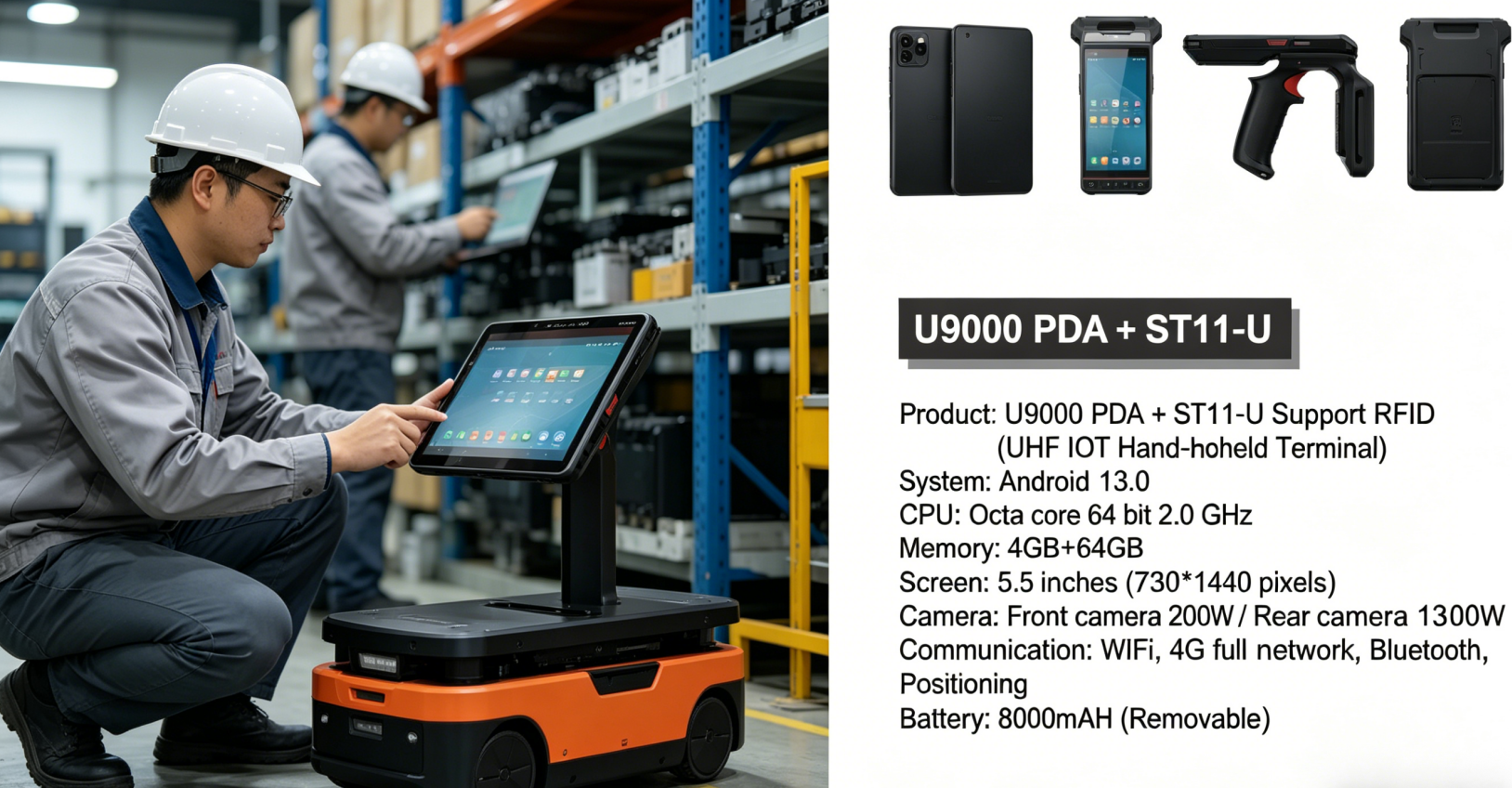
The Hotus ST11‑U 10.1″ Windows Rugged Tablet serves as the supervisor‘s command console for micro‑fulfillment operations. With its high‑brightness 1000+ nit display, Windows 11 Pro OS, and hot‑swappable battery, it enables 24/7 fleet monitoring, real‑time exception resolution, and performance analytics — all from a device that survives drops onto concrete and exposure to warehouse dust.
A national third‑party logistics provider operating 2 million square feet of warehouse space deployed 200 AMRs, 150 U9000 PDAs, and 50 ST11‑U tablets across five fulfillment centers. The results after 12 months:
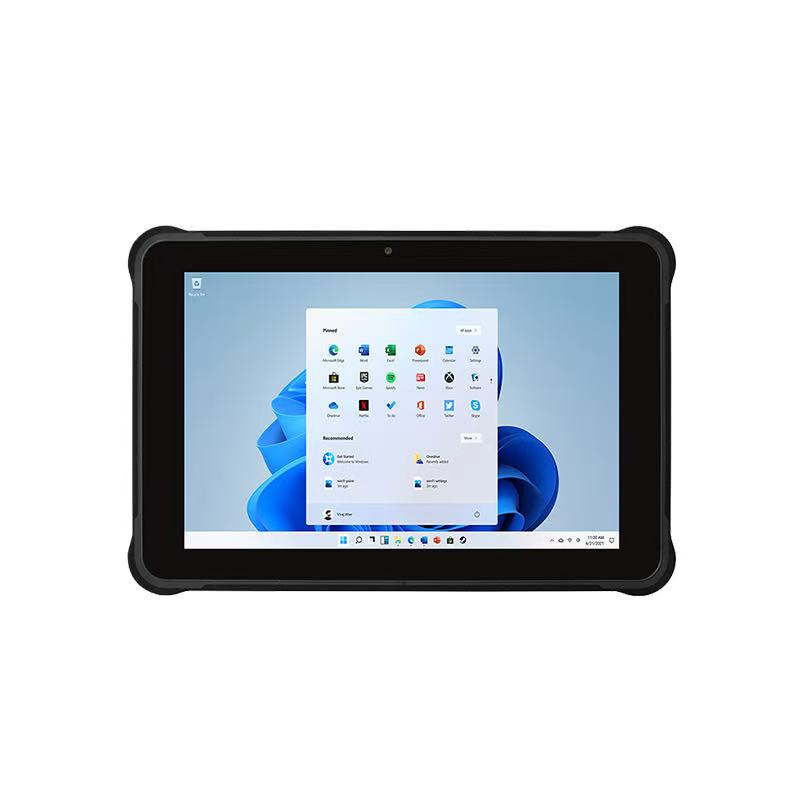
Hotus ST11‑U — Windows tablet for 24/7 robot fleet monitoring
Contact HOTUS Technology to discuss your warehouse automation needs, request pilot units, or explore custom PDA and tablet solutions for human‑robot collaboration.