- Select Language
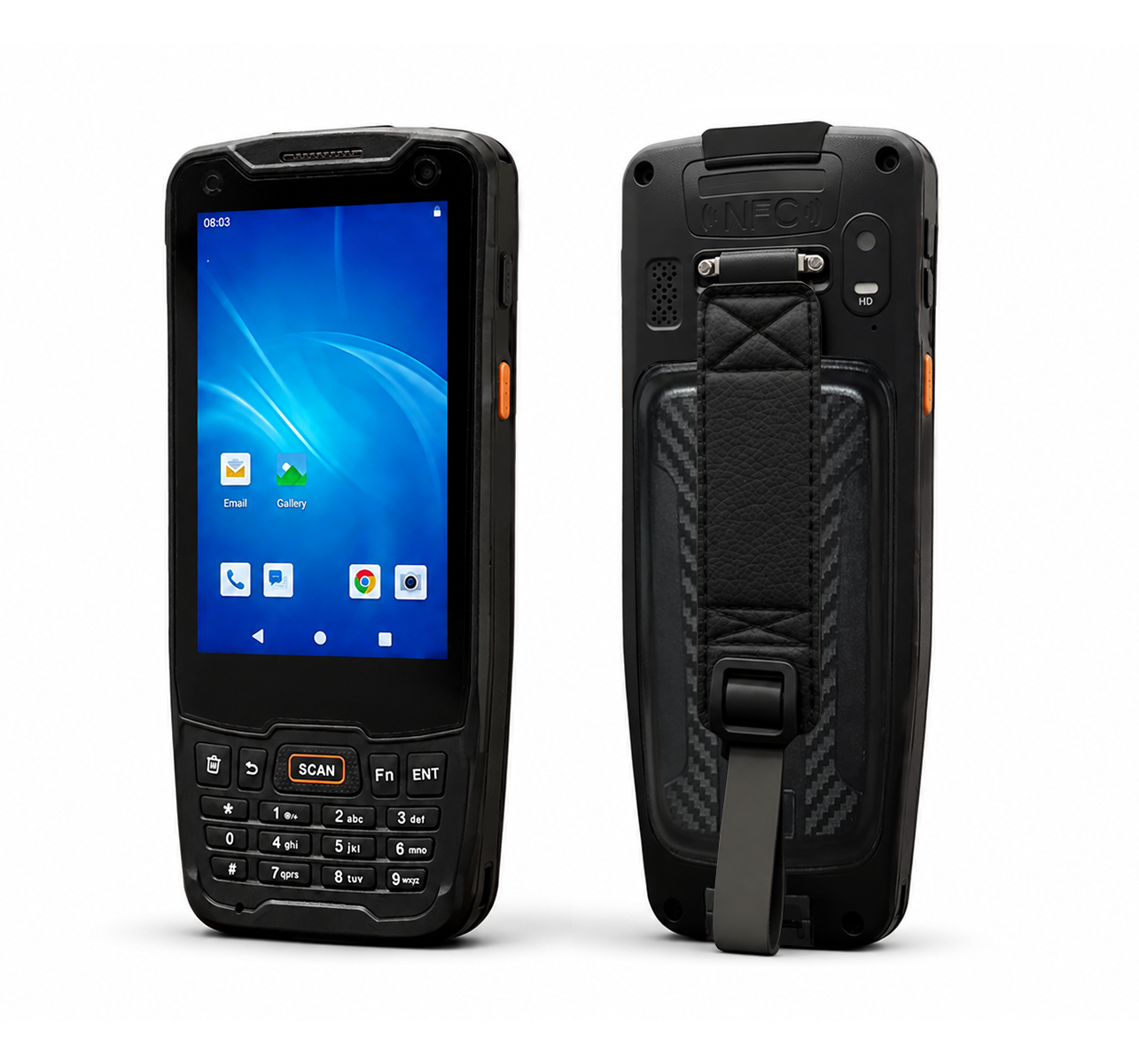
R350C 4-inch Industrial Handheld PDA | Qualcom...
Explore an innovative Personal Digital Assistant f...
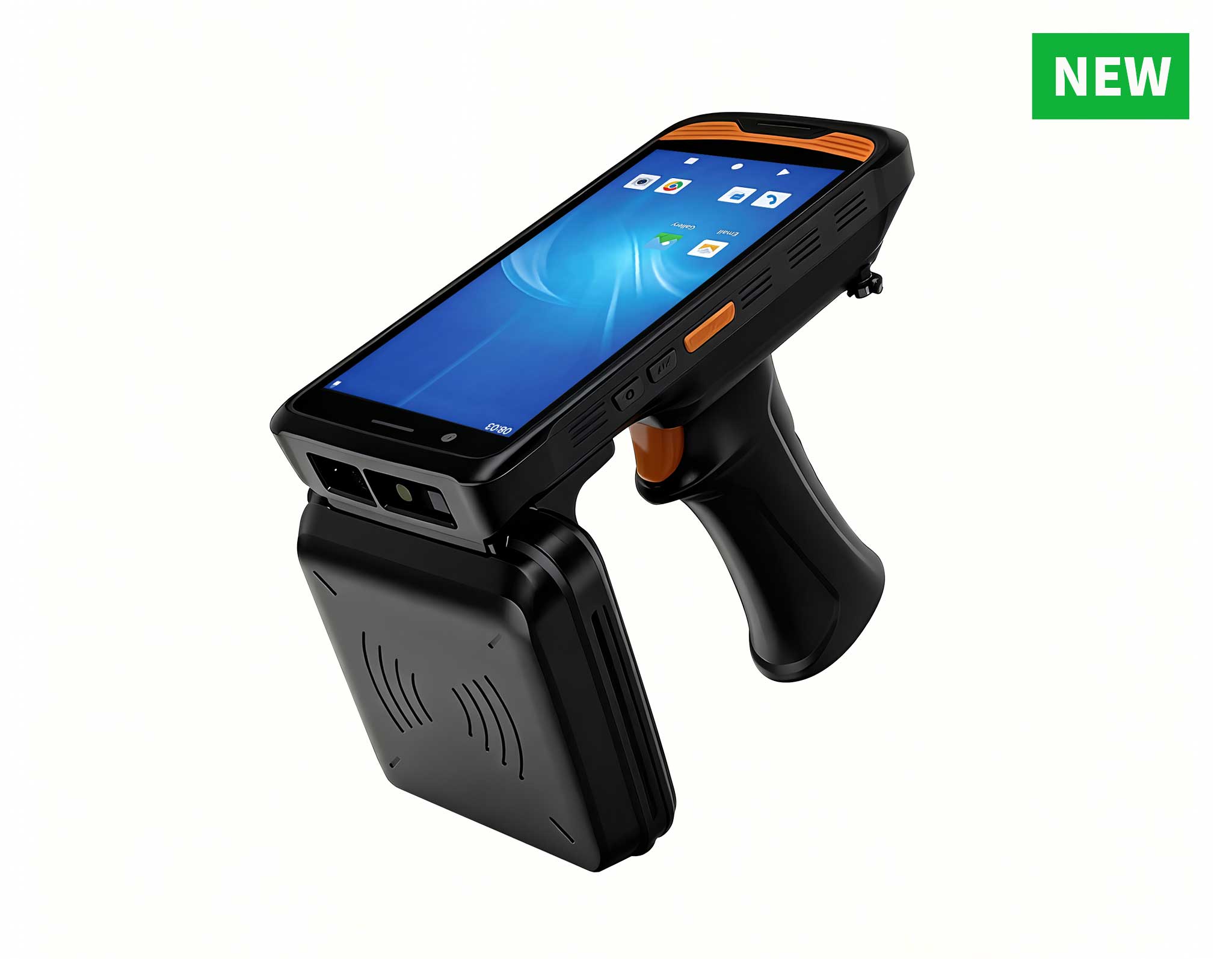
R366C-S 5.5-inch Industrial UHF RFID Reader | Qual...
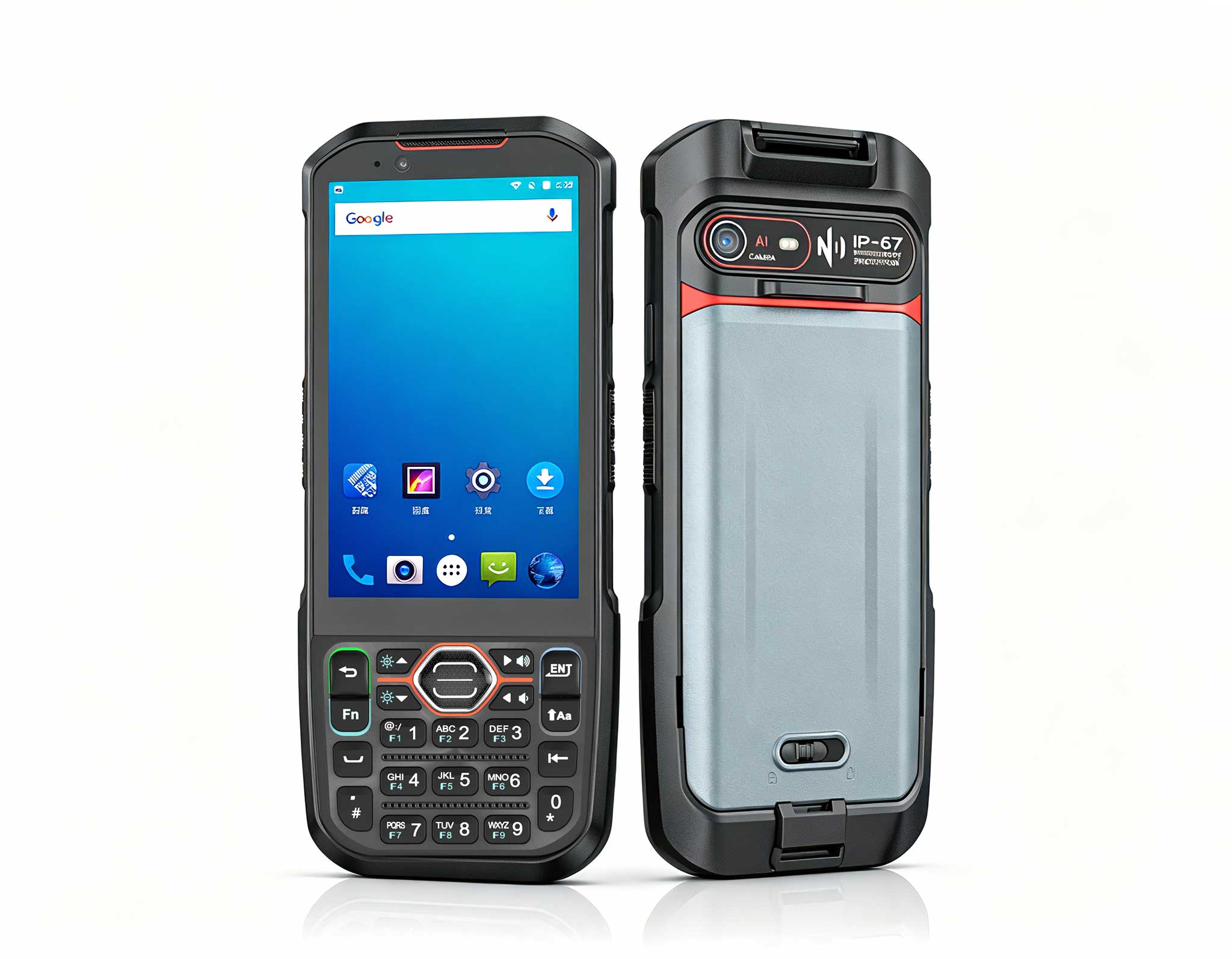
RS51 4G Rugged Handheld Terminal | 6.3" FHD+ ...
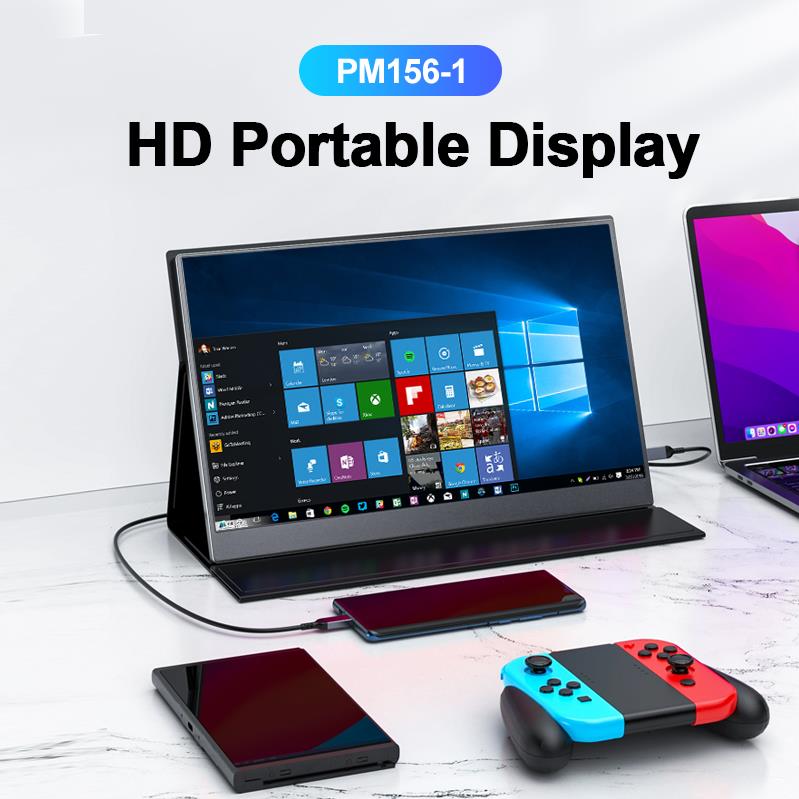
The PM156-1 is a 15.6-inch portable PC monitor fea...
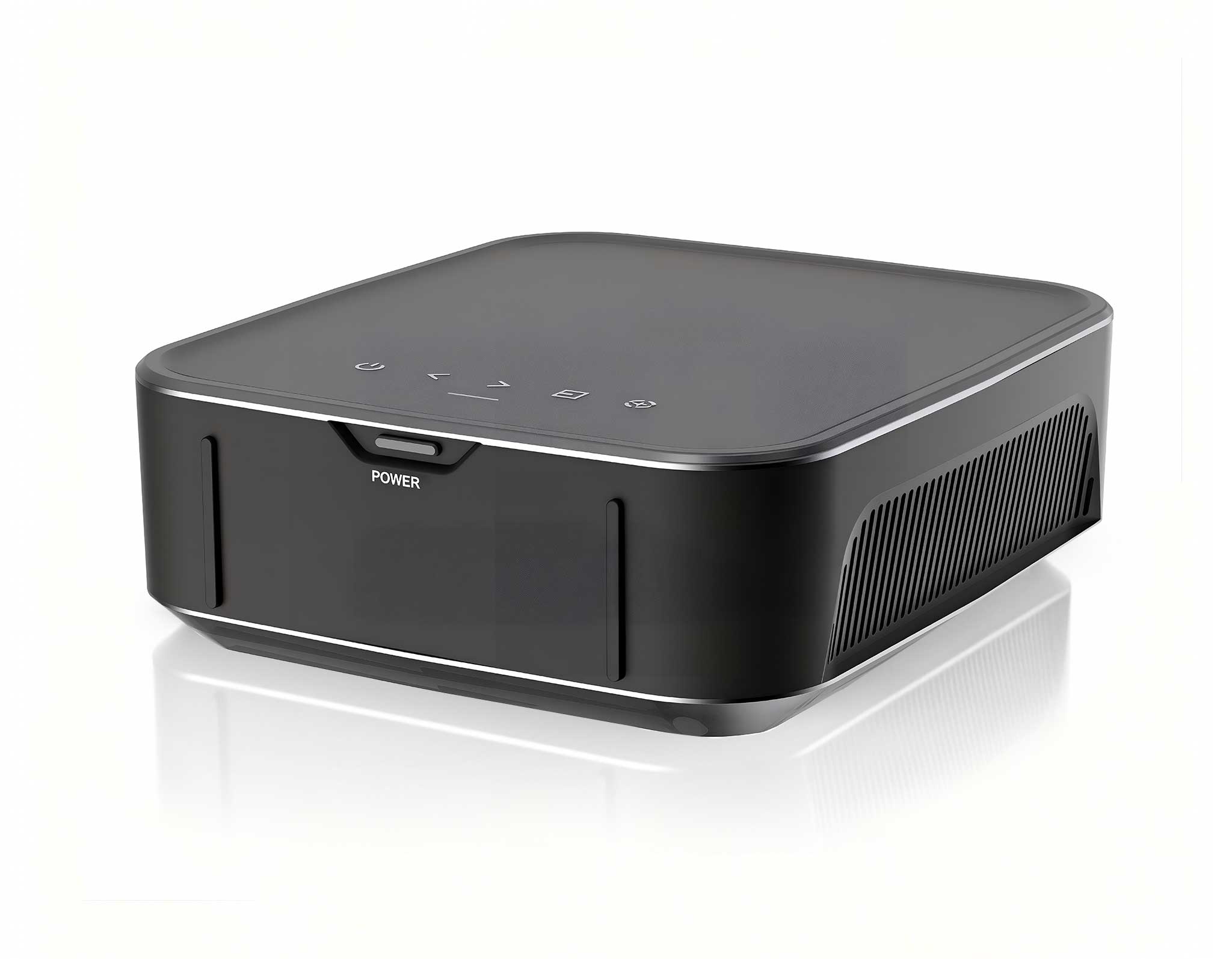
One Device, Dual Functions – A Projector and a Com...
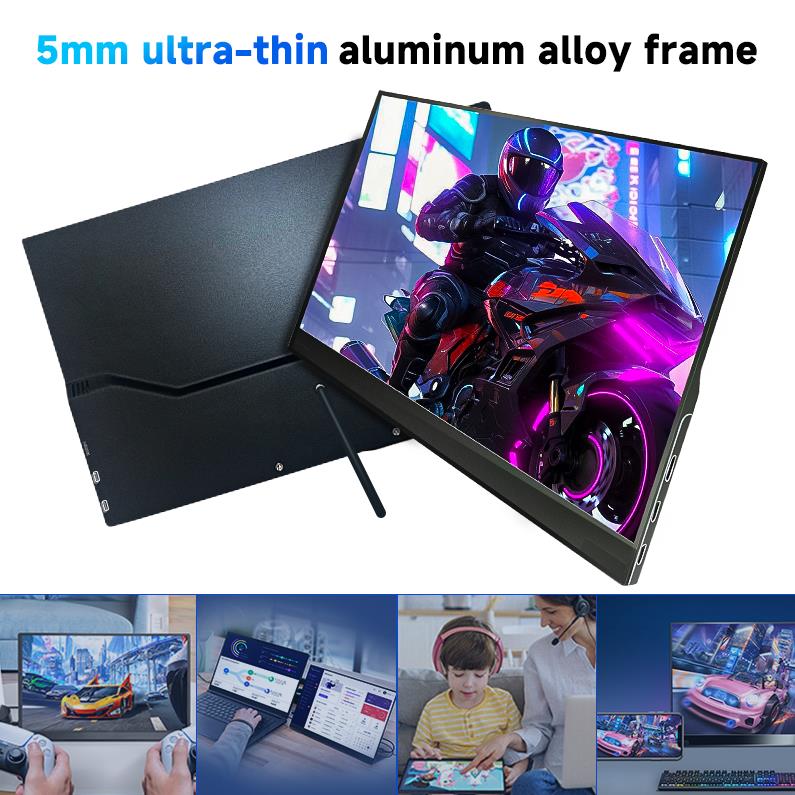
The PM133-2 is a 13.3-inch portable monitor featur...
From the unknown so simpleUsed for mobile phones, ...
Explore an innovative Personal Digital Assistant f...
Full SpecificationsModelHotus ST11‑MOSWindows 10/1...
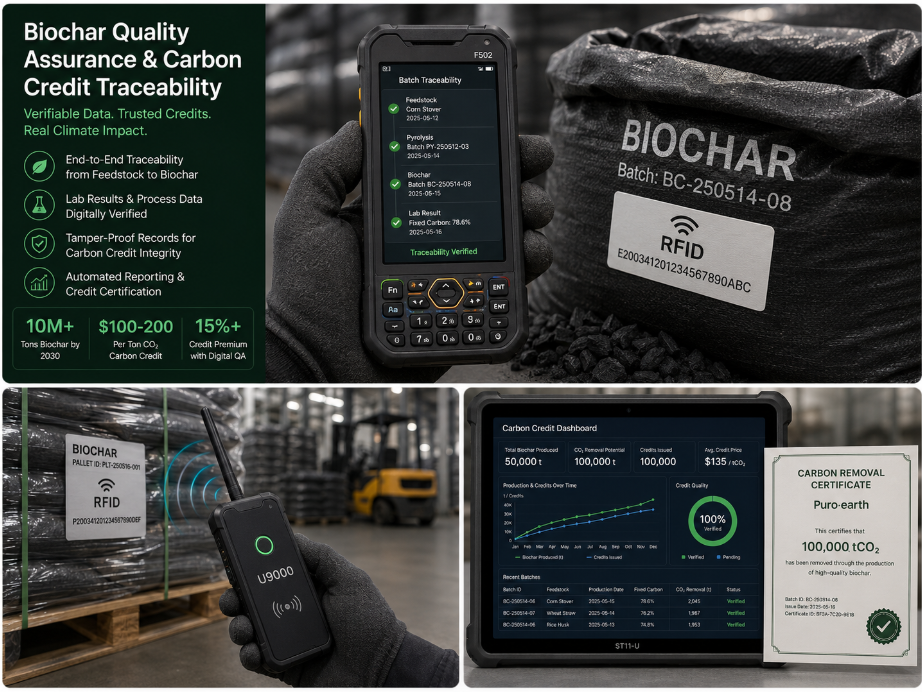
Fig 1 – A quality technician in a dusty coverall points the F502 at a woven bag of biochar. The screen shows a lab-verified carbon content of 82% and a moisture level of 12%. Behind her, a pyrolysis reactor vents steam. The product is black, dusty, and climate-positive – but only if the data behind it is real.
Industry Insight: Biochar has rapidly evolved from a niche agricultural amendment into a serious carbon removal industry. As global carbon markets tighten verification requirements, producers are under pressure to prove exactly where every batch came from, how it was processed, and whether the carbon storage claims are scientifically valid. In modern biochar operations, traceability is no longer paperwork — it is the product itself. RFID-enabled rugged mobile devices now play a central role in validating carbon credit eligibility, managing production genealogy, and protecting producers from rejected audits.
By HOTUS Technology | May 2026
Industrial biochar production is entering a new growth phase. Governments, enterprise sustainability programs, and voluntary carbon markets are investing heavily in long-term carbon removal technologies, and biochar has emerged as one of the most scalable options available today. Produced through pyrolysis of agricultural waste, forestry residue, and biomass, biochar stores carbon in stable form for hundreds of years while improving soil quality and water retention.
Analysts expect global biochar demand to rise sharply over the next decade as carbon removal standards mature and more corporations seek durable carbon offset projects. Carbon credit registries increasingly require full digital traceability for every verified ton of CO2 removed. Producers that cannot provide auditable production records risk lower pricing, delayed verification, or complete rejection of their carbon credits.
This shift is transforming how biochar facilities manage quality assurance. Traditional paper batch logs and disconnected spreadsheets are becoming liabilities. They are difficult to audit, vulnerable to transcription errors, and nearly impossible to synchronize across receiving docks, pyrolysis systems, laboratories, warehouses, and shipping operations.
The Hotus F502 RFID PDA was designed for exactly these industrial traceability environments. At biomass intake, operators scan RFID tags attached to incoming feedstock loads, instantly recording supplier origin, moisture readings, biomass category, and delivery timestamps. During pyrolysis, the F502 captures reactor operating data including temperature curves, residence time, and batch identifiers directly from production systems.
Once laboratory testing begins, technicians use the F502 to associate each sample with its original production batch. Fixed carbon percentage, ash content, moisture levels, and volatile matter measurements are uploaded immediately into the digital record. Instead of fragmented paperwork, every stage of the carbon removal chain becomes linked to a single traceable RFID identity.
This level of traceability is becoming critical because corporate carbon buyers now conduct far deeper due diligence than in previous years. Buyers want proof that feedstock was sustainably sourced, that the pyrolysis process met approved methodology standards, and that the final biochar product meets permanence requirements. An RFID-based digital chain of custody dramatically simplifies these audits.
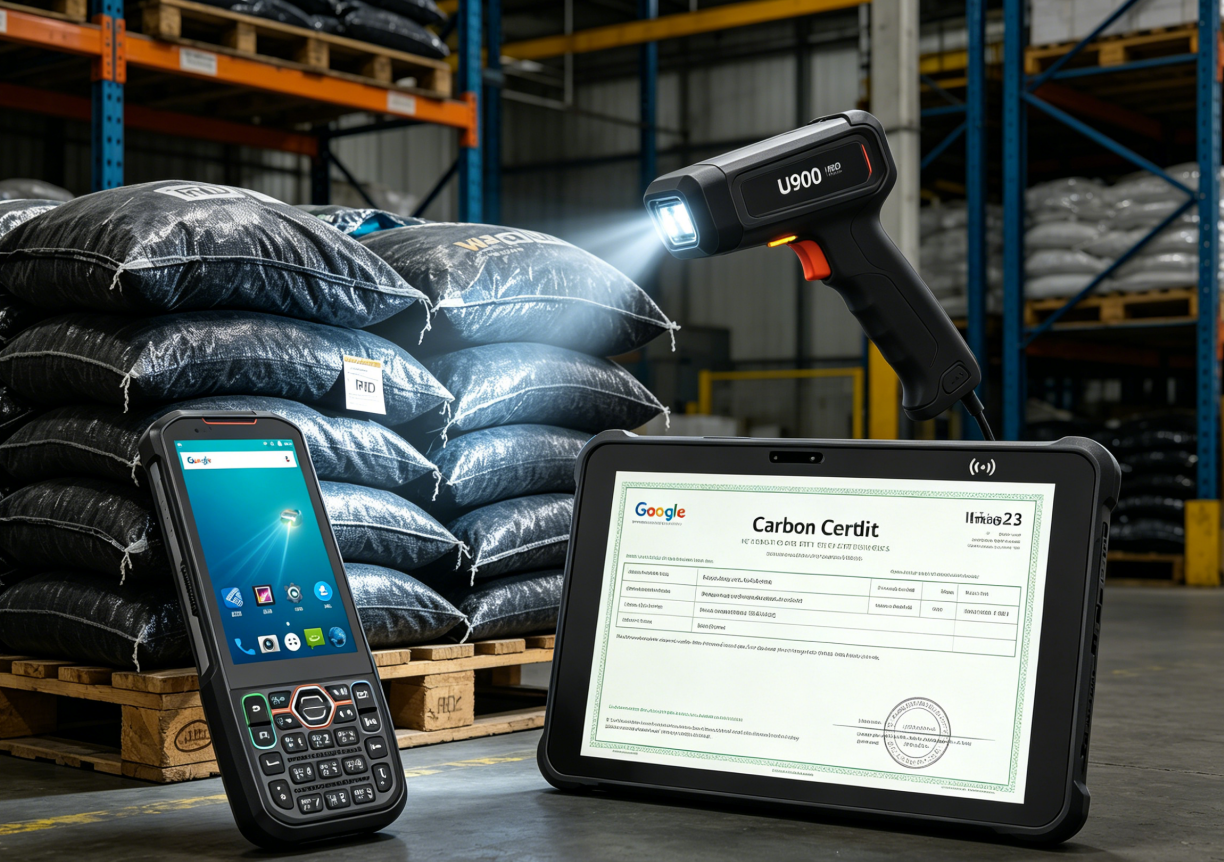
Fig 2 – A production supervisor waves the U9000 over a pallet of biochar bags; the screen shows the batch number, production date, and a green “Verified – Carbon Removal” badge. The warehouse is dim, the bags stacked high. Outside, a truck waits to carry carbon removal to a farm.
For warehouse and logistics operations, the Hotus U9000 Handheld PDA provides longer-range RFID performance ideal for pallet management and outbound shipment verification. Forklift operators can scan multiple pallets simultaneously while loading trucks, reducing manual handling time and improving shipping accuracy.
The U9000 also simplifies inventory reconciliation. Production managers can instantly verify which carbon-credit-eligible batches remain in storage, which lots have already been sold, and which shipments are assigned to specific buyers or agricultural projects. This improves operational visibility while reducing the risk of duplicate reporting or inventory mismatch.
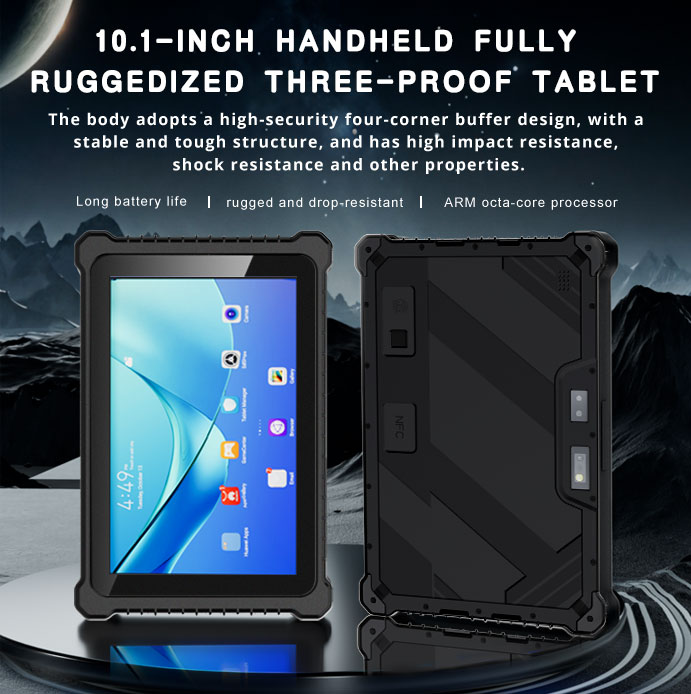
In large facilities, managers require centralized oversight across receiving, processing, laboratory testing, certification, and shipment operations. The Hotus ST11-U 10.1″ Windows rugged tablet provides a mobile dashboard for plant supervisors and sustainability compliance teams. Real-time production status, carbon credit eligibility, RFID inventory counts, laboratory approval queues, and shipment destinations can all be monitored from a single rugged device.
The ST11-U also supports on-site certification reviews. During third-party audits, managers can instantly retrieve production histories, operator logs, laboratory records, and shipment documentation without searching through filing cabinets or disconnected spreadsheets. Faster audits mean faster carbon credit issuance and improved buyer confidence.
One industrial biochar producer processing agricultural residue for international carbon markets deployed 40 F502 RFID PDAs, 28 U9000 handhelds, and 18 ST11-U rugged tablets across its operations. Within the first year, the company reduced manual data entry errors by more than 90%, shortened certification preparation time by 60%, and achieved significantly faster verification approval cycles from carbon registries.
More importantly, the producer secured long-term contracts with enterprise carbon buyers that required fully traceable digital production records. According to facility leadership, the ability to demonstrate transparent RFID-linked chain-of-custody data became one of the strongest differentiators in a highly competitive carbon removal market.
As carbon markets mature, verification standards will only become stricter. Producers that invest early in digital traceability infrastructure will be better positioned to scale operations, protect pricing power, and maintain regulatory compliance. Facilities still relying on handwritten batch sheets and disconnected spreadsheets may struggle to compete as buyers demand greater transparency.
Biochar is not just about producing carbon removal — it is about proving it. The F502, U9000, and ST11-U provide the rugged RFID-enabled infrastructure needed for reliable carbon credit verification, industrial batch traceability, and audit-ready production management in modern biochar facilities.
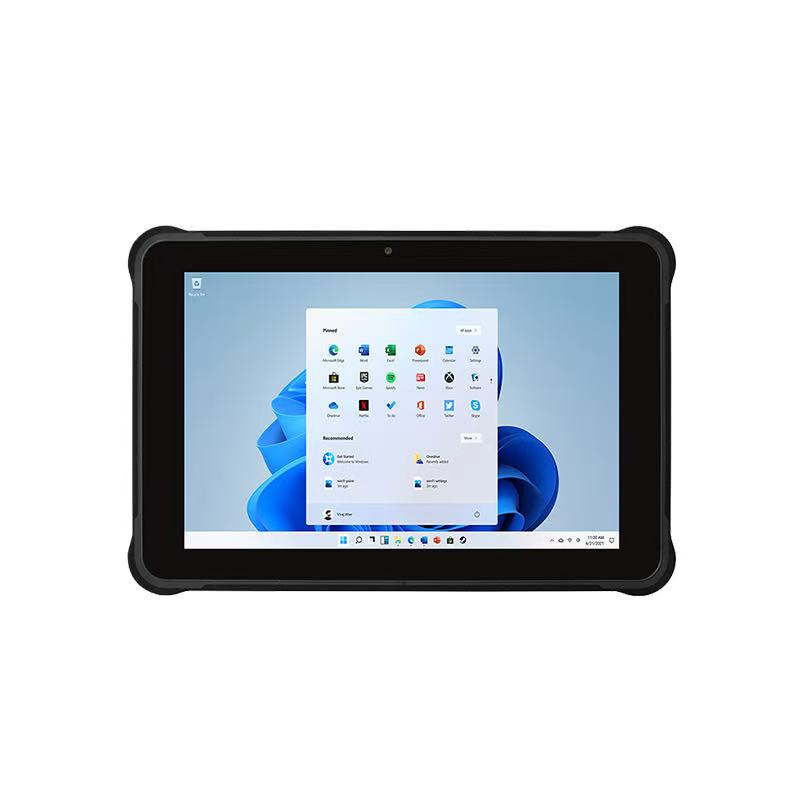
Fig 3 – The ST11-U on a desk in the company office. The screen shows a list of batches, each with a green “Certified” badge and a carbon credit serial number. A finger taps a batch – the full test report appears. The sunlight crosses the desk quietly while digital verification replaces paper uncertainty.
F502 RFID Industrial PDA
Rugged Android handheld designed for biomass intake tracking, reactor batch logging, laboratory sample association, and carbon credit traceability workflows.
U9000 Long-Range RFID PDA
High-efficiency RFID scanning for pallet inventory management, warehouse logistics, outbound shipment validation, and batch genealogy tracking.
ST11-U Windows Rugged Tablet
Mobile operational dashboard for carbon registry compliance, production analytics, digital audits, and enterprise sustainability reporting.
Contact HOTUS Technology to discuss RFID traceability solutions for biochar production, request industrial PDA pilot testing, or explore rugged tablets for carbon credit verification and sustainable manufacturing operations.