- Select Language
P11 Series Next-Gen Enterprise Rugged Industrial ...
Full SpecificationsModelHotus ST9‑JOSWindows 10 Pr...
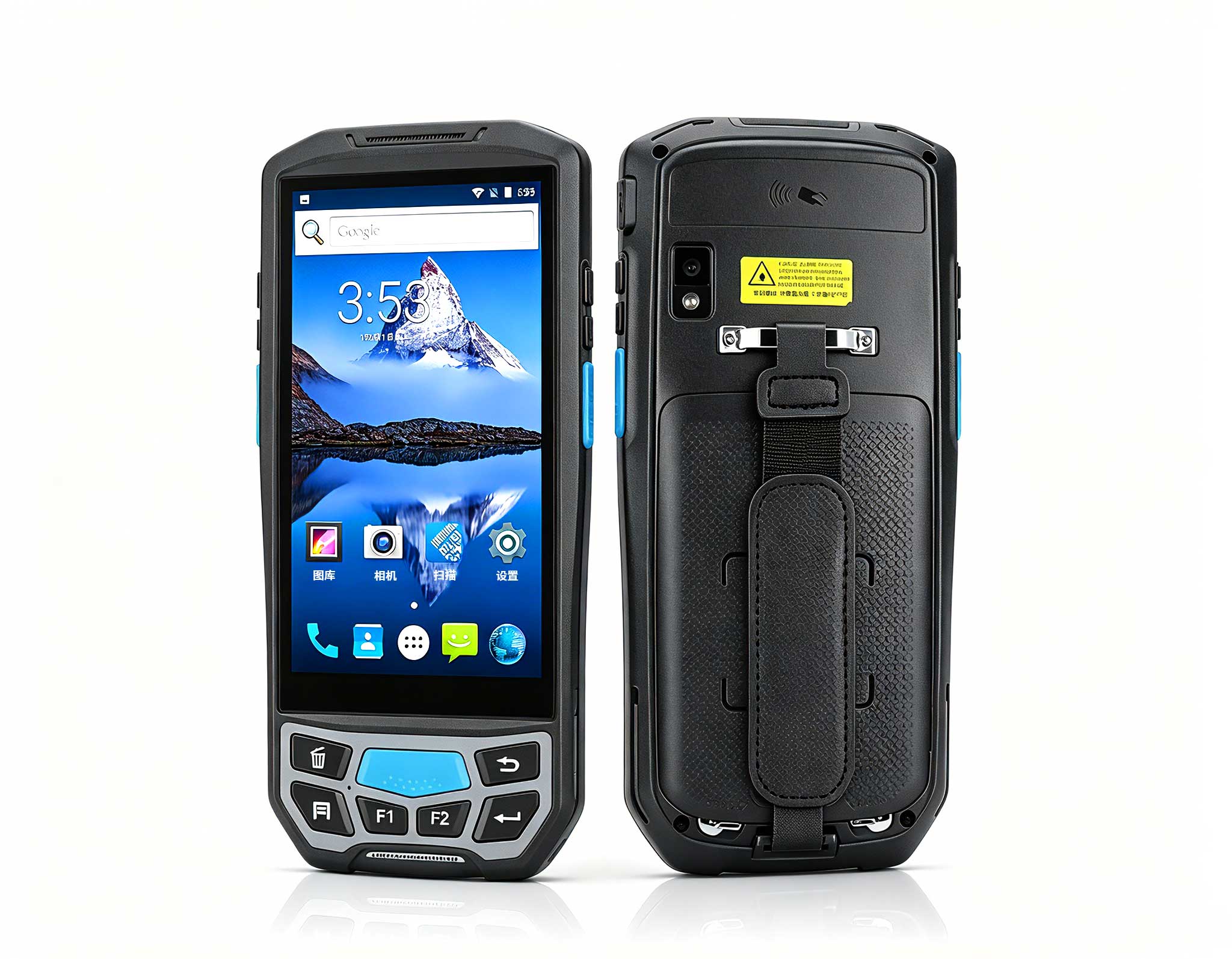
The U9000 handheld PDA combines advanced barcode s...
P8 Series 8-Inch Rugged Industrial Tablet PC Mobi...
A mine site is two environments wearing one address. Above ground, in the workshop yard and the open pit, the problems are dust, vibration, glare and vehicle vibration. Below ground, in a coal gallery or a metal mine stope, a third problem appears that no specification sheet for a rugged tablet usually addresses: the atmosphere itself may be classified as explosive. A device that is perfectly suited to the yard can be the reason a gallery gets closed, because it was never certified to enter one.
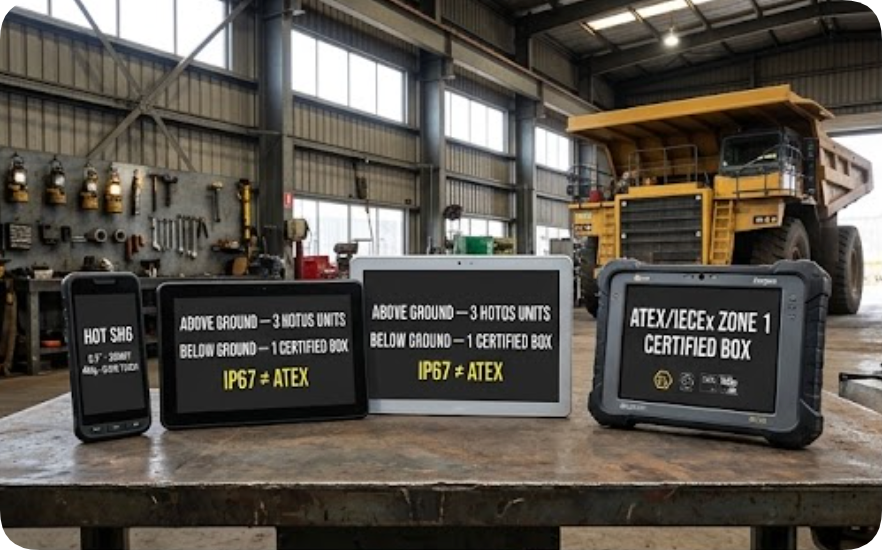
This comparison sets three Hotus units against two competitors built for the same site, and the honest finding is that the IP rating everyone quotes first does not decide this purchase. What decides it is whether the unit carries a hazardous-area certificate. The Aegex Aegex100M carries ATEX and IECEx Zone 1 along with UL913 Class I Division 1. The Waysion SYVR10R answers a different question with a 9 to 36 volt input range and a CAN bus. None of the three Hotus units carries an ATEX or IECEx certificate, and the highest ingress rating among them is IP67, which is a water and dust rating and not a hazardous-area approval. That is stated plainly here rather than buried, because a mine procurement officer who discovers it after delivery has bought the wrong equipment.
What the Hotus units do offer is real, and it is what most site work actually needs: an eight-inch Windows panel for the control room and the survey office, a 6.5-inch Windows handheld for the walkaround, and a 10-inch Android tablet with a 7000mAh cell for the pit floor.
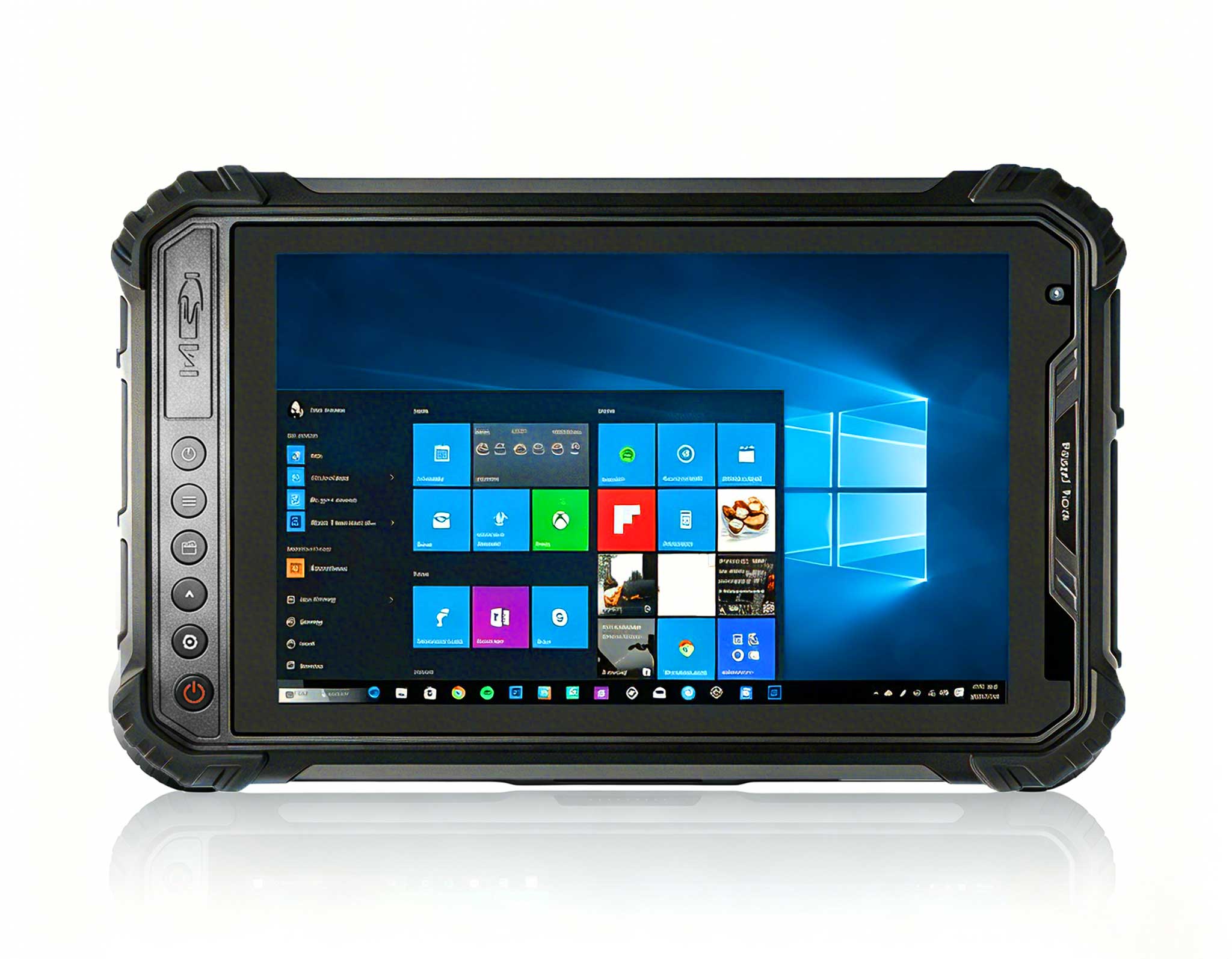
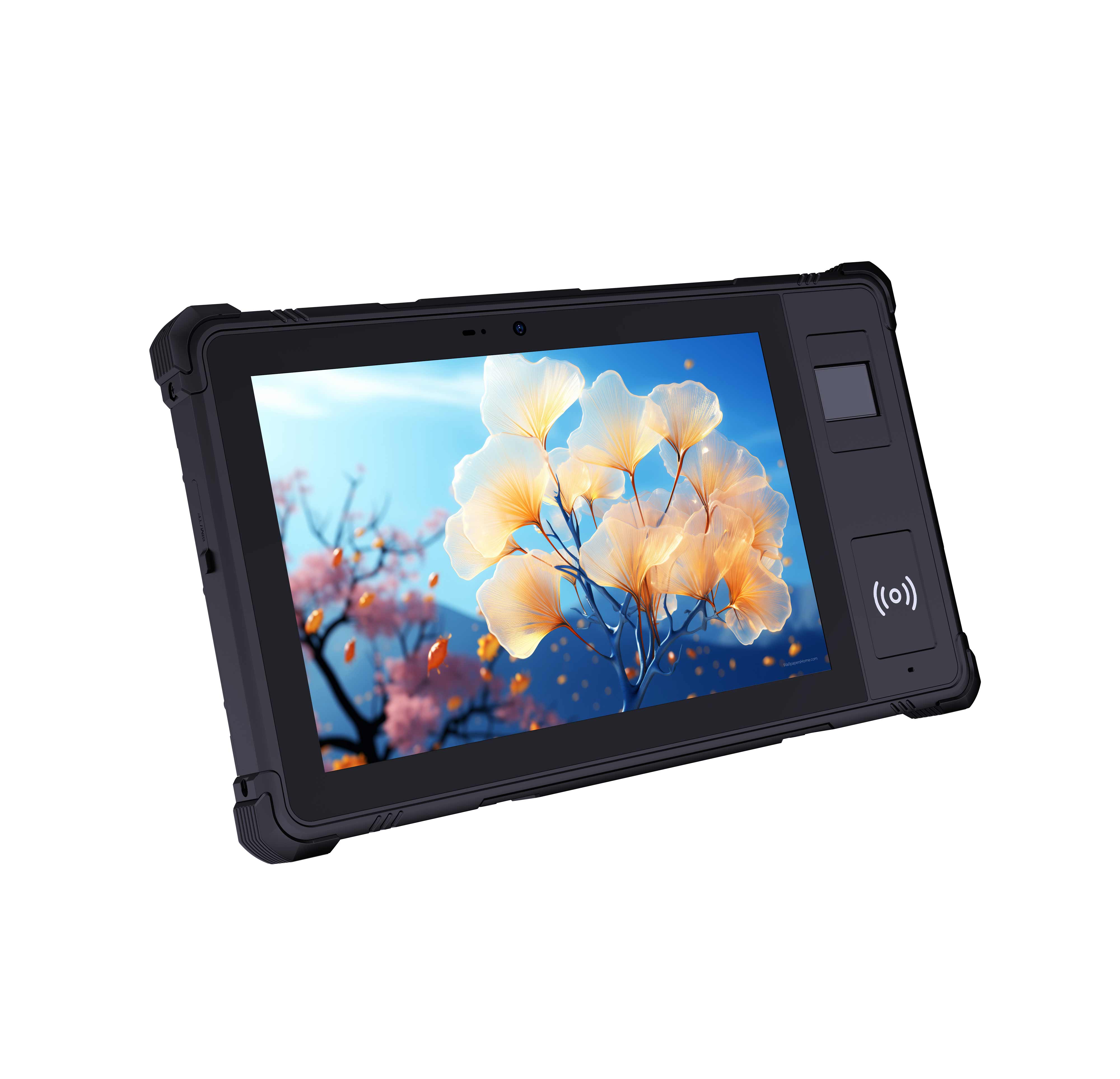
The Hotus ST9-M is the unit that stays above ground, and it is built for the job that has to run Windows software. It carries an Intel Core i5-8200Y dual core at 1.30GHz boosting to 3.90GHz with Intel UHD Graphics 615, 8GB of memory with 128GB eMMC or higher, and up to 512GB or 1TB of storage. Operating systems listed include Windows 10 Pro, Windows 10 Home and IoT, Windows 11 Pro and Ubuntu Kylin-20.04, which matters for a site running Chinese industrial software.
The display is an 8-inch IPS panel at 1200 by 1920, quoted at 400 nits with a 1000-nit option on an 800 by 1280 panel — the second figure worth knowing about, because a surface workshop under direct sun is a different task from an underground gallery where the light is artificial. Protection is IP65 with a MIL-STD-810G certification stated on the product page, and the touch panel supports stylus input and wet-hand operation. Battery is 5000mAh at 7.7V with about six and a half hours of use quoted at 50 percent volume and 60 percent brightness. The body measures 236 by 144 by 17.4mm. Expansion options include TPM 2.0, scanner, UHF and fingerprint modules plus a docking station, which is what turns it from a handheld into a fixed terminal when it sits in the survey office.
The limit worth naming is the same one that applies across this comparison: IP65 and MIL-STD-810G describe resistance to dust, water, vibration and drop. Neither is a statement about an explosive atmosphere.
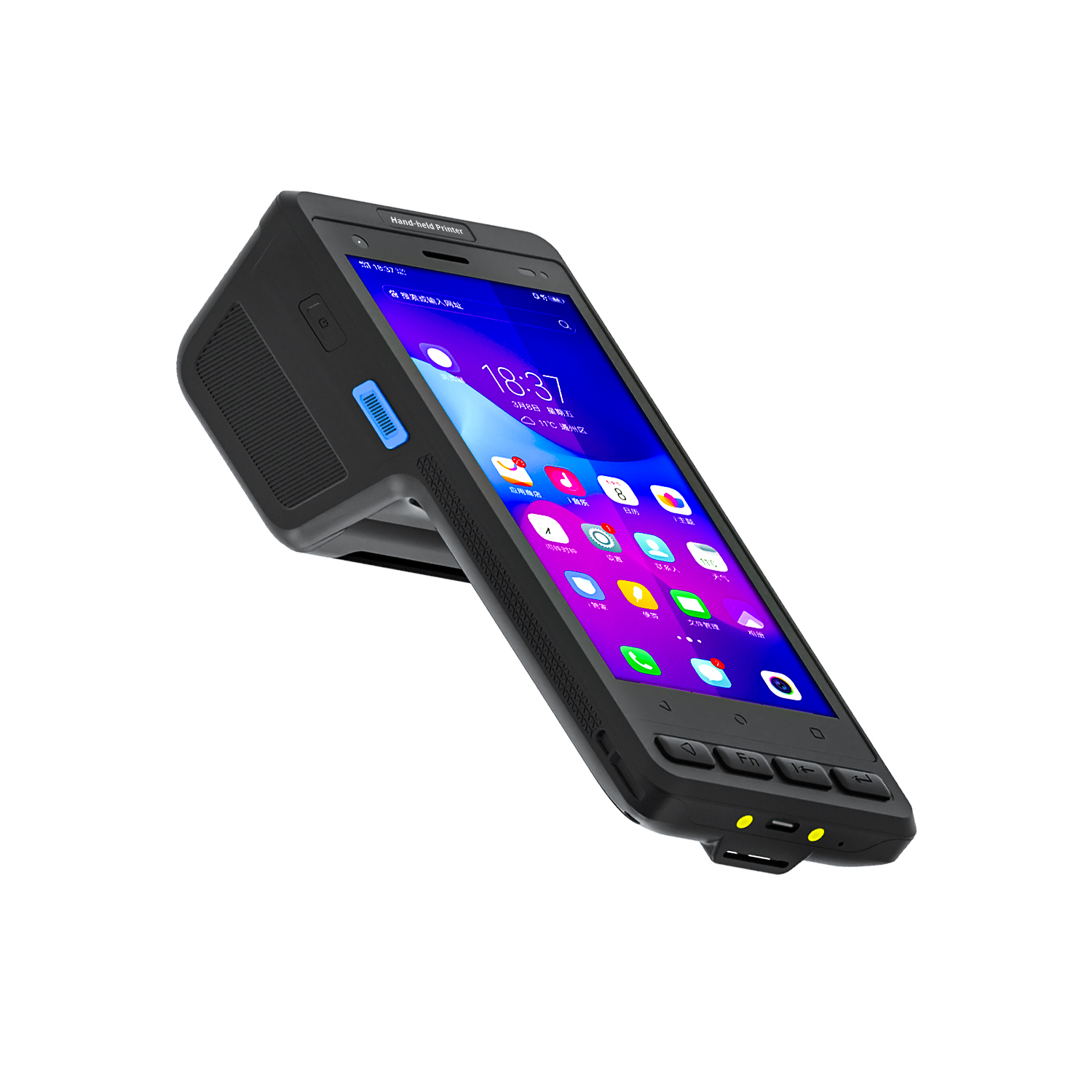
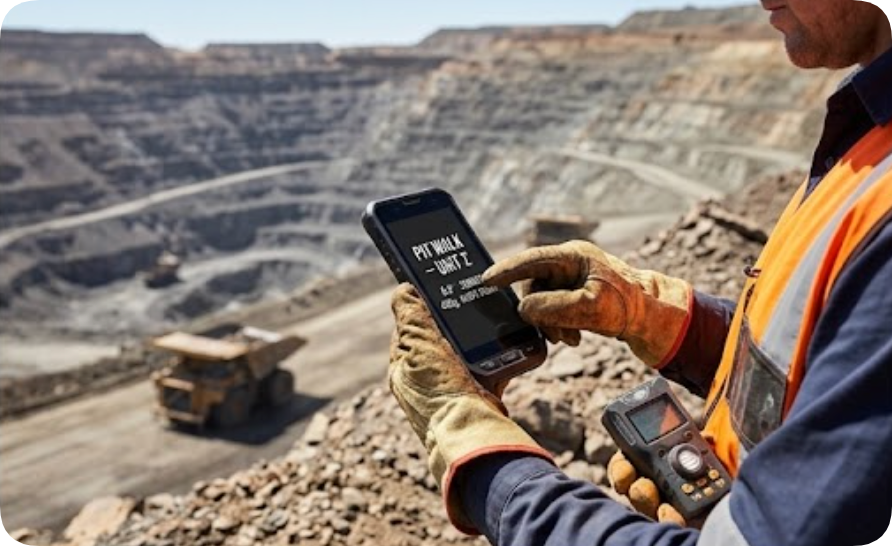
The Hotus SH6 is the one that goes out on the floor. It runs an Intel N100 quad core with 8GB of memory and 256GB of storage, upgradable to 16GB and 512GB, on Windows 11 Pro with Home and IoT variants listed. The 6.5-inch HD+ panel is quoted at 380 nits, which is the lowest figure in this comparison and the one specification that matters most for a surface inspection round in full sun.
Against that, the physical figures are genuinely good for a handheld. At 460 plus or minus 20 grams and 178.3 by 83 by 23mm, it is a one-hand device that a safety inspector can hold while writing with the other. Protection is IP65 with 1.2-metre drop resistance, the operating range is -20 to 55 degrees with storage from -40 to 60, and connectivity is Wi-Fi 6, Bluetooth 5.2 and 4G LTE global bands with GPS, BeiDou and GLONASS positioning. A 5000mAh battery at 7.6V gives a quoted maximum of four and a half hours, and optional 1D or 2D scanning plus a docking station are listed. Certification is CE, FCC and 3C.
Two honest observations. Four and a half hours is the smallest runtime figure here, and a full shift on an open pit does not fit inside it without a spare battery or a vehicle to charge at. The 380-nit screen is the other: readable indoors, marginal in direct summer sun, which is exactly where the ST9-M's optional 1000-nit panel is the better answer.
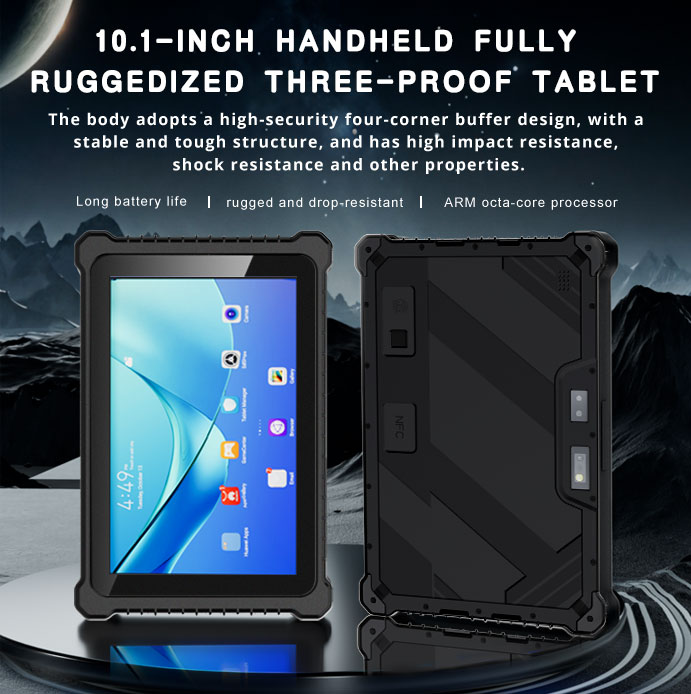
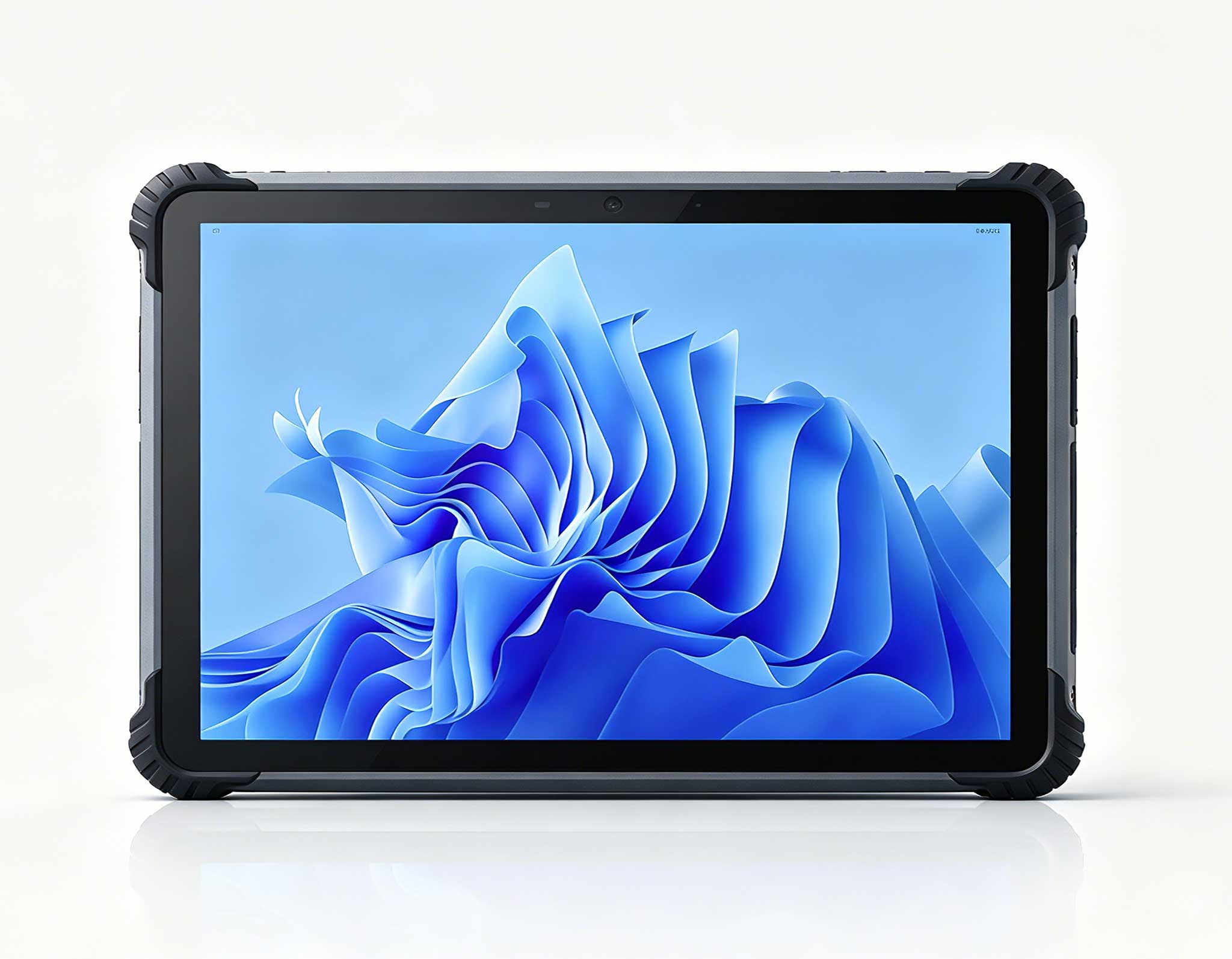
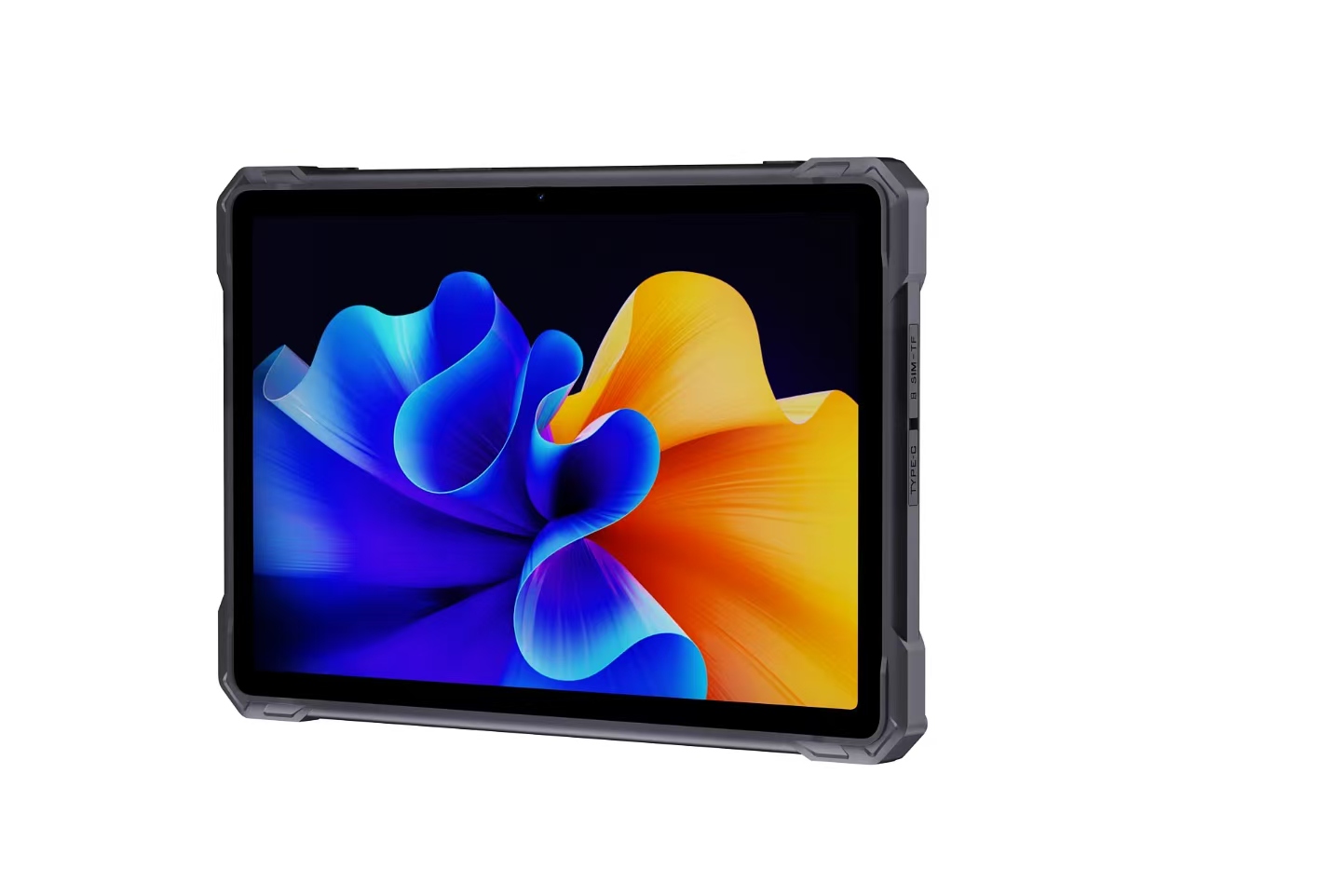
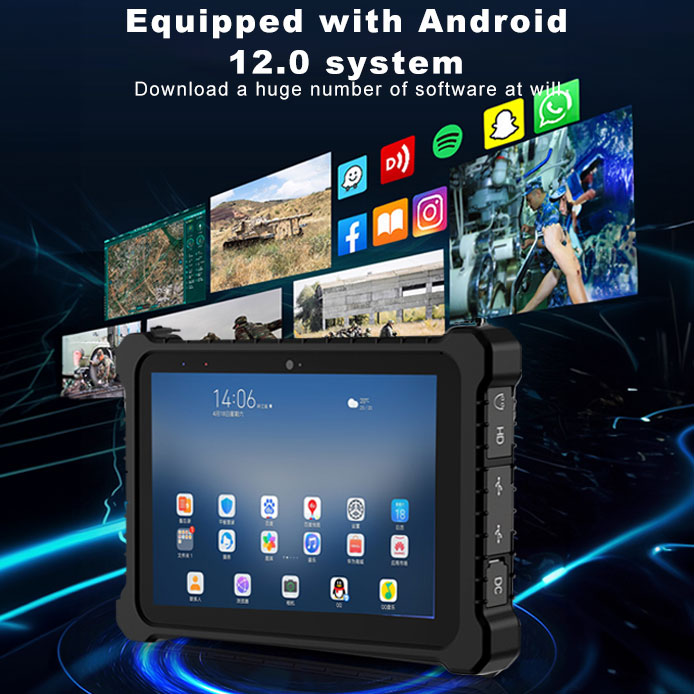
The HTQ10A Android Rugged Tablet is the largest of the three and the one with the longest endurance figure on paper. It runs a MediaTek 8788 octa-core at 2.0GHz on Android 12, with 8GB of memory and 128GB of storage, both optionally adjustable. The 10-inch LCD at 1920 by 1200 is quoted at 560 nits behind 7H glass — the highest brightness in this comparison, and the number that decides outdoor readability.
The battery is the headline: a 7000mAh polymer cell at 3.8V, and unlike the other two units this one is non-removable. Protection is IP67 with 1.22-metre drop resistance, and the operating range is -20 to 60 degrees, which adds five degrees at the top end over both the ST9-M and the SH6. The body is 284 by 175 by 15mm with a quoted gross weight of 1.7KG including carton, and the interface list covers audio, mini HDMI, USB, Type-C, DC input, a combined TF and SIM slot and a 12-pin pogo connector, with 4G, NFC, scanning, fingerprint and a charging dock listed as options. Connectivity is Wi-Fi 5 and Bluetooth 4.2.
The honest trade is weight against endurance. At 15mm thin and 1.7KG gross, this is the panel that lives on a vehicle dashboard or a bench rather than in a pocket, and the non-removable 7000mAh cell is what buys the full-shift runtime that the SH6 cannot reach.
The Aegex Aegex100M is listed as an explosion-proof rugged tablet at the premium end, priced at $2,459 to $3,404. Its published parameters are 10.1-inch, Windows 11 IoT, an Intel quad core at 1.6GHz, 8GB RAM and 256GB storage, IP67, ATEX and IECEx Zone 1, and UL913 Class I Division 1, with oil and gas, chemical, mining and hazardous-area applications.
This is the specification that decides a mine purchase wherever a gallery is involved, and no amount of ruggedness elsewhere substitutes for it. Zone 1 covers an area where a flammable gas concentration is likely to occur in normal operation, and UL913 Class I Division 1 is the North American equivalent statement. A site that needs either of those has one answer on this list, and it is not one of the three Hotus units.
The cost of that answer is the price band and the question that follows it. At roughly seventeen to twenty-five thousand yuan the unit is several times the cost of a standard rugged tablet, and the buyer should establish early whether the work genuinely enters a classified zone or whether most of it happens in the yard, the workshop and the open pit — because those are the places the Hotus units below are built for.
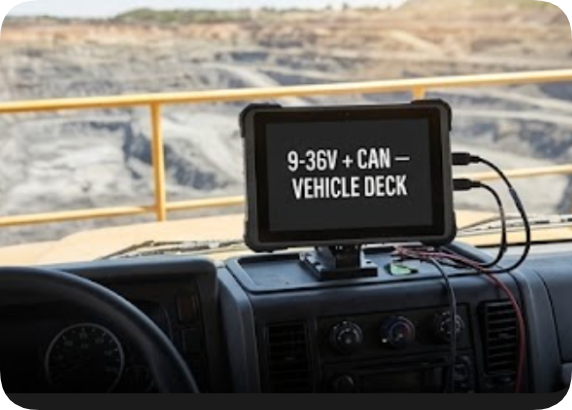
The Waysion SYVR10R is a different answer again, listed at the mid tier at $600 to $1,200 with vehicle, logistics, mining, transport and construction machinery applications. The published parameters are a 10-inch panel running Linux Ubuntu or Debian, IP65 and IP67, MIL-STD-810H, a 9 to 36 volt input range, CAN bus, barcode scanning, a vehicle dock and rich industrial I/O.
That wide voltage figure is the part a surface site actually feels. Haul trucks, excavators and lighting towers run on 24-volt DC systems, and a tablet that accepts 9 to 36 volts connects directly to vehicle power without a separate converter. On a vehicle-mounted installation — a command cabin, a dispatch truck, a machine monitoring mount — that saves a component and a failure point. The Linux base is also the right choice for fleet telemetry work where the unit is a data sink rather than an application terminal.
What it does not carry is a hazardous-area certificate in the published parameters, and its Linux base makes it a different product category from a Windows application tablet. It is a strong answer to the vehicle question and no answer at all to the gallery question.
| Hotus ST9-M | Intel Core i5-8200Y dual core to 3.90GHz; Windows 10 Pro, Win 11 Pro, Ubuntu Kylin | 8-inch IPS, 1200x1920, 400 nits, 1000-nit option | 5000mAh at 7.7V, about 6.5 hours | IP65, MIL-STD-810G. No ATEX or IECEx listed | Not published on the product page | Not published on the product page |
| Hotus SH6 | Intel N100 quad core; Windows 11 Pro, Home and IoT variants | 6.5-inch HD+, 380 nits | 5000mAh at 7.6V, up to 4.5 hours | IP65, 1.2m drop, CE/FCC/3C. No ATEX or IECEx listed | -20 to 55 degrees, storage -40 to 60 | Not published on the product page |
| Hotus HTQ10A | MediaTek 8788 octa core at 2.0GHz; Android 12 | 10-inch LCD, 1920x1200, 560 nits, 7H glass | 7000mAh at 3.8V, non-removable | IP67, 1.22m drop. No ATEX or IECEx listed | -20 to 60 degrees | Not published on the product page |
| Aegex Aegex100M | Intel quad core at 1.6GHz; Windows 11 IoT | 10.1-inch | Not published in the source database | IP67, ATEX and IECEx Zone 1, UL913 Class I Div 1 | Not published in the source database | $2,459-3,404 (about CNY 17,700-24,500) |
| Waysion SYVR10R | Linux Ubuntu or Debian | 10-inch | Not published in the source database | IP65 and IP67, MIL-STD-810H. No hazardous-area certificate listed | Not published in the source database | $600-1,200 (about CNY 4,300-8,600) |
| Survey office running Windows industrial software on a fixed desk | ST9-M | Intel Core i5 with Windows 10 Pro, 11 Pro or Ubuntu Kylin, plus TPM 2.0, scanner, UHF and docking options for a fixed installation |
| Safety inspector walking an open pit one-handed | SH6 | 460 grams and a 6.5-inch body, with gloves-and-wet-hand touch and optional 1D or 2D scanning; carry a spare battery for a full shift |
| Vehicle dashboard or pit-floor panel needing full-shift runtime and daylight readability | HTQ10A | 7000mAh non-removable cell and 560 nits at 10 inches, on a 15mm body with pogo connector and charging dock options |
| Any work inside a classified gallery or stope | Aegex Aegex100M | ATEX and IECEx Zone 1 with UL913 Class I Div 1; the other four units cannot enter a classified zone |
| Haul truck, excavator or lighting tower installation | Waysion SYVR10R | 9 to 36 volt input accepts 24V DC vehicle power directly, with CAN bus and vehicle dock |
Two things decide a mine tablet purchase that no datasheet covers. The first is the boundary itself. Every site has a line, sometimes a painted one, and the question for a buyer is how many people and how many hours a day sit on the far side of it. A site with twelve survey staff who never enter a gallery is badly served by buying certified units for the whole fleet, and a site with forty underground inspectors is badly served by the opposite decision. Write the number down before choosing the hardware.
The second is radio. A gallery is a steel-reinforced box with no cellular coverage, and a tablet specified for LTE and Wi-Fi is a tablet that works at the portal and nowhere else. Two of the Hotus units here carry 4G and the ST9-M carries a 4G LTE module as standard, but none of them is specified for a mine radio network, and that is a question for the site engineer rather than for a supplier. The same applies to the certified unit: a hazardous-area certificate covers ignition risk, not connectivity.
Sites running above-ground work only can review the full rugged tablet lineup for other chassis sizes, and vehicles or control rooms usually need a fixed terminal rather than a handheld — the related mini PC range covers that side. Further device comparisons across the catalog sit in the device comparison archive.