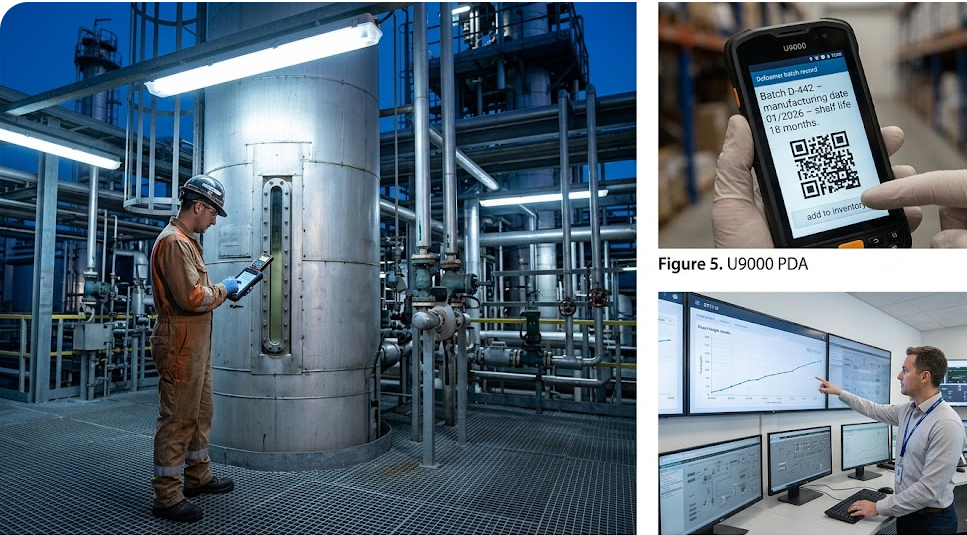
A process operator checks amine level and foam height at a carbon capture absorber using an ATEX‑rated HOTUS PDA.
I’ve watched carbon capture plants lose 20% of their CO2 capacity because of amine foaming. The operators pour defoamer, but they’re guessing – no log, no trend, no proof. A paper clipboard won’t tell you that foam is increasing by 2 cm per week. You need an ATEX‑rated Windows handheld that logs foam height, defoamer injection rate, and pressure drop across the absorber. In carbon capture, foaming isn‘t an annoyance – it’s a performance thief. Your tablet is the fire extinguisher.
Carbon Capture Amine Foaming Is Killing Efficiency – Your Defoamer Log Needs An ATEX‑Rated Windows Handheld
By HOTUS Technology | May 2026
The Silent Margin Destroyer in Post-Combustion Carbon Capture
Amine‑based carbon capture stands as the foundational industry standard for commercial post‑combustion CO2 removal. In typical operations, flue gas enters an absorber column where chemical solvents—commonly monoethanolamine (MEA) or piperazine blends—selectively bind with carbon dioxide before flowing to a stripper column for thermal regeneration. However, industrial scale-up reveals a catastrophic operational bottleneck: solvent degradation and resultant amine foaming. Contaminants bypassing upstream filtration, such as sub-micron fly ash, soot, aerosolized hydrocarbons, and liquid dissolution products, accumulate rapidly within the solvent loop. These particulates dramatically lower surface tension and increase bulk liquid viscosity, stabilizing gas bubbles into a resilient foam layer within the absorber.
When severe foaming occurs, the mechanical vapor-liquid equilibrium is shattered. The dense foam blocks the structured packing gas channels, severely restricting the contact surface area between the rising flue gas and the descending amine solvent. The immediate thermodynamic consequence is a sharp spike in column differential pressure, accompanied by massive solvent carryover (entrainment) into the treated gas stream. This operational upset slashes net CO2 capture efficiency by 10% to 25%, causing immediate compliance failures and driving up energy penalties in the reboiler. For procurement and field maintenance teams sourcing from a reliable Mini Projectors, Mini PCs, Rugged Tablets & RFID PDAs Factory, digitized field hardware has shifted from a convenience to an absolute survival tool for carbon credit verification.
The Failure Modes of Reactive, Paper-Based Antifoam Protocols
To counteract this efficiency drain, plant engineers rely on structured chemical dosing, injecting specialized silicone-based or polyol-based antifoaming agents into the solvent stream. Yet, the current industry approach to defoamer management remains dangerously archaic. In most facilities, chemical dosing is completely reactive: an operator walks the gantry, peers through a fouled sight glass on the absorber tower, roughly estimates the foam layer, and manually opens a needle valve. The field record consists of a scribbled note on a soggy paper clipboard, reading "defoamer added."
This total lack of granular data creates critical failure modes. Paper logs fail to quantify real-time foam height, track the exact mass balance of chemical injection rates, or calculate the historical rate of foam decay. Without localized trend logging, process engineers cannot evaluate chemical efficacy or diagnose whether a foaming episode stems from a sudden hydrocarbon surge or gradual surfactant buildup. More importantly, paper records lack validation mechanisms; they cannot provide the tamper-proof data trail required to audit financial losses associated with collapsed carbon credit yields during process upsets.
Intrinsically Safe Data Logging: Deploying the HOTUS SH5-W in Zone 1 Environments
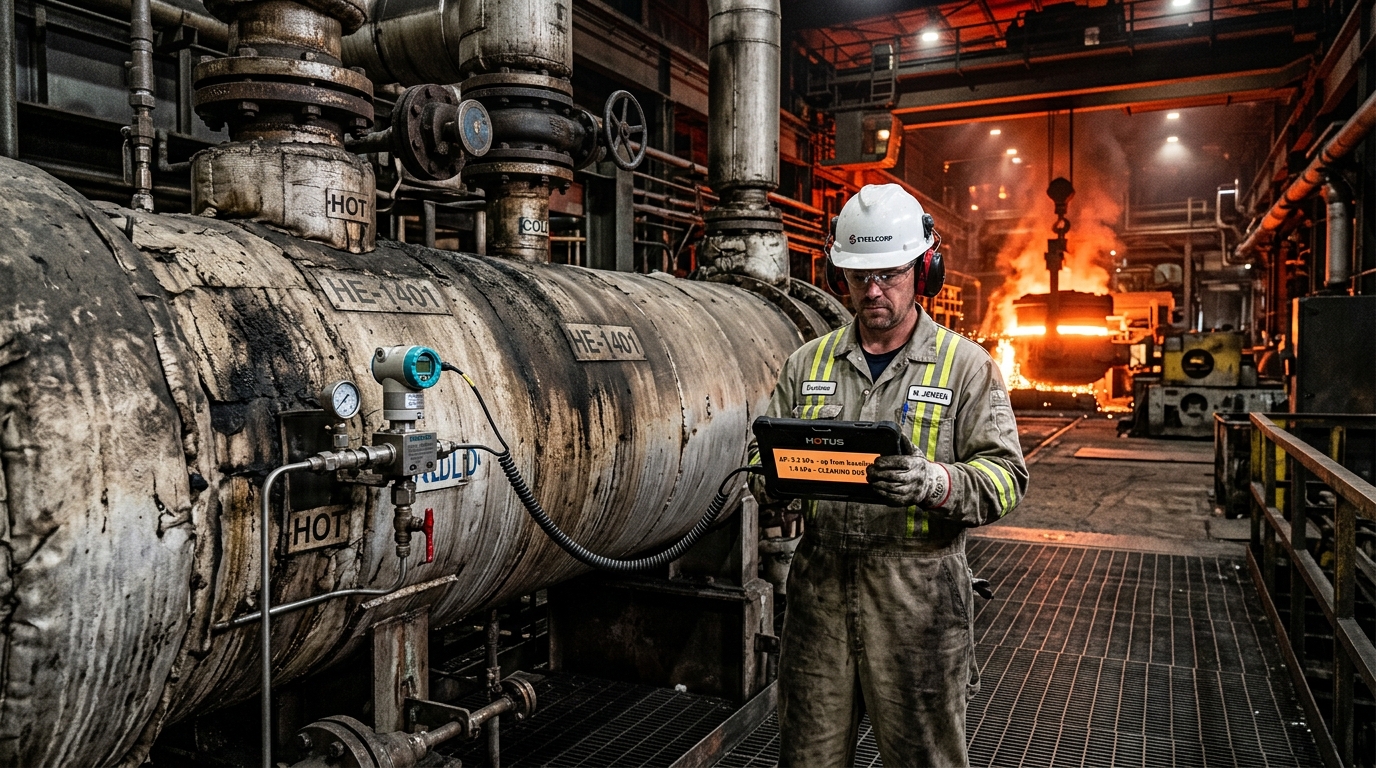
The implementation of the HOTUS SH5‑W Windows rugged handheld completely redefines hazardous area data capture. Certified under rigorous ATEX Zone 1 and Zone 2 directives, the SH5-W features explosion-proof, intrinsically safe circuitry housed in an IP65-rated impact-resistant magnesium alloy chassis. This design ensures safe deployment directly alongside absorber columns where flammable or toxic gas mixtures may settle. Running a dedicated, lightweight edge application on Windows, the SH5-W transforms field inspections into systematic, data-driven inputs by prompting field operators through verified measurement loops:
- Precision Metric Input: Field personnel input physical foam height directly at the column glass using integrated Bluetooth-linked laser distance meters or standardized physical sight scales.
- DCS Cross-Referencing: Operators cross-verify and input real-time differential pressure ($ \Delta P $) pulled directly from local column transmitters, linking physical foam characteristics with hard thermodynamic feedback.
- Mass Balance Tracking: The unit logs localized defoamer pump stroke frequencies, setting a precise timestamped record of cumulative chemical volume introduced during each 12-hour shift.
By executing localized processing, the SH5-W instantly calculates the foam rise velocity ($ \Delta H / \Delta t $). If this acceleration metric crosses a critical threshold, the device triggers an immediate high-priority on-screen visual alarm, dictating proactive chemical adjustments before an irreversible column flood occurs. Furthermore, by calculating the decreasing time-interval between required injections, the edge software detects solvent saturation trends early, notifying maintenance that the amine loop requires mechanical carbon filtration or thermal reclaiming long before a major shutdown is forced.
The U9000 PDA scans an RFID tag on a defoamer drum, recording batch number and expiration date.
Securing the Chemical Supply Chain with the HOTUS U9000 RFID PDA
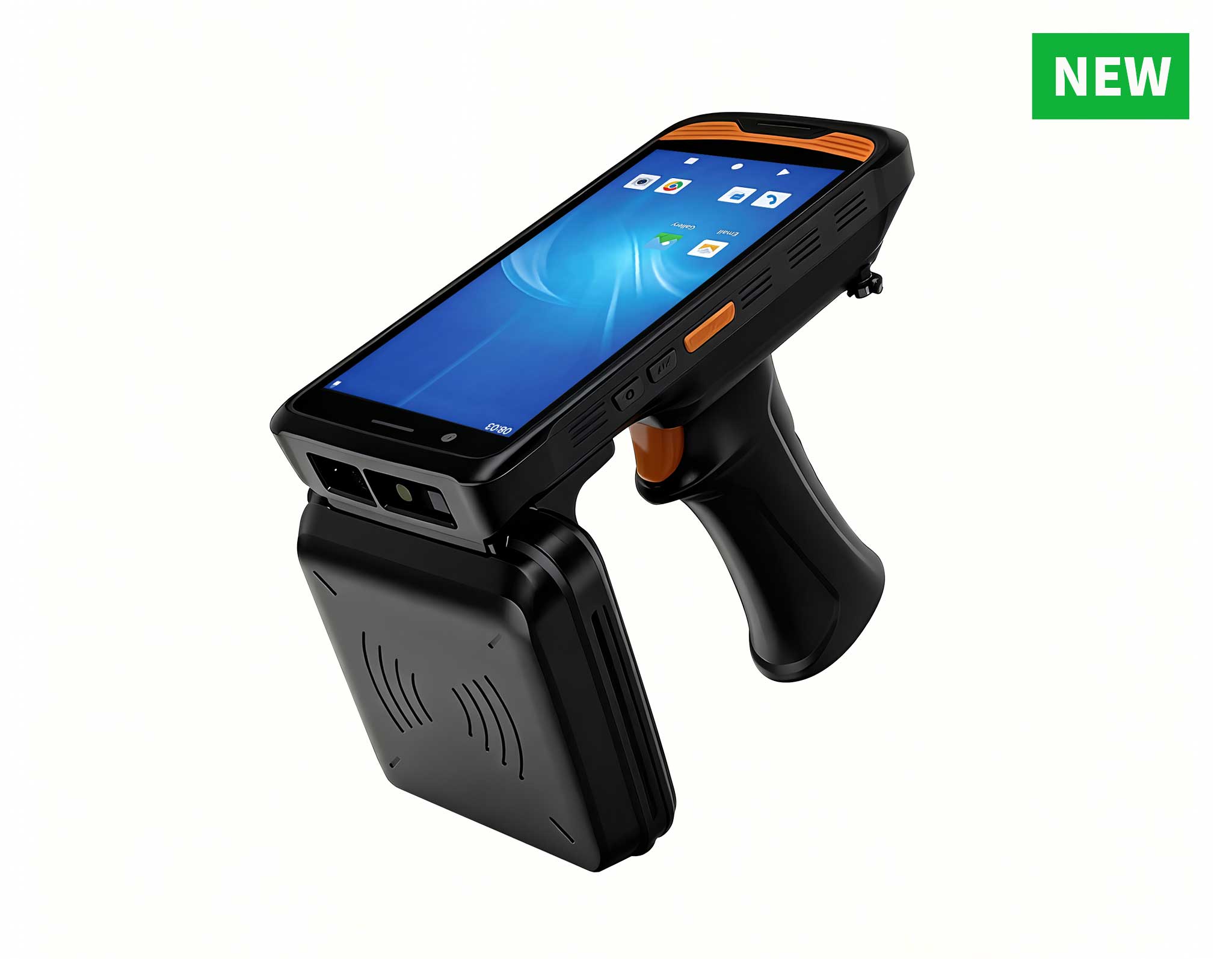
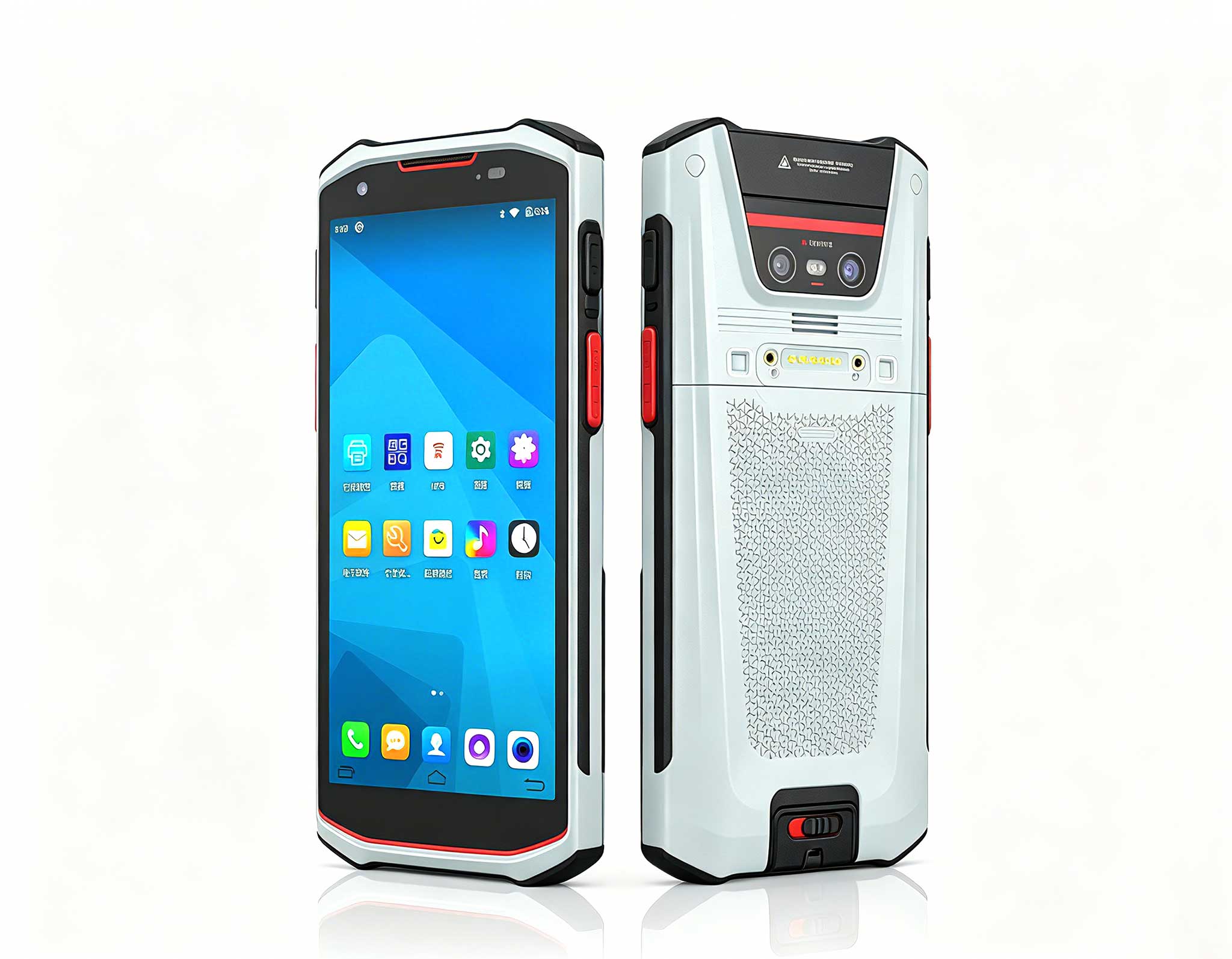
Operational variance often stems from variations in chemical composition. To eliminate this issue, the HOTUS U9000 Handheld PDA integrates industrial-grade 1D/2D barcode scanners and Ultra-High Frequency (UHF) RFID modules directly into the chemical management workflow. When new chemical pallets arrive at the loading dock, warehousing teams utilize the U9000 to instantly scan passive RFID tags attached to the chemical drums.
The device logs critical material data including chemical batch numbers, manufacturing dates, and supplier certificates of analysis (CoA). By syncing this information over secure industrial Wi-Fi directly to the plant's ERP system, the U9000 prevents bad chemical batches from entering the field. If a specific lot exhibits degraded performance inside the absorber, process engineers can run an absolute digital trace to pinpoint the supplier, protect chemical asset integrity, and defend vendor warranty claims.
Engineering Dashboards and Enterprise Visibility via the ST11-U Tablet
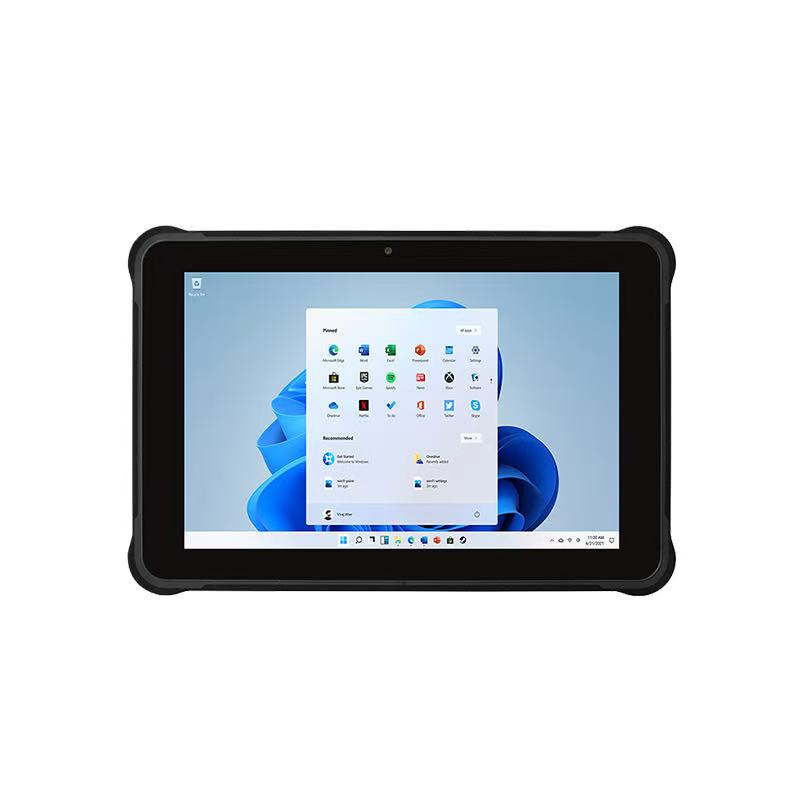
At the management level, data collected from the field must be translated into long-term operational strategy. The HOTUS ST11‑U 10.1″ Windows rugged tablet serves as the process engineer's control station. Equipped with a bright, sunlight-readable multi-touch display and powered by an Intel processor, the ST11-U runs data visualization tools that plot historical foam growth trends against defoamer volume curves.
When the system detects a deviation across multiple carbon capture units, a yellow status flag warns engineers of an ongoing issue. This early warning allows engineers to optimize pump configurations, balance chemical consumption, and coordinate filter maintenance before severe solvent degradation impacts the plant's bottom line.
Proven Industrial ROI: $750,000 in Annual Carbon Credits Protected
The financial value of digital process tracking is demonstrated by an industrial post-combustion carbon capture facility designed to capture 500,000 tonnes of flue-gas CO2 annually. Historically plagued by unexpected column foaming caused by seasonal coal-fired fly ash bypass, the facility deployed a connected hardware system consisting of 25 SH5-W handhelds, 30 U9000 RFID PDAs, and 15 ST11-U tablets.
During the third month of deployment, analytics on an ST11-U tablet revealed a slow but steady increase in baseline foam height across two absorber lines, even with increased chemical dosing. The historical log linked this trend to a minor, un-alarmed pressure drop variance in an upstream particulate electrostatic precipitator (ESP). Maintenance teams inspected the ESP and discovered torn filter bags that were letting fine particulates pass into the solvent loop. By identifying the issue early, the plant completed targeted repairs during a scheduled down-shift, avoiding a prolonged 15% drop in CO2 capacity. This proactive intervention saved approximately $750,000 in annual carbon credit revenue and provided a complete, compliant data log that easily passed a subsequent environmental audit.
The ST11‑U dashboard displays foam height trends and defoamer usage for three capture units – one flagged yellow for increasing foam.
Transition to Data-Driven Foam Control Architecture
Amine foaming does not have to be an unpredictable operational risk. Through systematic logging, real-time data collection, and hazardous-area hardware, chemical plants can transform their foam management from reactive guesswork into an optimized, predictable process. Paper logs cannot generate predictive alerts or maintain the data integrity required for modern industrial compliance.
By deploying intrinsically safe devices like the HOTUS SH5-W, U9000, and ST11-U, facilities gain full visibility into their operations, ensuring high chemical performance, lower material costs, and protected carbon credit yields. Do not let process foam compromise your facility's environmental compliance and profitability.
Ready to Optimize Your Carbon Capture Operations?
Contact our industrial hardware application engineers today to request technical specifications, schedule a deployment evaluation, or arrange pilot testing for our ATEX-certified solutions.
Contact HOTUS Technology