- Select Language
The F505 Handheld PDA is a compact, high-performan...
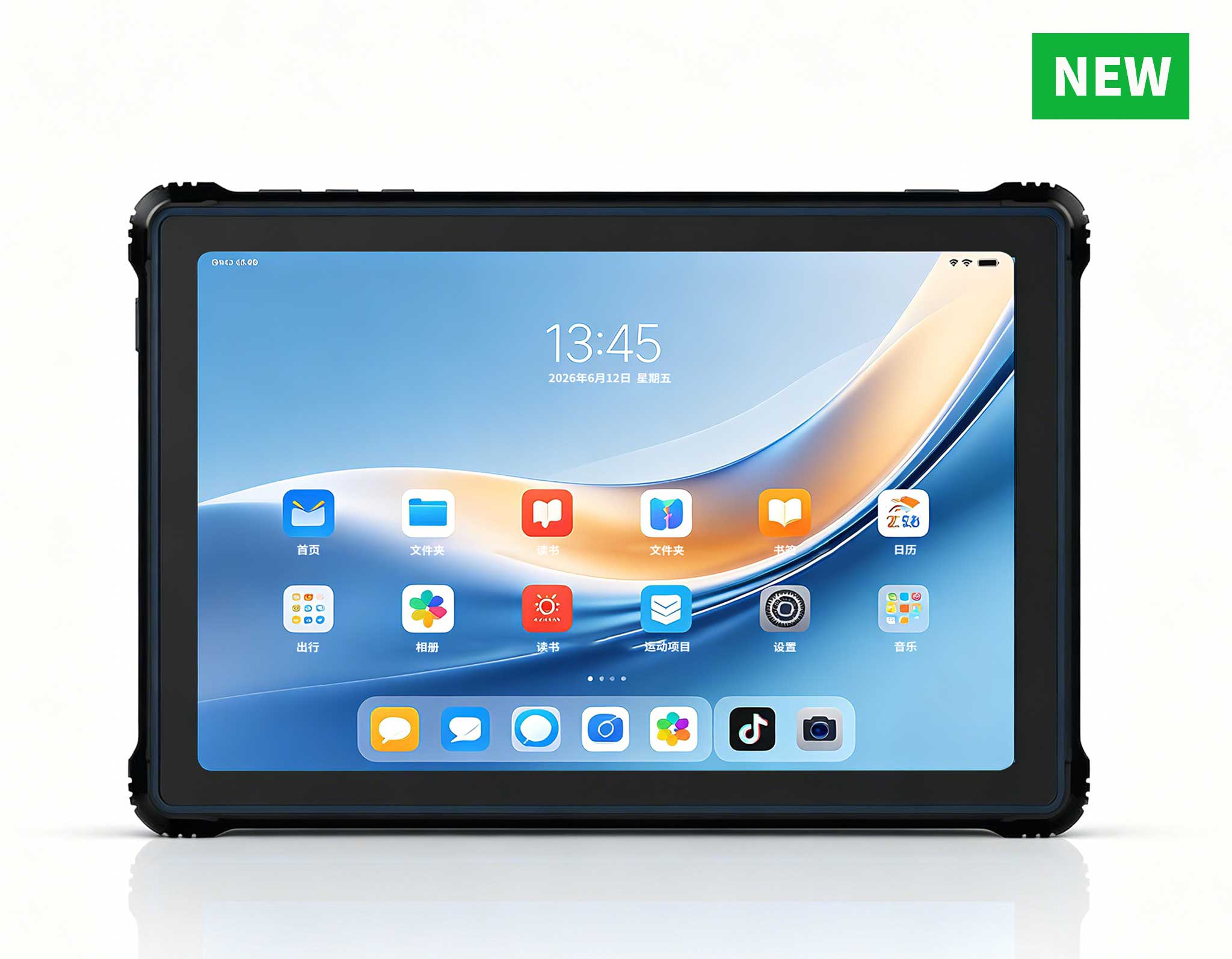
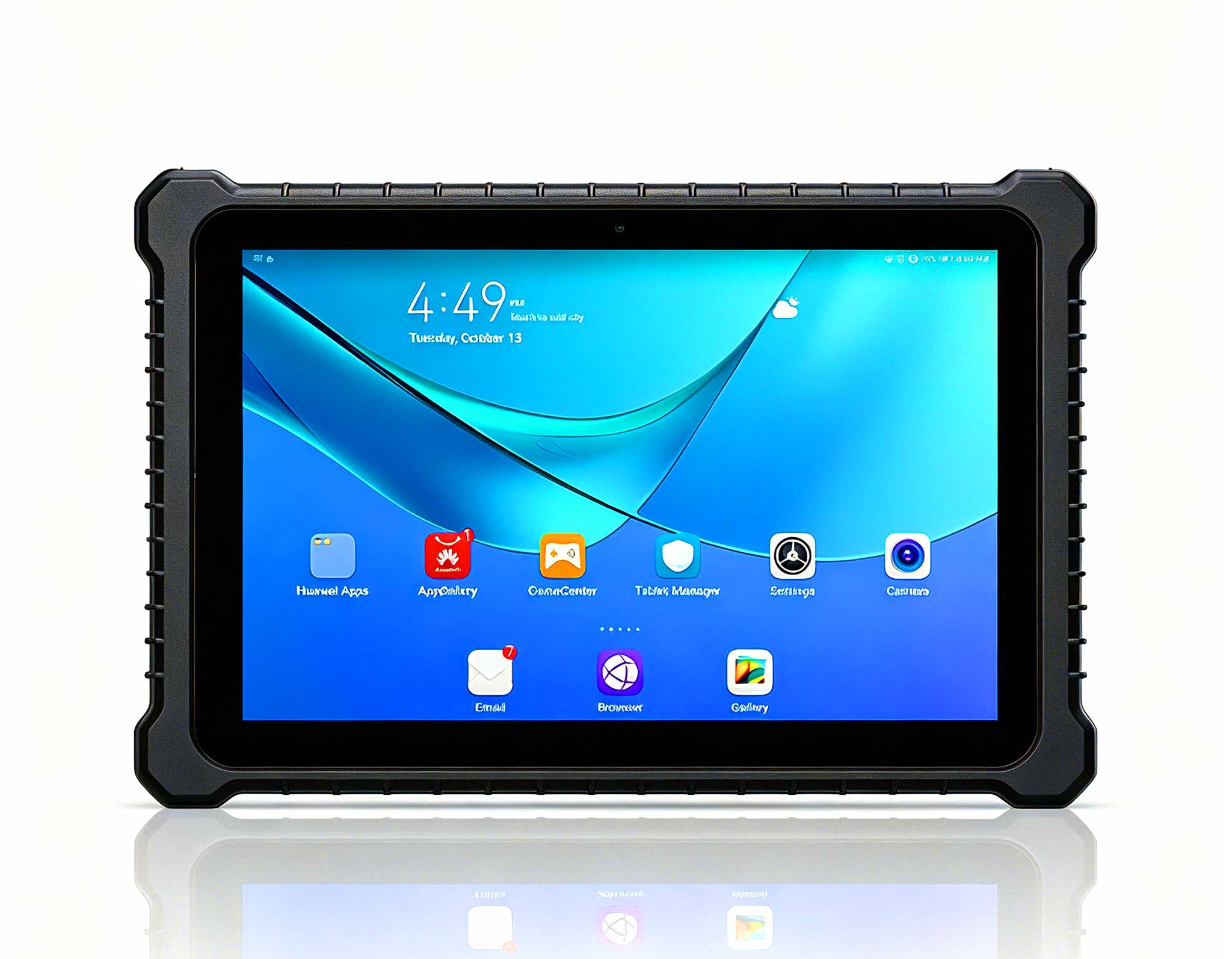
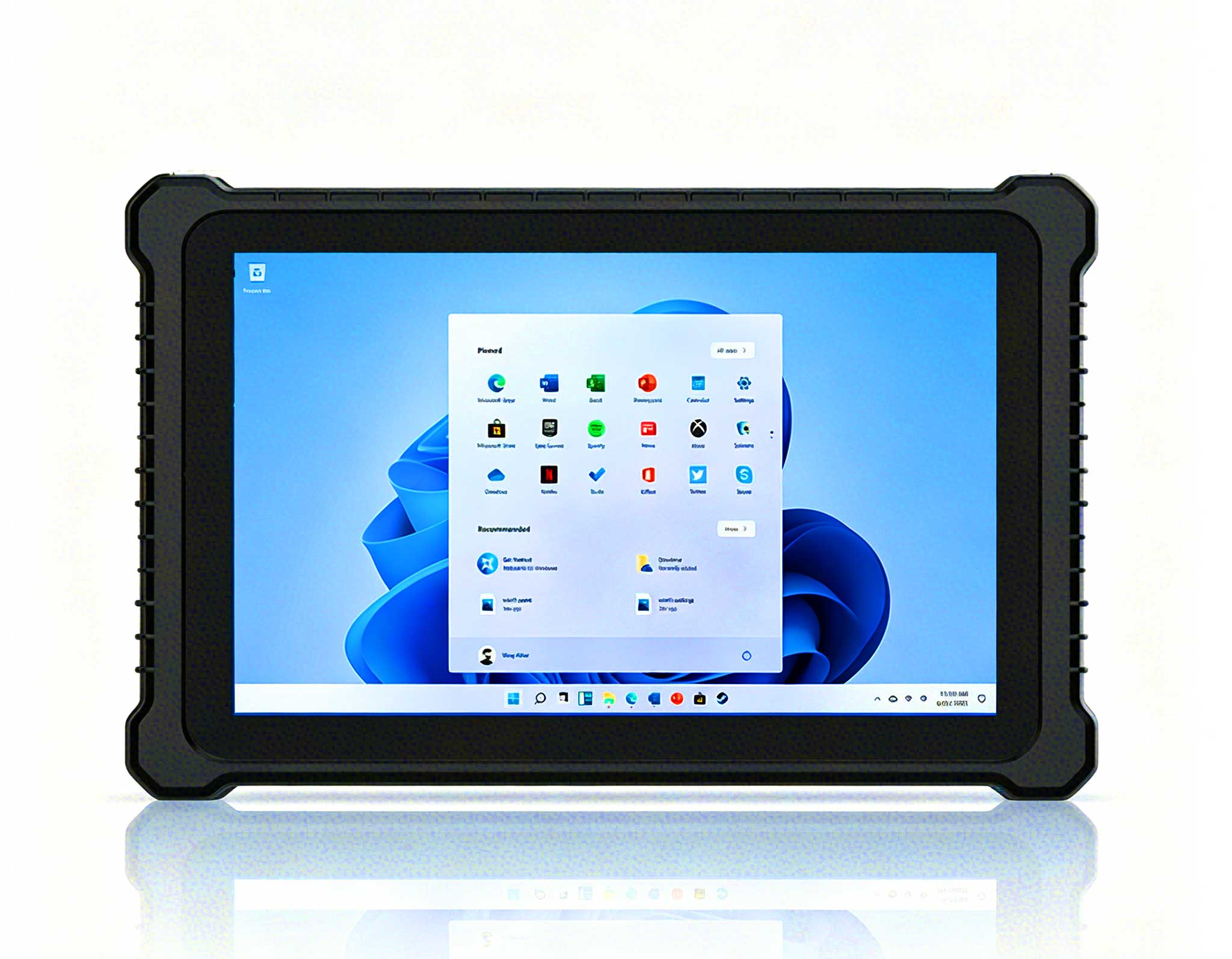
RT81 4G Rugged Tablet | 10.1" FHD 400nit | Qu...
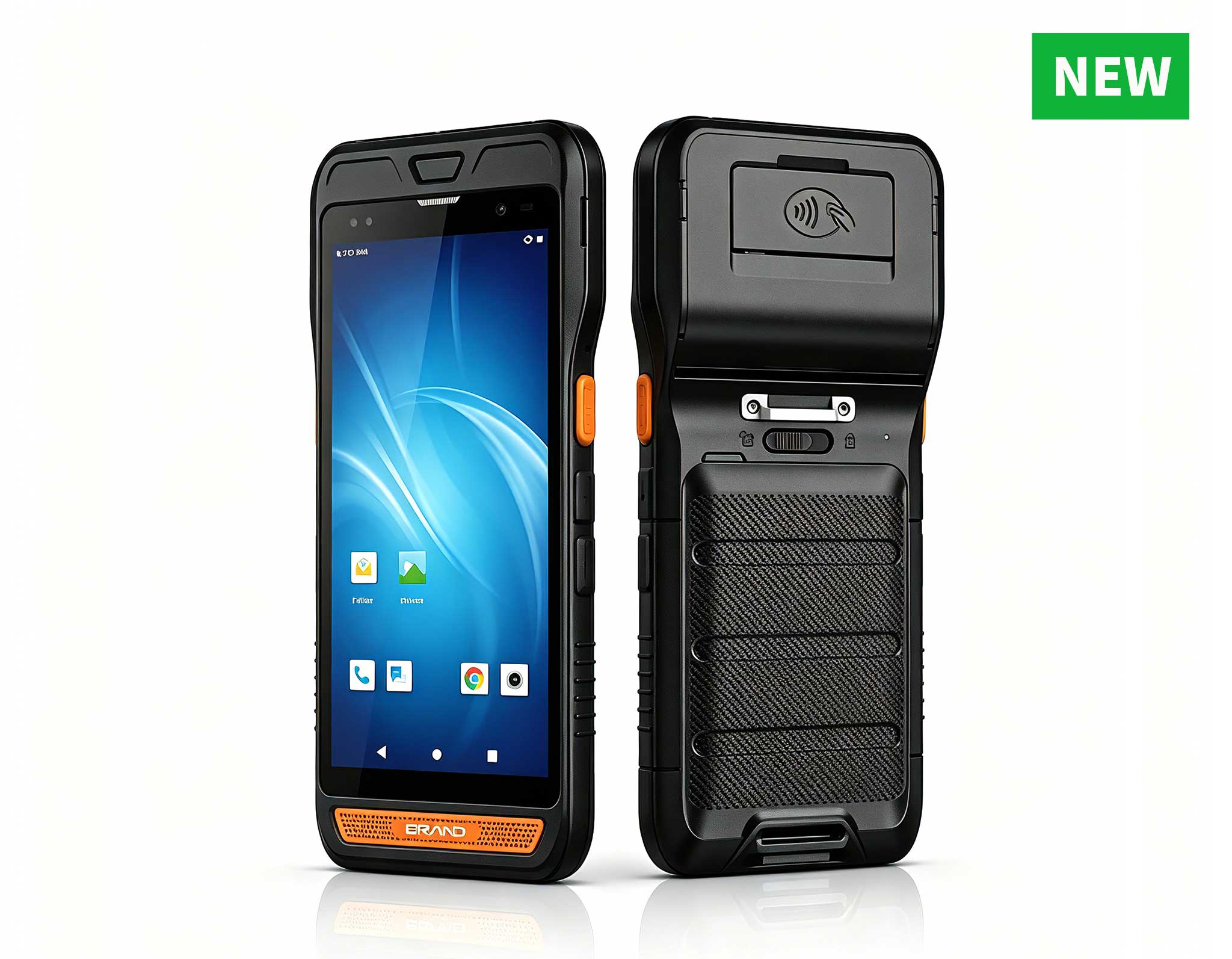
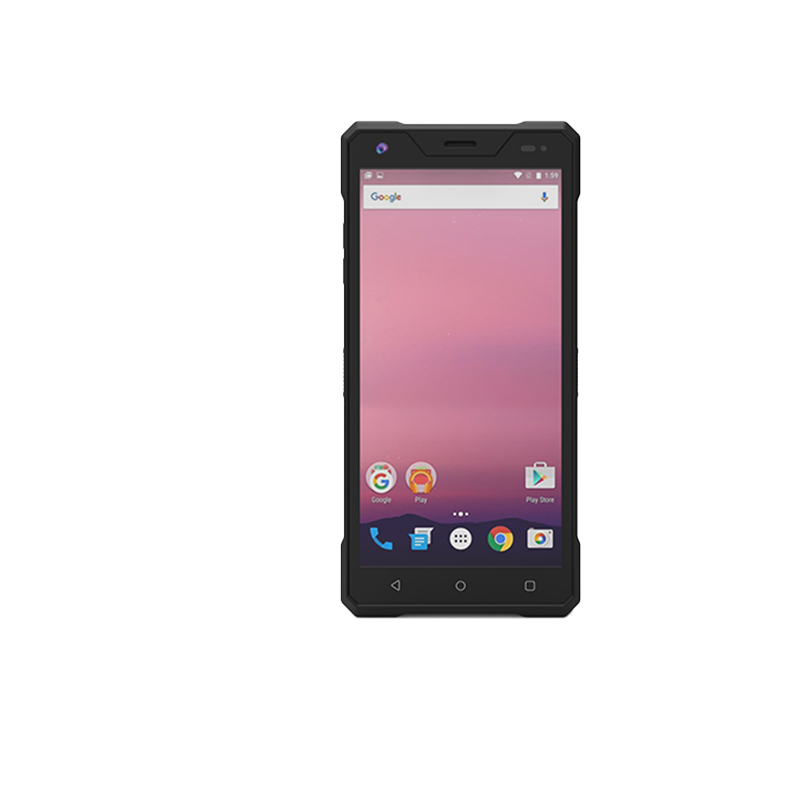
R860-S 5.5-inch Industrial PDA with Thermal Printe...
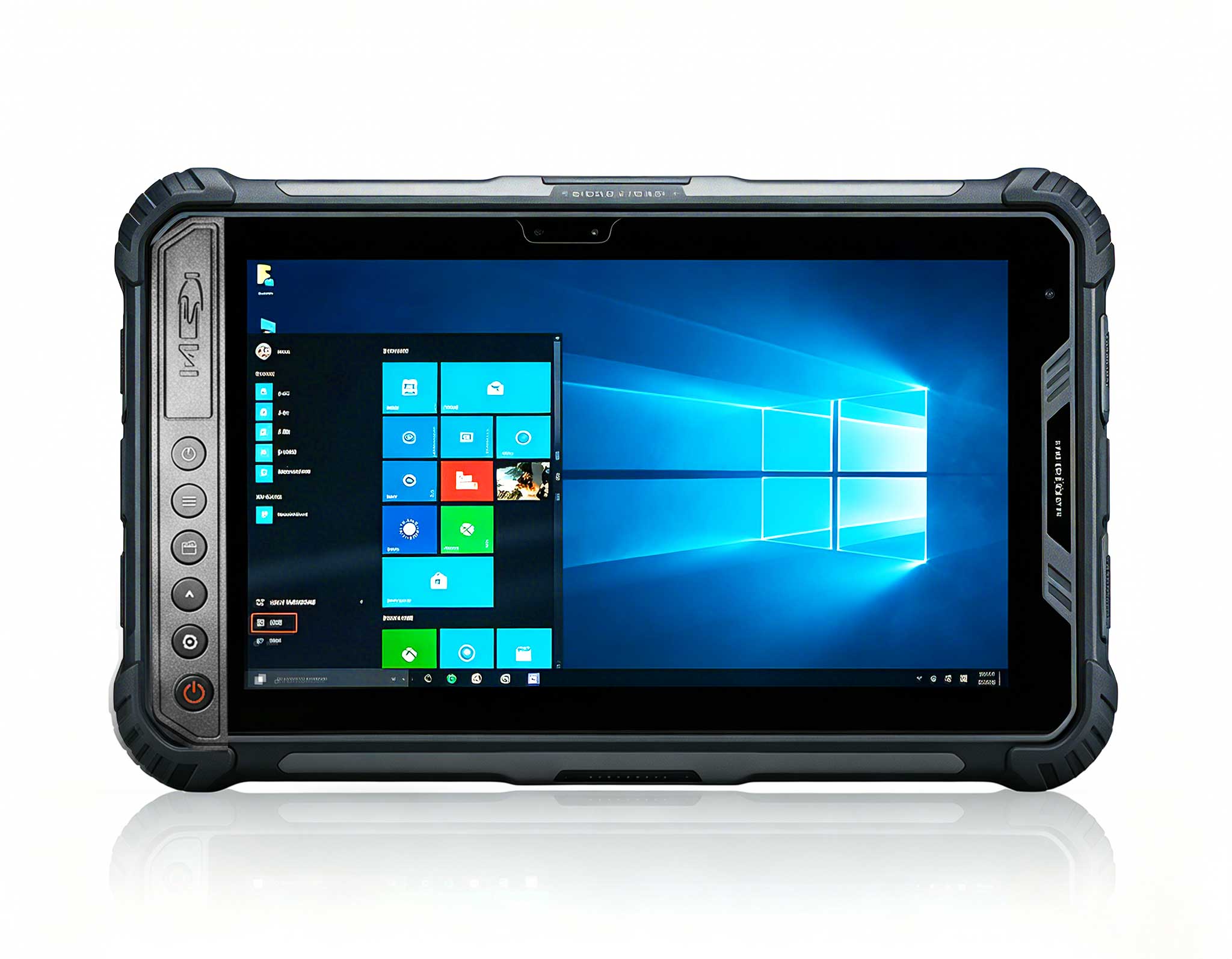
Full SpecificationsModelHotus ST11‑MOSWindows 10/1...
Enterprise Flagship SeriesEngineered for mission-c...
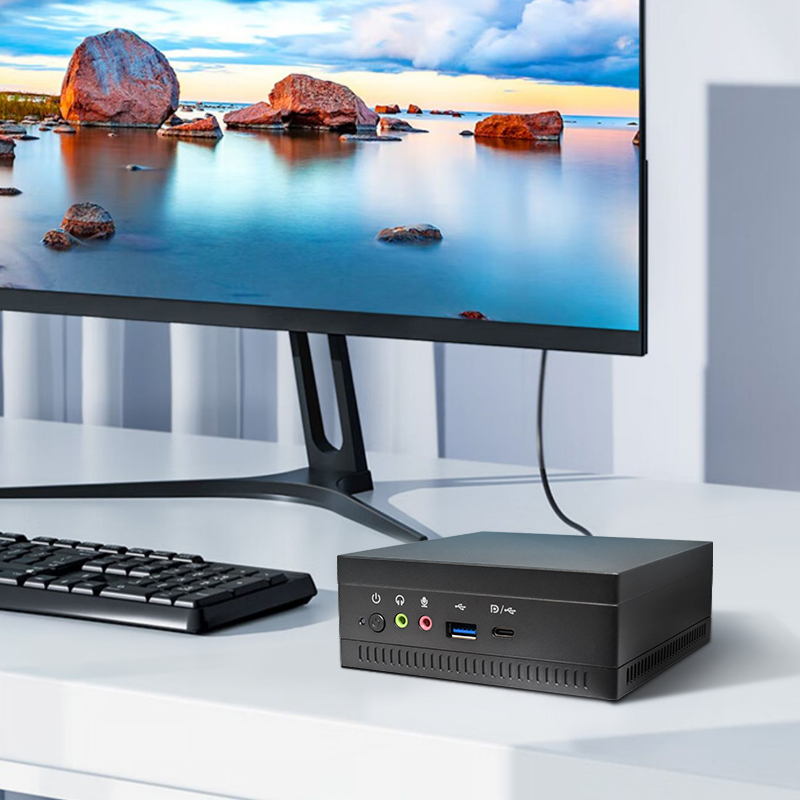
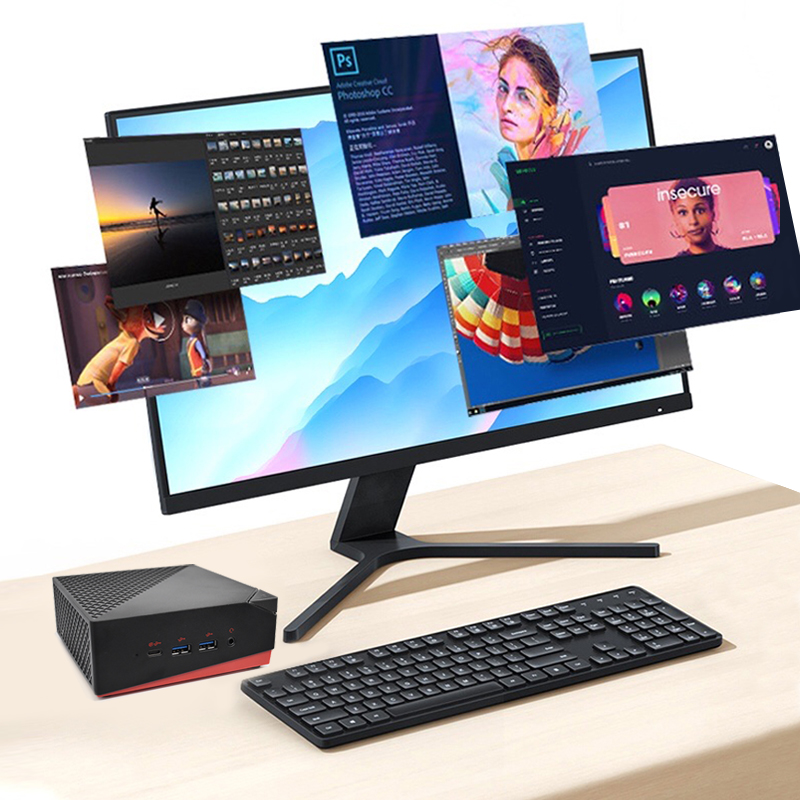
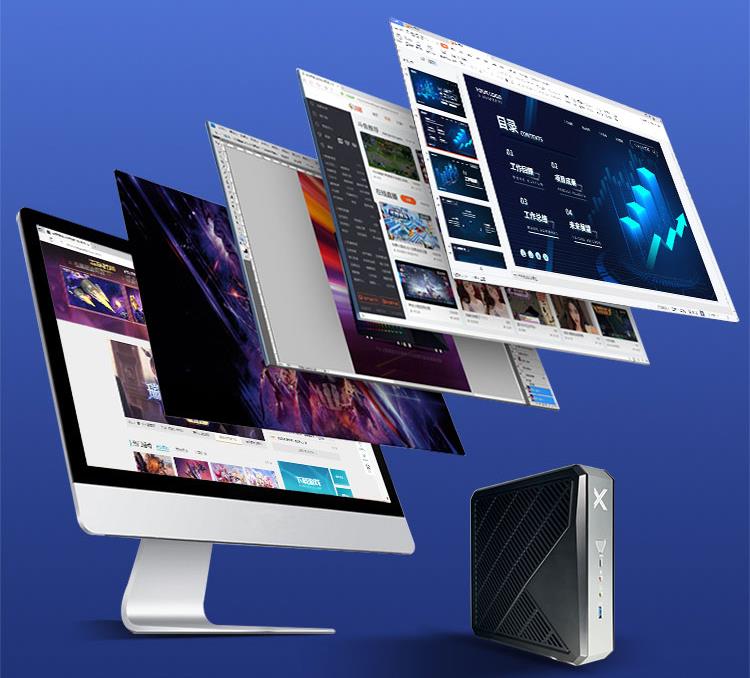
The AMD Mini PC Windows 10 Pro is a compact yet po...
One Device, Dual Functions – A Projector and a Com...
I’ve been a home theater consultant for over a decade, and I’ve set up projectors everywhere from backyard campouts to boardroom presentations. If you’re shopping for a projector right now, you’re probably drowning in specs: resolution, brightness, throw ratio, light source, smart features. It’s overwhelming. But after hundreds of installations, I can tell you that it all comes down to one simple question: where are you using it? Once you answer that, the right projector almost picks itself. Whether you need a go-anyway portable for the campsite, a compact bedroom companion, or a permanent living-room cinema that doesn’t require ceiling mounts, the technology has to match the room — not the other way around. At Mini PC and projector specialist Hotus, I’ve tested three distinctly different models that cover the most common real-world setups. Let me walk you through each one, based on actual use, not marketing fluff.
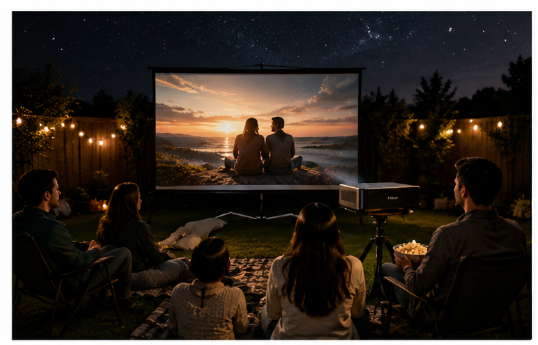
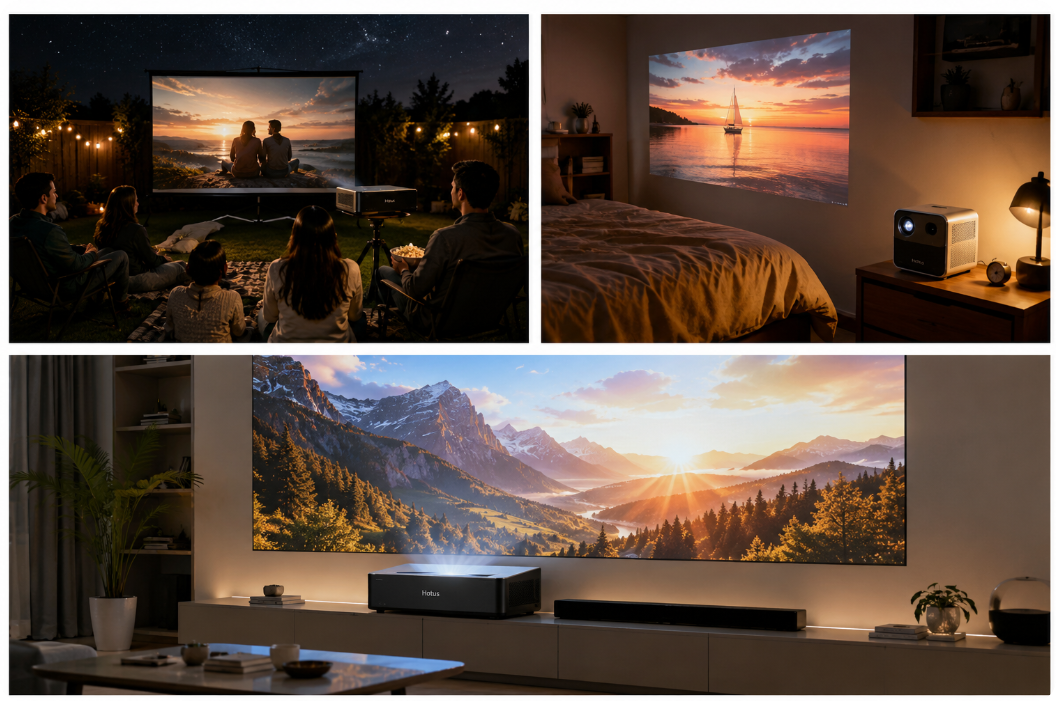
The HT500 Portable Outdoor Projector is the projector I grab whenever I leave the living room. I’ve used it on camping trips (yes, even under a light drizzle), on a friend’s rooftop, and for weekly backyard movie nights with the kids. Its DLP engine is ultra-portable, and the built-in battery means you don’t need to hunt for an outlet. You just drop it on a side table, connect your phone via wireless casting, and you’re projecting a 100-inch image onto a sheet or wall within 30 seconds. The IPX-rated splash resistance gives you real peace of mind outdoors — I’ve had a sudden mist turn into light rain, and the HT500 didn’t even blink.
Which specs matter most here? Brightness (around 500 ANSI lumens is enough for dusk or night), battery life (it runs a full movie plus trailers), and weight. Throw ratio is flexible because you can move the projector wherever you want. The built-in battery and wireless casting are non-negotiable for outdoor freedom. If you choose a traditional home projector for the outdoors, you’ll regret the tangle of extension cords and the fear of moisture. The HT500 is purpose-built: compact, splash-proof, and battery-powered.
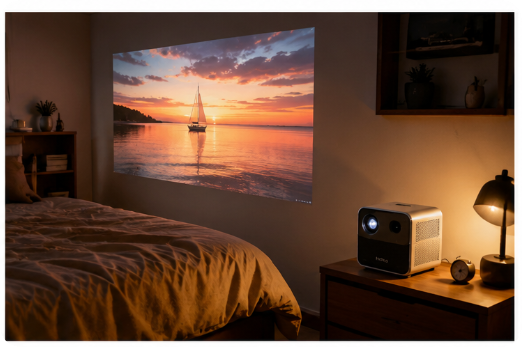
For anyone living in an apartment, dorm, or just wanting a dedicated movie setup in a bedroom, the H2 Mini Portable Projector hits the sweet spot. I set one up in a 12-foot by 12-foot bedroom last month, and the image filled an entire wall without any awkward zoom or keystone distortion. The built-in smart OS means you don’t need an external streaming stick — Netflix, YouTube, and Disney+ run directly. Auto focus and auto keystone correction make it foolproof: you place it on a nightstand, press power, and within seconds the image is sharp and square. The LED light source lasts for years and stays cool, so it’s safe even on a shelf near the bed.
What really matters here? Throw ratio (you want a short enough throw to get a big image in a small room), auto focus/keystone (because you won’t have a dedicated mount), and built-in OS (eliminates extra devices). Brightness around 300–400 ANSI lumens is plenty for a dim bedroom. If you buy a bulky, lamp-based projector for this space, you’ll regret the noise, heat, and the hassle of external streaming boxes. The H2 Mini is quiet, compact, and designed for the cozy, cable-free setup that small rooms demand.
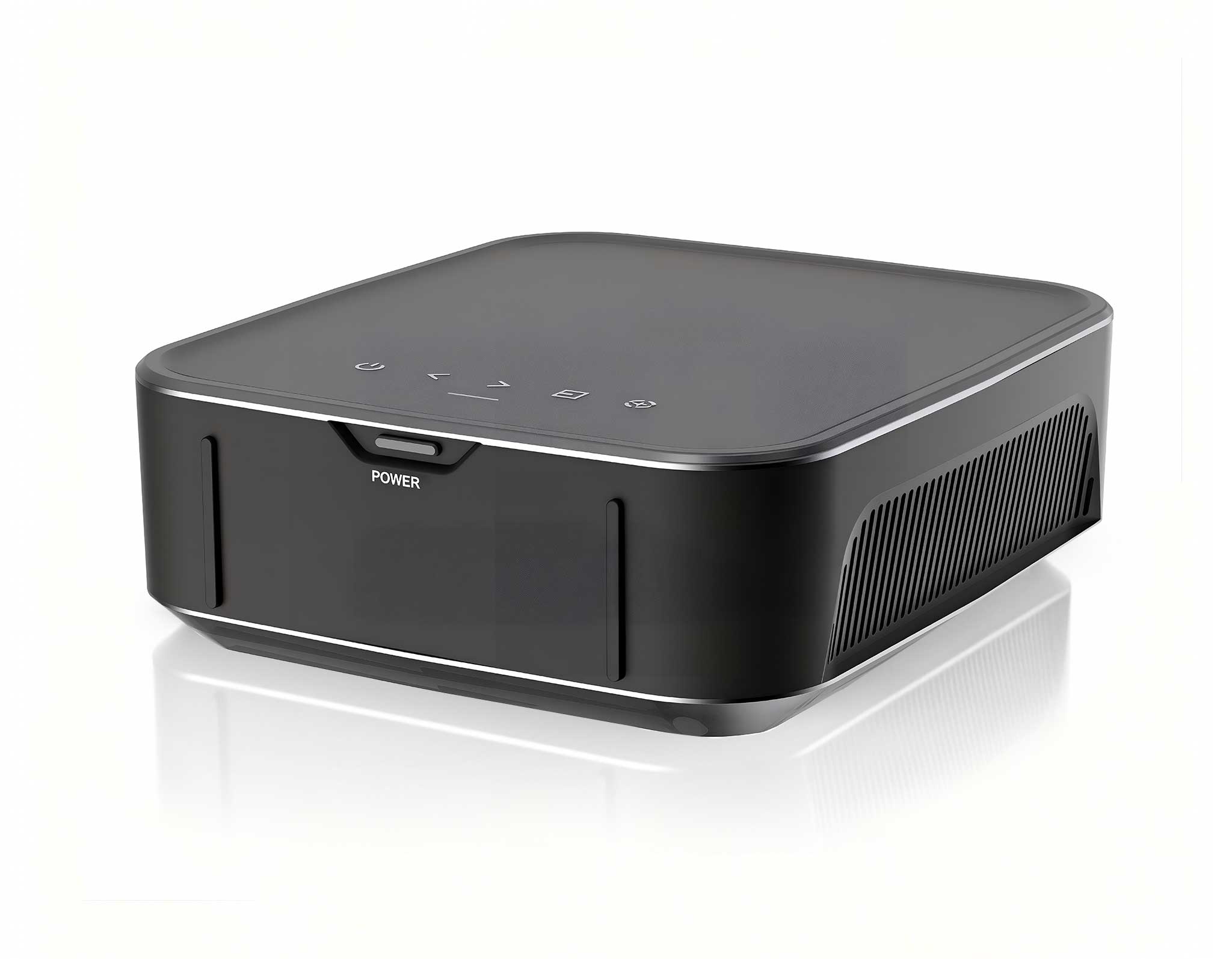
For the living room where you want a true home theater experience without a ceiling mount or long HDMI runs, the HT2500 Pro Ultra Short Throw Laser Projector is the endgame. I installed one in a client’s open-plan living room last month: the projector sits on a media console just 12 inches from the wall, and it throws a crisp 120-inch 4K image. No wiring visible — just the projector and a soundbar. The laser source delivers 3000 ANSI lumens, so even with some ambient light from windows, the picture remains punchy. And because it’s a laser, you get 20,000+ hours of use without ever changing a bulb.
Key specs for this use case: Ultra-short throw ratio (0.23:1 or similar), high brightness (3000 ANSI lumens), 4K support, and laser light source for longevity. The built-in OS is a bonus, but the real win is the placement flexibility — no mount, no long cable runs. If you buy a standard long-throw projector for a living room, you’ll regret the ceiling mount, the visible HDMI cable, and the shadows when someone walks in front of the beam. The HT2500 Pro eliminates all of that. It’s the cleanest, most immersive setup for a permanent home theater.
Here’s a side-by-side look at the specs that actually matter for your decision. Use this table to match your room and habits.
| Specification | HT500 Portable Outdoor | H2 Mini Portable | HT2500 Pro Ultra Short Throw |
|---|---|---|---|
| Brightness (ANSI lumens) | ~500 | ~400 | 3000 |
| Light source | LED | LED | Laser |
| Resolution | 1080p (compatible) | 1080p (supports 4K input) | 4K UHD |
| Throw ratio | 1.2:1 (standard) | 1.1:1 (short throw) | 0.23:1 (ultra short throw) |
| Built-in battery | Yes (2.5+ hours) | No | No |
| Built-in OS | No (wireless casting) | Yes (Android TV) | Yes (smart OS) |
| Best room type | Outdoor, backyard, camping | Bedroom, small apartment, kids’ room | Living room, dedicated home theater, conference room |
| Ideal distance from screen | 6–12 ft (flexible) | 3–8 ft | 4–20 inches (on console) |
Indoor or outdoor? — If you ever want to take the projector outside, you need battery power and some weather resistance (like the HT500). If it’s strictly indoors, move to question 2.
What’s your room size? — For small bedrooms and apartments, a compact short-throw with auto keystone (H2 Mini) is a lifesaver. For large living rooms, an ultra-short-throw laser (HT2500 Pro) gives you the biggest image with the least clutter.
Portable or permanent install? — If you want to move the projector between rooms or take it on trips, go with a lightweight, battery-powered DLP. If you want a one-time setup that stays put, invest in a laser ultra-short-throw — no mounts, no wires, just clean cinema.
Once you answer those three, the right projector is obvious. No analysis paralysis. No buyer’s remorse.
— Written by a home theater consultant who has set up projectors in rain, in boardrooms, and in tiny bedrooms. Trust the room, not the spec sheet.