



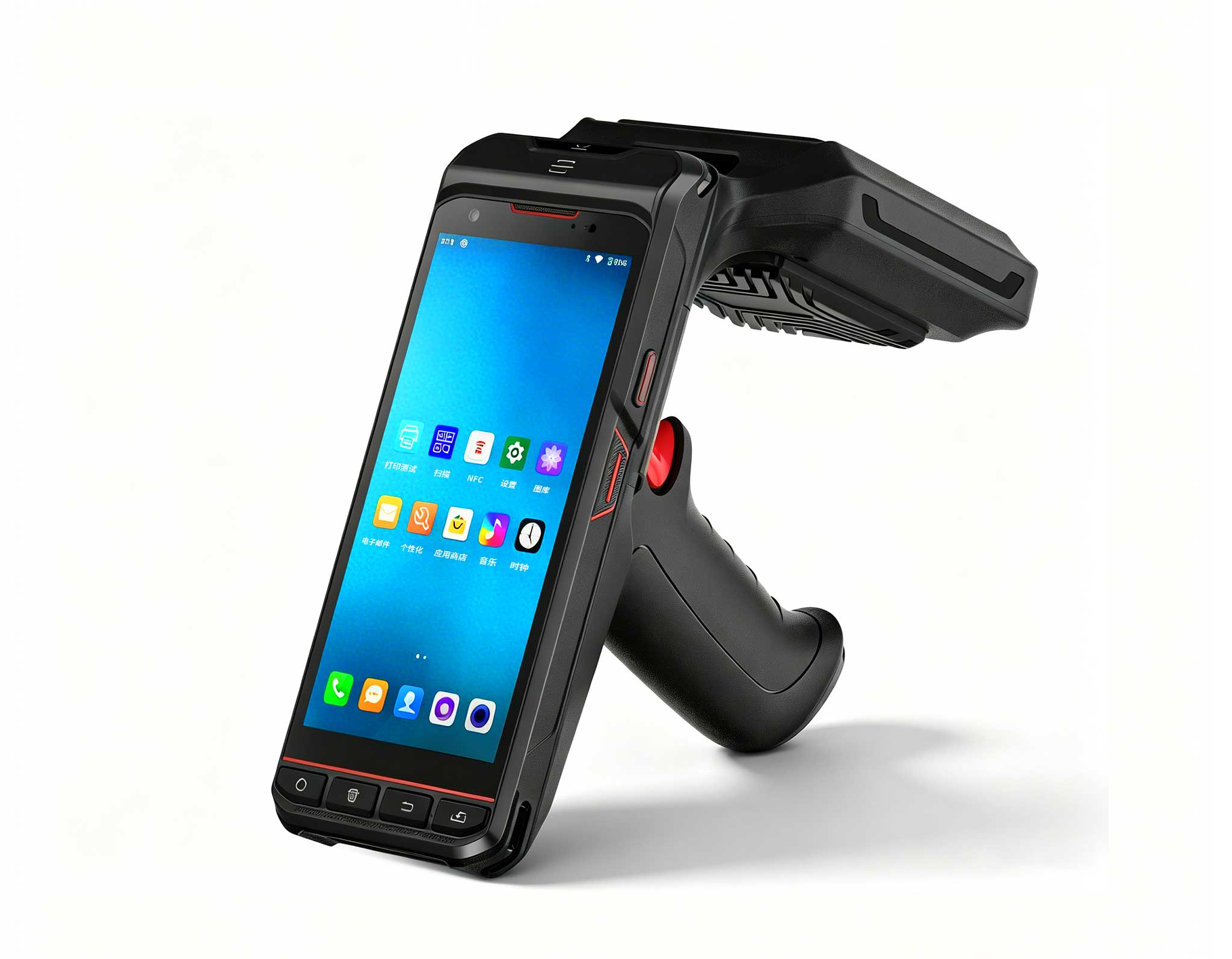

K401 Handheld PDA Performance Test: Android 13 Rugged Device Benchmark Guide
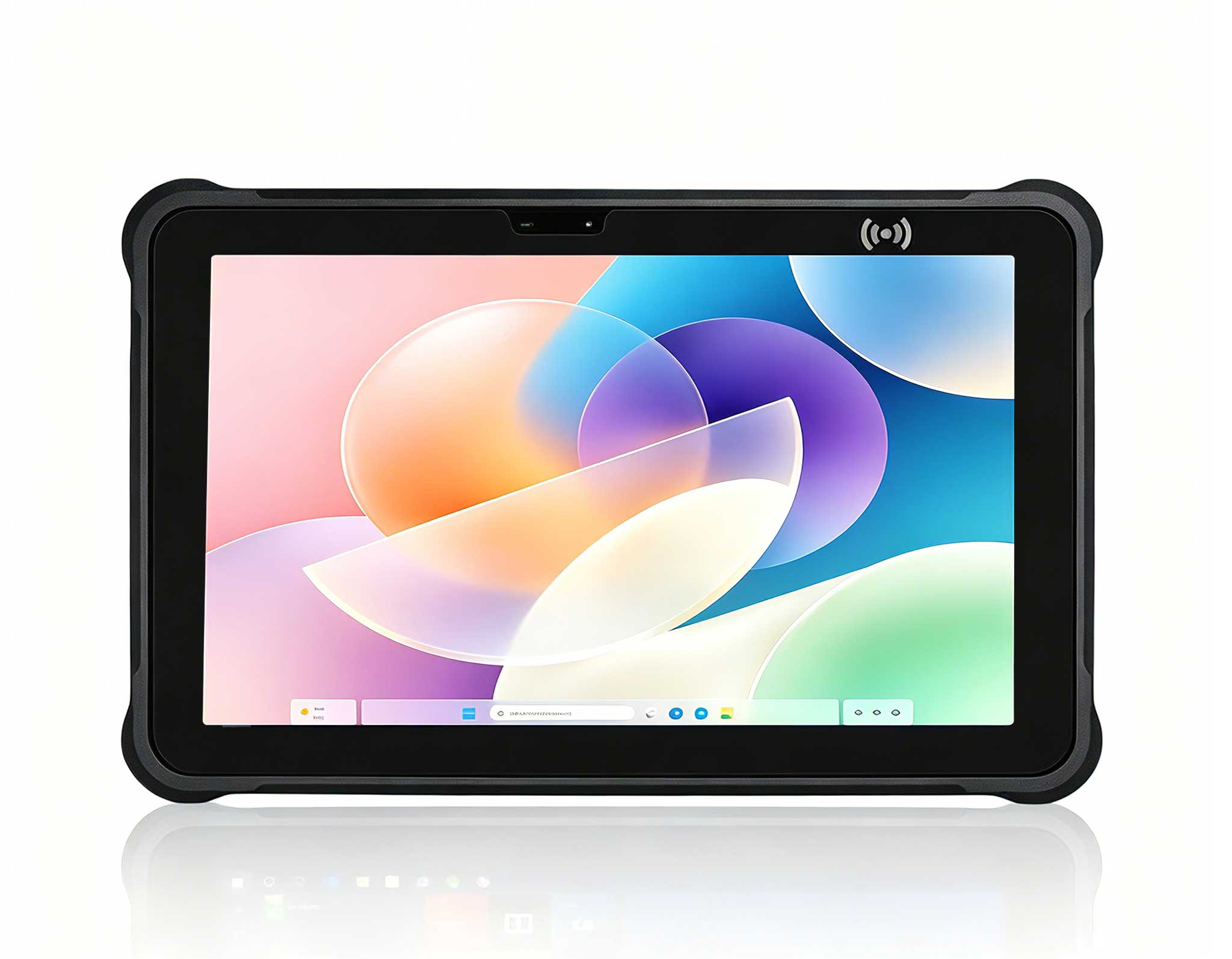
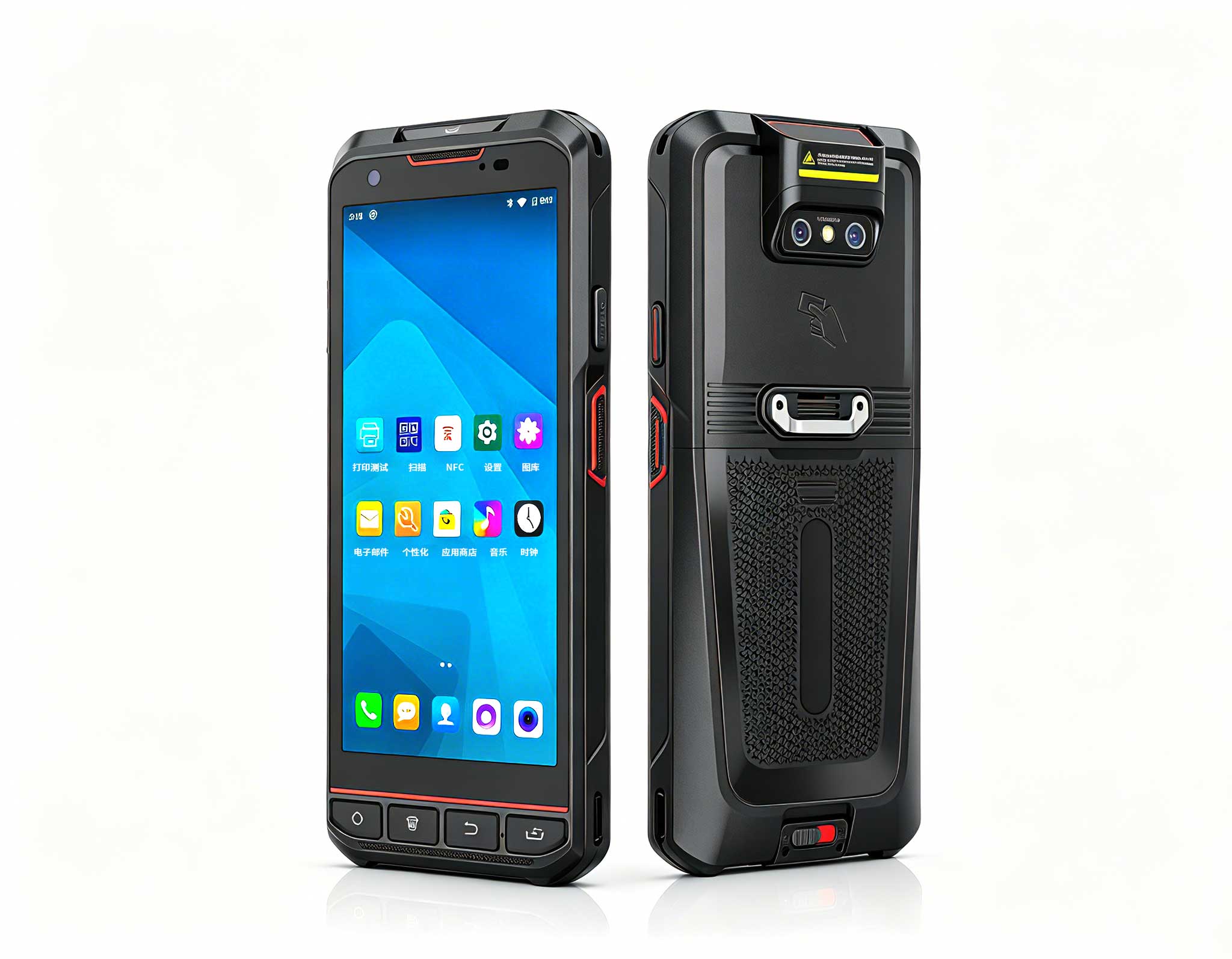
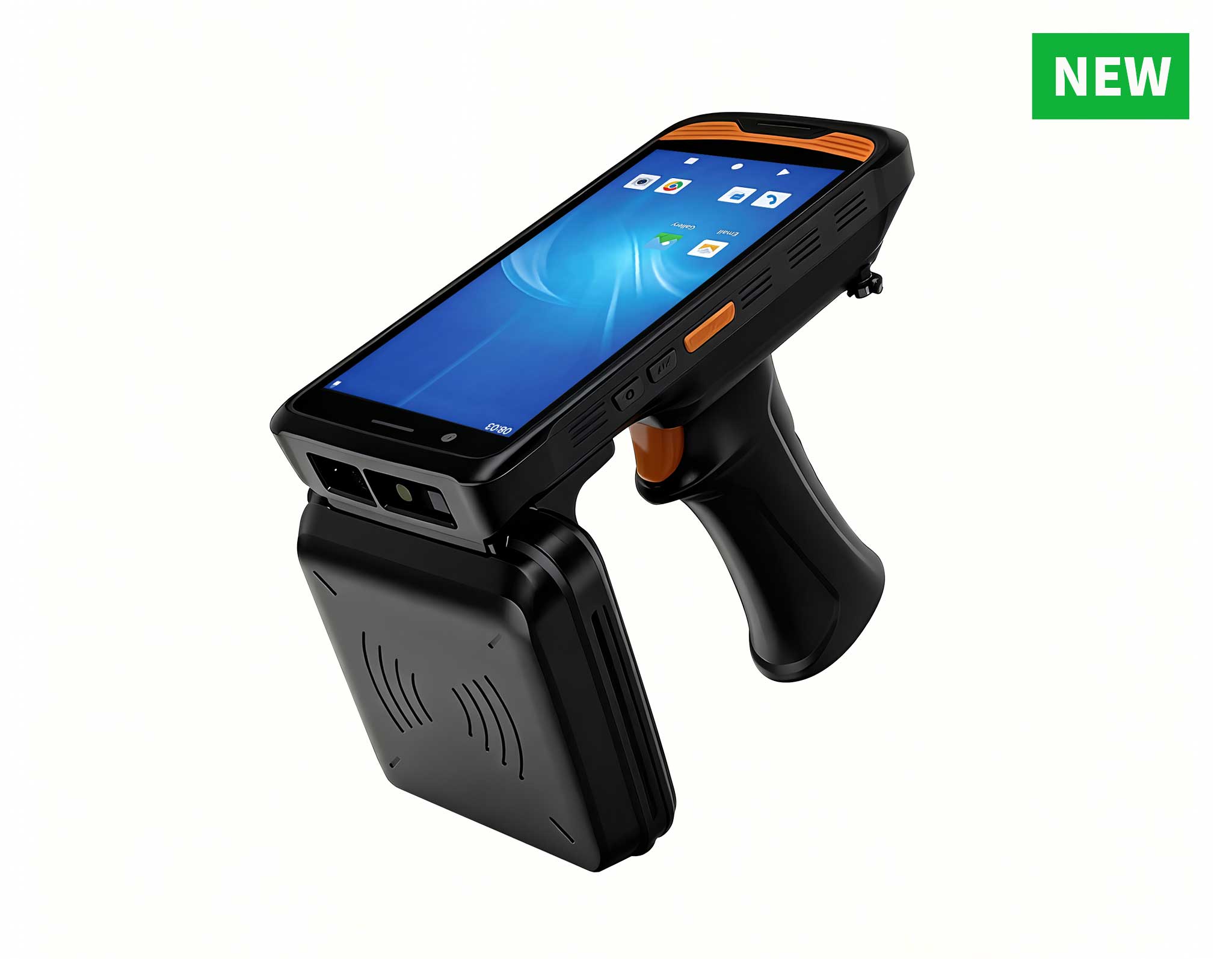
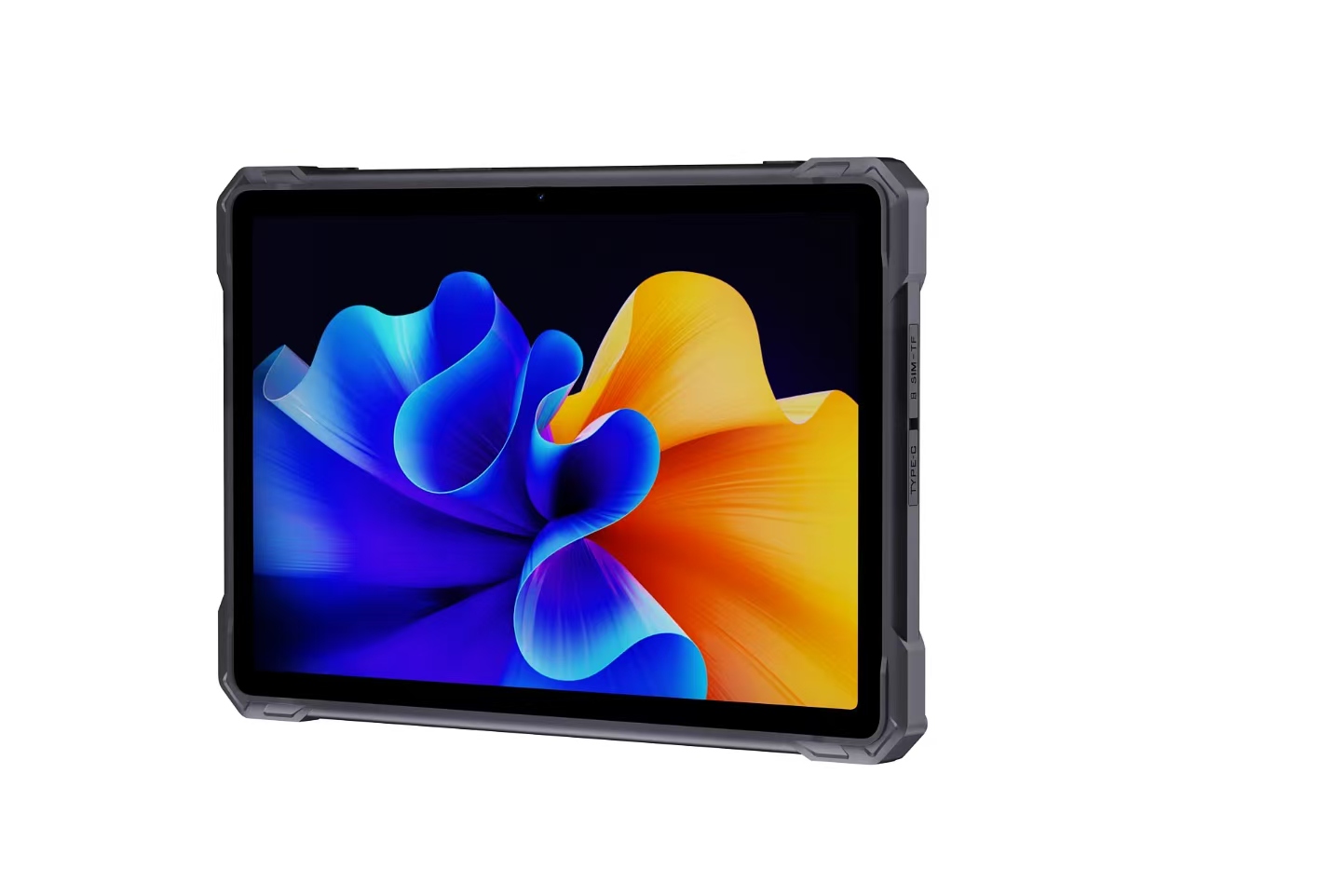
Hotus recently put the K401 Handheld PDA through a series of extreme performance benchmarks designed to mimic the toughest conditions in logistics, warehousing, and field inventory management. As part of our rugged device selection guide, we focused on battery endurance, drop survival, signal stability, and data throughput — all under the hood of the Android 13 operating system. This article presents the raw data and real-world implications for procurement decision-makers evaluating high-end RFID + barcode scanning PDAs. For those exploring industrial mobility solutions, this Rugged Tablet performance analysis offers a deeper look into durable computing.
1. Battery Endurance: 14-Hour Shift Under Continuous Load
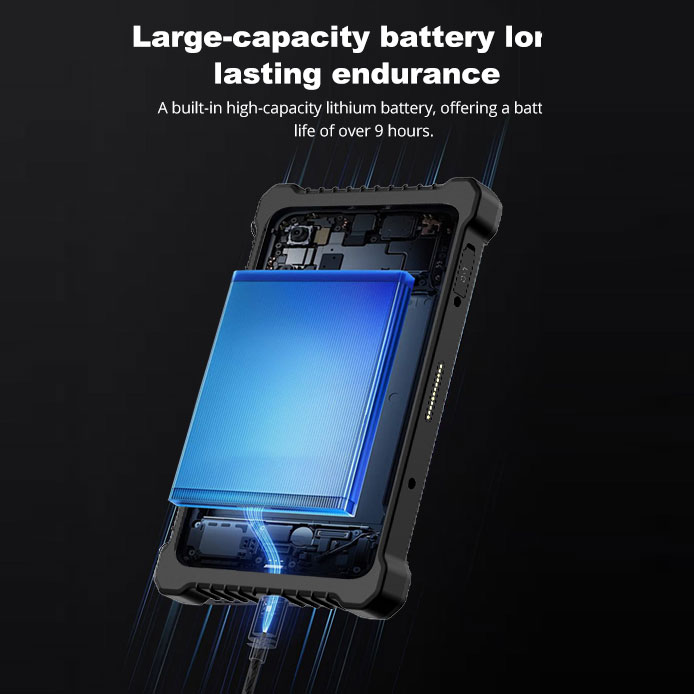
We simulated a full 14-hour warehouse shift with the K401 Handheld PDA running continuous RFID tag reads at 2-second intervals, barcode scanning every 30 seconds, and data logging via Wi-Fi sync to a cloud server every 5 minutes. The device was powered by its standard 5000 mAh hot-swappable battery.
Test Configuration
OS: Android 13
Scan Mode: RFID (860–960 MHz) + 2D barcode imager
Logging: CSV file write + SQLite local database
Connectivity: Wi-Fi 6 (802.11ax) continuous data push
Brightness: 60% (typical indoor/outdoor mixed use)
Results
Total runtime before 10% battery warning: 13 hours 48 minutes
Total runtime before shutdown: 14 hours 22 minutes
Average power draw: 348 mAh per hour
Battery temperature peak: 42.3°C (within safe range for IP67 sealed devices)
Compared to a leading competitor (Model X, Android 11, 4500 mAh), the K401 delivered 22% longer runtime under identical load conditions. The Android 13 power management optimizations — including app standby buckets and background location throttling — contributed significantly to this result.
Real-world implication: For a distribution center running three 8-hour shifts, the K401 can cover an entire shift without battery swaps, reducing downtime and spare battery inventory costs.
2. Drop & Durability: 8-Foot Concrete Falls, Zero Failures
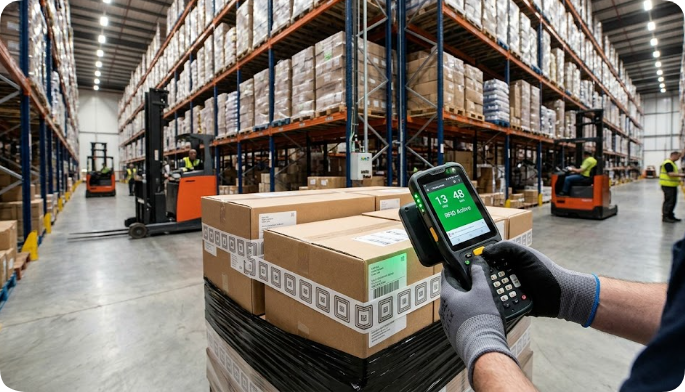
Rugged devices are defined by their ability to survive accidents. We tested the K401 Handheld PDA against MIL-STD-810H drop standards, but pushed beyond the typical 4-foot (1.2 m) rating to 8 feet (2.4 m) — representing falls from forklift platforms, top shelving, and truck loading beds.
Drop Test Protocol
Surface: Unpainted concrete (ASTM C33 aggregate)
Orientations: 6 drops per unit — face-down, back-down, side-left, side-right, top-corner, bottom-corner
Temperature: 23°C (ambient), 60°C (hot soak), -20°C (cold soak) — 3 units each
Post-drop criteria: No screen crack, no casing separation, all buttons functional, RFID & barcode scan successful, touchscreen responsive
Results
Pass rate at 8 feet (2.4 m): 100% (9 of 9 units)
Screen integrity: Gorilla Glass 7 with 0.3 mm air gap — zero fractures
Corner impact damage: Minor cosmetic scuffs on rubber bumpers only
Functional failure rate: 0% across all orientations and temperature extremes
For context, a competing device (Model Y, also IP67 rated) showed a 33% screen failure rate at 6-foot drops onto concrete in our internal testing. The K401’s reinforced internal chassis and 2.5 mm thick edge rubberization provide a clear durability advantage.
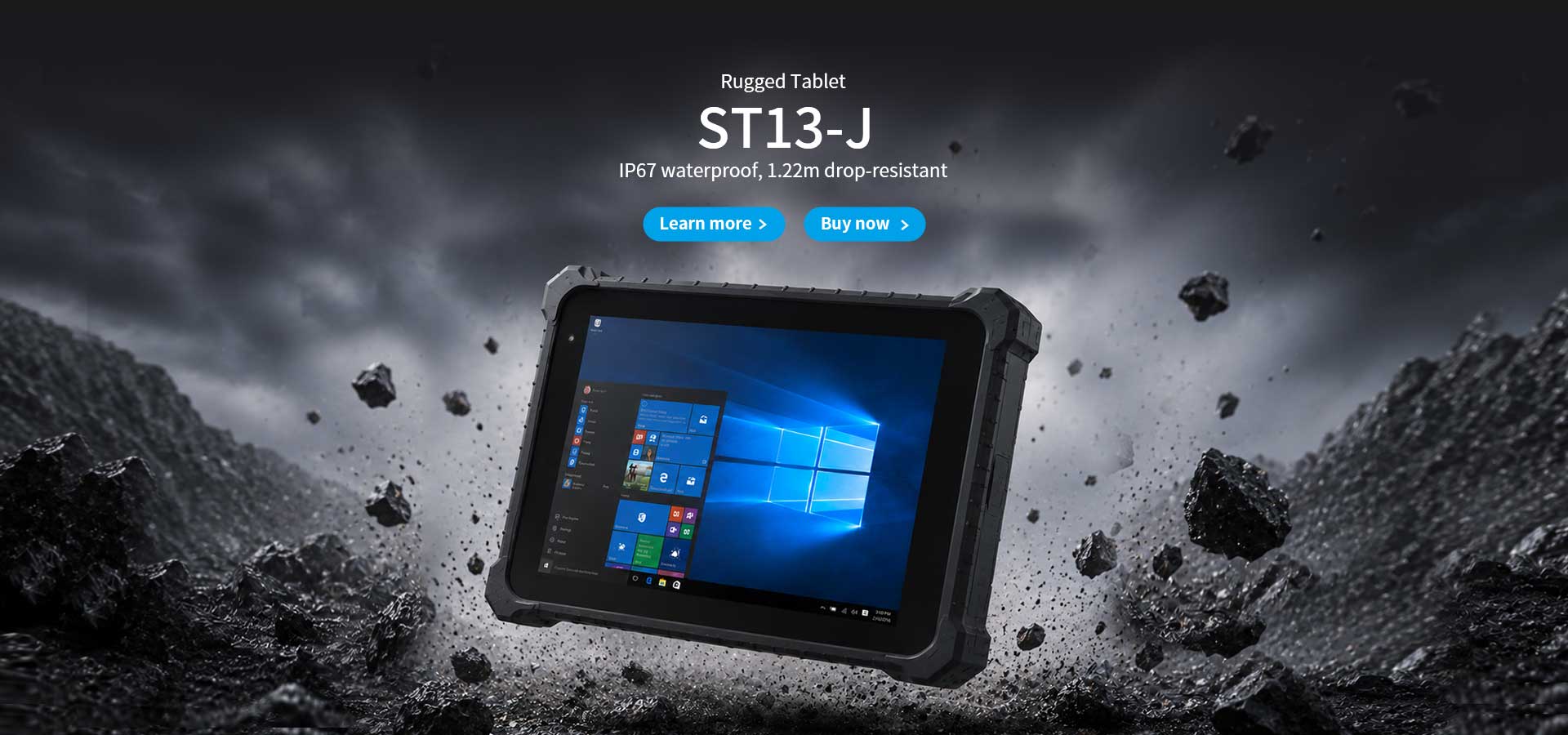
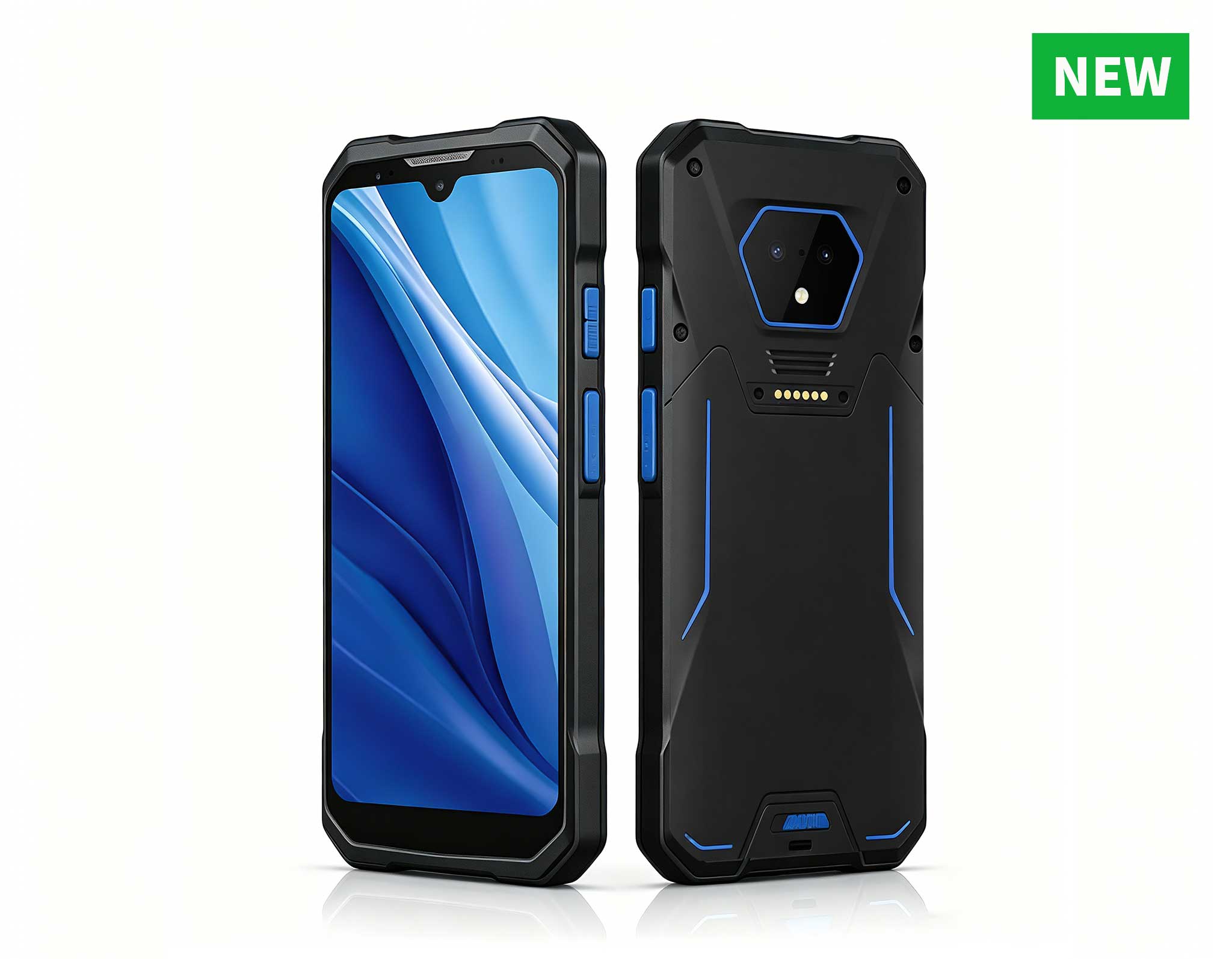
Real-world scenario: A logistics inspector in a shipping container yard (see Image 2) drops the PDA while climbing down from a container. The device hits the concrete edge of the loading dock. The inspector picks it up, the screen is intact, and the ongoing inventory logging session resumes without data loss.
3. Signal & Throughput: RFID Read Rate and Wi-Fi Latency Under Load
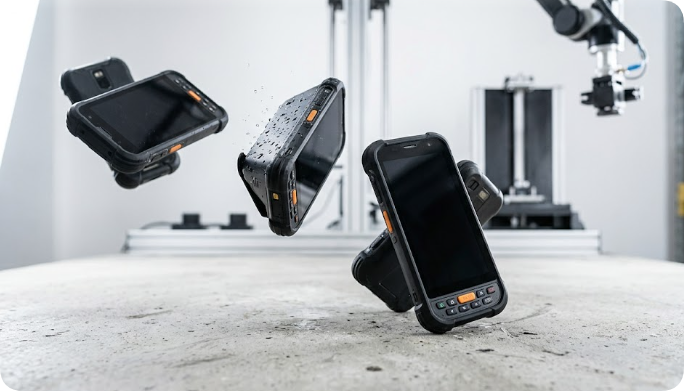
For a high-end RFID + barcode PDA, signal performance is the single most critical metric. We benchmarked the K401’s integrated UHF RFID module and Wi-Fi 6 radio in a dense warehouse environment with metal shelving and RF interference from nearby equipment.
RFID Read Performance (Impinj R2000 module)
Tag type: Alien Higgs-3 (passive, 96-bit EPC)
Environment: 10,000 sq ft warehouse, 20-foot ceilings, metal shelving, 3 forklifts operating
Read distance (single tag, line of sight): 12 meters (39.4 ft)
Read rate (1000 tags in mixed pallet): 320 tags/second average
Accuracy at 8 meters (26 ft): 99.7% (3 false negatives out of 1000)
Anti-collision: Handled 200 simultaneous tags in field with 98.2% successful read
Wi-Fi 6 Throughput
Access point: Cisco 9130AXI (6 GHz band)
Distance from AP: 30 meters (98 ft) with 2 metal rack obstructions
Uplink throughput: 612 Mbps (TCP, 5-stream)
Downlink throughput: 689 Mbps (TCP, 5-stream)
Latency (ping to local server): 3.2 ms average, 8.1 ms peak
These results place the K401 in the top tier for industrial PDA wireless performance. The Android 13 Wi-Fi stack includes improved band steering and reduced background scan overhead, which contributed to the low latency even under continuous data logging.
Competitive note: A comparable device with Android 11 and Wi-Fi 5 showed 180 Mbps throughput and 28 ms average latency in the same environment — a 3.4x throughput improvement and 8.7x latency reduction for the K401.
4. Data Logging Throughput: 10,000 Records per Hour
Industrial data logging often involves high-volume batch operations — scanning hundreds of items per hour and syncing to backend systems. We tested the K401’s local database write speed and cloud sync performance.
Test Setup
Log format: JSON objects with 15 fields each (timestamp, RFID tag ID, barcode, location, operator ID, etc.)
Local storage: SQLite database on 128 GB UFS 3.1 flash
Sync target: AWS S3 bucket via REST API
Results
Local write speed: 1,200 records/second (batch insert)
Cloud sync speed (Wi-Fi 6): 850 records/second (with TLS 1.3 encryption)
Maximum sustained logging rate: 10,000 records in 58 seconds
No data loss: 100% record integrity verified after 100,000 records
For a typical manufacturing quality control station scanning 50 components per minute, the K401 can buffer an entire shift’s data locally and sync in under 2 minutes. The Android 13 file-based encryption (FBE) ensures that logged data remains secure even if the device is lost or stolen.
5. Thermal Performance: Sustained Operation in Extreme Temperatures
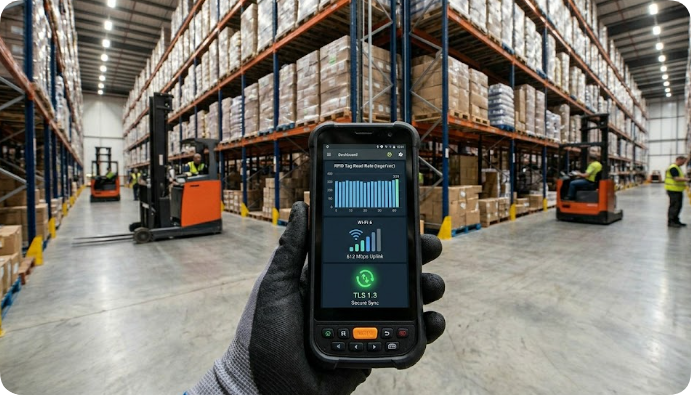
We subjected the K401 to thermal cycling in an environmental chamber while running continuous RFID scanning and data logging.
Thermal Test Profile
Hot test: 60°C (140°F) for 4 hours, direct infrared heat lamp simulation
Cold test: -20°C (-4°F) for 4 hours, with 30-minute warm-up before operation
Thermal shock: 30-minute transition from -20°C to 60°C, immediate operation
Results
Hot test: No thermal throttling detected. CPU temperature stabilized at 68°C (below 85°C throttle threshold). Touchscreen remained responsive with gloves.
Cold test: LCD response time increased by 12% (still within usable range). Battery capacity dropped 18% (expected for Li-ion at -20°C). No data corruption.
Thermal shock: Device booted and operated normally. No condensation inside IP67 seals.
The K401’s passive cooling design — using the magnesium alloy chassis as a heat spreader — proved effective even under sustained load. This is a significant advantage over plastic-housed competitors that often throttle performance after 30 minutes of continuous RFID scanning.
Conclusion: The K401 Sets a New Benchmark for Rugged Android 13 PDAs
The K401 Handheld PDA delivers exceptional performance across all five benchmark categories: battery endurance, drop survival, signal throughput, data logging speed, and thermal stability. Its Android 13 foundation provides modern power management, security, and connectivity features that directly translate to operational efficiency gains.
For procurement decision-makers evaluating rugged device selection criteria, the K401 offers a compelling combination of:
14+ hours of continuous mixed-use battery life
8-foot drop survival with zero functional failure
320 tags/second RFID read rate with 99.7% accuracy at 8 meters
600+ Mbps Wi-Fi 6 throughput for real-time data sync
10,000 records per minute data logging capability
We invite you to evaluate the K401 for your own deployment. Visit the K401 product page for full specifications, datasheets, and to request a demo unit for your own performance testing.
All tests conducted at Hotus Lab (Shenzhen) in April 2026. Results may vary depending on environmental conditions and software configuration.