- Select Language
The U9000 handheld PDA combines advanced barcode s...
Explore an innovative Personal Digital Assistant f...
R530C 6.0-inch Industrial PDA | Qualcomm Octa-core...
RT82 5G Rugged Tablet | 10.1" FHD 400nit | Qu...
R860-S 5.5-inch Industrial PDA with Thermal Printe...
Technical SpecificationsModel: Palm-sized miniPCTy...
The X501 Handheld PDA combines advanced barcode sc...
P8 Series 8-Inch Rugged Industrial Tablet PC Mobi...
R366-S Thin 5.5-inch Industrial PDA | Qualcomm Oct...
R860-S 5.5-inch Industrial PDA with Thermal Printe...
In my years working with IT infrastructure, I've seen countless organizations struggle with the hidden costs of desktop management. The traditional PC, with its fans, vents, and spinning disks, is a maintenance nightmare in a virtual desktop environment. You're not just managing one machine; you're managing dozens or hundreds. Every fan that clogs with dust, every power supply that fails, and every hard drive that crashes becomes a multiplied problem. This is precisely why the shift to virtual desktop cloud terminals is not just a performance decision—it is a maintenance decision. A modern, fanless, solid-state device like a Mini PC eliminates the most common points of mechanical failure. When you deploy a dedicated thin client vdi solution, you are fundamentally changing your maintenance cycle from reactive repairs to proactive, zero-touch management. The hardware becomes an appliance, not a project.
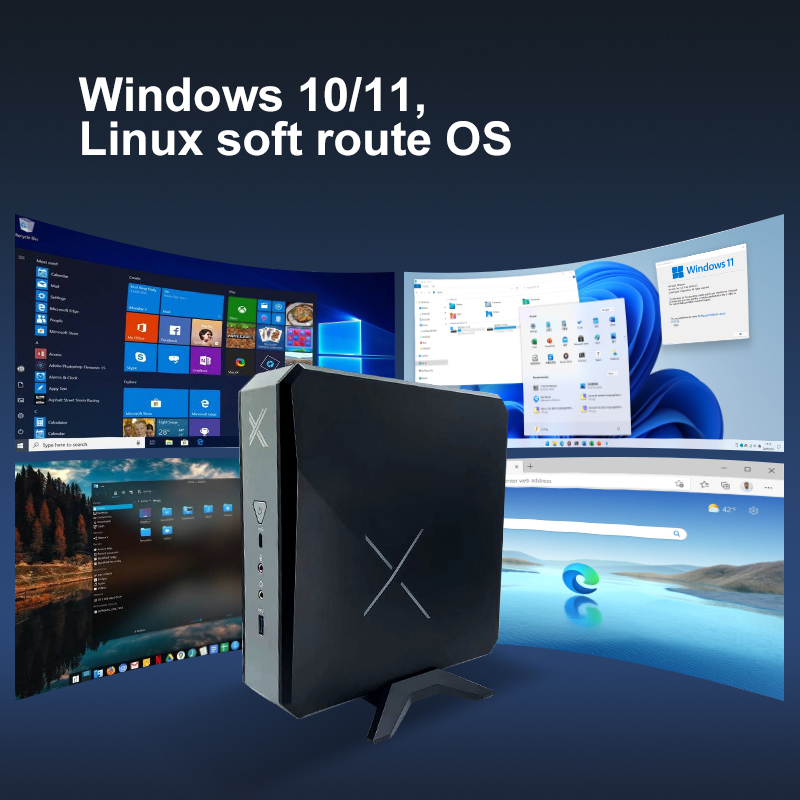
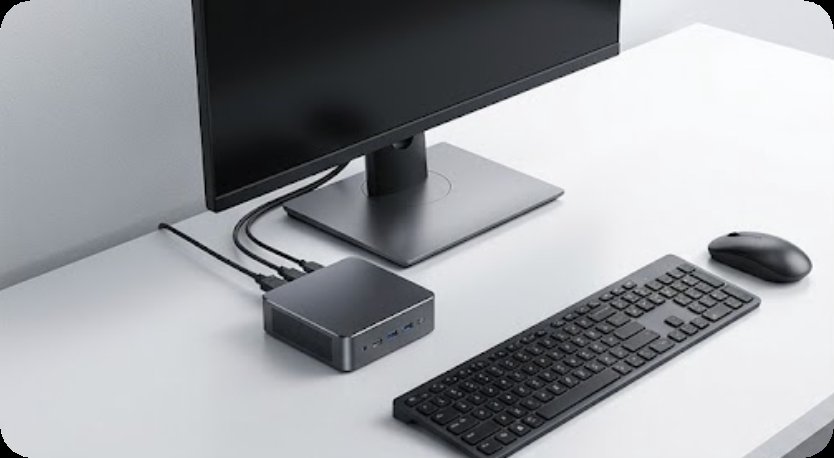
The star of our lineup is the Palm-sized miniPC, a device purpose-built to redefine the virtual desktop endpoint. Its primary positioning is as the ultimate low-maintenance, high-performance cloud terminal. The core engineering philosophy here is "set and forget." With a completely fanless, sealed metal chassis, this device has zero moving parts. There are no air intake vents to clog, no fans to replace, and no dust accumulation to manage. This makes it ideal for environments where cleanliness and reliability are paramount, such as healthcare, education, or financial services. The device is powered by an energy-efficient processor that handles the decoding of virtual desktop streams with ease, ensuring a responsive user experience without generating heat or noise.
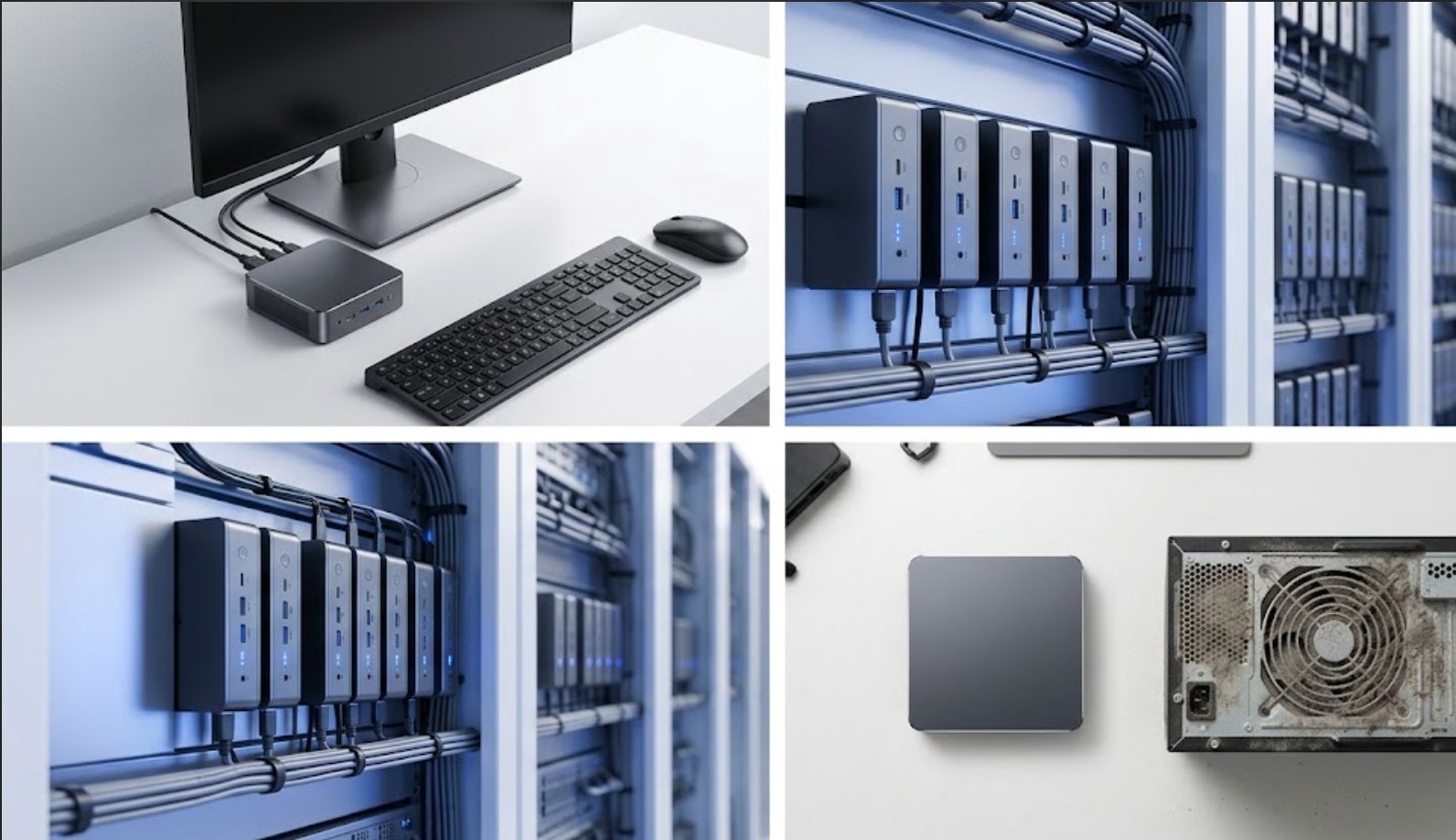
Beyond its physical resilience, the Palm-sized miniPC offers significant operational advantages. Its compact form factor means it can be mounted directly behind a monitor or under a desk, freeing up valuable workspace and reducing clutter. In a VDI deployment, the endpoint is essentially a portal, and this device performs that role flawlessly. It requires no local software updates in the traditional sense, as all applications and operating systems are managed centrally on the server. This drastically reduces the time IT staff spend on desk-side visits. For organizations looking to scale their virtual desktop infrastructure without scaling their maintenance headaches, the Palm-sized miniPC is the ideal endpoint.
To understand the tangible benefits, let's look at a direct comparison between a traditional desktop PC and the Palm-sized miniPC in a VDI context. The table below highlights the critical differences that impact your total cost of ownership and maintenance schedule.
| Feature | Palm-sized miniPC (VDI Endpoint) | Traditional Desktop PC |
|---|---|---|
| Cooling System | Fanless, passive cooling | Active fan, requires cleaning |
| Local Storage | eMMC / SSD (no moving parts) | HDD or SSD (mechanical risk) |
| Dust/Ingress Protection | Sealed chassis, IP5x equivalent | Open vents, high dust intake |
| Physical Footprint | Palm-sized, mountable | Tower, requires floor/desk space |
| Expected Maintenance Cycle | Annual visual check | Quarterly cleaning, part replacement |
| Power Consumption | Very low (10-15W) | High (65-150W) |
| Noise Level | Silent (0 dB) | Audible fan noise (20-30 dB) |
| Best Use Case | Clean room, office, healthcare | Workshop, gaming, local processing |
Selecting the correct endpoint for your virtual desktop cloud terminal deployment comes down to three key maintenance considerations: environment, workload, and lifecycle.
Environment: If your deployment is in a dusty warehouse, a factory floor, or a clean medical facility, the sealed, fanless design of the Palm-sized miniPC is non-negotiable. Traditional PCs will fail prematurely due to dust ingress and fan failure. For a standard office environment, the miniPC still offers the benefit of silent operation and zero maintenance, which enhances user satisfaction.
Workload: For standard office productivity—email, web browsing, document editing—the Palm-sized miniPC is perfectly matched. It handles the decoding of the VDI stream without issue. If your users require heavy local processing (e.g., 3D rendering on the endpoint), a traditional PC may be necessary, but this is rare in a properly architected VDI scenario. The entire Palm-sized miniPC series is optimized for cloud-based workloads.
Lifecycle: Consider the total cost of ownership over three to five years. The miniPC’s lack of moving parts means significantly lower failure rates and fewer technician call-outs. While the initial purchase price of a traditional PC might be lower, the cumulative cost of maintenance, cleaning, and part replacement quickly surpasses the miniPC’s upfront investment. This is why forward-thinking IT managers are switching to these devices.
For a deeper dive into how these devices can transform your IT strategy, I encourage you to explore our mini PC solutions to see the full range of deployment options and case studies.
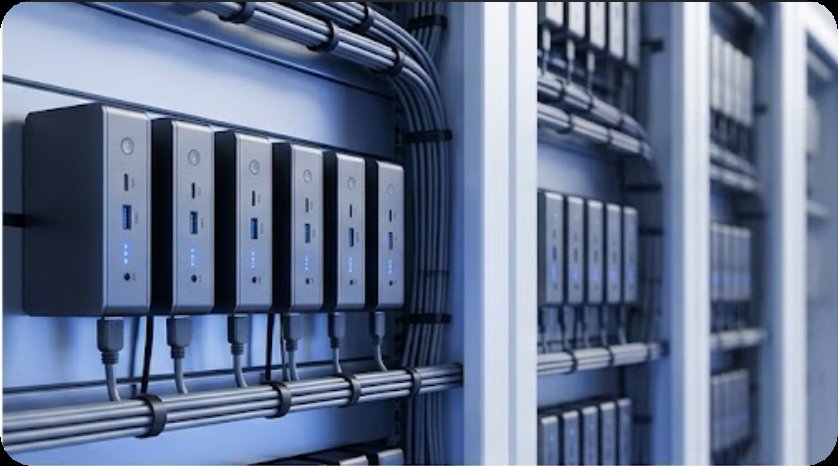
The image below visually summarizes the core maintenance argument. On the left, the Palm-sized miniPC sits clean, sealed, and ready for years of silent service. On the right, a standard PC tower shows the inevitable result of active cooling: dust accumulation in the fan and vents, which leads to overheating, noise, and eventual failure. This side-by-side comparison makes the choice clear for any IT administrator focused on reducing operational overhead.
Shifting to a virtual desktop cloud terminal architecture is a strategic move. But the hardware you choose to access that cloud matters immensely. Don't let outdated, high-maintenance endpoints undermine the efficiency gains of your VDI investment. The Palm-sized miniPC is designed to be the most reliable, lowest-maintenance endpoint on the market. Contact Hotus Technology today to discuss a pilot deployment and see firsthand how a fanless, maintenance-free endpoint can transform your IT operations. Reduce your ticket volume, lower your total cost of ownership, and give your team the gift of silent, reliable computing.
From my experience, the shift to fanless endpoints is not just about cutting costs—it's about reclaiming IT time. When you stop fighting hardware failures, you can focus on strategic projects that actually move the business forward. The Palm-sized miniPC makes that possible.