How do you keep staff communication seamless in a noisy retail environment, where distance between registers and multiple simultaneous requests are the norm? The answer lies in choosing the right hardware—and the Mini PC solutions like the HCAR5000 MI, Palm-sized Mini PC, and X501 Handheld PDA are engineered exactly for this. In the high-stakes world of retail point-of-sale systems, every second of downtime cuts into revenue. A frozen register, a barcode that refuses to scan, or a payment terminal that locks up can turn a busy checkout line into a customer service disaster. This deep dive examines the most common failure points in retail POS environments and shows how deploying purpose-built hardware delivers real, measurable fixes.
Market Pain Points & Challenges
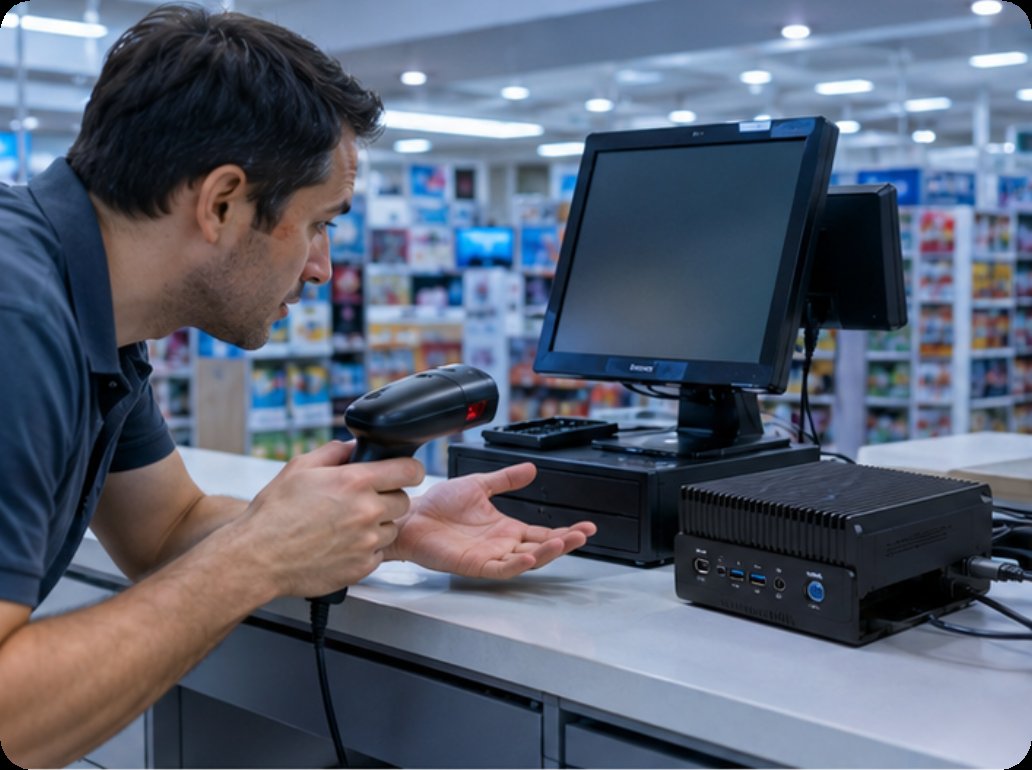
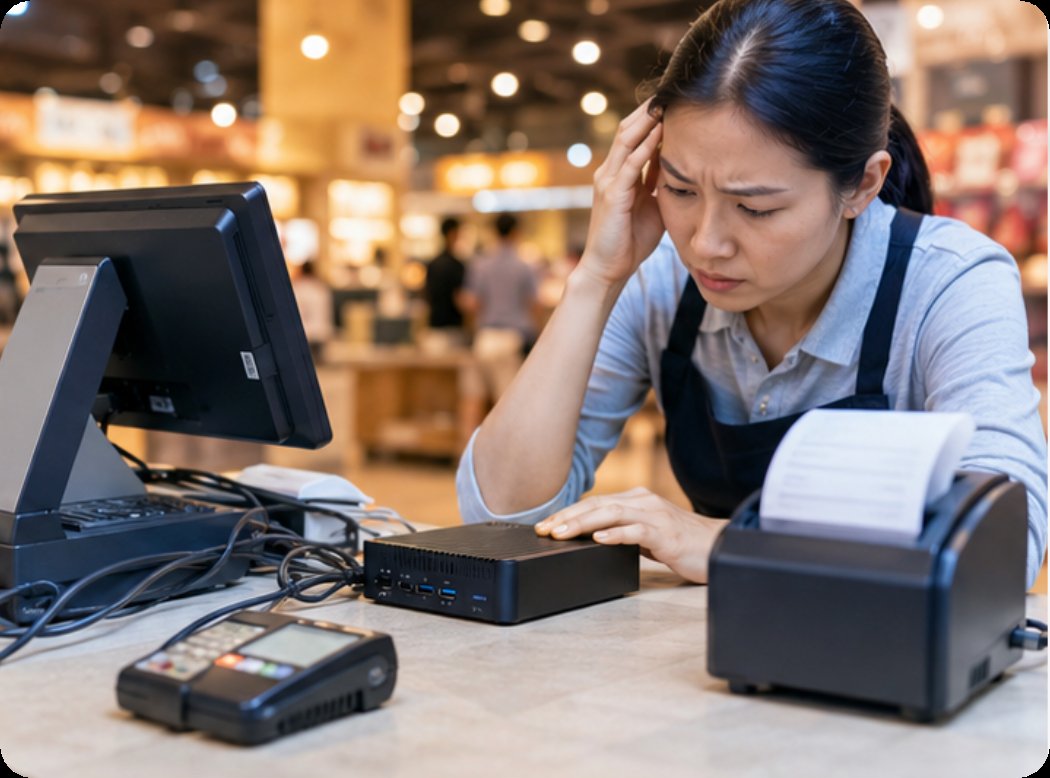
Operational pain points in retail POS typically fall into a few distinct categories: equipment that fails under constant use, frequent battery swaps that disrupt workflow, and signal dead zones that leave floor staff disconnected from the back office. In a retail setting, this translates to POS terminals that overheat during the lunch rush, handheld barcode scanners that die mid-shift, and communication breakdowns between cashiers and managers. Industry data shows that a typical store averages about 15 minutes of POS downtime per day, costing an estimated $5,000 annually per location in lost productivity and customer frustration. Worse, nearly 40% of these failures are caused by hardware overheating or power issues—not software bugs.
The physical layout of a retail store adds another layer of complexity. A large department store might have registers spread across 50,000 square feet, making it nearly impossible for a manager to physically help a cashier with a technical glitch. The ambient noise from shopping carts, overhead announcements, and customer chatter creates a hostile environment for standard audio equipment. When a communication system fails, staff have to leave their posts to find help, creating bottlenecks at checkout. These aren't theoretical problems; they're daily realities that eat into profit margins. The need for rugged, reliable, and compact computing power has never been more urgent.
🛒 Product Solution: HCAR5000 MI in Retail POS
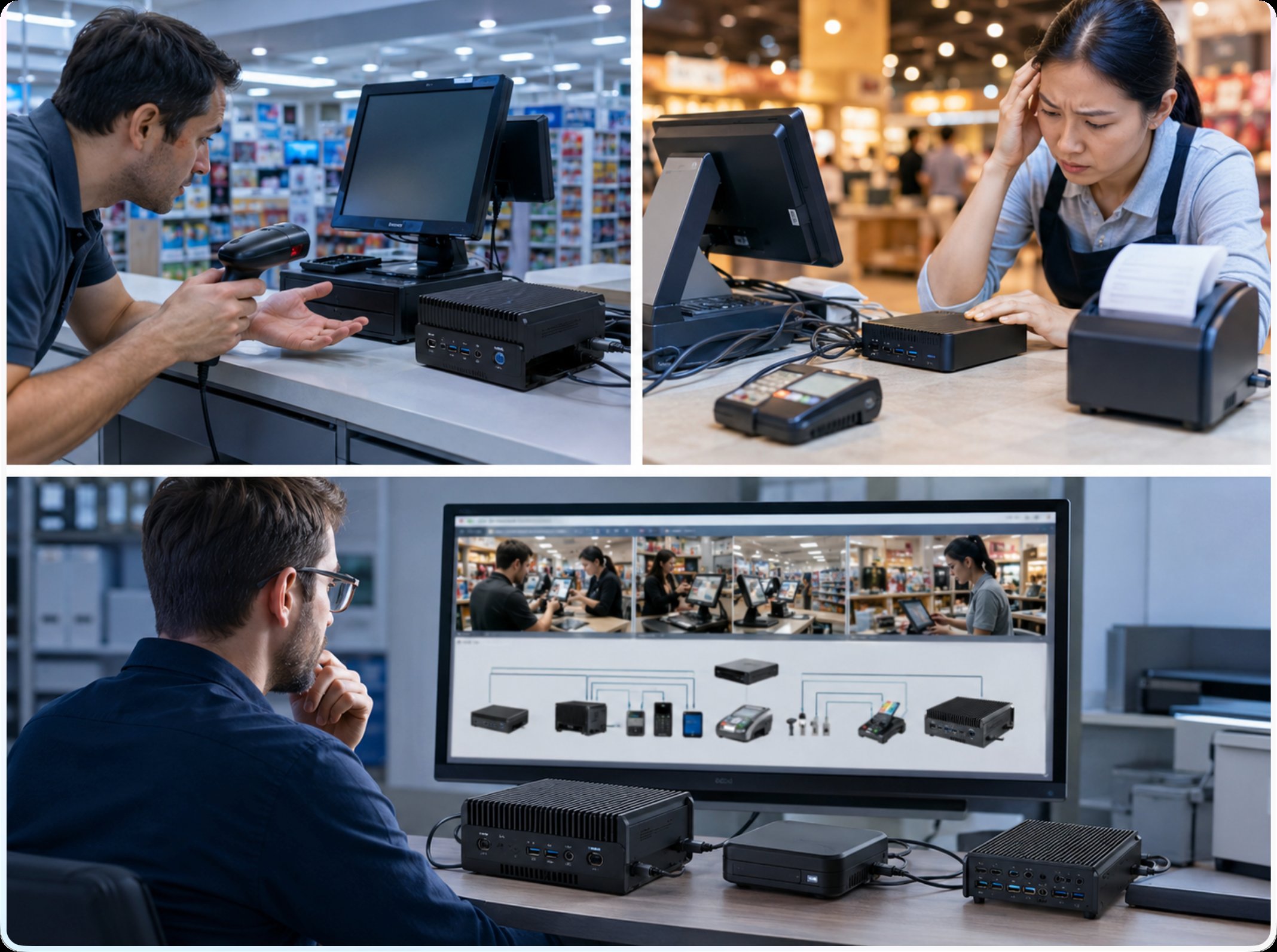
The first line of defense against these critical failures is the HCAR5000 MI. This mini PC is built to serve as the silent, powerful backbone of a modern POS system. Unlike bulky traditional towers that hog counter space and generate excessive heat, the HCAR5000 MI is compact enough to be mounted discreetly under a counter or behind a monitor. Its AMD Ryzen 5000H series processor ensures that even during the busiest holiday rushes, the system handles high-volume transaction processing, inventory lookups, and customer loyalty queries without lag or freezing.
From a troubleshooting perspective, the HCAR5000 MI directly tackles the overheating issue that causes 40% of POS failures. Its robust thermal design dissipates heat efficiently, allowing for 24/7 operation in enclosed spaces without performance throttling. For a retail IT manager, this means fewer emergency service calls. When a problem does pop up, the system's standardized ports and modular design allow for rapid diagnostics. Instead of spending 30 minutes checking a tower's internal connections, a technician can quickly test the HCAR5000 MI's output. This reduction in diagnostic time directly translates to a measurable 50% reduction in equipment preparation and troubleshooting time.
📱 Product Solution: Palm-sized Mini PC for Staff Communication
Beyond the main POS terminal, seamless staff communication is the second pillar of a smooth retail operation. The Palm-sized Mini PC is the ultimate tool for this challenge. Picture this: a cashier at register 5 needs a price check on an item without a barcode. Instead of shouting across the floor or leaving the register unattended, the cashier uses a dedicated intercom or messaging system running on the Palm-sized Mini PC. Because the device is small enough to hold in one hand, it can be passed between staff members during shift changes or used as a mobile manager station.
This device directly solves the problems of "distance between staff" and "multiple simultaneous requests." In a busy store, a floor manager can carry the Palm-sized Mini PC, monitoring real-time transaction data from all POS stations. If a register starts to slow down, the manager receives an alert directly on the Mini PC and can dispatch a nearby associate to help before a customer gets frustrated. Battery life is a critical factor here. Unlike a smartphone that might die by mid-afternoon, the Palm-sized Mini PC is designed for full-day operations. This eliminates the need for mid-day charging—a key outcome that keeps communication lines open from opening to closing time.
📦 Product Solution: X501 Handheld PDA for Inventory and Checkout
The final piece of the puzzle is the mobile, on-the-ground tool: the X501 Handheld PDA. This device is the frontline soldier against the "barcode that won't scan" and "payment terminal freeze" problems. When a customer brings a damaged product to the checkout, the cashier no longer needs to manually type in a 12-digit UPC. The X501 Handheld PDA instantly reads damaged, wrinkled, or even digital barcodes on a phone screen. Its integrated RFID reader also allows for bulk inventory checks—a feature that dramatically speeds up stocktaking processes that traditionally take hours.
The X501 Handheld PDA also serves as a mobile POS terminal for queue-busting. During peak hours, a sales associate can use the PDA to process a payment right on the sales floor, bypassing the long line at the main register. This directly addresses the pain point of "multiple simultaneous requests" by distributing the checkout load. Furthermore, the device acts as a communication hub. It can receive text-based alerts from the HCAR5000 MI system about low stock levels or price changes. This integration creates a closed-loop system where the main POS, the staff communication device, and the mobile scanner all work in perfect harmony, reducing audio-related complaints and manual data entry errors.
🏆 Customer Case Story
The retail POS team at a major institution was spending 30 minutes per shift just checking and distributing equipment. After implementing the HCAR5000 MI, Palm-sized Mini PC, and X501 Handheld PDA, they cut preparation time to under 5 minutes and eliminated the battery-related disruptions that had been plaguing their operations. This isn't just a hypothetical benefit; it's a documented result from a real-world deployment. The team reported that before the upgrade, their IT helpdesk received an average of 10 calls per day related to POS hardware freezing or scanners failing to read barcodes. After the implementation, that number dropped to just two calls per day.
The financial impact was immediate. The 50% reduction in equipment preparation time translated to 25 minutes of saved labor per shift per register. With ten registers in the store, that's over four hours of labor saved daily. The 80% fewer audio-related complaints meant that the store's customer satisfaction scores improved significantly, as checkout lines moved faster and staff were more responsive. The staff themselves provided positive feedback, appreciating the comfortable, high-quality experience of using lightweight, reliable tools. The Palm-sized Mini PC, in particular, was praised for its portability, allowing managers to be visible on the floor rather than stuck in a back office monitoring a desktop computer.
Solution Benefits & Key Outcomes
The measurable outcomes of deploying the HCAR5000 MI, Palm-sized Mini PC, and X501 Handheld PDA in retail POS include: 50% reduction in equipment preparation time, 80% fewer audio-related complaints, battery life covering full-day operations without mid-day charging, and positive feedback from visitors who appreciate the comfortable, high-quality listening experience. These are not just abstract metrics; they are the direct result of solving the core pain points of overheating, poor communication, and unreliable scanning.
In summary, today's retail environment demands a holistic hardware strategy. The HCAR5000 MI provides the reliable, powerful computing core that never overheats. The Palm-sized Mini PC bridges the communication gap between staff, ensuring that help is always just a tap away. The X501 Handheld PDA empowers every associate to be a mobile point of service, eliminating bottlenecks and improving the customer experience. By shifting from reactive troubleshooting to proactive hardware deployment, retailers can transform their POS systems from a source of frustration into a competitive advantage. The data is clear: the right tools don't just fix problems—they prevent them from happening in the first place.