- Select Language
R366C-S 5.5-inch Industrial UHF RFID Reader | Qual...
Explore an innovative Personal Digital Assistant f...
R530C 6.0-inch Industrial PDA | Qualcomm Octa-core...
The AMD Mini PC Windows 10 Pro is a compact yet po...
R530C 6.0-inch Industrial PDA | Qualcomm Octa-core...
Enterprise Flagship SeriesEngineered for mission-c...
The X501 Handheld PDA combines advanced barcode sc...
This dual touchscreen gaming laptop combines cutti...
Fig 1 – Field inspection in a hydrogen pipeline corridor. The technician monitors live pressure decay data while performing a leak survey in challenging terrain.
Hydrogen pipeline construction is accelerating globally, but inspection methods have not kept pace. Without verifiable digital records tied to location and time, operators face growing regulatory pressure and rising safety risks. Modern inspection workflows demand connected, rugged, and traceable data capture in the field.
Updated for 2026 | Industrial Inspection & Hydrogen Infrastructure
Hydrogen infrastructure is entering a critical growth phase. Large-scale transmission corridors are being planned and deployed across North America, Europe, and Asia. Compared to traditional natural gas systems, hydrogen pipelines introduce new inspection challenges due to molecular size, diffusion characteristics, and material interaction.
Even minor defects—micro-cracks, seal degradation, or imperfect welds—can lead to undetectable leaks if inspection is not performed with sufficient resolution and frequency. Conventional methods relying on manual recording and standalone detectors cannot deliver the traceability required for modern compliance frameworks.
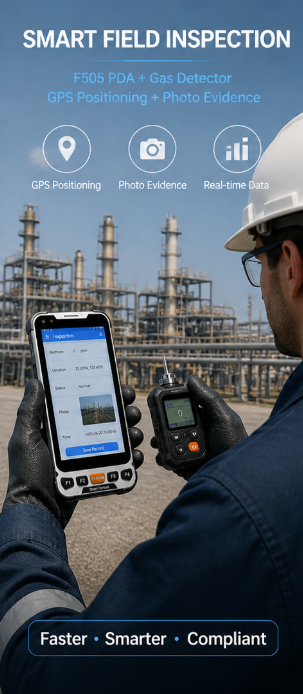
Many inspection teams still rely on handheld gas detectors paired with handwritten logs. While functional at a basic level, this approach introduces several operational risks:
In hydrogen applications, where leaks can be invisible and odorless, these limitations are no longer acceptable. Regulatory bodies increasingly require digital inspection evidence, not just reported outcomes.
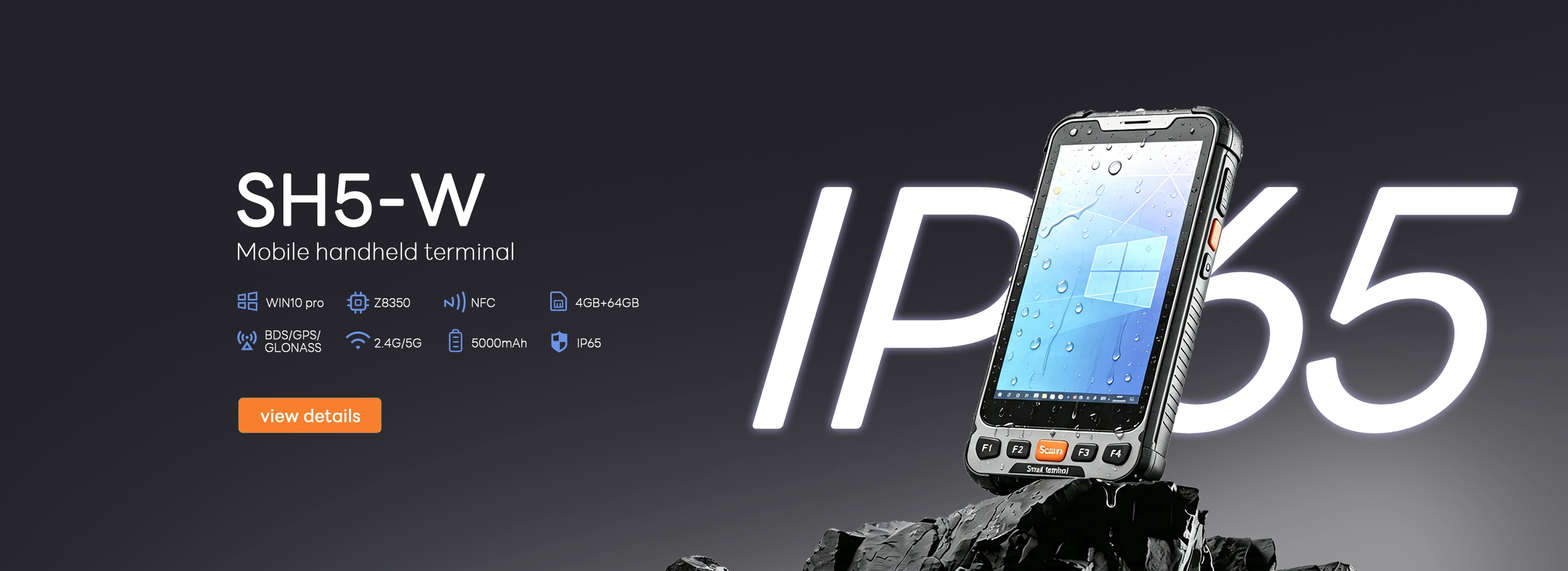
The SH5-W rugged Windows handheld is purpose-built for field inspection scenarios where reliability and data integrity are critical.
Connected to a hydrogen gas sensor via Bluetooth, the device records concentration levels alongside GPS coordinates and timestamps in real time. Each measurement becomes a traceable data point, automatically stored and ready for audit or analysis.
Key operational advantages include:
This transforms leak detection from a manual process into a structured, verifiable workflow.
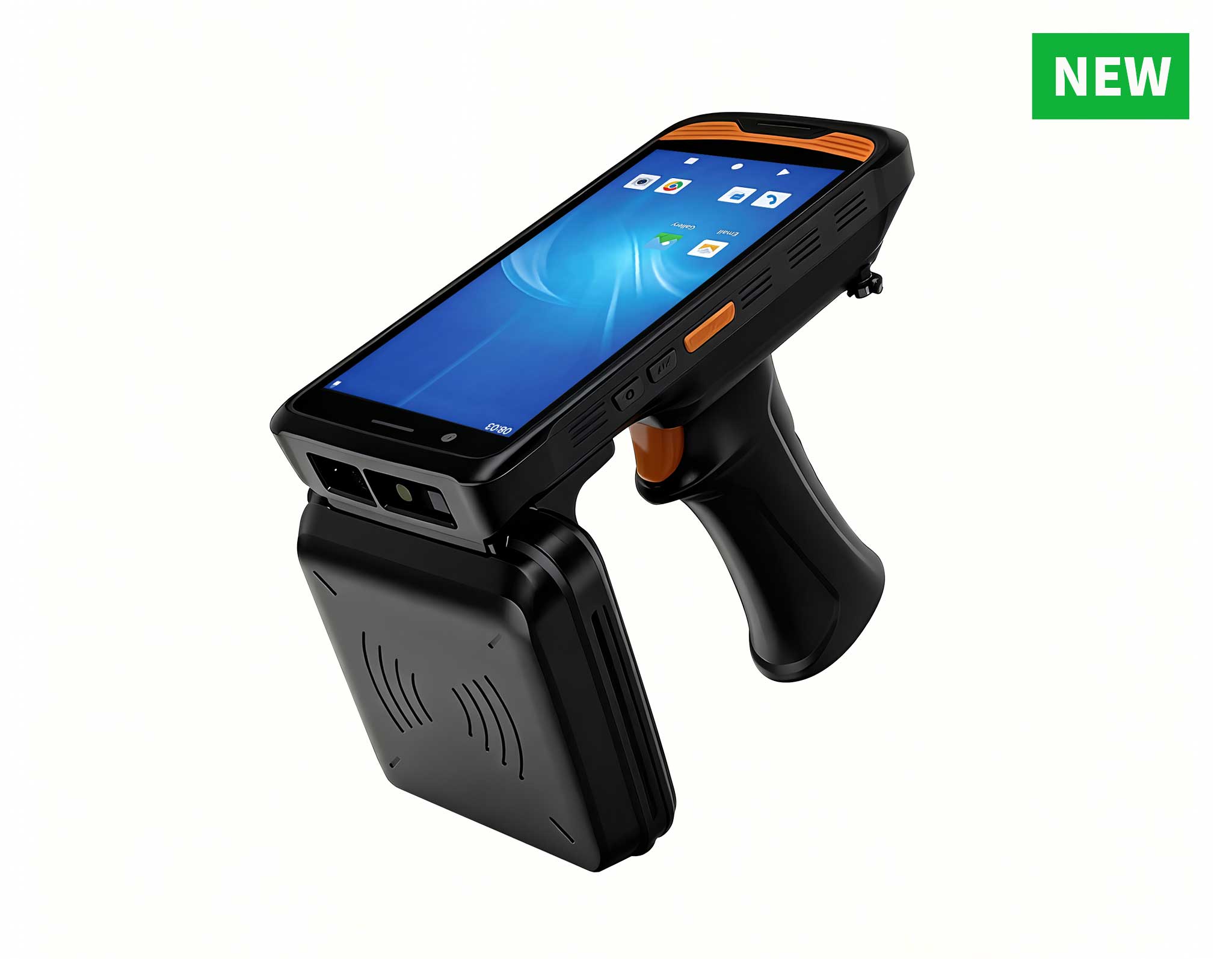
Fig 2 – Asset-level inspection using RFID identification to retrieve maintenance records and inspection history in seconds.
The U9000 industrial PDA introduces UHF RFID capability into pipeline inspection workflows.
Each pipeline component—valves, joints, flanges—can be tagged and uniquely identified. During inspection, technicians instantly access historical data, including previous leak tests, maintenance actions, and component lifecycle records.
This ensures:
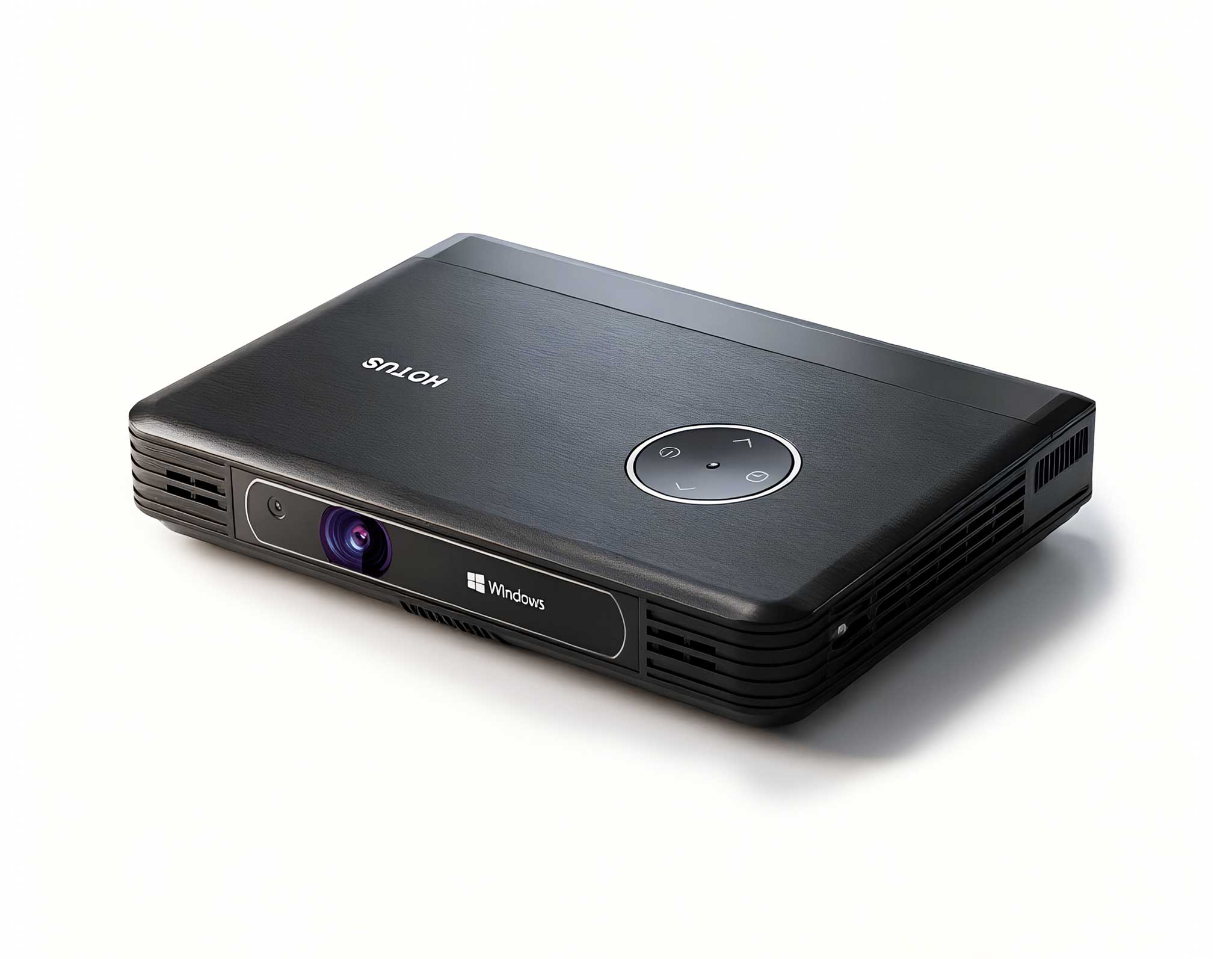
Pipeline networks often span remote regions where connectivity is unreliable. The palm-sized Mini PC functions as an edge computing node, ensuring continuous data availability.
Installed in field vehicles or temporary control stations, it aggregates inspection data from multiple handheld devices and enables:
This architecture maintains operational continuity even in isolated pipeline corridors.

Fig 3 – Mobile command setup enabling real-time monitoring and centralized inspection data visualization.
Pipeline operators adopting digital inspection platforms report measurable improvements in both safety and efficiency. By replacing manual logs with structured data collection, organizations gain complete visibility into inspection coverage and asset condition.
Typical outcomes include:
As hydrogen infrastructure continues to expand, inspection standards will become stricter and more data-driven. Operators that rely on outdated methods risk falling behind both regulatory requirements and operational best practices.
Deploying rugged handheld devices, RFID-enabled asset tracking, and edge computing systems establishes a scalable inspection framework designed for long-term reliability.
Digital inspection is no longer optional—it is a foundational requirement for safe hydrogen pipeline operation.
Explore inspection solutions: Contact HOTUS Technology to request evaluation units or discuss deployment strategies for hydrogen pipeline monitoring systems.