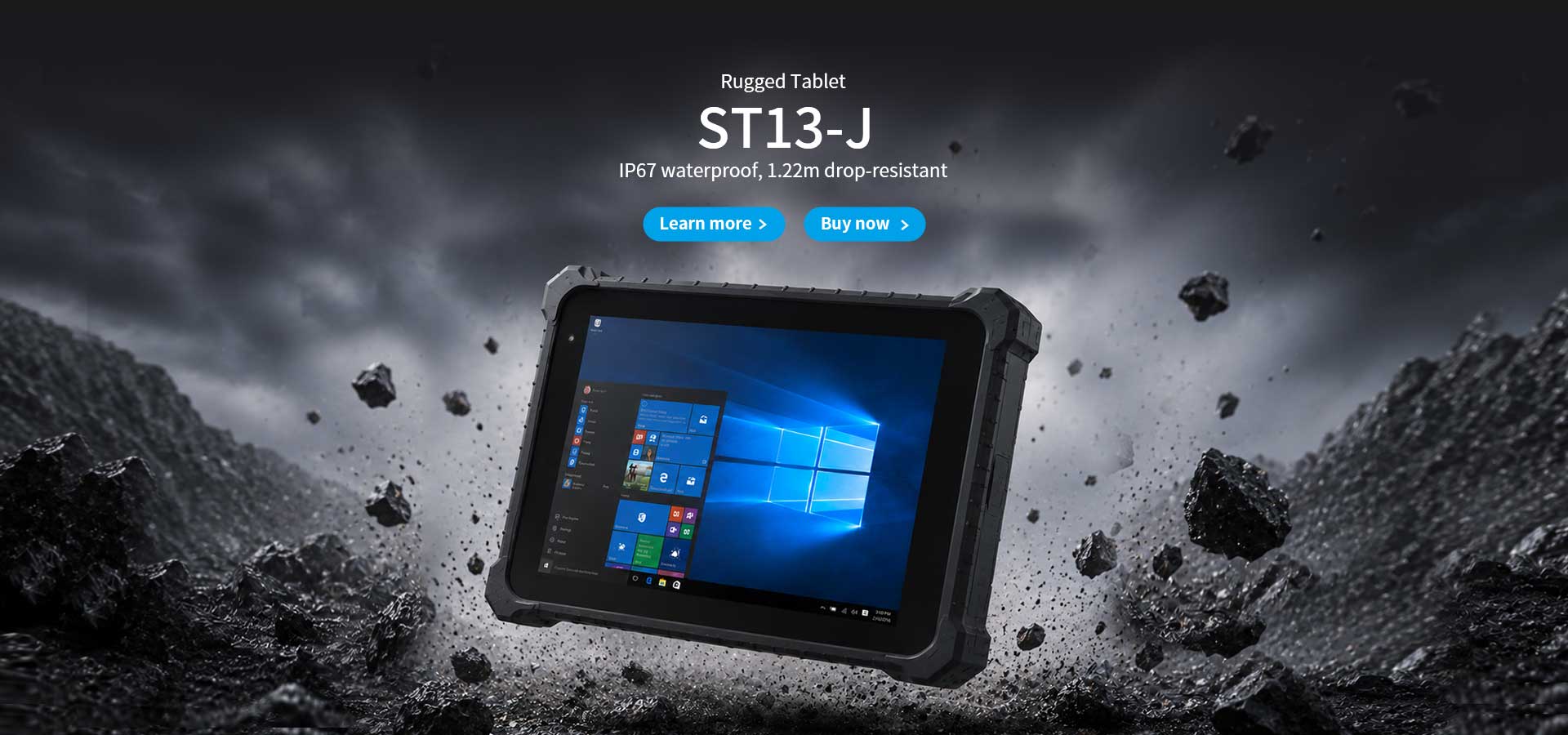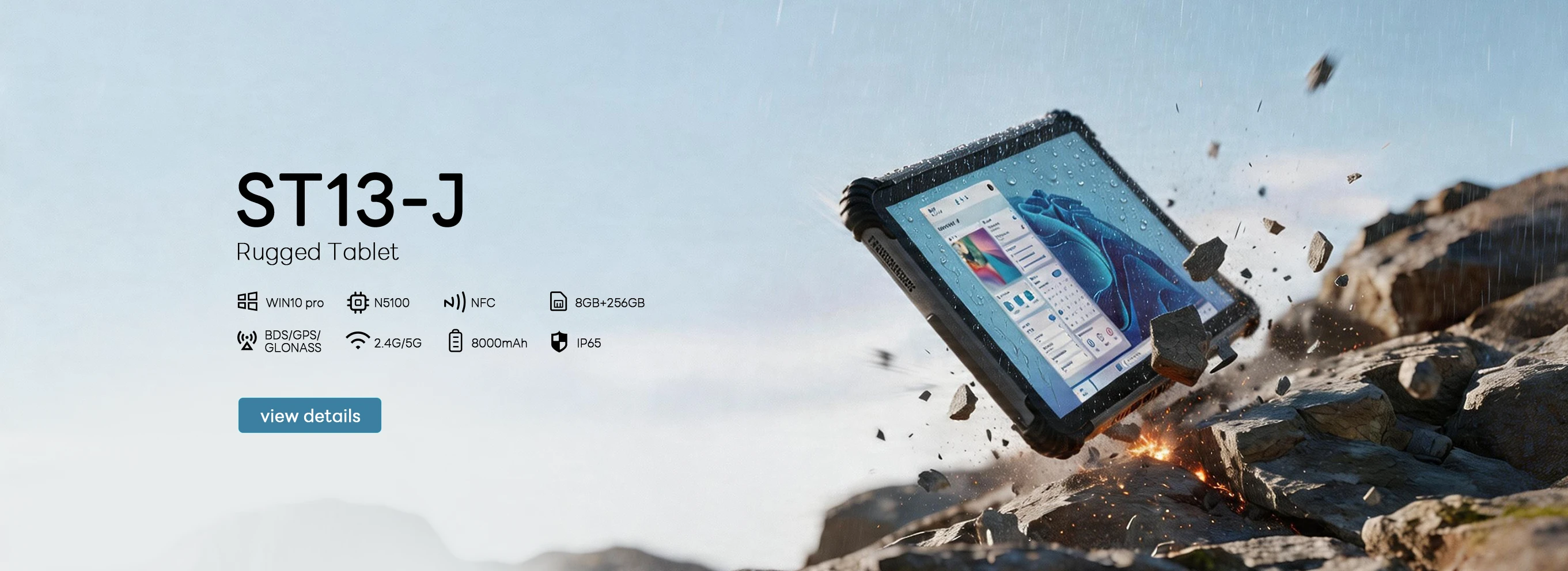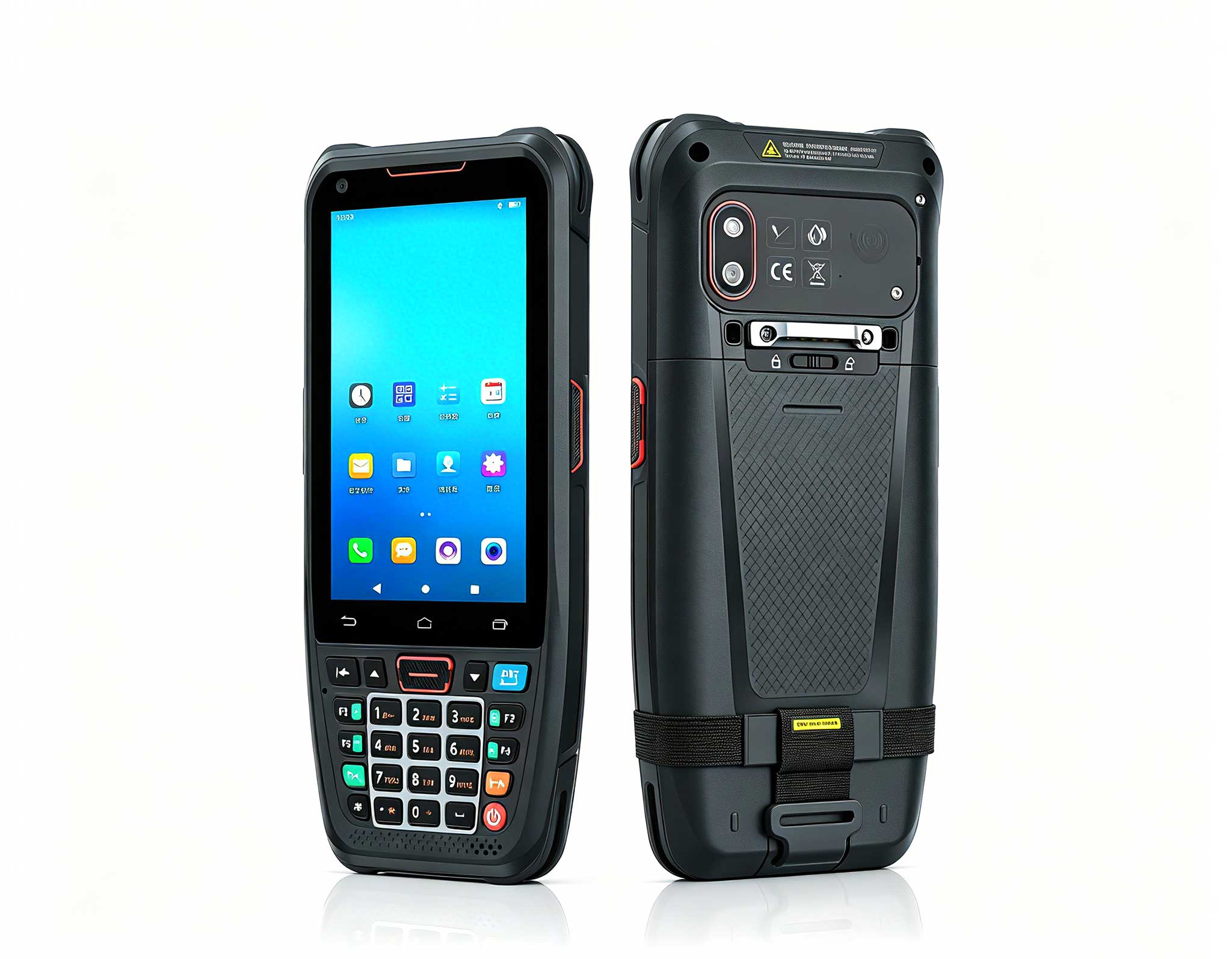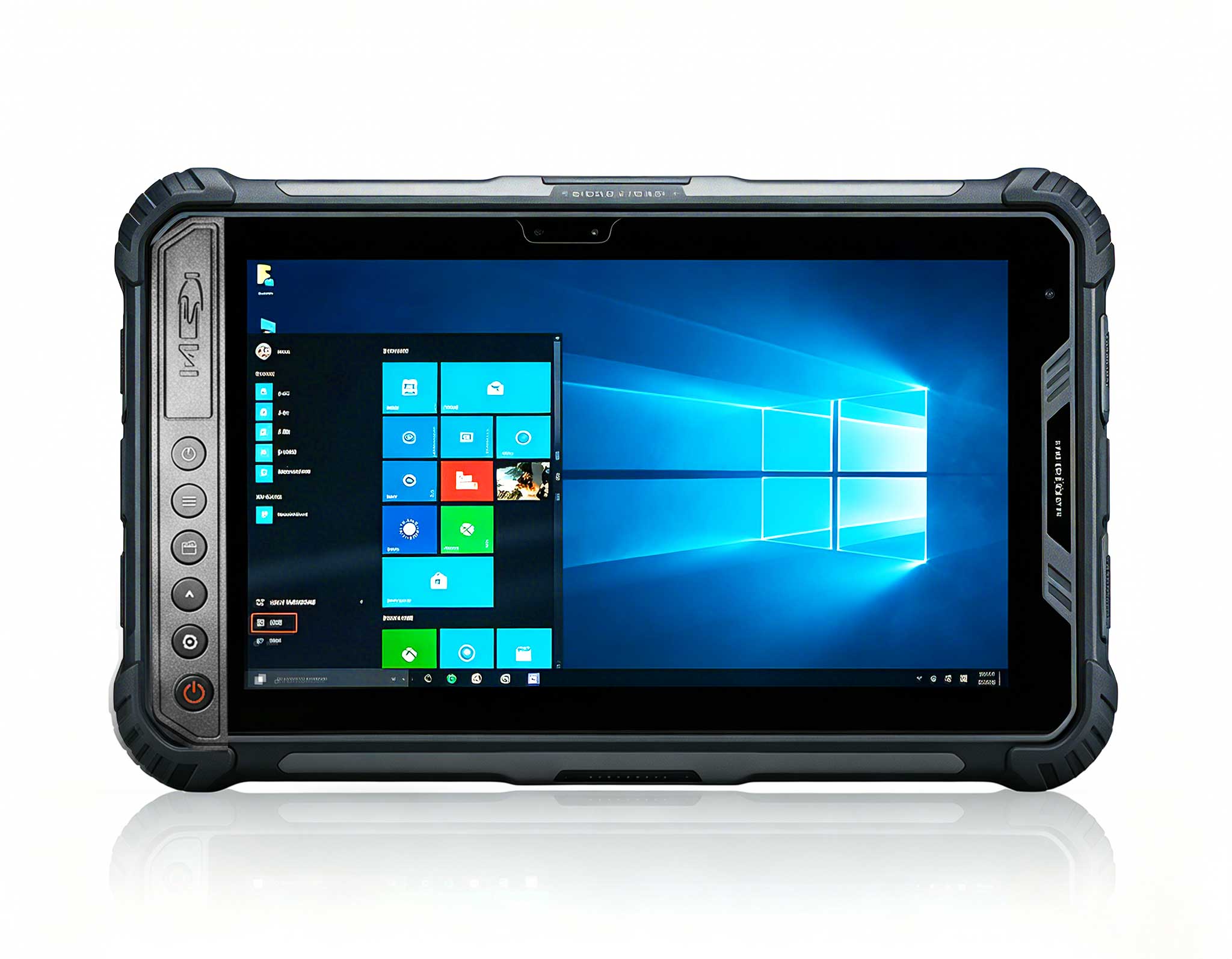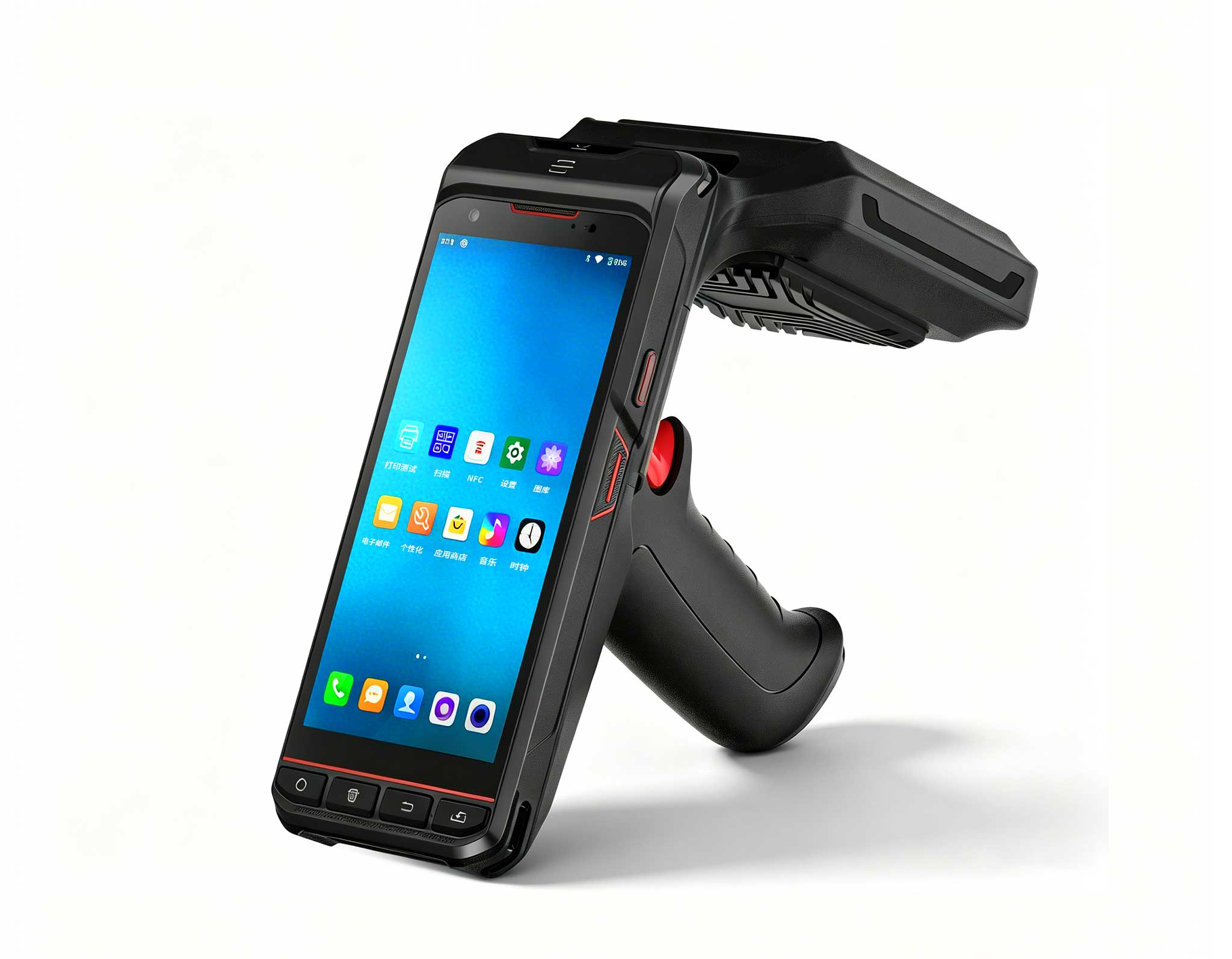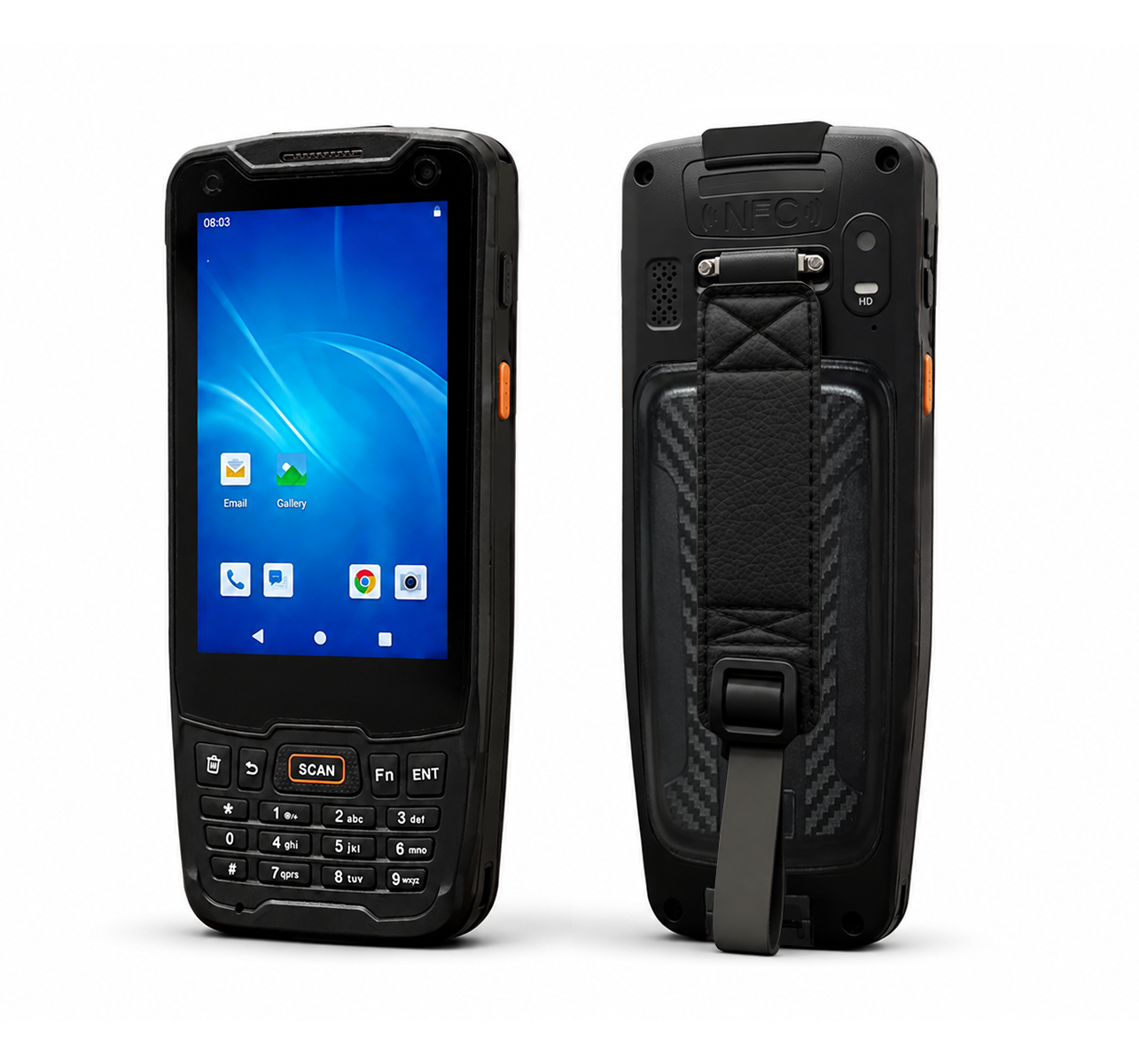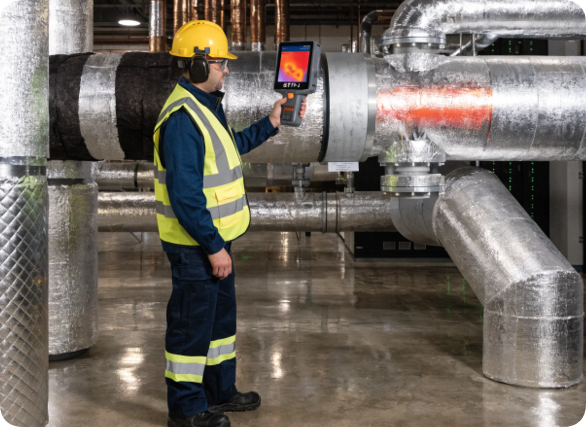
A data center technician uses the ST11‑J tablet with an integrated thermal sensor to identify fouling and heat anomalies within a high-density liquid cooling loop.
At a recent high-density infrastructure symposium, a facility director confessed that their 50 MW data center was flaring roughly 25% of its total thermal output—venting over 12 MW of heat straight into the atmosphere while their administrative complex next door burned natural gas for climate control. The underlying issue was not an engineering limitation, but a measurement failure. The operations team lacked visibility into the exact volume of low-grade thermal energy escaping the facility because their secondary cooling loop monitoring relied on paper clipboards and manual monthly logs. Maximizing heat reuse requires a high-reliability industrial terminal equipped with infrared thermal imaging to scan hydronic networks, calculate localized temperature differentials, and flag drops in thermal recovery efficiency. In high-performance data center facilities, unmonitored exhaust heat is no longer just an environmental footprint issue; it is an unexploited revenue stream that directly affects the bottom line.
Data Center Wasted Heat Is Flaring – Your Cooling Loop Efficiency Log Needs a High‑Temp Windows Tablet
Infrastructure Management Report by mini pcs Manufacturing Division | Industry Analysis | June 2026
Modern data centers function as massive power consumers, with hyperscale facilities drawing quantities of electricity comparable to municipal power grids. A substantial portion of this incoming electricity is converted directly into thermal waste by processing chips, which facility engineering teams must move away from the server chassis to prevent hardware failure. Traditionally, this thermal energy is rejected directly into the local environment through cooling towers, evaporative chillers, or extensive dry cooler arrays. At the same time, district heating utilities, agricultural greenhouse operators, and nearby industrial commercial properties purchase fossil fuels to satisfy their own heating demands, highlighting a clear mismatch in energy distribution.
The market for data center waste heat recovery is expanding as municipal utilities build specialized infrastructure to capture low-temperature water loops. However, many mission-critical facilities are unable to participate in these programs due to localized measurement limitations. A chilled water circuit may demonstrate a healthy 6°C temperature differential across the computer room air handler, but thermal losses, internal piping scale, and unbalanced fluid dynamics often degrade this differential to less than 3°C by the time it reaches the primary heat exchanger. Without continuous, hardware-validated data collection at critical junctures, facility managers are left guessing about actual thermal transmission performance.
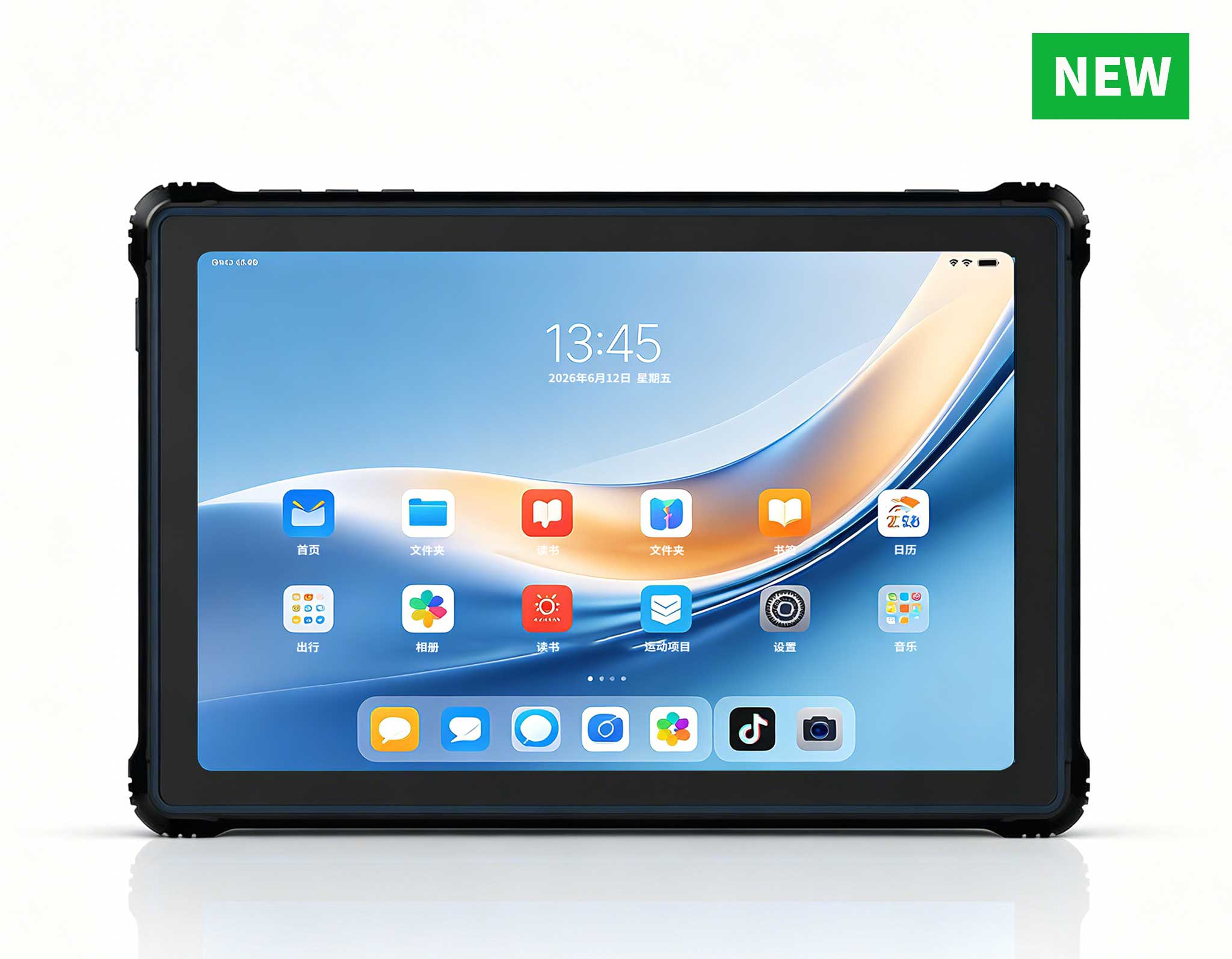
The Hotus ST11‑J 10.1″ Windows rugged tablet addresses these monitoring gaps by combining mobile computing with thermal diagnostics. Designed for clean data center white spaces and high-temperature mechanical plant rooms, the device features a high-brightness display that remains fully visible under intense fluorescent lighting. Its specialized fanless cooling architecture eliminates internal dust accumulation, allowing technicians to work safely around sensitive networking equipment. The device provides essential field diagnostic capabilities:
- Unified Sensor Data Logging: The tablet aggregates live metrics from inline ultrasonic flow meters and immersion temperature probes using long-range Bluetooth or secured physical USB ports.
- Automated Energy Metrics: Internal processing software calculates localized thermal energy transfers in kilowatts, allowing teams to track what percentage of the total server heat load is being captured for secondary use.
- Automated Alert Logic: The platform automatically flags piping segments where the temperature differential drops more than 20% below established baseline parameters, pinpointing internal scaling issues or hydraulic imbalances.
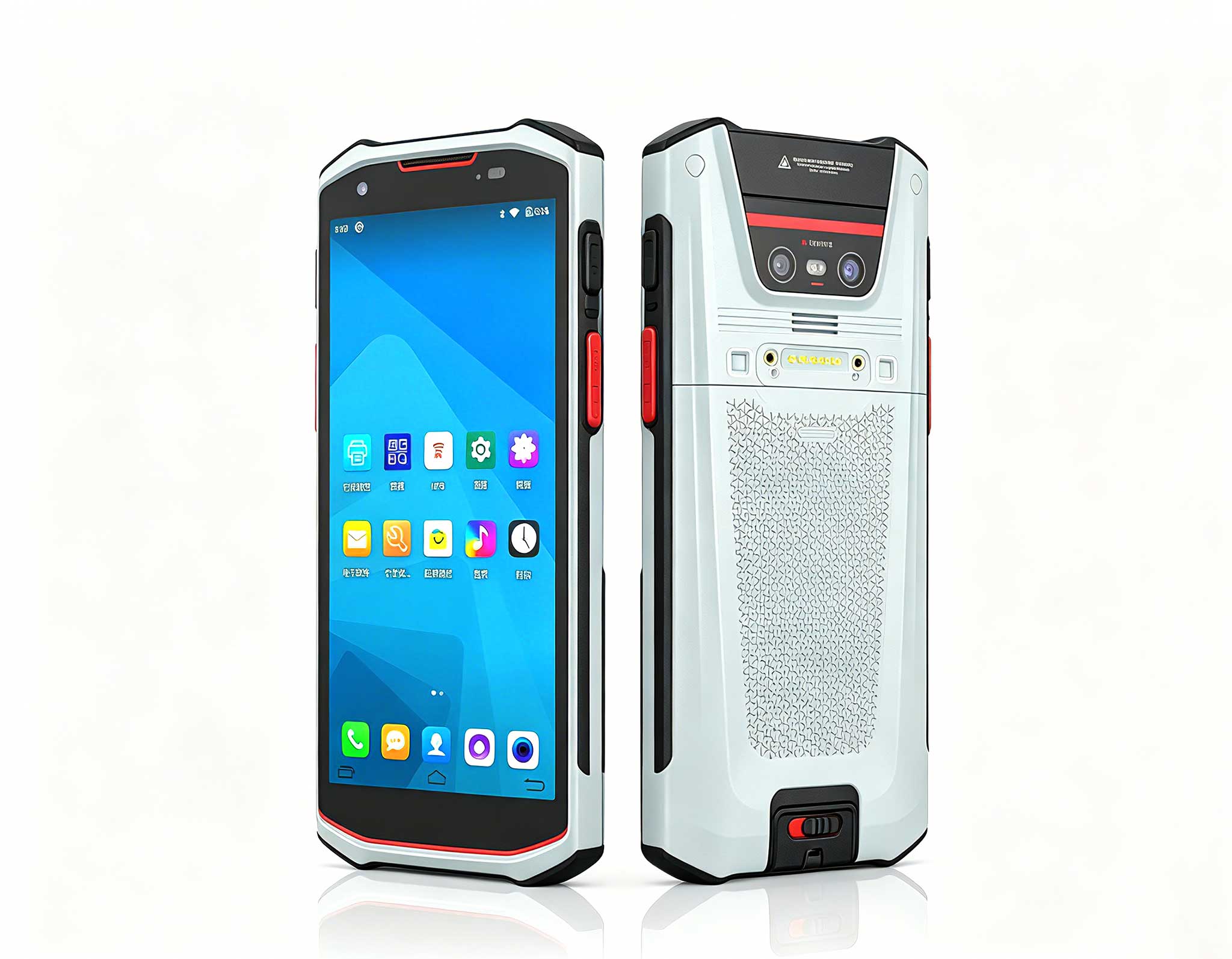
The integrated thermal camera on the ST11-J provides real-time visualization of heat exchanger assemblies, complex piping bends, and heavy balancing valves. Cold zones across an exchanger plate reveal localized fluid blockages or mineral deposits, while unexpected thermal signatures on insulation blankets point to energy leakage. These insulation compromises remain hidden during standard physical visual inspections but can lead to notable efficiency losses over time.
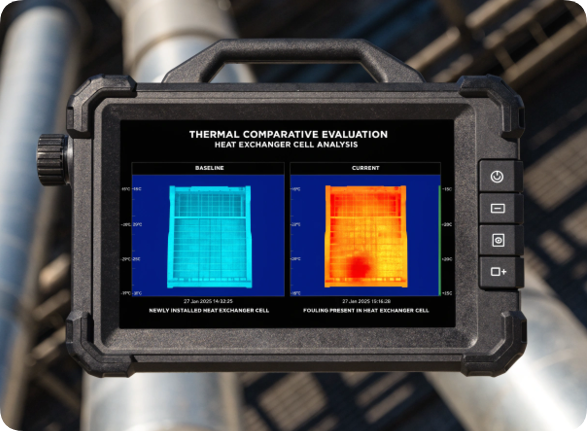
A compact rugged processing screen provides a thermal overlay of liquid-to-liquid heat exchanger channels, cross-referencing current thermal signatures with baseline performance records.
Centralized Asset Management and Data Integration
To support plant operations directors managing multi-wing facilities, the Hotus ST11‑U 10.1″ Windows rugged tablet functions as a centralized mobile dashboard. It compiles performance metrics from multiple independent mechanical loops, giving managers a unified view of facility-wide heat utilization. Any loop experiencing a steady decline in temperature delta triggers immediate automated notices for chemical flush procedures or physical valve adjustments.
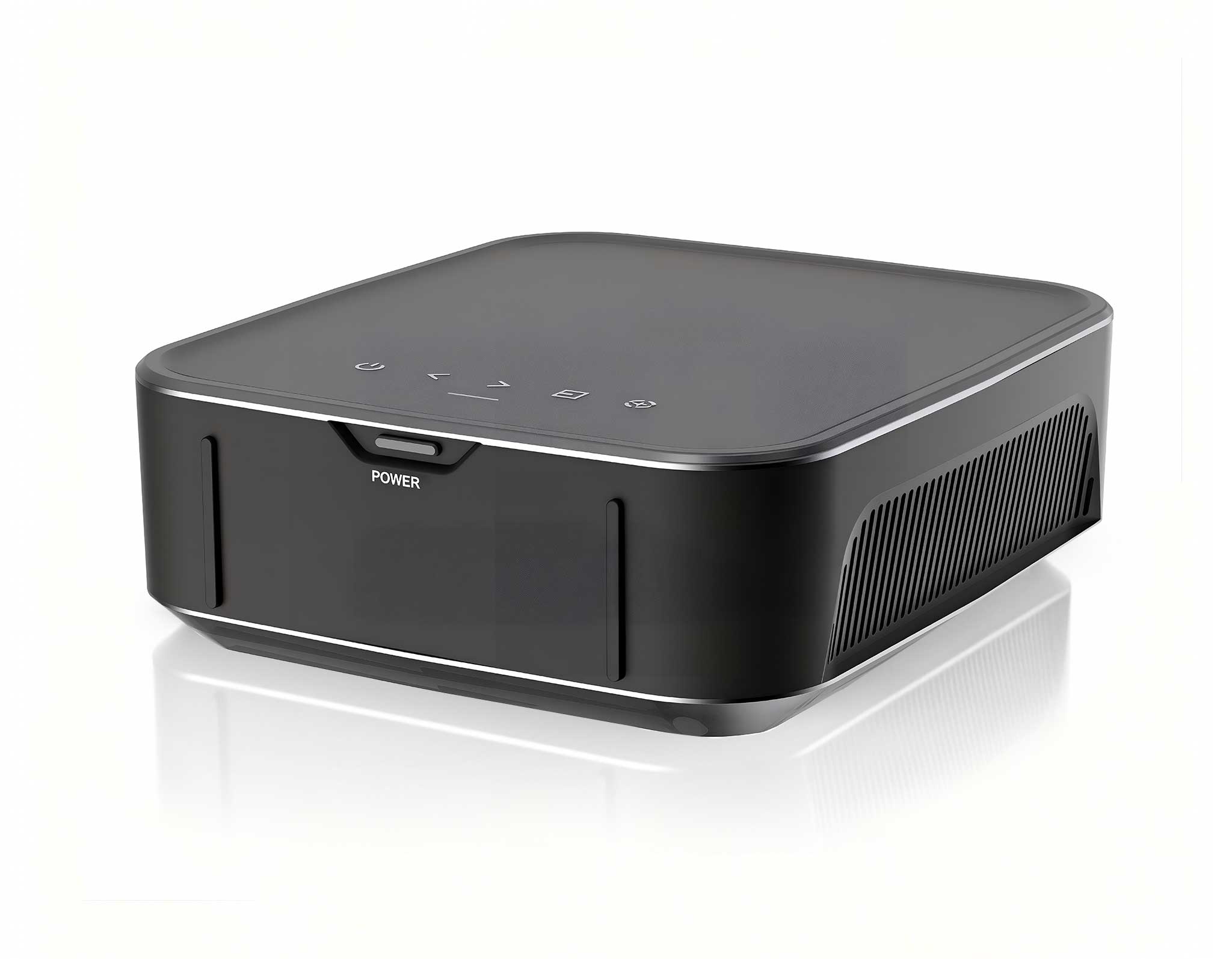
To supplement mobile inspections, the Hotus Palm‑sized Mini PC acts as a dedicated edge processing node located right at the heat transfer stations. It gathers continuous analog signaling from inline instrumentation, converting physical data streams locally and passing key alerts up to the primary control application. The edge device maintains continuous internal data logging during network drops, ensuring no gaps in utility billing documentation or carbon tracking records.
Documented Revenue Protection and Financial Performance
The economic impact of migrating to continuous, hardware-validated thermal tracking is demonstrated by a hyperscale hosting provider operating 100 MW of processing infrastructure. The company deployed 30 ST11-J thermographic kits for field diagnostic technicians, along with 25 ST11-U central displays and 15 compact edge processing devices to monitor their primary heat-rejection infrastructure. Within the first year of operation, this integrated monitoring network identified three distinct liquid loops operating below 70% thermal efficiency due to severe calcium buildup inside the primary plate cells.
Scheduled cleaning processes based on this diagnostic data restored loop performance back to 92%. This modification allowed the operator to harvest an additional 8 MW of stable thermal energy, which was sold directly to a regional district energy utility under a long-term supply contract, generating $1.6 million in new yearly revenue. Furthermore, the verified data logs provided the authenticated documentation necessary to secure a low-interest corporate green bond, lowering overall capital costs for their next expansion phase.
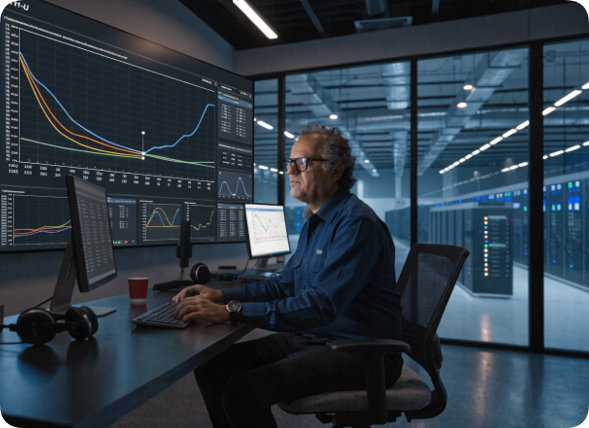
The ST11‑U interface presents real-time flow distribution data, highlighting loop efficiency trends across multiple plant wings.
Stabilizing Energy Asset Auditing At the Source
Unmonitored heat rejection represents an unnecessary financial loss for modern computing facilities. Periodic manual checks fail to capture progressive scaling within complex heat exchangers, and standard office hardware cannot withstand the challenging environments of high-temperature mechanical rooms. To secure participation in municipal heat networks and ensure data integrity, facility managers require specialized, hardware-validated monitoring tools. Utilizing rugged industrial systems like the Hotus ST11-J, ST11-U, and ultra-compact edge computing modules provides infrastructure teams with the precise tracking required to optimize heat reuse and document energy performance. Implement data-driven thermal management to maximize resource efficiency across your facility footprint.
Optimize Your Data Center Heat Recovery Strategy
Ready to stop venting valuable thermal energy and start documenting your environmental efficiency metrics? Contact the industrial hardware division at HOTUS Technology to request system specifications, set up product evaluations for the ST11-J thermographic tablet, or explore our full range of edge computing platforms and centralized Windows displays.
Contact HOTUS Technology Mechanical Systems Division →