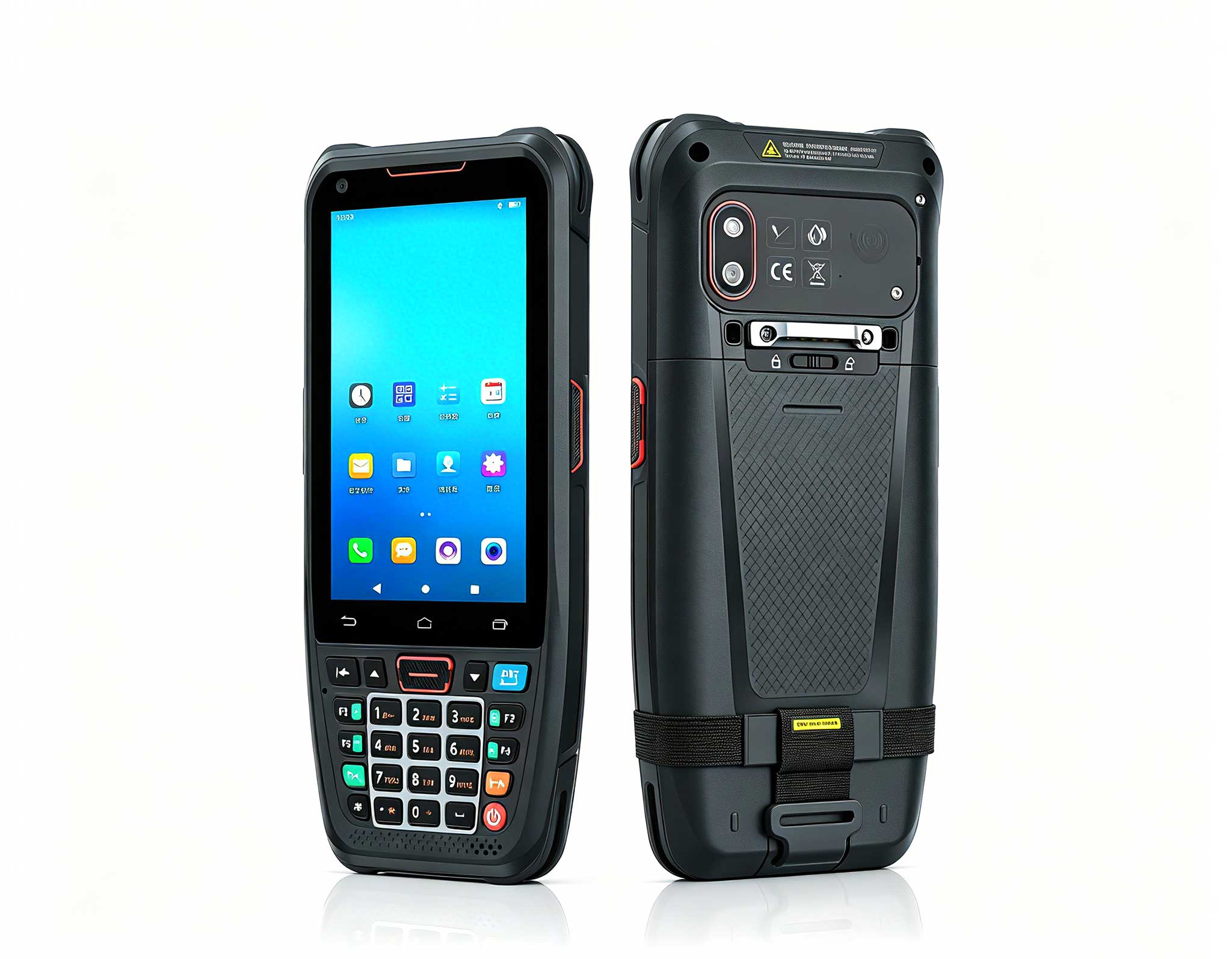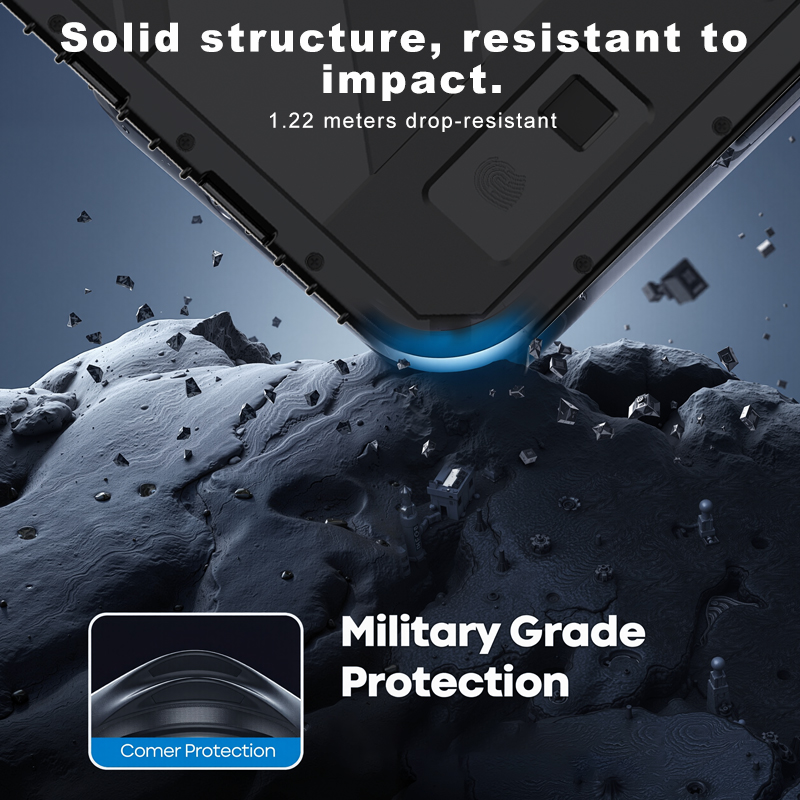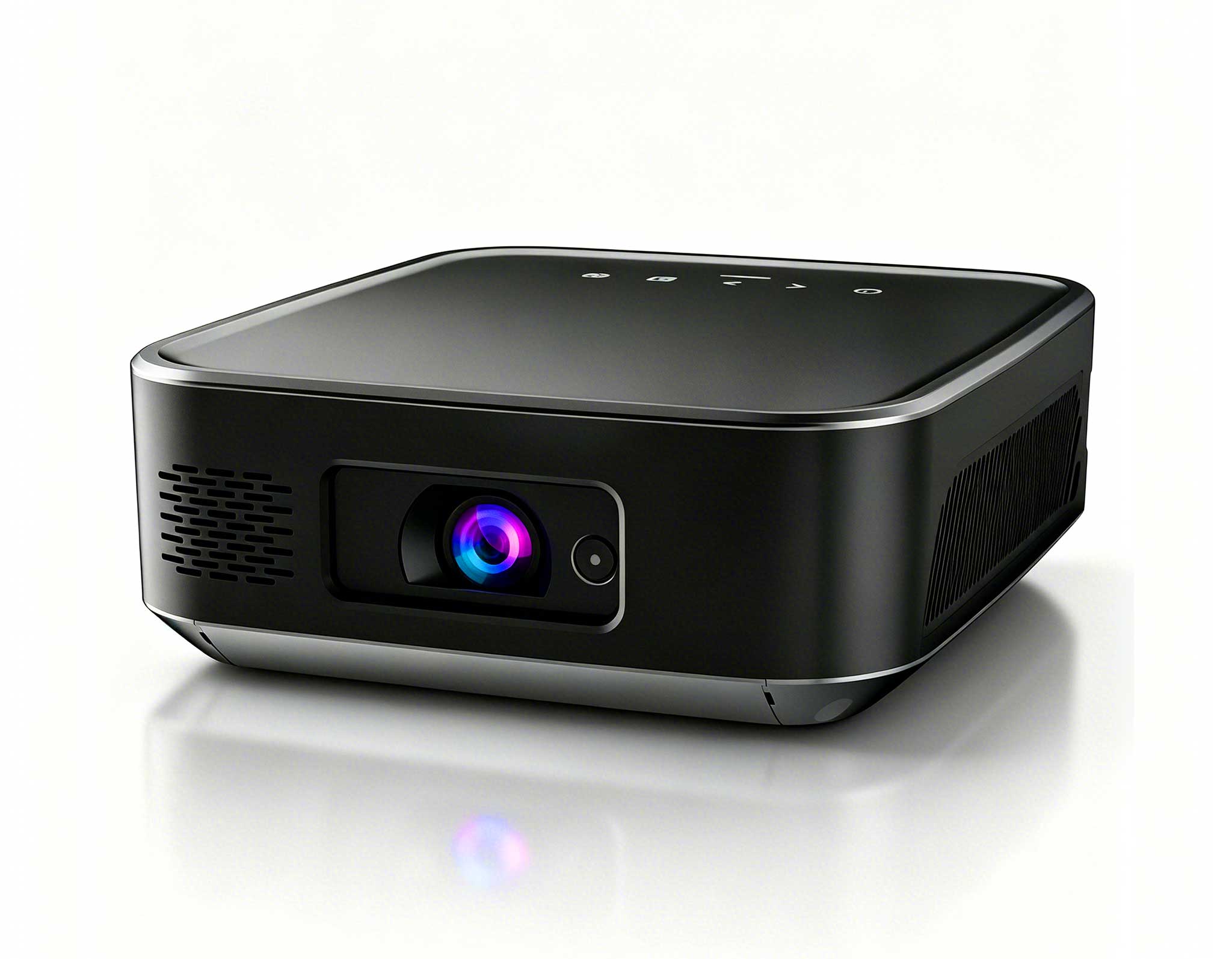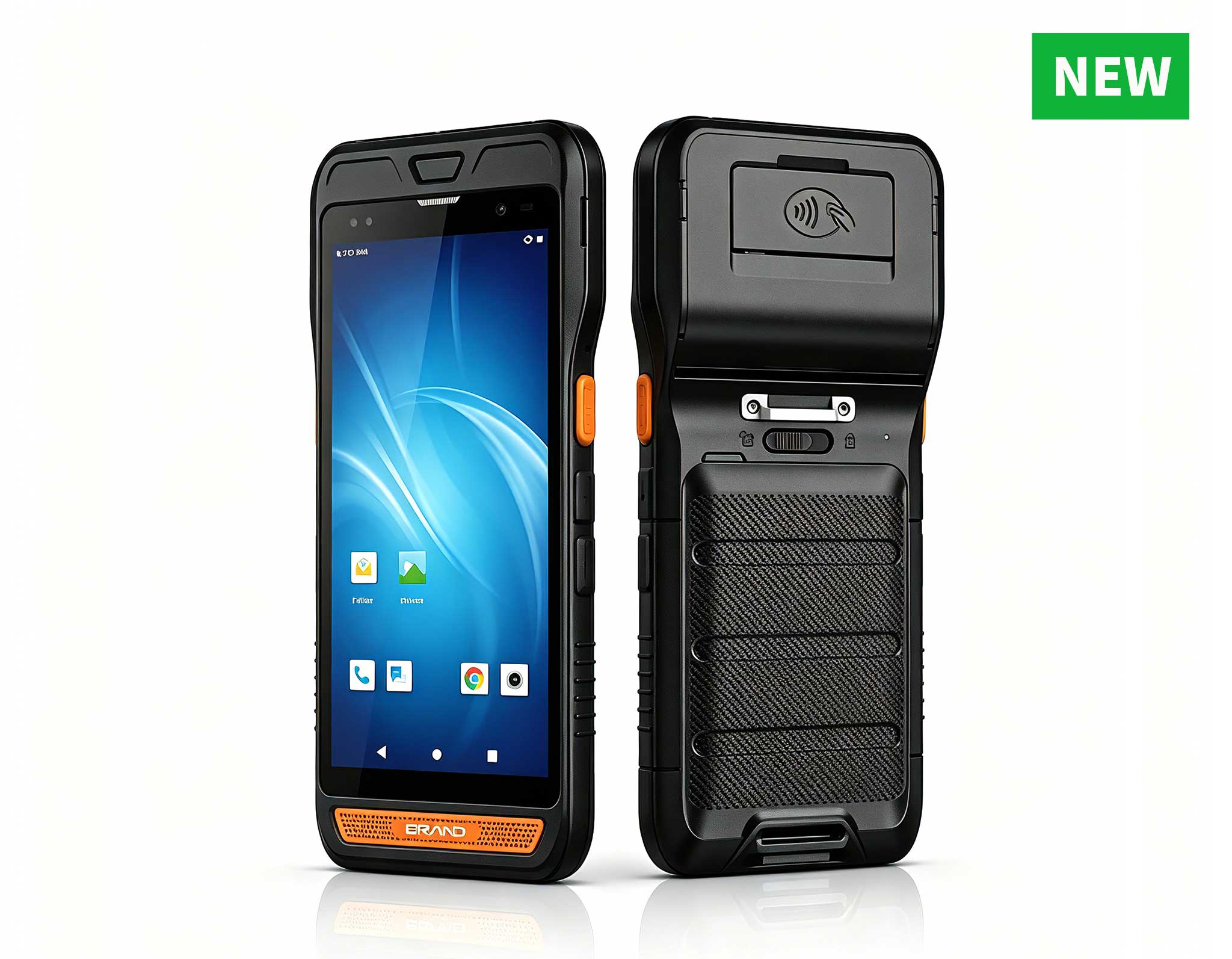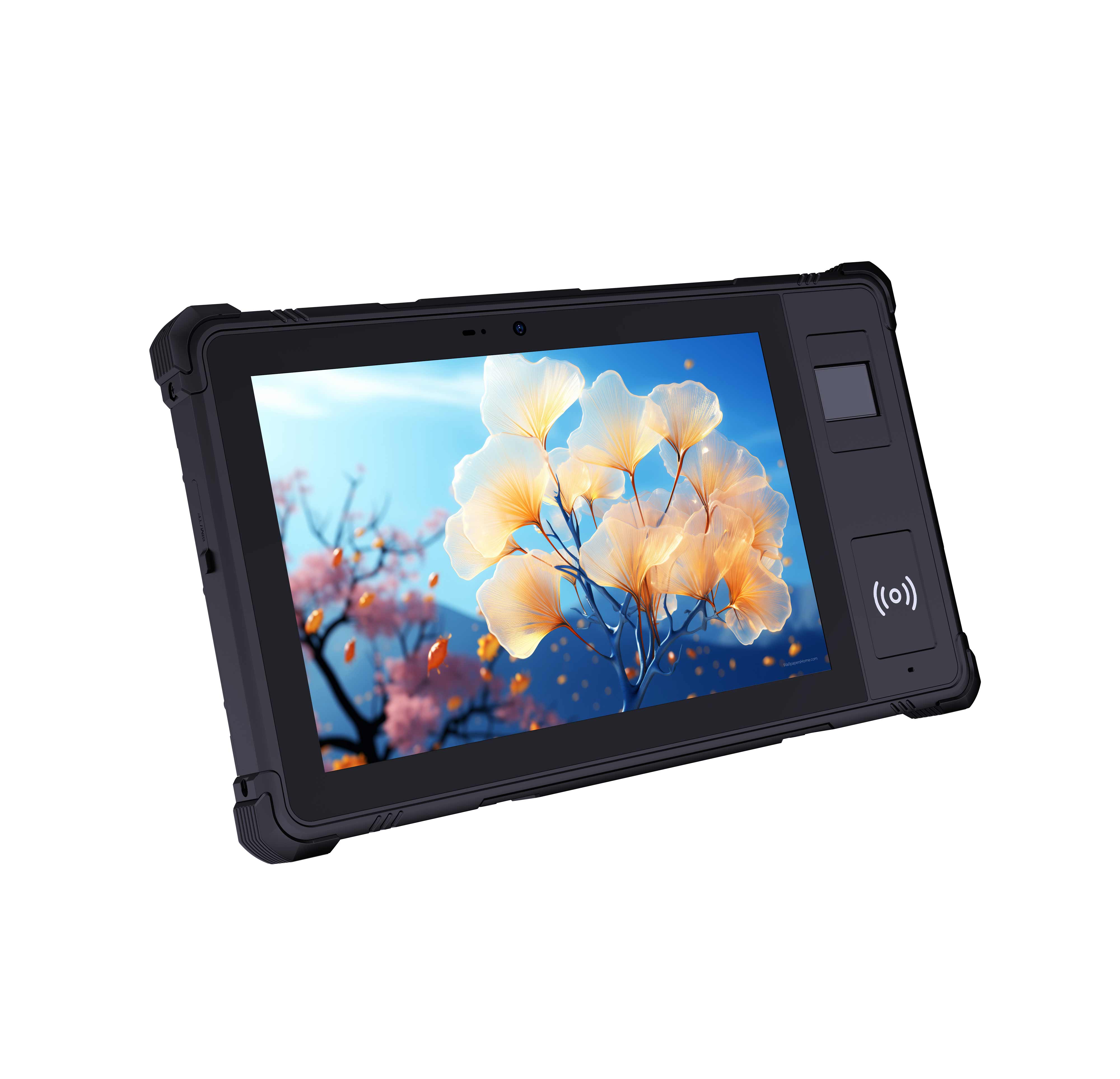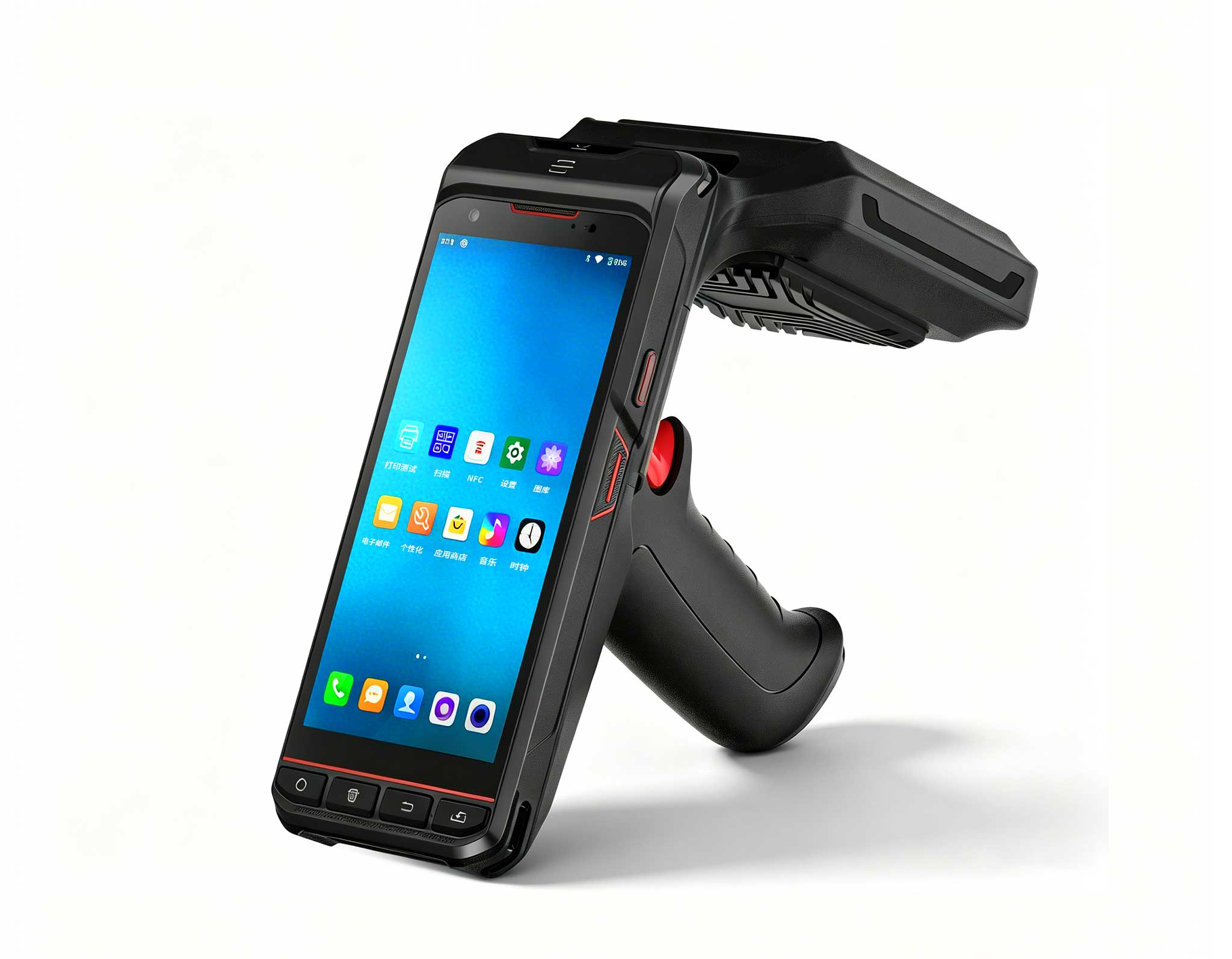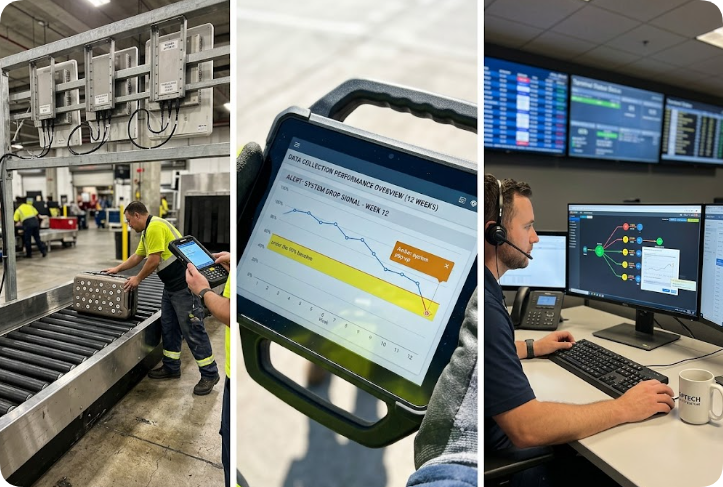
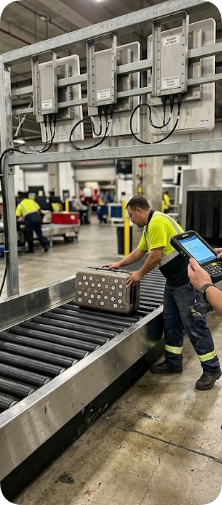
An airport logistics operator uses a high-performance HOTUS U9000 RFID PDA to audit and validate real-time tag read rates inside a high-speed automated baggage sortation tunnel.
During a comprehensive logistics operational review at a major international aviation hub, an alarming infrastructural blind spot came to light: the facility was misrouting or completely missing over 800 pieces of checked luggage every single day. Shockingly, the engineering team's legacy paper-based tracking sheets continuously reported "system fully operational." The underlying crisis stemmed from a complete lack of real-time telemetry tracking regarding subtle hardware degradation. The airport's automated sorting architecture required a data-driven Android ultra-high frequency (UHF) handheld capable of scanning specialized calibration arrays on demand, logging every individual sensor response, and calculating localized read-rate efficiency metrics on the fly. A minuscule 0.5% degradation in antenna performance per week remains entirely invisible on manual paper logs, yet quickly snowballs into an operational disaster over months of constant usage. Within high-volume airport logistics, a missed piece of baggage isn't just an abstract data point—it represents an deeply dissatisfied passenger, a fractured airline reputation, and a costly, preventable compensation claim. Your enterprise-grade mobile device must function as the primary performance auditor.
Optimizing Airport Baggage RFID Tunnel Throughput: Eliminating Logistics Blind Spots with Enterprise Rugged Tablets and Smart Handheld PDAsAirport Baggage RFID Tunnel Throughput Validation
By HOTUS Technology | Aviation Logistics Engineering Insights | June 2026
Modern tier-one aviation hubs rely heavily on complex, automated ultra-high frequency identification corridors—commonly known as sensor tunnels—to index, track, and route vast volumes of passenger luggage traveling across complex conveyor networks. Under peak operating conditions, a single critical sorting tunnel must accurately process more than 10,000 unique checked items per hour. To maintain seamless sortation, airline service-level agreements strictly mandate a continuous data capture precision rate of 99.5% or greater. Every individual scanning omission forces the sorting system to divert items into manual processing tracks, directly triggering baggage handling delays, missed aircraft connections, or severe lost luggage insurance incidents. With global aviation statistics pinning the average remediation cost of a single severely misrouted bag well above $1,000, maintaining optimal sensor architecture is an absolute financial necessity.
Unfortunately, hardware data capture capability degrades via a slow, imperceptible curve. Antenna coaxial fittings loosen over time due to constant structural building vibration; internal transceivers slowly drift out of physical frequency calibration; and localized shifts in ambient electromagnetic interference—such as nearby structural steel changes or compressed tag placements—gradually erode reception quality. Despite this known vulnerability, conventional airport engineering guidelines frequently fall back on an outdated monthly manual validation check: an engineer sends a single test suitcase through the array, verifies whether the tag registered on a local screen, and manually marks a binary pass-or-fail note on a clip-board. This coarse, non-statistical tracking methodology completely fails to uncover a dangerous operational slide from a pristine 99.7% capture rate down to a problematic 98.9% over a multi-month span, leaving operators vulnerable to sudden spikes in sorting faults.
Automating Field Audits with the Hotus U9000 Handheld PDA UHF Reader
The Hotus U9000 Handheld PDA is meticulously engineered with integrated high-sensitivity UHF circular-polarized antennas to handle rigorous industrial data tracking. To replace flawed manual logging habits, operations supervisors can execute automated statistical validation cycles by following a standardized, repeatable testing process:
- High-Density Calibration Scanning: Technicians attach a standardized array of calibration tags (typically a batch of 50 to 100 verified reference tags) onto a dedicated test fixture or calibration piece.
- Conveyor Corridor Testing: The automated calibration piece is routed directly through the sorting zone, passing through the primary antenna field at standard conveyor speeds.
- Downstream Output Logging: Positioned precisely at the exit node of the scanning corridor, the U9000 instantly logs each tag's unique identifier token as it clears the active antenna path.
- Algorithmic Precision Assessment: The localized software engine cross-references the expected tag manifest against the actively captured inputs, immediately rendering an exact, unalterable throughput efficiency percentage.
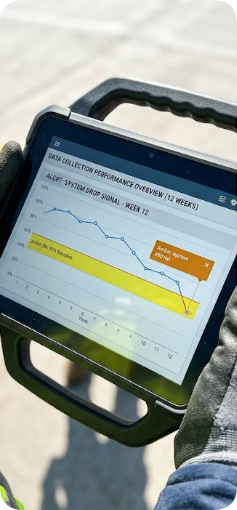
By logging each verification run with an immutable digital timestamp and unique employee credentials, the U9000 constructs a clean, granular performance database. When executed on a scheduled weekly rotation, this proactive dataset enables predictive analytics: a chronological path showing 99.8%, 99.7%, 99.5%, and then dipping to 99.1% flags a clear warning sign. Maintenance technicians can easily isolate and service a fading internal component hours or days before the tunnel breaches its critical 99% contractual service agreement.
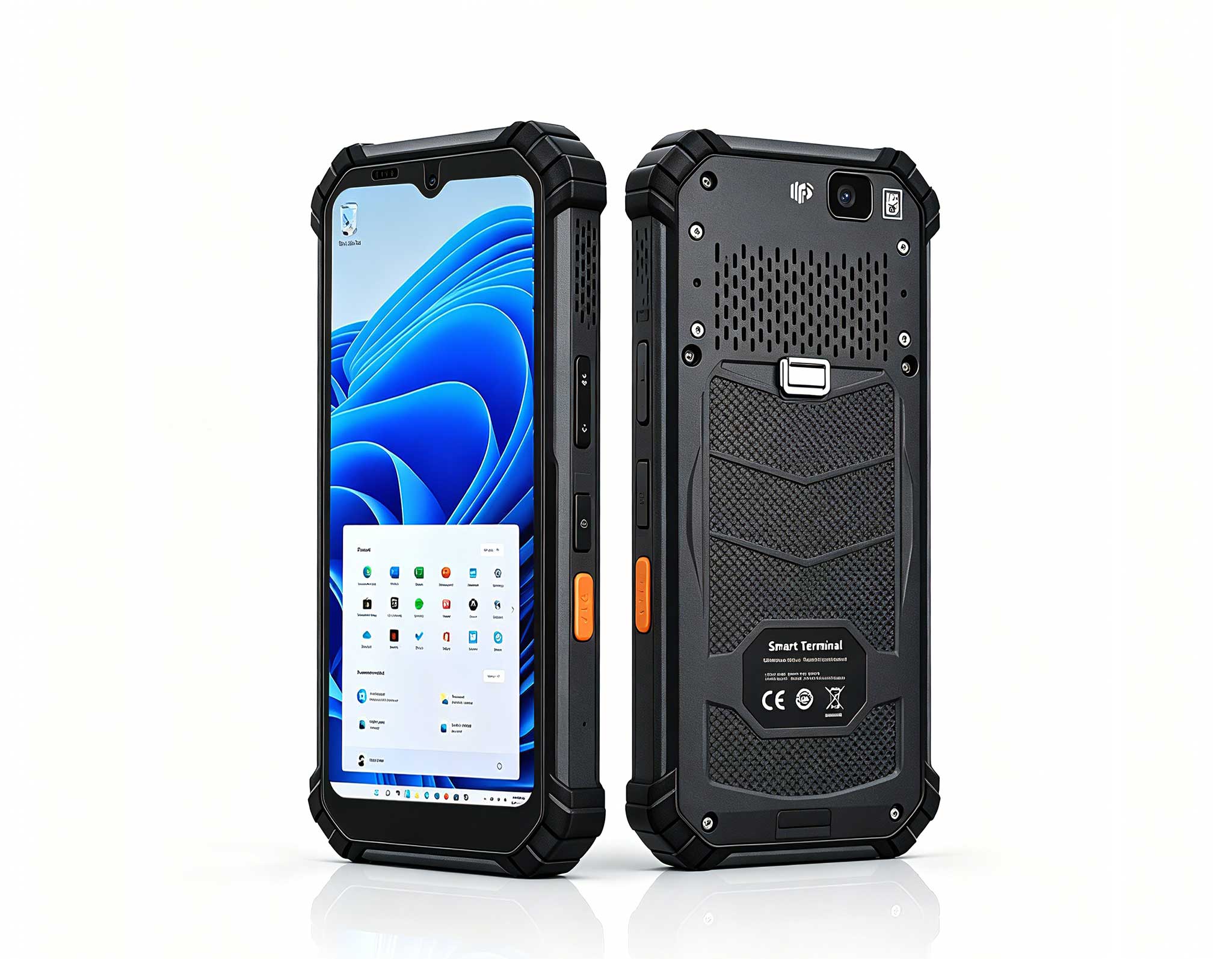
The ST11-U tablet displays a weekly data trend chart, showing a localized performance warning as a specific scanning zone slips from 99.8% down to 99.1% over a six-week timeline.
Streamlining Airport Infrastructure via Industrial Rugged Tablets
For terminal logistics managers overseeing extensive sorting networks spread across multiple concourses, the high-durability Hotus ST11-U 10.1″ Windows rugged tablet functions as a secure central data node. The ST11-U ingests audit results from mobile crews in real time, automatically running trend calculations and flashing system warnings the moment a tracking node displays long-term performance loss.
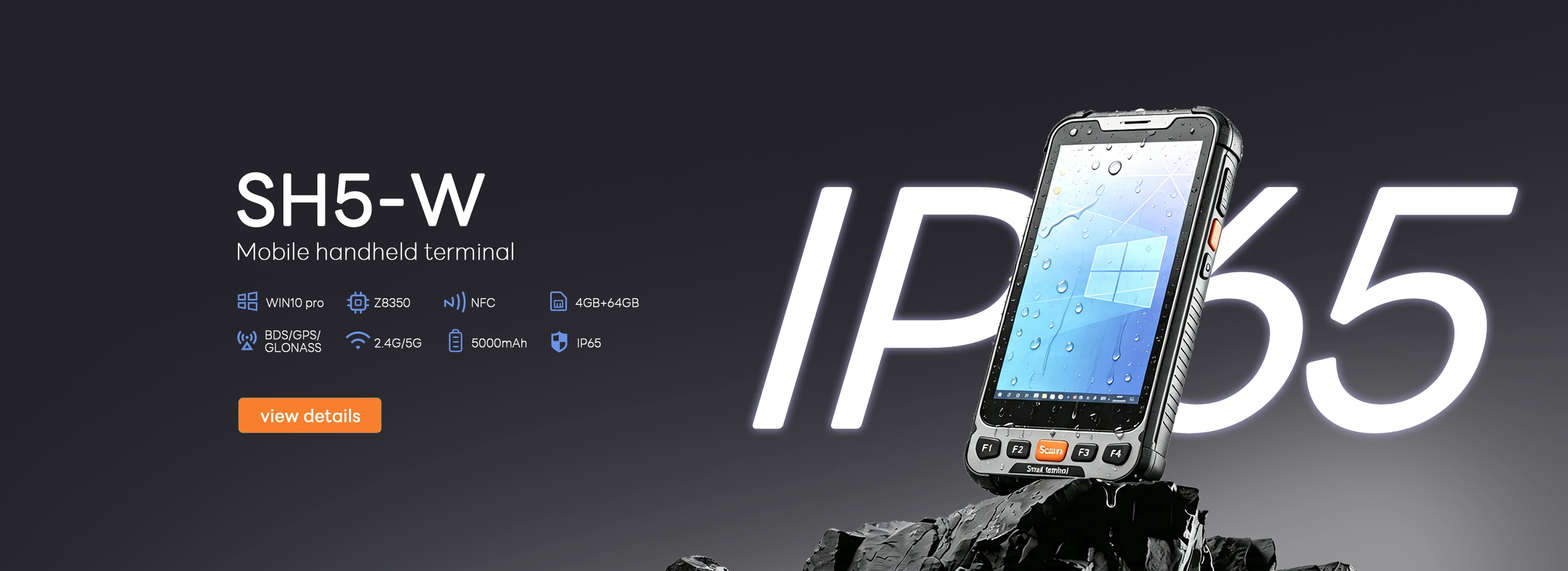
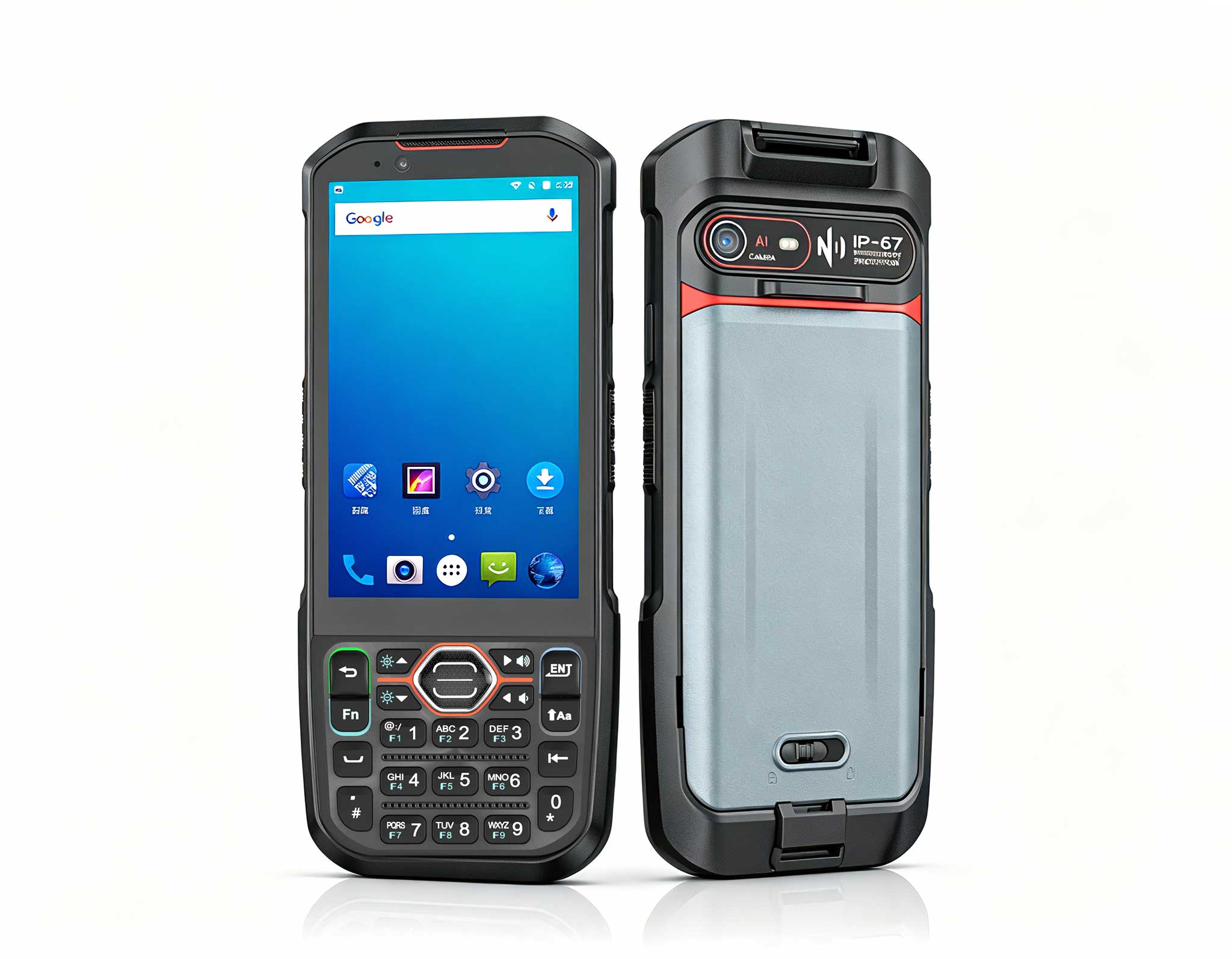
When a hardware anomaly requires diagnostic repair, technicians utilize the tactical Hotus SH5-W Windows rugged handheld directly at the conveyor line. The SH5-W interfaces directly with stationary reader modules via industrial serial ports or secure wireless links, letting maintenance personnel flash firmware updates, adjust antenna transmission patterns, and review raw RF power levels without stepping away from the machinery.
A real-world example of this system in action involved a prominent international aviation gateway operating 12 main sorting corridors. To secure their baggage throughput, they equipped their teams with 30 U9000 inspection terminals, 15 ST11-U dashboard tablets, and 20 SH5-W maintenance devices. Within the first ninety days of implementation, the system pinpointed a major sorting line where data capture accuracy had drifted downwards from 99.6% to 98.8%. A focused technical inspection revealed an internal antenna cable that was intermittently grounding out due to heavy conveyor motor vibrations. The faulty line was quickly replaced during a scheduled maintenance window, restoring data capture accuracy to a crisp 99.7%. Airport operations analysts determined that catching this hardware drift early saved over 1,200 bags from being misrouted, avoiding an estimated $200,000 in direct airline compensation costs and secondary shipping fees.
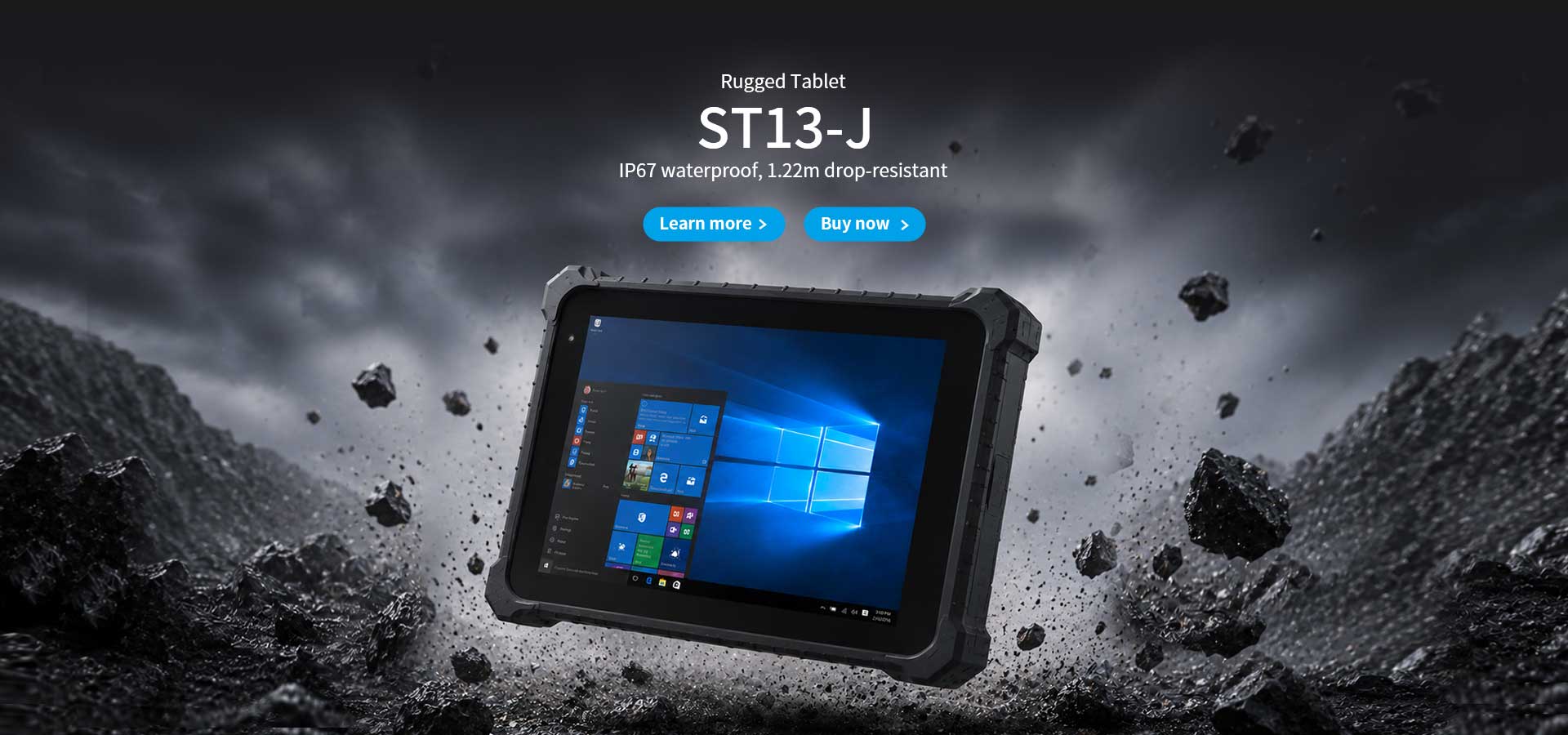
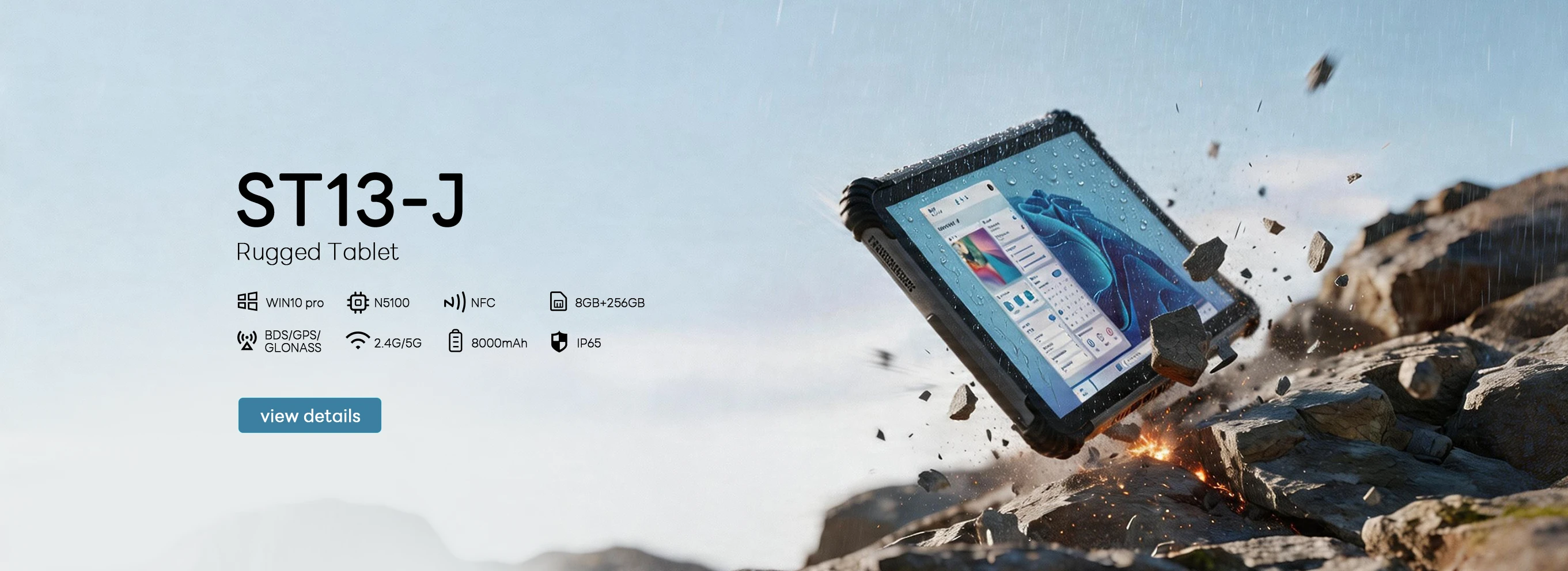
The ST13-J dashboard provides a comprehensive real-time status matrix across all 12 baggage tunnels, highlighting a single terminal sector trending below the required 99% operational limit.
Automated sorting infrastructure forms the core of modern airport terminal operations; however, relying on primitive paper verification forms introduces immense operational liability and costly tracking gaps. Protecting critical logistics workflows demands specialized data capture terminals, integrated long-range readers, automatic mathematical logging, and centralized cloud telemetry. By integrating the commercial hardware ecosystems built by Rugged Tablets manufacturer HOTUS Technology—including the long-range U9000, the high-performance ST11-U, and the tactical SH5-W—aviation authorities can eliminate sorting guesswork and keep baggage operations running at maximum efficiency. Ensure your sorting infrastructure remains fully audited; do not let a slow equipment decline turn into a major baggage handling crisis.
Consult with Our Airport Logistics Technology Team:
Contact HOTUS Technology Today to receive a detailed evaluation of your facility's asset tracking workflows, schedule delivery of factory-configured U9000 evaluation units, or request complete specification manuals for our ST11-U field tablets and SH5-W industrial handheld systems.