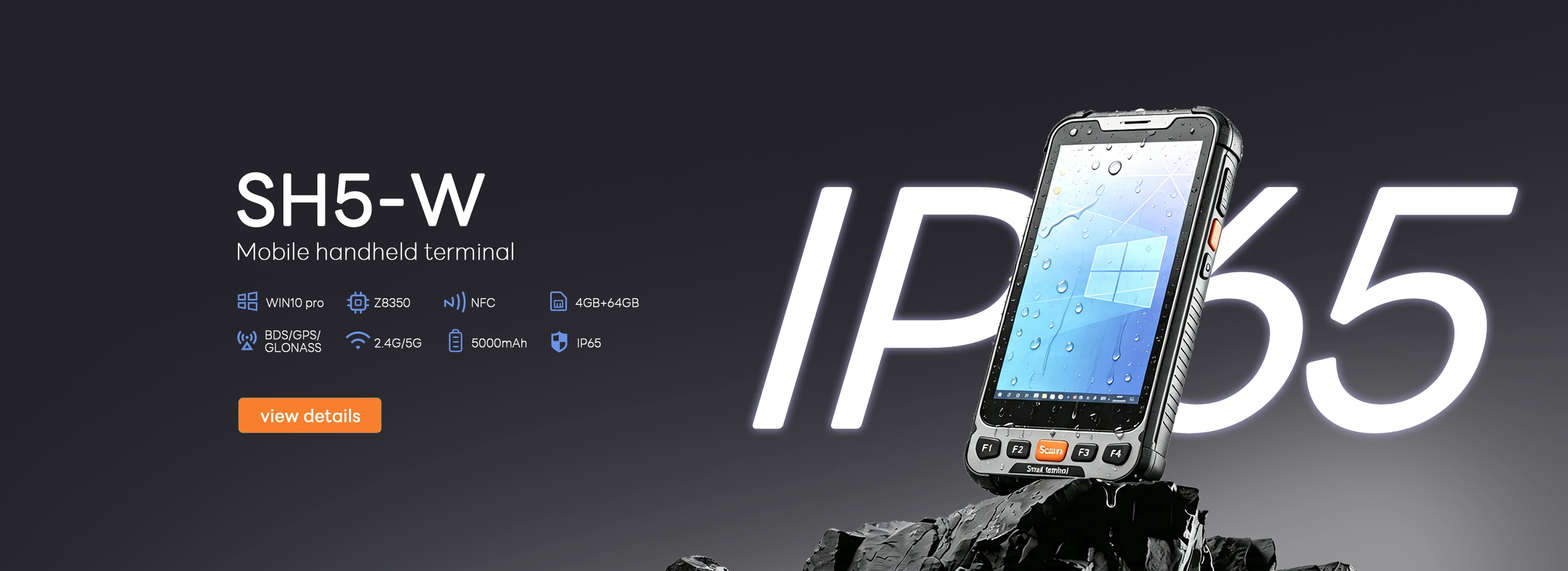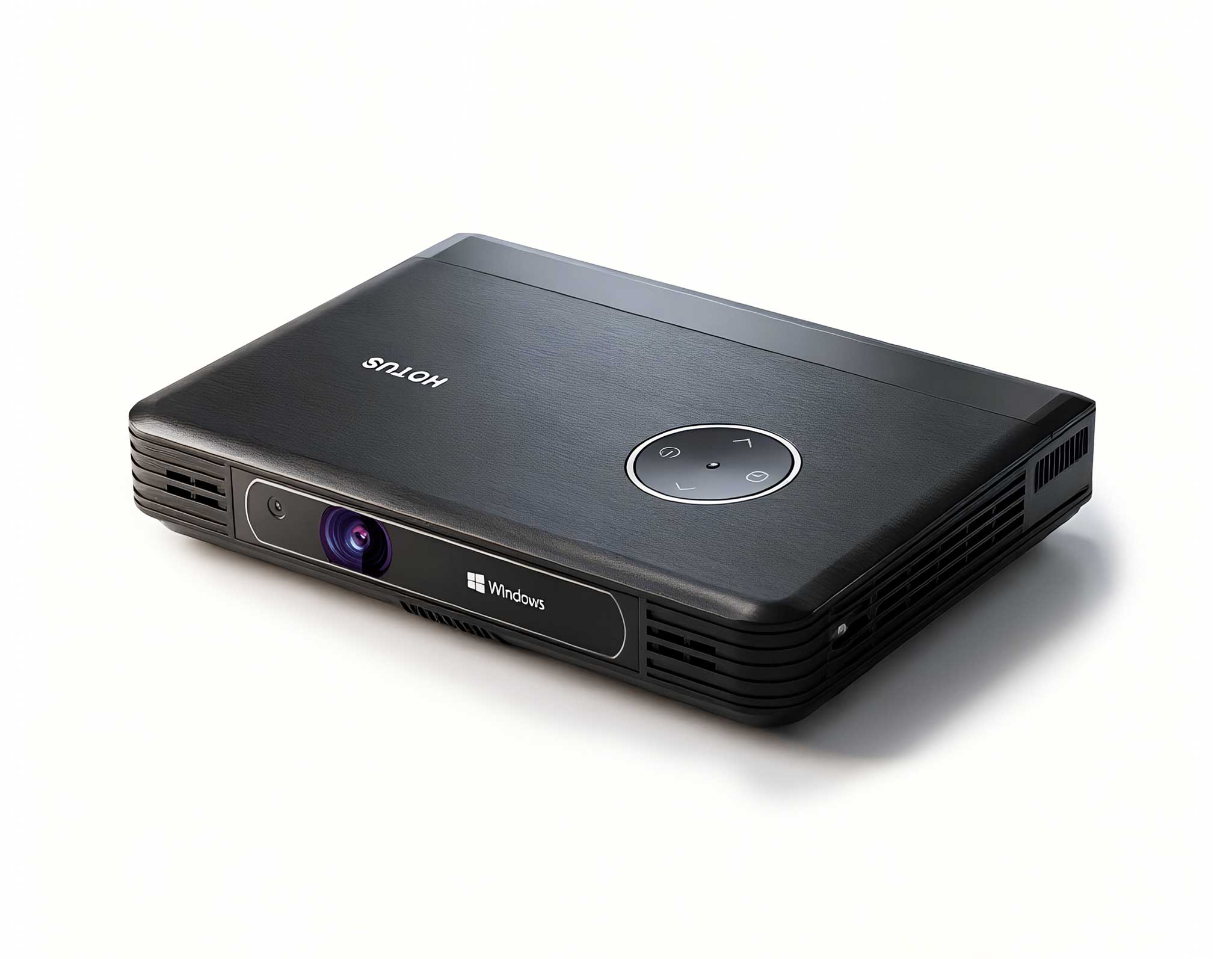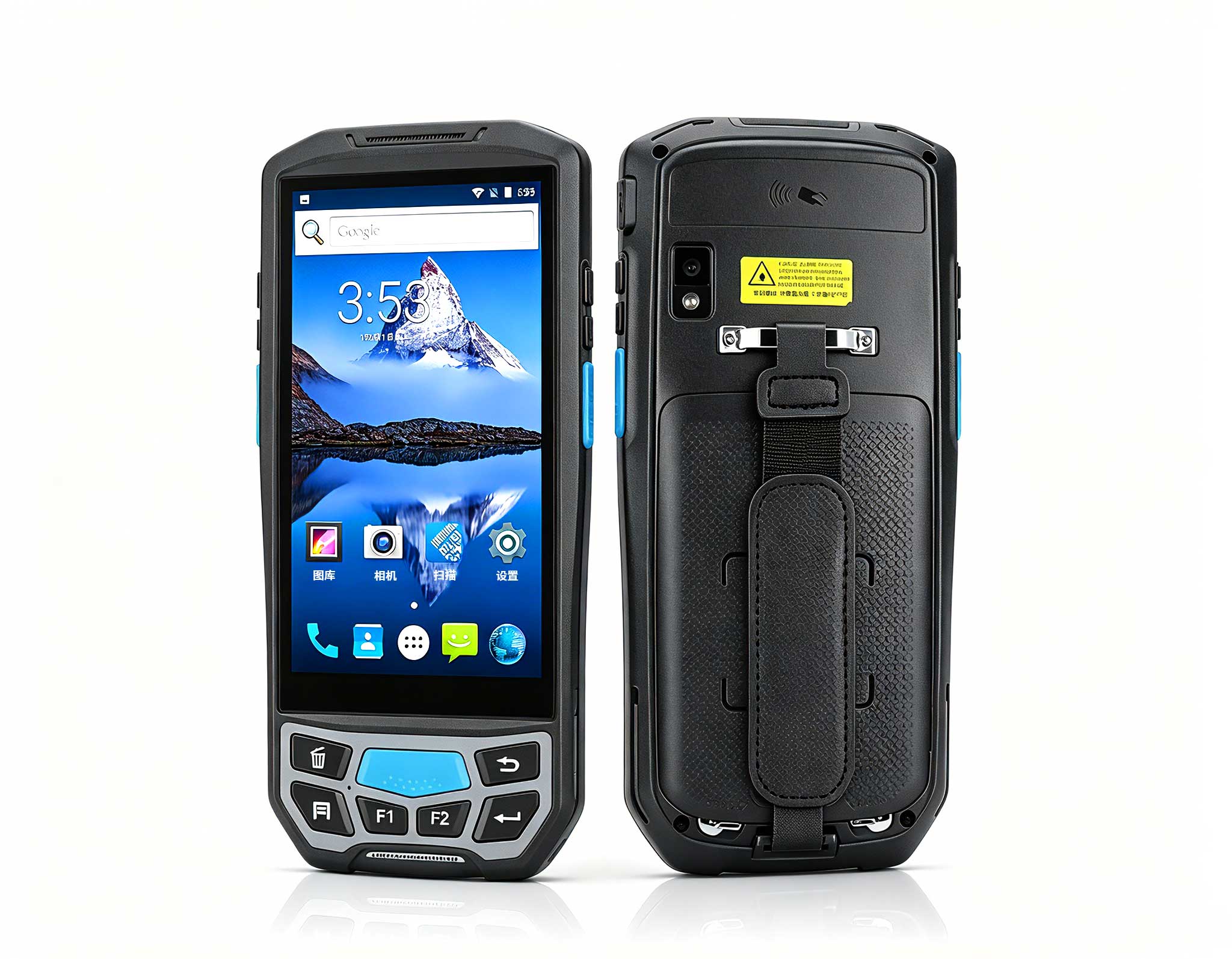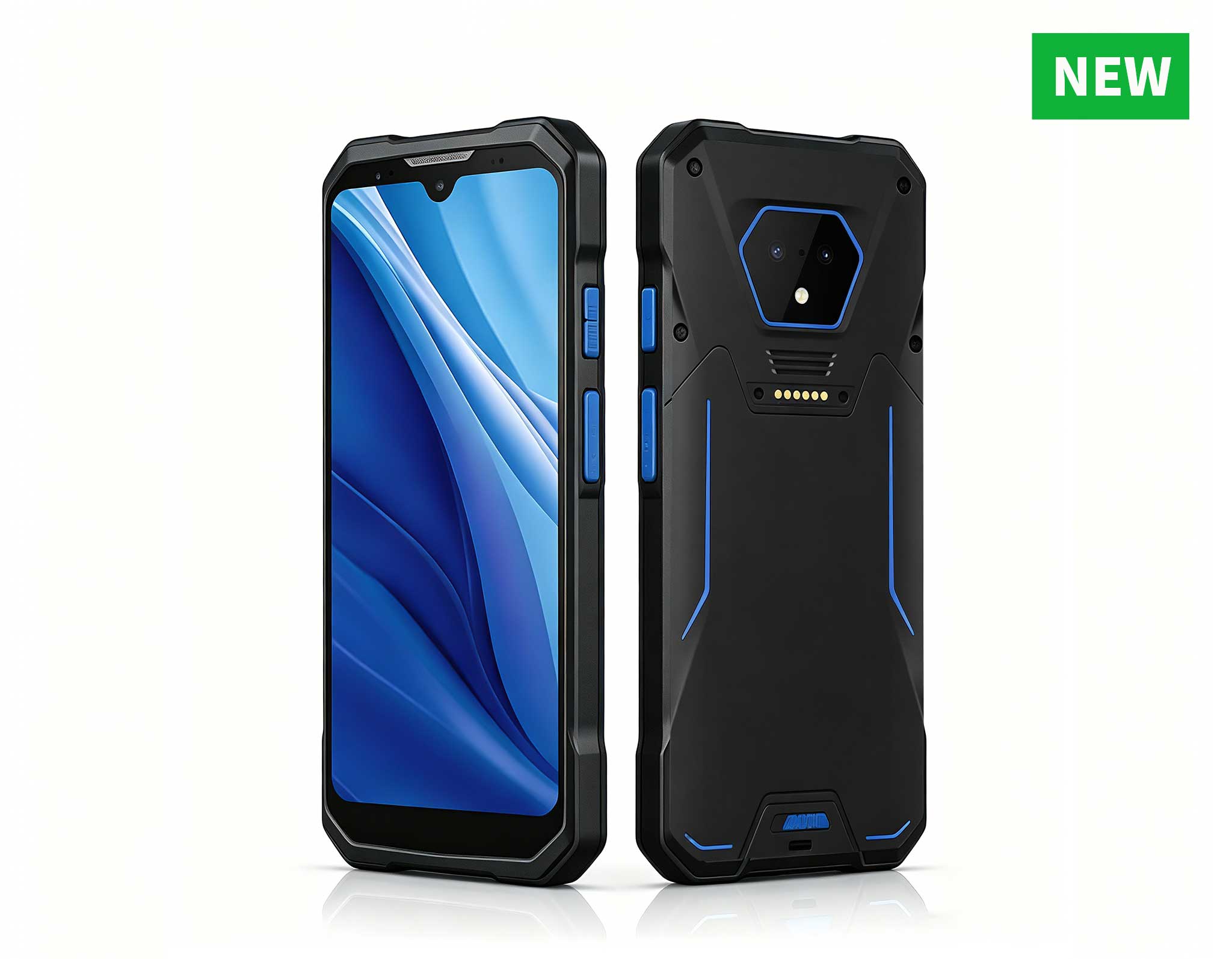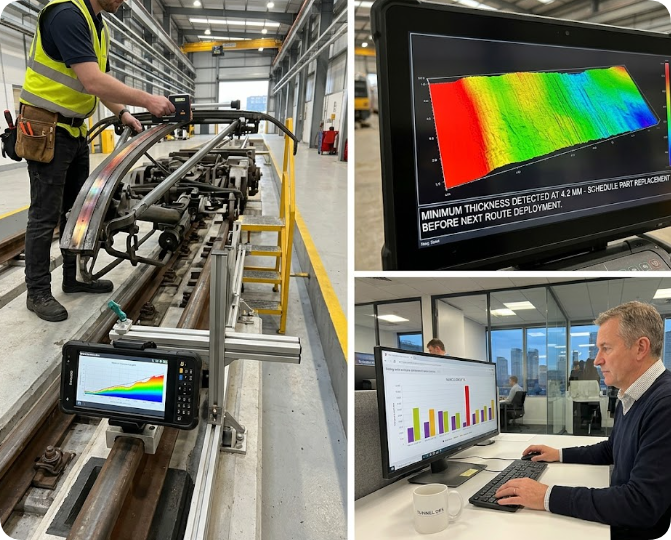
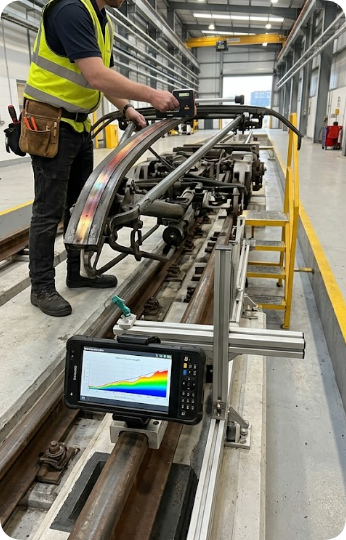
A rail depot technician utilizes a HOTUS SH5-W rugged PDA paired with a precision laser thickness gauge to audit pantograph carbon strip wear on a high-speed train set.
A major high-speed rail network recently suffered a catastrophic pantograph failure that completely paralyzed a main transit trunk line for over six hours. Investigators discovered the conductive carbon contact strip had physically worn down to an abysmal 3 mm—falling dangerously past the absolute 8 mm regulatory safety limit—yet the local maintenance log sheets had confidently recorded "system OK" for the past four consecutive inspection cycles. This systemic blind spot occurred because field personnel were manually measuring the structural component at its thickest remaining point rather than identifying the thinnest localized wear groove. Rail safety requires an industrial, enterprise-grade Windows PDA integrated with a digital laser profile gauge that automatically collects high-density measurements across the entire length of the component, isolates the absolute minimum thickness value, and maps it directly against historical wear curves. Within high-speed rail asset management, an unevenly worn contact block is not a routine consumable item—it represents a ticking time bomb capable of slicing down overhead catenary wires. Your handheld device must serve as the ultimate safety stop.
High‑Speed Rail Pantograph Carbon Strip Wear
By HOTUS Technology | Rolling Stock Maintenance Engineering Report | June 2026
Modern high-speed rail networks draw thousands of volts of electricity continuously from overhead catenary wire networks through specialized roof-mounted pantograph assemblies. The critical point of physical contact relies entirely on specialized conductive strips manufactured from dense carbon composites—a vital consumable component specifically designed to absorb intense friction while protecting the expensive copper overhead lines from severe electrical arcing. The exact speed of material degradation fluctuated wildly based on operational variables, including traction current draw, extreme weather exposure, cruising speeds, and pre-existing wire roughness. When an individual contact block experiences excessive thinning or localized gouging, it risks fragmentation mid-journey. A shattered collector strip can snag the overhead wire assembly at 300 km/h, ripping down kilometers of catenary lines, triggering millions of dollars in emergency track repairs, causing extensive network gridlock, and resulting in immense passenger compensation payouts.
Despite these massive operational and financial liabilities, legacy fleet maintenance guidelines frequently depend on manual caliper measurements taken at just two or three easily accessible points along the carbon bar. Technicians write these sparse findings onto paper-based inspection sheets. Because traditional performance metrics often prioritize rapid train turnaround times, human error tends to favor documenting the healthiest section of the bar to avoid taking the rolling stock out of service. Consequently, a composite bar that has worn down to an acceptable 6 mm on its left flank but possesses a lethal 2 mm divot near the center will be officially signed off as completely compliant. This structural flaw will pass unnoticed into high-speed transit, paving the way for a catastrophic failure hours later.
Eliminating Human Error via the Hotus SH5-W Windows Rugged Handheld Laser Array
The Hotus SH5-W Windows rugged handheld is purpose-built to eliminate inspection ambiguity by integrating seamlessly with wireless Bluetooth laser profiling sensors and linear displacement gauges. When conducting a mandatory rolling stock safety audit at the maintenance depot, the field technician executes a highly structured, automated data capture sequence:
- Continuous Linear Profiling: The inspector slides the digital laser gauge along the entire horizontal tracking profile of the carbon strip, automatically recording micro-thickness variations every 10 mm.
- Minimum Value Isolation: The internal processor logs the complete point-cloud data stream in real time, automatically isolating and storing the absolute lowest measurement obtained.
- Threshold Verification: Instantly compares the isolated minimum thickness metric against pre-programmed asset tolerances (e.g., 8 mm warning threshold, 4 mm mandatory replacement limit).
- Immutable Cryptographic Logging: Permanently links the telemetry data with the specific pantograph serial number, the train set ID number, and precise tracking timestamps.
The primary advantage of deploying the SH5-W mobile system rests in its ability to generate highly granular material wear curves over successive inspections. A carbon block demonstrating a steady material loss of 1 mm per 10,000 operational kilometers can be accurately tracked over its entire lifecycle. This mathematical oversight allows maintenance managers to accurately predict replacement dates well in advance, avoiding early component discards while completely eliminating the risk of over-worn components entering active service.
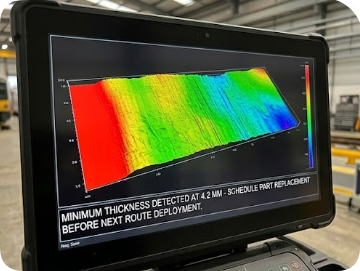
The HOTUS SH6 tablet serves as a depot-side inspection station, rendering a clear 3D profile map of the carbon strip to highlight uneven friction patterns.
Centralizing Fleet Telemetry with Industrial Rugged Tablets
To ensure flawless coordination across multiple regional transit facilities, the mid-sized Hotus ST11-U 10.1″ Windows rugged tablet functions as a central maintenance command dashboard. The ST11-U compiles wear profiles from dozens of mobile handheld units simultaneously, tracking overall fleet health and automatically generating procurement alerts when warehouse inventory levels for specific rolling stock components drop below critical margins.
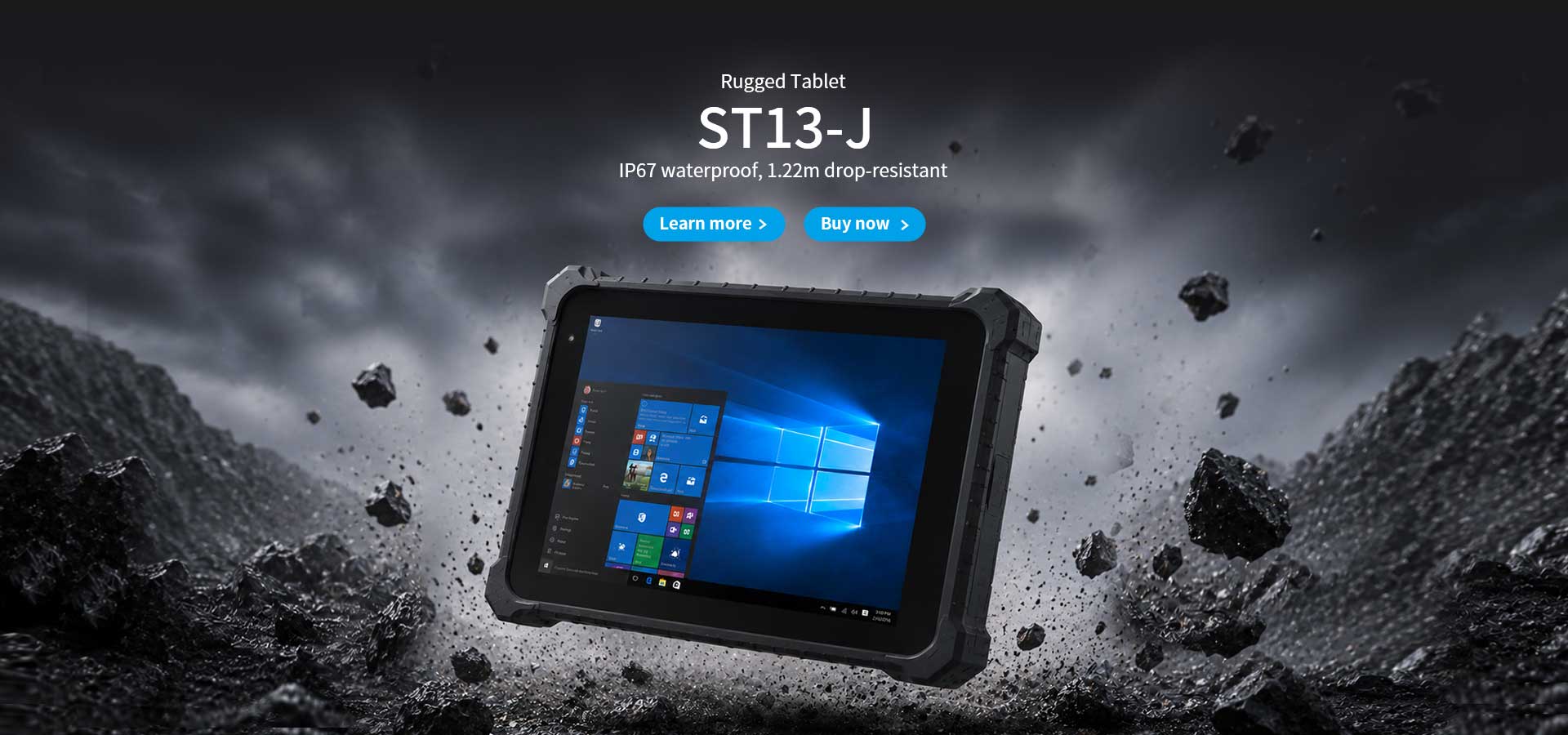
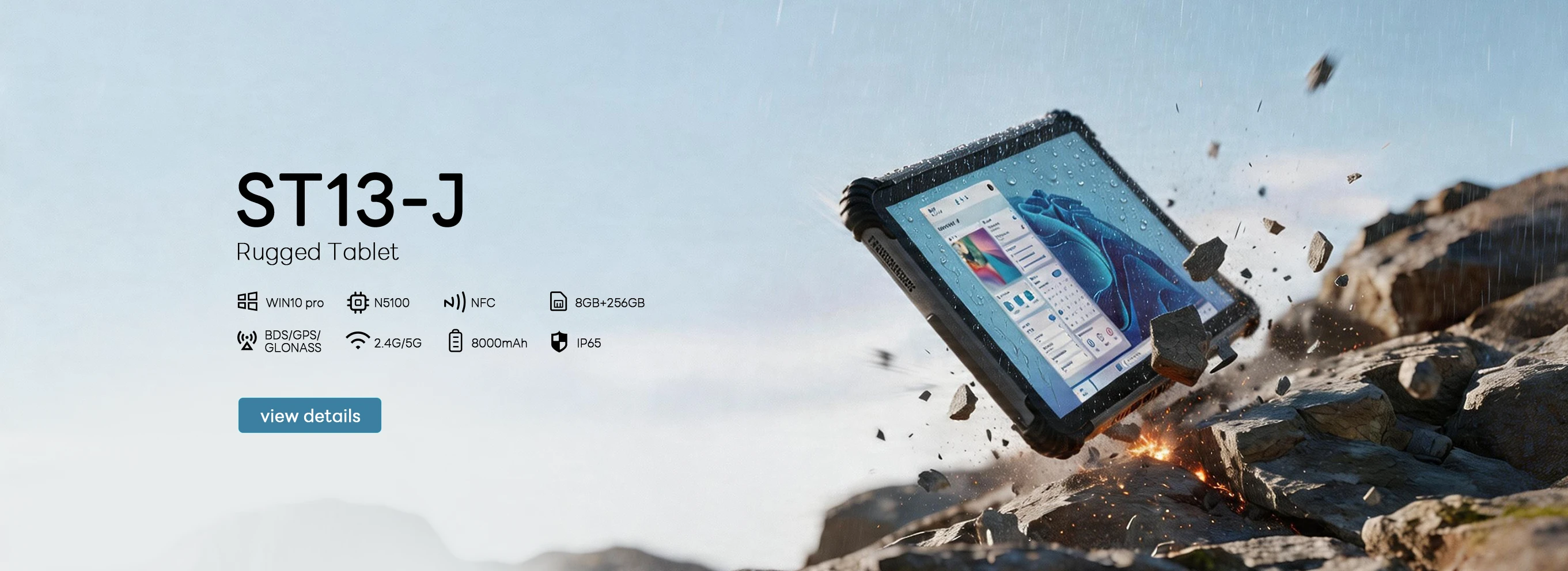
Concurrently, senior data analysts utilize the expansive Hotus ST13-J 13.3″ Windows rugged tablet to perform advanced historical trend processing. By comparing data across various train configurations, engineering teams can pinpoint which specific high-speed routes, overhead wire zones, or train models are generating abnormal, accelerated wear patterns due to localized tension anomalies or track geometry variations.
A notable case study involves a prominent national high-speed rail enterprise operating a fleet of 200 active passenger trains. To secure their infrastructure, they equipped their technical teams with 30 SH5-W laser-linked inspection kits, installed 20 fixed SH6 workbench stations across major transit depots, and deployed 15 ST13-J engineering dashboards within their central command hub. Within the first year of transitioning to this digital framework, the platform successfully flag-tagged 12 separate pantographs where internal wear grooves had breached the 6 mm safety warning threshold, despite local paper checklists mistakenly rating them above 7 mm. These compromised strips were replaced immediately during routine nightly servicing windows, preventing multiple catastrophic line tear-downs. Furthermore, by utilizing the predictive analytics software, the operator optimized their overall component lifecycle, reducing premature parts replacement by 10% and recovering over $200,000 in annual maintenance overhead.
The ST13-J dashboard provides logistics planners with a real-time wear matrix across the entire rail fleet, utilizing clear color codes to flag components that require immediate service scheduling.
Conductive carbon contact strips are relatively small components within a massive transit network, yet their mechanical failure carries enormous operational consequences. Relying on basic manual measurements and pencil-and-paper record keeping creates severe liability gaps and compromises public safety. Securing high-velocity transport infrastructure requires specialized mobile data terminals, automated multi-point laser scanning, unalterable digital logs, and comprehensive cloud-based asset tracking. By adopting the high-durability enterprise hardware systems designed by premier Rugged Tablets manufacturer HOTUS Technology—including the tactical SH5-W handheld, the versatile SH6 workstation, and the high-performance ST13-J monitor—railway operations can completely eliminate tracking blind spots and establish a flawless, predictive maintenance framework. Ensure your rolling stock remains accurately monitored; do not let an unrecorded wear groove disrupt your entire rail network.
Consult with Our Transit Safety Engineering Experts:
Contact HOTUS Technology Today to receive a specialized technical consultation for your fleet maintenance workflows, arrange for on-site delivery of factory-sealed SH5-W laser testing units, or secure detailed engineering brochures for our SH6 depot terminals and ST13-J management dashboards.