- Select Language
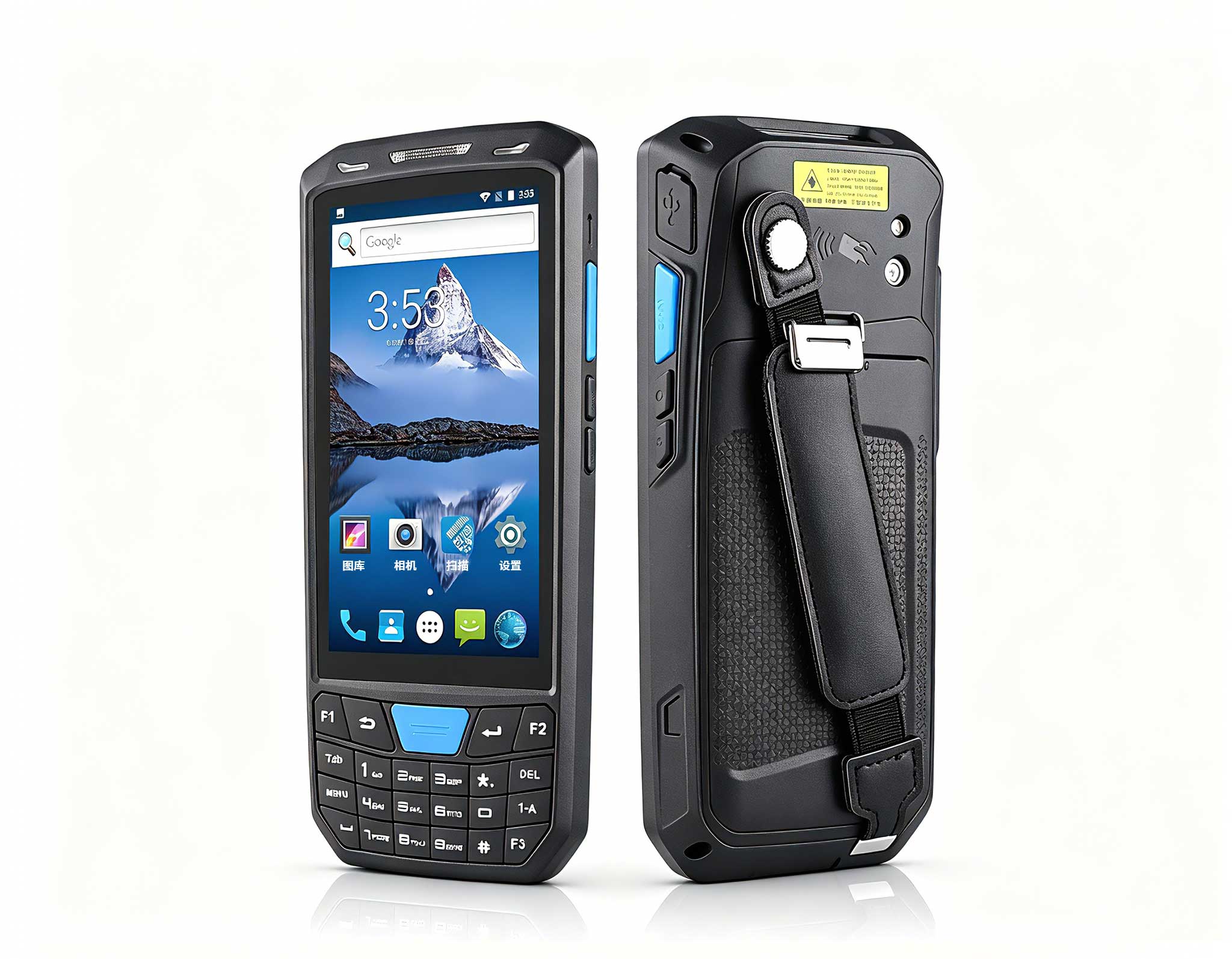
The F505 Handheld PDA is a compact, high-performan...
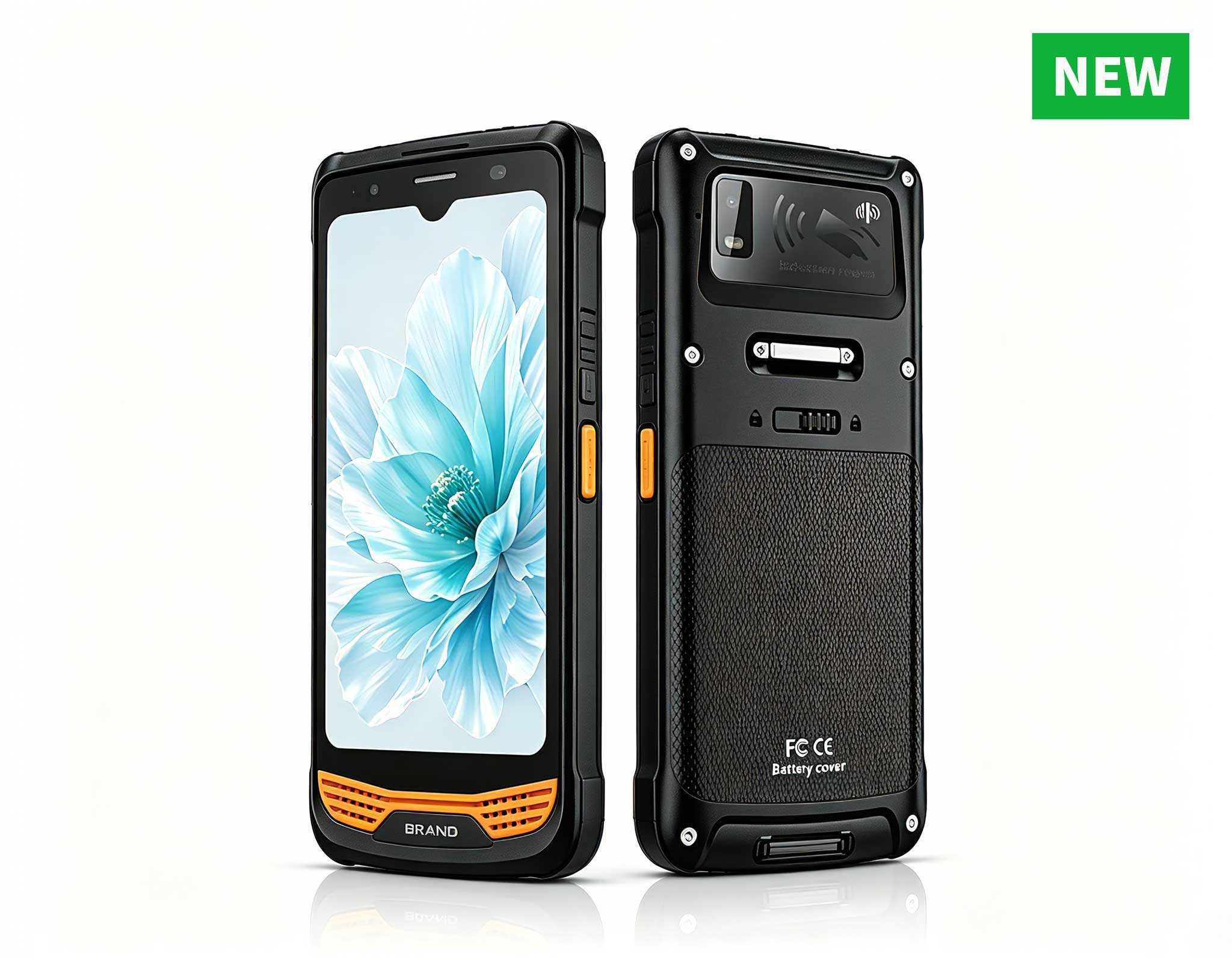
R366-S Thin 5.5-inch Industrial PDA | Qualcomm Oct...
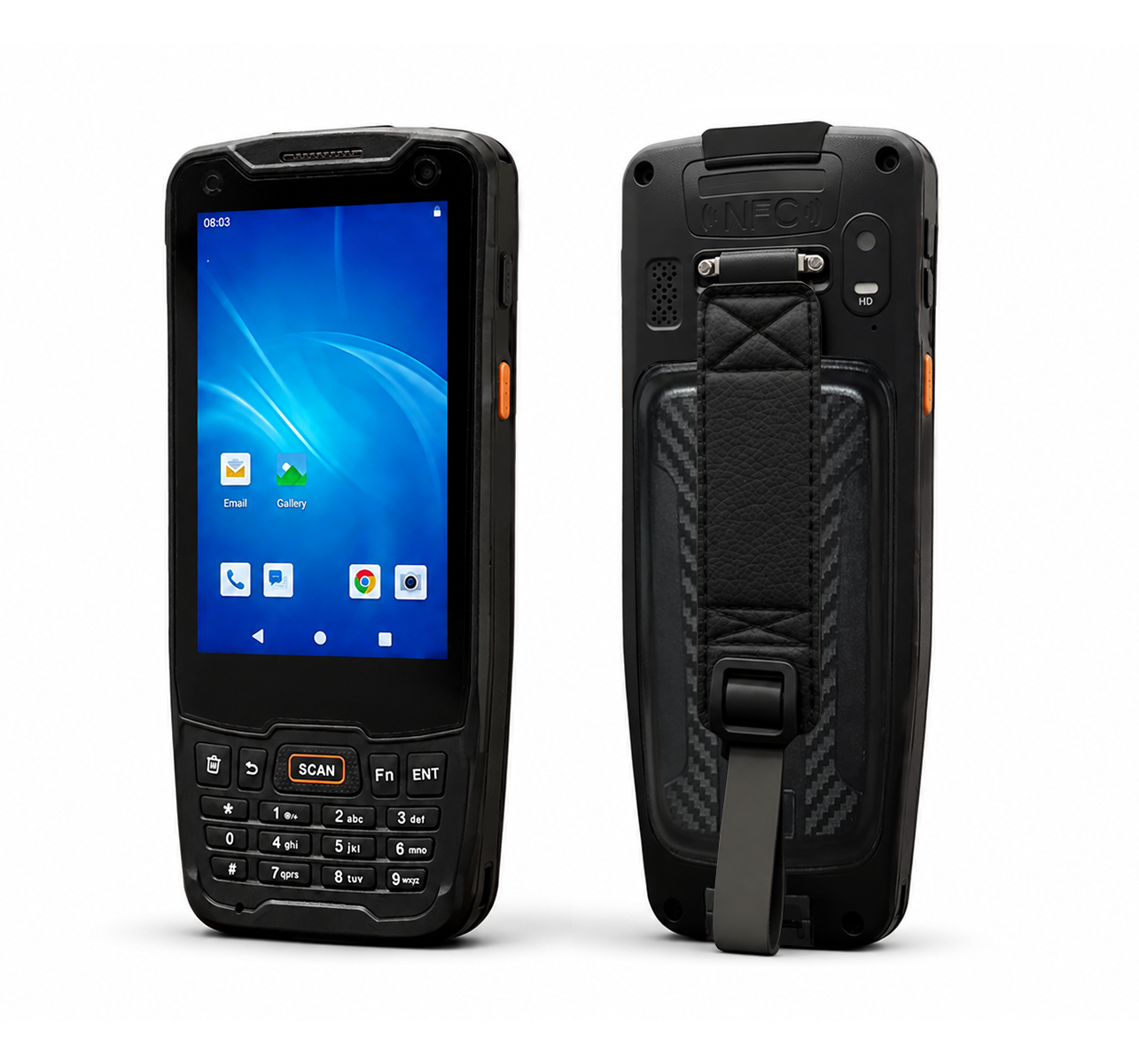
R350C 4-inch Industrial Handheld PDA | Qualcom...
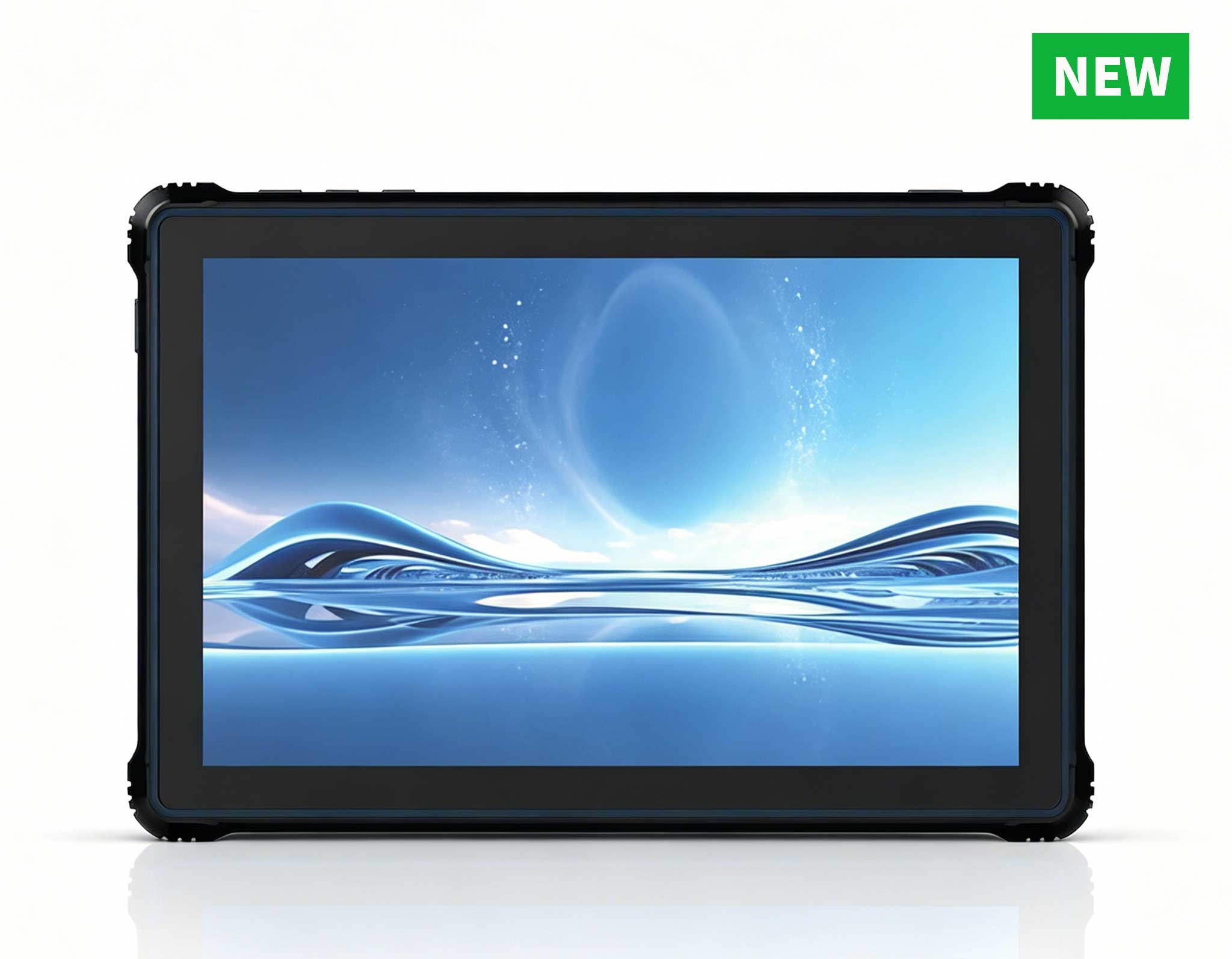
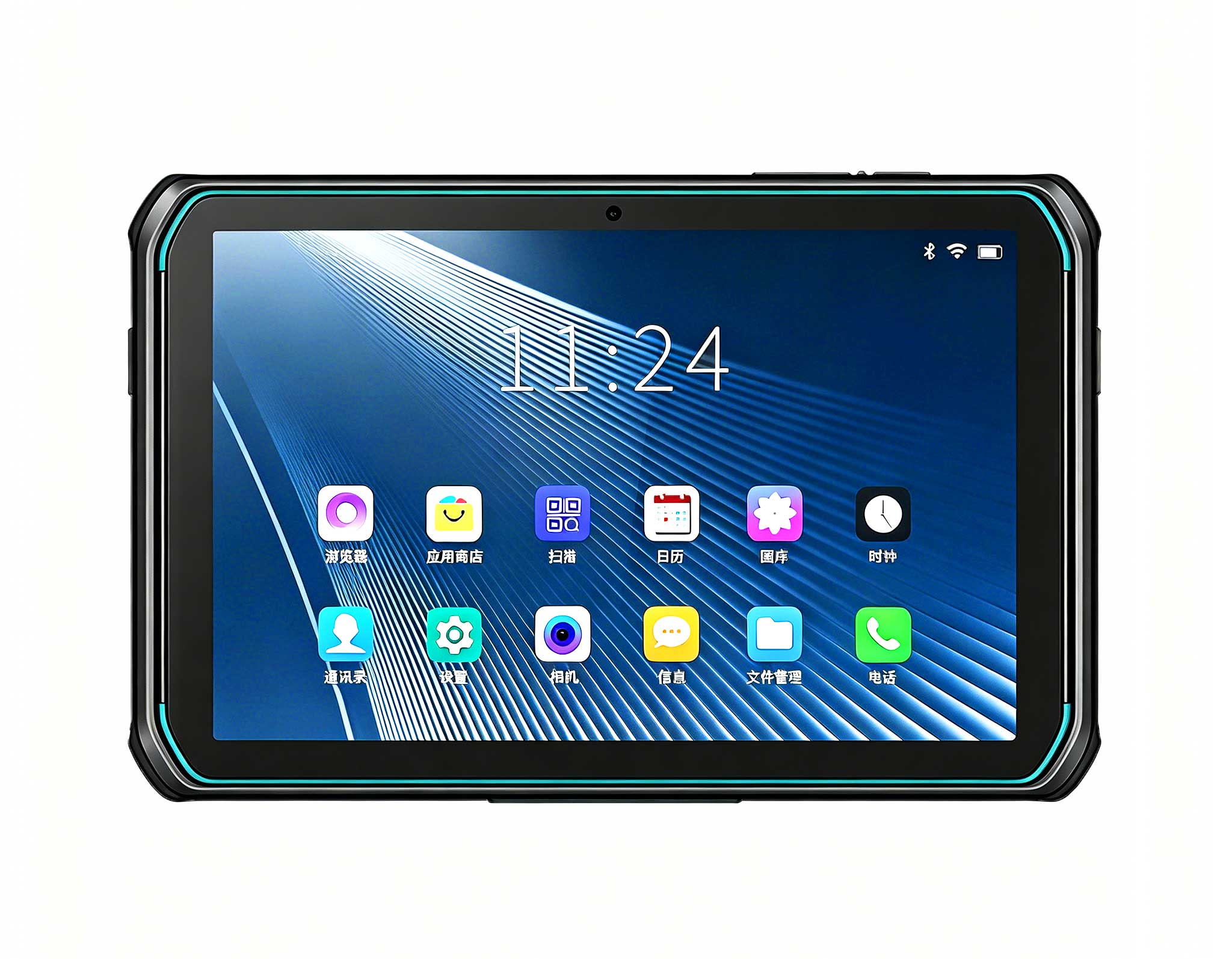
RT80 5G Rugged Tablet | 10.1" FHD 400nit | Un...
The T80 handheld PDA combines advanced barcode sca...
Explore our customized PDA designed for versatile ...
A surface patrol at an open-pit or strip mine does not stay in one place. It starts on the haul road where trucks pass, crosses the pit rim to check warning boards and gas readings, then drops to the conveyor gallery and the switchgear room, where the same inspector stands still for twenty minutes beside a cabinet. The equipment list for that shift is usually bought as one model across three sizes, and the reason each size lands where it does is not brightness or weight on a datasheet. It is whether the unit is carried for the whole leg, carried part of the way, or parked at a desk for the duration.
Three panels from the same Hotus catalogue cover those three conditions, and the specifications line up in a way that makes the assignment almost automatic once the route is drawn. What follows works through one patrol in the order it is walked, assigns a panel to each leg, and then sets out the fields where buying the wrong size costs more than the price difference between the three.
A patrol of this kind is not a single environment once it is described properly. The bench work, the moving work and the parked work sit in different rooms with different light, different power, and different consequences when a unit is dropped.
The first thing worth separating is where the power comes from. A switchgear gallery has a socket on the wall and rarely moves the cabinet, so a device that spends the shift plugged into a dock is really a small fixed terminal. The haul road has nothing to plug into at all, and the inspector is walking in dust for most of an hour. The bench area in between has a table, a chair and a laptop that does not leave the building.
Screen size follows from that split more closely than it follows from any single technical figure. A large panel is an advantage when somebody has to read a live trend next to a log entry without moving. It becomes a liability the moment the unit has to be carried up a slope, pulled through a gate, or held in one hand while the other writes. A small panel is easy to carry and becomes a problem at the exact moment three people need to look at the same number.
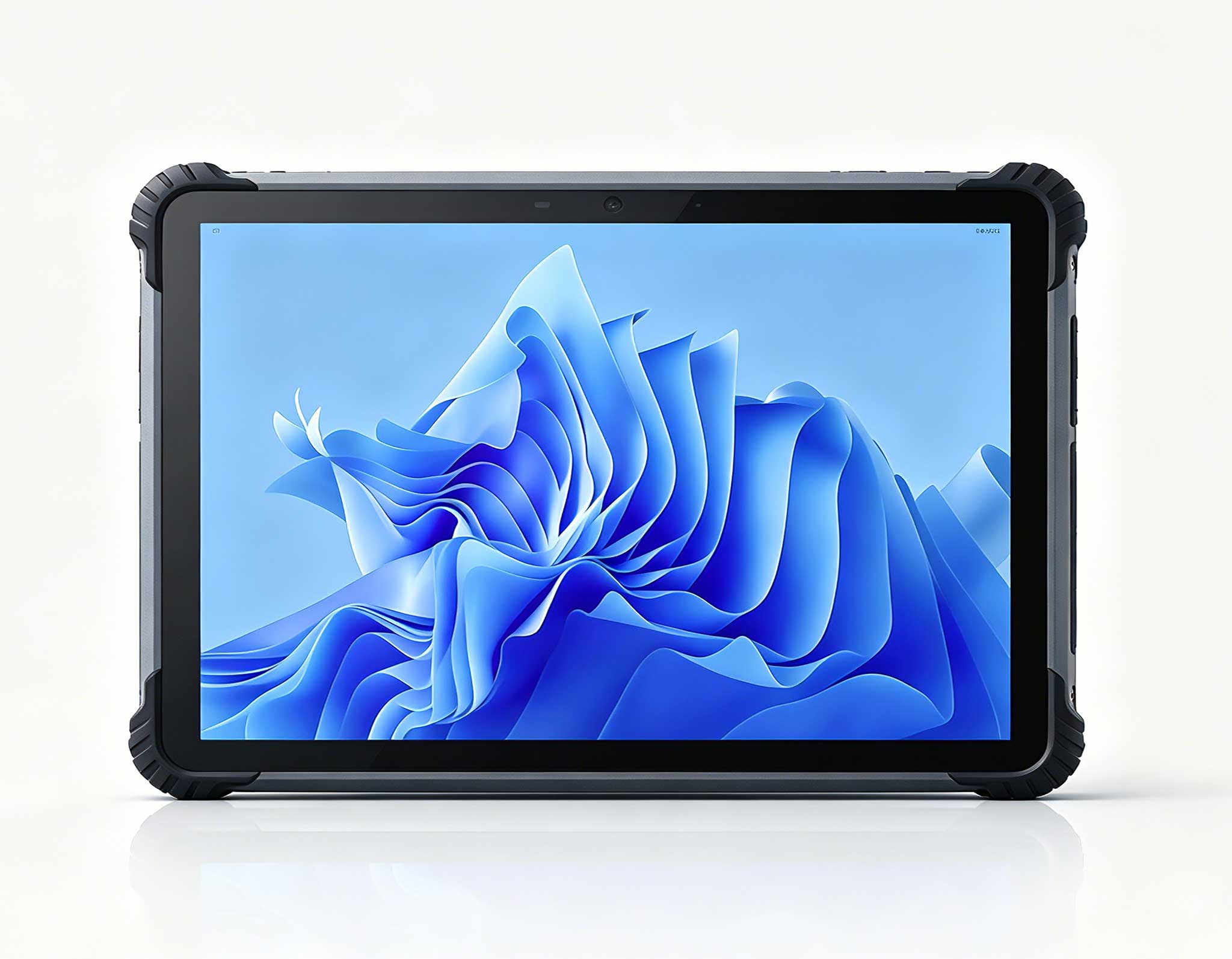
The ST13-U is the leg of the patrol that does not move. Its 13.3in IPS panel at 1920 by 1080 is the one that makes a two-column entry possible at the switchgear room, where the reading sits on one side and the operator reference on the other. That is the whole argument for it: nobody carries this unit past the room door, so the screen can be as large as the budget allows and the battery can be as large as the wall can charge.
Underneath that display sit choices the other two do not offer. The processor is an Intel Core i5-1235U or i7-1255U, and the memory reaches 64GB with storage offered at 128GB, 256GB or 512GB, which is what running professional engineering and analysis software at the same time actually requires. Windows 11 Pro is standard, WiFi 6 with Bluetooth 5.2 and 4G LTE cover the network side, and the battery is 8000mAh at 7.6V. The body measures 331.7 by 203.2 by 19.5mm and carries the IP65 sealing with 1.2m drop resistance that the smaller two also quote.
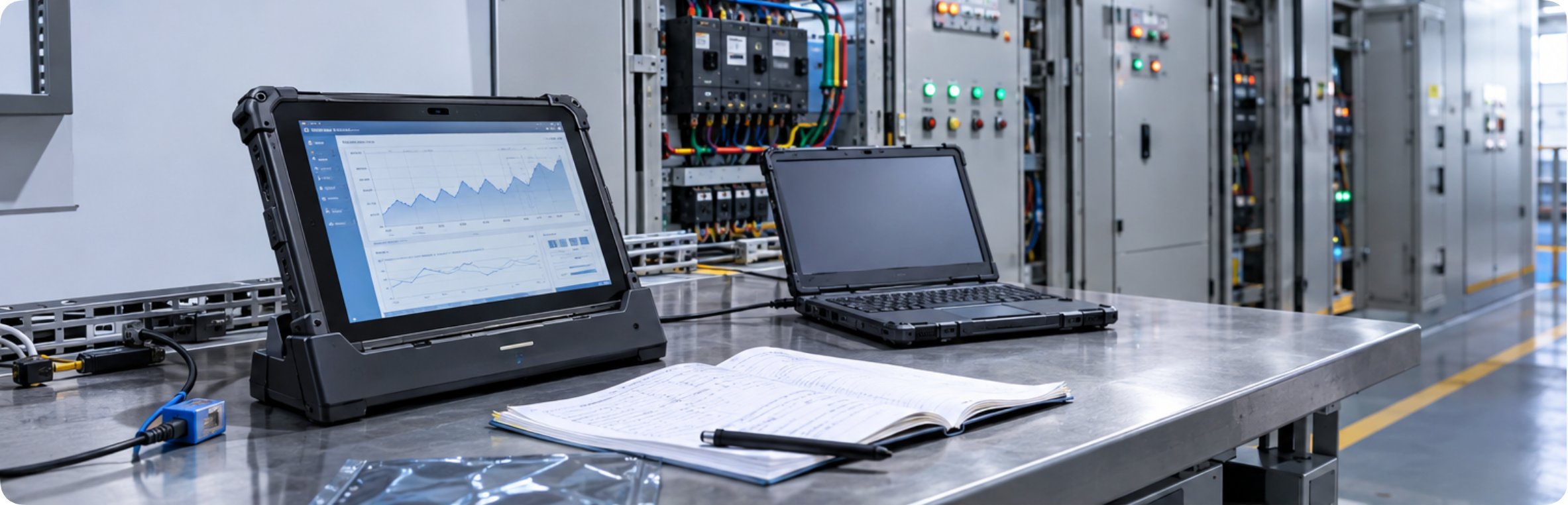
The HTNJ10C sits in the middle because it is the only one of the three whose interface list is built for a fixed table with peripherals attached. Audio, Mini HDMI, two Type-A ports, Type-C, DC input, RJ45, TF and SIM, plus a 12-pin POGO connector for a dock, means the gallery bench can run a wired network feed, a handheld scanner and a charging base without an adapter box on the floor. An Intel N100 running four cores and four threads at up to 3.4GHz handles the administrative load that comes with it.
Its sealing is also the strongest of the three. The protection line reads IP67 with 1.22m drop resistance, against IP65 and 1.2m on the other two, and the 10in LCD at 1200 by 1920 runs at 560 nits with a 7H hardness capacitive touch layer. The camera pair is a 500W front and an 800W rear with autofocus and an LED, the battery is 3500mAh at 7.6V, and the case is a double-layer shell measuring 28.4 by 19 by 2.5cm. Those numbers describe a unit built to sit on a bench that gets hosed down at the end of a shift.
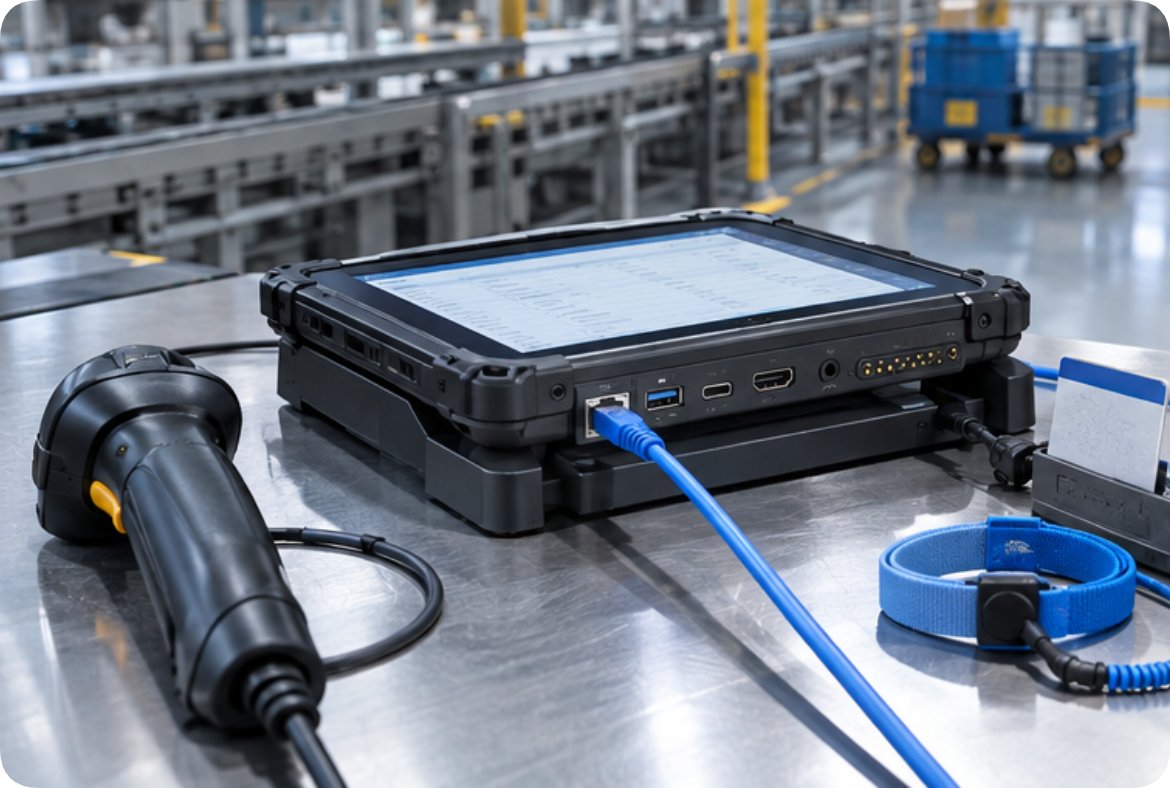
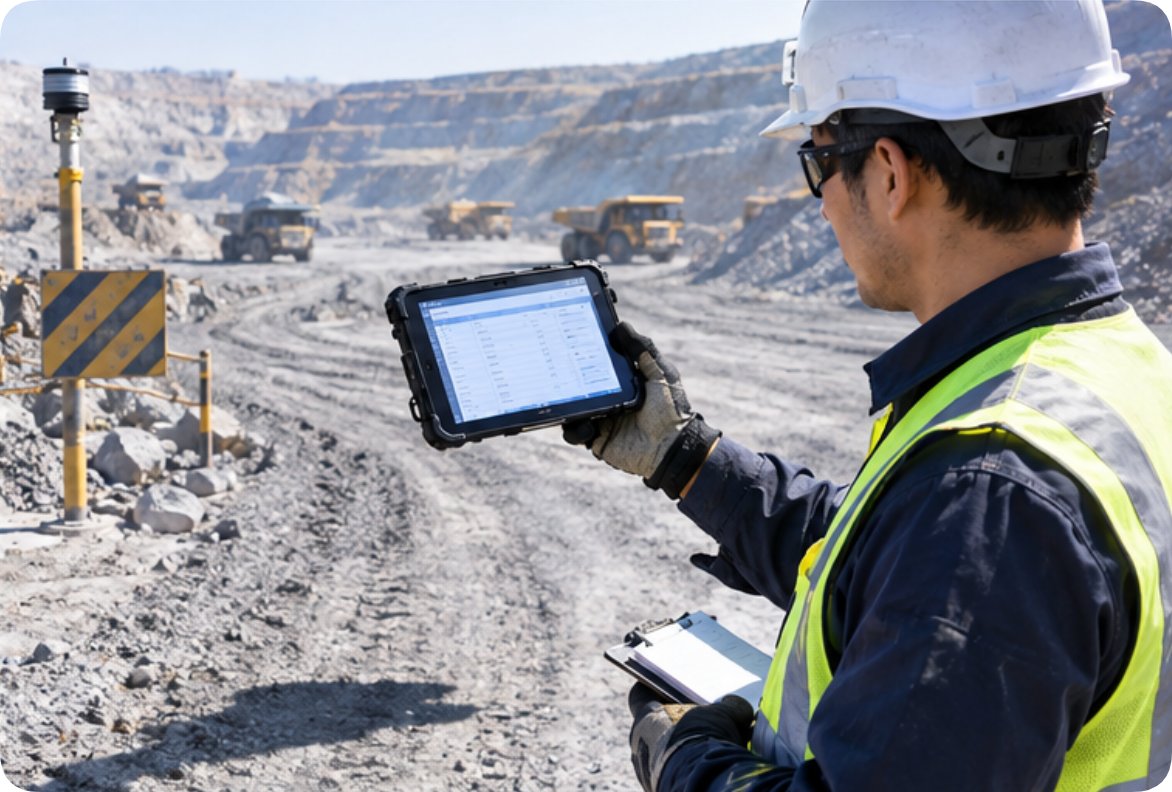
The ST9-J is the leg that never stops moving, and its case is built backwards from the other two to suit that. At 236 by 144 by 17.4mm it is the smallest panel of the three, and the listed weight is 700 plus or minus 50g, which is the difference between carrying a unit for an hour on the haul road and carrying a brick. An Intel Celeron N5100 running four cores at 1.10GHz with turbo to 2.80GHz is enough for data acquisition, MES and ERP collection, and vehicle-mounted navigation rather than for desktop-class software.
Two details make it the outdoor one. The 8in IPS panel at 1200 by 1920 is quoted at 400 nits and can be ordered at 1000 nits, which is what decides whether a warning board stays readable in direct sun on the pit rim. The rear camera is 13MP against 5MP on the other two, and the sealing carries IP65 with 1.2m drop resistance plus a MIL-STD-810G listing in the certification row, alongside CE, FCC and 3C. The battery is 5000mAh at 7.7V for roughly seven hours of use, and the network side is WiFi 5, Bluetooth 4.2 and 4G LTE on the SLM770A module.
The drop figures are close enough to look like a rounding difference and they are not. Two units state 1.2m drop resistance, the middle one states 1.22m, and the sealing ratings are not uniform either: IP67 on the ten-inch body, IP65 on the other two. For a patrol that includes a conveyor gallery with a concrete floor and a switchgear room with steel steps, that spread decides which unit stays in the gallery cabinet and which one rides on the inspector's belt.
The same caution applies to certification language. The eight-inch model lists MIL-STD-810G, CE, FCC and 3C together in its certification row, while the thirteen-inch model's certification row carries CE, FCC and 3C. Buyers comparing the three on a published standard-test logo should read the specification row on each page rather than assume one family-wide mark covers every member.
Capacity on these three runs 8000mAh, 3500mAh and 5000mAh, and it is tempting to rank them by that single figure. The ranking inverts when the route is mapped. The 8000mAh belongs to the unit that stays in the room and charges at the end of every shift, so a full day is never in question. The 3500mAh belongs to the unit that spends its day within reach of a dock and a wall socket. The 5000mAh with a stated usage time of roughly seven hours belongs to the only one of the three that has to survive the whole walk on its own charge.
This is the field where buying by the largest number reliably goes wrong. The route decides which capacity is load-bearing, and on most patrols only one of the three legs is genuinely off-grid for the length of a shift. Companies that order all three units to the same battery target end up paying twice for endurance on the two units that will be plugged in.
The fields below are the ones that came straight from the three product pages, with no field kept where one model had nothing published. Weight is left out on purpose: the ten-inch page quotes a gross figure including the carton, the eight-inch page quotes a bare unit, and the thirteen-inch page gives a single figure with no unit stated, so the three are not the same measurement and cannot sit in one column.
| Field | ST13-U | HTNJ10C | ST9-J |
|---|---|---|---|
| Display | 13.3in IPS, 1920x1080 | 10in LCD, 1200x1920 | 8in IPS, 1200x1920 |
| Brightness | 400/450 nits | 560 nits | 400 nits, 1000 nits optional |
| Processor | Intel Core i5-1235U or i7-1255U | Intel N100, 4 cores, up to 3.4GHz | Intel Celeron N5100, 4 cores, 1.10GHz |
| Memory and storage | RAM 8/16GB, up to 64GB; ROM 128/256/512GB | Not published | RAM 8GB, 4GB optional; ROM 256GB, 128/512GB optional |
| Battery | 8000mAh at 7.6V | 3500mAh at 7.6V | 5000mAh at 7.7V |
| Sealing and drop | IP65, 1.2m drop | IP67, 1.22m drop | IP65, 1.2m drop, MIL-STD-810G listed |
| Body size | 331.7 x 203.2 x 19.5mm | 284 x 190 x 25mm | 236 x 144 x 17.4mm |
| Operating temperature | -20C to 55C | Not published | -20C to 55C |
Read down the columns rather than across the rows and the assignment becomes plain. The unit with the most memory and the largest battery has no published wired interface beyond the standard set, so it belongs where a dock and mains power are waiting. The unit with the sealed RJ45 and POGO connector belongs where instruments and scanners plug in. The unit with the highest optional brightness and the smallest body belongs where there is no desk at all.
Teams running this kind of round usually already keep a shared pool of cases, scanners and mounts for field work, and the docking hardware they have chosen tends to decide the split before any tablet does. The panel range in field maintenance deployments follows the same pattern for the same reason.
The comparison that matters is not which panel is the fastest or which battery number is largest. It is whether the unit assigned to each leg of the route is the one that leg can actually use. A large screen that has to be carried uphill for an hour is a large screen nobody can read, and a small screen parked in a room where three people need to see a live reading is a small screen that ends the conversation.
Draw the route first, mark every point where mains power is within reach, and count how many of those points are a desk, a wall or a vehicle dock. Only the remaining points are genuinely mobile, and on most surface patrols that is a short list. Buying three sizes of the same panel and then assigning them by panel order gets this wrong more often than buying the wrong model, because the sizes are ordered by screen and not by how far the inspector walks before the battery matters.
For the wider range of handsets, scanners and mounted terminals that a patrol team ends up carrying between these three units, the industrial inspection hardware range covers the pieces that do not belong on a tablet at all. Matching panel sizes to the three conditions on the route is the cheap part of the job; the expensive part is discovering after the first season that the unit on the walking leg was the one chosen for the parked one.