- Select Language
Technical SpecificationsModel: Palm-sized miniPCTy...
P8 Series 8-Inch Rugged Industrial Tablet PC Mobi...
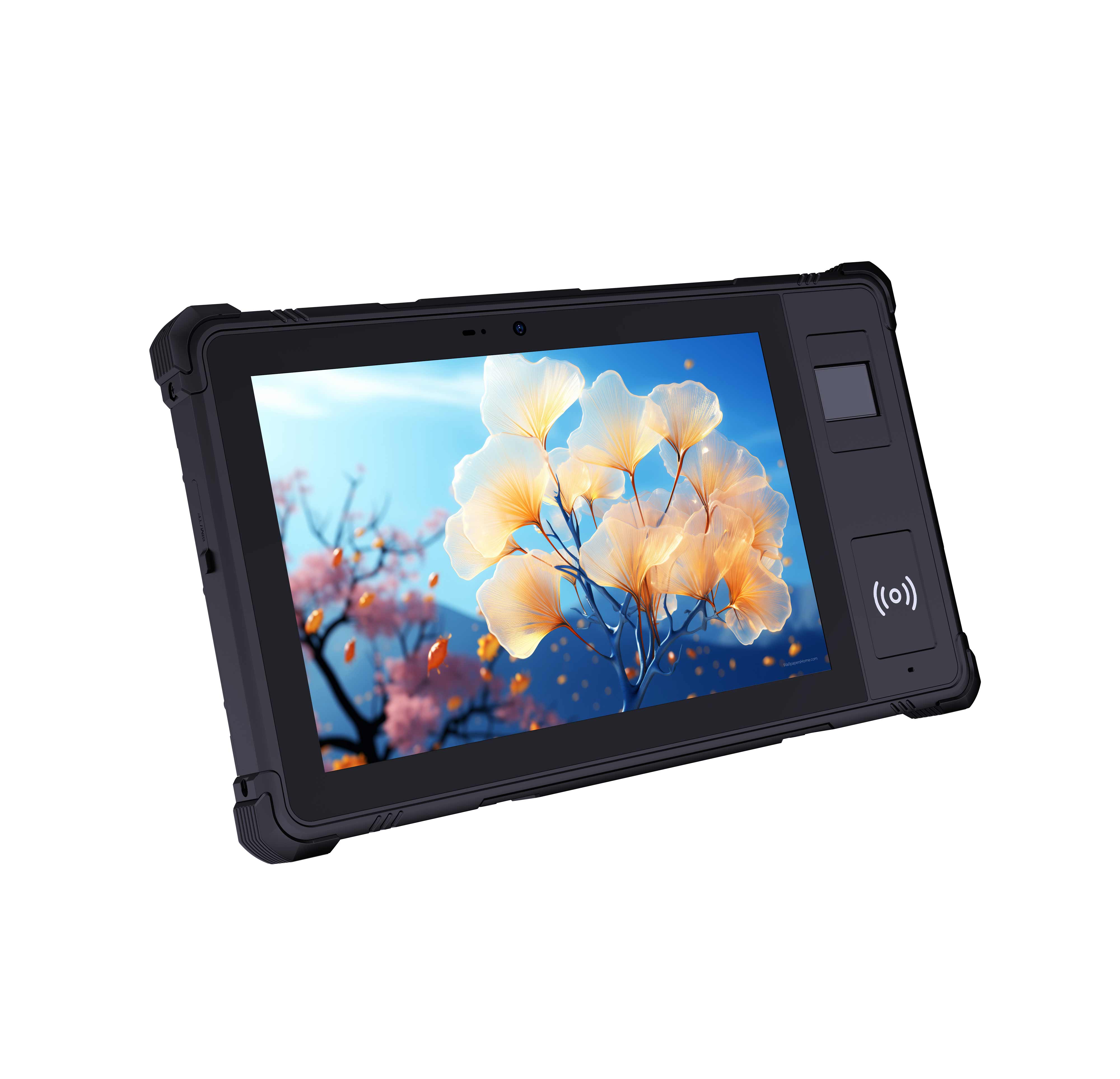
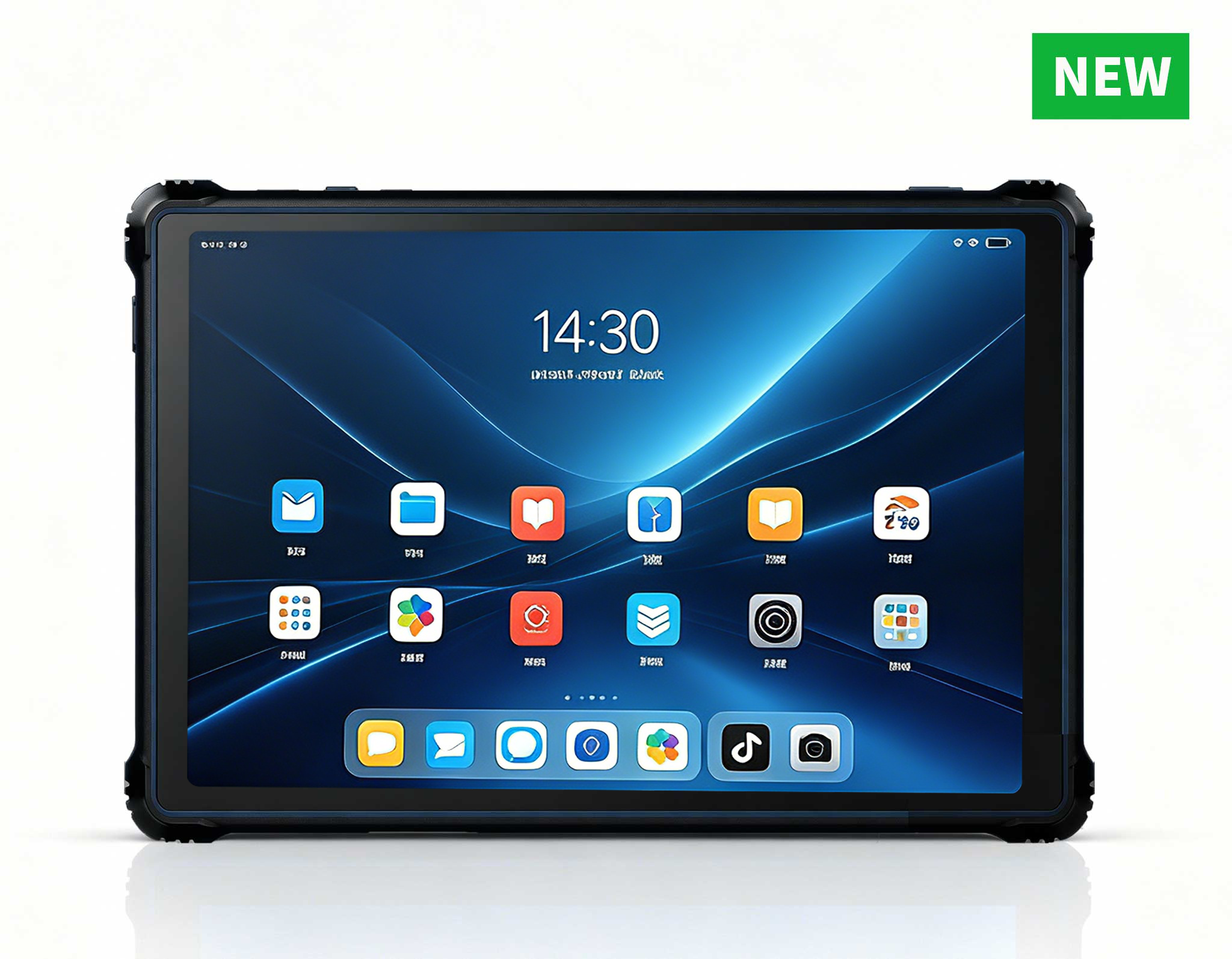
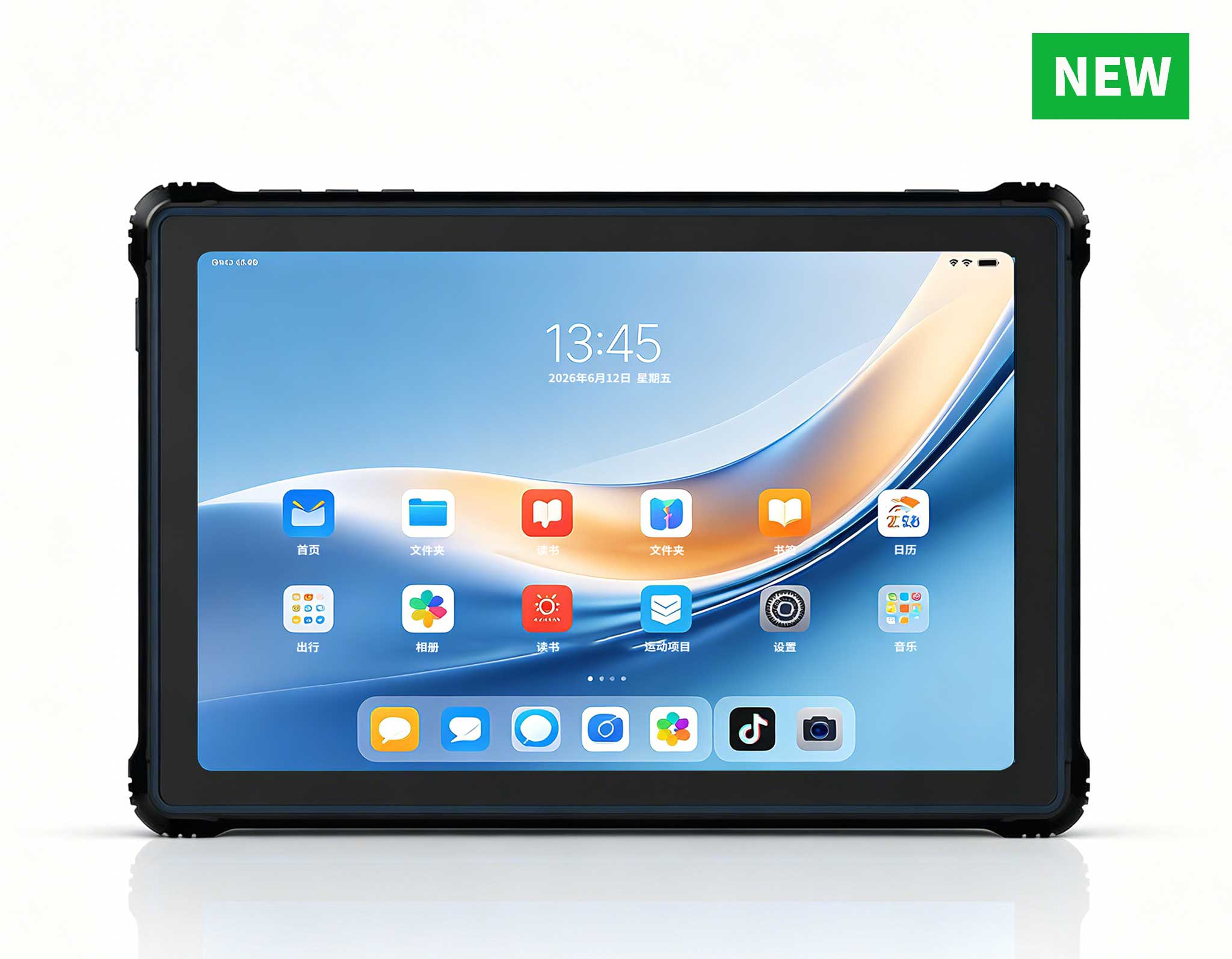
RT82 5G Rugged Tablet | 10.1" FHD 400nit | Qu...
RT81 4G Rugged Tablet | 10.1" FHD 400nit | Qu...
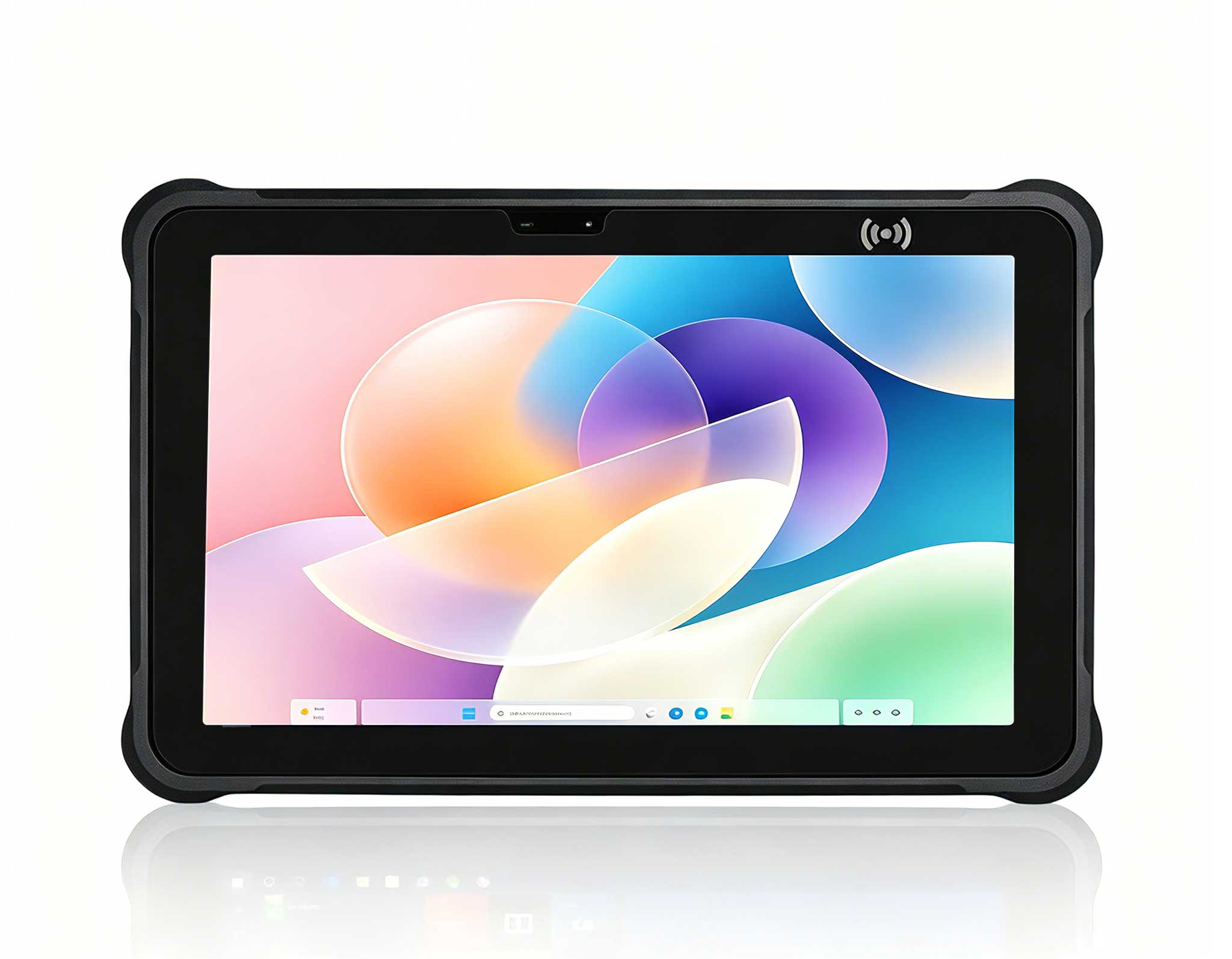
Full SpecificationsModelHotus ST11‑UOSWindows 10 P...
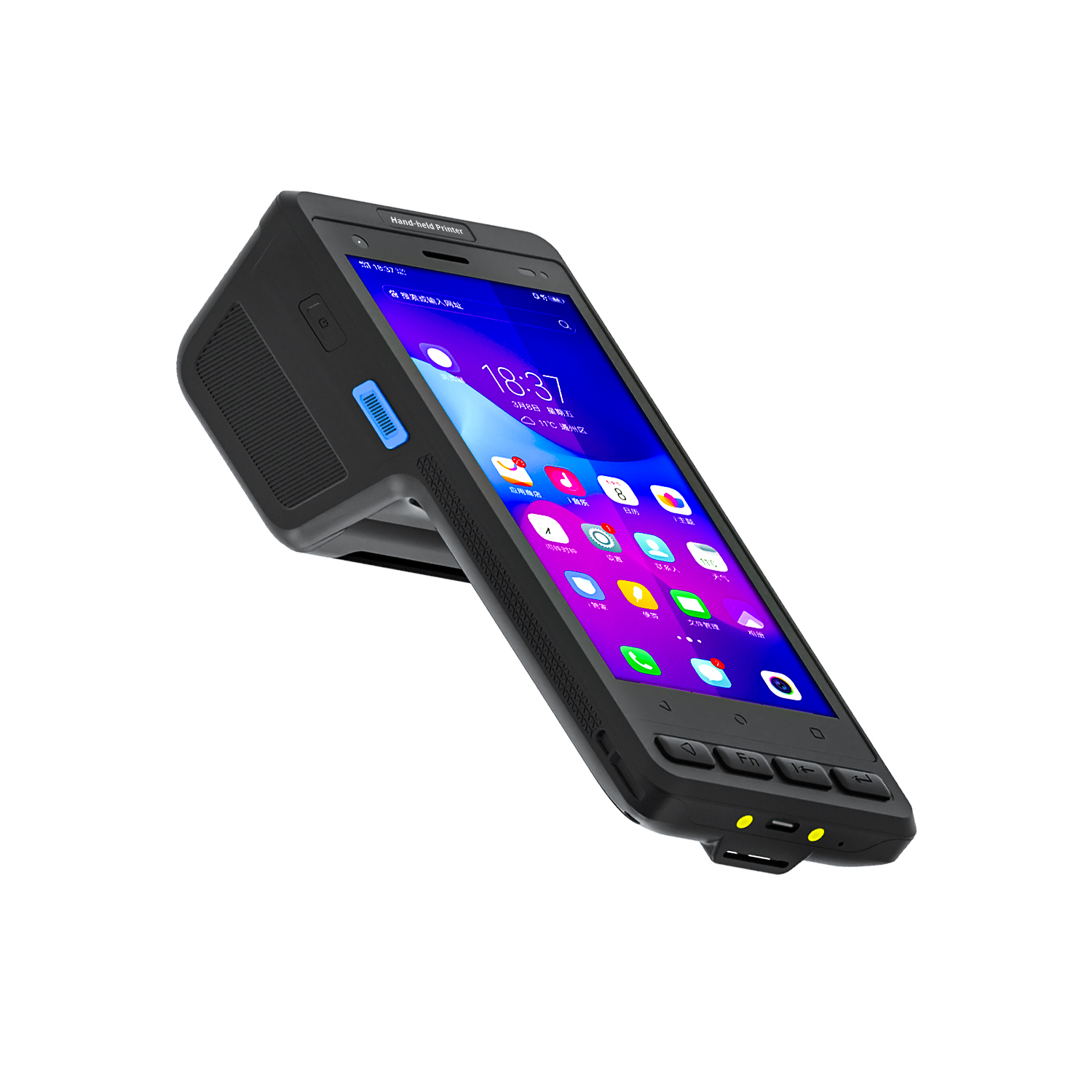
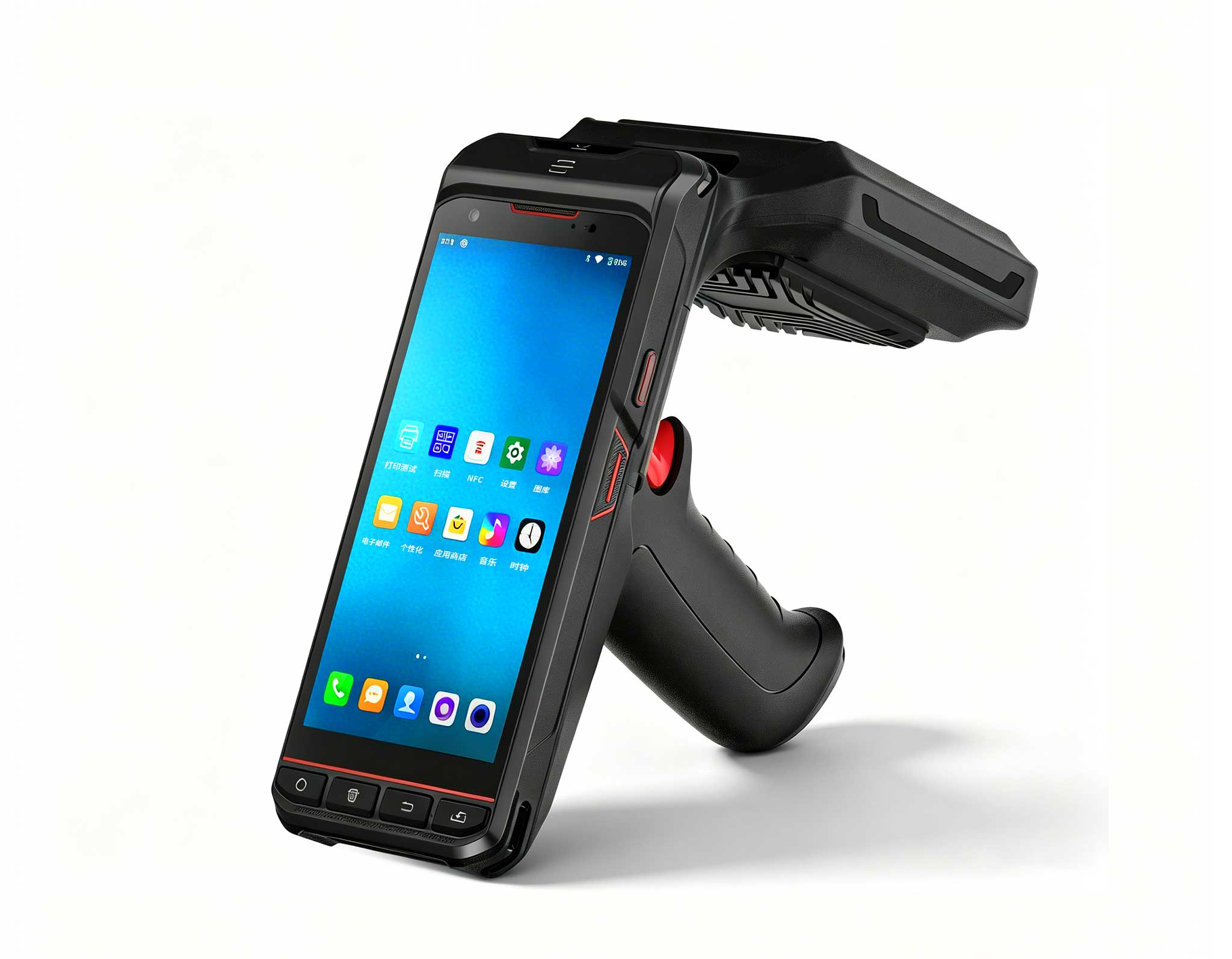
The R501 PDA combines a powerful MT6762 Octa-Core ...
A hospital biomedical engineering round is not a walk through a ward. It is a loop with a fixed order that repeats every day: pharmacy refrigerators first, because those hold stock with a documented temperature, then the ward-level cold storage, then the plant room, then every ventilator and infusion pump rack on the way back. Somewhere between four hundred and six hundred steps, spread over eight floors and two lifts, a technician opens twelve or more housings, reads a value, notes a fault code, and moves on.
A paper sheet survives that route. What it cannot do is prove the reading was taken at the appliance in front of the operator rather than copied from the last round, or that it was taken at all when the round ran forty minutes late. Those are the two questions an audit asks, and they are the reason a tablet shows up on this cart in the first place. What follows is how three very different rugged tablets handle the specific conditions of that loop, using only figures each manufacturer publishes.
The pharmacy refrigerator is the first stop and the least forgiving. Inside it, screens are irrelevant and gloves are mandatory, so the device is used with two hands occupied and often through a pair of nitrile gloves. The technician needs to reach the appliance display, read the value, and type it in without setting the tablet down on a wet floor next to a condensate tray.
Warm air is what makes that first hour uncomfortable, and it also determines how the tablet has to be carried. A device that has to be held in one hand while the other works the appliance door cannot be charged on the way, cannot be clipped to the technician's belt, and cannot survive being set down on a steel plinth. Both ten-inch units in this comparison are specified at under 650g and are supplied with a wrist strap; the thirteen-inch unit is a different object entirely, and the section below returns to what that difference costs.
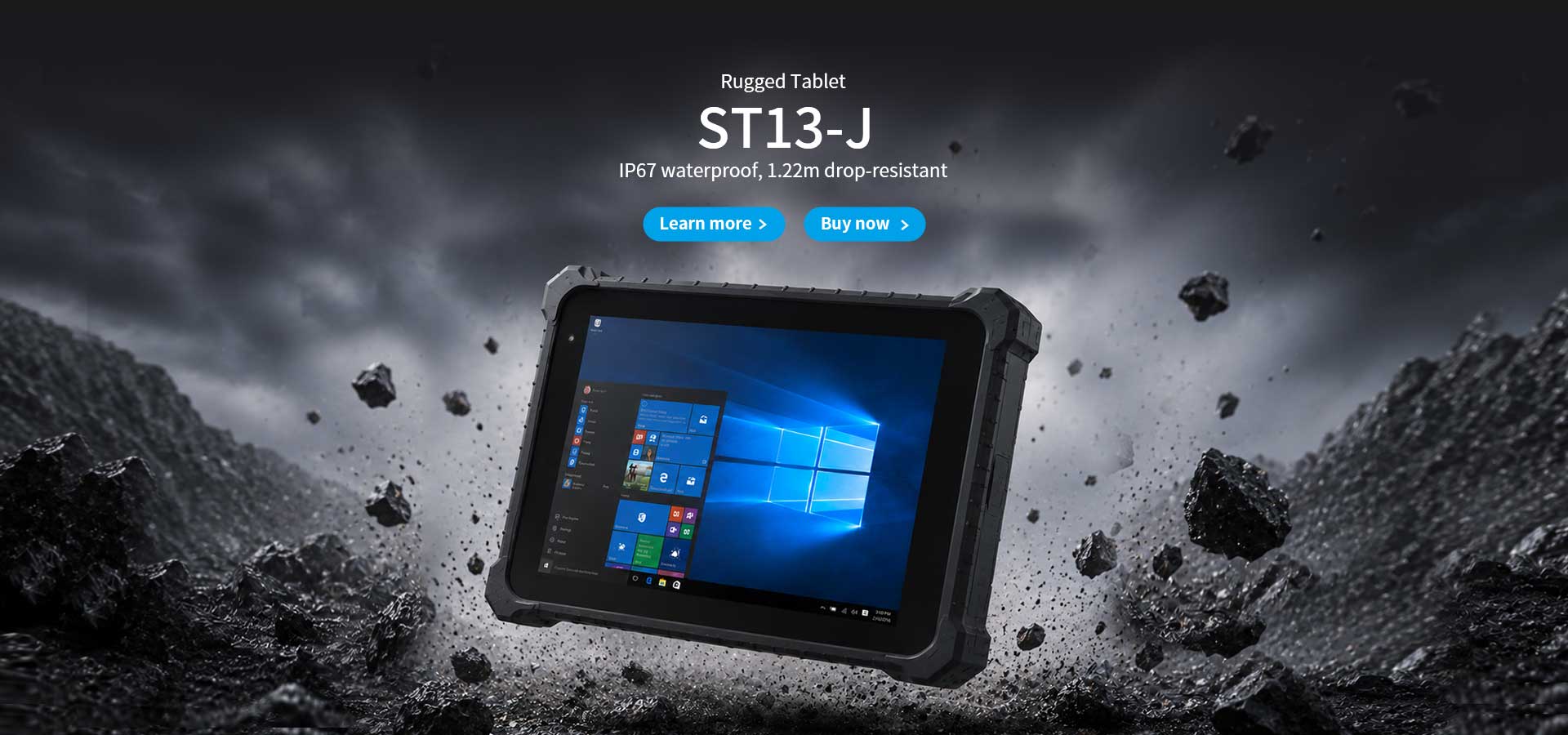
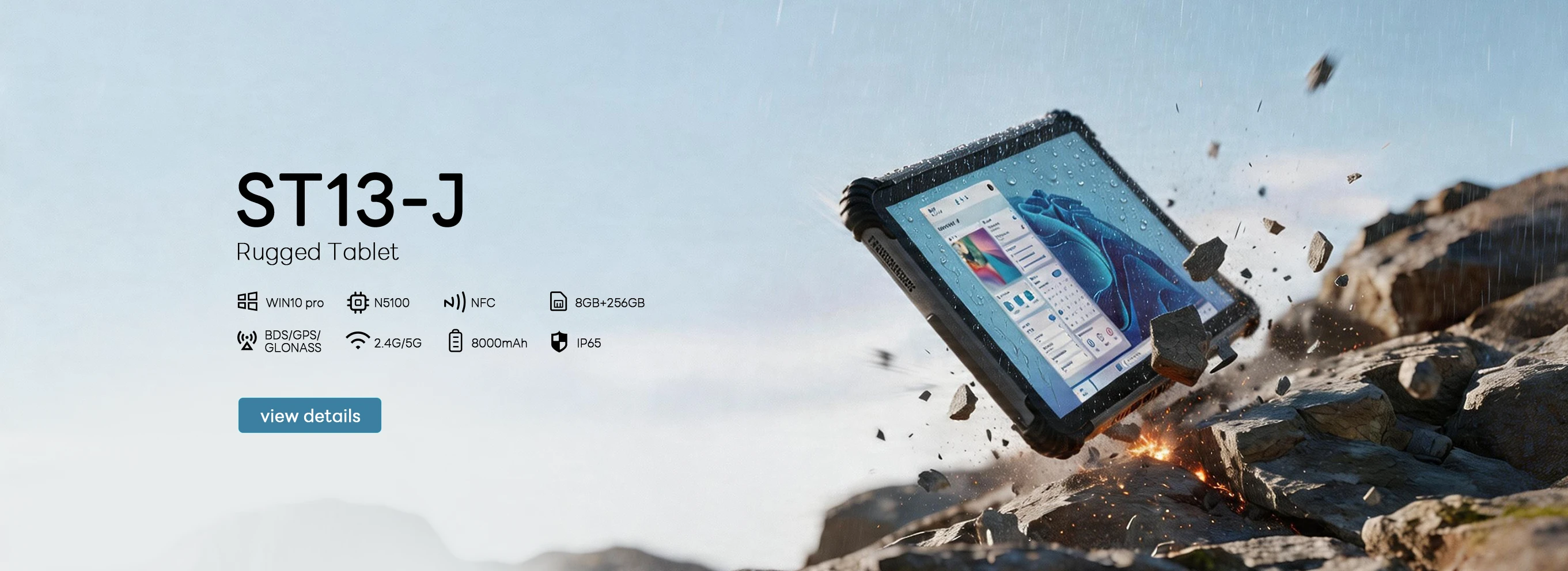
Published operating temperatures decide where a device can stay on the cart at all. The ST13-J 13.3-inch rugged tablet is specified for operation from -20 to 55 degrees Celsius, with storage from -40 to 60. Both RT82 and RT81 are specified for -10 to 50 degrees, with storage from -40 to 70.
The gap that matters is at the cold end, and it is ten degrees wide. A plant room in winter is not a pharmacy refrigerator, but an unheated plant room or an external chiller alcove genuinely sits in that range, and a device specified to -10 is outside its own operating range there. Whether that matters is a property of the building, not of the tablet, and it should be measured in January rather than assumed.
The other end of the range is where a corridor gets uncomfortable. Fifty-five degrees is stated for the ST13-J against fifty for the two Android units, and on a summer afternoon a plant room sits closer to the upper figure than anyone expects. This is a small difference that decides whether the tablet finishes the loop or has to come off the cart for twenty minutes.
Two lifts separate the basement cold storage from the top-floor ward. Neither lift has a network cable, and in most older buildings the shaft is a metal box that attenuates anything passing through it. A device that buffers records offline is unaffected; a device that requires a live connection to decide what to do next will sit on the cart doing nothing for the ninety seconds the doors are shut.
What the two Android units specify matters here. The RT82 lists 5G SA and NSA across a wide band set, dual-band Wi-Fi at 2.4, 5 and 6GHz with Wi-Fi 6E, and Bluetooth 5.2. The RT81 lists 4G LTE with a global band set, dual-band Wi-Fi at 2.4 and 5GHz with 802.11ax readiness, and Bluetooth 5.0. The ST13-J lists Wi-Fi 5 and Bluetooth 4.2 alongside 4G LTE.
None of that guarantees reception inside a shaft, and no published figure here addresses lift coverage. What the specifications do support is a planning statement: a hospital buying 5G should confirm indoor coverage floor by floor before the purchase order is signed, and a hospital buying Wi-Fi-only should plan for offline capture regardless of generation. The trap is not the specification, it is assuming a specification is a coverage survey.
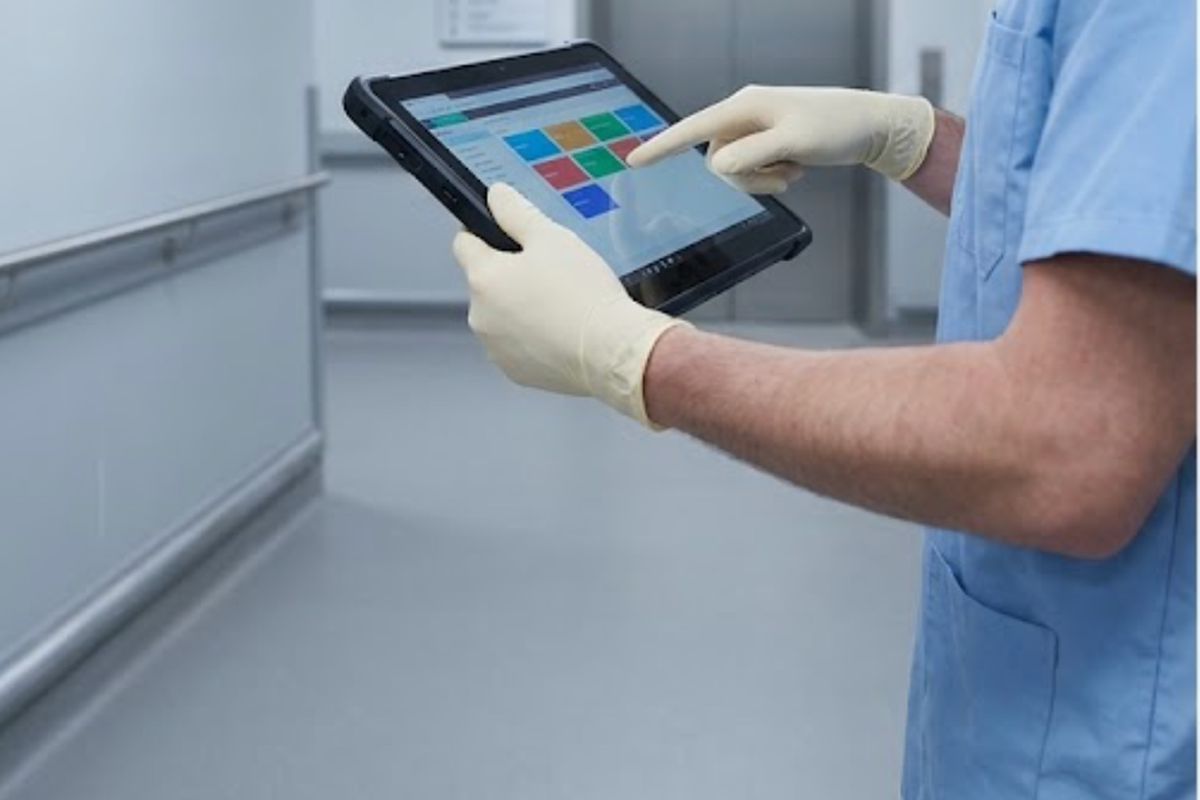
An IP rating measures water. A round involves alcohol gel, quaternary ammonium wipes, and hospital-grade disinfectant sprayed around handles and carts, none of which is water and all of which attacks the oleophobic coating on a touch surface. A tablet that survives an IP65 water test can still end the year with a screen that responds erratically at the edges, and the failure arrives slowly enough that it is usually blamed on the firmware.

What the three units share is the same answer: wipes, not jets. There is no published chemical-resistance specification for any of them, and no claim is made here about one. The published ingress figures are IP65 with 1.2 metre drop resistance for the ST13-J, and IP67 with the same 1.2 metre drop figure for both Android units. IP67 means dust-tight and temporarily submerged, which is a genuine improvement for a cart that gets washed down at the end of a shift.
The operational rule that follows is unglamorous and worth writing into the round procedure: clean with a lint-free cloth and the hospital's own approved wipe, never with a solvent the manufacturer has not named, and keep a spare screen protector in the spares drawer for the first three months. A device that reads a touchscreen correctly is the only precondition for every other feature on this cart.
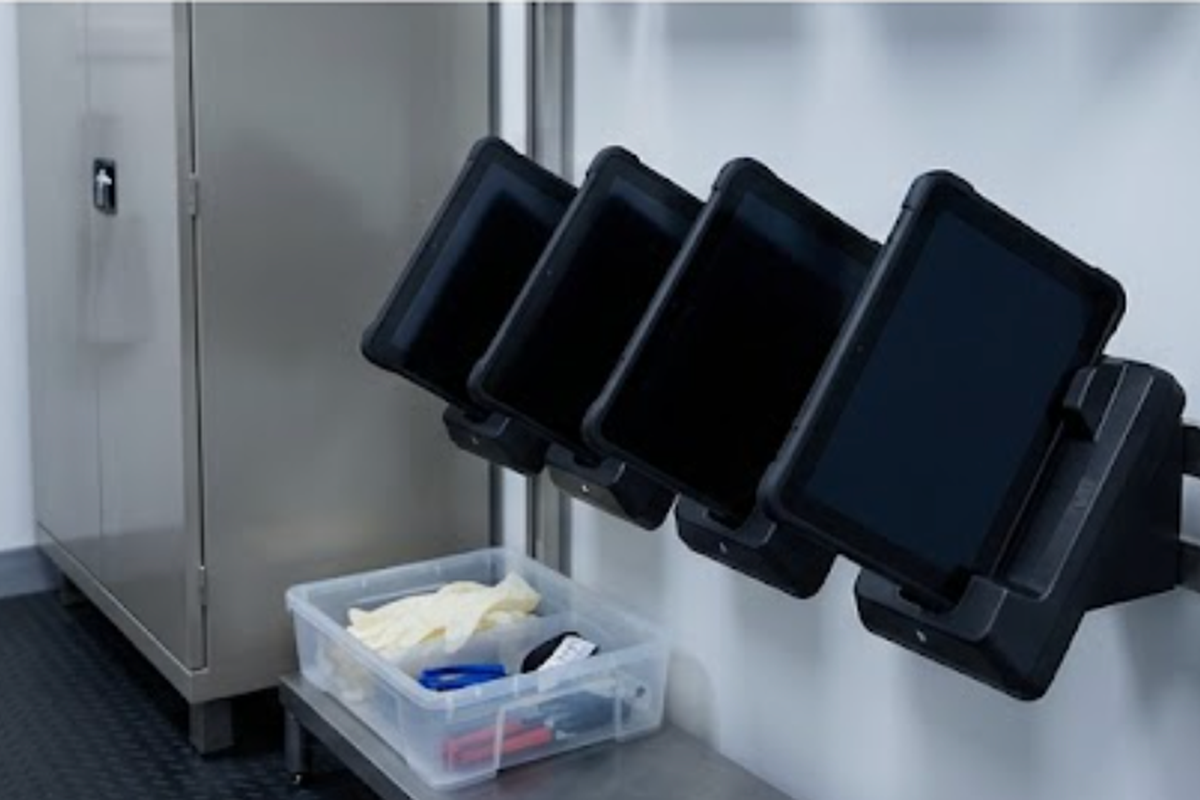
The honest reason to keep paper on the cart is that the exception path must not depend on a battery. When a device fails at basement level, the round continues on paper and the fault is logged by hand; nothing stops until someone decides that paper is no longer acceptable. Building the tablet workflow around that assumption rather than against it is what separates a deployment that lasts from one that is quietly abandoned after a month.
The other reason is that a paper signature is defensible in a way a sync log is not. A signature belongs to a named person at a named moment; a database row belongs to a queue that may have been uploaded at any later point. Most hospital audits accept either, but the two are not equivalent and it is worth deciding deliberately which one the department is relying on.
What a tablet adds is not replacement but attribution: who read the value, when, and on which appliance identifier. Recorded against an asset tag rather than a room number, that record survives a room being renumbered, which is a routine change in a hospital that has just opened a new wing.
All three are Android or Windows rugged tablets with published, comparable figures, so the table can be laid out as a straight comparison. Battery capacities differ between the specification table and the descriptive text on one of these product pages, so the table uses the specification table value and the discrepancy is noted underneath rather than resolved silently.
| Published specification | ST13-J | RT82 | RT81 |
|---|---|---|---|
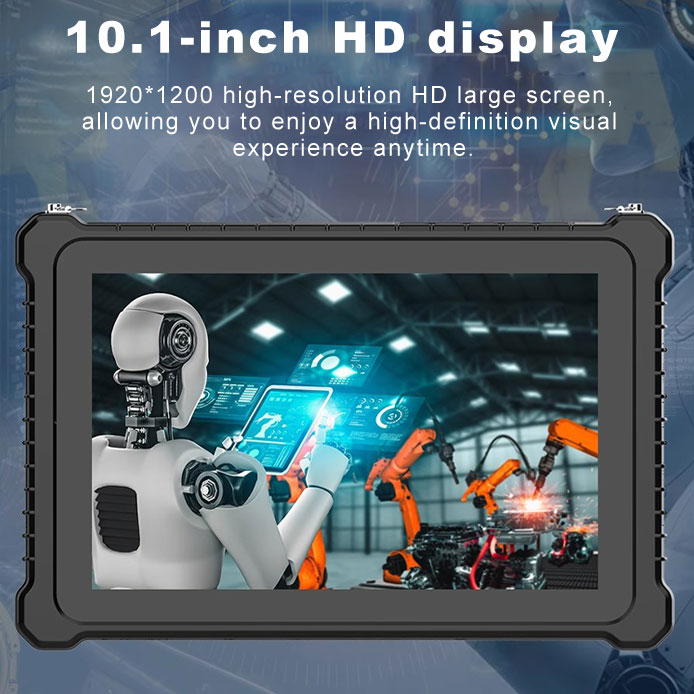
| Screen | 13.3 inch IPS, 1920x1080, 260 or 400 nits | 10.1 inch IPS FHD, 1200x1920, 400 nits | 10.1 inch IPS FHD, 1200x1920, 400 nits |
| Processor | Intel Celeron N5100 quad core | Qualcomm QCM6690 octa core, 2.9GHz, NPU 6t | Qualcomm SM6115 octa core, 2.0GHz |
| Operating system | Windows 10 Pro / Windows 11 Pro | Android 16 | Android 16 |
| Memory and storage | 8GB / 256GB, options to 4GB/128GB and 512GB | 8GB + 128GB, TF to 256GB | 4GB/64GB or 8GB/128GB, TF to 256GB |
| Battery | 8000mAh, 7.6V | 10000mAh, 3.8V, non-removable | 10000mAh, 3.8V, non-removable |
| Operating temperature | -20 to 55 degrees | -10 to 50 degrees | -10 to 50 degrees |
| Ingress and drop | IP65, 1.2m | IP67, 1.2m | IP67, 1.2m |
| Dimensions and weight | 331.7 x 203.2 x 19.5mm, 1450 plus or minus 50g | 252 x 170 x 14.6mm, under 650g | 252 x 170 x 14.6mm, under 650g |
| Cellular | 4G LTE | 5G SA/NSA plus LTE, WCDMA, dual SIM | 4G LTE with global bands, dual SIM |
| Wireless | Wi-Fi 5, Bluetooth 4.2 | Wi-Fi 6E on 2.4/5/6GHz, Bluetooth 5.2 | Wi-Fi 6 ready on 2.4/5GHz, Bluetooth 5.0 |
| Scanning and NFC | Optional scanner, NFC 13.56MHz ISO14443A | Optional 2D scanner at 3mil, optional NFC | Optional 2D scanner at 3mil, optional NFC |
| Optional security feature | TPM2.0 | Independent Beidou RTK positioning | Independent Beidou RTK positioning |
| Certifications | CE, FCC, 3C | Not published on the product page | Not published on the product page |
Two honesty notes. The RT82 product page states its battery as 10000mAh in the specification table and 9600mAh in the descriptive text below it; the table uses 10000mAh and the department should confirm the figure on the units it actually receives. Separately, no certification list is published for either Android unit on its product page, so where a tender requires documented compliance status, that has to be requested in writing before delivery rather than inferred from the absence of a contradiction.
Read the rows rather than the columns and the choice narrows. The larger, warmer-rated screen suits a plant room where a reading is compared side by side against a trend. The two ten-inch units are the same physical device with a different radio, which means a department running both can standardise the charging cradle and the spare parts bin regardless of which cellular generation it buys.
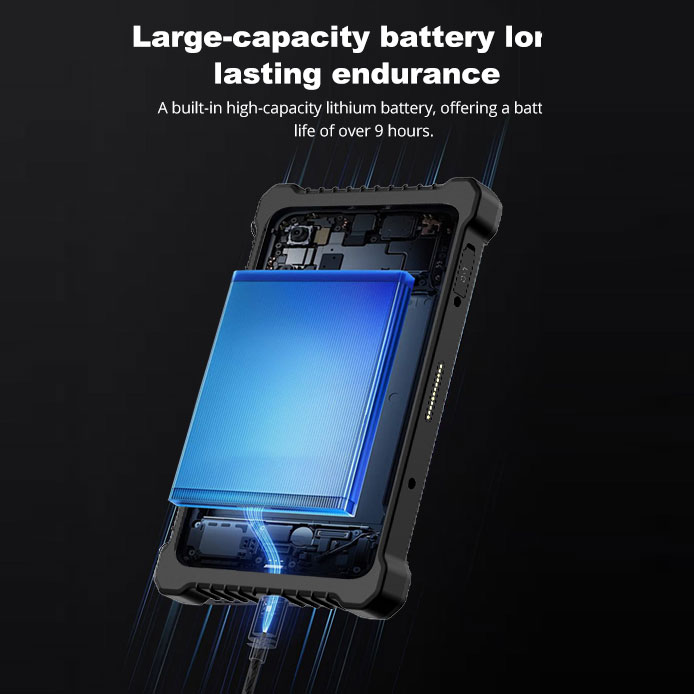
Battery capacity is not the constraint on this cart; charging opportunity is. Both Android units are specified at 10000mAh and the ST13-J at 8000mAh, and none of those figures is reached from an empty device on eight hours of readings. The constraint is that the round passes a charging point twice: at the start and at the end. Nothing charges between them.
The planning figure that matters is therefore the overnight charge, and it has to be achieved on eight devices at once rather than in rotation. Two practical arrangements work. One is a lockable charging cupboard in the biomedical workshop with eight cables, charged flat across a single overnight. The other is eight identical cradles in a rolling case that travels with the technician and is plugged in wherever the round finishes.
Wrist straps are included with both Android units. They are the difference between a device found in a corridor at the end of a shift and a device logged as missing, which on a hospital cart means an incident report before it means a replacement order.
What is the coldest point on the actual route, measured in January, and is any device specified below it? This one question eliminates more candidate hardware than any specification comparison, and it is the reason the -20 degree figure on the ST13-J is worth reading twice.
Which appliances carry an asset tag that the round records against, and does the identifier survive the next room renumbering? Where assets are tagged at the appliance rather than in the department spreadsheet, a paper sheet and a device record the same fact, and the device adds only the timestamp.
Does the department need TPM-class hardware encryption, and does the platform support it? Only one of these three units lists TPM2.0 as an option. A requirement for hardware-backed key storage is a procurement decision before it is a technical one, and it should be written into the specification rather than discovered in a security review after delivery.
And what happens to the record when the device fails mid-loop? If the answer is that the round stops, the cart has been designed for the wrong failure mode. A round that depends on one device staying alive for four hundred steps will eventually not finish, and the department that has planned for that will still have a complete round at the end of the year.
Every figure above is a manufacturer-published number rather than a measured one, which is the right starting position for a specification question and the wrong place to end. A two-day trial on the real route, in the coldest season, with the real wipes, answers more than another page of catalogue.
For context on how rugged tablets are deployed in other fixed-site settings, the rugged tablet range page covers the current lineup, and the wider product directory lists the rest of the range.