The Dock Door Adds a Batch Mark
At 09:42, the initial pallet rolled off a carrier trailer at Dock 3 while a second vehicle reversed into Dock 7. Comprising twenty-six cartons under clear stretch wrap, the load carried a handwritten lot tag taped to the exterior film by the driver. The receiving gate clerk did not break the wrap to inspect inner cartons. Instead, he scanned the exterior barcode, wrote LOT 214-B in pencil on the reverse of the physical pallet ticket, and locked in the arrival timestamp on his handheld terminal before a forklift moved the freight eleven meters inside the bonded zone. That sequence constitutes the entire first record: a batch mark, an immutable timestamp, and the operator ID standing at the threshold. Cargo descriptions remain blank at this stage because formal customs declarations have not yet been filed.
The HTQ10A Android Rugged Tablet IP65 Rated is the terminal assigned to that dock door. Its published datasheet specifies a 10.1-inch IPS touchscreen at 1200 x 1920 resolution with 400 nits brightness and ten-point capacitive touch supporting gloved and wet-hand input—exact conditions encountered on an open loading dock during a damp November shift. Built on Android 12 with IP67 dust and water sealing, 1.2-meter drop resistance, MIL-STD-810G certification, and an operating temperature tolerance from -20°C to 55°C, these hardware metrics ensure the clerk can register the batch mark immediately while shrink wrap is wet, insulated gloves stay on, and an idling forklift waits behind him.
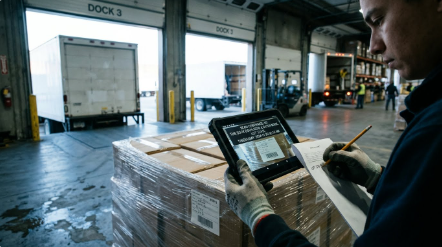
Gate-in batch marks cannot be reconstructed accurately after the shift ends. When two adjacent bays unload simultaneously within an eleven-minute window, bundled paper tickets collected at shift close lose chronological precision. A batch mark typed at an administrative desk thirty minutes later from memory carries a timestamp after the truck has already exited the yard; an auditor cross-checking that entry against perimeter CCTV footage will immediately flag an unresolvable discrepancy. Configuring the dock terminal to commit timestamps at the exact second of the barcode scan—paired with a physical pencil notation on the pallet ticket—preserves an unbroken chain of custody.
A Declaration Table Is Read Twice
The customs declaration operates under entirely different rules. Structured as a multi-row manifest detailing commodity descriptions, country of origin, unit quantities, declared valuation, and measurement units under a reference such as DECL 4471/26, the record is read twice: first as an entry clerk populates the fields, and second when a compliance reviewer audits every line against the commercial invoice before electronic submission. Between those two reviews, line-item quantities frequently require adjustment. For audit purposes, the authoritative record is not the preliminary draft, but the final submitted manifest accompanied by a clear, chronological log of every modification. Filing workstations must therefore display active drafts alongside locked submissions without risking accidental overwrites.
| Operational Moment | Number Written | Where It Is Captured | What the Compliance File Needs |
|---|---|---|---|
| Gate-in at 09:42 | LOT 214-B | Scanned at Dock 3; pencil mark on pallet ticket | Scan timestamp matching yard perimeter cameras |
| Declaration at 11:20 | DECL 4471/26 | Fourteen line-item rows at the filing desk | Submitted version plus visible amendment trail |
| Release at 14:05 | SEAL 88317 | Photographed in the yard after trailer door closure | Seal serial linked directly to the original pallet |
| Final Reconciliation | All Three Identifiers | Unified digital dossier assembled at sign-out | Three distinct timestamps resolving to one load |
This matrix governs documentation rules rather than hardware specs. A datasheet cannot define which row is permitted to change; bonded customs law establishes that asymmetry. Declarations may be formally amended prior to release, gate-in batch marks remain permanently locked once scanned, and seal numbers append only after physical inspection. Any tablet integrated into this chain must enforce those boundaries—capturing high-resolution photographic evidence without allowing accidental edits to upstream timestamps.
A Seal Number Arrives After the Truck Leaves
At 14:05, the outbound vehicle had already cleared the security gate when the inspecting customs officer called out SEAL 88317 for entry onto the release note. Because high-security bolt seals are crimped onto trailer doors only after loading concludes, this third identifier could never have been logged at the receiving dock at 09:42 or included in the morning declaration filed at 11:20. The clerk photographed the intact seal, keyed the digits into the manifest, and appended the officer's badge annotation to the active record. When an amended declaration copy arrived an hour later, it cross-referenced this exact row rather than overwriting the release log.
The HTNJ08B 8 Inch Waterproof Rugged Tablet anchors that administrative filing desk. Its datasheet specifies an 8-inch IPS display at 1200 x 1920 resolution with 560 nits brightness, 7H scratch-resistant glass, active stylus and wet-hand touch support, running Windows 10 Pro or Windows 11 Pro on an Intel Pentium Silver N6000 quad-core processor. Rated to IP67 and MIL-STD-810G standards with 1.22-meter drop protection, a -20°C to 55°C operating range, and a removable 7.6V 3500mAh battery charged via a DC 19V 3.42A adapter, a full Windows desktop OS at this station is a functional necessity: legacy customs brokerage software requires x86 desktop architecture to generate digitally signed amendment lines.
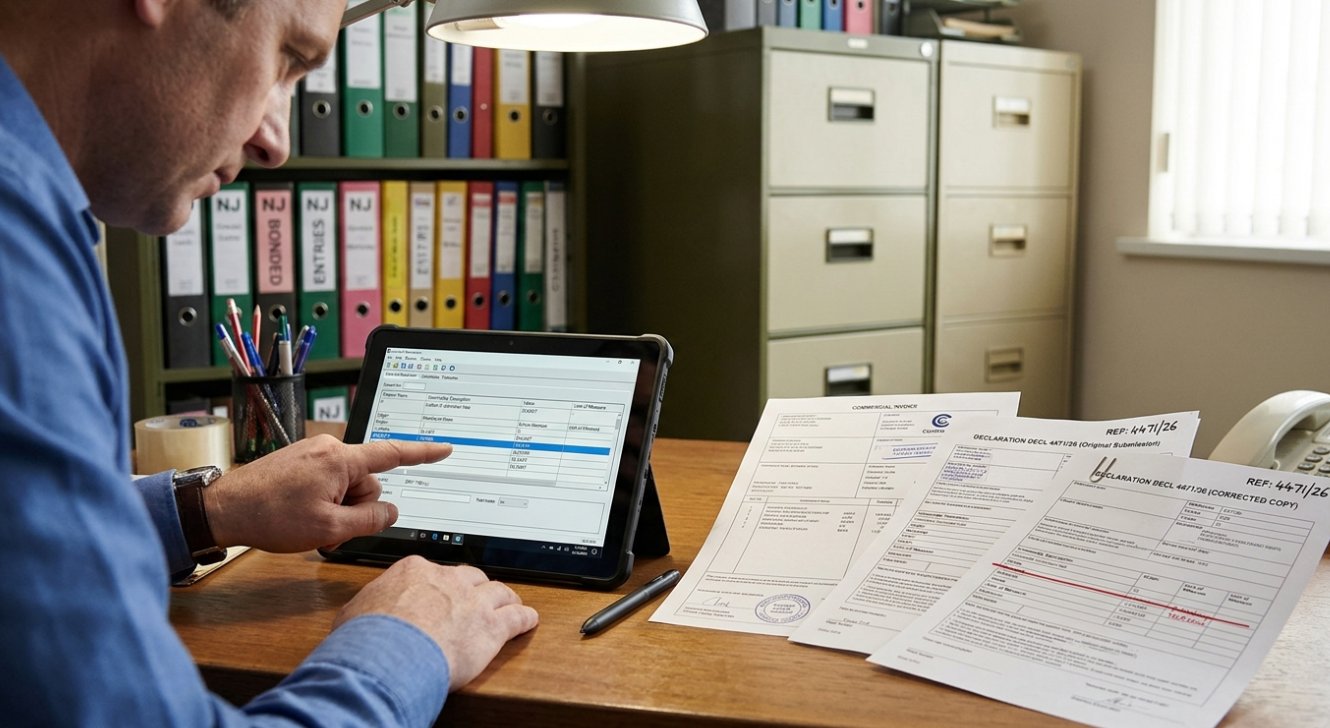
Accurate procurement requires noting what datasheets omit. The HTNJ08B specification lists a 1.8 kg gross packaged shipping weight rather than a bare net device weight, and omits hour-based battery runtime figures. Rather than estimating or converting incompatible weight metrics, we exclude weight rows from direct comparison tables so facility planners evaluate verified numbers on an equal footing.
Where Three Entries Have to Agree
The third mobile terminal operates outside the warehouse perimeter in open container yards where indoor Wi-Fi coverage drops off and paper folders are impractical. The RT80 5G Rugged Tablet HarmonyOS Android 13 integrates a UNISOC UIS7885 octa-core 2.7 GHz processor, 8GB RAM, 128GB internal storage, a 10.1-inch IPS FHD screen (1200 x 1920, 400 nits), IP67 ingress protection, a -10°C to 50°C operating window, and an integrated 3.8V 10000mAh battery with USB Power Delivery fast charging. Supporting 5G SA/NSA, 4G LTE, dual-band Wi-Fi, Bluetooth 5.0, multi-constellation GNSS, and independent Beidou RTK positioning, this connectivity suite allows yard inspectors to pull live customs records directly at the trailer gate.
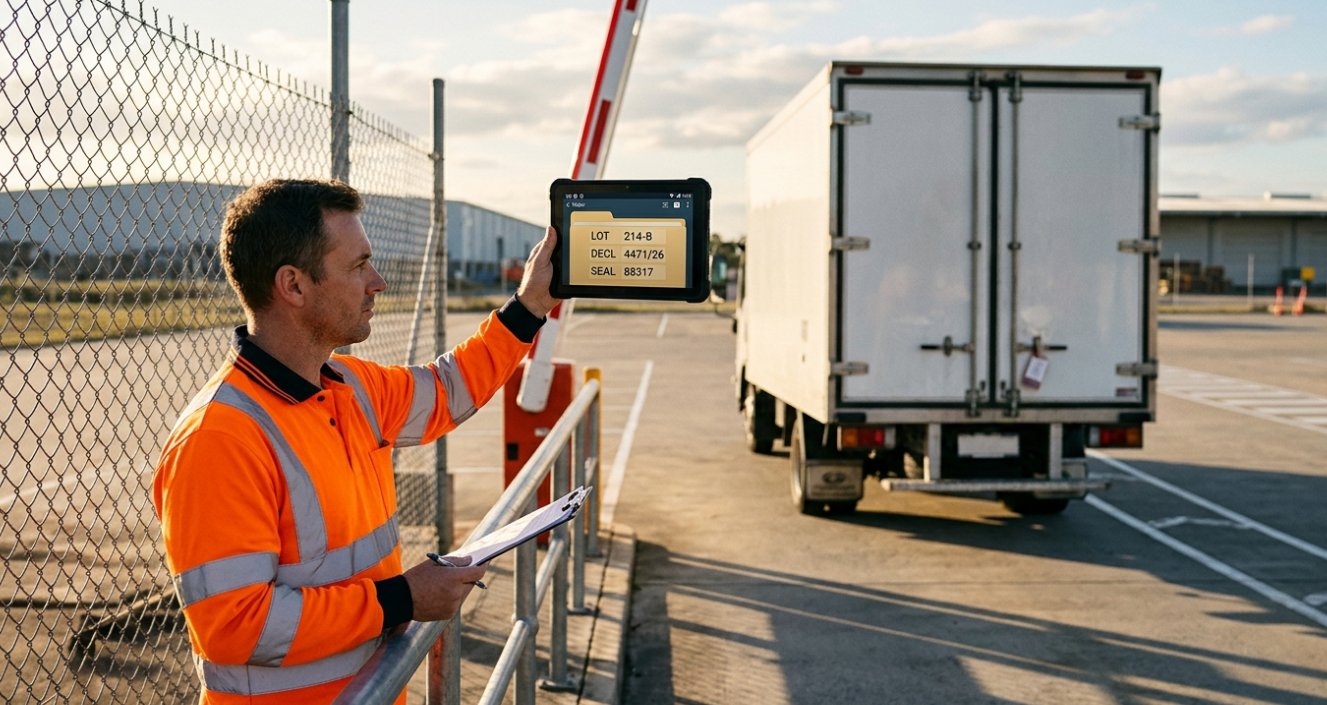
Final sign-out reconciliation is methodical and exact. The compliance clerk opens the digital dossier, verifies LOT 214-B, DECL 4471/26, and SEAL 88317 across three separate database rows, and confirms that all three resolve to the exact twenty-six cartons. When a declaration is amended, the original reference remains visible alongside a stamped correction line, while the seal record stays linked to the submitted version rather than the superseded draft. The three numbers never collapse into a single code; their audit value lies in tracing three distinct timestamps across one morning.
Published Hardware Specifications on a Common Basis
Every specification below reflects verified data published directly on official product pages, standardized on an identical basis for objective comparison.
| Published Dimension | HTQ10A | HTNJ08B | RT80 |
|---|---|---|---|
| Operating System | Android 12 | Windows 10 Pro / Windows 11 Pro | Android 13.0 / HarmonyOS 6.1 |
| Processor | Qualcomm Snapdragon octa-core up to 2.0 GHz | Intel Pentium Silver N6000 quad-core up to 3.3 GHz | UNISOC UIS7885 octa-core 2.7 GHz |
| Display | 10.1-inch IPS, 1200 x 1920, 400 nits | 8-inch IPS, 1200 x 1920, 560 nits | 10.1-inch IPS, 1200 x 1920, 400 nits |
| Ingress Protection | IP67 | IP67 | IP67 |
| Operating Temperature | -20°C to 55°C | -20°C to 55°C | -10°C to 50°C |
| Battery Architecture | 3.8V 10000mAh, removable | 7.6V 3500mAh, removable | 3.8V 10000mAh, built-in |
| Charging Interface | Quick swap fast charging | DC 19V 3.42A adaptor | Power Delivery fast charging |
| Warranty Coverage | 3-Year Limited Warranty | 3-Year Limited Warranty | 3-Year Limited Warranty |
| Regulatory Certifications | CE, FCC, RoHS, IP67, MIL-STD-810G | MIL-STD-810G, CE, FCC, 3C, IP67 | CE, FCC, RoHS |
Three parameters are deliberately omitted from the table above. Because datasheets list net weight for the HTQ10A and RT80 but gross packaged weight for the HTNJ08B, a single weight row would compare incompatible metrics. Similarly, body dimensions are unpublished for the HTNJ08B, drop height is omitted for the RT80, and hour-based runtimes are not inferred from milliamp-hour ratings. MIL-STD-810G certification appears on both the HTQ10A and HTNJ08B listings while omitted on the RT80. Logistics managers evaluating full fleet deployments can browse the Hotus Smart Hardware Products Manufacturer Catalog to match specific terminal specs against local customs workflows.
When an Amended Copy Reaches the Filing Desk
Amended customs filings arrive stamped, never erased. When the item quantity row on DECL 4471/26 changed at 15:10, the filing clerk retained the original submitted manifest, appended the revised sheet directly behind it, and cross-referenced the seal number across both pages. That disciplined version control keeps all three identifiers reconcilable: the gate-in mark still reflects LOT 214-B scanned at 09:42, the declaration displays two distinct chronological versions, and SEAL 88317 remains anchored to the active release manifest. Software that silently overwrites fields produces cleaner screens but invalidates audit trails.
This distinction highlights why specification tables alone cannot dictate warehouse procurement. Two rugged tablets may share identical IP67 ratings and 1200 x 1920 screen resolutions yet sit on opposite sides of a regulatory workflow—one capturing barcode scans at a wet dock door, another running desktop Windows customs software, and a third maintaining 5G telemetry across an open container yard. Side-by-side hardware benchmarks in Hotus Product Comparisons & Technical Insights clarify physical capabilities, while bonded warehouse procedures define edit permissions.
Cables and Spare Units at the Sign-Out Table
Power delivery differences across the three units surface immediately at the shift sign-out bench rather than on a spreadsheet. The HTNJ08B requires a dedicated DC 19V 3.42A barrel adapter packed separately; the HTQ10A utilizes a removable 10000mAh battery pack designed for rapid hot-swapping between shifts; and the RT80 charges via standard USB Power Delivery on an internal cell. Managing an eight-unit shift rotation requires keeping three labeled charging leads, a charged spare battery pack, and a station assignment card right in the equipment tray so late-afternoon declaration amendments never stall over a missing power cord.
The exact same discipline governs data logging. As documented in RT82 and HTYJ10A: When a Repeat Reading Keeps Its Own Line, preserving secondary readings on independent database rows prevents data loss during audits. A bonded pallet demands identical rigor: three numbers, three timestamps, and zero attempts to overwrite historical entries—ensuring an inspector reviewing the folder three weeks later finds an unassailable paper and digital trail.
Frequently Asked Questions (FAQ)
1. Does a bonded warehouse pallet really carry three separate tracking numbers?
Yes. Inbound bonded cargo accumulates a gate-in batch mark (such as LOT 214-B) at dock arrival, an official customs declaration reference (DECL 4471/26) at the filing desk, and a physical container seal number (SEAL 88317) upon release inspection. All three identifiers remain permanently in the compliance dossier because each documents a distinct operational checkpoint and operator sign-off.
2. Which hardware specification determines which rugged tablet goes to the dock door versus the filing desk?
Touchscreen input support and operating system architecture govern placement. The HTQ10A features ten-point capacitive touch engineered for gloved and wet-hand operation at exposed loading bays, whereas the HTNJ08B pairs a 560-nit display and active stylus precision with Windows 10/11 Pro to run desktop customs declaration software at the filing desk.
3. Can a gate-in batch mark be edited after the delivery truck leaves the facility?
No. Gate-in batch marks are locked with exact timestamps at the moment of barcode scanning to match yard perimeter camera footage. While customs declarations can be formally amended using stamped correction lines prior to cargo release, the original dock arrival timestamp remains immutable.
4. Why does the RT80 handle outdoor container yard reconciliation better than standard Wi-Fi tablets?
The RT80 integrates 5G SA/NSA, 4G LTE, multi-constellation GNSS, and independent Beidou RTK positioning alongside a 10000mAh battery, maintaining uninterrupted cloud database access across open storage yards where indoor warehouse Wi-Fi signals cannot reach.
The video below demonstrates rugged tablet barcode scanning, glove-touch operation, and inventory reconciliation workflows in warehouse logistics environments.