A mid-sized aggregate quarry in mountain country is one of the hardest places to keep a paper trail straight. Haul roads climb and drop between benches, dust sits on every surface by mid-morning, and the settlement pond at the low corner of the site changes shape after every heavy rain. The operator we worked with this season runs two pickup cabs and one UTV on a fixed inspection loop: gate and weighbridge at opening, bench faces and slope catch fences through the middle of the shift, and the pond bank plus the drainage culverts before handover. Their previous system was a clipboard riding on the dashboard, and the supervisor's evening routine was reconstructing who had actually stopped where.
This is the account they gave us after roughly three months on the new setup. The fleet is not identical hardware doing one job; it is three different units, each assigned to the layer of the route where its design makes sense. Crews comparing options for similar sites can start from the industrial rugged tablet range and then split the roles the same way, because the split is what made the programme stick.
| Role on the loop | Unit | Display | Battery | Enclosure |
|---|---|---|---|---|
| Cab route and exclusion-zone display | ST13-J | 13.3-inch IPS, 1920x1080, up to 400 nits | 7.6V 8000mAh removable | IP65, 1.2m drop |
| Field photo and defect record | RT80 | 10.1-inch IPS, 1200x1920, 400 nits | 10000mAh, PD fast charge | IP67 |
| Checkpoint tag read and sign-off | HTQ10A | 10.1-inch, 1200x1920, Gorilla Glass | 3.8V 10000mAh quick-swap | IP67, MIL-STD-810G |
💡 Why Paper Logbooks Failed on the Haul Road
The old clipboard failed in three specific ways, and the operator can describe each one with a date attached. Rain days turned the paper into pulp before the second bench, so roughly one loop in four was logged from memory at the office. Handwriting on a moving cab seat was unreadable by anyone except the writer, which defeated the whole purpose when a shift changed mid-route. And nothing on paper could carry a photograph, so a crack in a catch fence or a slumped section of pond bank had to be described in words and found again later by eye.
None of those failures argued for more paperwork. They argued for one device per layer of the route that could survive the layer's conditions and upload what it collected before the crew came down. The hardware that ended up in the cabs was chosen for exactly that split.
🖥️ The Cab Screen That Ends Route Arguments
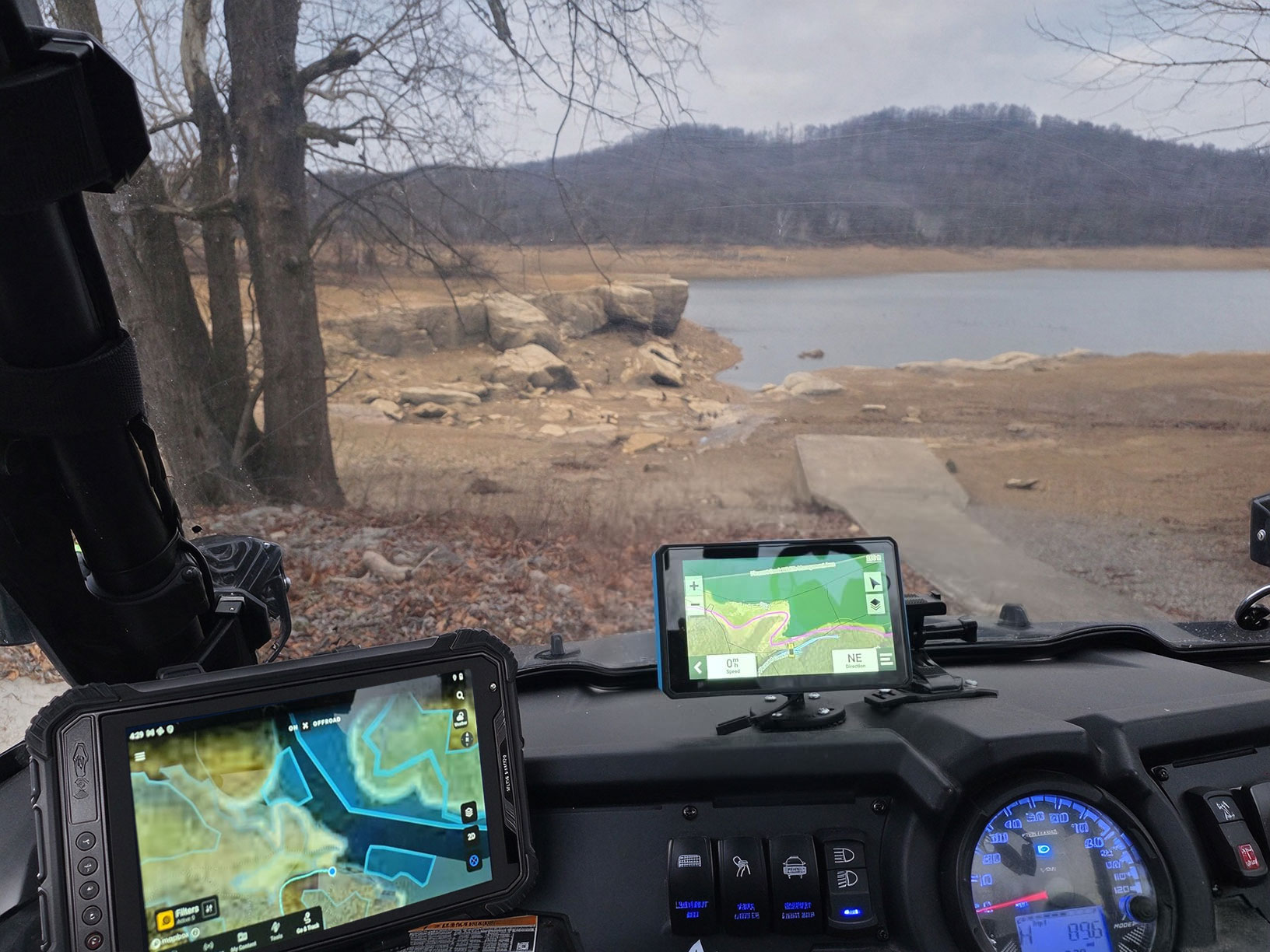
Each cab now carries a ST13-J 13.3-inch rugged industrial tablet on a mount beside the site's existing navigation screen. At 13.3 inches and 1920x1080 it is the only unit in the fleet large enough to show the whole loop at once: the haul road, the three bench stops, the pond bank and the culvert positions, with the exclusion zone around the active blast area drawn as a red boundary the driver cannot miss. The Intel N5100 platform runs their map package and the site browser at the same time without the fan noise they feared, and the 8GB plus 256GB configuration holds the offline map tiles for the whole concession, which matters because the lower benches still have patchy coverage.
The detail the supervisors did not expect to value most is brightness headroom. At up to 400 nits the map stays legible through the windscreen glare that made the previous consumer tablet useless after nine in the morning. The 7.6V 8000mAh pack is removable, so the day cab and the night cab each start with a fresh pack from the charger bank, and the IP65 enclosure has already been hosed down twice after lime-dust days without complaint. One 1.2-metre drop onto a cab step in week two left a corner scuff and nothing else, which the fleet manager documented with a photo and a shrug.
Photographing Benches Without Climbing Back Down
The middle of the loop belongs to the RT80. This is where the previous clipboard system lost its evidence chain: a slope crack, a moved berm, a torn catch fence, all of it described but none of it captured. The walker now carries the RT80 5G rugged tablet on a shoulder strap, and the 48-megapixel rear camera has changed what the evening review looks like. A bench face can be photographed from the road berm and cropped back at the office until the individual wire mesh squares are countable, which is the level of detail the geotechnical consultant asked for and never received under the paper system.
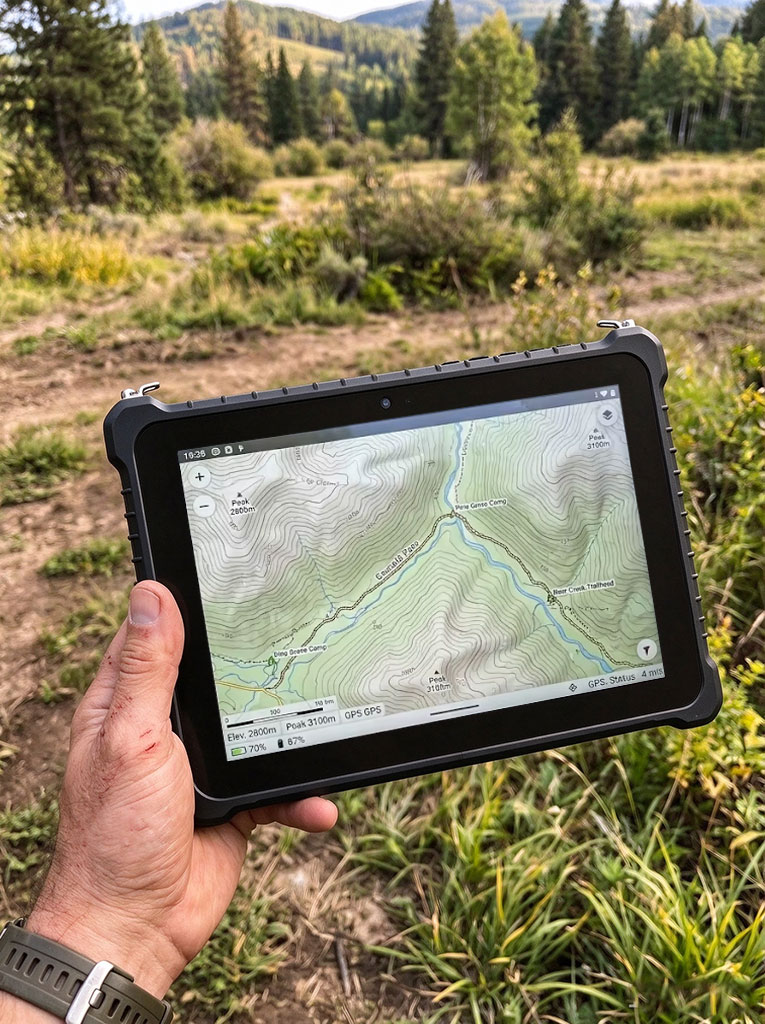
The Unisoc UIS7885 platform inside the unit carries a built-in 8T NPU, and their inspection app uses it for on-device edge detection when the walker frames a crack, so the photo is tagged with a suggested severity before it ever leaves the bench. Uploads ride the 5G connection on the upper roads and drop into a queue that clears whenever signal returns, so the walker never stops moving to wait for a transfer. The 10.1-inch 400-nit panel reads fine in open daylight with gloved taps, the IP67 sealing has been through pond-bank spray and lime dust, and the 10000mAh battery with Power Delivery fast charging covers the whole walking leg plus the drive home with the screen on for most of it. At 10.1 inches it is also light enough that the walker does not stash it in the cab halfway through, which was the failure mode of the first tablet they tried for this role.
Tag Reads That Survive Gloves and Dust
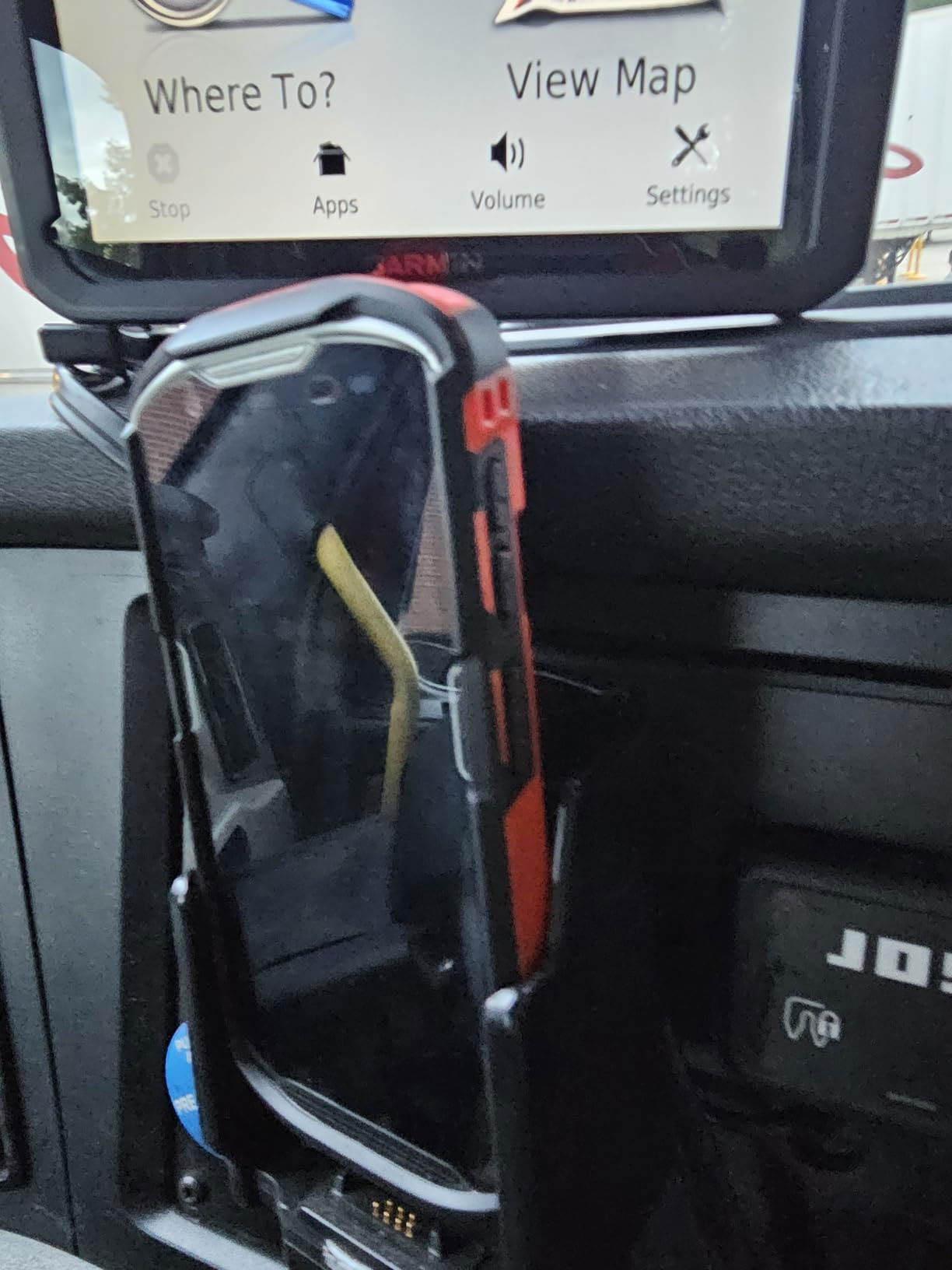
The third layer is accountability, and this is where the loop's three fixed checkpoints come in: the weighbridge office, the pond-bank gate and the upper-bench marker post. Each carries a bolted UHF tag, and the HTQ10A Android rugged tablet reads it at arm's length with the optional UHF RFID module, logging who arrived, when, and in what order the stops were made. The Snapdragon octa-core platform and Android 12 build run their guard-tour app without modification, and the 4GB plus 64GB configuration is deliberately modest because this unit stores almost nothing locally; everything syncs on the 4G connection before the cab moves on.
The physical design is what sold the guards on it. At roughly 950 grams with a Gorilla Glass front panel and glove-and-wet-hand touch, it can be operated standing in work gloves at the culvert stop without pulling anything off, and the IP67 rating plus MIL-STD-810G certification means the drop from the cab seat to the gravel that ended two previous phones registered as a non-event here. The 3.8V 10000mAh pack swaps in seconds, so the unit that runs the opening shift hands its fresh twin to the evening crew, and the operator has since standardised on a two-pack-per-crew rotation that has never yet gone flat mid-loop.
🔋 Dust, Rain and the Two-Shift Battery Question
Spring and early summer tested the environmental side of the programme in a way the demo never could. Lime dust coats everything at the crushing end of the site, and the operator's cleaning routine is now a five-minute wipe-down of all three units at shift end with the port covers checked during the wipe. Rain arrived in two proper storms, and the only water incident was a cup of coffee, which the RT80's owner reports with more relief than the facts strictly require. Operating ranges were never approached on either end: the coldest morning was well inside the units' specified windows, and heat has been a dust problem rather than a temperature one.
The two-shift battery question resolved itself into arithmetic. The ST13-J cab unit draws steadily and ends its shift around forty percent with a fresh pack installed at changeover. The RT80's screen-heavy walking leg is the biggest single draw on the loop, and PD fast charging over the lunch window returns it to a level the walker has learned to trust. The HTQ10A finishes nearly every shift above half, which the operator attributes to its narrow job description: tag reads and sign-offs, no video, no mapping. Any crew sizing a similar fleet should budget batteries by role rather than by unit count, because the three loads here are not close to equal.
⚖️ Charging Rotation Between Day and Night Crews
The charging bench sits in the weighbridge office, and the rotation rules are written on a laminated card beside it. Packs cycle by date label so the oldest cells retire first, cabs take fresh packs at every changeover rather than topping up mid-shift, and the HTQ10A twin-pack rule means a guard never begins a loop on a pack he cannot verify as charged. The operator buys consumables through the standard Hotus rugged device line catalogue, and the spare-parts drawer now holds two extra packs, a spare strap, and replacement port covers for the RT80, which is the entire maintenance inventory after a full quarter.
The discipline that made the rotation work came from the supervisor, not the supplier: no unit leaves the office on a pack that was not on the charger the previous evening, and any pack that swells or drops runtime gets pulled and labelled the same day. In three months exactly one pack has been pulled, and the incident report is one line long. Compare that with the clipboard era, when the incident report was usually a paragraph of reconstruction written the morning after something went missing.
What Changes When the Ponds Fill in Spring
The operator's plan for next season is already written down, and it is about scope rather than hardware. When the spring rains refill the settlement ponds and the lower culvert section becomes soft ground, the pond-bank leg will move from the walking loop to a UTV-mounted pass, with the RT80 riding in a dashboard cradle for that section and returning to the shoulder strap for the benches. The upper-bench checkpoint will gain a second tag so the guard can log both the arrival and the all-clear separately. And the photo archive, now several hundred tagged frames deep, becomes the baseline the geotechnical consultant compares against every quarter instead of starting each visit from zero.
The fleet itself stays as it is. For teams planning a comparable programme, the operator's closing advice was to fix the roles before fixing the models, and to read the published product comparisons and competitor analysis only after the route is written down. The screen that ends route arguments is the one sized for the seat it sits in, the camera that documents a bench is the one the walker will actually carry, and the tag reader that gets used is the one that works with gloves on. None of those conclusions came from a datasheet; all of them came from a loop that finally stopped losing its paperwork.