A courier sorting hub on the industrial edge of a provincial capital processes between eleven and fourteen thousand parcels on a weekday night, and every one of them is scanned at least twice before it leaves the building. The hub's night crew ran the autumn peak on a three-terminal fleet from HOTUS: the Handheld PDA F505 at the unload doors, the T80 Handheld PDA along the sort wall, and the RS51 Handheld Terminal on the truck deck. This case study follows one full shift from the first trailer at 20:10 to the last departed van past 02:00, using the hub's own scan logs and the crew's own counting habits, and it is written for sorting-center supervisors who care less about spec sheets than about whether a device survives the night. The operational backdrop — door counts, wall lanes, and deck cutoffs — is the same territory covered in the site's express and courier logistics applications page, but the numbers below come from one hub's floor, not from a brochure.
Arrival Scans at the Four Unload Doors
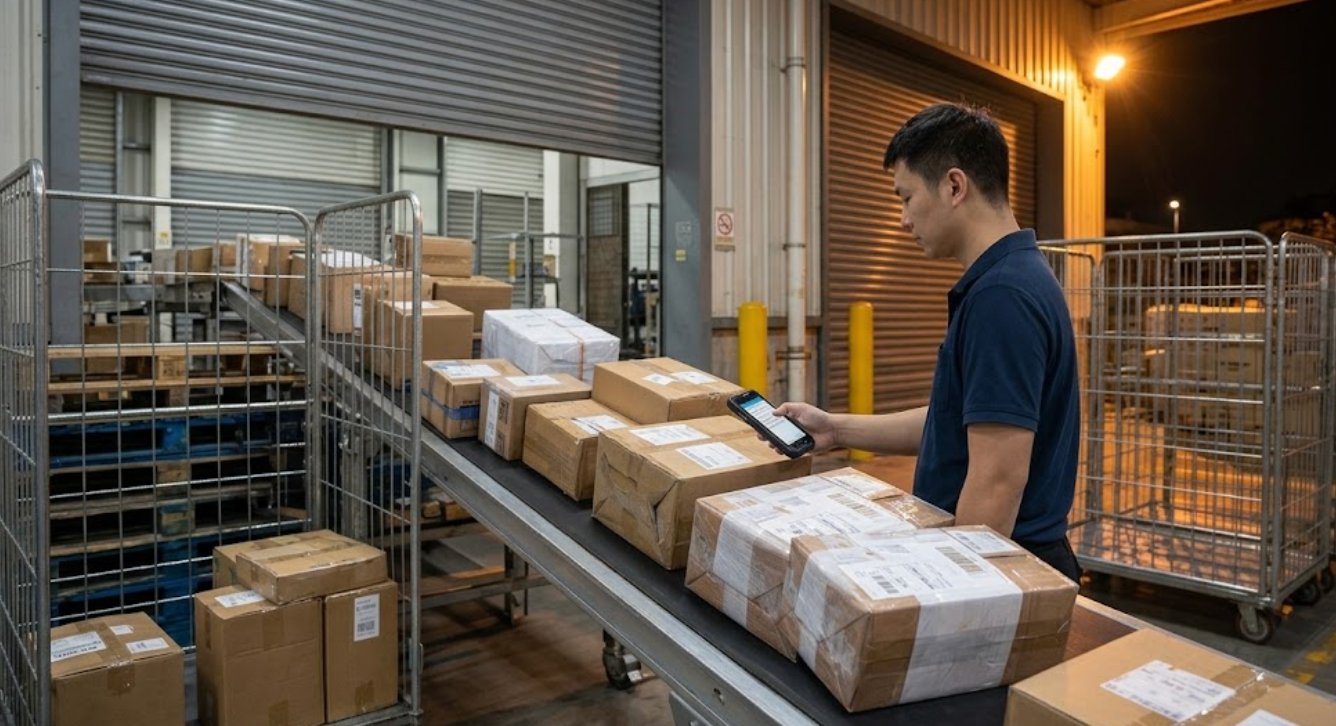
The night begins at the unload bay, where four doors take linehaul trailers between 20:00 and 23:30. Every parcel gets its first scan here, held label-up, and the crew's arrival scanners take the most physical abuse of any post in the building: wet cardboard, stretch-wrap glare, cage carts bumping hips, and a concrete floor that has ended more than one device career. The F505 earned the post because of how little it asks from the operator. Its 5.5-inch screen stays readable under the bay's mixed sodium-and-LED lighting, the hardware 2D engine reads crumpled waybills that the hub's older units had to be angled and re-tried, and at roughly 285 grams the unit can be swept across four hundred parcels an hour without the wrist ache the crew used to log by midnight. The removable 5000mAh battery matters more than its capacity suggests: door scanners run nine hours with the screen always on, and the crew simply swaps packs at the 23:30 trailer gap instead of parking a scanner on a cable. Two doors on the busiest side also handle poly bags with reflective surfaces, and the engine's screen-decode mode handled those without the tape-over-label workaround the old fleet needed. After the shift, the IP67 rating is not a spec, it is the reason a scanner dropped on the apron during the 21:40 rain surge simply got picked up, wiped, and kept scanning. The F505's full arrival-scan configuration is listed on its product page.
Lane Calls Along the Sort Wall
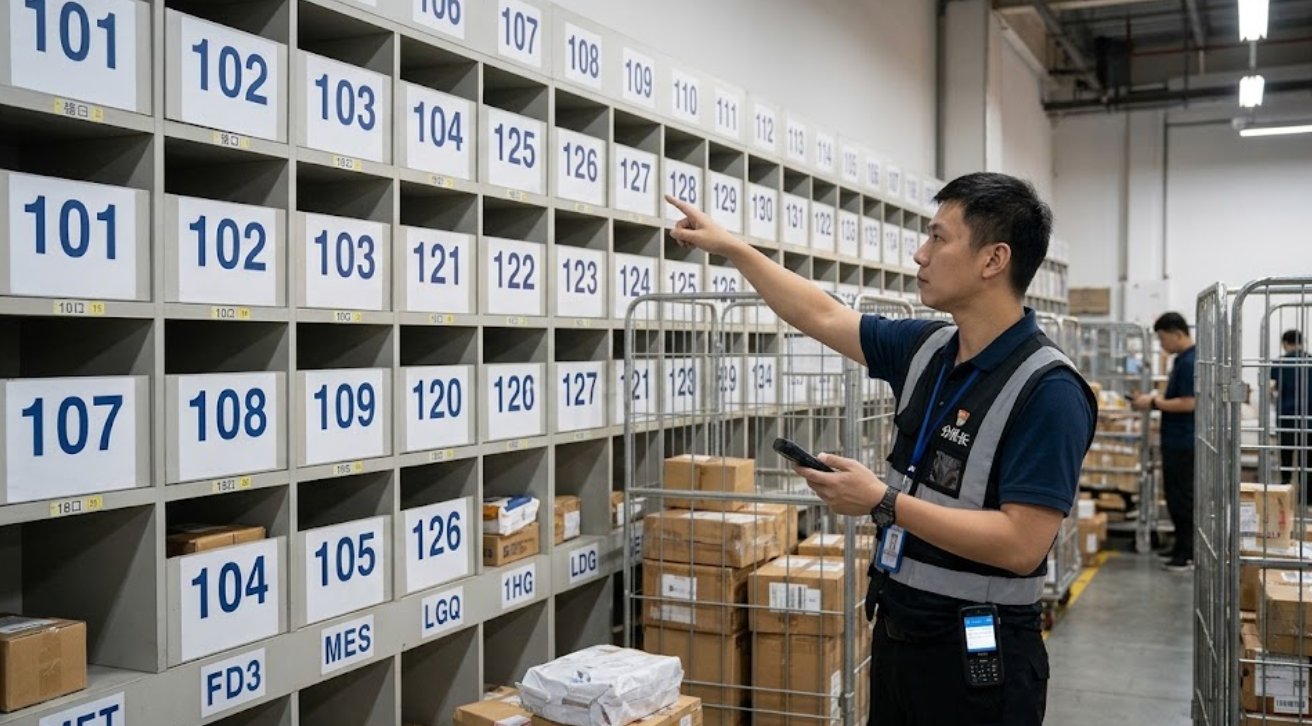
Behind the unload bay sits the sort wall: forty-eight lanes, each labeled to a district loop, and each parcel's second scan happens here as it is placed into a lane cage. The wall captain does not scan — she assigns. When a lane clogs or a cage is late, she re-routes upcoming parcels on the fly, and that job runs on the T80. The choice looks odd on paper, because the T80 carries the smallest screen in the fleet at 4.5 inches, but the wall captain's case is about wear and reach, not resolution: the unit rides in a hip holster all night, comes out for a two-second check, and its dual side scan buttons let her confirm a problem parcel without re-gripping. Its quad-core 2.0GHz platform and Android 9 build run the hub's lane-management web app in a stripped browser profile, and the crew values that the device boots to working state in under a minute when the backup unit rotates in. The Gorilla Glass panel survived the shift's one real accident, a lane-gate swing that caught the unit edge-on. Where the T80 shows its age is storage headroom — 2GB plus 16GB is the fleet's smallest allocation — but the wall app is a single tab, and the hub's IT lead described the unit as "the one I stop thinking about." The lane-map details and network options sit on the T80 product page.
Deck Confirmation at Load-Out
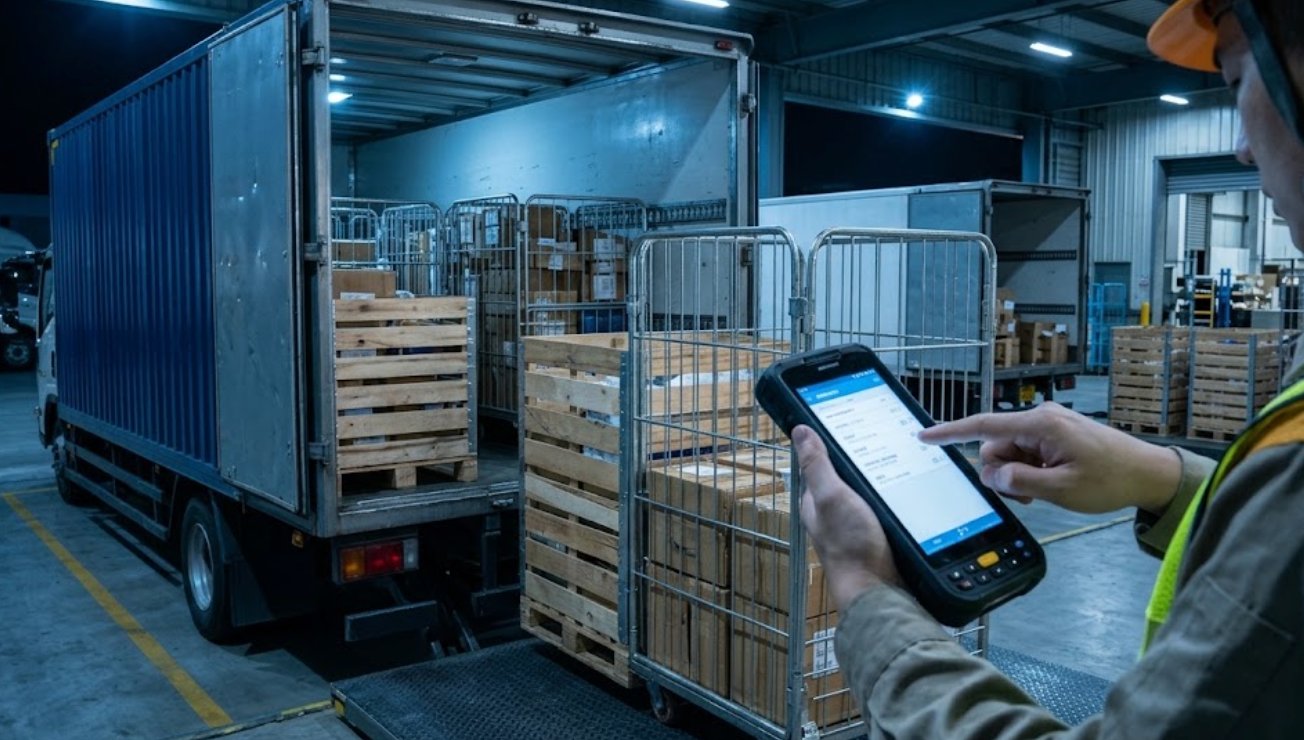
The third post is the truck deck, where district vans load from 23:00 onward and every cage gets a departure scan that closes the hub's chain of custody. The RS51 runs this post, and its case is the opposite of the T80's: this is the fleet's largest and newest screen, a 6.3-inch FHD+ panel that the deck leads use to reconcile cage manifests against the outbound plan without walking back to the wall desk. The Qualcomm octa-core 2.4GHz platform opens the manifest app and the camera feed simultaneously, which matters at the 01:00 cutoff when a disputed cage count has to be settled on the spot. Our review unit carried the optional 2D scan engine, and the deck leads used it for the door-scans of cage barcodes rather than keying cage numbers — the hub's standard build leaves that module to site choice, which is worth knowing before ordering. The 5000mAh detachable battery covers the full deck shift with margin, the IP67 housing shrugged off the same rain surge that hit the unload bay, and at under 500 grams the unit stays one-handed through a two-hour load-out. One operational note from the floor: the deck crew charges its spare packs in the office rather than the deck's cold corner, because the RS51's operating floor of -10 degrees Celsius is a storage figure the crew does not like to test with a live battery. The RS51 product page carries the deck-relevant options verbatim.
Specification Comparison Across the Night's Three Posts
The table compiles each terminal's published page. The hub chose by post, not by rank: the lightest scanner went to the highest-volume post, the smallest screen went to the shortest interactions, and the largest panel went to the post that reads manifests. Where a value is not published on the product page, the table says so rather than estimating.
| Item | F505 | T80 | RS51 |
|---|---|---|---|
| Display | 5.5" IPS HD, 720 x 1440 | 4.5" IPS, 480 x 854 | 6.3" IPS FHD+, 1080 x 2340 |
| Processor | Octa-core 64-bit 2.0GHz | Cortex-A53 quad-core 2.0GHz | Qualcomm SM6225 octa-core 2.4GHz |
| Operating system | Android 14 / Android 12 | Android 9.0 | Android 13 |
| Memory and storage | 4GB + 64GB, microSD to 256GB | 2GB + 16GB, extendable to 3GB + 32GB | 4GB + 64GB, TF to 256GB |
| Battery | 3.8V 5000mAh removable | Not published | 3.8V 5000mAh detachable |
| Scan engine | Hardware 2D (Honeywell / Zebra / professional CMOS) | Not published on page | 2D scanner optional, accuracy 3mil or better |
| Protection | IP67, 1.5m drop | Rugged chassis, rating not published | IP67, 1.2m drop, -10°C to 50°C |
| Weight | Approx. 285g | Not published | Under 500g |
| Warranty | 3-year limited, main unit | 3-year limited, main unit | 3-year limited, main unit |
💡 Why the Hub Did Not Standardize on One Terminal
The obvious question from the finance office was why the night did not run on three dozen identical units. The hub's answer came from its own injury log and its scan counters. Arrival scanning is a wrist-load job, and the 285-gram F505 cut the end-of-shift complaints the supervisor used to collect on paper. Wall assignment is a two-second-look job, and a smaller, cheaper unit that lives in a holster is easier to replace on schedule than to baby. Deck confirmation is a read-and-decide job, and only the RS51's panel made manifest reconciliation possible without leaving the deck. Standardizing would have meant paying tablet money for wall duty or asking deck leads to squint at a 4.5-inch screen at one in the morning. The three-terminal fleet also spreads charging across three dock stations instead of stacking forty units on one strip, which the facilities lead credits for the absence of the midnight charge fights the old single-model fleet used to have. Supervisors weighing the same trade can compare the full PDA range on the industrial PDA catalog page before committing to a mix.
What the Counters Said at 02:00
The hub's shift report closes the case. Arrival scans at the four doors finished at 23:52, twelve minutes ahead of the peak-season plan, with no re-scan queue at any point in the night. The sort wall cleared all forty-eight lanes by 01:20, and the wall captain logged a single device incident, the lane-gate strike that the T80's glass shrugged off. Load-out closed at 02:07 with every cage's departure scan accounted for, and the deck leads reported zero manifest disputes reaching the office, which the operations manager attributed to settling counts at the van instead of after it left. Battery swaps totaled three across the whole fleet: two F505 packs at the trailer gap and one RS51 pack ahead of the deck's second wave. The T80 ran its full post on its overnight charge. For a night that moved over thirteen thousand parcels, the equipment ledger fit on one line, and that is the outcome the hub had been chasing since it retired its previous mixed drawer of consumer phones and failing scanners. Operators modeling a similar build-out can cross-check the terminal mix against the site's comparison coverage on the device comparisons section, where adjacent fleet choices are argued in the same post-by-post style.