D802 and F502: Standardizing Produce Receiving and Batch Traceability
A cold-chain produce distributor takes in hundreds of crates a day, and every crate arrives with a weight, a supplier, and a grade that someone has to capture before it moves into the cooler. When that capture happens on paper, or on three unrelated apps, the record breaks the moment a lot is split or a crate is returned. This deployment shows how one distributor put the rugged handheld terminal range at three points of the same dock so the receiving, grading, and inspection steps all write to one batch record.
The site runs a mixed fleet built around three jobs. A pistol-grip scanner lives at the scale, a rugged tablet runs the grading bench, and a camera-first handheld works the inspection bay. The D802 sits at the scale where weight and lot are entered on arrival. The RT80 drives the supplier grading screen on the stainless bench. The F502 documents defects with a photo and a voice note before a crate is accepted or rejected. Each device is matched to the task instead of forcing one shape onto every step.
📦 The Receiving Bottleneck at the Cold-Chain Dock
Before the rollout, the receiving clerk weighed each crate on a floor scale, shouted the number to a second person at a desktop, and logged it in a spreadsheet an hour later. Lots like RX-118 left the dock with a sticky note instead of a record, and a 12.4 kg crate of leafy greens could not be tied back to its supplier once it entered the cooler. The first fix was to put the data capture at the scale itself rather than downstream.
The dock runs three bays with orange forklifts moving pallets of green crates between the truck and the cooler. In that environment a consumer tablet lasts a week; the hardware has to survive being dropped on steel, wiped with a wet rag, and used by a different gloved hand every few minutes. That is the bar the three devices were chosen against, and it is why a sealed, drop-tested build beats a thin consumer slab on a produce line.
💡 Why D802, RT80 and F502 Were Chosen
Three jobs, three form factors. The scale operator needs a one-handed device with a trigger that reads the crate tag while the other hand steadies the weight. The grading clerk needs a large shared screen that two people can read while comparing two suppliers. The inspector needs a camera-first handheld that attaches evidence to a lot without slowing the line.
| Device | Station | Primary capture | Key build feature |
|---|---|---|---|
| D802 | Receiving scale | Tag scan plus weight and lot | 8-inch FHD panel, dual scan keys, removable battery |
| RT80 | Grading bench | Supplier comparison and grade | Rugged tablet with a large shared screen |
| F502 | Inspection bay | Defect photo and voice note | Camera-first handheld with an INSPECT action |
Choosing one device for all three would have forced a compromise on every step. The distributor instead matched the D802 to the scale, the RT80 to the bench, and the F502 to the bay, and tied them to one backend so the record follows the crate rather than the person.
⚖️ D802 at the Scale: Capturing Weight and Lot on Arrival
The HOTUS D802 8-inch barcode and RFID industrial PDA is the first device a crate meets. The operator scans the incoming tag, the screen opens the lot, and the weight from the bench scale is entered against it. In the deployment photo the screen reads LOT RX-118, 12.4 KG, SUPPLIER B, RECEIVED. The lot is closed the moment it is weighed, not after a round of manual entry.
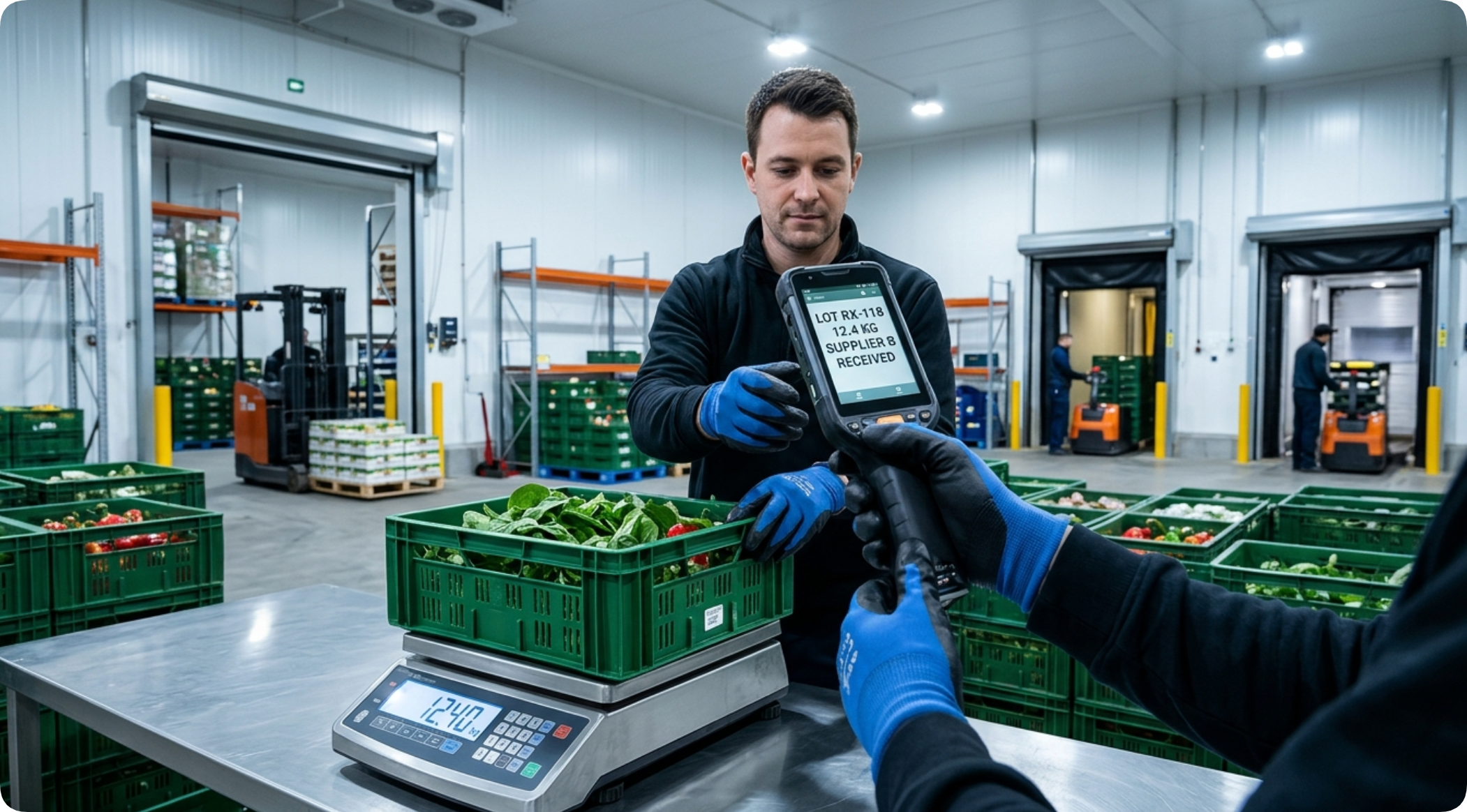
The 8-inch panel is large enough for a gloved operator to tap the lot without mis-hits, and the dual scan keys mean either hand can trigger a read while the other steadies the crate. Because the device is sealed and drop-tested, a splash from a leaking crate or a drop onto the steel dock is a wipe-down, not a write-off. The shared record means SUPPLIER B's lot is visible to grading and inspection before the crate leaves the scale.
🖥️ 🍅 RT80 at the Grading Bench: Supplier Comparison on One Screen
The HOTUS RT80 rugged tablet sits on a stainless table next to a label printer and a handheld scanner. The distributor buys the same category from two growers, so the grading screen shows them side by side. SUPPLIER A reads Cherry Tomatoes, GRADE A, BATCH 224, against SUPPLIER B which reads Heirloom Tomatoes, GRADE A, BATCH 231. The clerk assigns the grade on the tablet, the label printer drops a batch tag, and the decision is locked to the lot that the D802 opened at the scale.
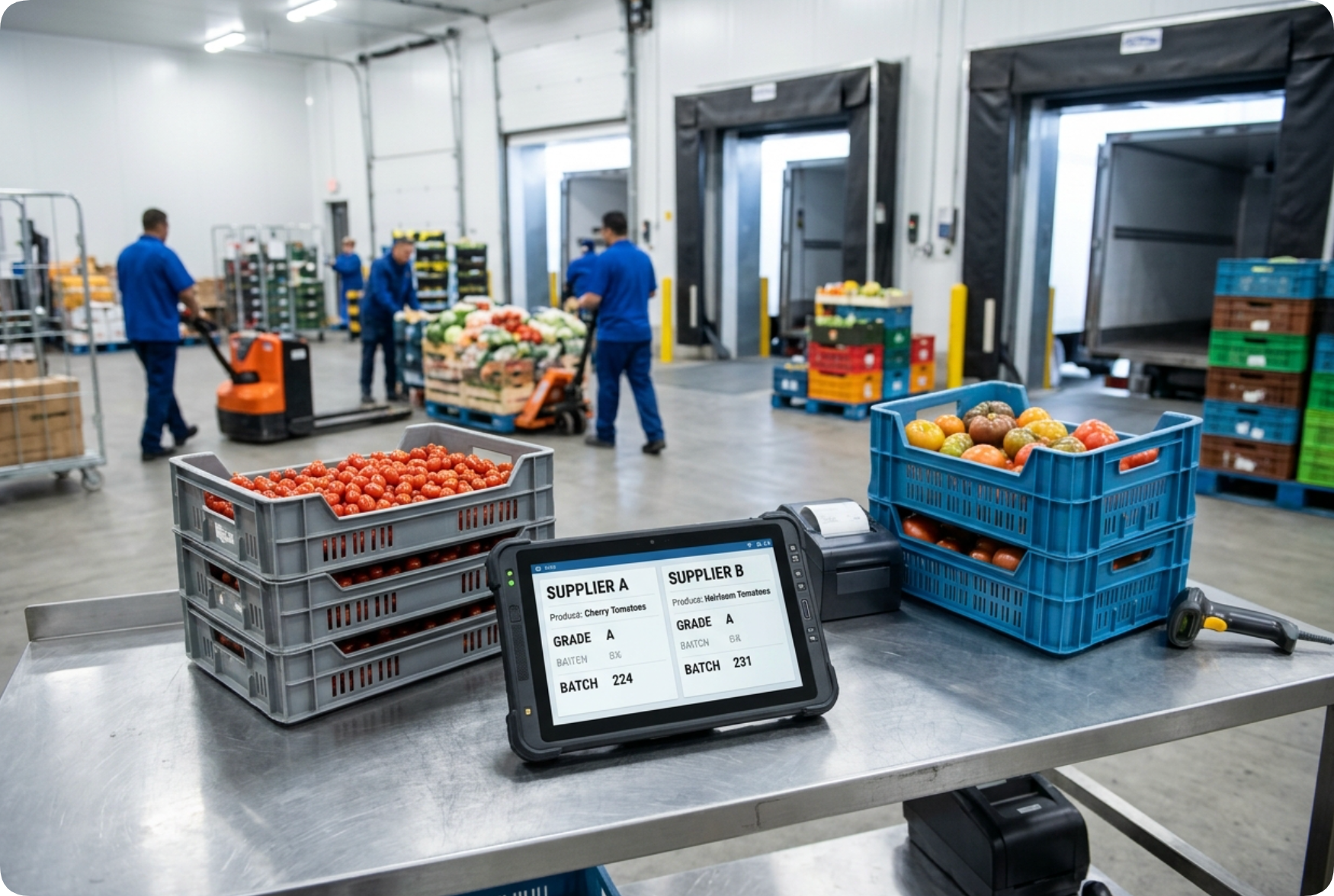
A tablet beats a phone here because two people read the same screen while a pallet jack moves crates behind them. The RT80's larger display keeps the comparison readable across the bench, and the rugged case shrugs off the condensation and produce residue that collects on a packing line. Grades entered on the bench flow straight into the same batch record the scale started.
📸 F502 in the Inspection Bay: Photo and Voice Defect Logging
The HOTUS F502 RFID barcode scanner is the device that says no. When a crate of red bell peppers shows mold, the inspector opens the lot, the screen reads LOT 4471, and the camera captures PHOTO 03 of the defect. A red record indicator shows a voice note is being captured. The inspector talks the defect while shooting it, so the evidence is a photo plus a spoken line, not a typed report written after the fact.
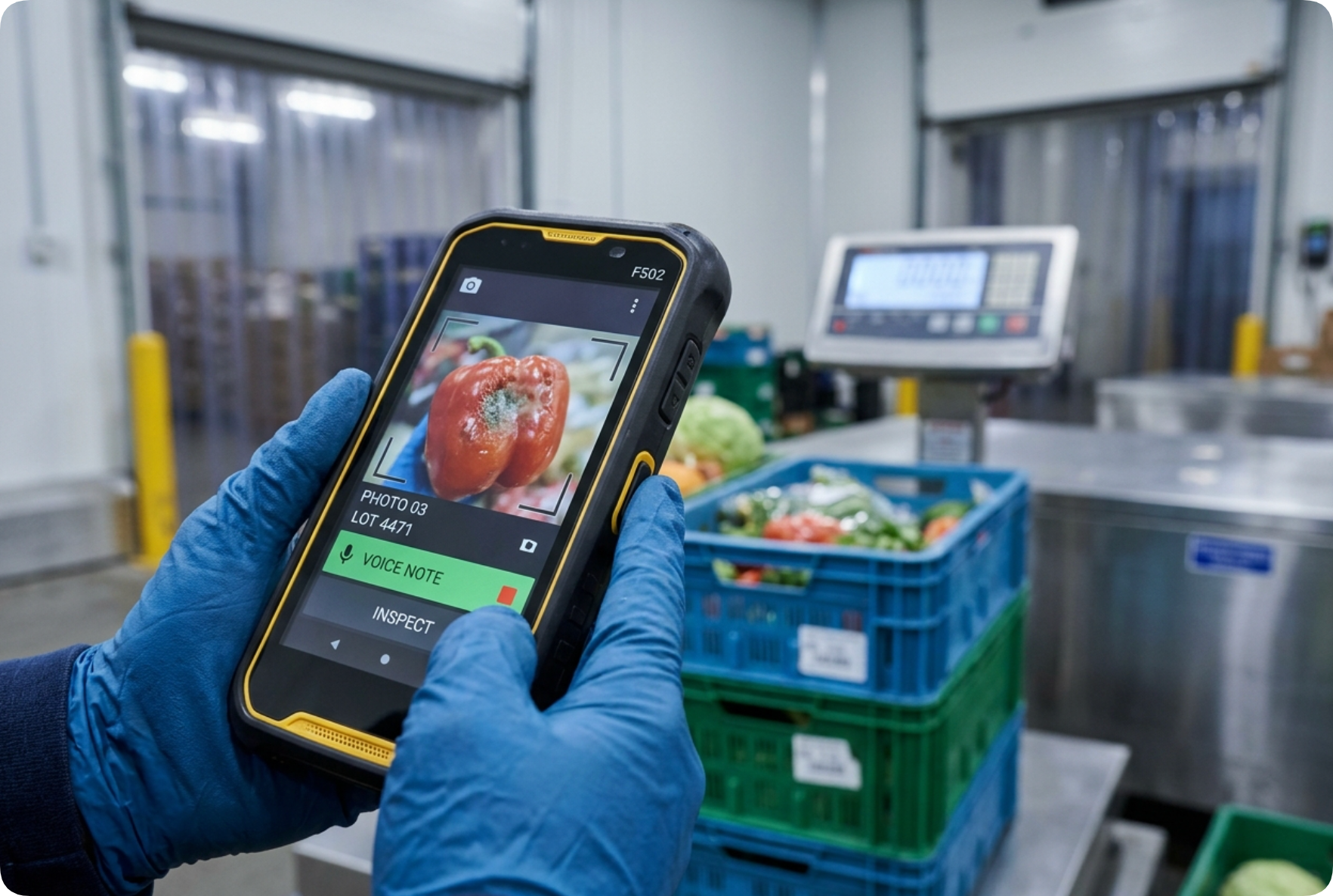
The F502's camera-first design is built for exactly this: a quick photo, a quick note, and an INSPECT action that attaches both to the lot. Because the defect is logged at the bay, a suspect batch can be flagged for a quality review before the crate reaches the cooler, instead of after a customer complaint. The photo and voice note travel with the batch record the D802 and RT80 already opened.
🔗 How the Three Devices Share One Traceability Record
The point of running three devices is not three apps. It is one record. The D802 opens the lot with weight and supplier at the scale. The RT80 adds the grade and batch tag at the bench. The F502 appends the defect photo and voice note at the bay. Each step writes to the same lot identity, so a supervisor can open LOT RX-118 or LOT 4471 and see the full chain from arrival to acceptance.
Tying the fleet together matters more than any single specification. The full rugged device range from the same vendor means one charging rack, one spare-battery pool, and one support line, which is what keeps a cold-chain dock running through a morning surge rather than stalling on a missing charger.
📈 Results: Fewer Mis-Grades and Faster Put-Away
Within the first weeks the distributor saw fewer mis-graded crates because the grade was assigned once, on the bench, against the supplier comparison, instead of guessed at the cooler. Put-away got faster because the lot was already closed at the scale. The forklift operator scanned the tag and the destination appeared, with no sticky note to lose.
The inspection bay caught more defects earlier. With a photo and voice note attached at the bay, a rejected batch was documented before it mixed with good stock, and the grower conversation started from evidence rather than memory. The three devices paid for themselves in rejected-lot accuracy alone.
💰 🛠️ Deployment Notes and Operator Training
Rolling the fleet out took one training session per shift. Operators learned the D802 trigger at the scale, the RT80 grading screen at the bench, and the F502 photo-and-voice flow at the bay. The shared backend meant there was one login to teach, not three, and the device comparison notes helped the team pick spare models when a unit rotated out for service.
Spares stay simple: one charged battery per active device, one charging rack at the dock, and a small pool of loaners so a dropped unit never stops a bay. None of this needs a technician. It needs a two-minute habit at shift change and a record that follows the crate instead of the clipboard.
Frequently Asked Questions
1. How does the D802 capture weight and lot data at the receiving scale?
The D802 scans the incoming crate tag and opens the lot on its 8-inch screen, then the operator enters the weight read from the bench scale against that lot. In the deployment the screen showed LOT RX-118, 12.4 KG, SUPPLIER B, RECEIVED, closing the lot at the moment of weighing rather than after manual spreadsheet entry.2. Can the RT80 show two suppliers side by side for grading?
Yes. The RT80 grading screen places SUPPLIER A and SUPPLIER B on one panel. In this deployment Cherry Tomatoes GRADE A BATCH 224 sits next to Heirloom Tomatoes GRADE A BATCH 231, so the clerk assigns the grade against a direct comparison and the label printer drops a batch tag locked to the lot.3. How does the F502 document a quality defect like a moldy pepper?
The F502 is camera-first. The inspector opens the lot, captures PHOTO 03 of the defect, and records a voice note with the red indicator showing while talking the problem. The photo and the spoken line attach to the lot through the INSPECT action, so the evidence travels with the batch record instead of being written up later.4. Do the three devices write to one shared traceability record?
They do. The D802 opens the lot with weight and supplier at the scale, the RT80 adds grade and batch at the bench, and the F502 appends the defect photo and voice note at the bay. Each step writes to the same lot identity, so a supervisor can open any lot and see the full arrival-to-acceptance chain.Across a cold-chain produce dock, the D802, RT80, and F502 each cover a different point of the same receiving line, and all three feed one batch record that follows the crate from the truck to the cooler. Match the device to the task, keep one backend, and the receiving bottleneck turns into a traceable, defensible process.