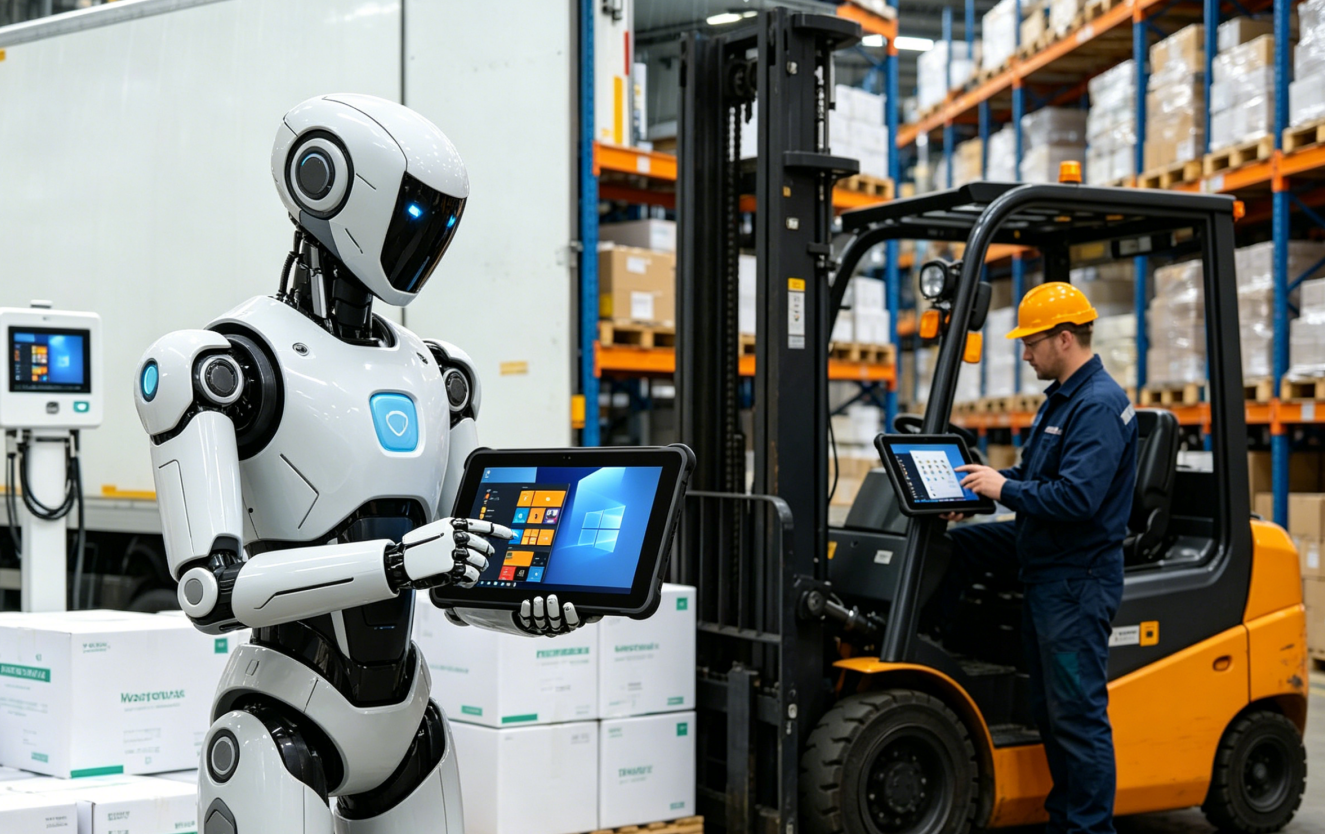
Hotus U9000 — human‑robot collaboration for warehouse automation
The $11.91 Billion Warehouse Robotics Market by 2030: How Hotus U9000 RFID PDAs and ST11‑U Windows Tablets Are Bridging the Human‑Robot Collaboration Gap
By HOTUS Technology | April 2026
The warehouse of the future is already here — and it‘s noisy, fast, and increasingly automated. The warehouse robotics market is projected to grow from $6.21 billion in 2025 to $7.08 billion in 2026 (CAGR 14.1%), reaching $11.91 billion by 2030 at 13.9% CAGR[reference:13]. The broader industrial robots (warehousing) market is expected to grow from $8.64 billion in 2025 to $9.85 billion in 2026 (CAGR 14%)[reference:14]. And the logistics robots market is projected to reach $68.9 billion by 2033 at an astonishing 16.9% CAGR[reference:15].
But here‘s the reality that glossy market reports don‘t show: robots still need human help. Even the most advanced autonomous mobile robots (AMRs) encounter exceptions — a damaged barcode, an unexpected obstacle, a mis‑picked item. And when they do, a human needs to step in. The difference between a warehouse that runs smoothly and one that grinds to a halt often comes down to how effectively workers can interact with the robot fleet. This is where Hotus U9000 RFID PDA and ST11‑U Windows rugged tablets become essential.
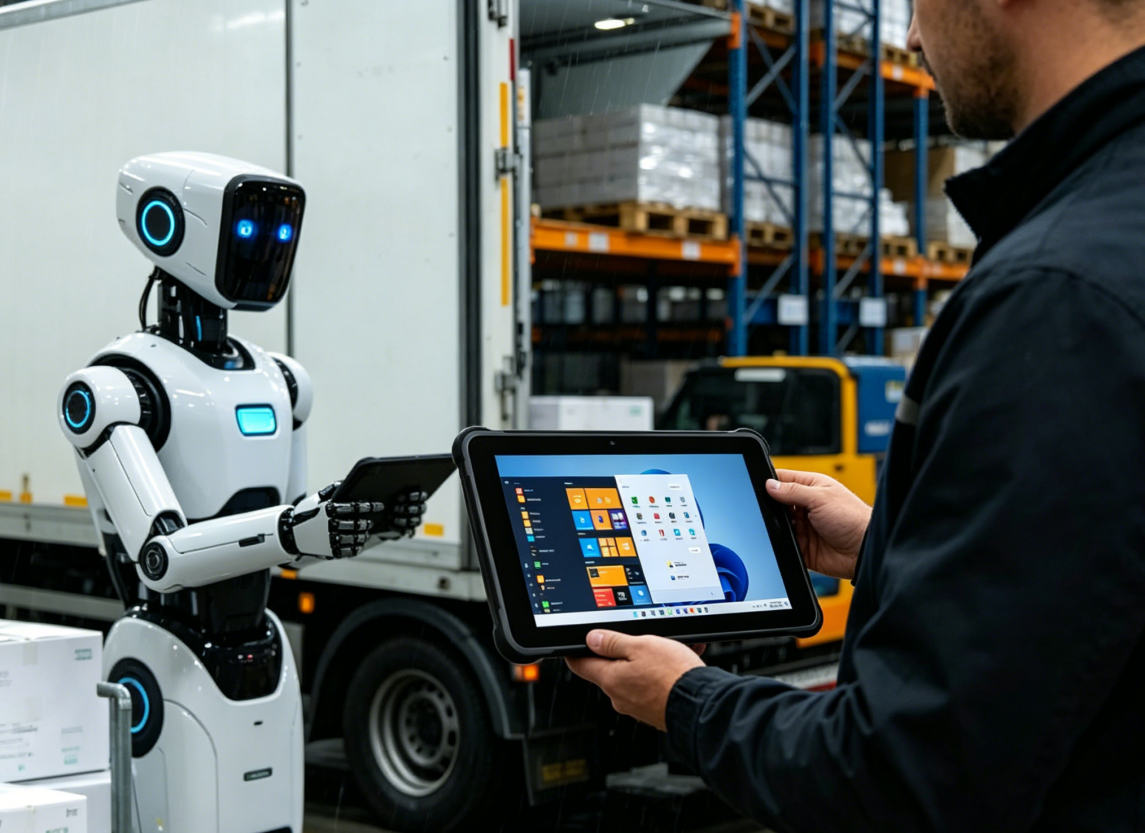
The Human in the Loop: Why You Still Need PDAs
Major trends in the forecast period include rapid adoption of autonomous mobile robots, growth in goods‑to‑person automation, integration of AI‑driven picking systems, and rising demand for warehouse process optimization[reference:16]. But every one of these systems requires a human interface. The U9000 PDA serves as:
- The robot task assigner — workers assign pick, put‑away, and replenishment tasks to AMRs via the PDA interface.
- The exception resolver — when a robot cannot identify an item or encounters an obstacle, workers use the PDA to diagnose the issue, scan the problematic item, and resume operations.
- The quality verifier — after a robot picks an item, workers scan it with the U9000 to confirm accuracy before packing.
- The inventory corrector — when system inventory doesn‘t match physical inventory, workers perform cycle counts and update records instantly.
The ST11‑U Windows tablet serves the supervisors who oversee multiple AMRs simultaneously:
- Real‑time fleet dashboard — monitor robot locations, battery levels, and task completion status across the entire warehouse.
- Performance analytics — track pick rates, travel times, and exception frequencies to identify optimization opportunities.
- Maintenance management — log robot service records and schedule preventive maintenance based on usage data.
The ROI of Human‑Robot Collaboration
The numbers are compelling. The e‑commerce industry continues to expand — online transactions accounted for 16.3% of total retail sales in Q2 2025, with e‑commerce sales increasing by 5.3% year‑over‑year, outpacing the 3.9% growth in overall retail sales[reference:17]. As online order volumes rise, warehouses increasingly rely on automated robots to handle manual material movement, streamline operations, and improve efficiency[reference:18].
Major companies are developing collaborative robots designed to work safely alongside human workers within a shared workspace[reference:19]. But collaboration requires communication — and that‘s where mobile devices come in. When a worker with a PDA can scan an item, confirm its identity, and redirect a robot within seconds, the warehouse operates at peak efficiency.
Real‑World Impact: E‑Commerce Fulfillment Center Deploys AMRs and PDAs
An e‑commerce fulfillment center processing 80,000 orders daily deployed 100 autonomous mobile robots, 75 U9000 PDAs, and 25 ST11‑U tablets. Results after 12 months:
- Order fulfillment time reduced by 38% — AMRs reduced worker travel time by 65%.
- Picking accuracy improved from 98.2% to 99.7% — PDA‑verified picks eliminated errors.
- Exception resolution time reduced from 4 minutes to 45 seconds — workers with PDAs resolved robot issues immediately.
- Labor costs reduced by 22% — same output with fewer workers, despite rising wages.
- Worker satisfaction improved — turnover reduced by 35% — less walking, more engaging work.
- ROI achieved in 11 months
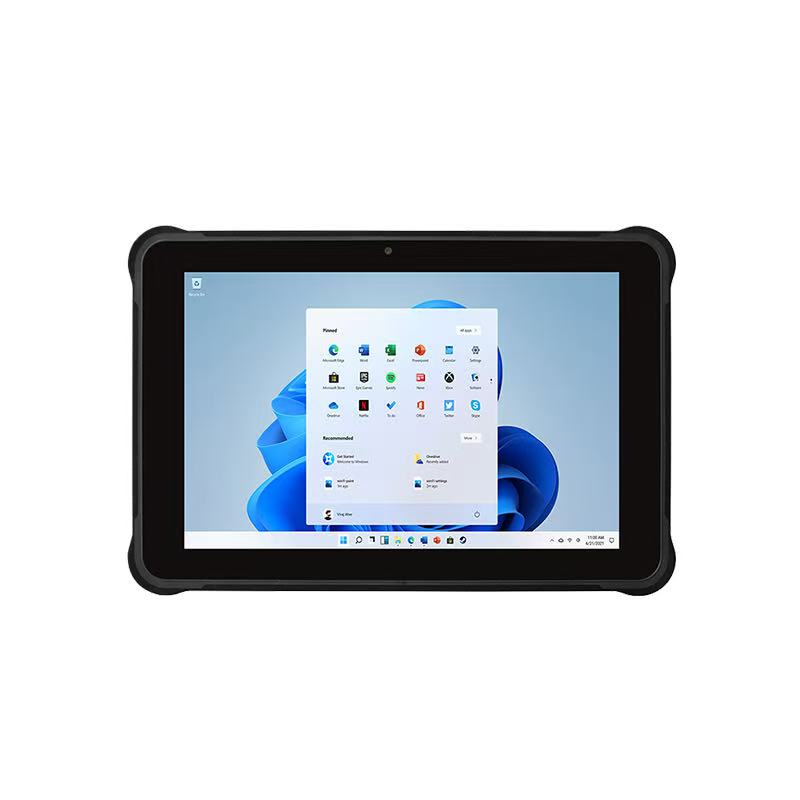
Hotus ST11‑U — Windows tablet for warehouse robotics fleet supervision
Contact HOTUS Technology to discuss your warehouse automation needs, request pilot units, or explore custom RFID PDA and Windows tablet solutions for human‑robot collaboration.