- Select Language
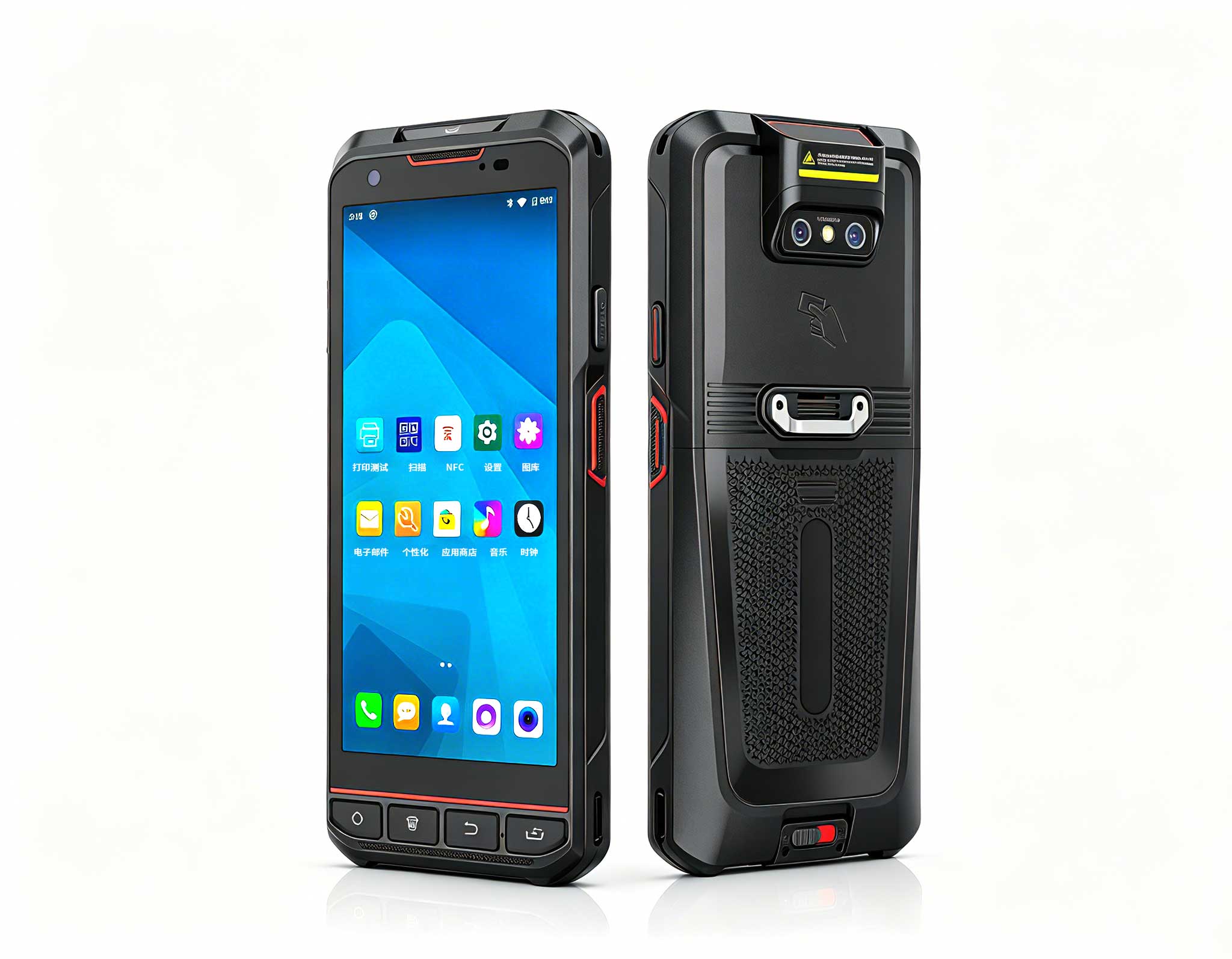
The F505 Handheld PDA is a compact, high-performan...
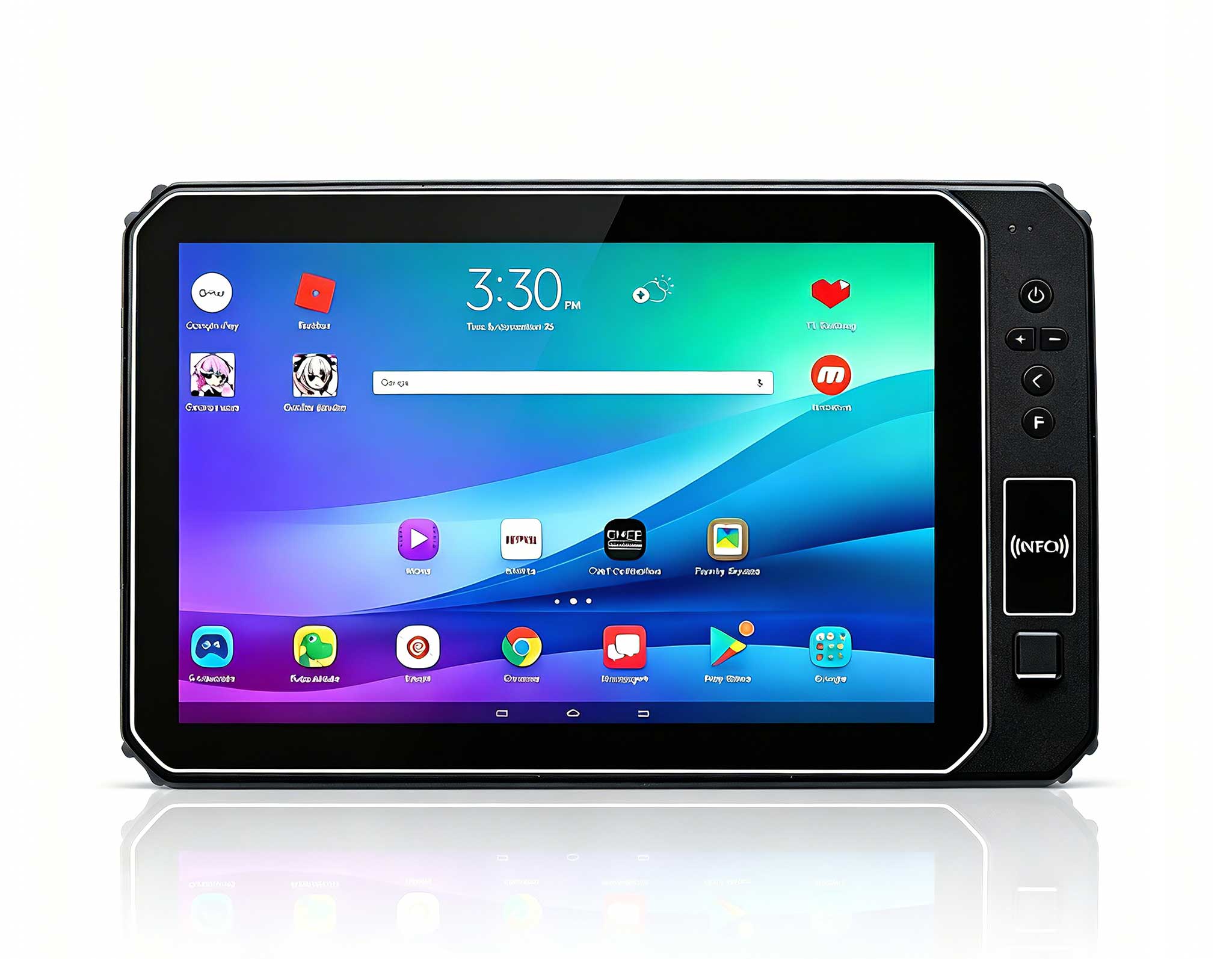
The X501 Handheld PDA combines advanced barcode sc...
Full SpecificationsModelHotus ST11‑UOSWindows 10 P...
R366-S 5.5-inch Industrial PDA | Qualcomm Octa-cor...
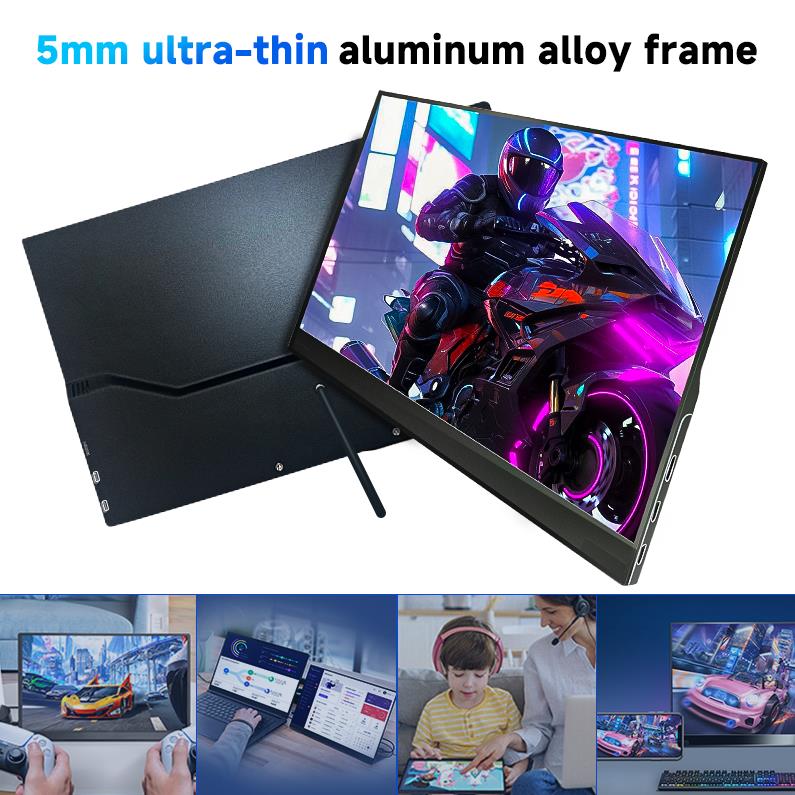
The PM133-2 is a 13.3-inch portable monitor featur...
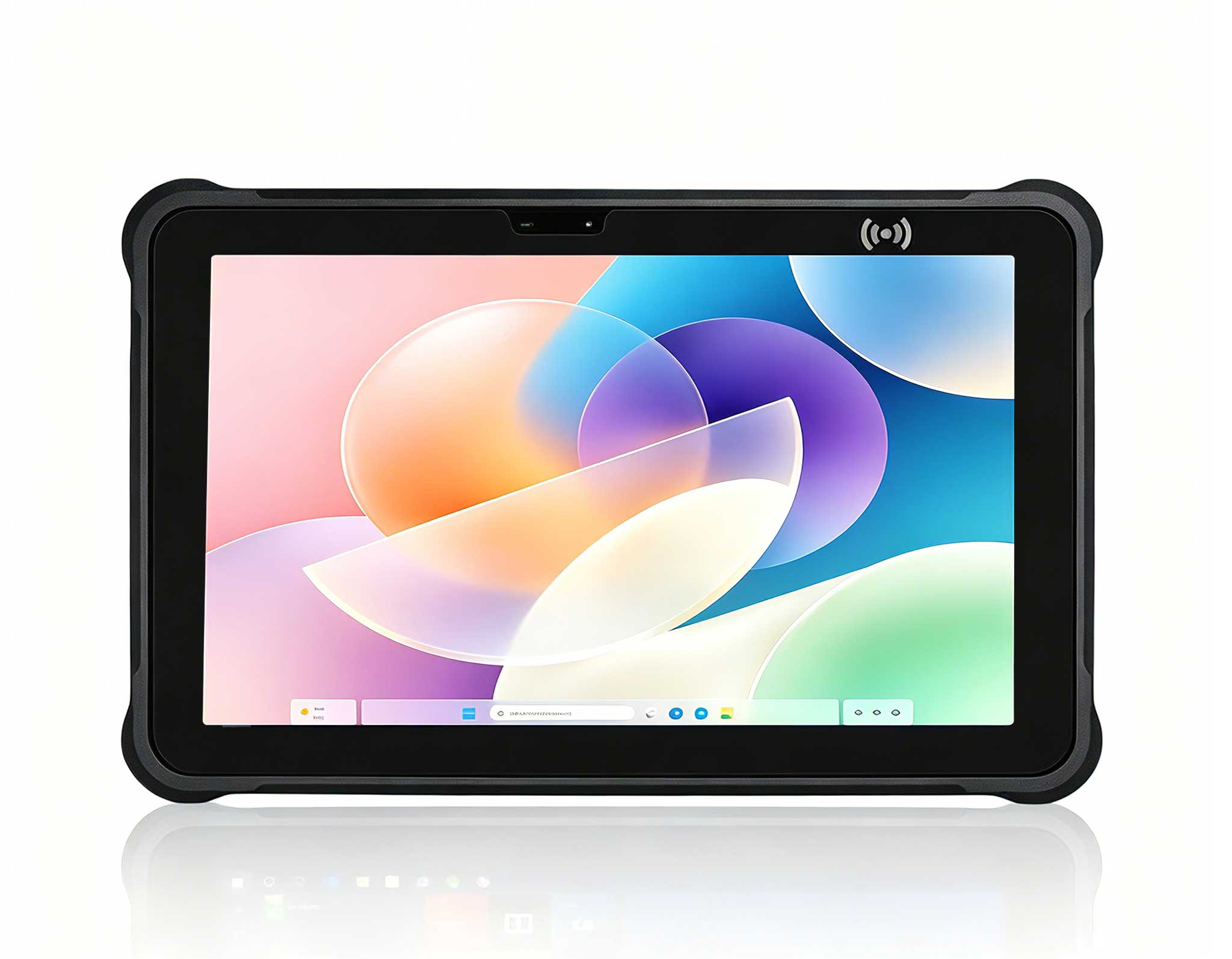
This 10-inch Android rugged tablet is designed for...
Full SpecificationsModelHotus ST11‑MOSWindows 10/1...
The way people build a gaming den in a rented flat has quietly split in two. One path buys rendering: an ITX tower with a discrete GPU, a desk, and a monitor that eats a quarter of the floor plan. The other path rents the graphics card from a data centre and spends the money where the evening actually happens - on the screen, the sound and the seat. Cloud game libraries and console streaming have made the second path genuinely playable, and it changes which hardware counts. This comparison puts a Hotus stack - the mini PC line represented by the Palm-sized miniPC, the HT2500 Pro Ultra laser projector and the H2 Mini portable - against two very different challengers, the NZXT H1 Mini and the Chuwi LarkBox X 100U, for a gaming room that measures a few square metres.
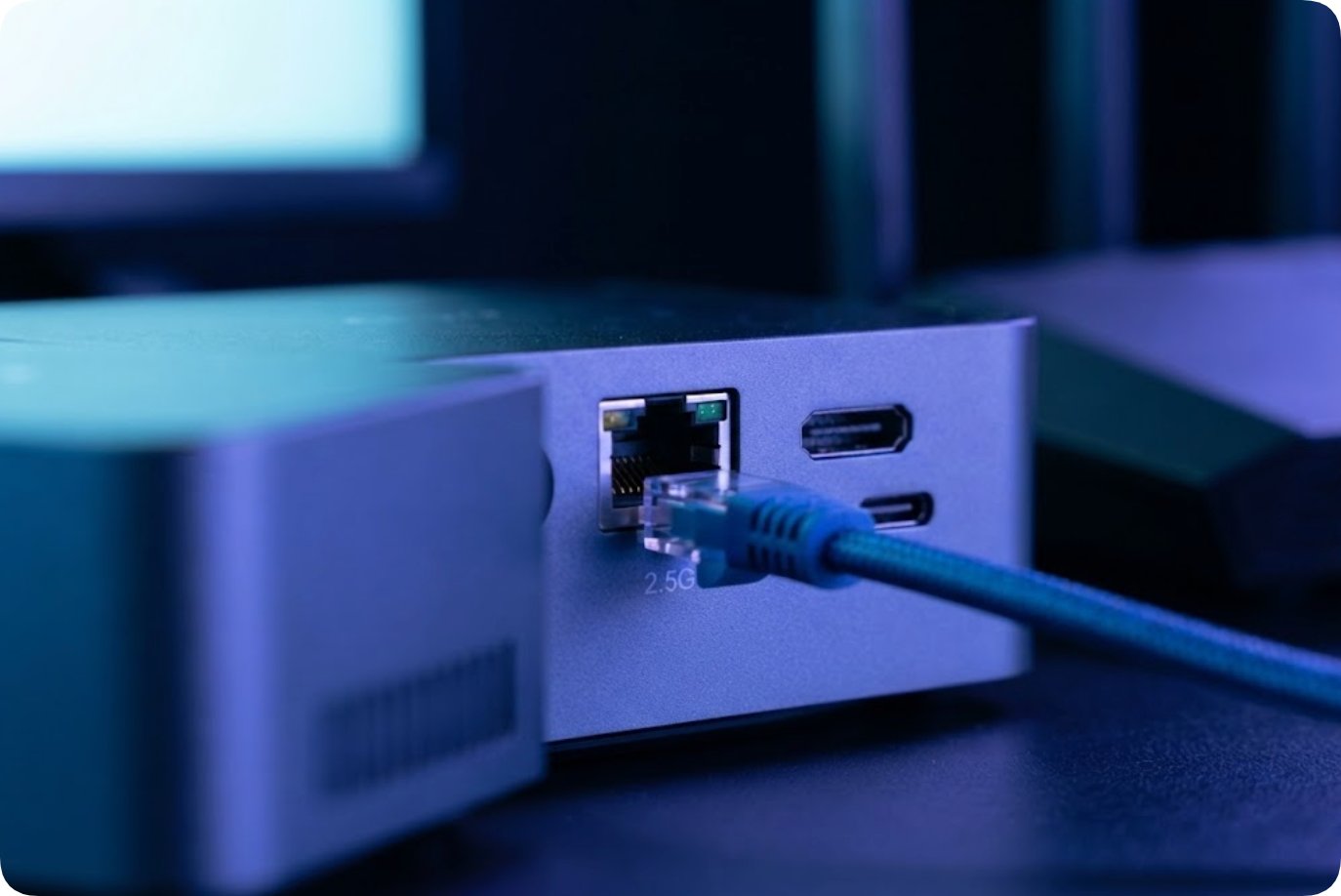
A streaming-first den still needs one honest computer, and the Palm-sized miniPC covers the whole job description. Processor options run from the i3-1215U up to the i9-12900HK - twelve cores at up to 5.0GHz - with dual-channel DDR4 or DDR5 memory to 64GB. The storage story is unusual at this size: two M.2 NVMe slots plus two 2.5-inch SATA bays accept up to 12TB, enough to hold a downloaded library next to the streaming apps. Network is where streaming latency lives or dies, and the 2.5G Ethernet port alongside Wi-Fi 6 and Bluetooth 5.2 gives the wired path a proper ceiling. Display output reaches triple 8K through two HDMI 2.1 ports and one Type-C, so the same box feeds a projector today and a monitor later. At 800 grams it moves between shelf and TV bench without ceremony.
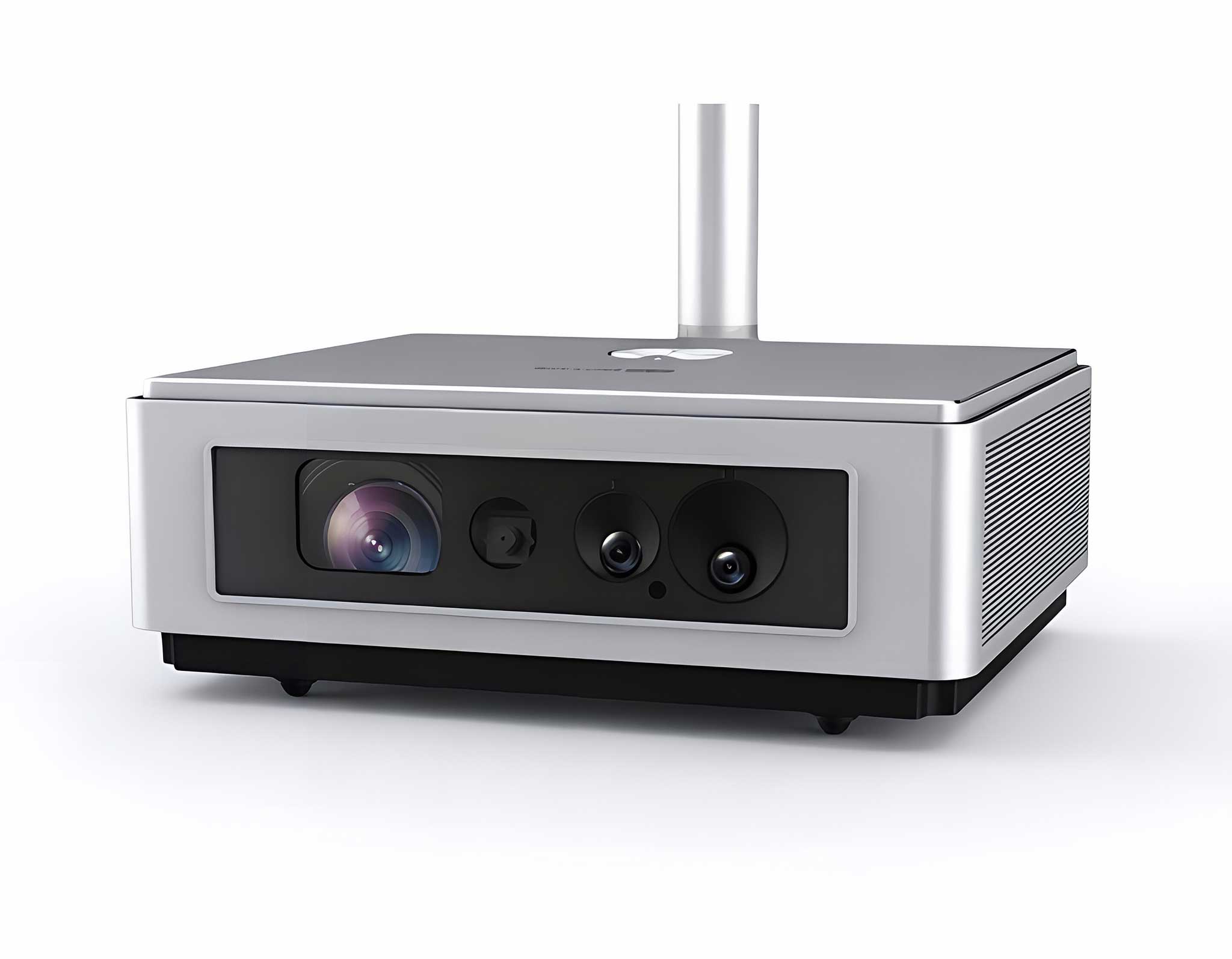
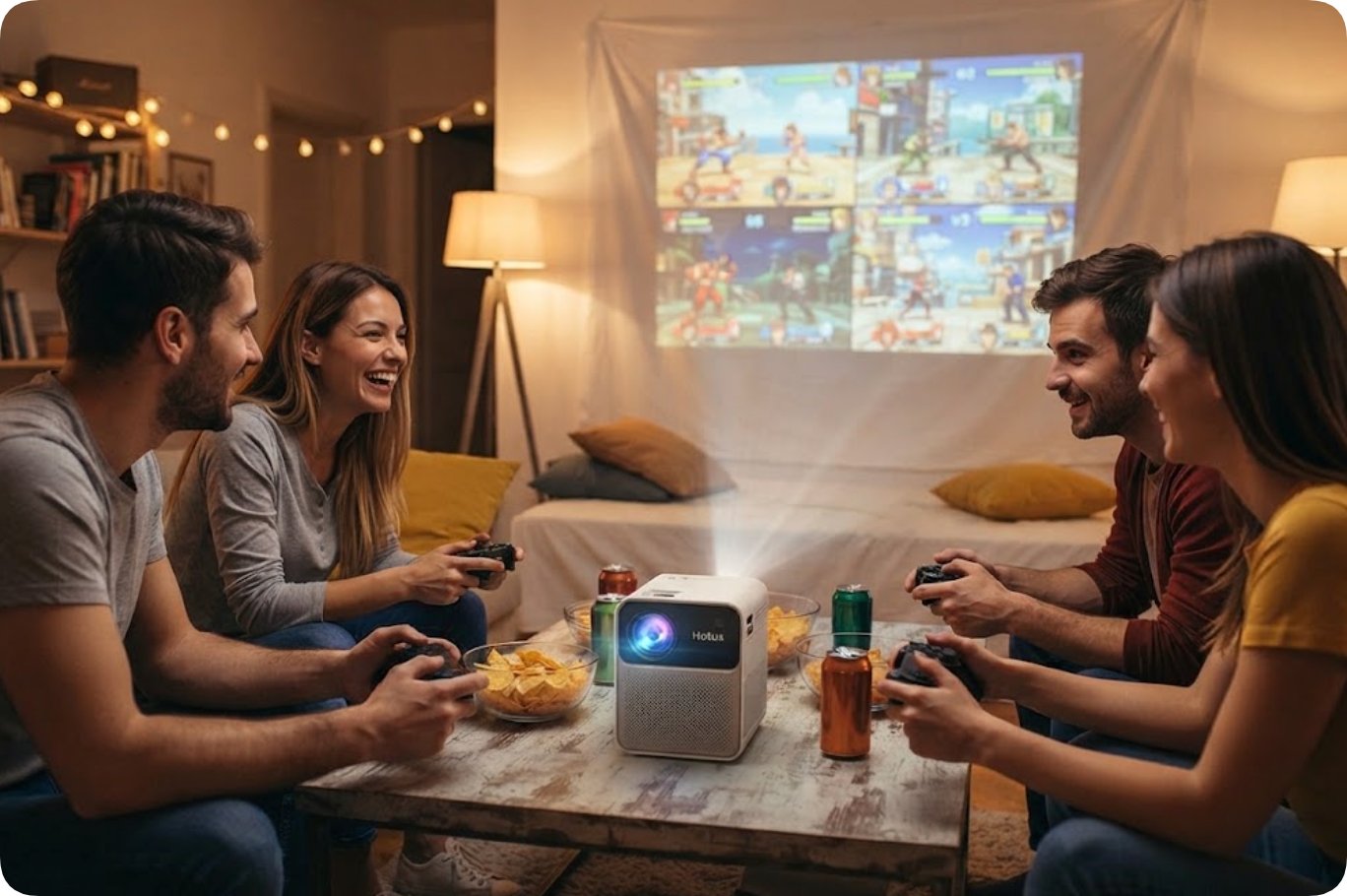
The fixed centrepiece is the HT2500 Pro Ultra laser projector. Its 0.233:1 throw ratio puts a hundred-inch image just 7.2 inches from the wall, adjustable across 80 to 150 inches, so the screen occupies no floor at all - the decisive trick in a small room. The engine is a 0.47-inch DMD with XPR at 4K, driven by a laser light source rated at 3000 ANSI lumens with a 1,000,000:1 dynamic contrast figure and HDR10. For couch gaming, that reads as a 100-inch HDR display that arrives with built-in speakers and no TV bench, no mounting arm and no 55-kilogram panel to carry up the stairs. The trade is physics: a projector this bright still prefers an evening room, and curtains belong in the plan the way they do for any big-screen living room.
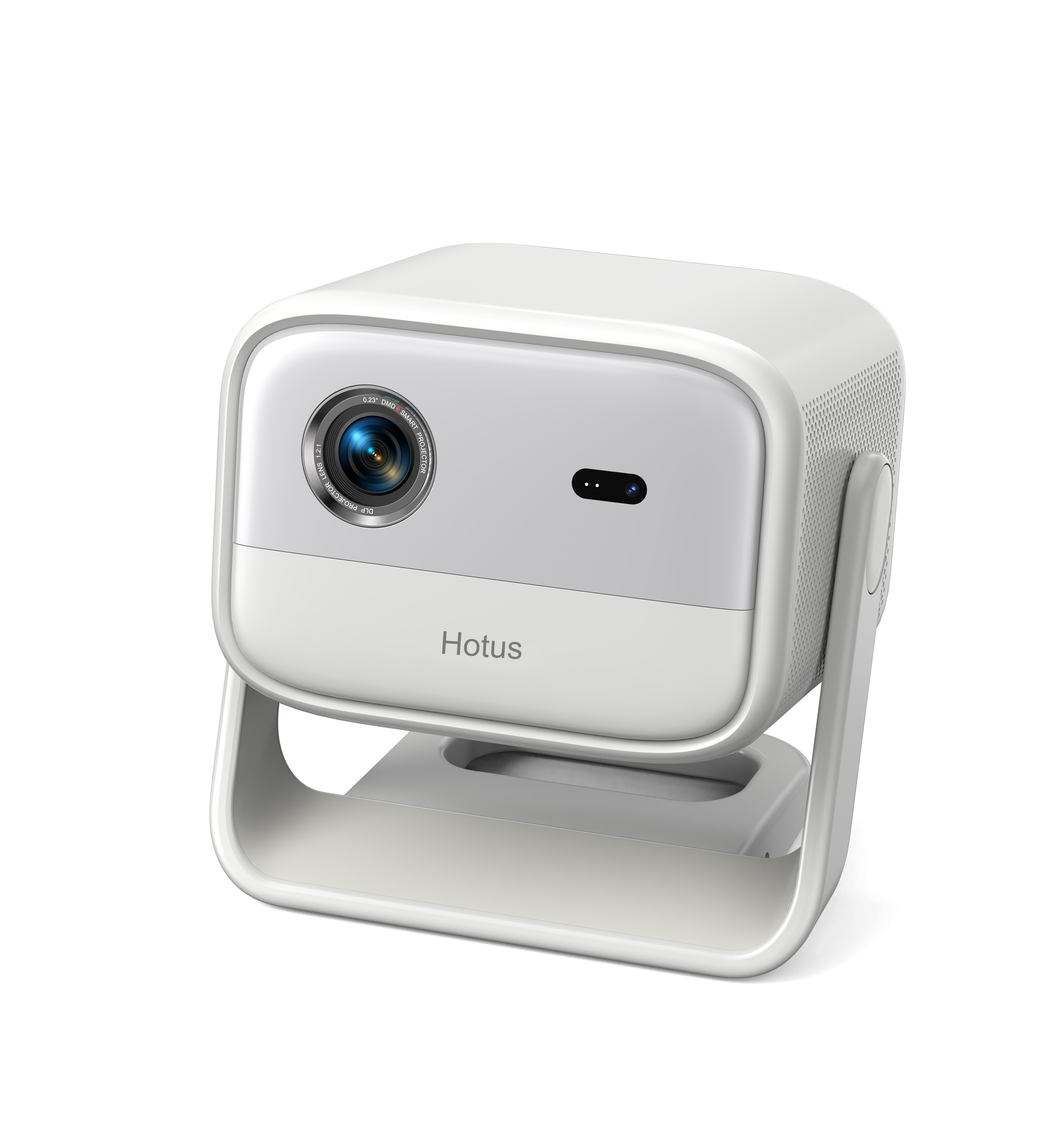
The third piece solves the evening that happens elsewhere. The H2 Mini portable projector is a DLP unit that runs full Windows 10 on an Intel Atom quad-core platform, which means the streaming client installs directly and no phone, no dongle and no console needs packing alongside it. Brightness is 350 ANSI lumens with auto focus, and the native panel is 720P while accepting 1080P, 2K and 4K input. Honest framing: this is a dim-room, big-diagonal machine - a garden wall at dusk, a bedroom ceiling, a friend's blank wall - not a sunlit arena. As a second-screen strategy it costs one bag slot and turns any flat surface into the guest screen for the night.
NZXT builds the other philosophy. The H1 Mini packs an i9-14900HX with an RTX 4070 Super Laptop GPU into 3.2 litres, with 64GB of DDR5-5600, dual PCIe 4.0 M.2 slots, Wi-Fi 7, twin Thunderbolt 4 and a 280W SFX supply under 140mm liquid cooling, priced at $1,800-2,200. Nothing streams better than playing locally at that specification, and for competitive shooters the render pipeline beats any cloud route. The costs are the desk footprint it never gives back, the fan noise under load, and the fact that the screen, sound and seating are still separate purchases. Chuwi attacks the same streaming premise from pricing: the LarkBox X 100U pairs a Core 3 100U with Intel UHD graphics, 16GB of DDR4-3200, dual gigabit ports and triple 4K output at 144Hz in a 127mm square for $359-439. It is a legitimate streaming terminal, and this comparison does not pretend otherwise; what it lacks is the storage headroom for a local library, any screen of its own, and the 2.5G wired ceiling that keeps 4K streams calm at peak hours.
| Dimension | Palm-sized miniPC | HT2500 Pro Ultra | H2 Mini | NZXT H1 Mini | Chuwi LarkBox X 100U |
|---|---|---|---|---|---|
| Platform | i3-1215U to i9-12900HK, 12C/16T | 4K, 0.47" DMD + XPR, laser | Intel Atom quad-core, Windows 10 | i9-14900HX, 24 cores | Core 3 100U, 6C/8T |
| Graphics | Integrated Iris Xe / UHD | - | - | RTX 4070 Super 12GB | Intel UHD 64EU |
| Display | Triple 8K out (2x HDMI 2.1 + Type-C) | 3000 ANSI lm, 0.233:1, 80-150" | 350 ANSI lm, 720P native | Requires separate monitor | Triple 4K @144Hz out |
| Memory / Storage | 64GB DDR5 max, 2x M.2 + 2x SATA, 12TB | - | - | 64GB DDR5-5600, dual M.2 | 16GB DDR4, 512GB + M.2 |
| Network | Wi-Fi 6, BT 5.2, 2.5GbE | - | - | Wi-Fi 7, 2.5GbE, 2x TB4 | Wi-Fi 6, dual gigabit |
| Size / Weight | 800 g | 20 kg, wall-hugging UST | Portable, auto focus | 3.2 L, 280W SFX | 127 x 127 x 49 mm |
| Price | Not published | Not published | Not published | $1,800-2,200 | $359-439 |
The gaps deserve plain language. No Hotus unit in this stack carries a discrete GPU, so locally rendered AAA titles at high settings are simply not this system's job - buyers who need that should read the NZXT column again, because that is what the money buys. Hotus publishes no input-latency figure for the HT2500 Pro Ultra, and competitive players should treat the number as unverified until tested on their own title and settings. The H2's 720P native panel and 350-lumen output cap it to dim rooms and forgiving eyes. On the challenger side, NZXT quotes no noise level for the 280W liquid-cooled loop, and Chuwi does not state whether the LarkBox X's memory upgrade path reaches beyond 32GB. Streaming quality itself depends on the ISP as much as the box: a 2.5G port cannot rescue a congested evening connection.
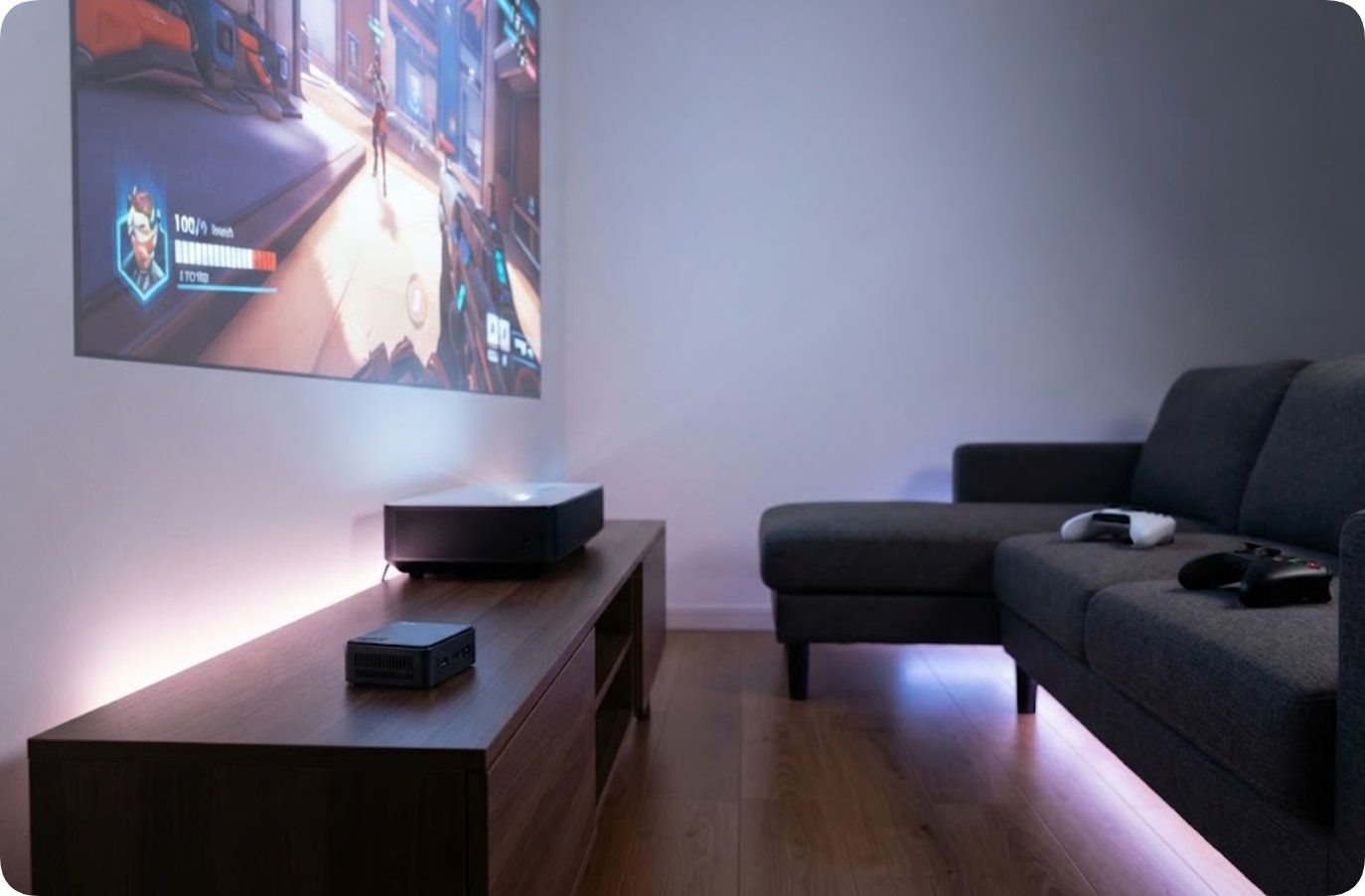
Decide by where the money should sit. If competitive local rendering is the hobby, the NZXT H1 Mini is the honest purchase and no streaming stack replaces it. If the flat is small, the lease is short and the games live in the cloud, the Hotus trio puts the budget into assets that survive the next move: a Palm-sized miniPC that also archives a 12TB library, a wall-hugging 4K laser screen, and a pocketable Windows projector for away games. Tight budgets that only need a terminal should price the Chuwi honestly and add their own screen. The pattern to remember is simple: subscribe to the GPU, invest in the glass. Compare the full product range to plan the stack, or read more breakdowns in our comparison guides.