An incident command post is not one device. It is a command vehicle with a rack that runs the mapping server and records the bodycam and drone feeds, a briefing screen the incident commander carries to the tailgate, and a handheld unit the sector lead uses to pull up the plan while walking the line. Most rugged vendors sell for the second and third roles and leave the first to an integrator, because a vehicle rack needs desktop-class compute and real storage in a 12-volt envelope. This comparison builds all three nodes from Hotus hardware — the HCAR5000 MI in the vehicle rack, the ST13-J as the briefing screen, and the ST9-M in the sector lead's hand — against the two names that dominate public-safety rugged procurement: Getac, whose F110 is a fixture in police vehicle docks, and Panasonic, whose Toughbook line has carried fire and EMS fleets for decades. Both are excellent at what they build. The question this piece asks is what an incident unit actually needs, and which vendor has to be chained together to provide it.
The Rack Node: Where the Rivals Stop
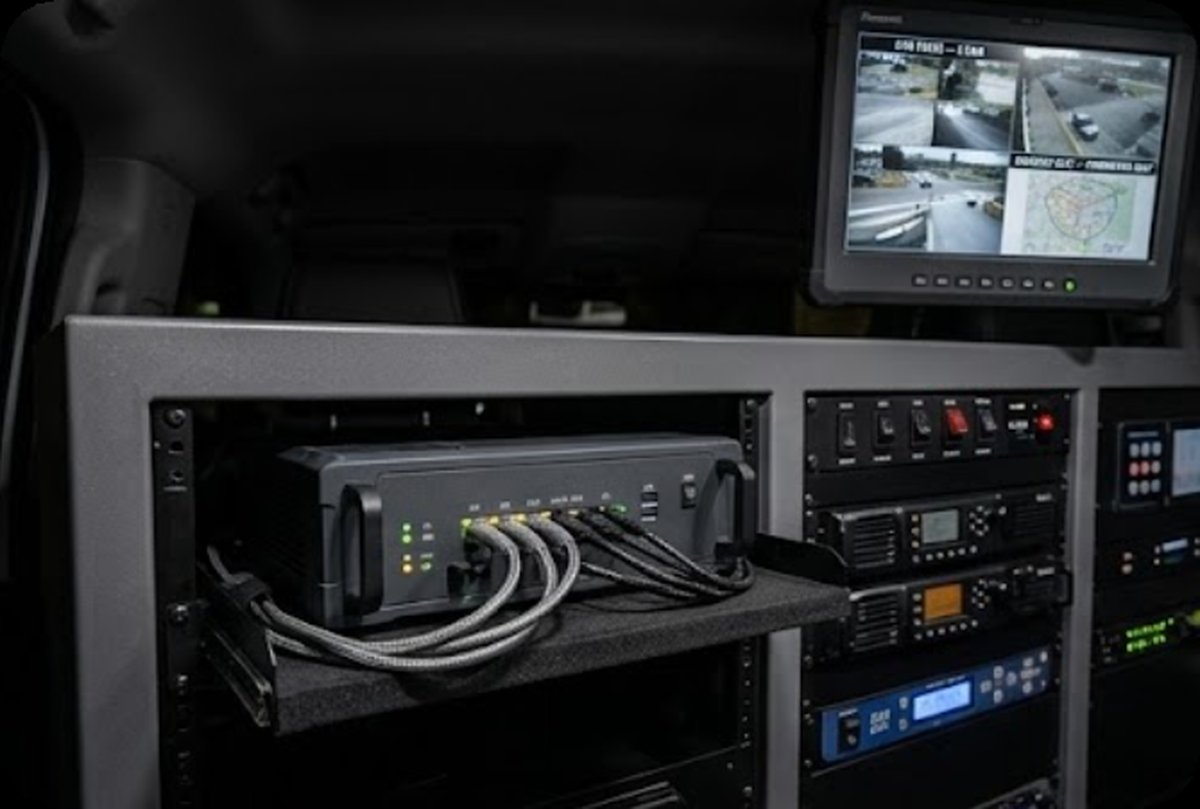
The HCAR5000 MI runs a Ryzen 5600H/5800H-class mobile CPU with up to 64 GB of DDR4, and that alone puts it in a product category neither Getac nor Panasonic fills: a vehicle-mounted compute node. Its storage layout is the operational detail — an SSD for the OS and map tiles plus a 500 GB to 1 TB hard drive for the long tail of bodycam, dashcam and drone footage that an incident generates and a jurisdiction must retain. A Toughbook or an F110 records to its own local drive and syncs when the vehicle returns to the station, which works until the shift never returns — a standby deployment or a mutual-aid response that runs three days means footage piles up on whatever the vehicle carries, and swapping a drive at the curb beats syncing over a congested field network. Build the rack around the HCAR5000 MI and the vehicle becomes the archive; build it around tablets and laptops and the vehicle is just another endpoint that has to phone home.
| Node | Hotus unit | Engine | What it carries | Rival answer |
|---|---|---|---|---|
| Vehicle rack | HCAR5000 MI | Ryzen 5600H/5800H class | 64 GB DDR4, SSD + 0.5-1 TB HDD | None — integrator project |
| Briefing screen | ST13-J | Intel N5100, 15 W | 13.3" sealed IP65 all-in-one | Getac F110, 11.6" |
| Hand unit | ST9-M | Intel i5-8200Y | 8" x86 Windows, stylus | Android PDAs / Toughbook |
🖥️ The Briefing Screen: Big Panel, Sealed Body
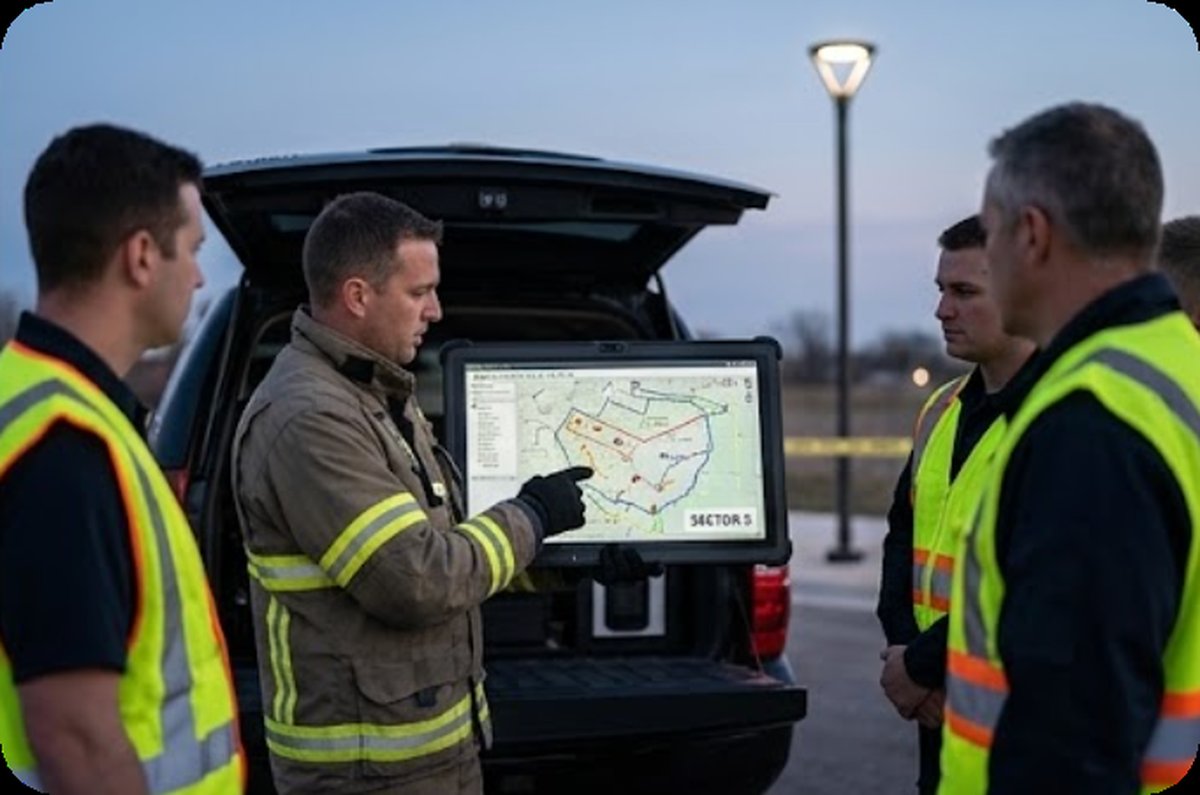
Maps, floor plans and drone feeds want screen area, which is why the tailgate briefing happens on the biggest display in the kit. The ST13-J puts a 13.3-inch touch panel and an Intel N5100 quad-core in the same IP65-sealed body — fifteen watts runs the mapping client and a remote desktop back to the rack without thermal drama, and a cracked unit swaps in minutes because panel and computer are one SKU. Against it, Getac's F110 is the natural rival: an 11.6-inch fully rugged tablet with a brightness spec built for open-cab daylight and a vehicle dock ecosystem that agencies already own. The F110 wins the dock argument and the daylight-brightness argument, and this piece does not pretend otherwise. What the ST13-J answers is panel size per sealed unit — the briefing that today runs on a laptop balanced on a tailgate runs instead on a sealed slate that hoses off, and the F110's smaller panel either moves closer to the crowd or gets an external display, which is one more thing to cable in the rain. There is a night-shift argument too: a single sealed unit with no external cables has nothing to snag on turnout gear between briefings, and the same slate that runs the morning briefing re-docks at the rack for an overnight firmware and map-tile sync without anyone babysitting a second device.
The Hand Unit: Desktop Clients in a Pocket Slate
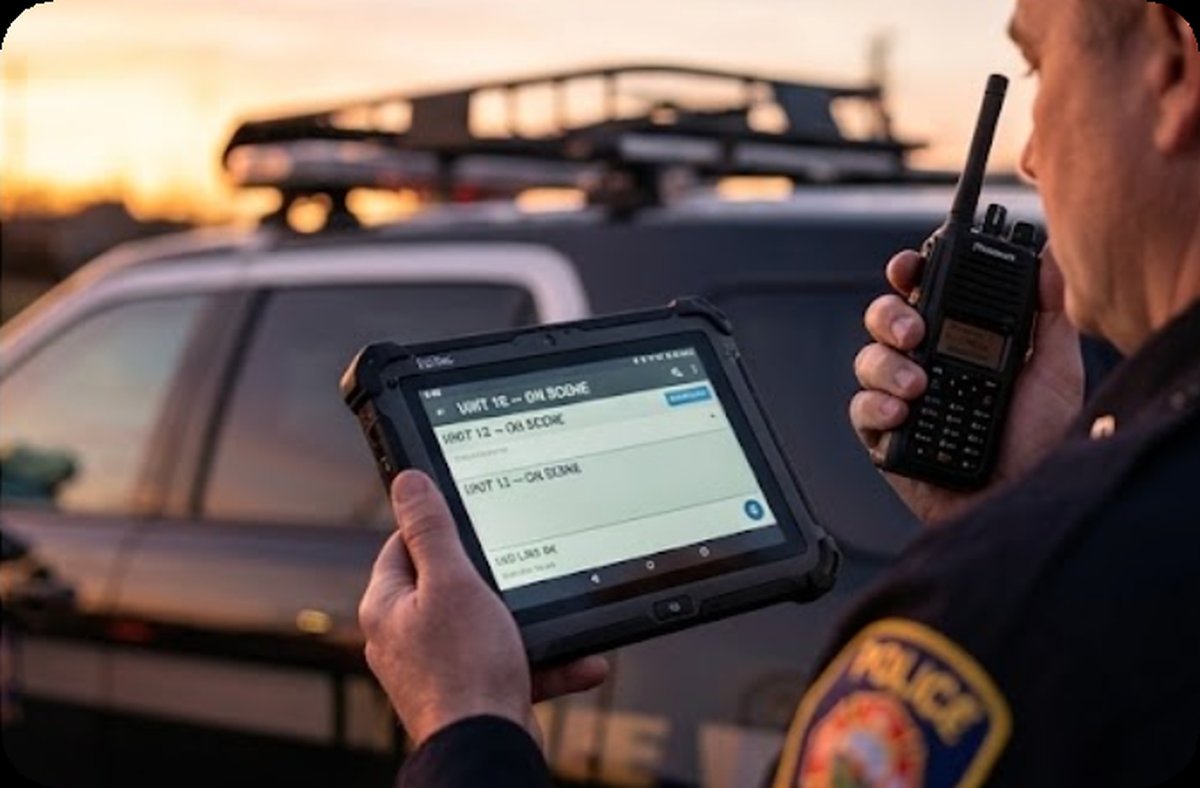
The sector lead's device runs whatever CAD and dispatch client the agency standardized on a decade ago, and that software is usually a Windows desktop build. The ST9-M is an 8-inch Windows tablet on an Intel i5-8200Y with a 3.9 GHz turbo — dual-core x86 that runs the same dispatch client, the same legacy incident-management agent and the same annotation tools the rack runs, with no mobile rewrite in between. Its 1200×1920 panel at 400 nits stays readable under a night-time dusk shield, the touch layer takes a gloved finger and a stylus for signatures, and an optional dock turns it into a vehicle station the moment the lead climbs back in. This is also where Panasonic's Toughbook 40 earns real credit: its modular xPAK bays let a technician swap I/O, batteries and optical drives in the field, which is a genuinely better answer for a fleet that cannot send units back to a depot. The honest trade is weight and cost — a Toughbook 40 is a laptop to carry on foot, and the sector lead walking a perimeter wants an 8-inch slate in one hand and a radio in the other. Procurement math makes the same point from the other side: fitting out one command vehicle with a rack, a briefing slate and two hand units is four line items on one Hotus quote, while the rivals' version of the same vehicle starts with two vendors before the integrator arrives.
Stacking the Three Nodes
Neither Getac nor Panasonic is a weak opponent; their docks, daylight screens and field-service channels are why agencies standardize on them, and a one-tablet procurement should absolutely start there. The gap opens when the unit needs all three heights at once: the rivals supply the screen and the hand but leave the vehicle rack to a systems integrator, which means a third vendor, a second warranty and an integration project for the node that holds the footage and the maps. The Hotus stack closes that with parts-bin compatibility — one accessories drawer, one RMA process and one vendor to call when the standby deployment runs into a third day. The remote assistance workflow describes how the field tablet reaches back to the rack over a degraded network, the mini PC lineup lists the rack options, and the comparison archive keeps the cross-brand receipts for the next tender cycle.