- Select Language
The R501 PDA combines a powerful MT6762 Octa-Core ...
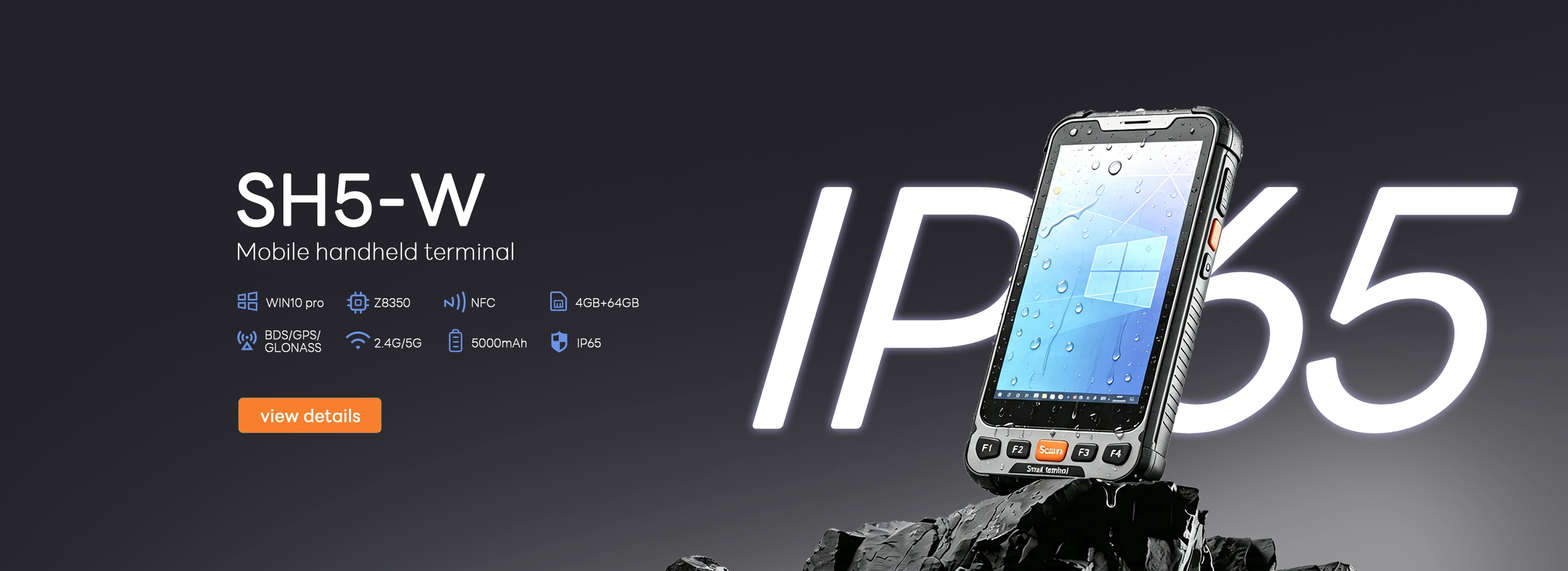
Full SpecificationsModel Hotus SH5‑WOperating ...
Enterprise Flagship SeriesEngineered for mission-c...
This 10-inch Android rugged tablet is designed for...
R530C 6.0-inch Industrial PDA | Qualcomm Octa-core...
R366-S 5.5-inch Industrial PDA | Qualcomm Octa-cor...
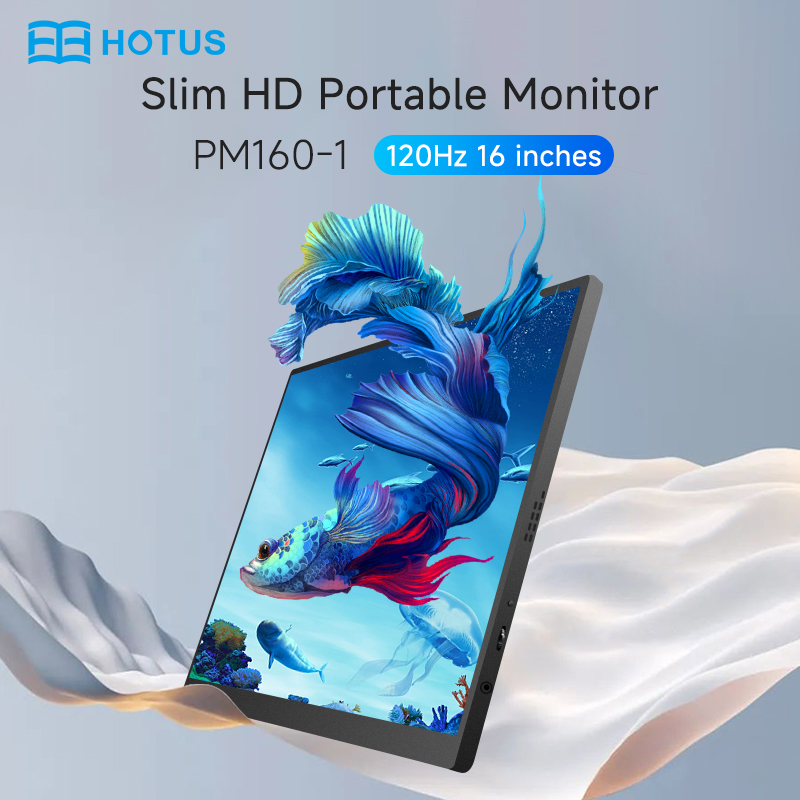
The PM133-2 is a 13.3-inch portable monitor featur...
R860-S 5.5-inch Industrial PDA with Thermal Printe...
R366-S Thin 5.5-inch Industrial PDA | Qualcomm Oct...
The X501 Handheld PDA combines advanced barcode sc...
P8 Series 8-Inch Rugged Industrial Tablet PC Mobi...
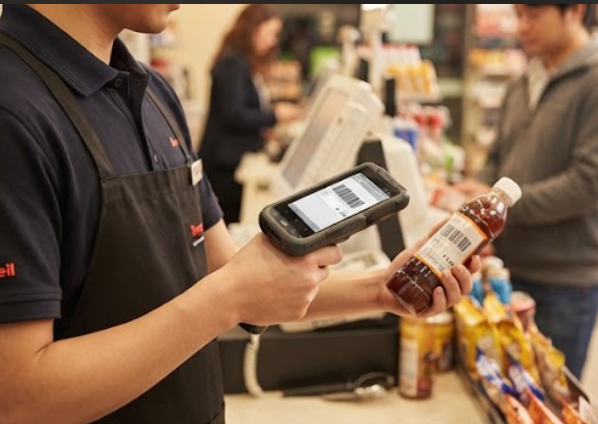
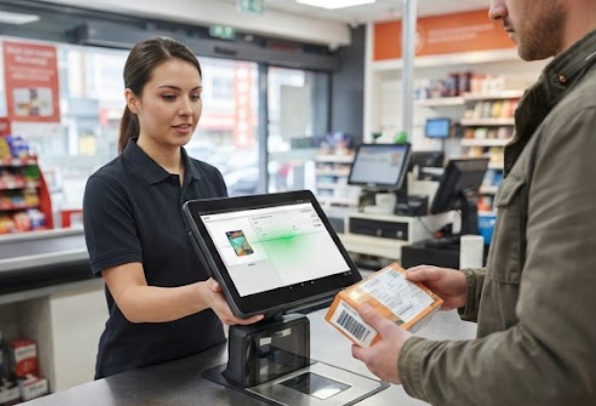
I have watched retail checkout change faster in the last two years than in the previous decade. The fixed lane where a cashier scans every item is no longer the only place a sale happens. Shoppers expect to pay at the shelf, at a pop-up counter, or while a staff member walks the floor with them. That shift puts pressure on the device in the associate's hand. A consumer phone cannot survive a drop onto a tiled floor, will not read a torn barcode, and dies before the evening rush ends. A purpose-built handheld PDA can. If you are planning a store-wide upgrade, our industrial PDA purpose-built for retail shows what a dedicated device delivers compared with a repurposed smartphone.
The trend behind this article is simple: counters are spreading out. Line-busting during peak hours, curbside pickup, assisted selling on the sales floor, and self-service with a staff override all need a scanner that moves with the person using it. Industry analysts describe this as the shift from fixed POS to mobile POS, and the driver is not novelty. It is throughput. A store that can open a second checkout in ten seconds by handing an associate a handheld beats a store that waits for a register to free up. The device has to be rugged because retail floors are unforgiving, and it has to be fast because the customer is standing there.
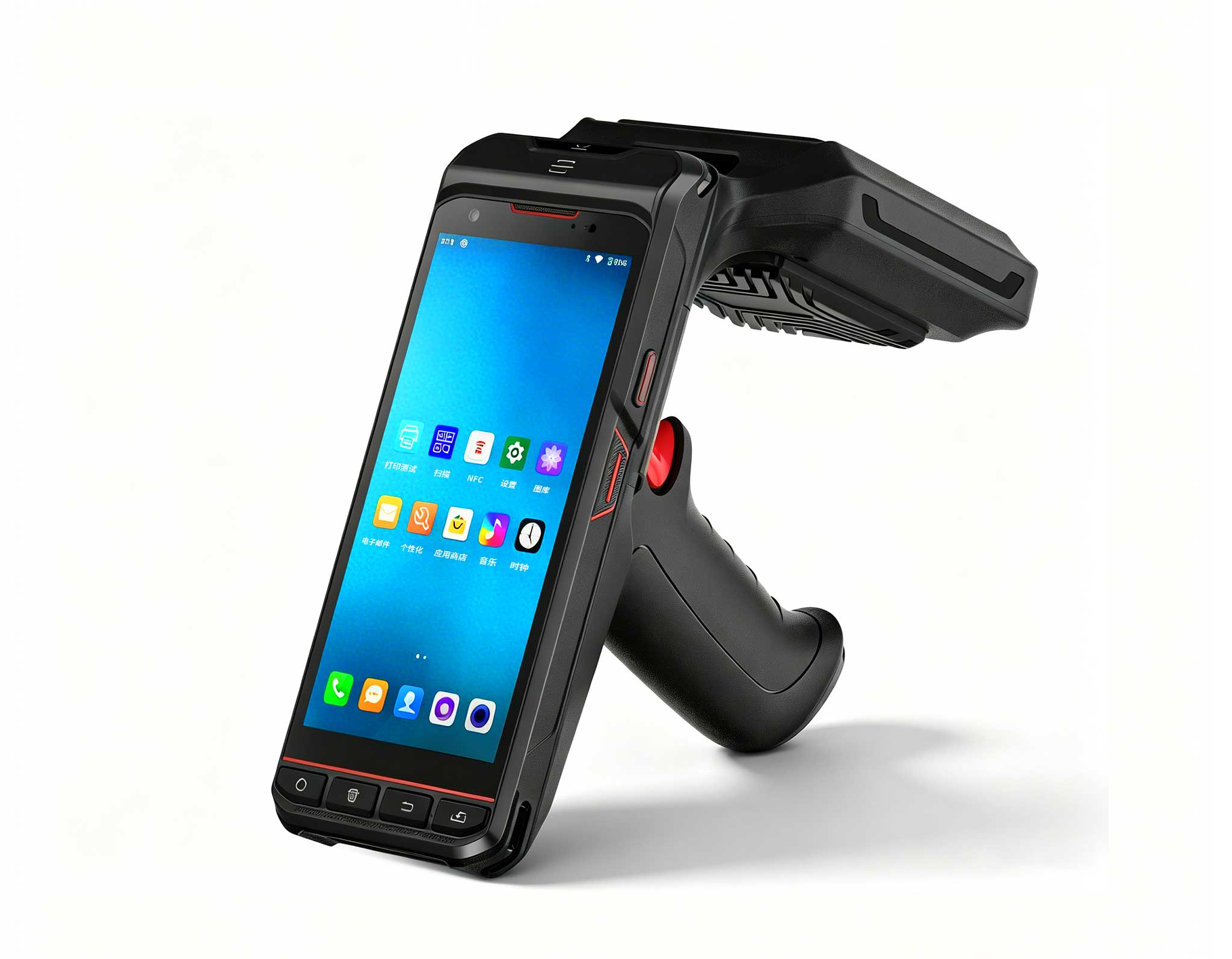
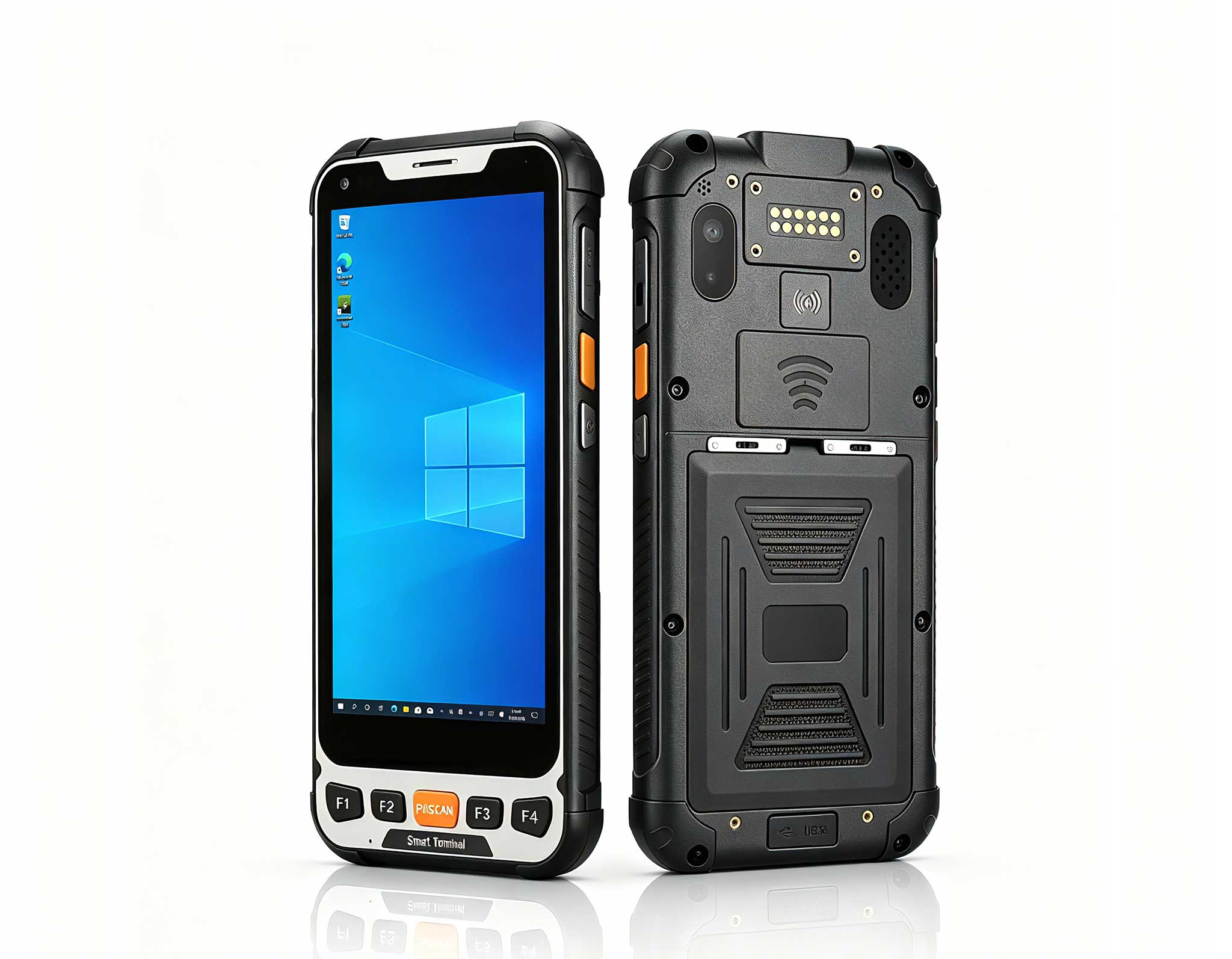
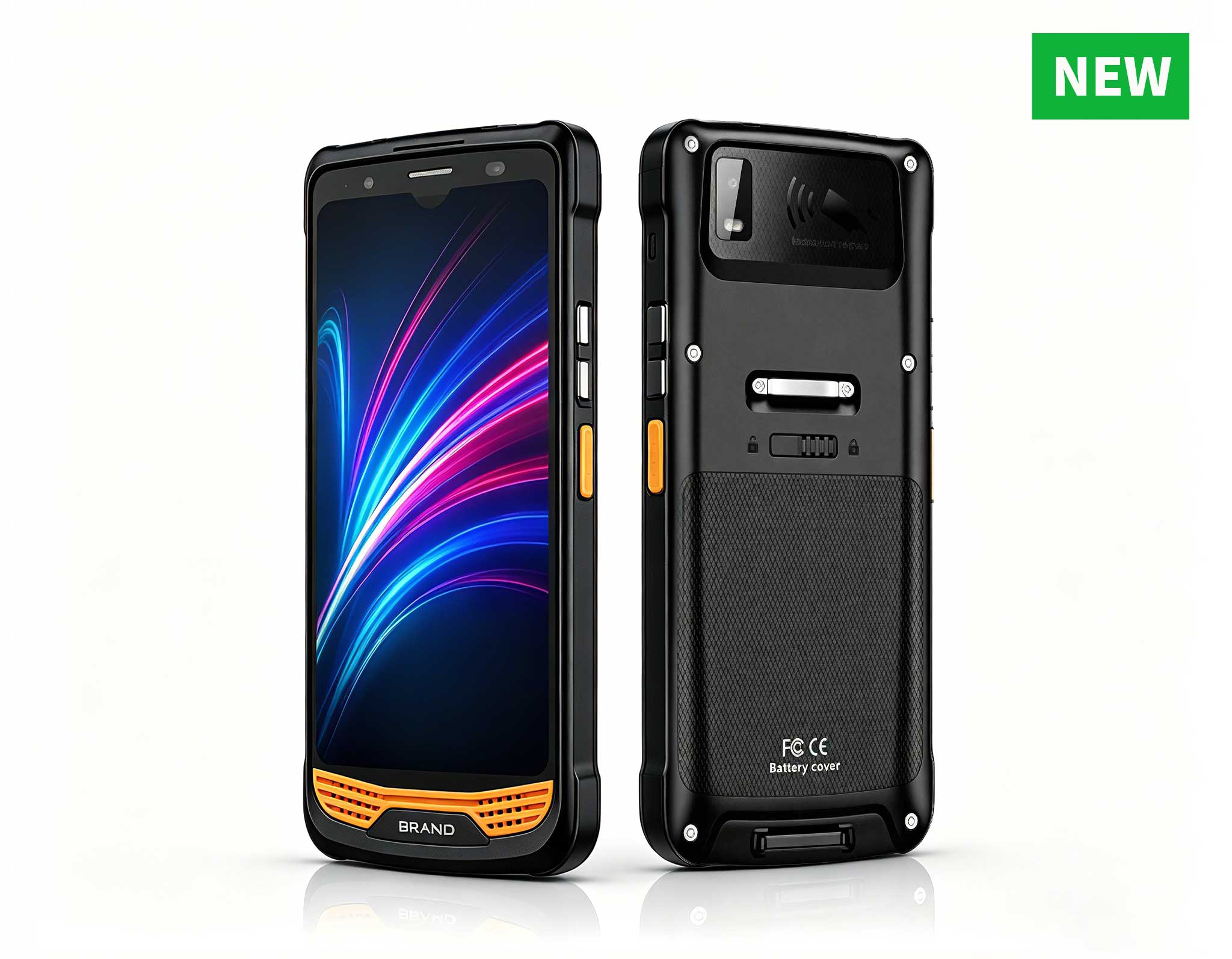
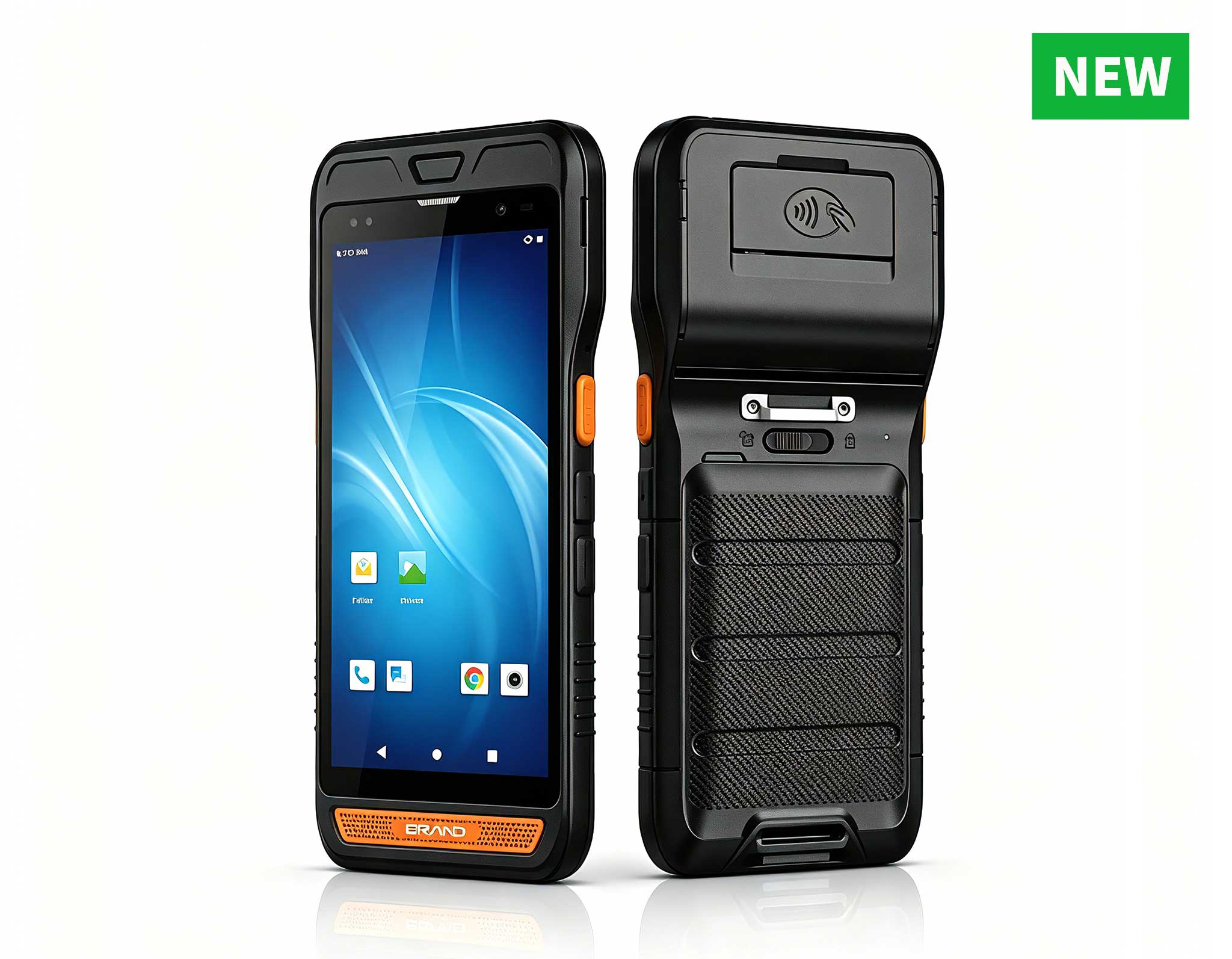
The X501 Handheld PDA is the workhorse of the trio. It runs on an MT6762 octa-core processor with Android 10 or 13, a 720x1440 display, and a choice of 2GB+16GB or 4GB+64GB storage. A 5500mAh battery carries a full shift, and the IP66 rating shrugs off spills and dust. At 500g it is substantial but balanced for all-day scanning, with NFC, UHF, Bluetooth 5.0, GPS, and 4G built in. The integrated 1D and 2D imager plus RFID support means one device handles price checks, loyalty cards, and inventory lookups without swapping tools. For grocery, pharmacy, and high-volume discount counters, the X501 is the safe default.
Where the X501 is built for the counter, the F505 is built to face the customer. Its full-screen Android 13 body keeps the interaction clean: the associate taps, scans, and shows the total on one uninterrupted surface. It shares the MT6762 platform but adds 4G and 5G connectivity, NFC, UHF, and Bluetooth, with the same 1D, 2D, and long-range UHF RFID scanning. At just 114g it disappears in the hand during line-busting, and the high-capacity rechargeable battery is sized for a full selling day. Boutiques, electronics stores, and any format that treats the handheld as part of the brand experience will appreciate the lighter, more presentable device.
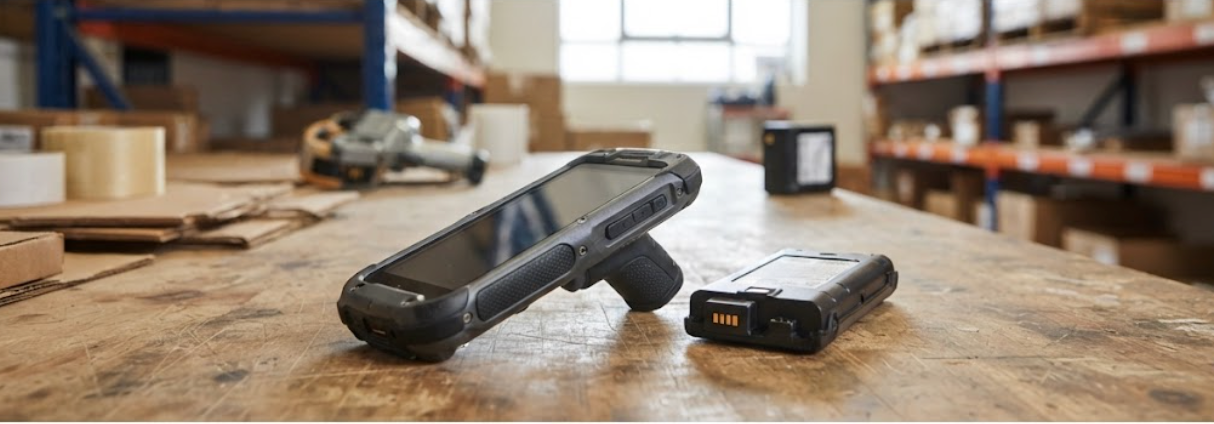
The K401 is the one to reach for when the day does not end at the store door. Its MT6769 octa-core chip at 2.0GHz runs Android 13 or 14 on a 4.2-inch 720x1280 screen, paired with 6GB of RAM and 64GB of storage. The 5200mAh battery is removable, so a spare cell ends downtime completely. IP67 sealing and MIL-STD-810G drop certification to 1.5 meters put it a step above the others for rough handling, and at under 300g it stays comfortable through long shifts. NFC covering ISO 14443, 15693, and MIFARE, plus UHF, Bluetooth 5.0, 4G LTE, and GPS, make it the natural fit for stores that also run a stock room, a receiving dock, or field service from the same handheld.
| Model | CPU and OS | Display | Memory | Battery | Protection | Weight |
|---|---|---|---|---|---|---|
| X501 Handheld PDA | MT6762 Octa-core, Android 10 or 13 | 720x1440 | 2GB+16GB or 4GB+64GB | 5500mAh | IP66 | 500g |
| Handheld PDA F505 | MT6762 Octa-core, Android 13 | Full-screen | Up to 4GB+64GB | High-capacity, full shift | Industrial rugged | 114g |
| K401 Handheld PDA | MT6769 Octa-core 2.0GHz, Android 13 or 14 | 4.2-inch 720x1280 | 6GB+64GB | 5200mAh removable | IP67, MIL-STD-810G | Under 300g |
All three read 1D and 2D barcodes and support UHF RFID, with NFC and 4G as standard. The differences come down to where the device spends its day: the X501 at the busy counter, the F505 in the customer's view, and the K401 wherever the job gets rough or reaches past the sales floor.
The decision is mostly about traffic and environment. A hypermarket or pharmacy with long queues should standardize on the X501 for its battery and scan endurance. A boutique or electronics showroom that uses handhelds as a service gesture will look better with the F505. A format that blends selling with receiving, such as a hardware store or a club warehouse, gets the most from the K401 and its spare-battery workflow. Hotus also ships a broader family of rugged mini PC solutions that pair with these handhelds at the back office for signage, kiosks, and management terminals.
A rugged handheld PDA is only as good as the workflow around it. Start with a pilot on your busiest day of the week, measure the time saved at the queue, and roll out the model that matched your format. Because all three devices share the same scanning and connectivity core, training transfers between them with almost no overhead. For stores that also run stock rooms, our logistics and warehouse solutions explain how the same handhelds manage inbound goods and cycle counts after hours. Talk to our team about a trial unit and a configuration that fits your POS software, and you will have a checkout that moves with your customers instead of making them wait for it.