- Select Language
Maintenance instructions: Store at room temperatur...
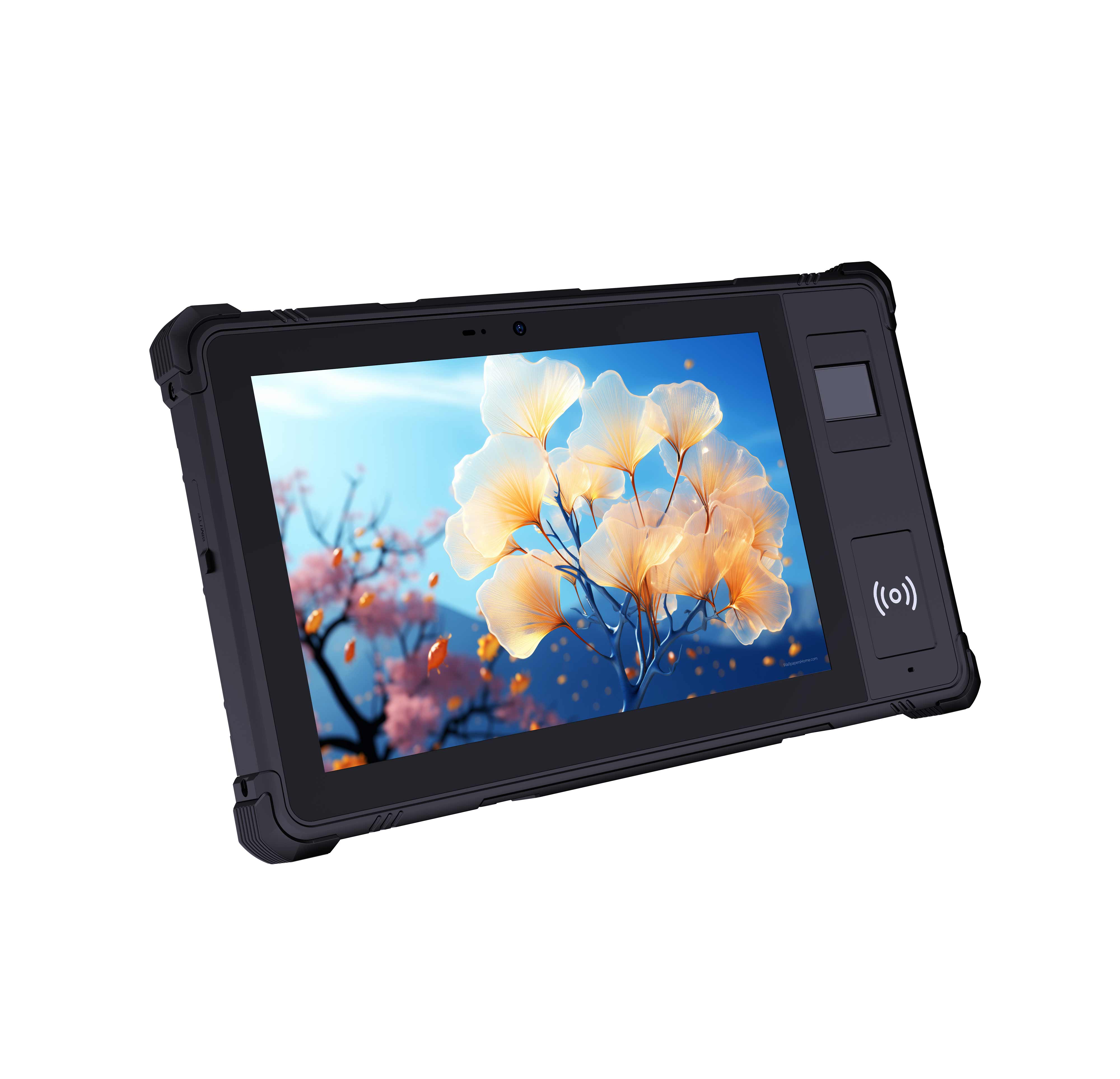
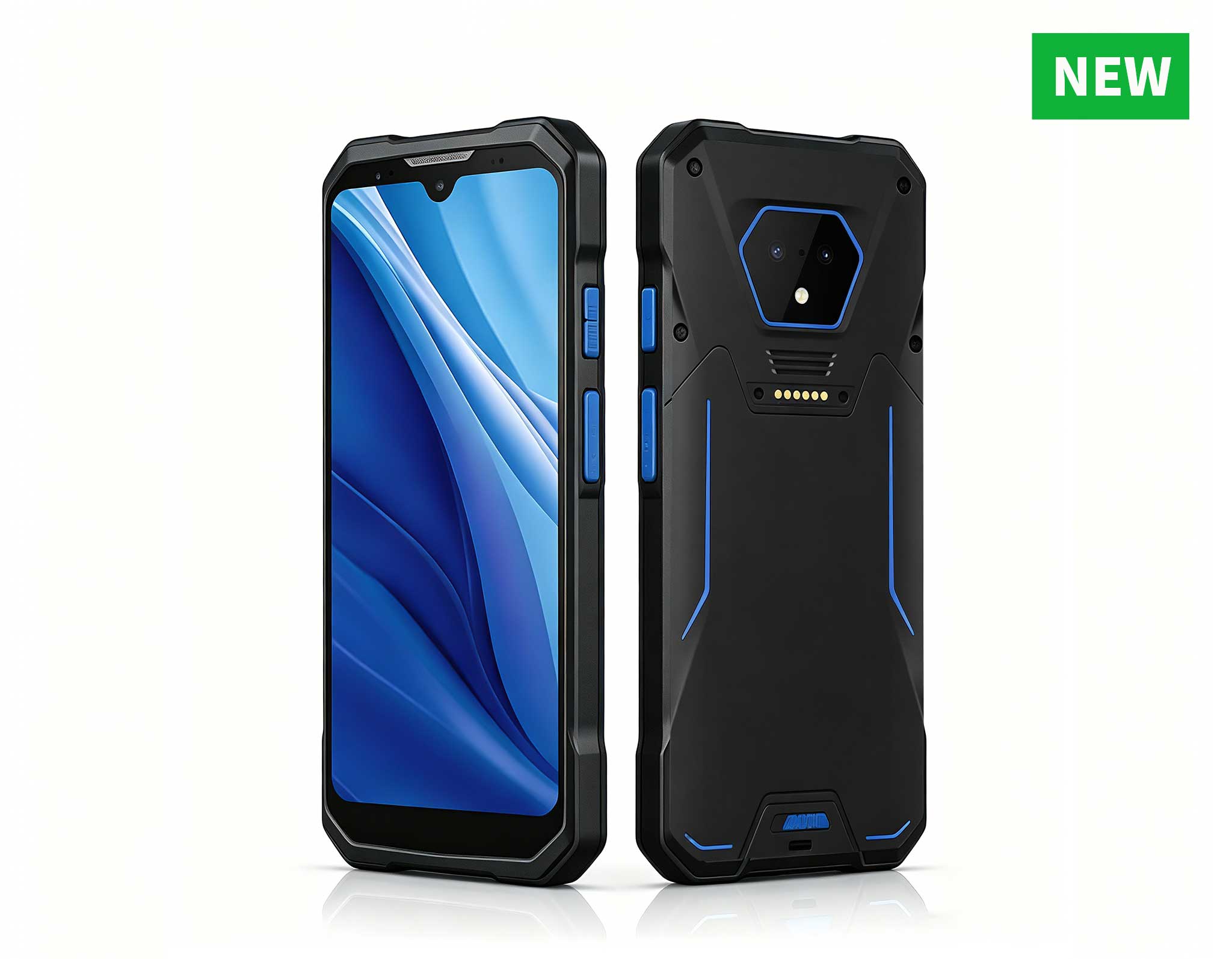
RS50 5G Rugged Handheld Terminal | 6.3" FHD+ ...
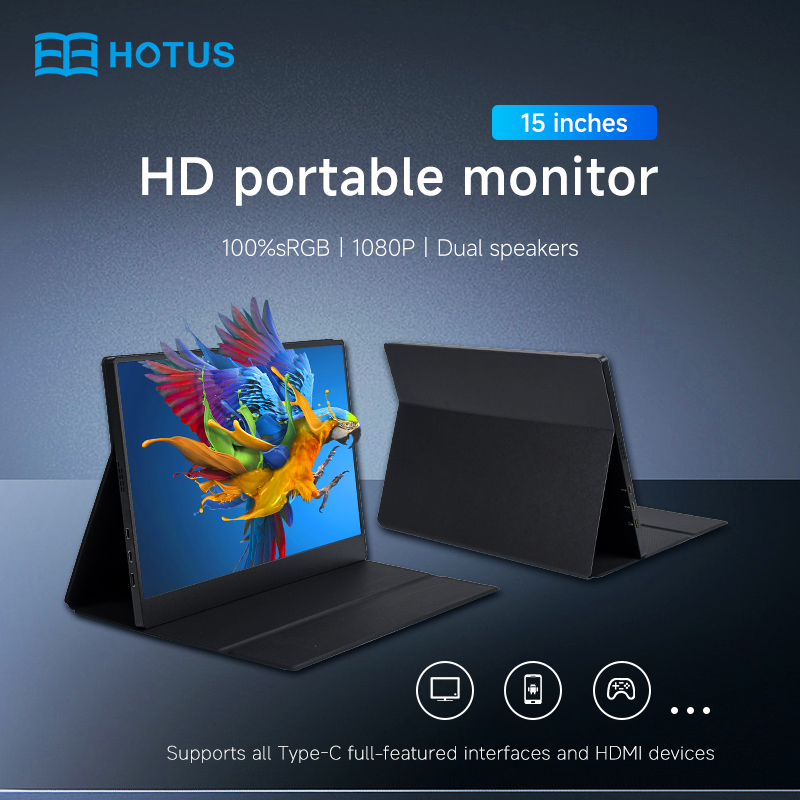
The PM156-1 is a 15.6-inch portable PC monitor fea...
Field crews rarely write long reviews. What they send instead are pictures taken in the middle of a working morning, and this week a facility-services customer running equipment rounds sent three of them in one batch. Two frames show a rugged tablet in active use: one at an outdoor meter cabinet, one beside a factory production line. The third frame shows a pump house where the record-keeping still runs on a paper folder. Together they sketch the exact fleet question this customer is working through, and the answer our lineup offers across the ST11-J, RT81 and ST13-J.
Nothing in the pictures is staged for a catalog. The first frame catches a brick wall, a round meter cabinet and a tablet held in one hand mid-entry. The second catches a roller line, a white helmet and a gloved grip on a silver chassis. The third catches valve hand wheels, floor grating and a clipboard. Deployment honesty is what makes returned photos worth reading: the equipment went into a live route, not onto a desk, and every surface in the frames is a surface a device has to survive.
A route is a sequence of environments, not a single site, and each environment stresses a different part of a machine. The cabinet stop happens outdoors, in glare, with gloves on and maybe damp hands after rain. The line stop happens indoors, in noise and dust, at a pace set by the production schedule rather than by the inspector. The pump house happens in a wet room full of steelwork, where both hands are often needed for access before any recording starts. Fleets that assign one generic device to all three stops usually discover the mismatch one stop at a time, which is why route planning matters more than any individual spec sheet. A star rating cannot show that; three frames can, because each frame records which hand held what, where the light came from and what the recorder trusted enough to carry all morning. The same logic runs through our industrial inspection solutions page: map the stops first, then pick the panel.

The outdoor frame is the one that looks simplest and is hardest to fake. A round meter cabinet on a brick wall, one hand holding the tablet, the other hand or a stylus doing the entry, and sunlight somewhere in the frame no matter which way the inspector turns. That stop punishes three things: a screen that washes out in direct sun, capacitive touch that ignores a wet or gloved finger, and a chassis heavy enough that the carrying arm tires between cabinets. Rounds like this can run twenty stops or more before lunch, so the carry problem compounds quietly. A folio cover folded back, as in the frame, doubles as a grip on a windy day, and the one-hand hold matters because the other hand is always busy with a key, a latch or a pen. Whatever panel works this stop has to behave like a clipboard with a screen, not like a laptop cut in half.
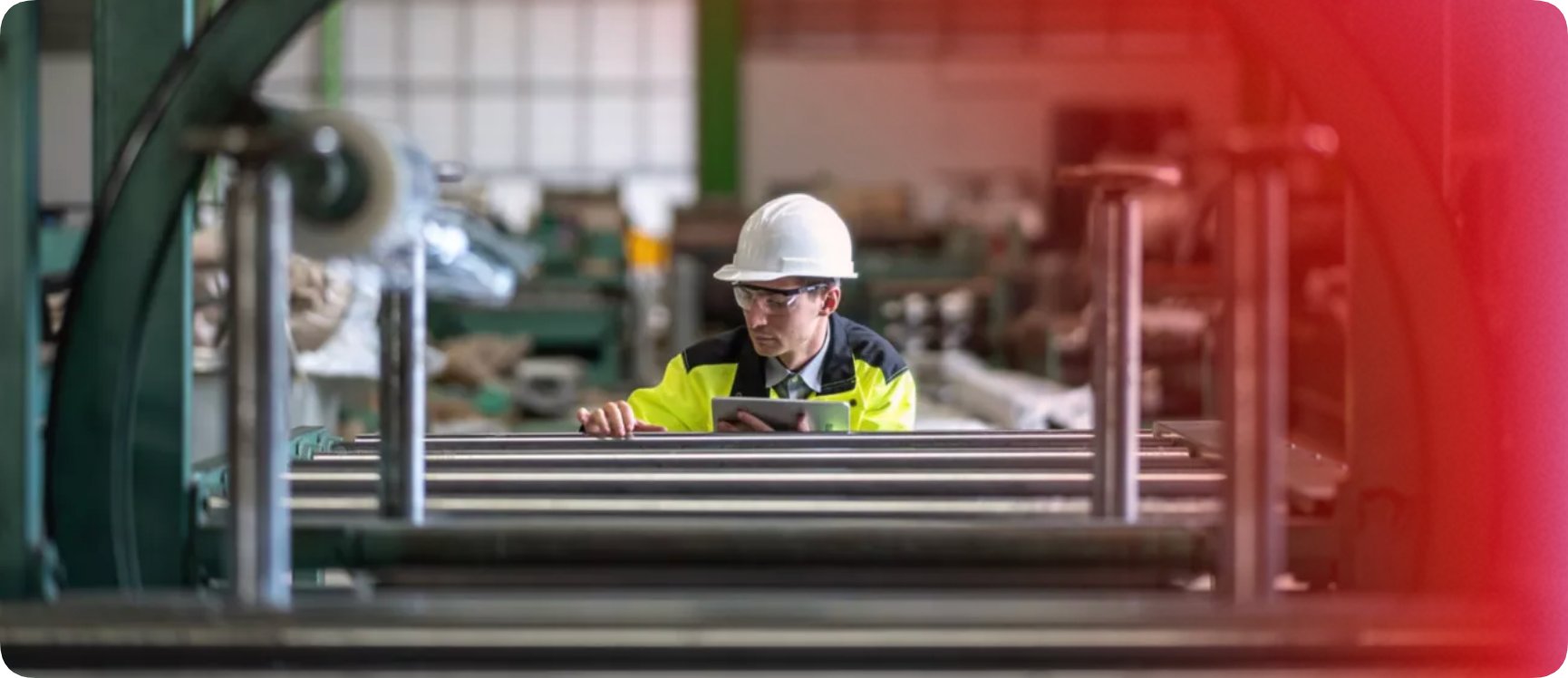
The indoor frame has a different rhythm. Roller conveyors, a white helmet, a hi-vis jacket and goggles: this is a line-side check, done in the seconds between cycles, at whatever spot on the line the supervisor walks to next. The tablet in the frame is held one-handed while the other hand points or gestures, which means the device was chosen for balance as much as for brightness. Dust and metal dust specifically, are constant here, and a knocked machine near steel framing is a when rather than an if. A stop like this also sets the battery question, because a line walk repeats across shifts, and nobody wants the second shift starting on a charger.
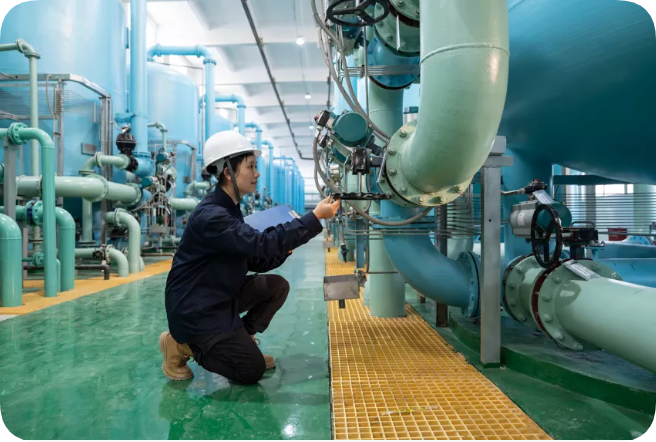
The third frame is the honest one. Valve hand wheels, floor grating, a walkway that needs both hands for the ladder, and a blue paper folder doing the recording. Paper survives in rooms like this for understandable reasons: pages do not need charging, a pencil works with wet fingers, and the folder has survived every redesign the route ever had. What paper costs is everything after the walk. Entries get transcribed hours later at a desk, timestamps depend on memory, and a photo of a corroded fitting stays in the folder instead of reaching the maintenance planner the same morning. The stop still on paper is rarely stubbornness; it is usually a room where no device has yet proved it belongs.
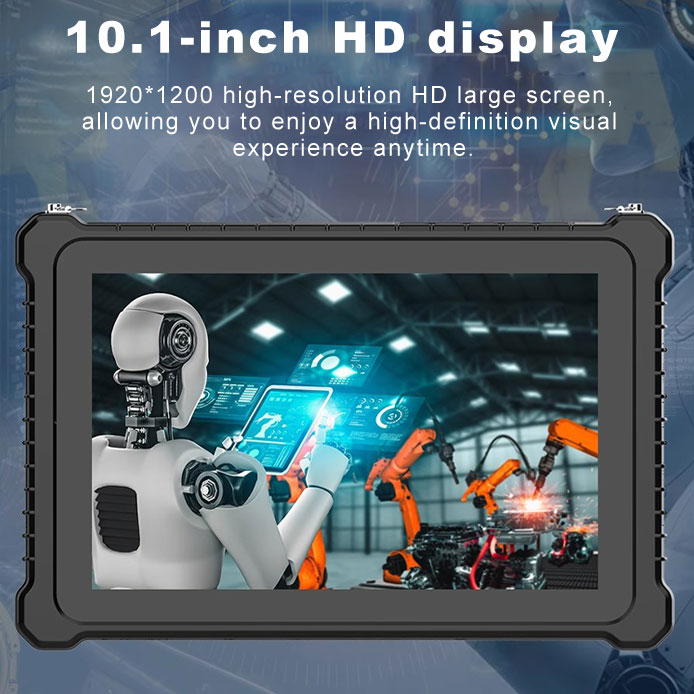
This is the part of the conversation the three frames set up, and the fleet answer splits cleanly by stop type. For cabinet rounds, the ST11-J rugged industrial tablet is built around the outdoor problem: a 10.1in IPS panel at 1200×1920 with an optional 1000-nit screen for direct sun, touch that publishes wet-hand and stylus support, and Windows 10 or 11 Pro for crews whose round forms already live on Windows. Its 6000mAh battery at 7.6V is rated for roughly 8.5 hours of use, and the chassis carries IP65 sealing with MIL-STD-810G certification at 1150±50g.
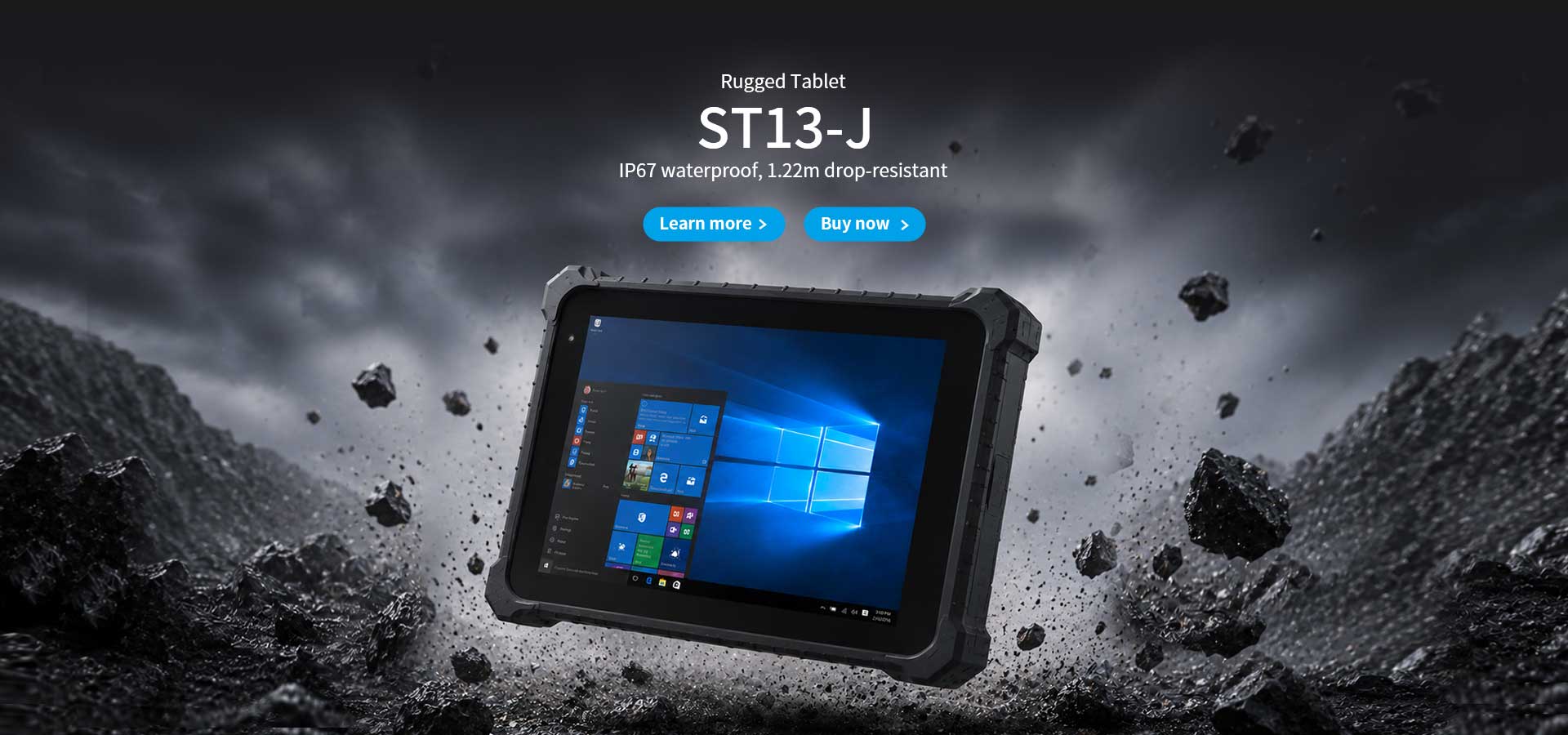
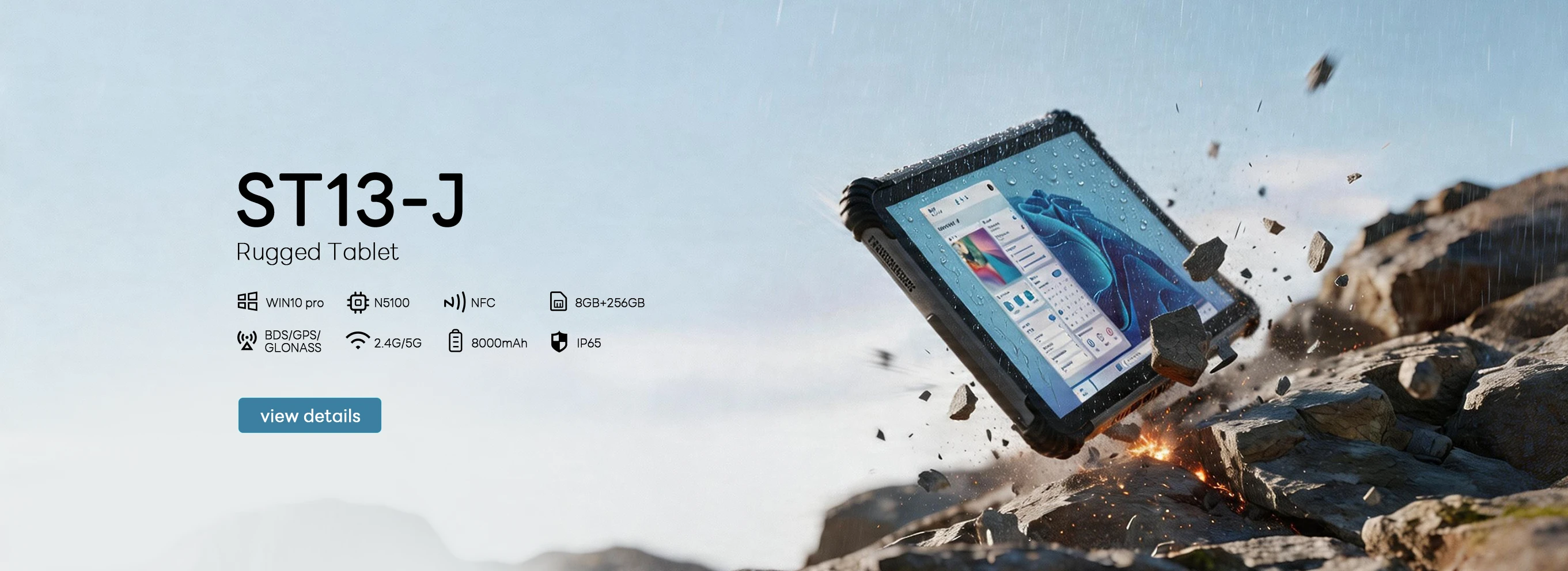
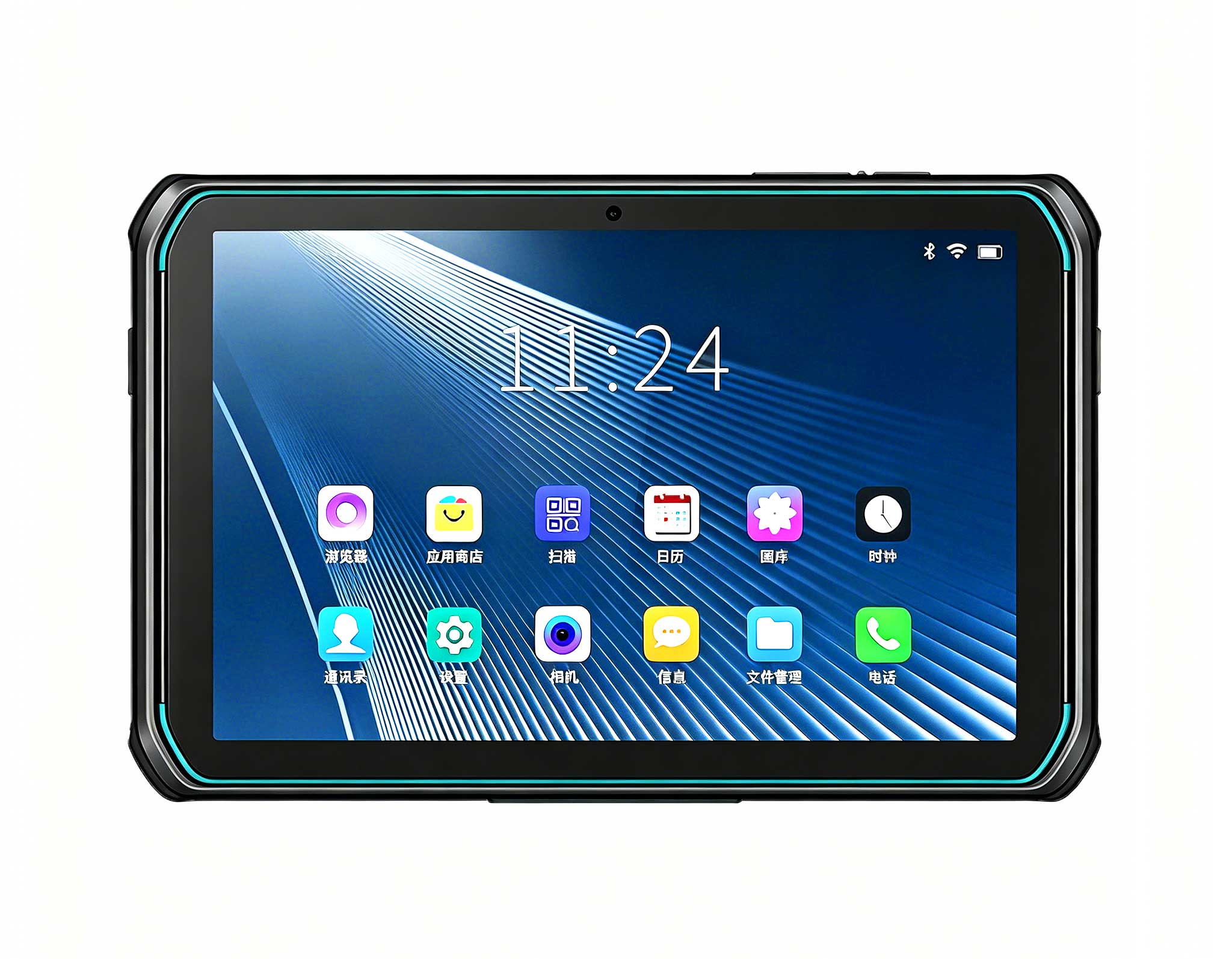
For the line walk, the RT81 4G rugged tablet takes the other side of the trade. It runs Android 16 on a Qualcomm octa-core platform, seals to IP67 with a 1.2m drop rating, and weighs under 650g, which is the difference an arm feels by the twentieth stop. Its 10000mAh battery at 3.8V is built for the multi-shift question, and the 10.1in FHD screen at 400 nits holds up under hall lighting. For the pump house and any stop where two people read at once, the ST13-J rugged industrial tablet brings a 13.3in panel at 1920×1080, an 8000mAh battery at 7.6V, IP65 with 1.2m drop resistance, and dock plus vehicle-mount options that suit a fixed room.
The published figures line up cleanly against the three stops, and the table below collects the fields that actually move the decision.
| Unit | Display | Battery | Sealing and Drop | Weight |
|---|---|---|---|---|
| ST11-J | 10.1in IPS, 1200×1920, 1000-nit optional | 6000mAh at 7.6V, about 8.5h use | IP65, MIL-STD-810G | 1150±50g |
| RT81 | 10.1in FHD, 1200×1920, 400 nits | 10000mAh at 3.8V, non-removable | IP67, 1.2m drop | under 650g |
| ST13-J | 13.3in IPS, 1920×1080, 400 nits | 8000mAh at 7.6V | IP65, 1.2m drop | 1450±50g |
One line of that table needs a caveat: the battery cells run at different voltages, so the mAh column is not a capacity ranking on its own. The honest reading is the operating-hours figure on the ST11-J, the multi-shift design intent on the RT81, and the fixed-room runtime on the ST13-J. The weight spread tells a plainer story, and the operating-system split, Windows on the two industrial tablets against Android 16 on the RT81, is the software decision that follows the customer's existing forms.
Digitalizing the pump house is not a bigger-screen problem; it is a belongs-in-this-room problem. A device that needs a desk, a stylus ritual or a reboot between entries will lose to the folder within a week, no matter what its spec sheet promises. The sequence that works in practice starts with the stop that generates the most transcription, mounts or docks a sealed panel at the writing point, keeps the entry form one screen deep, and lets the timestamp and the photo attach themselves. Because the ST13-J shares its family with the other two panels, the pump house joins the same management, the same accessories logic and the same support contact as the rest of the route, which is how a three-stop route becomes one fleet instead of three purchases. The clipboard does not have to lose the argument; it only has to lose the room.
The pattern from these three frames generalizes cleanly. Assign the light, sealed, long-runtime panel to whichever stop repeats the most steps, the sun-readable Windows panel to the outdoor stops, and the large-screen panel to the shared-reading rooms, then let one product family cover the whole route. The full range of rugged mobile computing solutions extends the same logic across handhelds and fixed terminals for crews that run mixed routes, and more deployment notes plus model-to-model breakdowns are collected in the product comparisons and competitor analysis section, including earlier field reports that started exactly the way this batch of photos did.