- Select Language
Enterprise Flagship SeriesEngineered for mission-c...
From the unknown so simpleUsed for mobile phones, ...
The R501 PDA combines a powerful MT6762 Octa-Core ...
R860-S 5.5-inch Industrial PDA with Thermal Printe...
️ X8 Series Handheld Label & Thermal Printing ...
Some feedback arrives as a survey score; the useful kind arrives as a photograph. This week a customer — an independent security and audio-visual reseller whose counter displays familiar names from the surveillance world — sent back two pictures hours after a shipment arrived, along with a message that every manufacturer hopes for: Working perfect. Thank you very much! The machines in the photos were a pair of compact hosts from our Mini PC line, already cabled, already mounted, already earning their keep on a working bench.
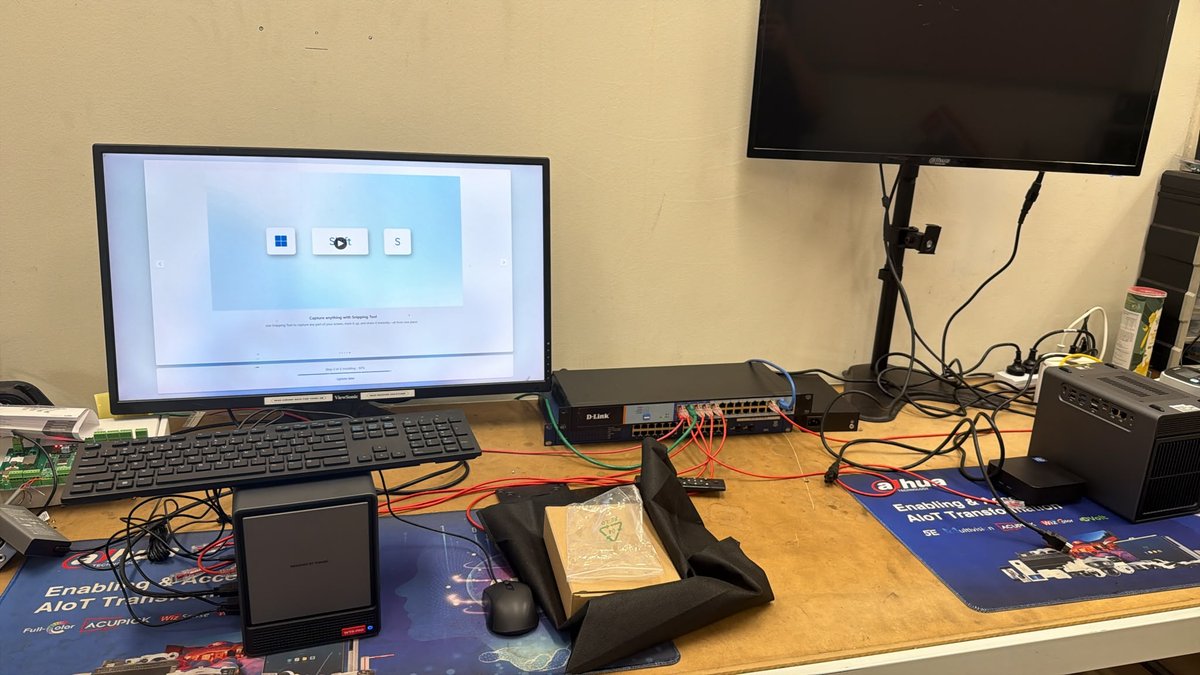
The photographs deserve a closer look, because they show how a reseller actually uses hardware like ours. One frame captures the workbench during setup: a monitor mid-configuration, a network switch feeding red and blue patch leads, and two mini PCs placed exactly where the day's work needed them. The other frame shows the shop floor itself — demo displays along the walls, a service counter with dual screens, and the kind of stock room that turns foot traffic into installation contracts.
A written review tells you whether a customer is satisfied. A photo taken mid-task tells you whether the product fit the job. In the first image, the smaller unit sits directly beneath the monitor it drives, close enough that its cables never cross the walkway; the larger unit stands at the far end of the bench beside a wall-mounted display, powering the feed. Nothing in the frame is staged for a catalog. That matters, because deployment honesty is the strongest signal a product photo can carry — the equipment went into a live working day, not onto a shelf. It also tells you something about the customer's trade. Security and audio-visual resellers judge hardware the way their own customers judge installations: by whether it disappears into the job. A unit that dominates a desk fails the test before anyone powers it on, and a unit that tucks under a monitor passes before a single cable is dressed.
Tracking notices usually arrive when nobody has time for them. This one was different: the customer unboxed the units between jobs, and by the time the follow-up message went out the same morning, both machines were already in service. There is a practical reason the ramp-up was that quick. Neither unit needs an unusual power brick, a proprietary adapter or a support call to reach a desktop, and both run the operating system the customer's trade already standardizes on. For a reseller, that gap between delivery and demonstration is where margin lives — hardware that waits is stock, and hardware that works the hour it arrives is inventory in motion. It also removes the quiet cost that rarely appears on an invoice: the half-day a technician would otherwise spend imaging machines before they can be shown at all.
The machine sitting beneath the monitor in the first photo is the Palm-sized miniPC, chosen for the counter. Its 800g chassis slides into the dead space under a display stand where a tower would never fit, and its port selection — two HDMI 2.1 outputs plus a Type-C that carries video — lets the dual-screen service position run from one small box. The Intel 12th-generation platform inside keeps the point-of-sale browser, the surveillance feed and a product demo open at once without the fan noise that would follow a bigger machine into a quiet shop.
On the sales floor that second role matters as much as the first. When a walk-in asks what the counter can do, the same small unit switches to a demonstration without a reboot, which keeps the conversation in front of the customer instead of behind a restarting desktop. Storage headroom helps here too: with two M.2 NVMe slots and two 2.5-inch SATA bays, the same machine can hold the demo library, the recorded walkthroughs and the paperwork archive on one box, so the counter position never has to shuffle files to make room for the next visitor.
At the far end of the bench stands the WTR PRO AMD, and its placement tells you what the reseller intends for it. This is the storage-heavy member of the Mini PC line — a four-bay SATA design built for sustained duty, with a metal chassis that sheds heat the way a bench machine needs to when it never powers down. Dual 2.5-gigabit Ethernet ports let the camera traffic, the shop network and the demo bench live on separate legs, which is exactly how an installer would segment a customer site. This is the unit that will hold the recordings and stay powered through the trading day rather than the demo hour.
Four SATA bays change what a bench machine can be responsible for. Instead of a single system drive, the WTR PRO AMD can hold rolling camera footage, the demo library and the archive of install photos on separate drives, so one workload filling a disk never takes the others down. The metal body does quiet thermal work all day — no fan ramping during a customer conversation — and the second 2.5-gigabit port means the surveillance VLAN can be isolated from the sales floor network without buying a separate appliance. For a shop that resells and installs in the same week, that is one chassis doing the work of two.
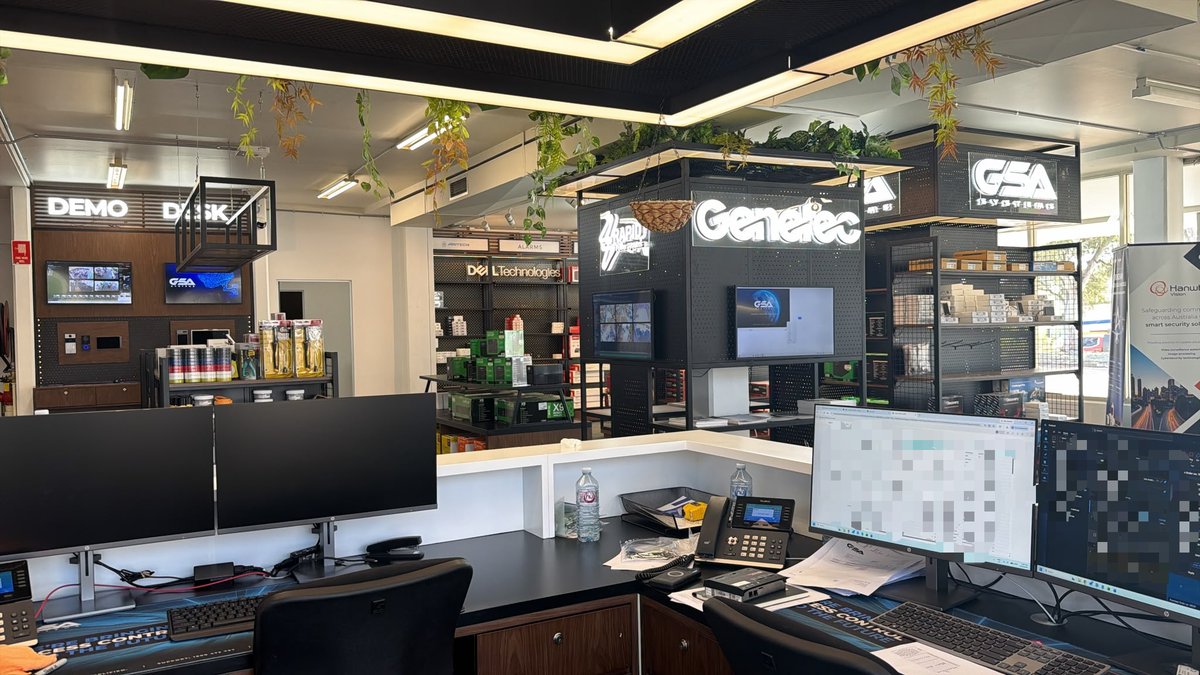
The second photograph shows why this customer bought demo-capable hardware at all. The shop runs brand-lit display walls and a service position with two monitors, and the machines we supplied now sit behind both. A reseller whose floor can demonstrate a working feed on demand sells installations, not boxes — and the fastest way to lose that advantage is a host that needs ten minutes of fiddling before it can show anything. Compact hosts that boot straight into a familiar desktop keep the demonstration where it belongs: in the hands of the person walking past the window. And because both units share the same product family, the sales story stays simple — one bench, one vendor, one support contact — which is exactly how this trade prefers to buy.
The published figures explain the division of labor between the two units, and why one sits under a counter display while the other works beside a wall screen.
| Unit | Storage | Display Output | Network |
|---|---|---|---|
| Palm-sized miniPC | 2x M.2 NVMe plus 2x 2.5-inch SATA | 2x HDMI 2.1 plus Type-C, triple 8K | 2.5G Ethernet |
| WTR PRO AMD | 4x SATA drive bays | HDMI plus DisplayPort plus Type-C, triple 4K | Dual 2.5G Ethernet |
One line of that table does more work than the rest: the storage gap. The 800g unit earns its place by disappearing into furniture with just enough local disk for the counter; the four-bay unit earns its place by becoming the shop's permanent shelf for footage, libraries and archives.
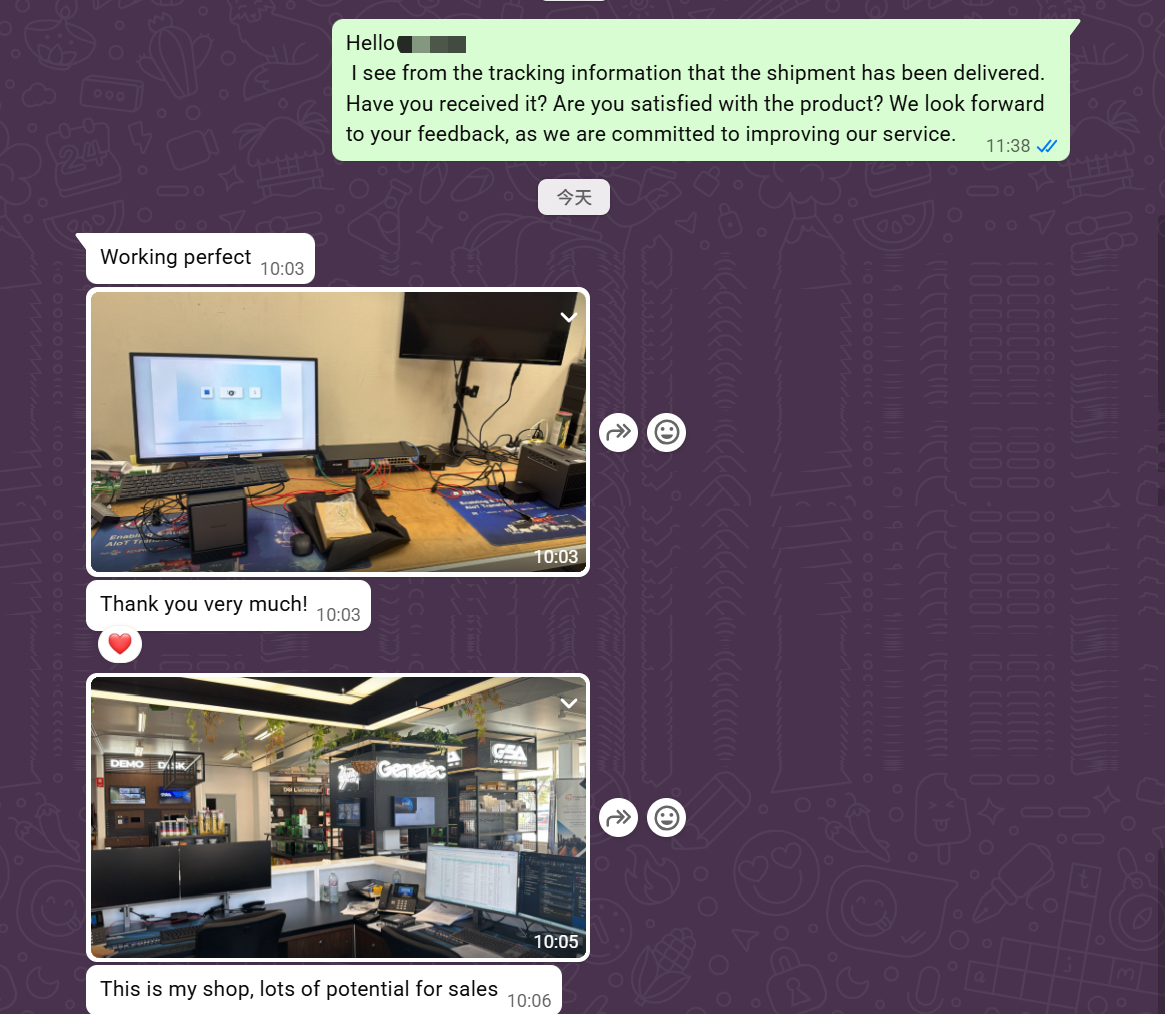
The follow-up message asked the standard questions — received, satisfied, anything to improve — and the reply came back with the two photographs and a short line: Working perfect. Then, minutes later, a picture of the shop floor with its own comment: This is my shop, lots of potential for sales. That second sentence is the one worth keeping. It says the machines were not purchased as end-user tools but as selling tools, and that the customer had already planned the revenue they would carry. A reply like that also settles the service question before it is asked: a buyer who photographs the installation and volunteers the pictures is a buyer who will send the next message from the same bench, and repeat orders follow the same route the first shipment took.
The pattern from this visit generalizes cleanly. Pick the light unit for anything a customer will see up close, the storage unit for anything that runs all day, and let the same product family cover both ends of the bench. The full Hotus lineup extends the same logic across rugged tablets and handhelds for the installation crews themselves, and more deployment reports from the field are collected in the news and comparisons section — including earlier notes on conference rooms and signage walls that started exactly the way this shipment did.