- Select Language
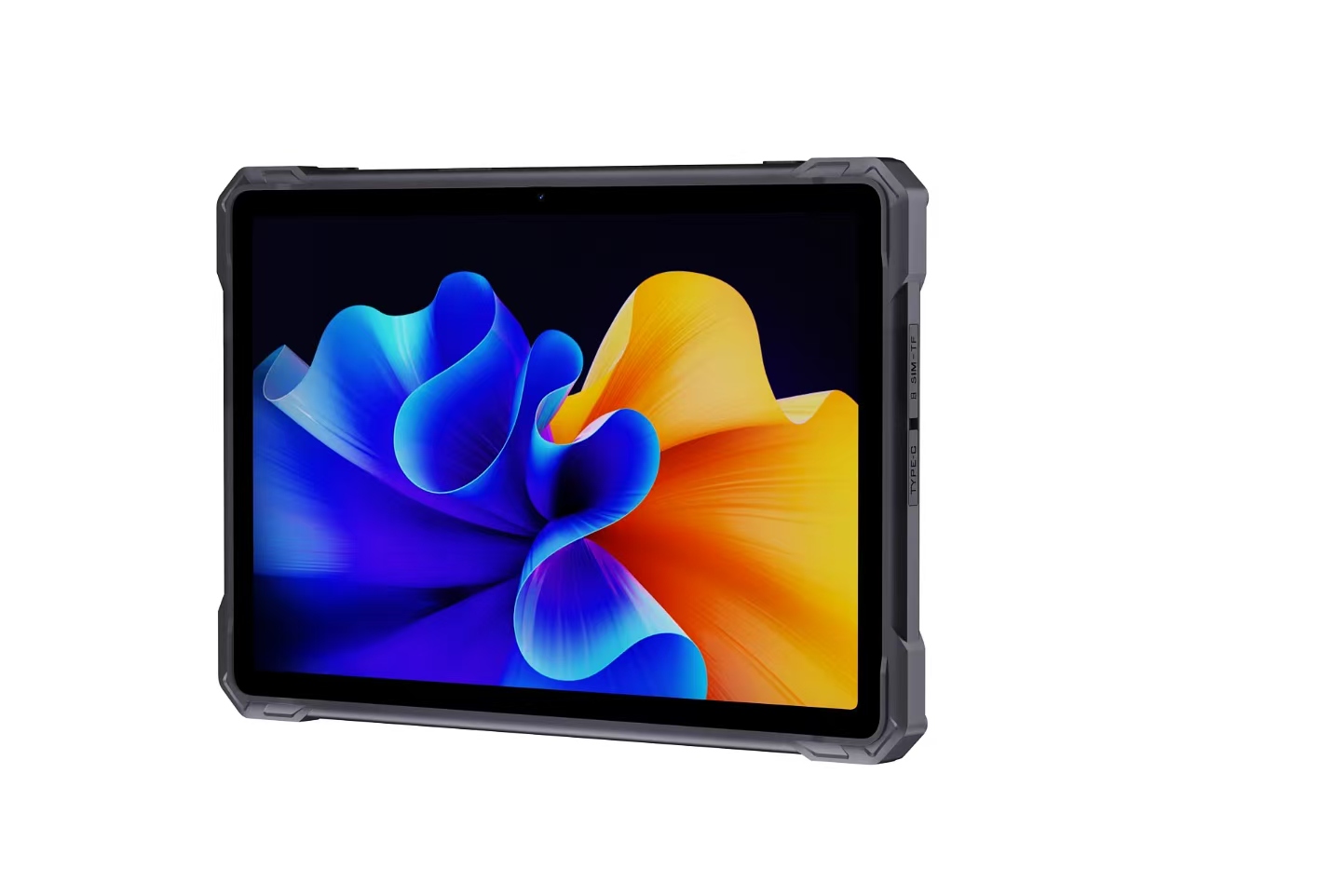
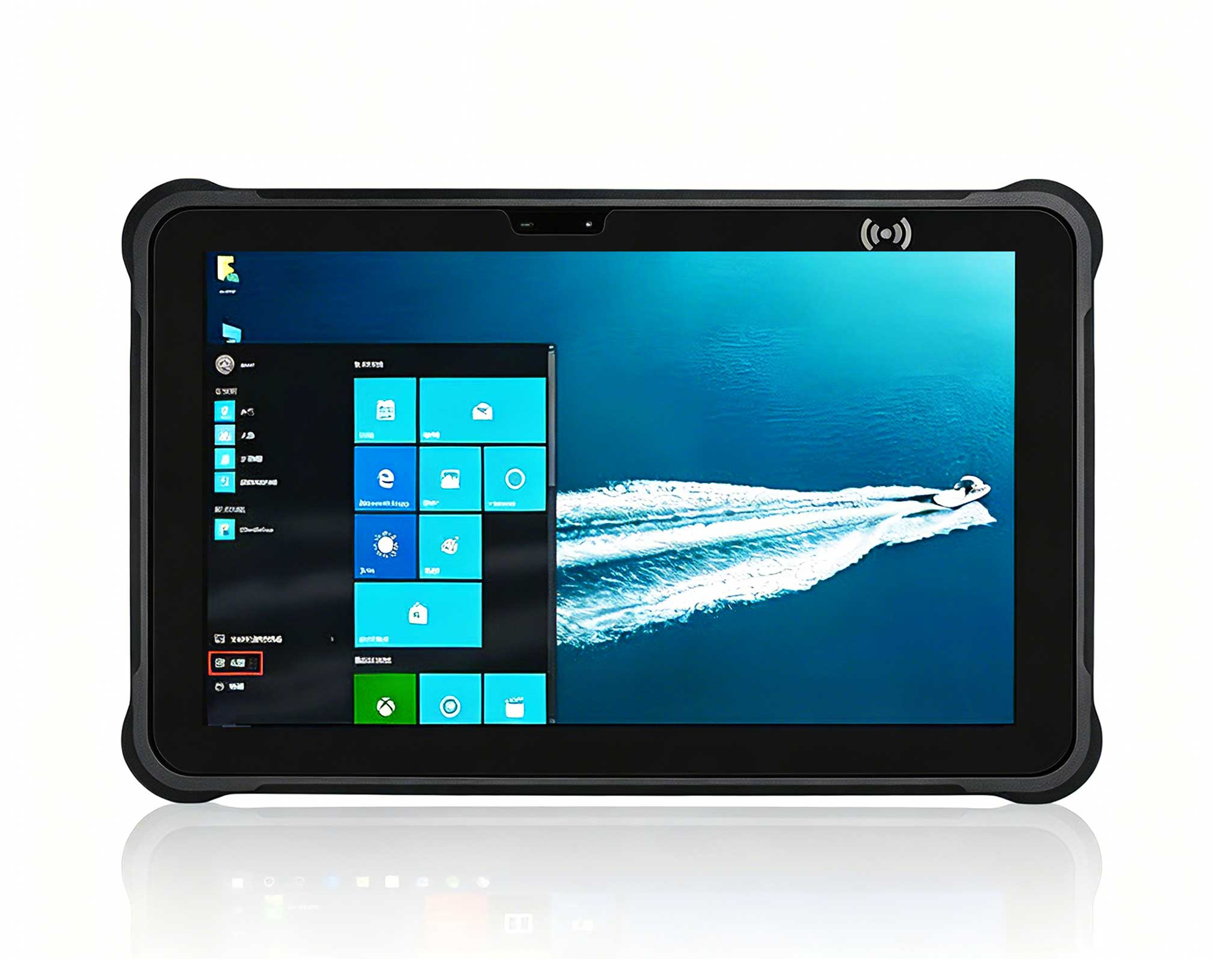
RT82 5G Rugged Tablet | 10.1" FHD 400nit | Qu...
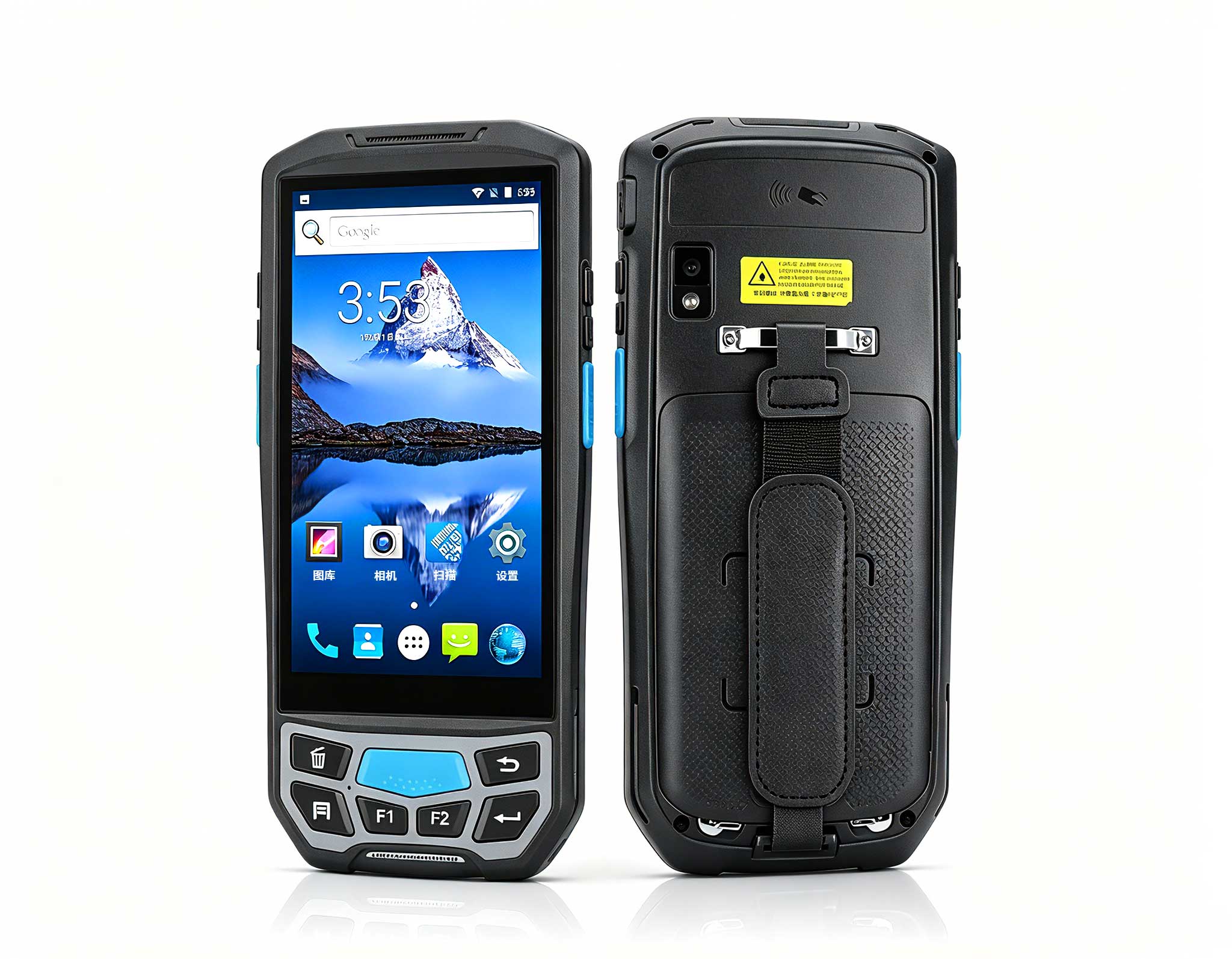
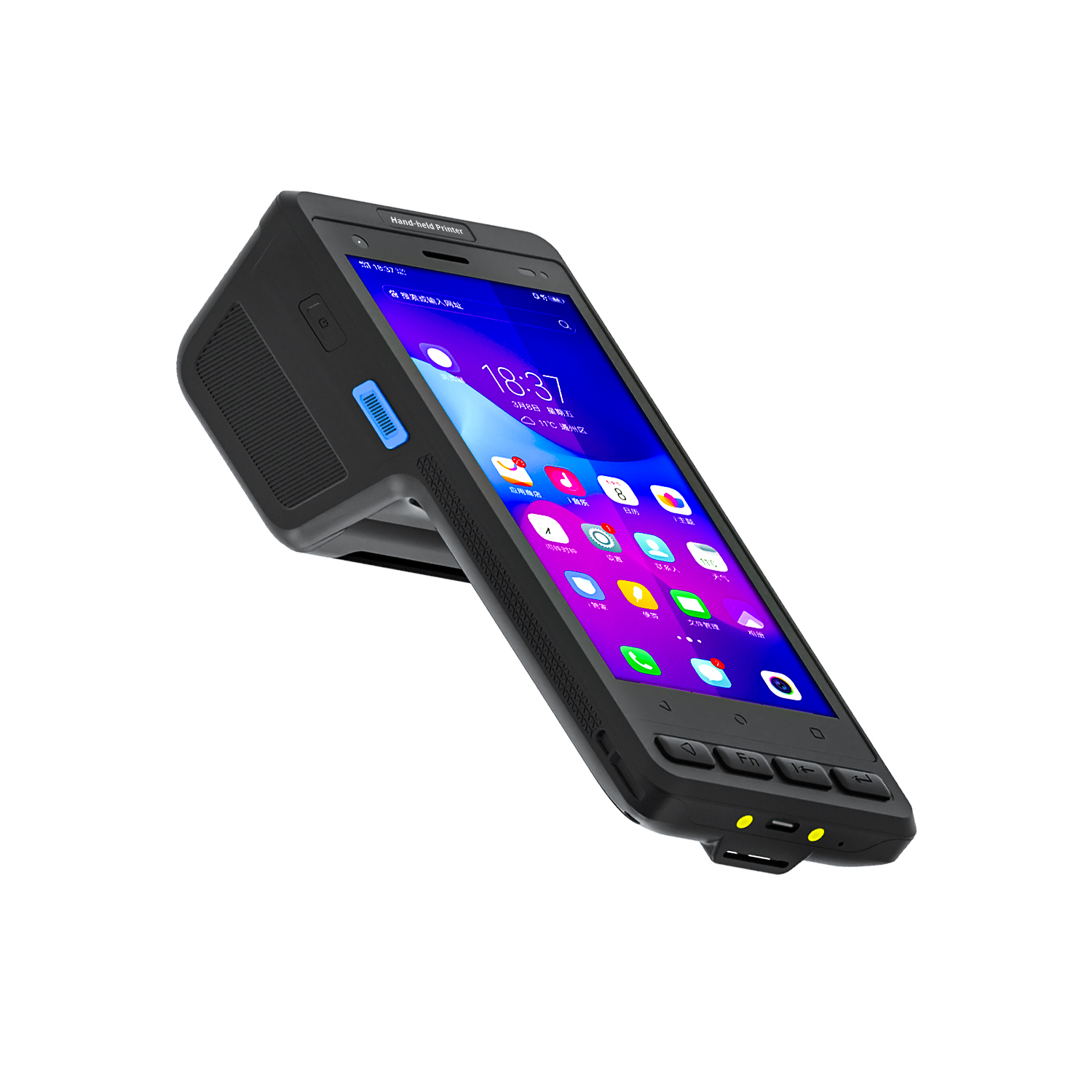
The U9000 handheld PDA combines advanced barcode s...
P11 Series Next-Gen Enterprise Rugged Industrial ...
RT81 4G Rugged Tablet | 10.1" FHD 400nit | Qu...
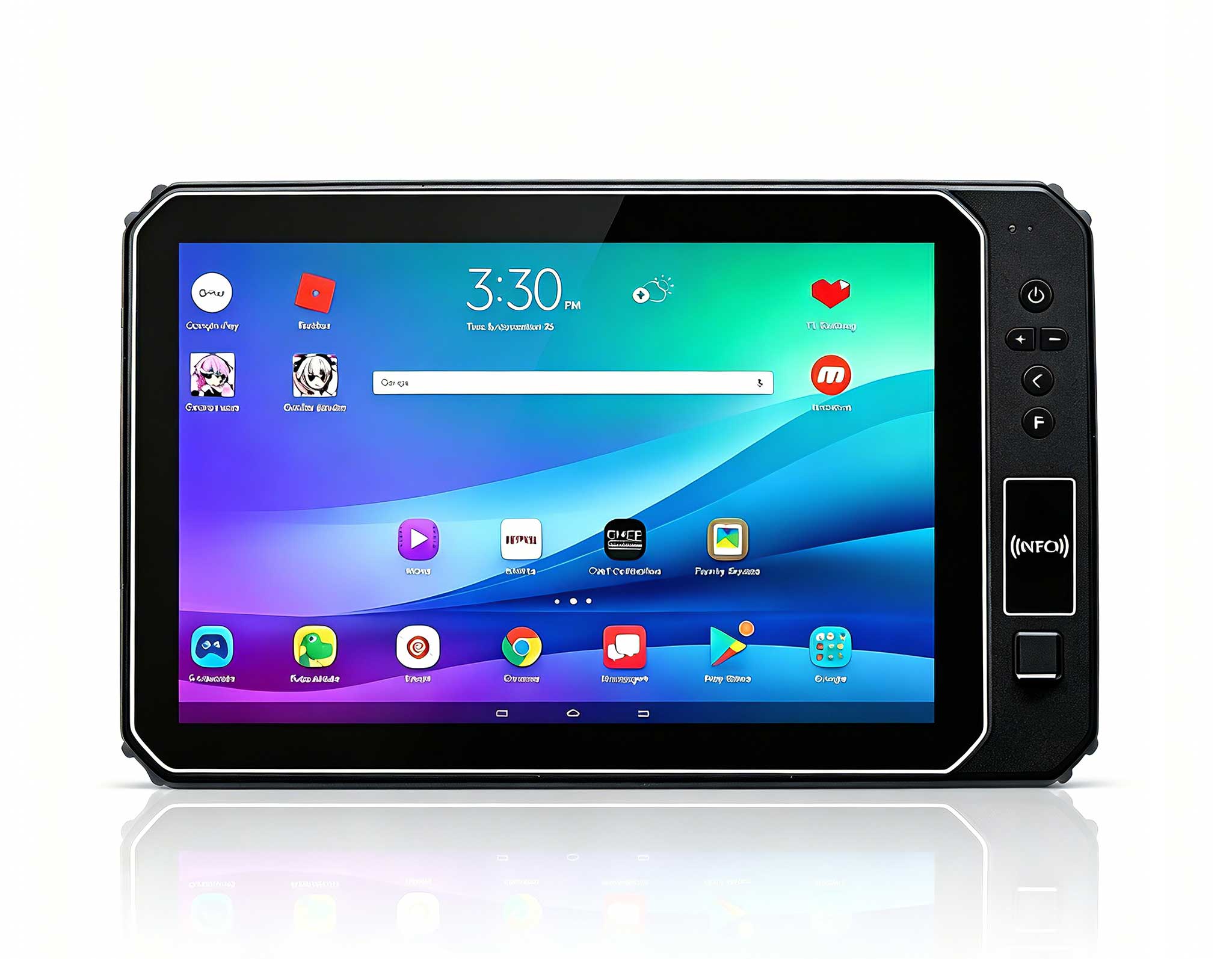
This 10-inch Android rugged tablet is designed for...
Full SpecificationsModelHotus ST11‑JOSWindows 10 P...
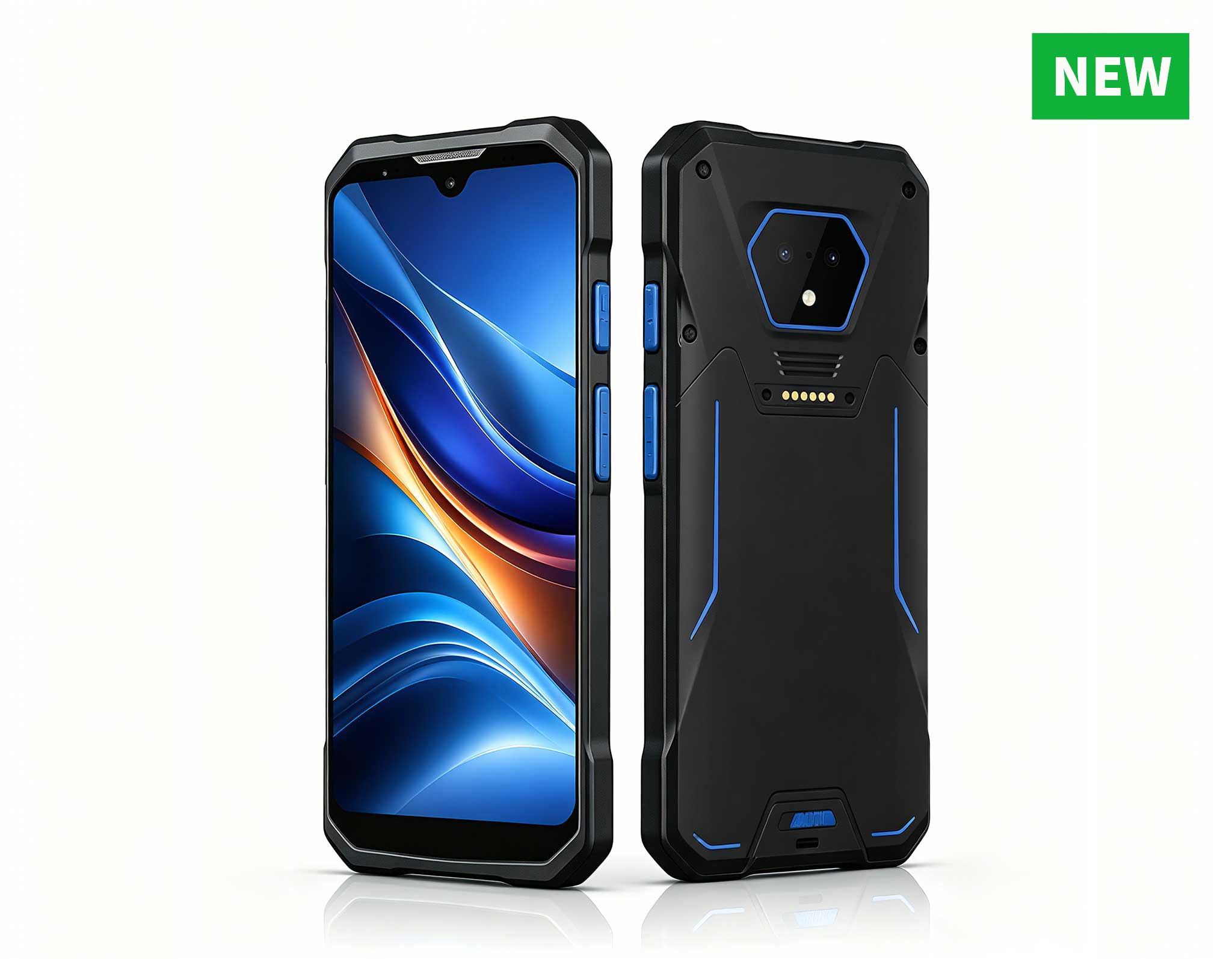
RS51 4G Rugged Handheld Terminal | 6.3" FHD+ ...
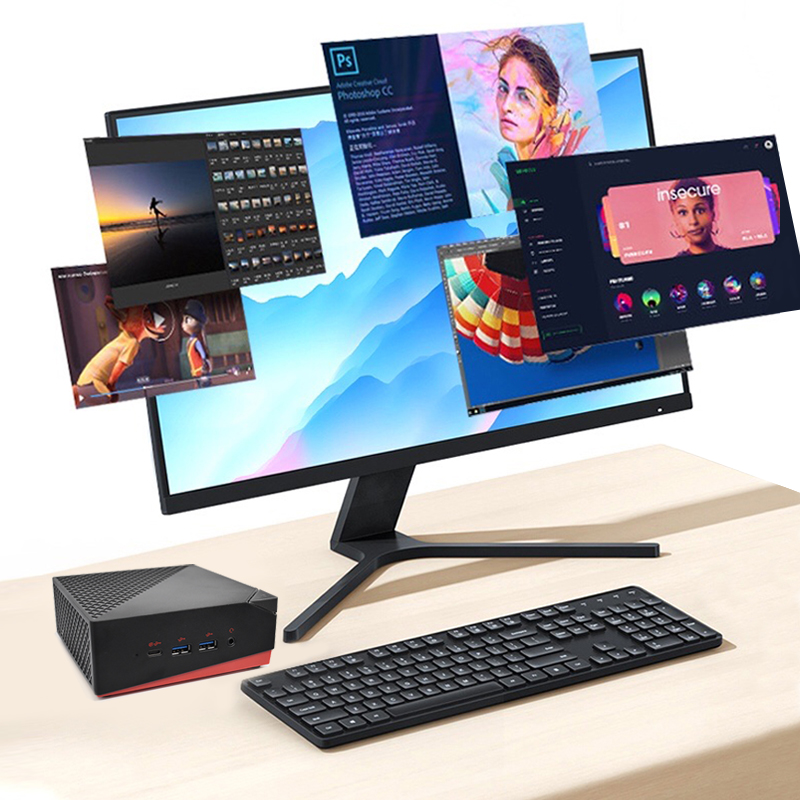
The AMD Mini PC Windows 10 Pro is a compact yet po...
️ X8 Series Handheld Label & Thermal Printing ...
From the unknown so simpleUsed for mobile phones, ...
Full SpecificationsModelHotus ST13‑UOSWindows 10 P...
Over a decade in industrial automation, I’ve watched the pendulum swing hard from centralized cloud architectures toward local processing. The simple truth is that sending every sensor tick to a remote data center introduces latency, bandwidth bills, and security vulnerabilities that break real-time control. That’s why industrial edge computing has become the backbone of modern IoT deployments—not just a buzzword, but a practical necessity. The real hurdle? Picking hardware that survives the factory floor, speaks the right protocols, and doesn’t require a PhD to install. In my experience, the installation phase is where most edge projects live or die. So let me walk you through three distinct form factors from Hotus Technology that tackle different tiers of this challenge. Whether you’re consolidating PLC data, running vision inference, or deploying a fleet of environmental sensors, the physical and logical placement of your edge node matters. For a deeper dive into the broader architecture, check out our Mini PC solutions designed for industrial edge computing.
The WTR PRO AMD isn’t your average mini PC. It’s a hybrid that blurs the line between a network-attached storage unit and a powerful edge controller. I lean on this device for scenarios where data aggregation and local logging are non-negotiable. Picture a production line with multiple vision cameras and PLCs churning out gigabytes of log data daily. The WTR PRO AMD, with its 4-bay NAS capability, lets you store weeks of high-resolution footage locally, slashing cloud egress costs. Its AMD processor handles containerized IoT applications like Node-RED or a local MQTT broker while managing RAID storage without breaking a sweat. Installation is straightforward: mount it in a control cabinet using the included VESA bracket, connect to your local switch, and configure the storage array via BIOS. For a full spec breakdown, visit the WTR PRO AMD product page.
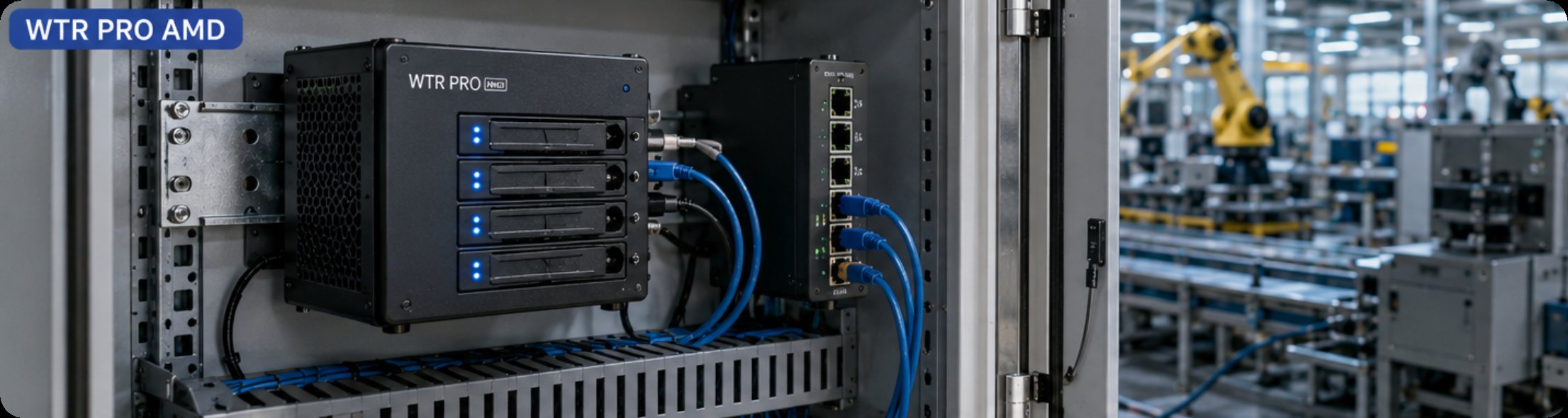
Its core strength lies in data integrity and processing at the source. The unit supports up to 64GB of RAM, making it suitable for running lightweight databases like InfluxDB directly on the edge. For a typical deployment, I advise installing the OS on an M.2 SSD and dedicating the four SATA bays to a RAID 5 array for storage. This model is best suited for discrete manufacturing, warehouse logistics, and any environment where data sovereignty and local analytics are required before sending summaries to the cloud.
When your edge computing task moves beyond data logging into real-time AI inference—think defect detection or predictive maintenance—you need raw CPU and GPU muscle. The HCAR5000 MI, powered by an AMD Ryzen 5000H Series processor, is my go-to for this. It’s a fan-cooled unit designed for sustained high loads, essential for running OpenCV or TensorFlow Lite models on continuous video streams. Installation here requires attention to thermal management. I typically mount it horizontally with a 2-inch clearance above the vents to ensure adequate airflow. The HCAR5000 MI offers multiple display outputs and USB 3.2 ports, perfect for connecting high-resolution industrial cameras directly.
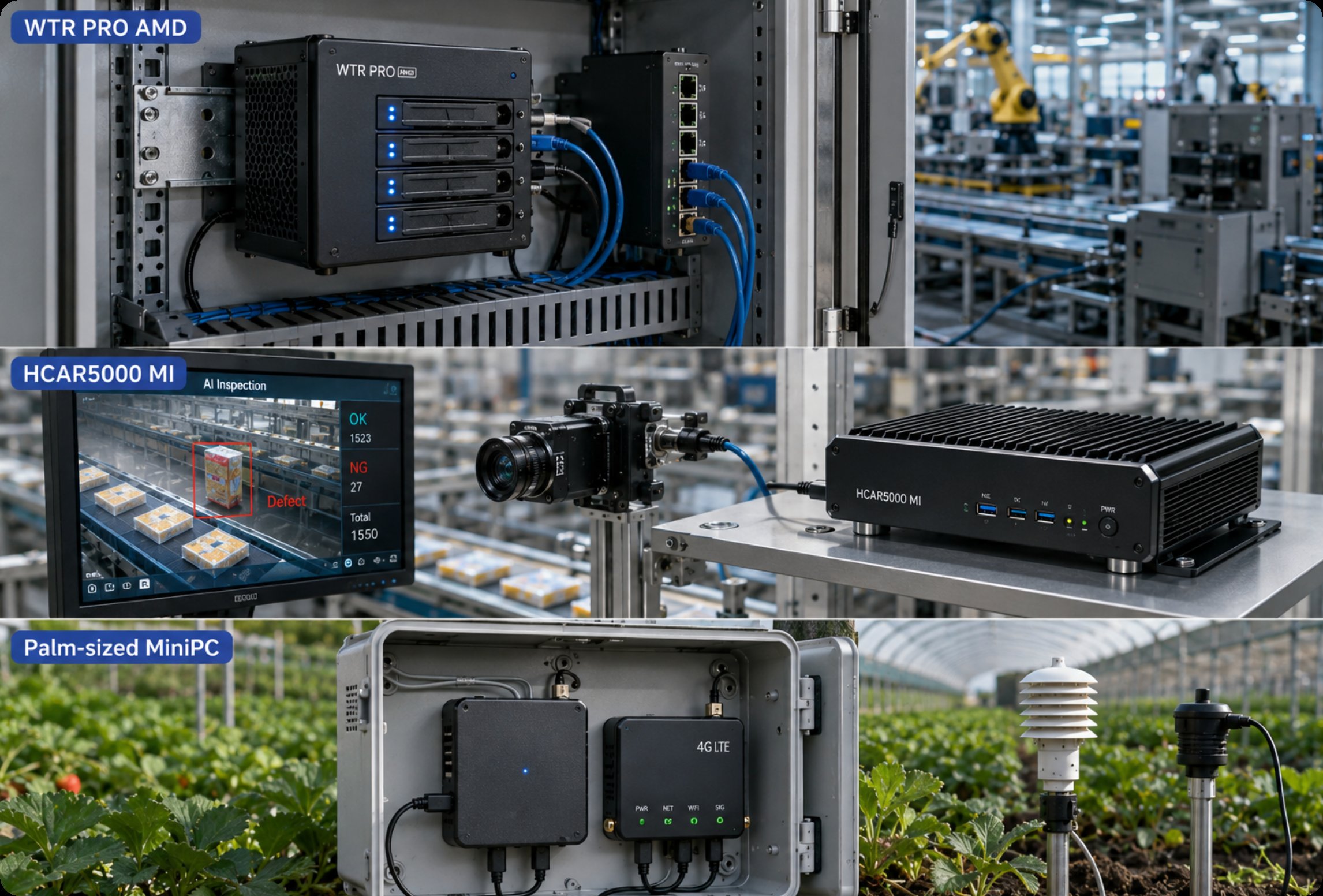
In an IoT deployment, this unit acts as a local server. It aggregates data from dozens of sensors via its dual 2.5G Ethernet ports, processes the data using complex algorithms, and pushes only actionable insights upstream. For example, in a packaging plant, it can analyze camera feeds for seal integrity in real-time, triggering a reject mechanism without any cloud round-trip. It’s a robust solution for smart manufacturing and high-speed automation lines. View the full technical breakdown of the HCAR5000 MI on the product page.
Not every edge computing problem requires a server-class device. For simple protocol conversion, data buffering, and low-volume telemetry, the Palm-sized miniPC is the most practical and cost-effective option. It fits in the palm of your hand and can be powered via USB-C, making it incredibly easy to deploy in tight spaces like junction boxes, near conveyor motors, or inside existing IoT sensor enclosures. Installation is often a matter of plugging it in, connecting to Wi-Fi or a cellular modem, and installing a lightweight Linux distribution. Its low power draw—typically under 15W—means it can be powered by a PoE injector or a small battery backup, ensuring uptime during power fluctuations.
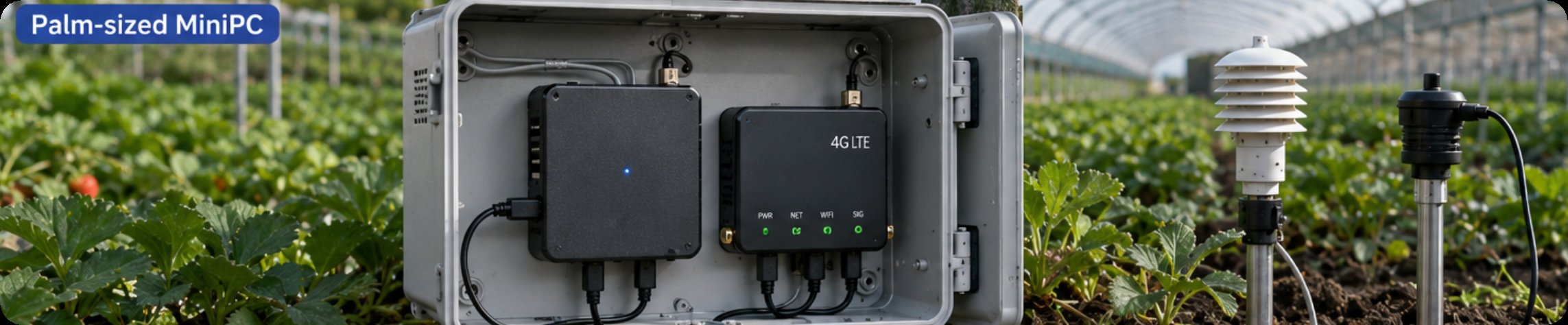
I see this device used extensively in smart agriculture, building management, and remote asset tracking. It’s perfect for running a single service, such as an MQTT bridge or a Modbus-to-OPC UA converter. The trade-off is processing power, but for 80% of simple IoT gateway tasks, it’s more than sufficient. It’s the ideal entry point for companies looking to start their edge computing journey without a massive capital investment. The new WTR PRO AMD series shares a similar design philosophy but scales up for more demanding storage needs.
To help you make a direct comparison, here is a table outlining the key specifications and ideal use cases for each model.
| Feature | WTR PRO AMD | HCAR5000 MI | Palm-sized MiniPC |
|---|---|---|---|
| Processor | AMD (High-efficiency, multi-core) | AMD Ryzen 5000H Series | Low-power Intel/AMD (Fanless options) |
| Memory (Max) | Up to 64GB DDR4 | Up to 64GB DDR4 | Up to 16GB LPDDR4/LPDDR5 |
| Storage | 4x SATA Bay + M.2 SSD | M.2 SSD + 2.5" SATA Bay | eMMC / M.2 SSD |
| Network | Dual 2.5G LAN | Dual 2.5G LAN | 1G LAN / Wi-Fi 6 |
| Cooling | Active Fan (Smart Control) | Active Fan (High Performance) | Passive (Fanless) |
| Protection Level | Industrial-grade (Vibration resistant) | Industrial-grade (Wide temp range) | Commercial-grade (Dust resistant) |
| Power Consumption | 25W - 45W | 35W - 65W | 5W - 15W |
| Best Scenario | Data Aggregation & Local Storage | AI Inference & High-speed Processing | Sensor Gateway & Protocol Conversion |
Your selection should be driven by three primary factors: data volume, processing latency, and environmental conditions. If you’re deploying a system that needs to store terabytes of raw IoT data for a month before analysis, the WTR PRO AMD is your only logical choice due to its 4-bay NAS. If your project involves real-time video analytics on a factory floor, the HCAR5000 MI is necessary to ensure frames are processed within milliseconds. For simple tasks like reading a temperature sensor every minute and sending the value to the cloud, the Palm-sized MiniPC is the most efficient and cost-effective solution. Always consider the physical deployment environment. Fanless, low-power devices like the Palm-sized MiniPC are superior in dusty or vibrating environments, while actively cooled units like the HCAR5000 MI are better for enclosed cabinets where heat buildup is a concern. For further reading on deployment strategies, we encourage you to explore our mini PC solutions and related technical guides.
Selecting the right hardware is the first step to a successful industrial IoT deployment. Each of these Hotus Technology mini PCs offers a specific set of strengths designed to solve real-world edge computing challenges. Whether you need massive local storage, high-speed AI processing, or a tiny, low-power gateway, there is a solution here for you. Contact our team today to discuss your specific installation requirements and get a quote for your next project. We can help you architect a system that is reliable, scalable, and ready for the demands of Industry 4.0.