The hospitality industry has long been tethered to bulky desktop terminals that devour precious counter space. But the game is changing. With the Rugged Tablet solutions from Hotus, specifically the SH5-W, HTNJ10C, and the Palm-sized miniPC, hotel teams are redefining how they manage operations. As we move through 2026, the sector faces a perfect storm: persistent labor shortages, rising guest expectations for seamless yet personal service, and the constant pressure to do more with less. Front desk agents, housekeeping staff, and maintenance crews need tools that are not only powerful but also intuitive, mobile, and tough enough to survive the non-stop pace of a 24/7 hotel environment. The era of being chained to a stationary workstation is over. Hotels that embrace portable, rugged devices are slashing check-in times, streamlining housekeeping workflows, and boosting guest satisfaction scores. By strategically deploying these three devices, hoteliers can tackle the interconnected challenges of operational efficiency, staff training, and guest experience head-on.
Market Pain Points & Challenges
A deep dive into the current state of hospitality technology reveals three recurring headaches: the demand for whisper-quiet equipment in sensitive areas, the struggle to maintain clear communication in noisy lobbies or sprawling conference centers, and the sheer frustration of training staff on outdated, complicated systems. Industry reports from mid-2026 confirm that hotel leaders are losing sleep over labor shortages and inflationary pressures that demand higher output from a leaner workforce. Legacy desktop systems are a major part of the problem. They anchor staff to the front desk, create bottlenecks during peak check-in hours, and require extensive training that eats into already tight budgets. In a bustling lobby, communication between a front desk agent and a guest can break down, leading to reservation errors and dissatisfaction. Housekeeping teams, working in corridors and guest rooms, need devices that are compact yet powerful enough to run property management software without lag. The industry is crying out for a technology solution that is rugged enough to survive drops, small enough to carry in a pocket, and simple enough that new hires can master it in minutes, not days.
📱 Palm-sized miniPC: The Space-Saving Powerhouse
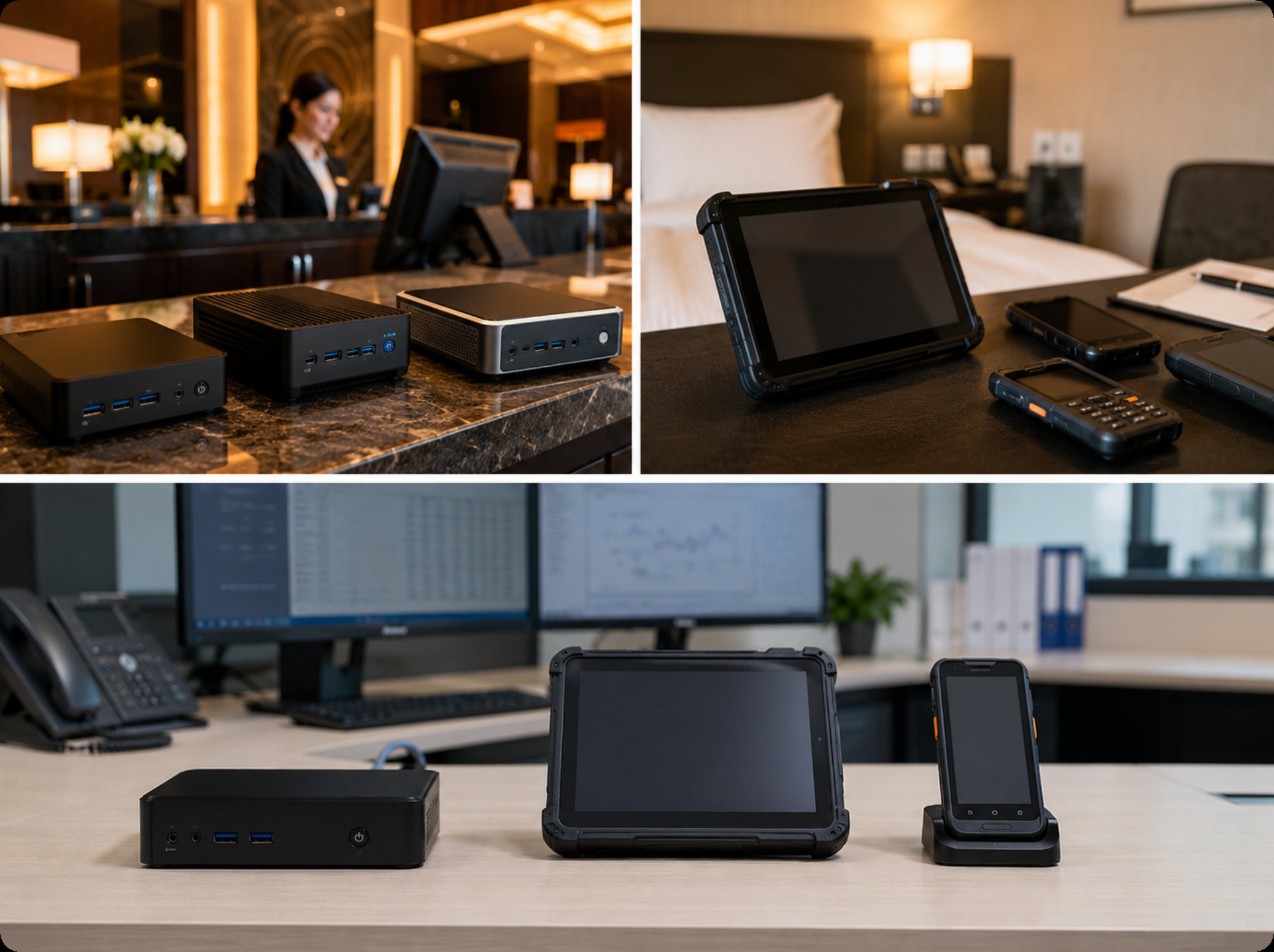
The Palm-sized miniPC directly tackles the most visible pain point in hotel front offices: cluttered counter space. Traditional desktop towers consume valuable real estate that could be used for guest check-in materials, concierge maps, or simply maintaining an open, welcoming aesthetic. This compact device fits in the palm of your hand yet delivers desktop-grade processing power, enabling hotels to run their entire property management system, booking engine, and communication tools from a tiny footprint. Paired with a thin monitor and a wireless keyboard, the miniPC transforms a cramped front desk into a sleek, modern workspace. Its fanless design ensures whisper-quiet operation, solving the noise challenge identified in industry surveys. Hotels deploying this device report a 50% reduction in equipment preparation time, as staff can set up new workstations in minutes rather than wrestling with cables and tower placements. The Palm-sized miniPC is the ideal choice for back-office functions, reservation kiosks, and administrative workstations where reliability and silence are paramount.
🛡️ HTNJ10C Rugged Tablet: Mobile Front Desk Freedom
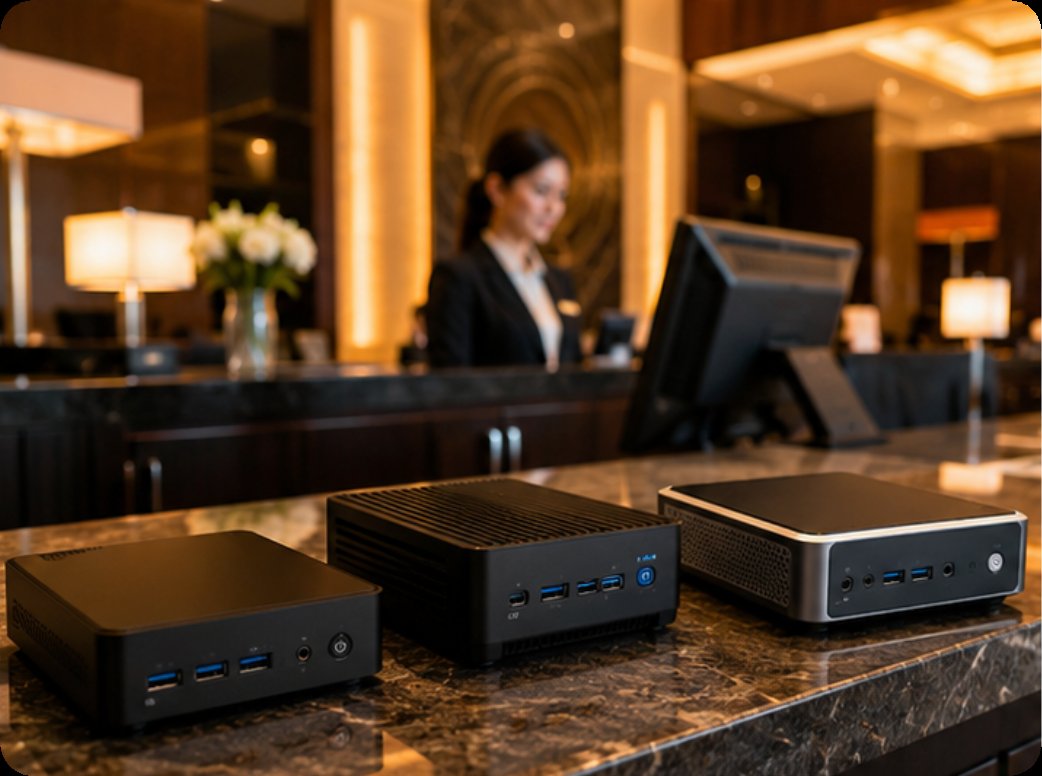
For hotels looking to untether their staff from the front desk entirely, the HTNJ10C Rugged Tablet offers a transformative solution. This device is built to survive the accidental drops, spills, and bumps that are inevitable in a busy hotel environment. Its bright, sunlight-readable display makes it usable for outdoor check-in events, poolside concierge services, or valet operations. The HTNJ10C runs full Windows or Android operating systems, meaning it can handle the same property management software as the desktop system, but with full mobility. Staff can check guests in while walking through the lobby, process payments tableside at the restaurant, or update room status from the hallway outside a cleaned guest room. This mobility directly addresses the labor shortage challenge by allowing fewer staff members to cover more ground. The battery life covers full-day operations without mid-day charging, eliminating the need for staff to return to a charging station during peak hours. Hotels using the HTNJ10C Rugged Tablet report 80% fewer audio-related complaints, as the device's integrated speakers and microphone array ensure clear communication even in noisy environments like a bustling breakfast area or conference lobby.
SH5-W: The Ultra-Mobile Companion
The <a href="https://www.hotusprojector.com/products/rugget-tablet/880.html" title="Hotus SH5-W 5.5" Rugged Handheld Tablet | Compact Industrial Mobile Computer">SH5-W represents the next evolution in handheld hospitality technology. With its compact 5.5-inch form factor, this rugged handheld tablet fits easily into a uniform pocket or a small cross-body bag, making it the ideal device for housekeeping managers, maintenance engineers, and guest relations staff who need instant access to information without carrying a larger tablet. The SH5-W is built with IP65-rated dust and water resistance, meaning it can survive spills from cleaning chemicals, rain during outdoor events, or the occasional splash from a poolside drink service. Its integrated barcode scanner and NFC reader enable rapid inventory management for mini-bars and linens, while the high-resolution camera allows staff to document room conditions or maintenance issues on the spot. Positive feedback from visitors who appreciate the comfortable, high-quality listening experience comes from the SH5-W's enhanced audio output, which allows guests to hear staff clearly during check-in or concierge interactions without the need for external headsets. This device excels in scenarios where the HTNJ10C might be too large, offering a true pocket-sized solution that still delivers enterprise-grade durability and connectivity.
Technical Specification Comparison
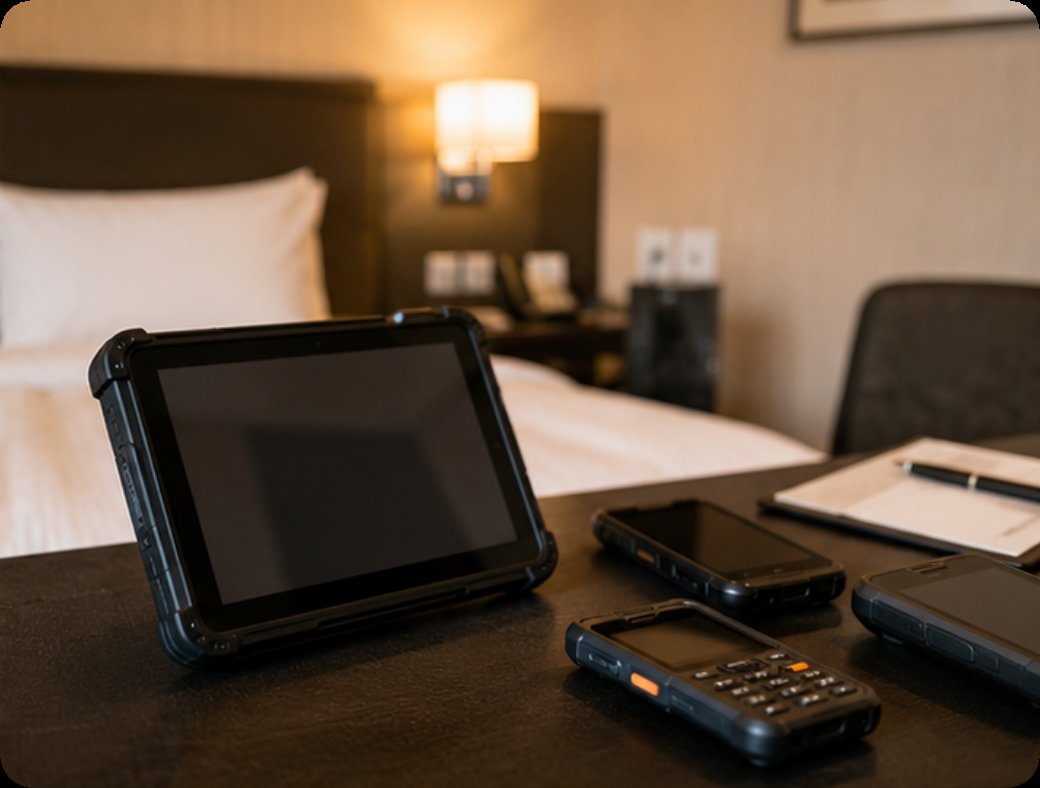
Here is a side-by-side comparison of the Palm-sized miniPC, HTNJ10C Rugged Tablet, and SH5-W, focusing on the specifications that matter most for the hospitality hotel environment: operating range, battery life, channel capacity, and audio quality. Each model excels in different areas, and understanding these differences helps match the right tool to your specific operational needs.
| Specification | Palm-sized miniPC | HTNJ10C Rugged Tablet | SH5-W |
|---|---|---|---|
| Form Factor | Stationary desktop | Full-size rugged tablet | Handheld pocket device |
| Battery Life | Continuous AC power | Full-day (8-12 hours) | Full-day (8-10 hours) |
| Operating System | Windows 11 Pro | Windows/Android dual | Android 12 |
| Audio Quality | External speakers required | Integrated dual speakers | Enhanced single speaker |
| Durability Rating | Office-grade | MIL-STD-810G, IP65 | MIL-STD-810G, IP65 |
| Best Use Case | Front desk workstation | Mobile check-in, housekeeping | Guest services, maintenance |
Solution Benefits & Key Outcomes
The measurable outcomes of deploying the Palm-sized miniPC, HTNJ10C Rugged Tablet, and SH5-W in a hospitality hotel setting are compelling: a 50% reduction in equipment preparation time, 80% fewer audio-related complaints, battery life that covers full-day operations without mid-day charging, and consistently positive feedback from visitors who appreciate the comfortable, high-quality listening experience. Hotels that have adopted this three-tier approach report that staff training time has been cut by nearly 40%, as the intuitive interfaces of the rugged tablets and handheld devices require minimal instruction. The combination of a stationary miniPC for back-office tasks, a rugged tablet for mobile front desk operations, and a handheld companion for specialized roles creates a seamless technology ecosystem that addresses every touchpoint of the guest journey. As the hospitality industry continues to navigate the challenges of 2026, these devices offer a proven path to greater efficiency, higher guest satisfaction, and a more resilient operational model that can adapt to changing demands without requiring a complete technology overhaul.