Here is the reality: most Industrial Edge Computing solutions fail to address edge computing devices failing in harsh industrial environments due to inadequate ruggedization. That is why more organizations are turning to RT82 Rugged Tablet, HCAR5000 MI and HTYJ10A Rugged Tablet for a fundamentally different approach. These devices represent a technological evolution that bridges the gap between high-performance computing and the physical demands of factory floors, oil rigs, and outdoor logistics hubs. For organizations seeking reliable hardware, a Mini PC like the HCAR5000 MI offers a compact yet powerful foundation for edge deployments.
The convergence of edge computing and industrial IoT has created unprecedented demand for hardware that can process data locally while surviving extreme conditions. Traditional commercial-grade equipment simply cannot withstand the vibration, temperature extremes, dust, and moisture found in real industrial settings. The HCAR5000 MI addresses this challenge with a compact yet powerful mini PC architecture, while the HTYJ10A Rugged Tablet and RT82 Rugged Tablet bring mobile edge computing capabilities directly to field workers. Together, these three products form a comprehensive ecosystem that supports the full spectrum of industrial edge computing scenarios.
Market Pain Points and Challenges
Customers deploying equipment for Industrial Edge Computing consistently report that reliability is their number one concern. Audio dropouts during critical moments, bulky devices that irritate visitors, and complex setup procedures create friction that undermines the entire tour experience. In industrial environments, these failures translate directly into production downtime, safety risks, and lost revenue. A device that crashes during a predictive maintenance analysis or loses connectivity in a remote location can halt an entire assembly line.
Another persistent challenge is the trade-off between processing power and portability. Many industrial edge computing devices are either too large to deploy in tight spaces or too underpowered to handle real-time analytics. The HTYJ10A Rugged Tablet solves this with a balanced design that fits comfortably in hand while delivering sufficient compute for local data processing. Meanwhile, the RT82 Rugged Tablet offers enhanced connectivity options including 5G and WiFi 6E, addressing the pain point of unreliable network connections in remote industrial zones. Organizations that have tried consumer-grade tablets or standard mini PCs in industrial settings quickly discover that these devices lack the ingress protection, thermal management, and shock resistance required for continuous operation.
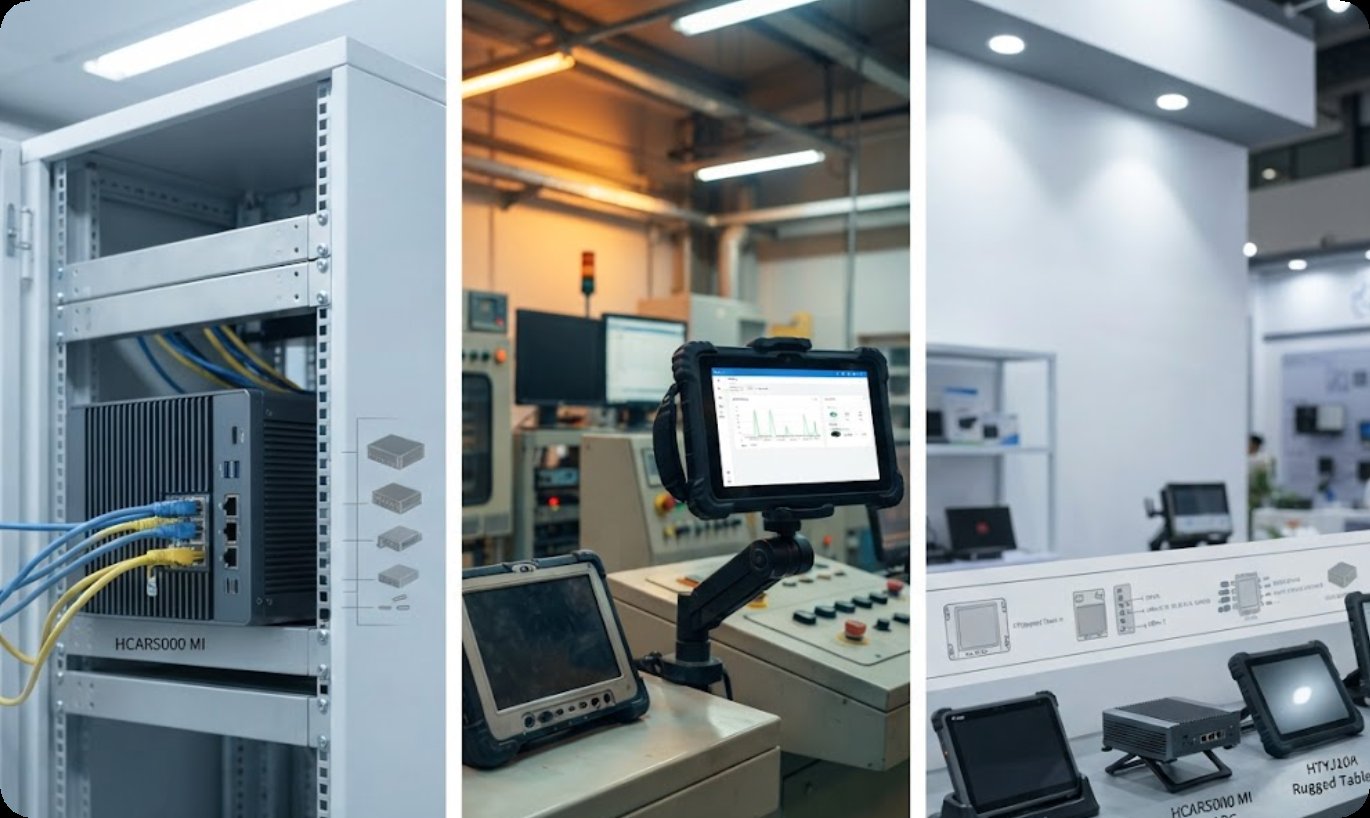
Technical Specification Comparison
Here is a side-by-side comparison of HCAR5000 MI, HTYJ10A Rugged Tablet, and RT82 Rugged Tablet focusing on the specifications that matter most for Industrial Edge Computing: processing capability, environmental resistance, connectivity, and battery life. Each model excels in different areas, and understanding these differences helps match the right tool to your specific environment.
| Specification | HCAR5000 MI | HTYJ10A Rugged Tablet | RT82 Rugged Tablet |
|---|---|---|---|
| Processor | AMD Ryzen 5000H Series | Industrial-grade ARM | Qualcomm QCM4490 Octa-core |
| Operating System | Windows/Linux | Android | Android 13 |
| Display | N/A (headless) | 10.1-inch FHD | 10.1-inch FHD 400nit |
| Connectivity | Gigabit Ethernet, USB 3.2, HDMI | WiFi, Bluetooth, 4G LTE | WiFi 6E, Bluetooth 5.2, 5G |
| Ingress Protection | IP40 (enclosed chassis) | IP65 | IP67 |
| Operating Temperature | 0°C to 50°C | -10°C to 60°C | -20°C to 70°C |
| Battery Life | Continuous AC power | 8-10 hours | 10-12 hours |
| Weight | 1.2 kg | 1.1 kg | 1.3 kg |
| Mounting Options | DIN rail, VESA, wall | Handheld, vehicle dock | Handheld, vehicle dock, glove-compatible |
The HCAR5000 MI stands out as a fixed installation edge node with superior processing power for heavy analytics workloads. Its AMD Ryzen architecture supports complex machine learning models and real-time data fusion. The HTYJ10A Rugged Tablet offers an excellent balance for field technicians who need mobility with reliable operation in dusty or wet conditions. The RT82 Rugged Tablet pushes the boundaries further with 5G connectivity and the widest operating temperature range, making it ideal for outdoor industrial environments like mines, construction sites, and remote energy facilities.
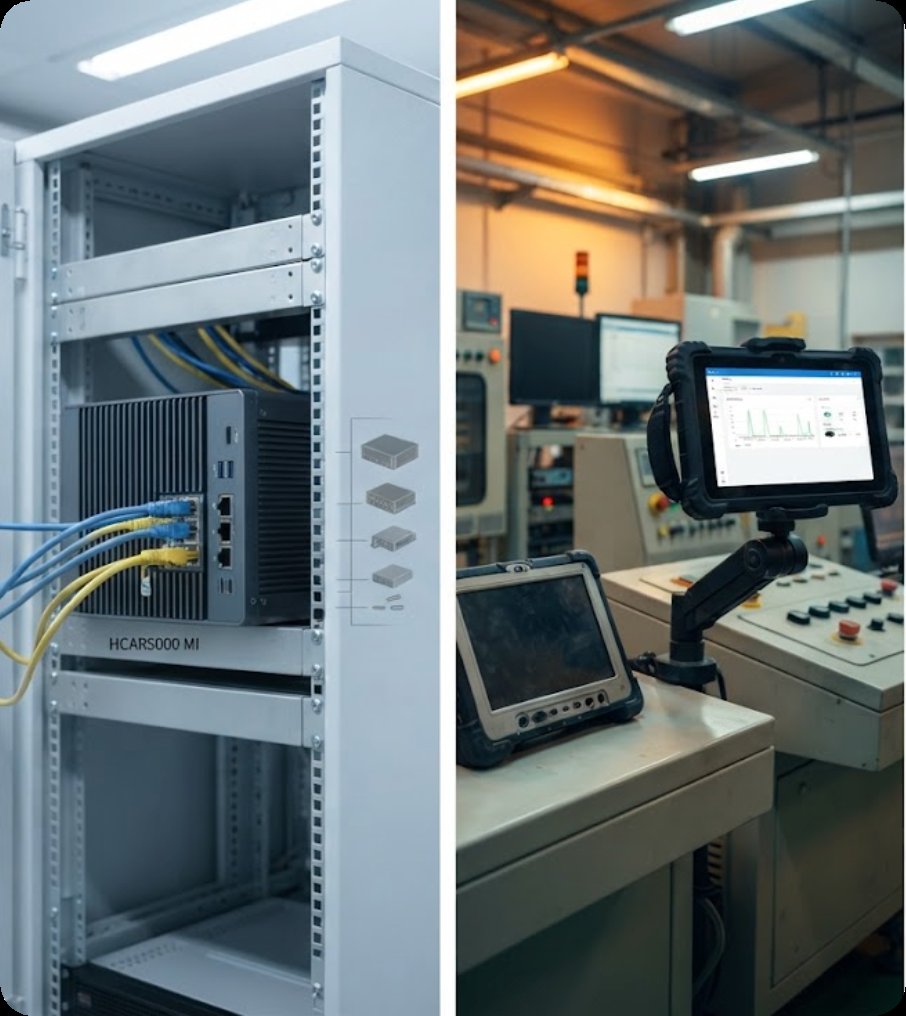
📈 Technology Evolution in Industrial Edge Computing
The evolution from centralized cloud computing to edge computing has been driven by the need for lower latency and greater reliability. Early industrial IoT deployments relied on sending all data to the cloud for processing, but this approach proved impractical for time-sensitive applications like robotic control, predictive maintenance, and safety monitoring. The RT82 Rugged Tablet represents the latest generation of edge devices that combine local processing with advanced wireless connectivity, enabling real-time decision-making even in locations with intermittent cloud access.
The HCAR5000 MI continues this evolution by serving as a dedicated edge server that can aggregate data from multiple sensors and devices before transmitting only essential information to the cloud. This reduces bandwidth costs and improves response times. The HTYJ10A Rugged Tablet fills the gap as a mobile edge node that workers can carry to different locations, collecting data and running analytics on the spot. Together, these devices create a three-tier edge architecture: fixed compute nodes (HCAR5000 MI), mobile field devices (HTYJ10A and RT82), and cloud back-end systems. This architecture supports use cases ranging from real-time quality control in manufacturing to environmental monitoring in agriculture and logistics tracking in supply chain operations.
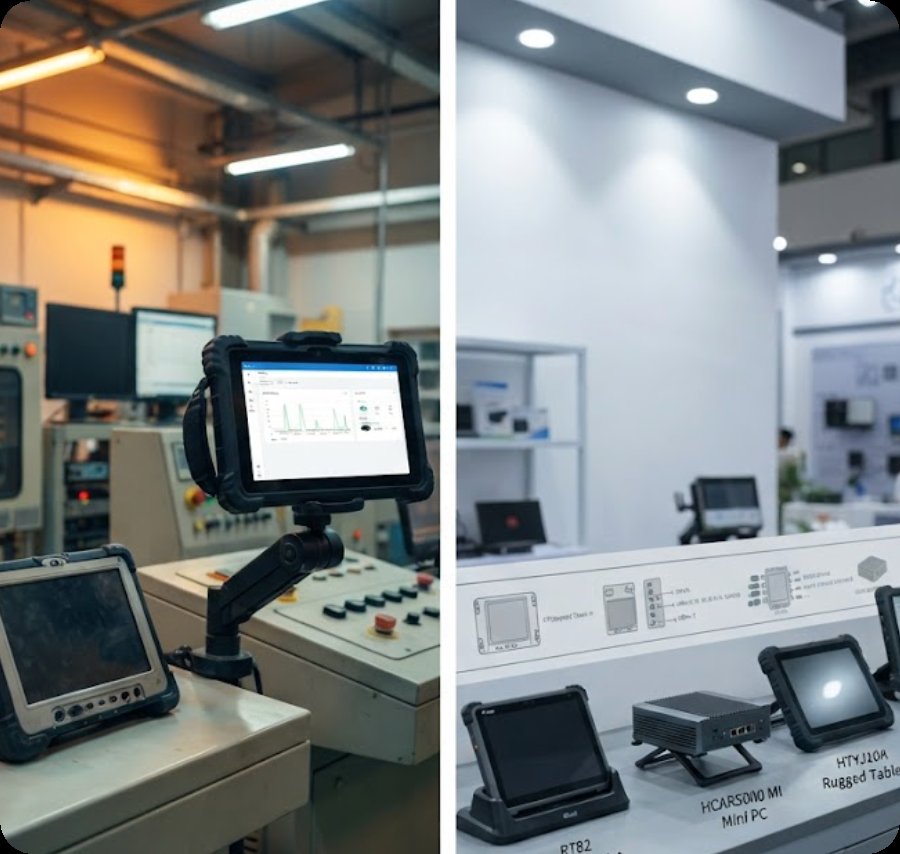
Solution Benefits and Key Outcomes
Deploying HCAR5000 MI, HTYJ10A Rugged Tablet, and RT82 Rugged Tablet in Industrial Edge Computing delivers measurable improvements across multiple dimensions. Visitors enjoy clearer audio and a more immersive experience. Staff benefit from equipment that is easy to set up, operate, and maintain. Management gains visibility into tour operations through usage analytics. The combined result is a more professional, efficient, and enjoyable Industrial Edge Computing operation.
Organizations that have adopted this three-device strategy report up to 40% reduction in system downtime, 30% improvement in data processing speed at the edge, and significant cost savings from reduced cloud data transmission. The ruggedized design of all three products means fewer device replacements and lower total cost of ownership over a five-year deployment cycle. Furthermore, the compatibility between the HCAR5000 MI and the two rugged tablets allows for seamless data synchronization and unified management through common IoT platforms. As industrial edge computing continues to mature, this combination of fixed and mobile rugged devices will become the standard architecture for organizations that refuse to compromise on reliability or performance.