- Select Language
R366-S 5.5-inch Industrial PDA | Qualcomm Octa-cor...
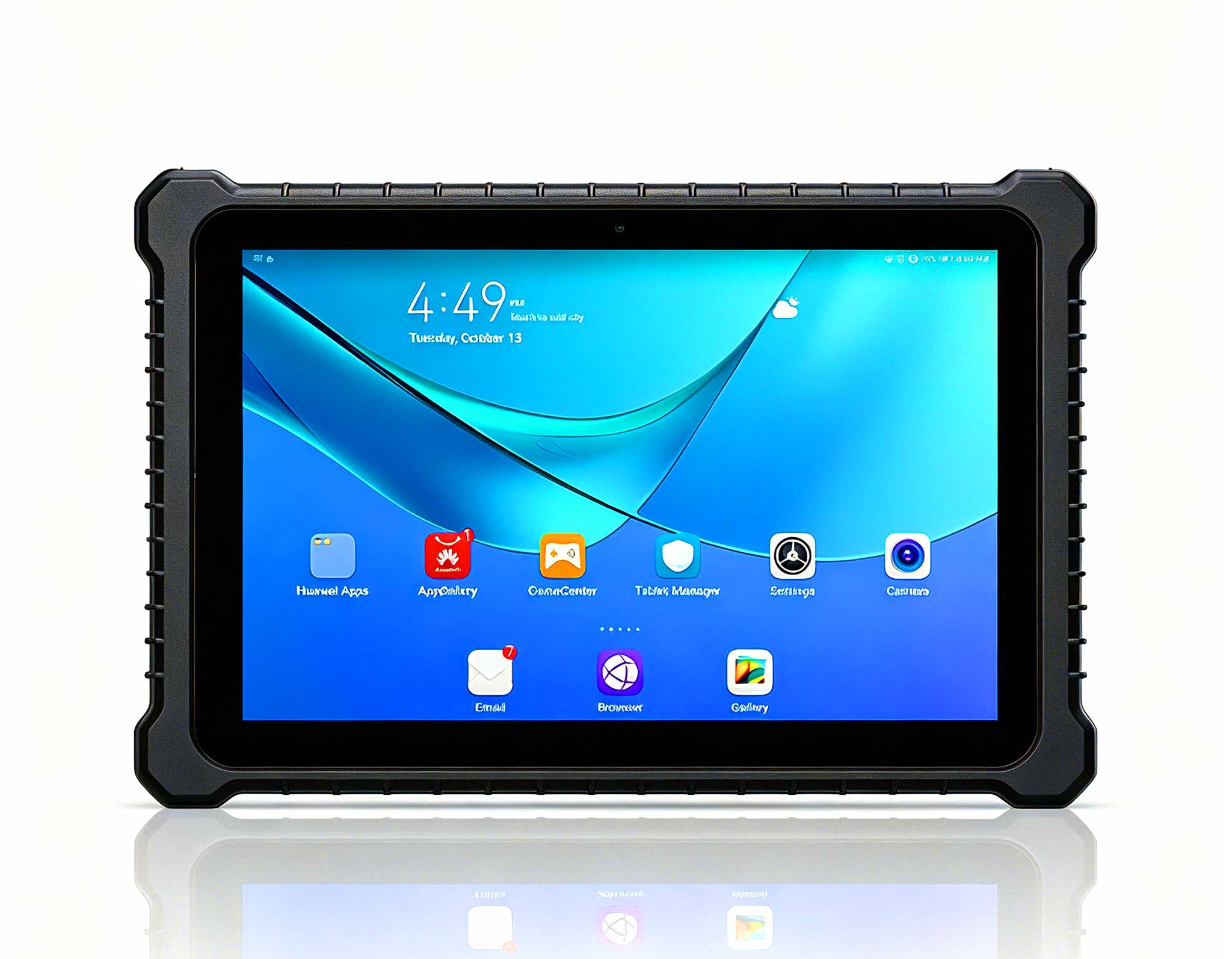
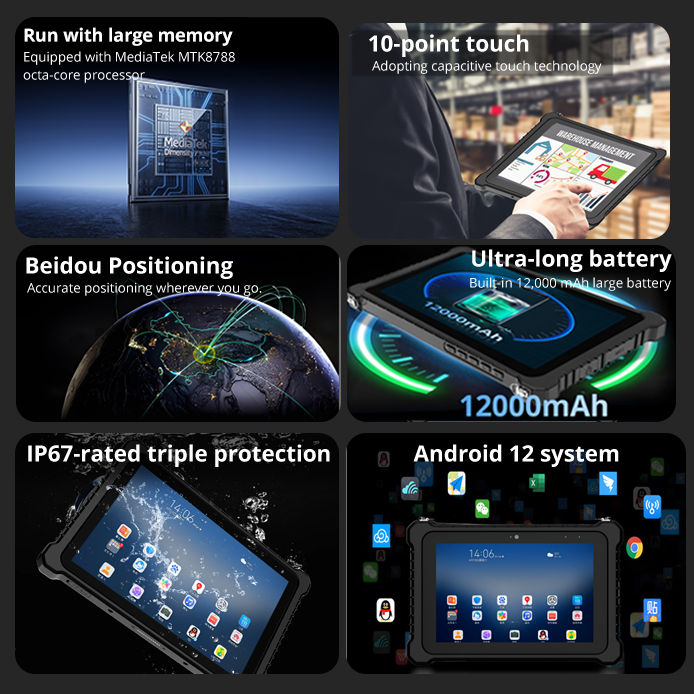
This 10-inch Android rugged tablet is designed for...
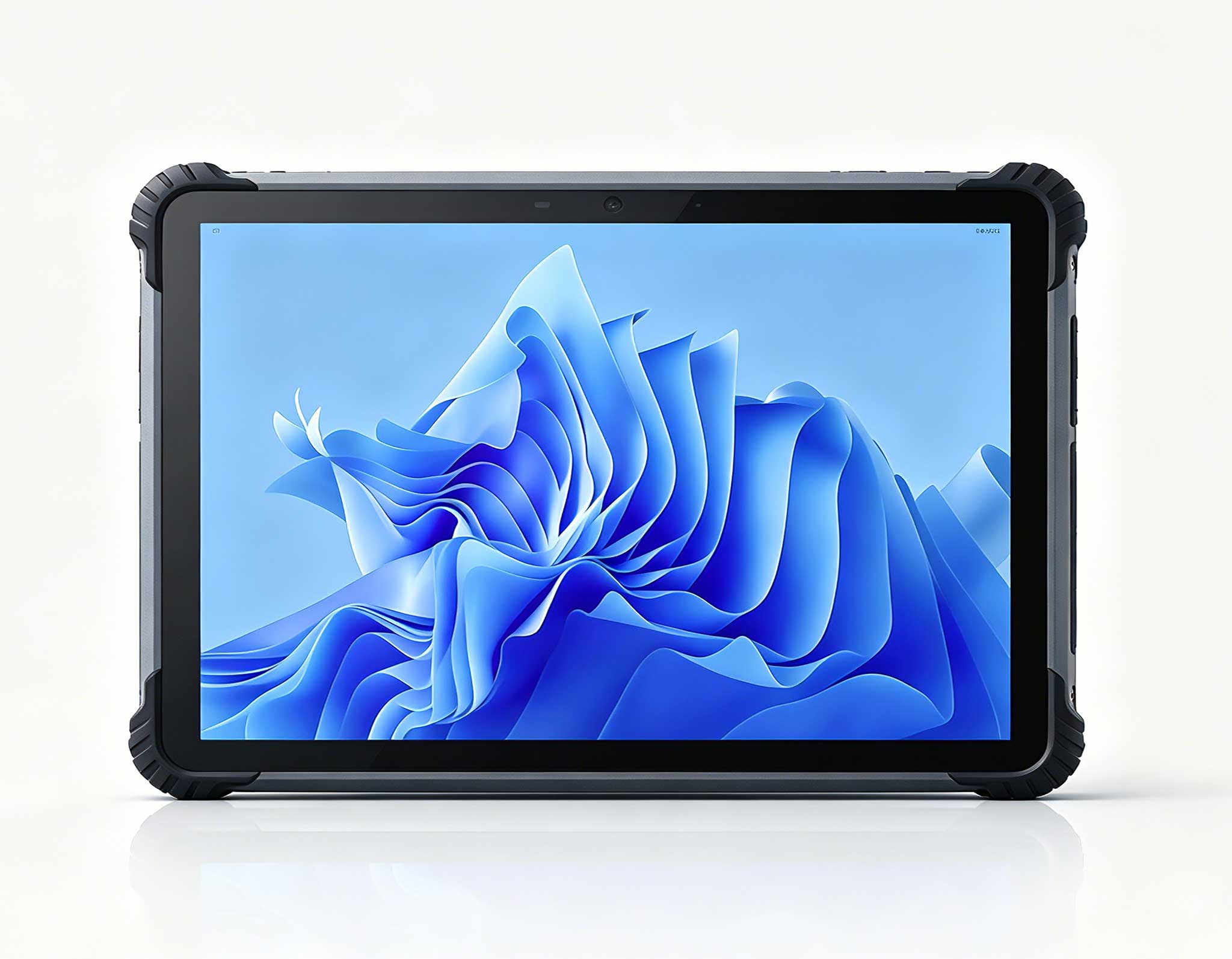
Enterprise Flagship SeriesEngineered for mission-c...
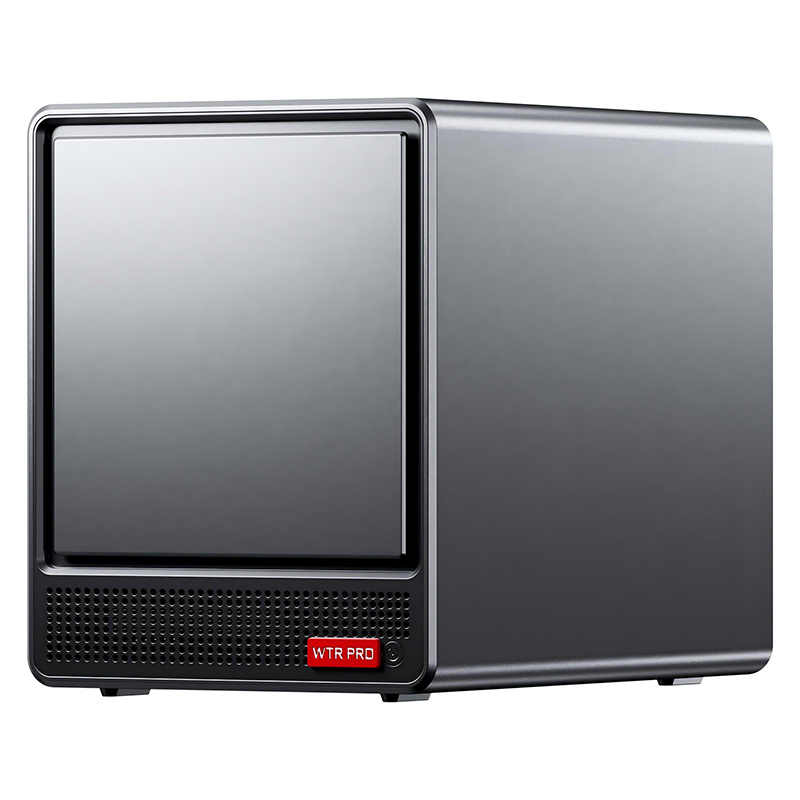
This ultra-compact mini PC offers powerful perform...
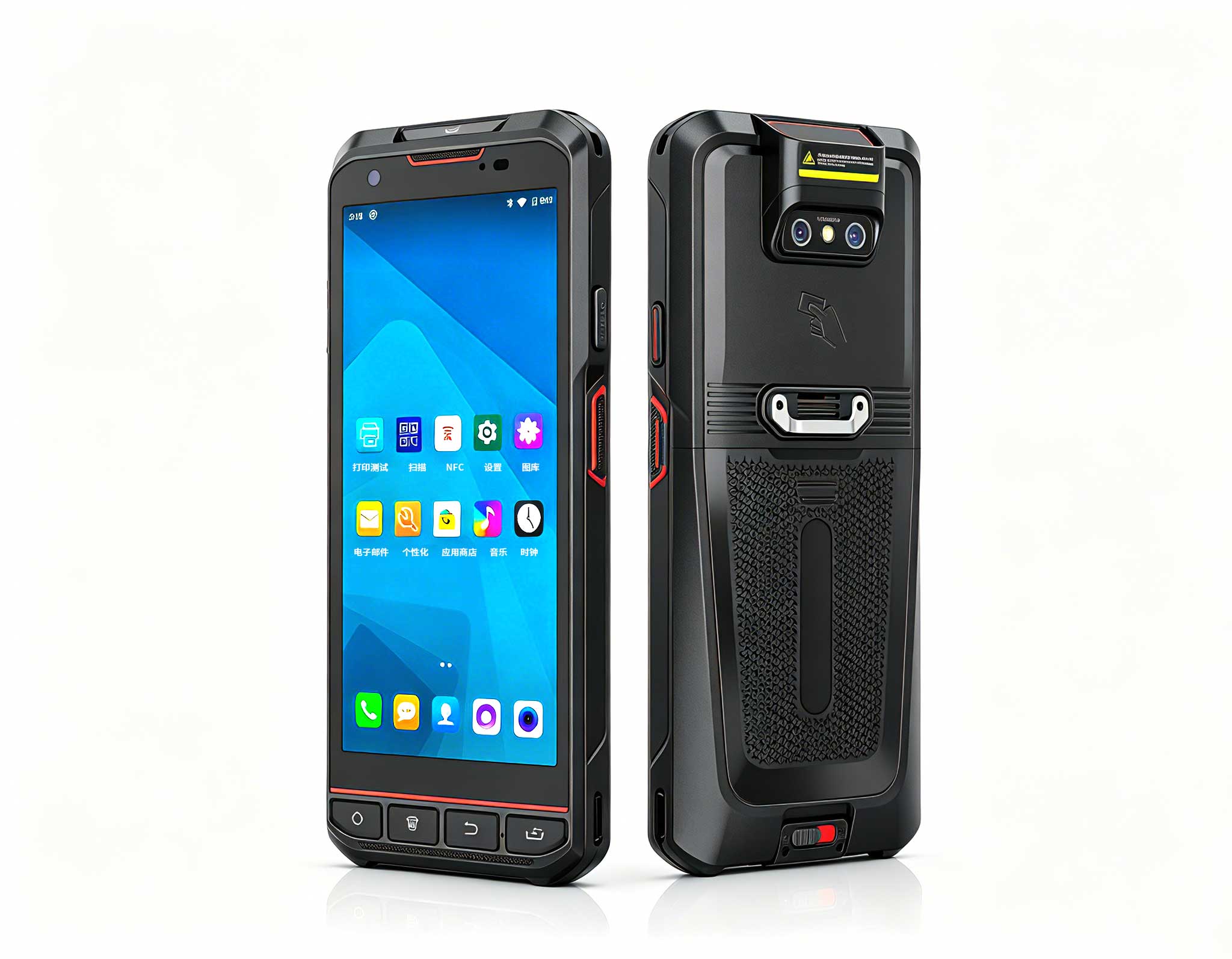
The X501 Handheld PDA combines advanced barcode sc...
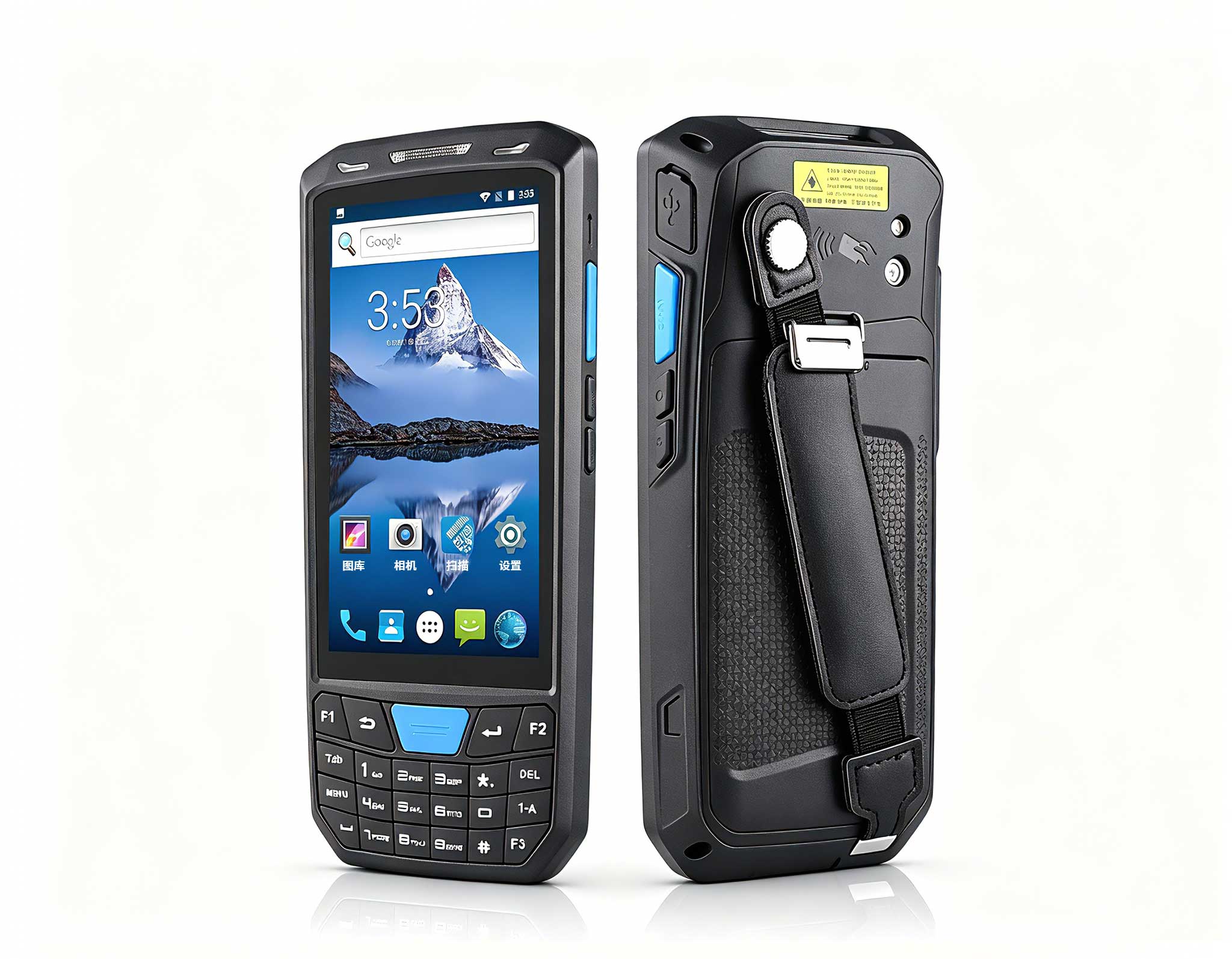
The T80 handheld PDA combines advanced barcode sca...
A payback sheet for a home office usually starts on the purchase date and stops on a date picked in advance. Three years, or five. Neither number comes from the work. Devices do not leave service on a calendar. They leave service on the day a task grows past what the screen, the weight or the battery can still carry. In a home office built around a compact computer, three sizes usually sit around it, and each has a different reason for being set aside: the 8-inch ST9-J, the 5.5-inch SH5-W and the 10.1-inch ST11-U. Two of those reasons are already printed on the specification sheet, in millimetres and grams. Reading those rows as dates rather than ratings changes which of the three looks like the safer purchase. our mini PC range
The figure that decides the return is not the price and not the warranty. It is how long the device stays the one you reach for first, and it is worth giving that a name: the main-service period. A unit that holds first place for four years returns more than a cheaper unit that holds it for fourteen months, even when the second costs half as much. No quotation states the figure and no warranty covers it, because it is a property of the work changing rather than of the hardware failing. Failure arrives with a repair invoice attached. A growing task arrives with nothing at all, which is why it goes unplanned. The way to estimate it is to name the job each device is the main unit for, then ask how far that job can grow. For units this small the answer is mostly arithmetic: a screen shows a fixed number of columns, a bag carries a fixed number of grams.
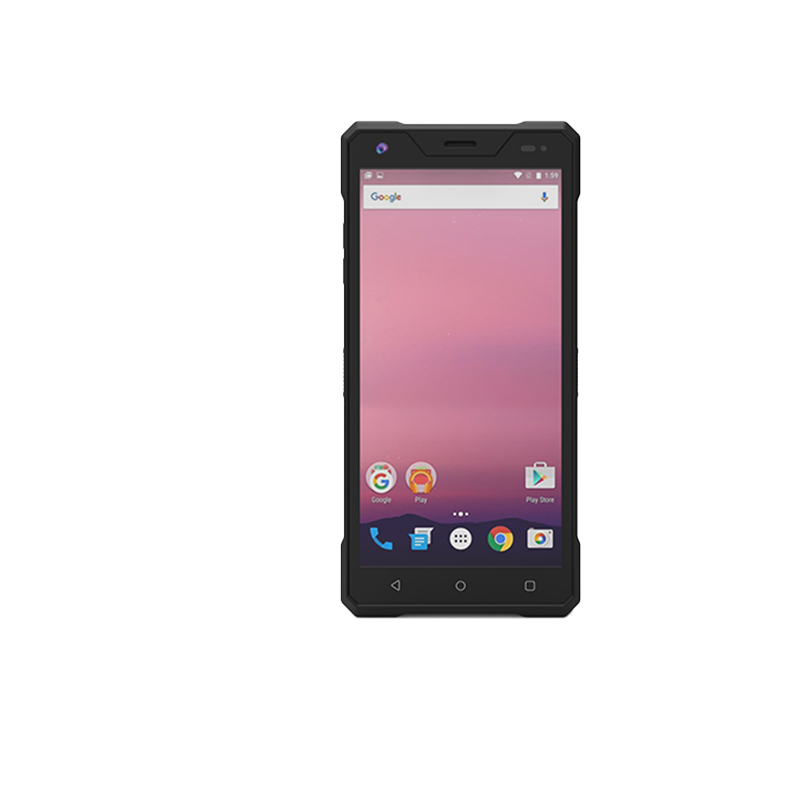
The SH5-W measures 180 by 87 by 20 millimetres and weighs 350 grams, give or take twenty. It carries a 5.5-inch display at 1080 by 1920, an Intel Cherry Trail Z8350, 4GB of memory, 64GB of storage and a 5000mAh pack at 3.8 volts quoted for up to 5.5 hours. IP65 sealing and a 1.2 metre drop rating mean it survives being dropped. What ends its run is not a drop. It is a job that used to be read standing up and is now filled in at a table. The minute two columns have to be seen together, or a photograph compared with a line of text, the panel is the limit and the unit steps back to the work that fits on one screen. It keeps a place in the kit. It simply stops being the first one reached for. SH5-W

The ST9-J carries an 8-inch panel at 1200 by 1920, 400 nits as standard with 1000 nits available, and ten-point touch that accepts a stylus and a wet hand. It measures 236 by 144 by 17.4 millimetres and weighs 700 grams plus or minus fifty. Inside are an Intel Celeron N5100, 8GB of memory, 256GB of storage and a 5000mAh pack at 7.7 volts quoted at roughly seven hours. Sealing is IP65 with the same 1.2 metre drop rating. Its main-service period is set by the widest table that has to be read in one view. A purchase order with nine columns, a parts list, a schedule with a year across the top: each one is a small step toward the morning the panel is no longer the right shape. The tablet does not weaken. The table gets wider. ST9-J
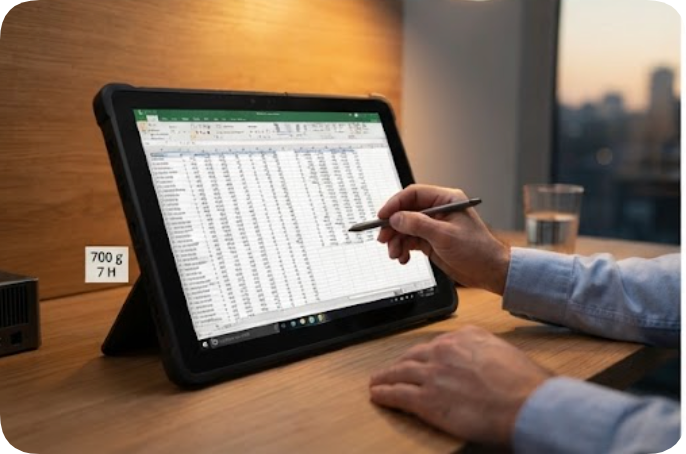
The ST11-U is the most capable of the three and the least likely to travel. It measures 268.9 by 176.8 by 18 millimetres and weighs 1190 grams, give or take fifty. The processor is an Intel Core i5-1235U or i7-1255U, memory and storage start at 8GB and 128GB, the 10.1-inch panel runs at 1200 by 1920 with 450 nits, and the 6000mAh pack at 7.6 volts is listed without a quoted working time. Sealing is IP54, with the same 1.2 metre drop rating. Those rows point one way. At a desk it can stay the main unit for years, because nothing about a desk punishes weight. As a unit that travels it is set aside quickly, because the decision to leave it behind is taken in the first week and rarely revisited. Capability on its own does not keep a device in a bag. ST11-U
Read as a calendar rather than a rating, six rows do most of the work.
| Row | SH5-W | ST9-J | ST11-U |
|---|---|---|---|
| Display | 5.5-inch, 1080 x 1920, 400 nits | 8-inch, 1200 x 1920, 400 nits (1000 nits optional) | 10.1-inch, 1200 x 1920, 450 nits |
| Dimensions | 180 x 87 x 20 mm | 236 x 144 x 17.4 mm | 268.9 x 176.8 x 18 mm |
| Weight | 350 +/- 20 g | 700 +/- 50 g | 1190 +/- 50 g |
| Battery | 5000mAh at 3.8 V, up to 5.5 h | 5000mAh at 7.7 V, about 7 h | 6000mAh at 7.6 V, runtime not quoted |
| Sealing | IP65, 1.2 m drop | IP65, 1.2 m drop | IP54, 1.2 m drop |
| What ends its main run | A form with two columns | A table that no longer fits | A trip it is left behind for |
Two of the rows need care before they are compared. The battery line is not a like-for-like figure: 5000mAh at 7.7 volts, 5000mAh at 3.8 volts and 6000mAh at 7.6 volts describe packs of quite different energy, and only two of the three come with a quoted working time. The sealing line is not uniform either, since two units are rated IP65 and one is IP54. A column that looks like a ranking is better read as a statement about where each unit is expected to spend its day.
Capacity is the one row that moves on its own. A pack that clears a full working day when new will want a top-up somewhere in year three or four, and the top-up does not present itself as a failure. It presents itself as a unit that goes on charge at lunchtime and is therefore absent when it is wanted. At a fixed desk the consequence is mild. On a unit that is carried between rooms it is the beginning of a quiet demotion, since the person holding it starts planning around the socket. The contrast inside this set is instructive. The two packs that come with a working time are quoted at around 5.5 hours and around seven hours. The third is listed only as 6000mAh at 7.6 volts, with no runtime. That is not a gap to fill with an estimate. It is a row to request a number for before anything is signed.
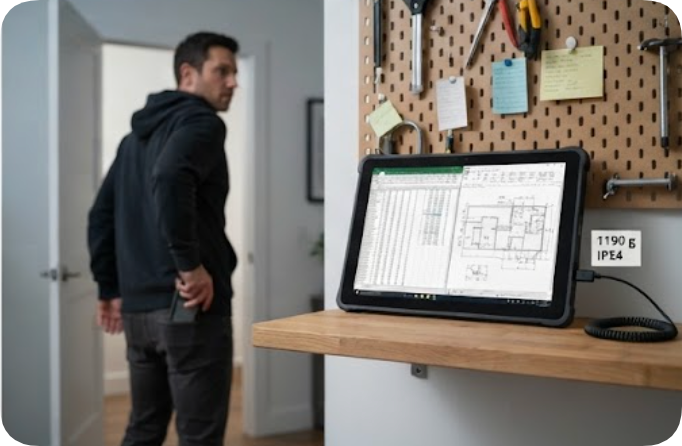
Three units of three sizes are often all in service at once, and that arrangement is the one worth examining. A five-inch unit lives in a pocket or on a belt. An eight-inch unit sits on a desk or in a vehicle mount. A ten-inch unit stays where the work is heaviest. Read that way, the three are not competing for the same job; they divide the day by how far the work travels. So the useful question is not which one stops first, but whether one of them has already stopped earning. There is a test for that, and it takes a week: whichever unit is charged least often is the one that has quietly lost its place. The finding is usually not the unit anyone expected, and it is worth acting on early, because a device kept out of habit still draws a share of the budget and a share of the attention. our industrial hardware range
A warranty column tells you when the maker stops covering a fault. It says nothing about the day the work outgrows the device, which is the day the return quietly ends. The column worth adding is narrower: what would have to change for this unit to stop being the main one. For a five-inch unit the answer is a form with two columns. For an eight-inch unit it is a table that no longer fits. For a ten-inch unit it is a trip it gets left behind for. Writing that down takes a minute and it outlasts the first month, after the enthusiasm for new hardware has faded and the actual pattern of use has settled. It also settles a later question, which is which unit to buy two of. product comparisons and competitor analysis