- Select Language
R366-S 5.5-inch Industrial PDA | Qualcomm Octa-cor...
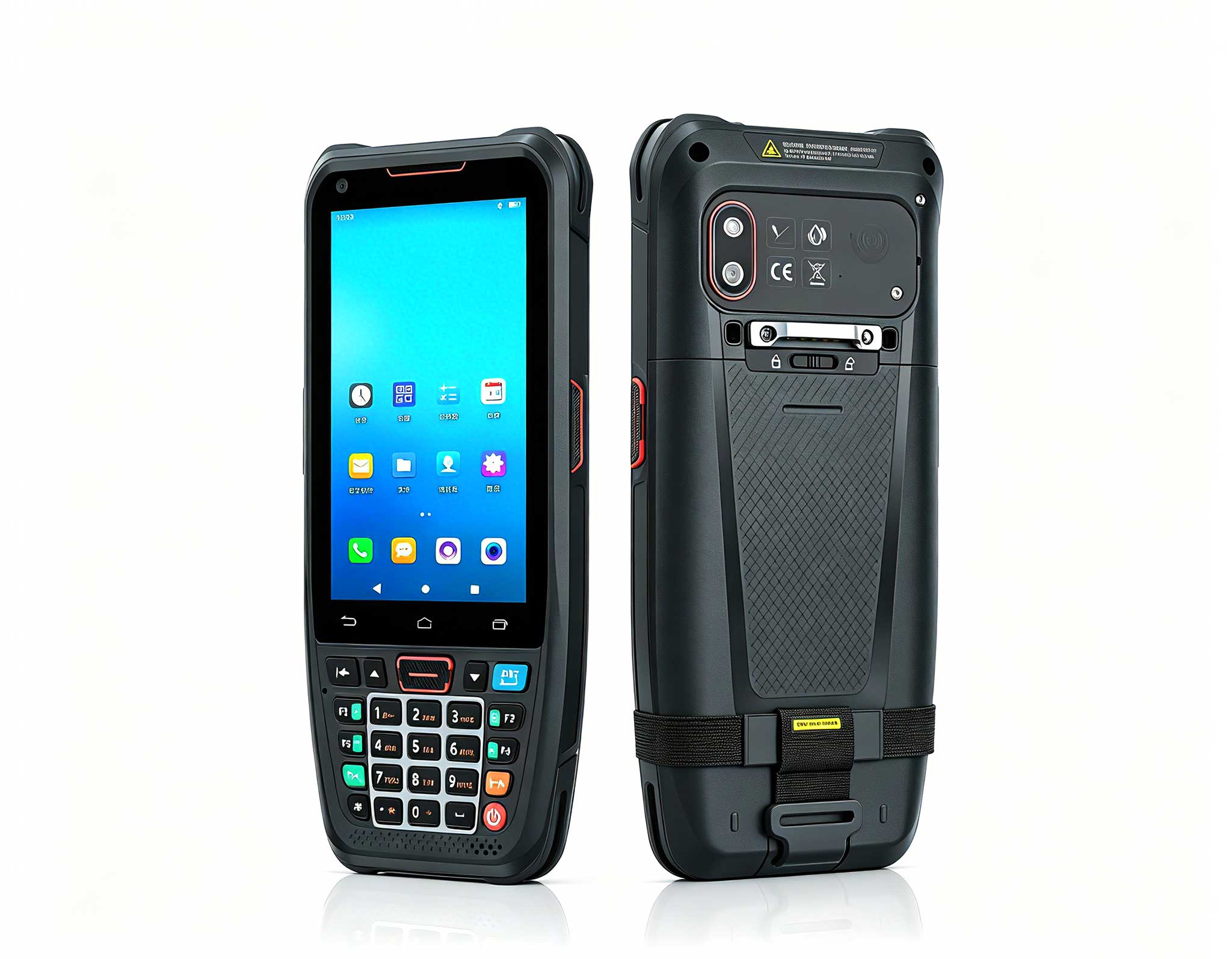
The N40 Android smart PDA features a Cortex-A53 qu...
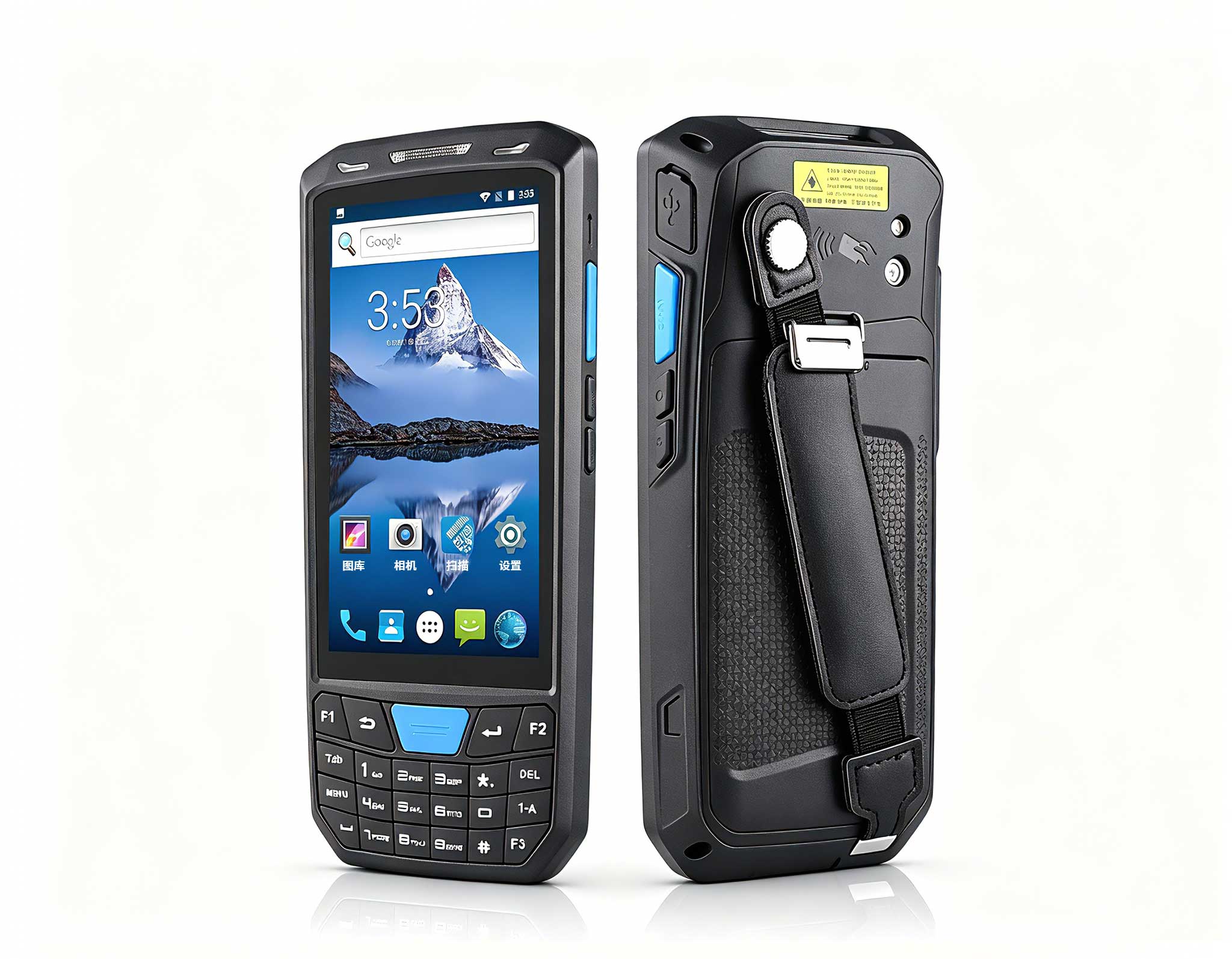
The T80 handheld PDA combines advanced barcode sca...
The U9000 handheld PDA combines advanced barcode s...
R366C-S 5.5-inch Industrial UHF RFID Reader | Qual...
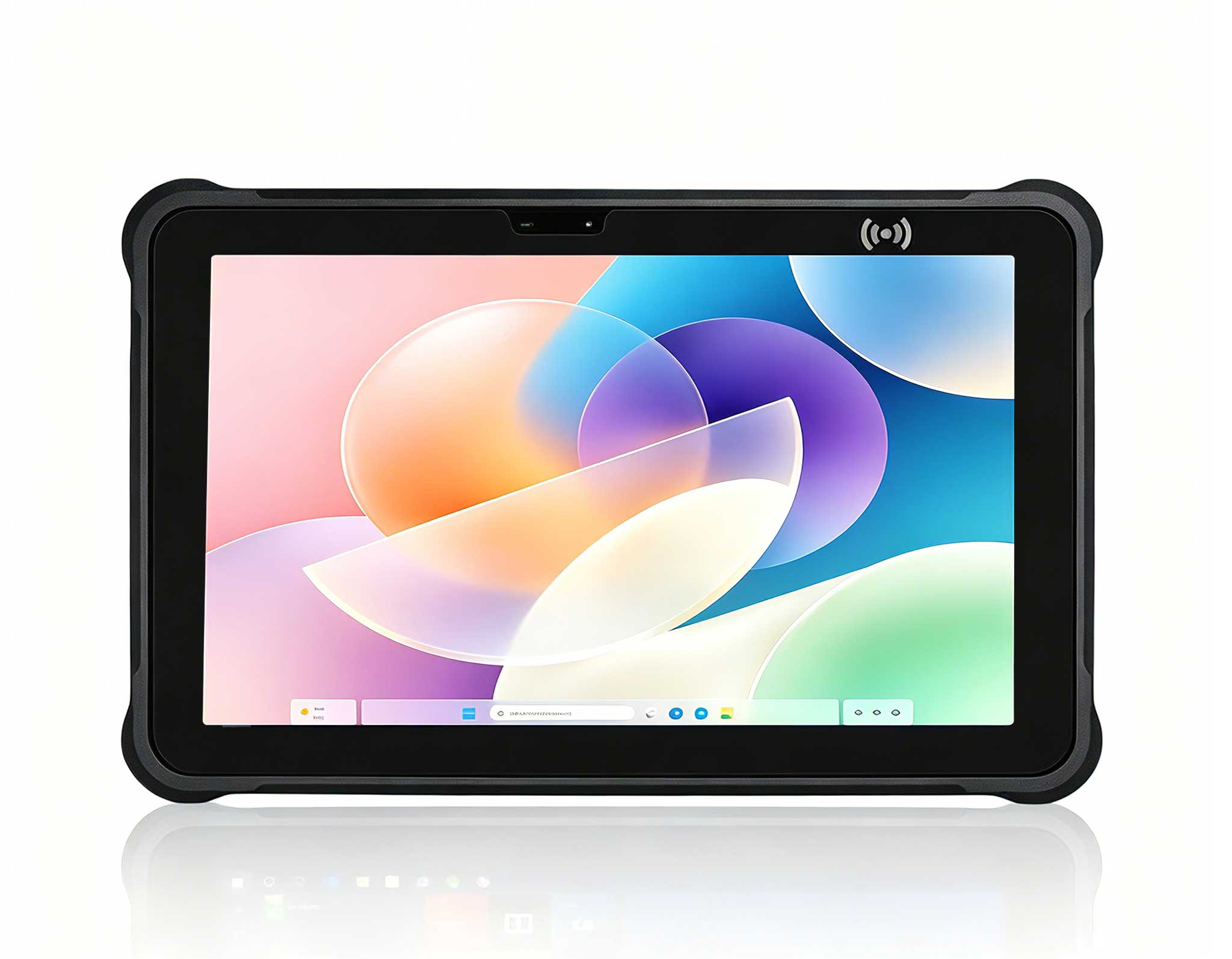
RT82 5G Rugged Tablet | 10.1" FHD 400nit | Qu...
R366C-S 5.5-inch Industrial UHF RFID Reader | Qual...
Full SpecificationsModelHotus ST11‑UOSWindows 10 P...
A meeting-room purchase order ends with a signature, and that signature is normally treated as the finish line. It is not. On the day the pallet is opened, three different products hand back three different levels of readiness, and none of them matches the line printed on the order. One arrives as a metal shell with nothing inside it, one arrives working but already spending the energy it holds, and one arrives as a shape that has to be fixed somewhere before it can do anything at all. The gap between those two sentences is where fit-out budgets quietly go wrong.
This is the gap worth planning for. A procurement sheet that stops at model, quantity and unit price has described three boxes, not three working assets. What closes the gap is knowing, line by line, which parts of the job are still outstanding after goods-in, and who is expected to carry them out. The three devices below sit at three different points on that scale, and the differences show up in the first week rather than in the fourth year. None of the three is faulty and none of them was mis-sold; each is simply bought before it is finished.
Goods-in is a short ceremony with a long tail. Someone counts cartons against the delivery note, checks for transit damage, signs, and the paperwork moves on to finance. Nothing in that sequence asks whether a room such as our business conference fit-out can run a meeting that afternoon. For the three units below, the honest answer on delivery day is no, and it stays no for three separate reasons. Treating the signature as completion is how a room ends up fully paid for and completely unusable. The delivery note answers a question about stock. It says nothing about the question the people booking the room are about to ask.
The WTR PRO AMD arrives as a compact metal box, and the metal is the part the product page leads with: a chassis built to shed heat rather than a plastic shell. What it does not arrive with is storage. The four-SATA version is designed for exactly the role a meeting room asks of it, as a fast local NAS or media server sitting quietly in the corner, yet its bays are empty until somebody buys and fits the drives. An order listing one mini PC has, in practice, bought a computer and four blanks. Nobody notices the difference until the first week the room is genuinely busy.
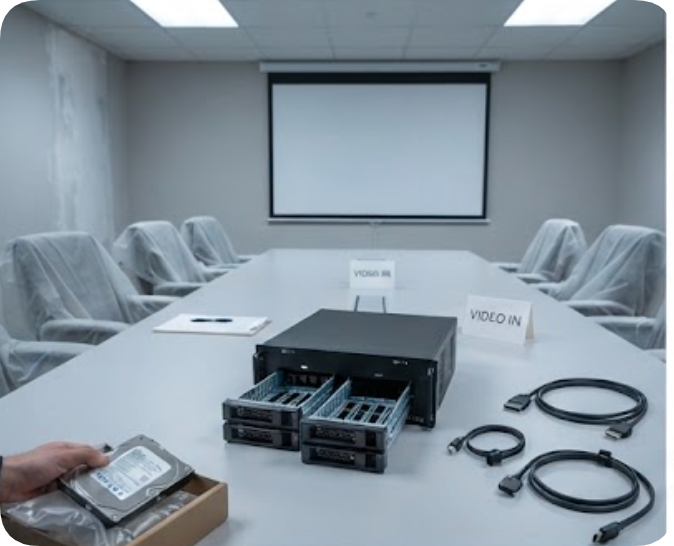
The second half of the gap is at the back of the same unit. It can drive three displays at 4K, one through HDMI, one through DisplayPort and one through USB Type-C, and it carries two 2.5G Ethernet ports for routing, fast file transfer or keeping the room's traffic away from the rest of the building. Those are fittings rather than features, and the building has to supply them. A room specified for a single screen and a single cable drop will find the hardware capable of considerably more than the wall behind it allows. Working backwards from the ports is far cheaper than discovering the shortage on the day the room opens.
The SH6 is the opposite case: it arrives ready. Windows 11 Pro is installed, the Intel N100 quad-core is inside, and the 6.5in panel lights the moment the power button is pressed. What it is not is inert. Its 5000mAh pack at 7.6V holds enough for roughly four and a half hours of work, and like any lithium pack it gives up a little of that capacity every week it sits unused. A handheld bought for a room that has not opened yet is an asset that ages quietly in its carton. Storage against a wall is not the same thing as storage in a cupboard.
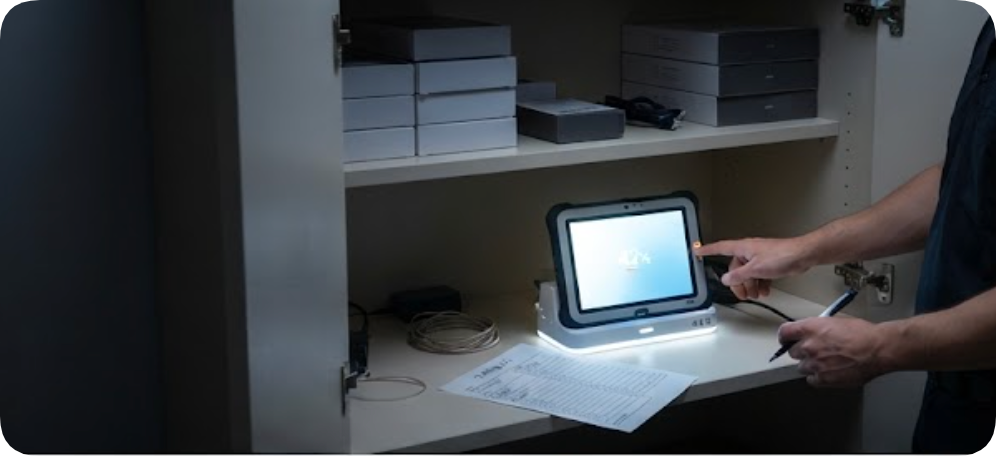
Four and a half hours belongs on the goods-in sheet rather than on a brochure, because it decides what happens next. A 460g handheld with an IP65 shell and a 1.2m drop rating survives being passed around a table, but it does not survive being shelved at nine per cent. Whoever receives it needs the pack figure, the 380-nit panel that must stay legible in a bright room, and a note that the optional 1D/2D scanner and dock change the accessory list. The published 1-year warranty is worth dating too, not because it will be needed, but because it runs from a moment somebody should record. Small figures carry the largest consequences on this particular line.
The 4K Home Projector is the line that cannot be used from inside a cupboard. Its job is to fill a wall or a screen, which means it has to be mounted, aimed and then left alone, and none of that happens in the carton. Until the mount is fitted, the room has no shared display and the unit is still, strictly speaking, an unfinished purchase. This is the line where the distance between goods-in and readiness is longest, and where the person signing the delivery note is rarely the person who owns the next step. A mount is a small purchase with a long shadow.
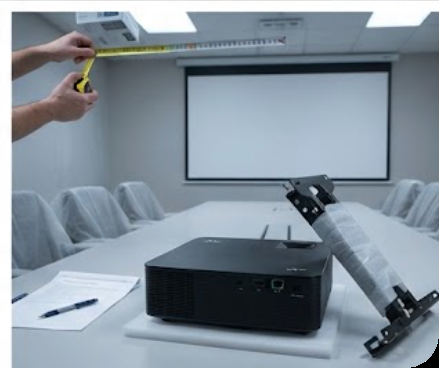
Even once it is up, the list is not finished. The unit takes 4K source material, accepts a touch-and-transfer handoff from a phone over NFC, and can be fed over its own 1000M LAN port instead of a cable run across the table. It also brings a set of physical jobs: focus, alignment to the screen edge, and an air-filtration design that the page credits with extending service life. None of those tasks appear on a purchase order, and all of them decide whether the first meeting looks like a demonstration or a rehearsal. A projector that is hung but never aligned has been bought twice, once in money and once in patience.
| Line on the order | What the carton contains | What is still outstanding | Who closes it |
|---|---|---|---|
| WTR PRO AMD | A metal mini PC with four empty SATA bays | Drives, three display connections and two 2.5G network drops | The team fitting out the room |
| SH6 | A working Windows handheld, charged and complete | A place in the room's routine and a recorded start date | The person who signs it in |
| 4K Home Projector | A projector with NFC handoff and a 1000M LAN port | A mount, an aimed image and a first alignment | The installer on the day it goes up |
Read down the final two columns and the remaining work stops being invisible. Every line carries an owner and a trigger, and neither of them appears anywhere on the order. The sheet records what was bought. This one records what buying it commits a team to doing, and by when, and it is the difference between a delivery that has been received and a room that has been finished. Attach it to the cost code and the order stops being a receipt and starts being a schedule.
| Device | Published on the product page |
|---|---|
| WTR PRO AMD | Up to four SATA bays; triple-screen 4K over HDMI, DisplayPort and USB Type-C; dual 2.5G Ethernet; metal chassis |
| SH6 | Windows 11 Pro; Intel N100 quad-core; 8GB/256GB, optional 16GB/512GB; 6.5in HD+ at 380 nits; 5000mAh at 7.6V, up to 4.5 hours; 460±20g; IP65 and 1.2m drop; CE, FCC, 3C |
| 4K Home Projector | 4K projection; NFC touch-and-transfer; Dolby audio and 3D surround; 1000M LAN port; voice remote; air-filtration design |
Those are the figures the manufacturer publishes, and they describe the devices in service rather than the devices in the carton. Set beside the first table they make a complete picture: what each unit can do once the room is ready, and what has to happen before that point arrives. One table is the specification a buyer compares against a budget. The other is the plan that decides whether the budget turns into anything a team can actually use on a Monday morning. Read together, the two lists describe both halves of the same purchase.
The practical fix is small. Give each line a readiness date instead of an arrival date, and name the person who closes it, so that an empty bay or an unaimed lens has somewhere to report to. A team planning a fit-out this way can check what each product page publishes before the order goes out, comparing across our rugged mobile computing solutions range of mini PCs, handheld tablets and projectors rather than treating them as interchangeable boxes. The product comparisons and competitor analysis section is a reasonable place to see how comparable installations were specified. Everything on the list can arrive on time and the room can still be late. The order closes in seconds. The room takes longer.