- Select Language
Enterprise Flagship SeriesEngineered for mission-c...
R530C 6.0-inch Industrial PDA | Qualcomm Octa-core...
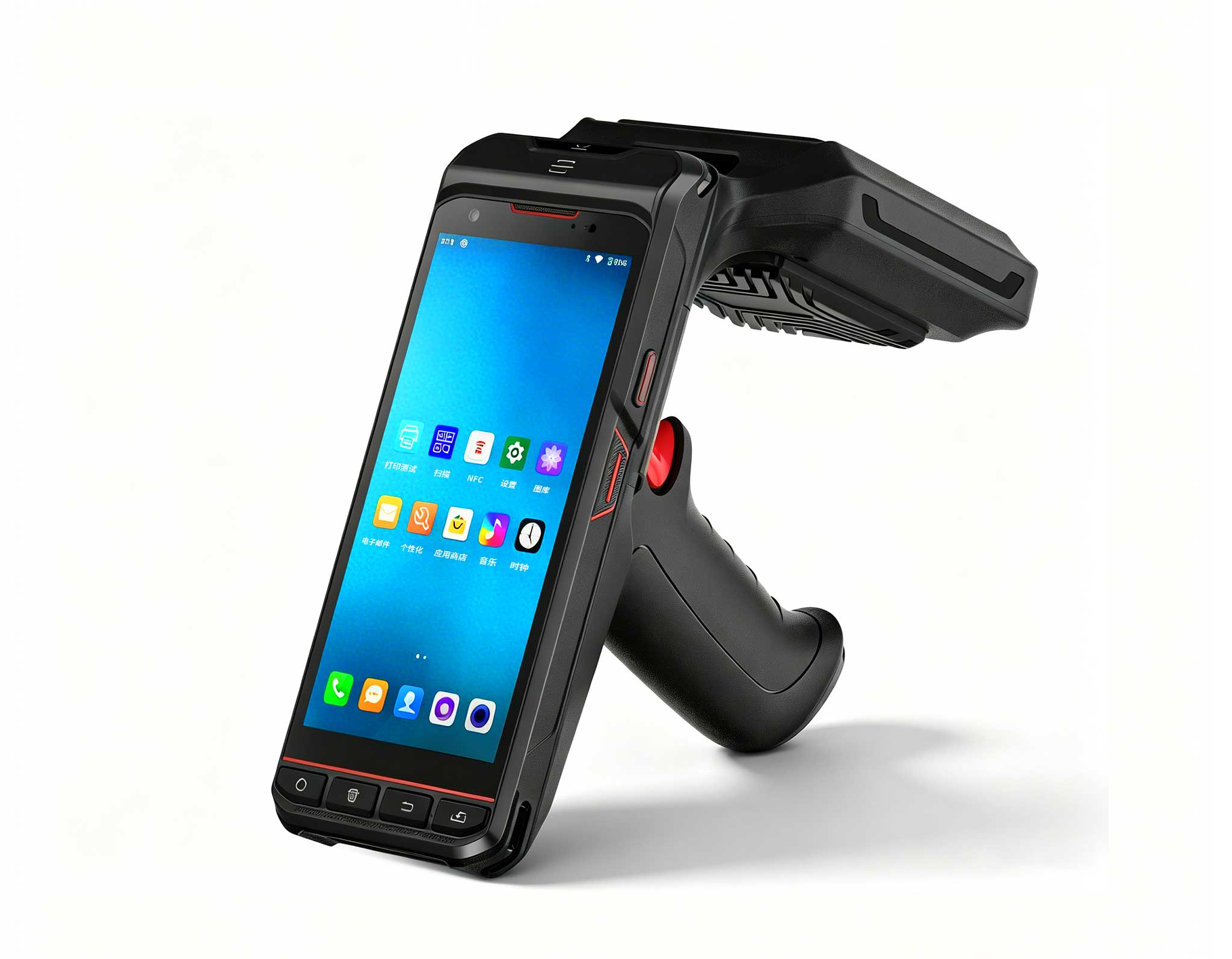
The R501 PDA combines a powerful MT6762 Octa-Core ...
R366-S Thin 5.5-inch Industrial PDA | Qualcomm Oct...
The F505 Handheld PDA is a compact, high-performan...
Full SpecificationsModelHotus ST11‑UOSWindows 10 P...
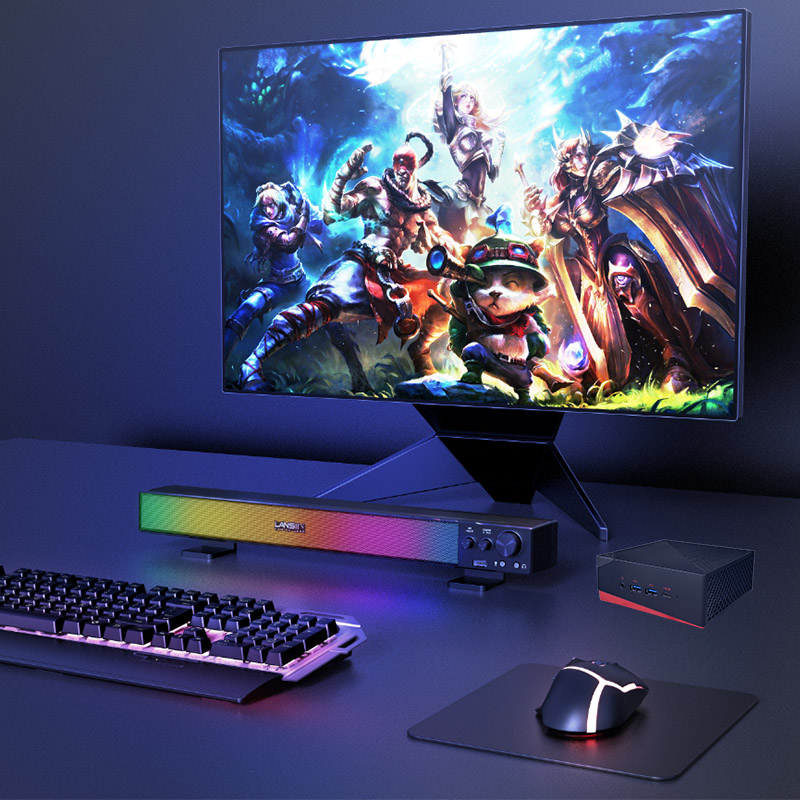
The AMD Mini PC Windows 10 Pro is a compact yet po...
Full SpecificationsModelHotus ST11‑JOSWindows 10 P...
Most warehouses hire for the outbound floor and treat the returns dock as a place where problem cases go to wait. That habit costs twice: once when a returned pallet sits unprocessed through a peak week, and again when a new hire reaches forward picking with no feel for what a bad scan or a mislabeled carton looks like. A growing number of operations run it the other way around. They put every new employee at the reverse quality control bench for their first two weeks, because the bench is the one station where a person handles every exception the building produces, and they arm that bench with three devices that split the work cleanly: the R501 for tag and barcode intake, the R350C for grading and records, and the U9000 for anything that needs a longer read or a second opinion.
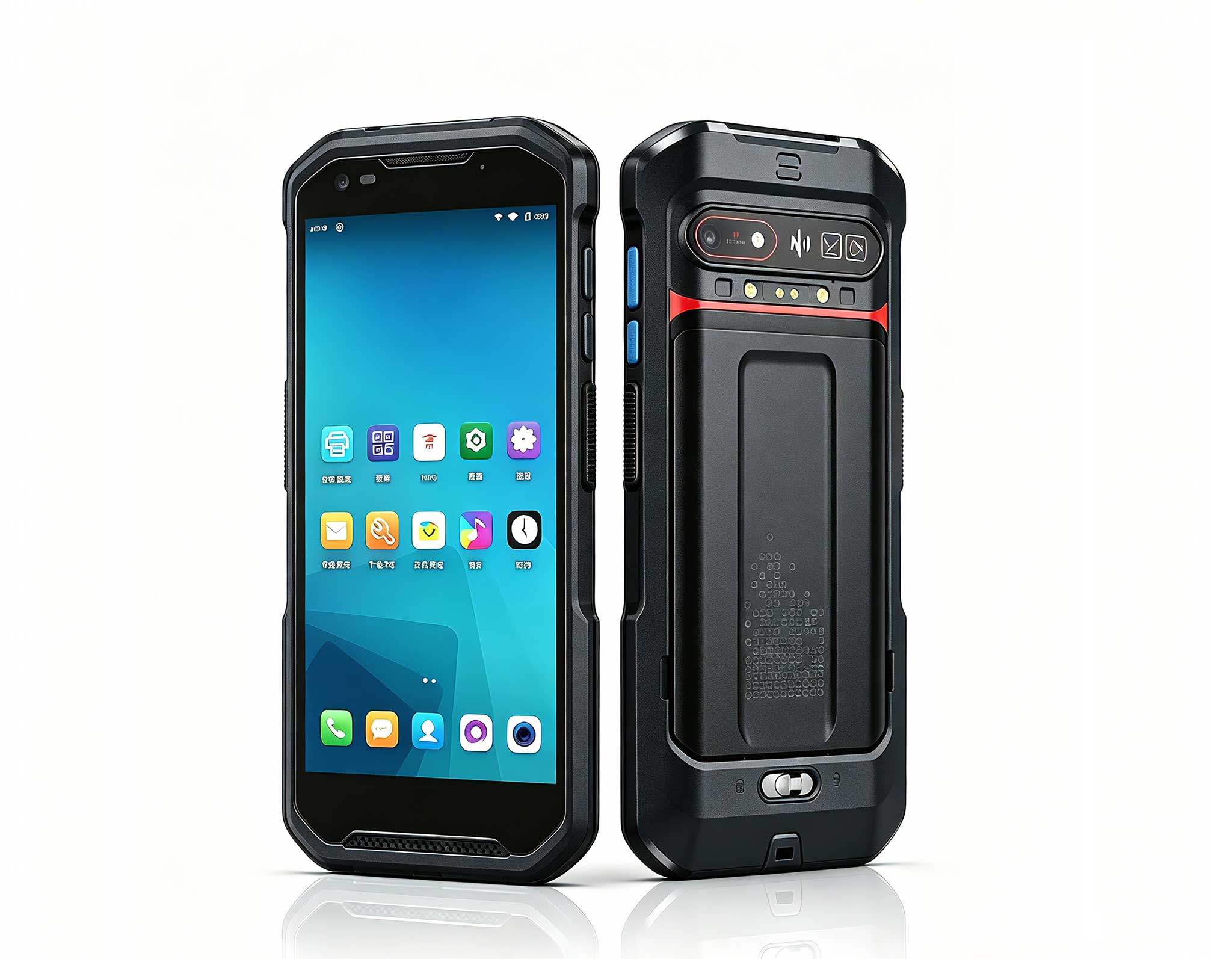
Forward work is repetitive by design. A picker scans four thousand identical cartons and learns speed, not judgment. Reverse intake is exception-dense: one pallet can hold a genuine defect, a buyer's remorse box, a carrier crush case, a warranty claim with a peeled label, and a return that was never ordered from you at all. A trainee who processes eighty of those learns to read condition, not just count units. The bench layout is deliberately simple. Everything arrives on one conveyor lane, gets a first touch on the intake mat, and moves to one of three disposition lanes: restock, refurbish, or scrap. What makes the first touch fast is the device in the trainee's hand, and for intake that device is the R501. It runs an MT6762 octa-core processor at 2.0 GHz on Android, weighs under 750 grams even with its grip handle, and carries an IP65 sealing rating, which matters because returned goods arrive dirty. The handle doubles as a scan grip with a dedicated trigger plus two side scan keys, so a trainee can hold a carton steady with one hand and scan with the other without ever setting the unit down.
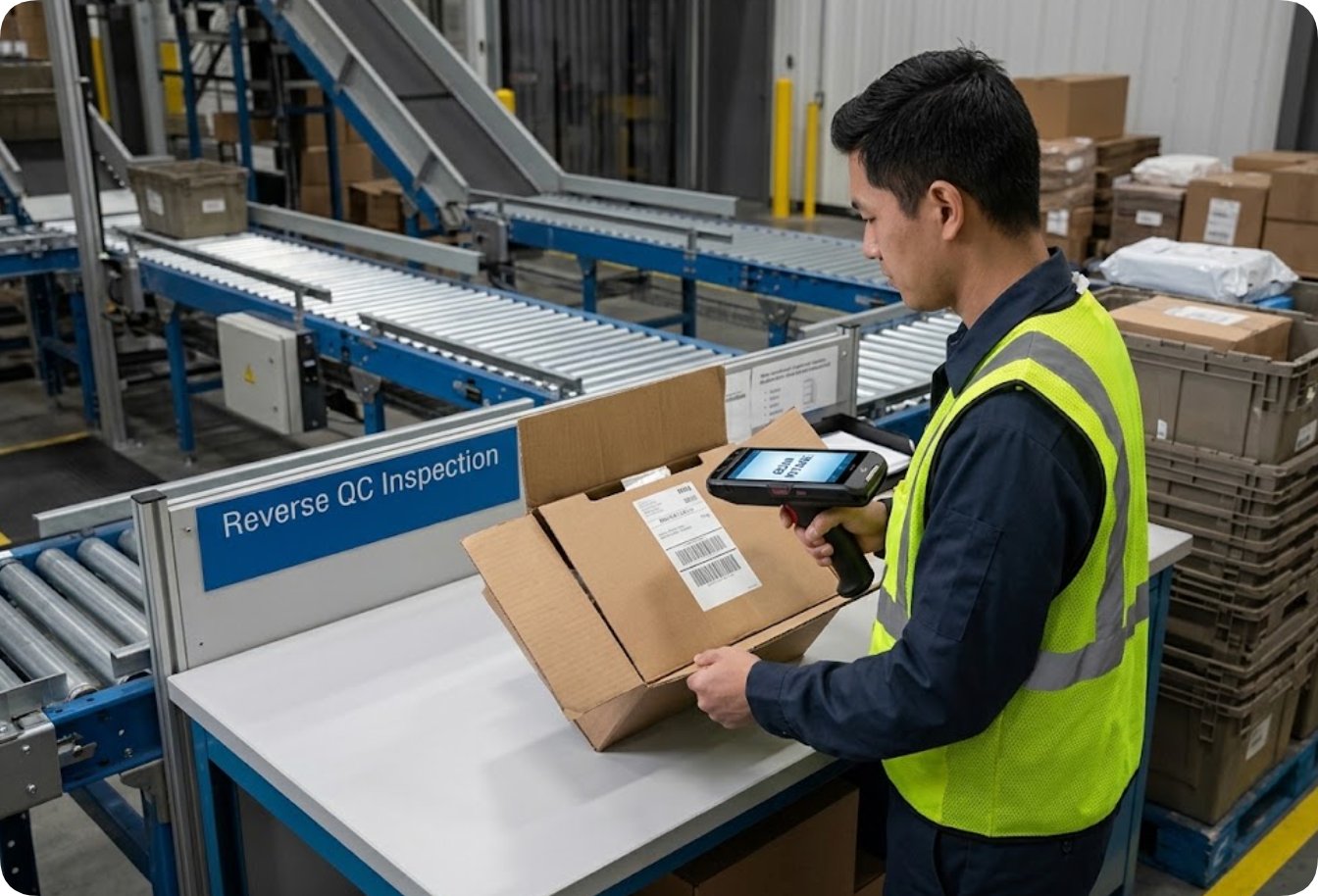
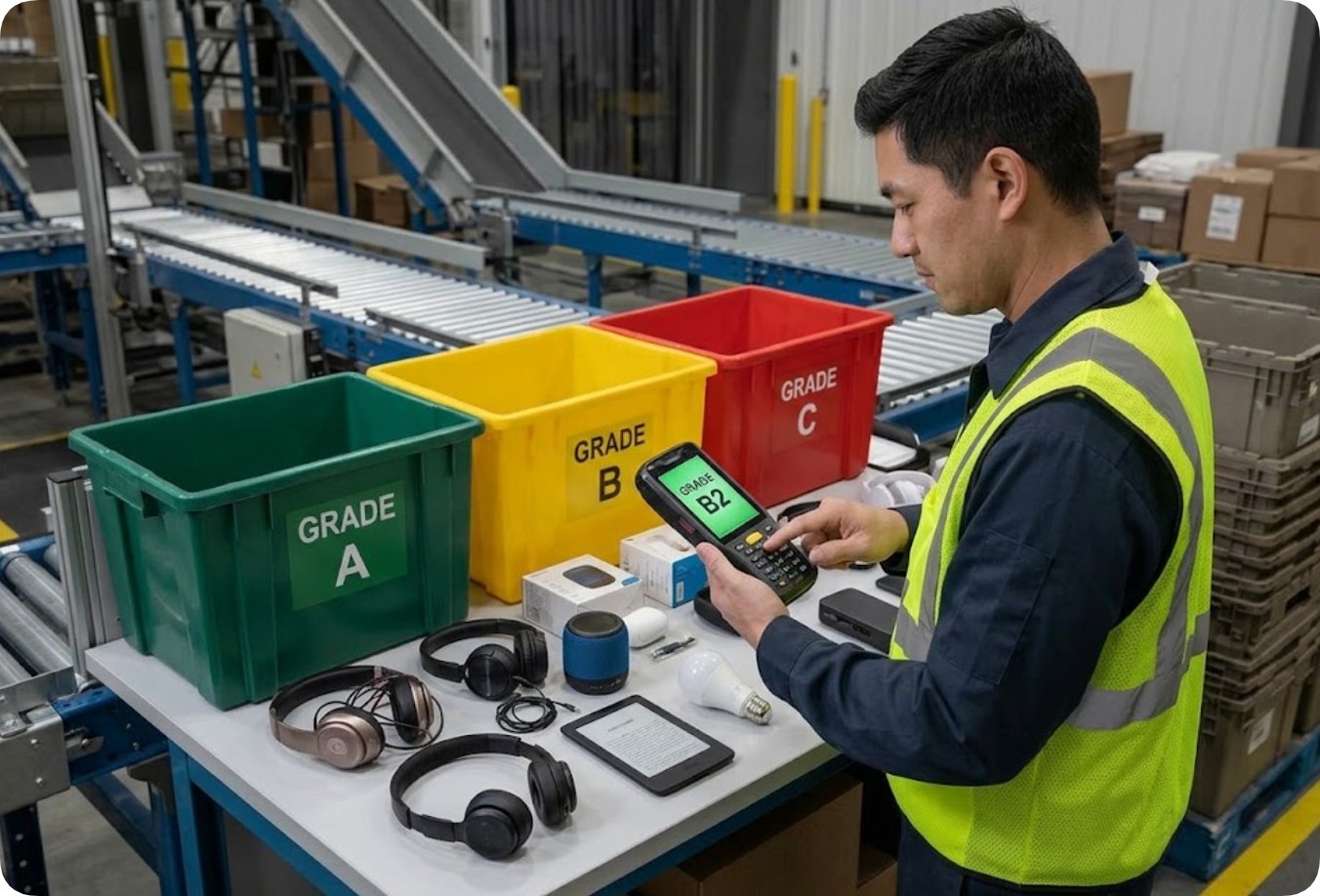
A typical ramp runs in three passes. Days one and two are pure barcode work: scan the return authorization, scan the item label, let the system say whether the two agree. Days three and four add condition grading, and day five adds disposition. The device changes at the grading stage. The R350C is the grader's unit: a 4-inch IPS screen at 480 by 800 that stays readable under the dock's mixed lighting, a Qualcomm QCM2290 quad-core processor on a 11nm process running Android 13, and 4 GB of RAM with 64 GB of storage expandable to 256 GB. Its 4000 mAh battery is detachable, so a grader who stays past shift change swaps packs instead of docking the unit, and at under 300 grams it is light enough to hold through a full grading pass on a single pallet. The numeric keypad matters more than new hires expect. Grading codes are numeric: a two-digit condition code, a one-digit lane code, then ENT. Trainees hit real keys instead of hunting through a touch keyboard with gloves on, and their entries per hour stop being the bottleneck by Wednesday.
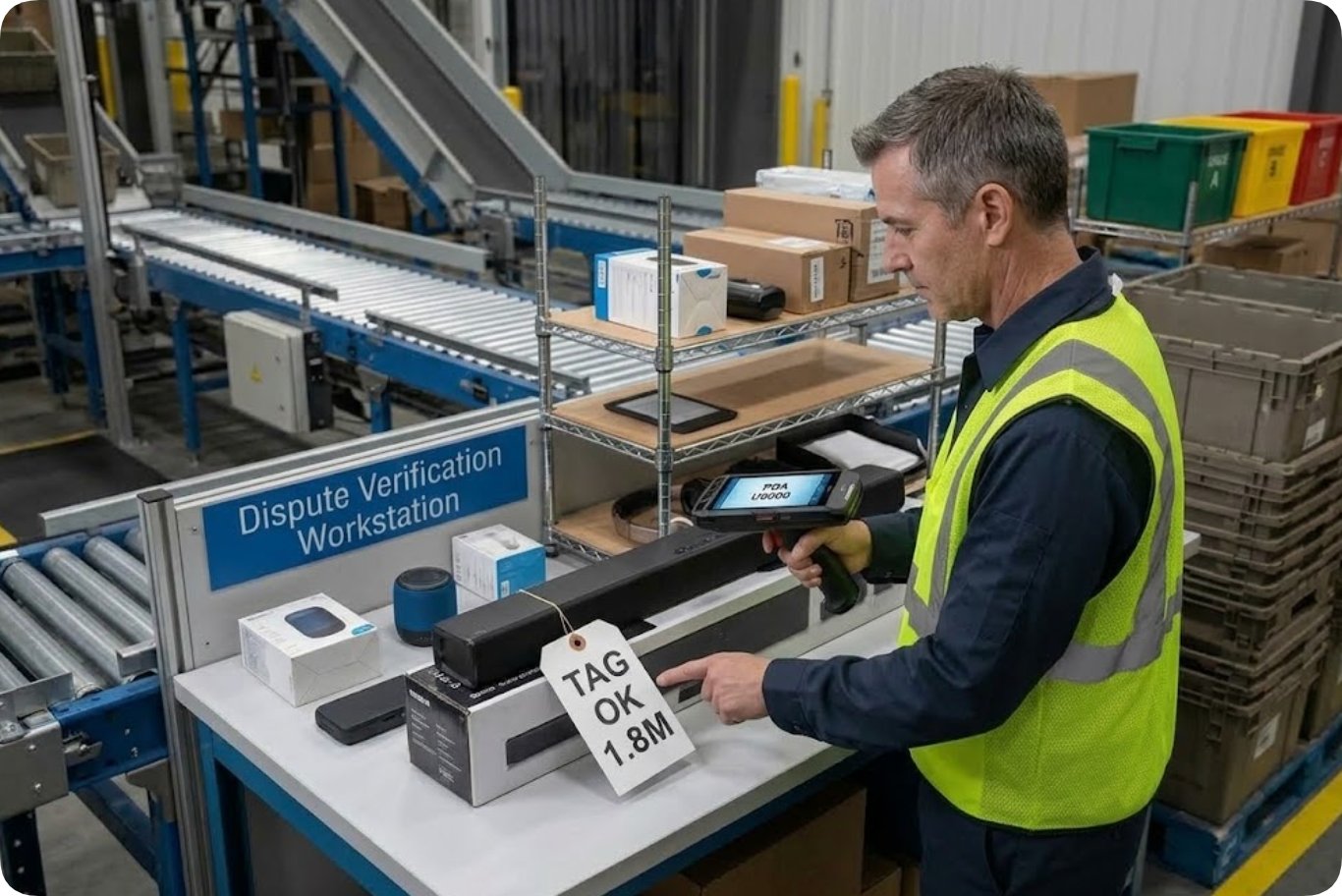
Every returns team needs at least one person per shift who can settle disputes, and disputes at the bench are usually about what a tag actually says. A supplier claims the returned lot is genuine and restockable; the buyer claims the tags are counterfeit; the difference is a frequency read that a barcode scanner cannot perform. That validator role is staffed by rotation, one senior operator per week, and the rotation exists so that the skill does not live in a single pair of hands. The validator's device is the U9000, which reads far beyond label depth: optional UHF at 840 to 960 MHz under the ISO 18000-6C protocol with reads past 1.5 meters, optional LF at 125 K and 134.2 K supporting ISO 11784 and 11785 for animal and FDX-B tags where the operation touches those streams, and NFC at 13.56 MHz from 2 to 5 centimeters for close-in chip checks. Its 5-inch 720 by 1280 display sits under Corning Gorilla glass and accepts gloved and wet-hand touches, the 8 megapixel rear camera with autofocus and flash photographs a suspect tag before anyone peels it, and the removable 4800 mAh battery holds more than 12 hours of work with over 350 hours of standby, which covers a validator through the longest dispute shift without a swap.
Capacity planning for reverse work fails in a predictable way: managers staff the bench for October volume in October, then the holiday surge arrives in November and the bench becomes the building's queue. The fix is arithmetic, not heroics. Count your December return projections, divide by a trainee's realistic day-five throughput rather than a veteran's, and back the difference up into November hiring. Two seats per shift is the practical floor for a mid-size operation: one intake seat running scans on the R501 and one grading seat running dispositions on the R350C, with the validator rotation floating across both. The bench also absorbs flex labor better than forward stations, because a seasonal hire who has learned one grading code set can be productive inside a week. Operations teams that share this staffing arithmetic across departments, including the teams running warehouse operations on the forward side, consistently schedule fewer emergency overtime blocks than teams that treat reverse intake as an overflow chore.
The argument for making this a universal first rotation, not just a returns team hire path, comes down to error feedback. On the forward floor, a mistake is silent until a customer finds it. At the bench, every mistake is another company's mistake arriving in a box, and a trainee sees the downstream cost of a bad label, a skipped verification step, or a mis-keyed code within hours of making the equivalent error themselves. Supervisors report that hires who spend two weeks at reverse intake ask better questions on the forward floor: they check label placement before applying it, they scan to verify rather than scanning to move, and they escalate anomalies instead of working around them. Because the bench runs the same product family as the forward floor, someone who has learned the scan key muscle memory on an industrial PDA from the barcode and RFID industrial PDA line picks up any unit in the building without a second onboarding session.
Rotation only works if it ends. Two weeks is the observed sweet spot: long enough for a trainee to see the full exception catalog at least twice, short enough that reverse intake does not become a career assignment people angle to avoid or to hoard. The handoff is a one-page checklist, not a ceremony. The departing trainee closes out their grading queue on the R350C, hands the validator rotation card to the next senior operator, and signs the intake tally that reconciles the bench's scan count against the returns system. Ten minutes, and the seat is ready for the next hire. Teams that skip the checklist accumulate drift: grading codes quietly mutate, the validator rotation lapses, and within a quarter the bench is back to being the place where problem cases wait.
The closing argument for finance is that a staffed reverse bench recovers value that an unstaffed one destroys. Restockable goods identified within the return window go back into sellable inventory days earlier; refurbish-lane items get routed before their resale window narrows; warranty claims with clean scan histories recover their credit from suppliers instead of aging into write-offs. None of that requires new infrastructure: three devices most operations already own in some form, a two-week rotation with a checklist, and the discipline to staff the bench before peak season instead of after. For a quick side-by-side before committing, the published product comparisons and competitor analysis covers the cross-brand trade-offs, and the bench-relevant specs line up like this:
| Bench seat | Intake: R501 | Grading: R350C | Validation: U9000 |
|---|---|---|---|
| Processor | MT6762 octa-core 2.0 GHz | Qualcomm QCM2290 quad-core, 11 nm | Cortex-A53 quad-core 2.0 GHz |
| Operating system | Android 10 or Android 13 | Android 13 | Android 9 |
| Input style | Grip handle, scan trigger, dual side keys | Numeric keypad with ENT and Fn | Touch under Gorilla glass, gloved and wet hands |
| Tag read | 1D/2D barcode via handle scan | Optional 2D imager at 3 mil; NFC 13.56 MHz at 2-3 cm | UHF 840-960 MHz past 1.5 m; LF 125 K/134.2 K; NFC 2-5 cm |
| Ruggedness | IP65 sealing | Operating -10°C to 50°C | 8 MP autofocus camera with flash |
| Weight | Under 750 g with handle | Under 300 g | 4800 mAh removable pack, over 12 h work |
The bench will train your people either way; the only question is whether it trains them on purpose.