A hazard that gets found but not filed is a hazard that will be found again next week. The walk from the machine where something looks wrong to the desk where somebody can approve a fix runs through a short chain of documents: a photo, a form, a ticket, a follow-up. The hardware that carries those documents decides whether the chain closes in one shift or drags across three.
This checklist walks that chain step by step and matches three tablets from the same rugged line to the roles they fit best. The RT82 is the 10.1-inch Android unit with 5G, the ST9-J is the 8-inch Windows unit rated for about seven hours per pack, and the HTNJ08A is the 8-inch Windows unit with a full set of physical ports. All three are built for plant floors; they are not interchangeable once the paperwork is counted.
What the Walkthrough Asks of the Hardware
Every stage of the chain taxes a different part of the device. The photo stage punishes weak cameras and screens that wash out under hall lighting. The form stage punishes small keyboards and screens that ignore a stylus. The ticket stage punishes devices that lose connectivity the moment a worker steps behind a rack of shelving, which is exactly where most hazards get spotted. A purchasing team that buys one model for all three stages should at least know which compromise it is accepting, and the pages of a factory safety walkthrough rarely say so out loud.
The sections below take each document in the chain, name the failure mode that shows up first, and check what each tablet's published specifications say about it. A comparison table near the end collects the numbers in one place, and a short section lists the rows we deliberately left out because the three product pages do not quote them on the same basis.
The Photo Log: Evidence That Survives Plant Lighting
The first document is photographic. An insurance reviewer or a safety auditor will reject a hazard entry if the picture shows a dark smear where the guard rail should be, so the camera and the screen both matter: the camera has to resolve the detail, and the screen has to show the inspector whether the shot is usable before he walks away from the machine.

The RT82 Rugged Tablet carries the strongest imaging hardware of the three: a 20MP autofocus rear camera with flash and an 8MP front unit. Its 10.1-inch IPS panel runs at 1200×1920 with 400 nits of brightness, which is enough to review a shot beside the machine rather than walking back to an office monitor. The panel sits behind 10-point capacitive glass, and the whole unit weighs under 650 grams, so a two-handed camera grip stays comfortable through a full patrol route. For crews whose hazard evidence is mostly pictures of guarding, spills and Blocked exits, this is the device that closes the first document fastest.
The Form Field: Writing the Report Where It Happens
The second document is the form itself: hazard type, location code, machine number, immediate action taken. Typing all of that on a shop floor is a different job from reviewing a photo, and it favors a screen that accepts a stylus and keeps working when a damp glove touches the glass.
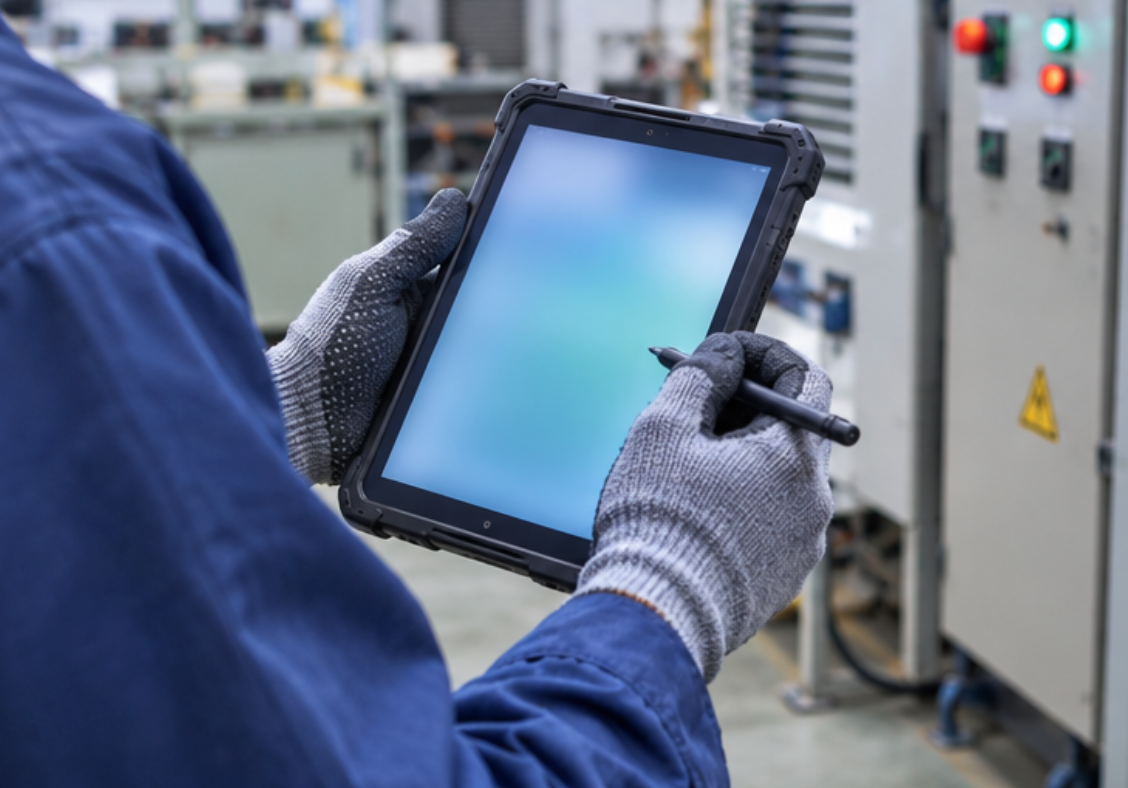
The ST9-J Rugged Industrial Tablet is built around that stage. Its 8-inch IPS touchscreen runs at the same 1200×1920 resolution as the RT82's panel, supports 10-point capacitive touch and takes both stylus and wet-hand input, with an optional 1000-nit sunlight-readable screen for yards and loading docks. It runs Windows 10 Pro, so the plant's existing reporting forms open without reformatting, and the standard 8GB of RAM with 256GB of storage leaves room for the full form library plus a season of archived reports. The pack is a removable 5000mAh unit rated at roughly seven hours per charge and about three hours to recharge, which turns a two-shift patrol into a battery-swap routine rather than a charging pause.
The Repair Ticket: From Finding to Fixed
The third document leaves the inspector's hands. Once a hazard is filed, maintenance has to receive it, quote the fix, and schedule the work, and the tablet that stays with the reporting team often becomes the terminal where those tickets are tracked and closed.
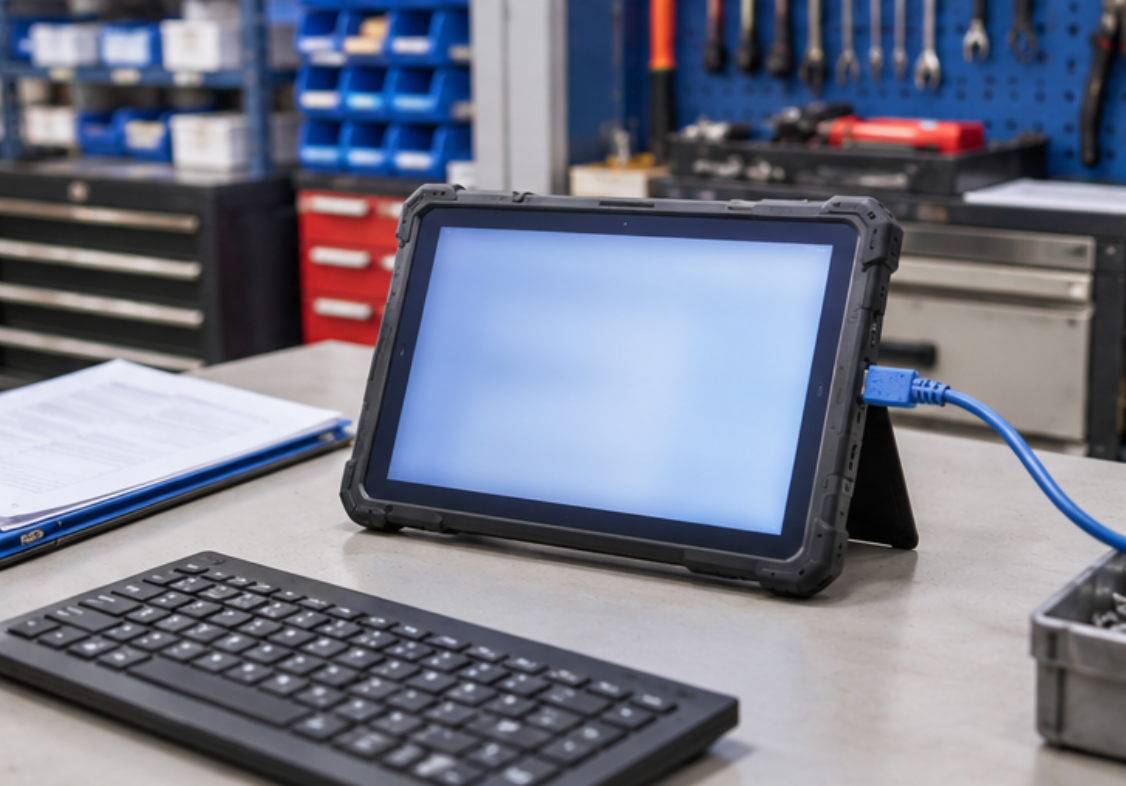
The HTNJ08A Rugged Tablet fits that desk-bound half of the chain. Its 8-inch panel runs at 1200×1920 with 560 nits of brightness, the highest of the three, and the glass is hardened to 7H with stylus and wet-hand support. Where it separates from the other two is the port row: RJ45 Ethernet alongside USB Type-A, USB Type-C, Mini HDMI and a 12-pin Pogo connector, with global 4G LTE and Wi-Fi 5 on top. A ticket terminal plugged into the plant network through a wired jack does not drop a session when the workshop's wireless spectrum gets crowded at shift change. It carries IP67 sealing, MIL-STD-810G certification and a 1.22m drop rating, so it tolerates the corner of the maintenance office as well as the floor.
Three Devices, One Comparison Table
The table below lines up the published figures that all three product pages quote on a comparable basis.
| Column | RT82 | ST9-J | HTNJ08A |
|---|---|---|---|
| Operating system | Android 16 | Windows 10 Pro (11 optional) | Windows 10 Pro or 11 Pro |
| Display | 10.1in, 1200×1920, 400 nits | 8in, 1200×1920, 400 nits (1000-nit option) | 8in, 1200×1920, 560 nits, 7H glass |
| Battery | 10000mAh, built-in | 5000mAh, removable, ~7h per charge | 3500mAh, removable |
| Protection | IP67, 1.2m drop, −10°C to 50°C | IP65, 1.2m drop, −20°C to 55°C | IP67 + MIL-STD-810G, 1.22m drop, −20°C to 55°C |
| Cameras | 8MP front / 20MP rear | 5MP front / 13MP rear | 5MP front / 8MP rear |
| Wireless and ports | Wi-Fi 6E, 5G, BT 5.2 | Wi-Fi 5, 4G LTE, BT 4.2 | Wi-Fi 5, 4G LTE, BT 4.2, RJ45, HDMI |
What We Kept Out of the Table
Two rows did not survive the comparison. Weight is the first: the RT82 page quotes under 650 grams for the unit, the ST9-J page quotes 700 grams, but the HTNJ08A page only publishes a gross figure of approximately 1.8 kilograms with the carton included. Three numbers on three different bases cannot share a column, so the row came out; if carried weight decides the purchase, ask the supplier for the bare-unit figure in writing.
Memory is the second. The RT82 lists 8GB of RAM with 128GB of storage expandable to 256GB, and the ST9-J lists 8GB with 256GB standard, but the HTNJ08A page describes its memory only as high-speed RAM with SSD storage and an M.2 extension, without publishing capacities. Treat that row the same way: request the configuration sheet before the order, because the two Windows units will otherwise look identical on paper when their form-library headroom may not be.
Three Roles in One Reporting Chain
Read back through the chain and the split is clean. A patrol that lives on photographs belongs to the RT82, whose 20MP camera and large panel turn evidence into a one-visit job. A patrol that lives on forms belongs to the ST9-J, whose stylus-friendly Windows screen and swappable 5000mAh pack keep a two-shift reporting rota running. A maintenance office that lives on tickets belongs to the HTNJ08A, whose wired Ethernet port and 560-nit screen make it the steadiest terminal at the desk end of the chain. Plants that route their hazard paperwork through a single platform on the factory floor can compare how these stages map onto the wider factory inspection workflow before committing to one device per role.
The practical buying summary is short: pick by the document your team fills in most, not by the spec sheet's boldest number. All three product pages, along with the rest of the rugged tablet line, publish the figures quoted above, and the product comparisons and competitor analysis section adds side-by-side notes against rival brands for teams still weighing the alternatives.