Editor’s Note: This guide is based on field data from logistics operations across North America and Europe, combined with hardware failure analysis from Q3 2024. If you are evaluating devices for a warehouse, cold chain, or last-mile fleet, these are the four traps that cost operators real money — and how to sidestep them.
Industrial Tablet Selection Guide: 4 Pitfalls Logistics Managers Must Avoid with hotus Rugged Tablets
In the high-stakes world of logistics, where every second counts and operational costs are razor-thin, the tools you choose can make or break your bottom line. Whether you are managing a sprawling warehouse, dispatching drivers across a frozen landscape, or tracking inventory in a temperature-controlled cold storage facility, the hardware in your hands must be as resilient as your team. Yet, a common mistake plagues the industry: the assumption that any consumer-grade tablet can handle the job. This guide, based on real-world industry data and case studies, will walk you through the four critical pitfalls to avoid and the specific features you need to demand in an industrial tablet.
We will also look at how recent trends, such as the rise of secure biometric authentication in e-government systems (like Japan’s e- platform, which now tracks which device was used for authentication), are influencing the need for robust, traceable, and tamper-proof hardware in logistics. While your primary concern may be barcode scanning and vehicle mounting, the underlying principle is the same: you need a device that provides end-to-end accountability and reliability in harsh environments. For back-office server-side solutions, a Mini PC can handle the heavy data processing, but the frontline device must be a true rugged tablet.
🖥️ Pitfall 1: Focusing Only on Screen Size, Ignoring Wide-Temperature & Rugged Protection
The first and most common trap is selecting a tablet based solely on its screen size or processing speed, while completely ignoring its environmental resilience. In a logistics context, this is a recipe for disaster.
The Real-World Problem:
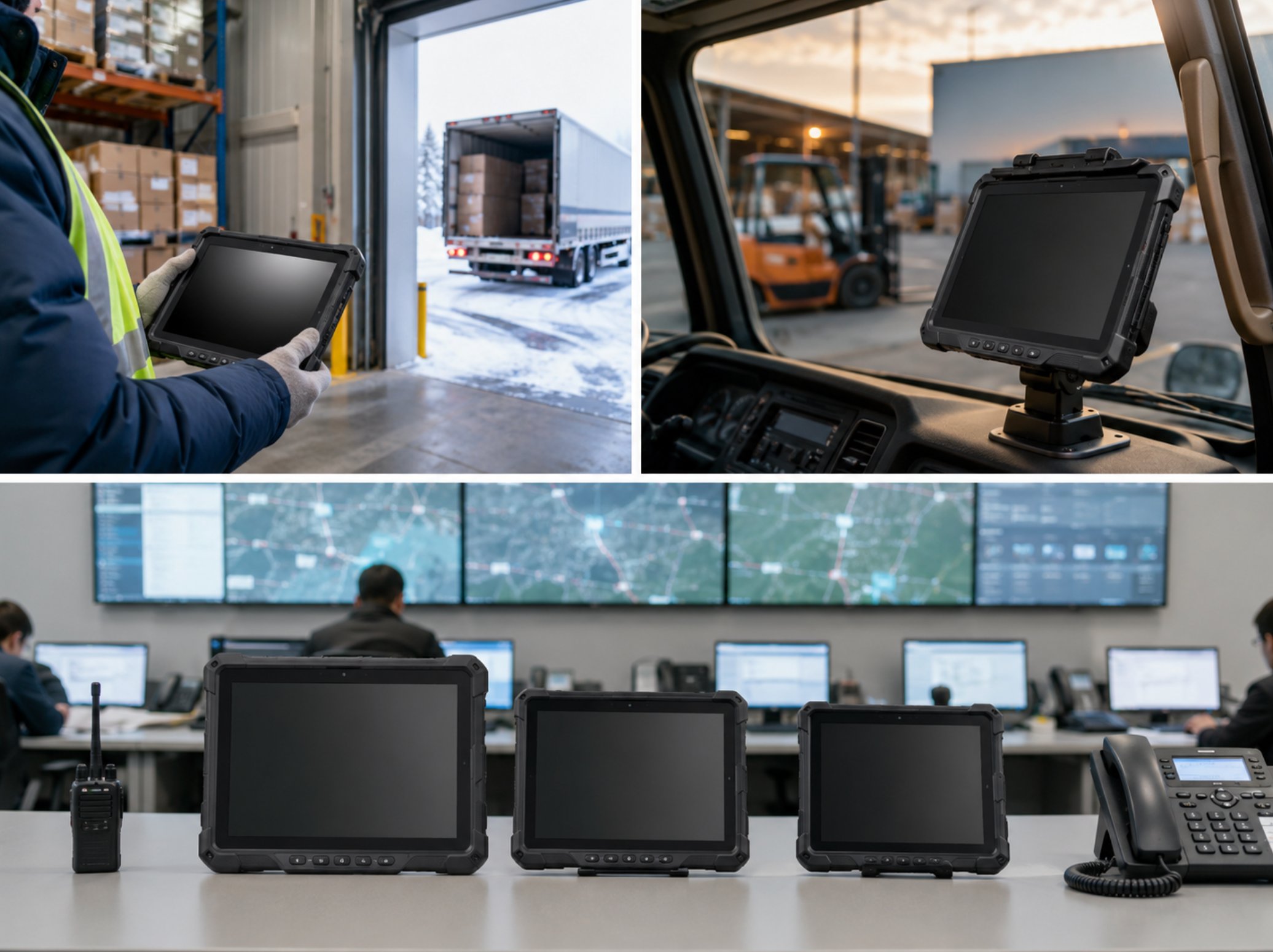
Consider a typical summer day in a distribution center in Phoenix, Arizona, or a winter morning in a cold storage facility in Minnesota. Consumer-grade tablets, designed for the comfortable environment of an office or home, will fail. The internal components overheat in direct sunlight, causing the screen to dim or shut down entirely. In a freezer, the battery drains instantly, and the LCD screen freezes, becoming unresponsive.
According to industry reports from October 2024, issues with login failures and device authentication (such as those seen with Japan’s e- system) often stem from hardware instability. When a device cannot maintain a stable operating temperature, its security and authentication modules become unreliable. For logistics, this means a driver cannot log into their TMS (Transportation Management System) to confirm a delivery, or a warehouse worker cannot authenticate a pick-up.
The Solution: Wide-Temperature and IP67 Rating
A true industrial tablet, such as the HTNJ10C Rugged Tablet, is built to survive. It must operate reliably across a wide temperature range of -20℃ to +60℃. This ensures functionality in both the heat of a sun-baked loading dock and the chill of a -20℃ freezer.
Furthermore, an IP67 protection rating is non-negotiable. This means the device is completely dust-tight (preventing damage from warehouse dust and debris) and can be submerged in up to 1 meter of water for 30 minutes. This is critical for outdoor operations, rain, or accidental spills in a cold chain environment.
💰 Pitfall 2: No Native TMS/WMS Support—The Hidden Cost of Integration
The second pitfall is assuming that a standard Android or Windows tablet can easily integrate with your existing logistics software. This assumption often leads to massive secondary development costs and integration headaches.
The Real-World Problem:
Most consumer tablets come with a standard operating system but lack the necessary APIs, hardware triggers, and software compatibility to natively support TMS (Transportation Management System) or WMS (Warehouse Management System) applications. You might find that your custom-built app runs slowly, the barcode scanner doesn't trigger the correct input field, or the device cannot communicate with your fleet management server without a complex middleware layer.
This leads to thousands of dollars in custom development fees, ongoing maintenance, and downtime. A recent case from October 2024 highlighted a logistics firm struggling with login errors on their e- platform because their generic tablets could not handle the secure authentication protocols required for government-issued digital contracts. The same principle applies to your logistics software: if the tablet cannot natively handle the security and data transfer protocols of your WMS, your entire operation slows down.
The Solution: Native Integration
Choose an industrial tablet that offers native TMS/WMS integration support. The HTNJ08A Rugged Tablet is designed to be plug-and-play with major logistics platforms. This means the device comes pre-configured with the necessary drivers, security certificates, and software layers to communicate directly with your backend systems. You avoid the "black box" of secondary development, ensuring that your team can start scanning, tracking, and dispatching immediately.
Pitfall 3: Weak Barcode Scanning—The Inefficiency of Cameras
The third critical mistake is relying on the built-in camera of a standard tablet for barcode scanning. While cameras have improved, they are fundamentally unsuited for the rigors of logistics.
The Real-World Problem:
In a warehouse or yard, barcodes are often:
Distant: Located on high shelves or far away on a pallet.
Damaged: Smudged, ripped, or faded from rough handling.
Dirty: Covered in dust, grease, or ice (in cold chain).
Reflective: On shiny shrink wrap.
A standard camera struggles to focus on these barcodes. It requires perfect lighting, a steady hand, and the barcode to be very close to the lens. This leads to scan failures, repeated attempts, and significant time wasted. A worker might spend 10 seconds trying to scan a single barcode, which, over a day of thousands of scans, results in hours of lost productivity.
The Solution: Professional Industrial Scanning Engine
A true rugged tablet must feature a professional industrial scanning engine. The HTQ10A Android Rugged Tablet is equipped with a high-performance scanner capable of 5-meter (16.4 feet) range and 1-second recognition. This engine is designed to read damaged, dirty, and low-contrast barcodes instantly. It uses laser or advanced imaging technology that is far superior to a camera, reducing scan time from seconds to milliseconds. This is the difference between a 95% scan rate and a 99.9% scan rate.
⚙️ Pitfall 4: No Vehicle Mounting Solution—A Safety and Stability Hazard
The fourth and final pitfall is forgetting about the vehicle environment. A tablet that works fine on a desk will be dangerous and ineffective in a moving vehicle.
The Real-World Problem:
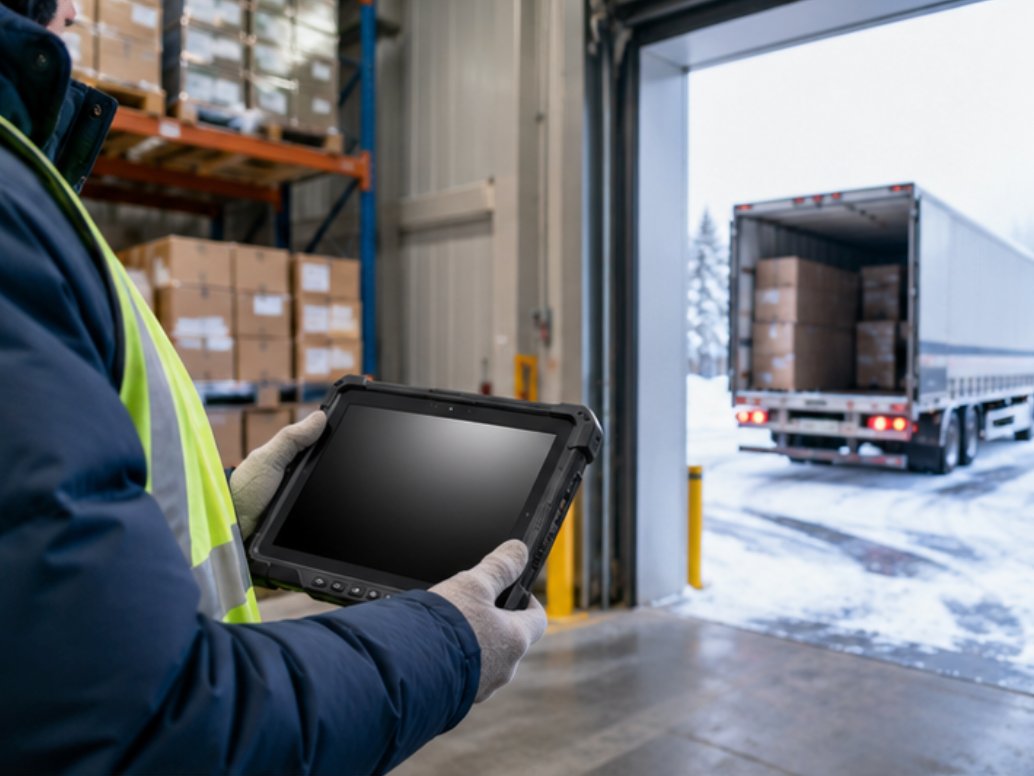
Standard tablet mounts are not designed for the vibration, shock, and movement of a forklift, delivery truck, or yard dog. When a forklift hits a bump, the tablet can fall off the mount, shattering the screen or disconnecting from the power source. Even if it stays attached, the constant vibration can cause the internal connectors to loosen, leading to premature failure. Furthermore, without a proper mount, the driver must hold the tablet, violating safety regulations and creating a distraction.
The Solution: Dedicated Shockproof Vehicle Mount
You need a shockproof vehicle mount specifically designed for your tablet. The hotus rugged tablet lineup is paired with a dedicated mounting solution that absorbs vibration, keeps the device secure, and allows for easy docking and undocking. This mount also provides a stable power supply, preventing battery drain during long shifts. It is a critical component of the system, not an afterthought.
🎯 Recommended Selection Criteria: The Five Pillars of a Logistics-Ready Tablet
Based on the pitfalls above, here are the five non-negotiable criteria for selecting an industrial tablet for logistics, warehousing, and cold chain:
Rugged Design: Must have IP67 protection and -20℃ to +60℃ operating temperature.
Integrated Scanning: Must include a professional industrial scanner (5m range, 1-sec recognition).
Software Compatibility: Must offer native TMS/WMS integration to avoid secondary development costs.
Vehicle Mounting: Must have a dedicated shockproof vehicle mount.
Fleet Management: Must be compatible with a fleet management platform for real-time monitoring.
🛡️ Product Recommendation: The hotus Rugged Tablet Lineup
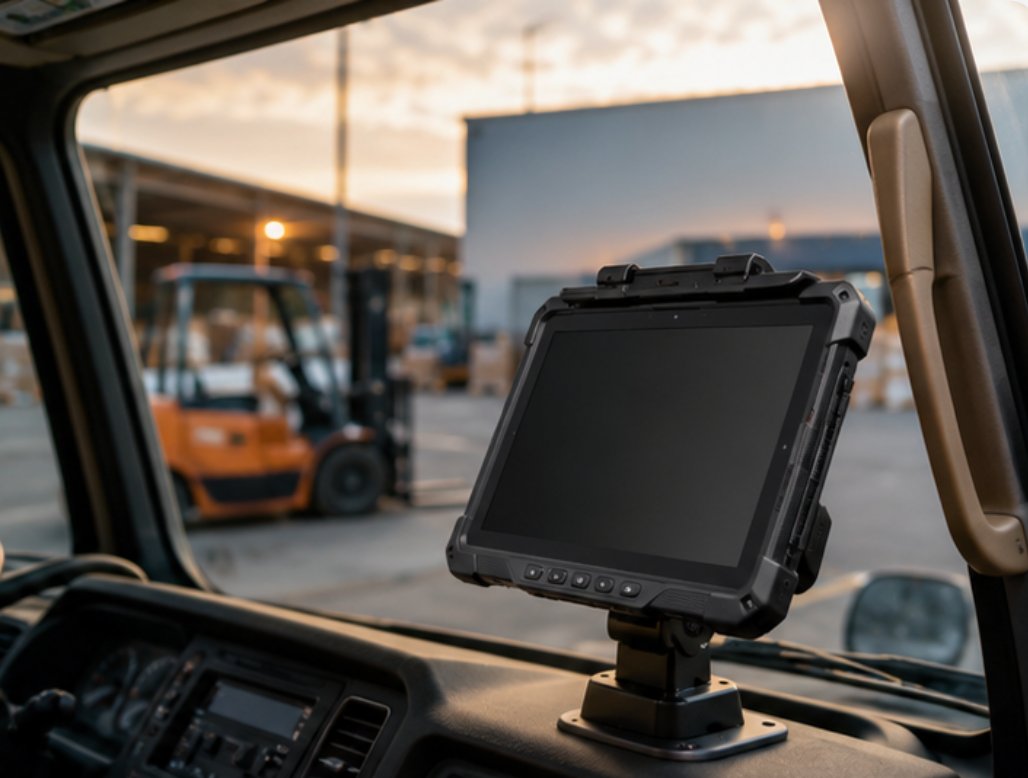
For logistics and warehouse operations, the hotus rugged tablet series—specifically the HTNJ10C, HTNJ08A, and HTQ10A—offers a complete solution that directly addresses the pitfalls mentioned above.
HTNJ10C Rugged Tablet: Ideal for heavy-duty warehouse and yard operations. Its large screen and powerful processor make it perfect for running complex WMS applications and managing multiple tasks.
HTNJ08A Rugged Tablet: A balanced choice for mixed-use environments, including delivery drivers and cold chain workers. Its compact size and excellent battery life make it a versatile workhorse.
HTQ10A Android Rugged Tablet: Optimized for scanning-intensive applications. Its high-performance scanning engine is the star feature, making it the best choice for high-volume picking and packing operations.
All three models come standard with IP67, wide-temperature support, and native TMS/WMS compatibility. They are designed to be the single point of truth for your logistics data.
For a deeper dive into how these tablets compare to standard mini-PCs in back-office operations, check out our mini PC lineup for server-side solutions.
Fleet Management Integration Tips
The true power of a rugged tablet is unlocked when it is integrated into a broader fleet management platform. This allows for one-person monitoring of:
Vehicle Trajectories: Real-time GPS tracking of every truck and forklift.
Temperature Data: Continuous monitoring of cold chain integrity from the tablet's sensors.
Device Status: Remote management of battery levels, software updates, and hardware health.
By pairing your rugged tablets with a fleet management platform, you move from reactive problem-solving to proactive management. You can see a temperature spike in a refrigerated truck before the goods are spoiled, or you can locate a missing forklift instantly.
For internal servers or edge computing solutions to support this platform, you might consider our industrial mini PCs to handle the data processing.
💰 Summary: The Cost of a Wrong Decision
Choosing the wrong tablet is not just a bad purchase; it is a drag on your entire logistics operation. It leads to:
Downtime: Devices failing in extreme temperatures.
Inefficiency: Slow scanning and poor software integration.
Costs: Thousands of dollars in secondary development and replacement hardware.
Safety Risks: Unstable mounts and distracted drivers.
The right choice—a rugged industrial tablet with professional scanning, native software support, and a dedicated vehicle mount—is an investment in productivity, accuracy, and safety. It is the tool that keeps your supply chain moving.
If you are building a centralized control room, you might find the processing power of a compact mini PC useful for running the fleet management dashboard.
Frequently Asked Questions (FAQ)
Q1: Can I use a standard iPad or Samsung tablet in a cold storage warehouse?
A: No. Standard consumer tablets are not rated for cold storage. Their batteries will drain quickly, and the LCD screens can freeze or become unresponsive. You need an industrial tablet with a -20℃ to +60℃ operating temperature range.
Q2: What is the difference between IP65 and IP67?
A: IP67 is the minimum standard for logistics. IP65 is dust-tight and protected against water jets, but IP67 is dust-tight and can be submerged in 1 meter of water for 30 minutes. In wet or rainy conditions, IP67 is required.
Q3: How long does it take to integrate a rugged tablet with my existing WMS?
A: With a tablet that offers native TMS/WMS integration, it can be as simple as installing the app and entering your server details. This process can take minutes, not weeks. You avoid the secondary development costs associated with consumer tablets.
Q4: Is the barcode scanner on a rugged tablet better than the camera?
A: Yes, significantly. A professional industrial scanning engine (like the one in the HTQ10A) can read damaged, dirty, and distant barcodes (up to 5 meters) in under 1 second. A standard camera requires perfect lighting and proximity.
Q5: Do you offer a vehicle mount for the HTNJ10C?
A: Yes. The hotus rugged tablets are designed to be used with a dedicated shockproof vehicle mount. This mount absorbs vibration, provides a stable power connection, and keeps the device secure during movement.
Q6: Can the tablet monitor temperature in a refrigerated truck?
A: Yes. When paired with a fleet management platform, the tablet can read data from external temperature sensors or its internal sensors (if configured) to provide real-time cold chain monitoring.
Q7: How does biometric authentication work on these tablets in a logistics setting?
A: Industrial tablets often support facial recognition or fingerprint scanning for secure login. This ensures that only authorized personnel can access the TMS/WMS, providing an audit trail similar to the e- platform's "which device" tracking. This prevents unauthorized access and data breaches.
For more information on our entire product line, including our powerful mini PCs for your back-end systems, please visit our website.