The cattle operation outside Rotoura runs its ear-tag reading season in a single hard fortnight, and for that fortnight the scan fleet performs flawlessly. Then the pens empty, the crates go back on the shelf, and the fleet quietly starts to rot. Last year the first surprise arrived in week three of the quiet period: a handheld that read every tag in spring started missing one in five, and nobody could say when it happened. The herd manager now runs a formal maintenance week after every reading season, built around the parts that actually fail in a livestock shed — not the software, and not the processor, but five physical weak points. The fleet behind the routine is the industrial PDA line for tag scanning, and this article is the maintenance week itself, written as the checklist the herd manager keeps clipped inside the equipment-room door.
🗓️ The Five Days After the Tags Come Off
The timing is not arbitrary. The week after the season is the only stretch when every unit is in one building, every battery has been through the same duty cycle, and every failure from the season is still fresh enough to trace. The herd manager blocks five working days and assigns each day a physical subsystem rather than a device: scan windows on Monday, battery contacts on Tuesday, antenna faces on Wednesday, charging hardware on Thursday, seals and screens on Friday. A subsystem-per-day order matters because the same fault shows up on different models through different parts. A missed tag in spring might trace to a dirty scan window on one unit, a corroded contact on a second, and a scraped antenna face on a third — three separate maintenance actions on three separate days, all wearing the same symptom. Sorting the week by subsystem is what turns a pile of handhelds into a fleet that can be audited line by line.
🧼 The Scan Window That Lies About Its Range
Monday belongs to the glass. A scan window filmed with shed dust — dried feed powder, skin oil from gloved handling, a fine layer of teat-dip residue from the parlour — keeps working, which is exactly the problem. The operator compensates by moving the unit closer and holding it longer, the read gets slower by fractions nobody notices, and the fleet's real capability has degraded weeks before anyone files a complaint. The routine is mechanical: inspect each window under the bench lamp, clean with a damp microfibre cloth only, and retire any unit with a scratch deep enough to catch a fingernail. On the smaller 4.5-inch handhelds the window sits close to the corner of the housing, so the cloth must be folded to a point; the larger 6-inch units forgive a flat wipe. The herd manager's acceptance test after cleaning is one full crate of retagged ear tags read at the normal working distance, timed. If the crate takes longer than it did on the season's first day, the unit goes to the bench, not back to the shelf.
🔋 🔋 The Battery Contacts That Corrode in a Damp Shed
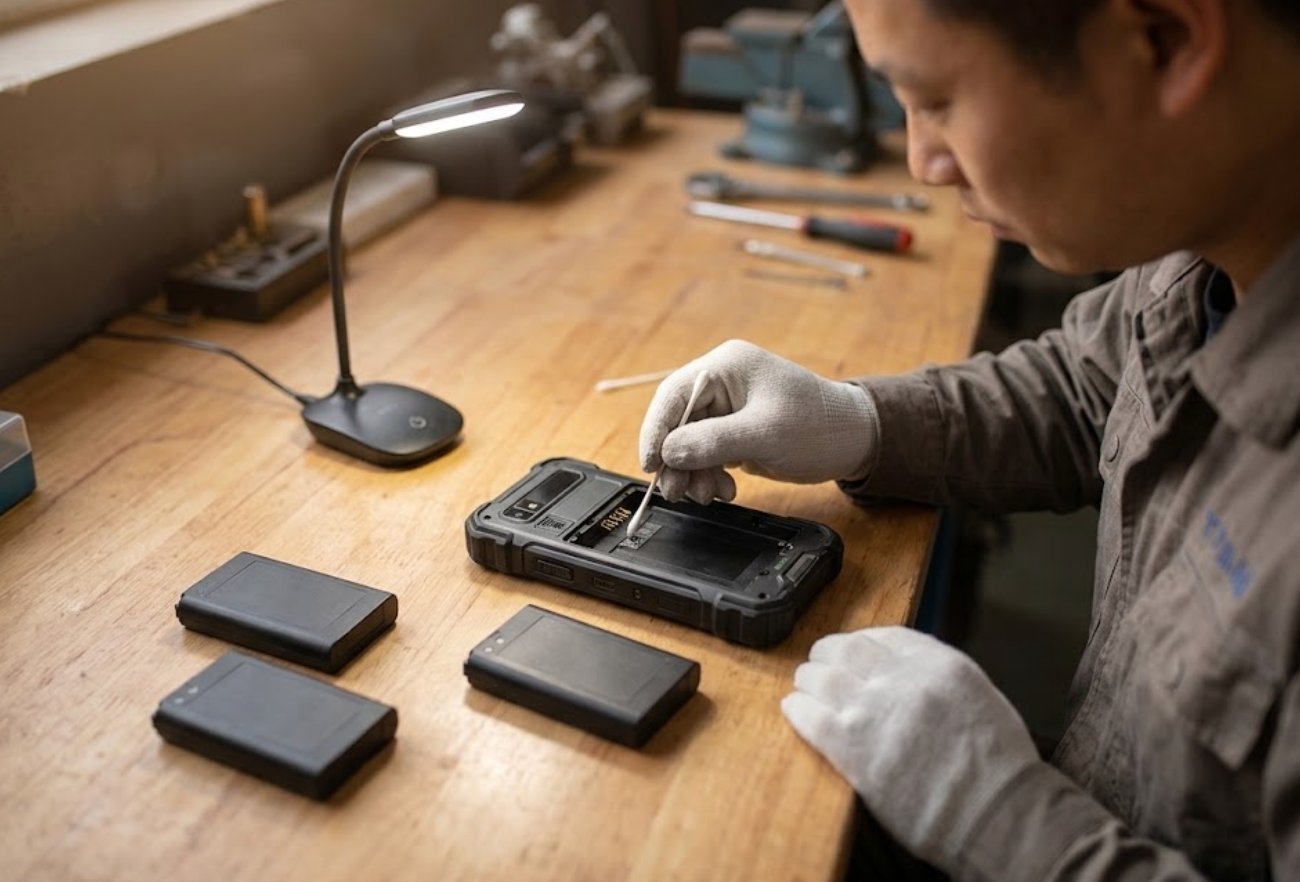
Tuesday is the contacts. Both the T80 handheld and the RS50 terminal run removable batteries, and a removable battery in a livestock building lives a shorter life than its spec sheet promises — not because the cells age, but because the contacts breathe. Humidity swings between a washed parlour and a dry office work the exposed terminals, and by mid-summer a unit that has been swapped between a day battery and a charge cradle for months can grow a dull film that reads as a full battery but delivers a brownout under scan load. The routine: pull every battery, inspect both the cell contacts and the housing pins under the lamp, clean any oxidation with an electronics contact swab, and check the battery latch still snaps with a click rather than a slide. The herd manager marks each battery with the month it entered service and rotates the oldest cells into the office spares pool, where a mid-shift swap costs nothing. The T80 handheld PDA makes this rotation simple, which is the quiet reason a small-screen unit stays in the fleet for tag work at all.
📡 The Antenna Face That Should Never Meet a Gate
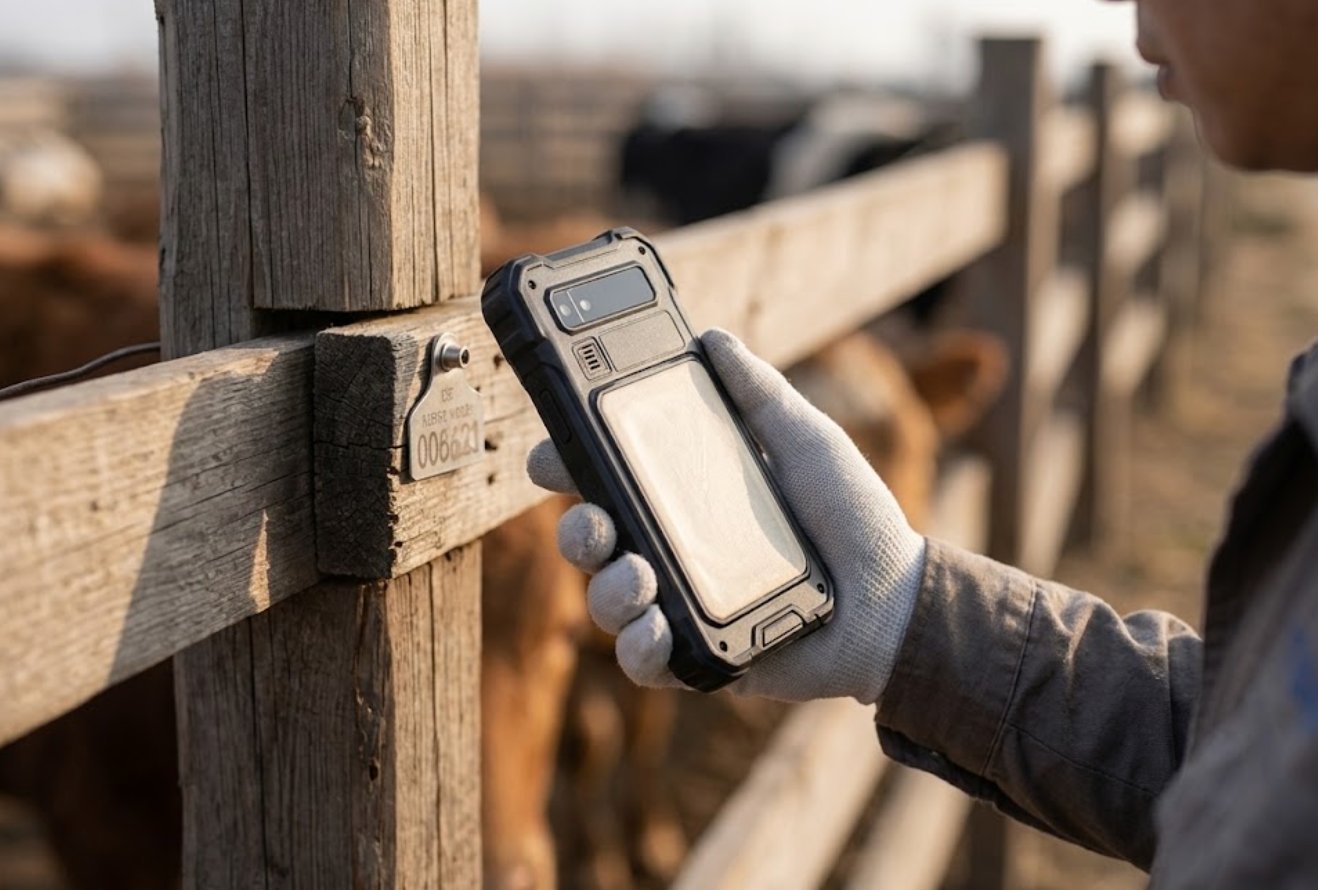
Wednesday is the antenna, and on the UHF unit it is one maintenance action with a rule attached. The R530C UHF RFID PDA carries a 40-by-40-millimetre ceramic antenna behind the housing face, rated to read ear tags at up to two metres, and ceramic does not forgive gate frames. The routine is twofold. First, a physical pass: run a palm over the antenna face and feel for chips or crazing, the damage that comes from clipping a steel gate on the follow-through of a read. Second, a functional pass: read a reference tag at a measured distance — the herd manager keeps a tag zip-tied to a post at exactly 1.5 metres — and compare against the season's opening log. A unit that has lost twenty percent of its rated range with a clean window and a full battery has an antenna problem, and no amount of cleaning will recover it. Two such units were pulled from the fleet last season and reassigned to the race where the operator works at arm's length anyway; the budget line for replacements went to one new unit instead of three, which the owner noticed.
🔋 ⚡ The Cradle and the Fast-Charge Handshake
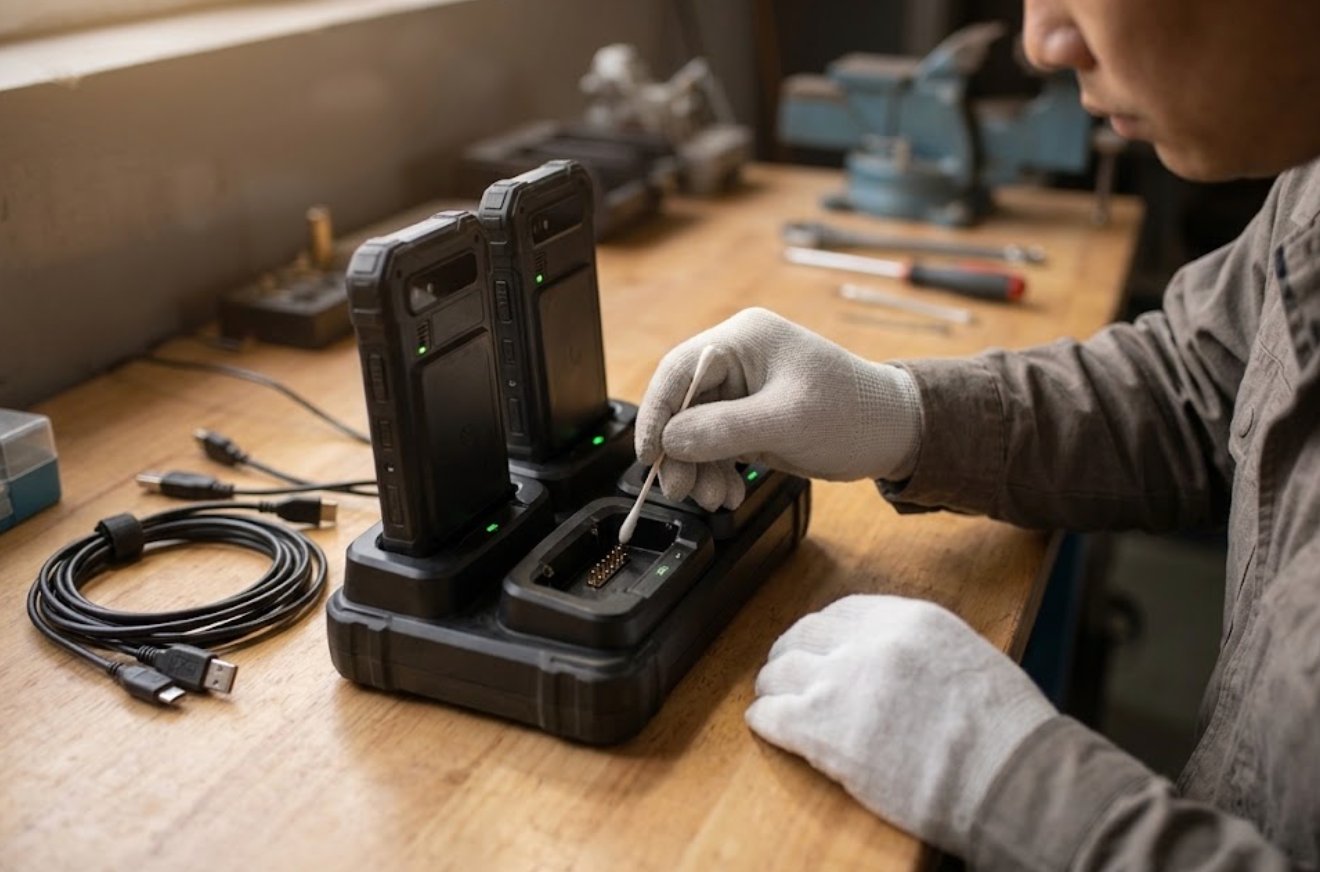
Thursday is the charging hardware, and the checklist item most sheds skip. The RS50 terminal charges over a USB Power Delivery handshake, and that handshake is a negotiation: a worn cable, a dirty cradle pin, or a third-party brick that sags under load can drop the negotiation to a slower profile, and the fleet starts every season half-charged without a single error message. The routine: test every cradle position with the same unit and time a zero-to-full charge against the manufacturer's figure; clean the cradle pins with a dry swab; and pull any cable whose connector wobbles in the port. Where the fleet uses removable cells, the Thursday pass also charges all spares to full and then lets them sit — a spare cell that cannot hold its charge over a quiet fortnight is a spare that will fail on the one morning it is needed. The RS50 handheld terminal shares cradles across the office pool, so one weak position can silently eat two units' worth of morning readiness before anyone connects the symptom to the furniture.
🧴 Seals, Screens and the Glove Test
Friday closes the week with the parts that keep the shed out of the electronics. Every unit gets the glove test: the operator works the screen in the same milking gloves used in the season, and any unit that misses touches goes on the bench rather than back to the crate — the small 4.5-inch display is specified for glove and wet-hand operation precisely because the parlour cannot wait for bare hands, but a worn screen film or a lifted corner of protection can silently break that promise. The seals get the same honesty: check the port covers close with pressure, look for the chalky line of a stretched gasket, and retire any unit whose cover needs a thumb-load to stay shut. The herd manager's rule from two seasons ago applies here — a cover that has to be argued closed in the office will be open in the pen, and the IP rating on the label stops being a fact the moment that happens. Friday ends with every crate photographed open, which is the before-picture the whole week is judged against.
🔮 📋 The One-Page Log That Decides the Next Order
Everything above lands on a single sheet, and the sheet outlives any individual unit. One row per device, one column per subsystem, and a cell filled in only with a measurement or a verdict — never a tick. The table below is the sheet's backbone, with the rhythm each row follows.
| Subsystem | The Check | Acceptance | When |
|---|---|---|---|
| Scan window | Lamp inspection, microfibre clean, timed crate read | Crate time within season day-one figure | Every season end |
| Battery contacts | Cell out, lamp inspection, contact swab, latch click test | Bright pins, positive latch | Every season end; cells rotated by age |
| UHF antenna face | Palm pass for chips; reference tag at fixed 1.5 m post | Reference read within log tolerance | Every season end |
| Charging hardware | Timed zero-to-full per cradle position; pin and cable check | Full charge within manufacturer figure | Every season end; spares top-up monthly |
| Seals and screen | Glove test, port-cover pressure check, gasket inspection | Screen true with gloves; covers close unaided | Every season end |
Two seasons of these sheets did something the office did not plan: they turned the next purchase order into an argument nobody had to have. When the fleet needed a fourth unit, the sheets showed the small-screen handhelds failing on contacts and the UHF units failing on antenna faces, in that order, and the order was written to match. The full rugged terminal range stayed browsable, but the decision came off the log, and the supplier quote came back against the office's own acceptance figures rather than against a brochure. That is the quiet payoff of a maintenance week — the fleet teaches you what to buy before the fleet fails.
🏭 🛒 Get the Spec Sheet, MOQ and a Factory-Direct Quote
Every terminal in this maintenance routine is in current production and ships factory-direct worldwide. Request full specification sheets, minimum order quantities and a quotation built around your own herd size and reading season, and include the accessory list you actually need — spare cells, cradles and reference-tag hardware quote as line items alongside the units. The factory answers specification questions within one working day, and the product comparison notes are the fastest way to line the models up against each other before the quote is requested.