A road maintenance crew does not lose money on tablets. It loses money on re-surveying a stretch that was recorded wrong the first time: the closure permit reissued, the crew remobilised, the asphalt ordered twice. This article runs that arithmetic for one highway maintenance district's survey season, using three devices that each pay for themselves at a different line of the ledger — the rugged tablet lineup covers the same categories, but the numbers below come from one district's own season sheet. The district runs a 38-kilometre commitment: two-lane rural carriageway, forty-one culverts, and a resurfacing programme that touches roughly a quarter of the network each year.
💡 One Re-Do Costs More Than Three Tablets
Start with what a re-survey actually costs. The district's own sheet prices a single repeated measurement visit like this: the lane-closure permit reissue runs €340 in administrative fees, a six-person crew remobilises at €41 per hour for a four-hour window, and the hot-mix patch ordered against the wrong measurement — 1.5 tonnes at €180 per tonne — either sits unused or gets laid at the wrong depth and re-ordered. Add the surveyor's half-day of re-planning and the total lands just over €2,200 per repeated visit. The district logged eleven repeated visits the season before it rebuilt its kit. That is €24,000 of pure rework in one survey season, from one district, on measurements — not on the repairs themselves.
Against that number, the question in the equipment meeting changed shape. Nobody argued about whether rugged tablets were worth it; the argument was which three, because the rework ledger said the kit pays for itself if it prevents roughly a dozen bad records a year. The purchase came down to three devices, each assigned to the line of the ledger where rework actually starts.
🛣️ Where the Season's Money Actually Leaks
Before the rebuild, the district traced every repeated visit from the season log back to its first cause. Three patterns covered the eleven repeats. Five came from records that could not be verified in the field: the crew wrote a position on paper, and the number that reached the office did not match the road. Four came from latency — the defect sat in a cab notebook for two days before anyone keyed it in, by which time the crew had closed the closure window and had to reopen it. The last two came from an integration gap: the falling-weight deflectometer van measured one file format, the office worked in another, and the numbers were retyped by hand, twice, with one transcription error each time.
That breakdown set the spec conversation. The crew did not need more screen brightness arguments or processor benchmarks; it needed position integrity, same-hour upload, and a machine that could plug into the test van. Each requirement landed on a different device.
📡 RT80: The Record Never Waits for the Office
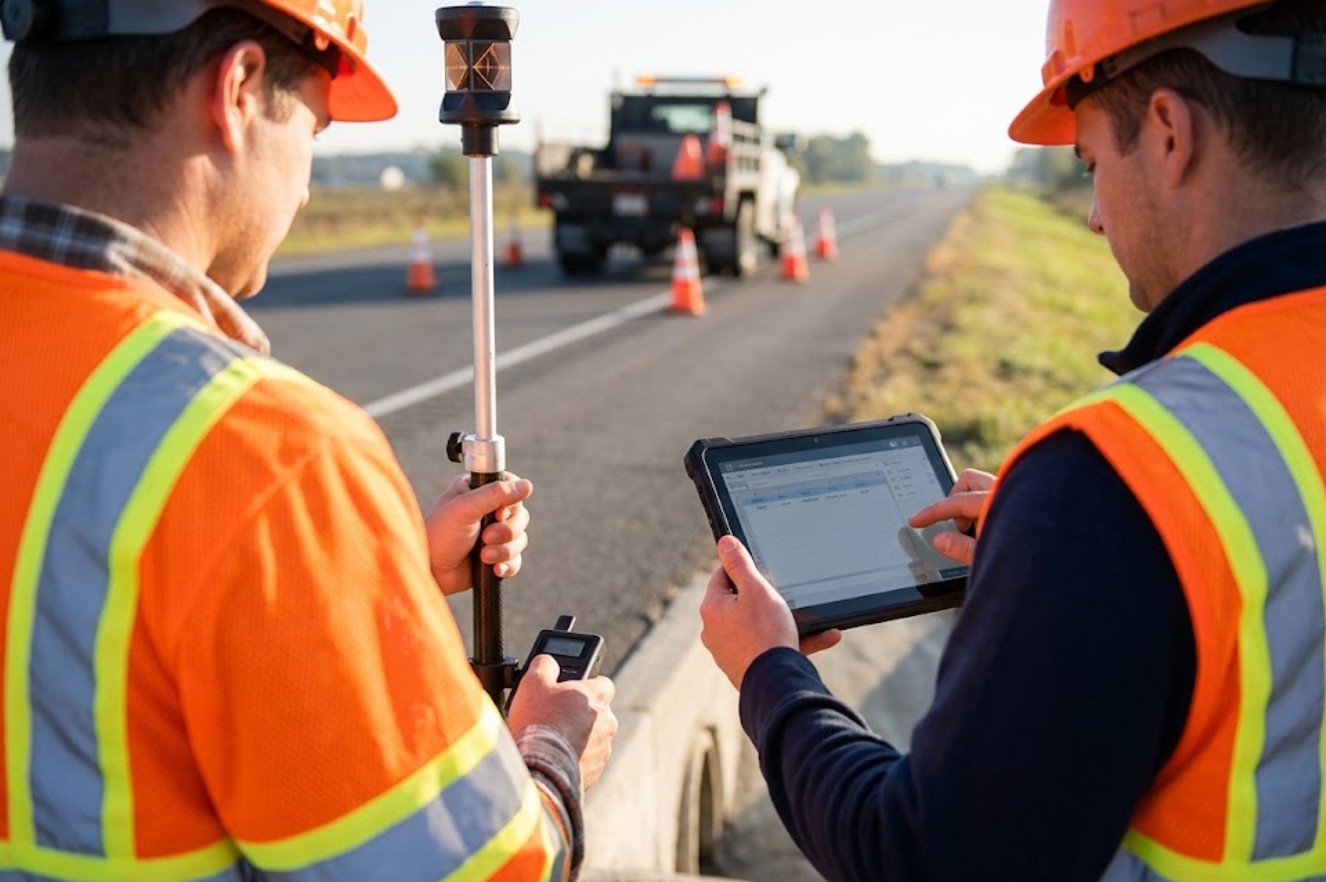
The five unverifiable records went away when every measurement point went through the RT80 Rugged Tablet. Position comes from its independent Beidou plus RTK chain alongside GPS, GLONASS and Galileo, which is what turns "approximately kilometre 14.3" into a fix the second crew can stand on. The 10.1-inch 1200 x 1920 IPS panel at 400 nits with G+G glass survives the dashboard mount, and the IP67 sealed body handles the drainage-ditch work at the culverts where the survey actually happens. Inside, the UNISOC UIS7885 eight-core processor at 2.7 GHz runs the district's survey forms without the lag the old consumer units showed by August.
The part that killed the latency repeats is the radio. The RT80 carries 5G SA/NSA dual-mode with 4G fallback, so the record, the photographs and the RTK fix leave the cab the minute the crew logs them. Its 3.8 V 10000 mAh battery with power-delivery fast charging covers the survey window plus the drive-back, charged from the truck's inverter between stops. On the district's sheet, field-verified records went from 89 percent to 98 percent of points, and the two-day notebook backlog stopped existing: the median time from measurement to office inbox is now under an hour, checked weekly by the office itself.
🖥️ The Full-Width Desk in the Review Truck
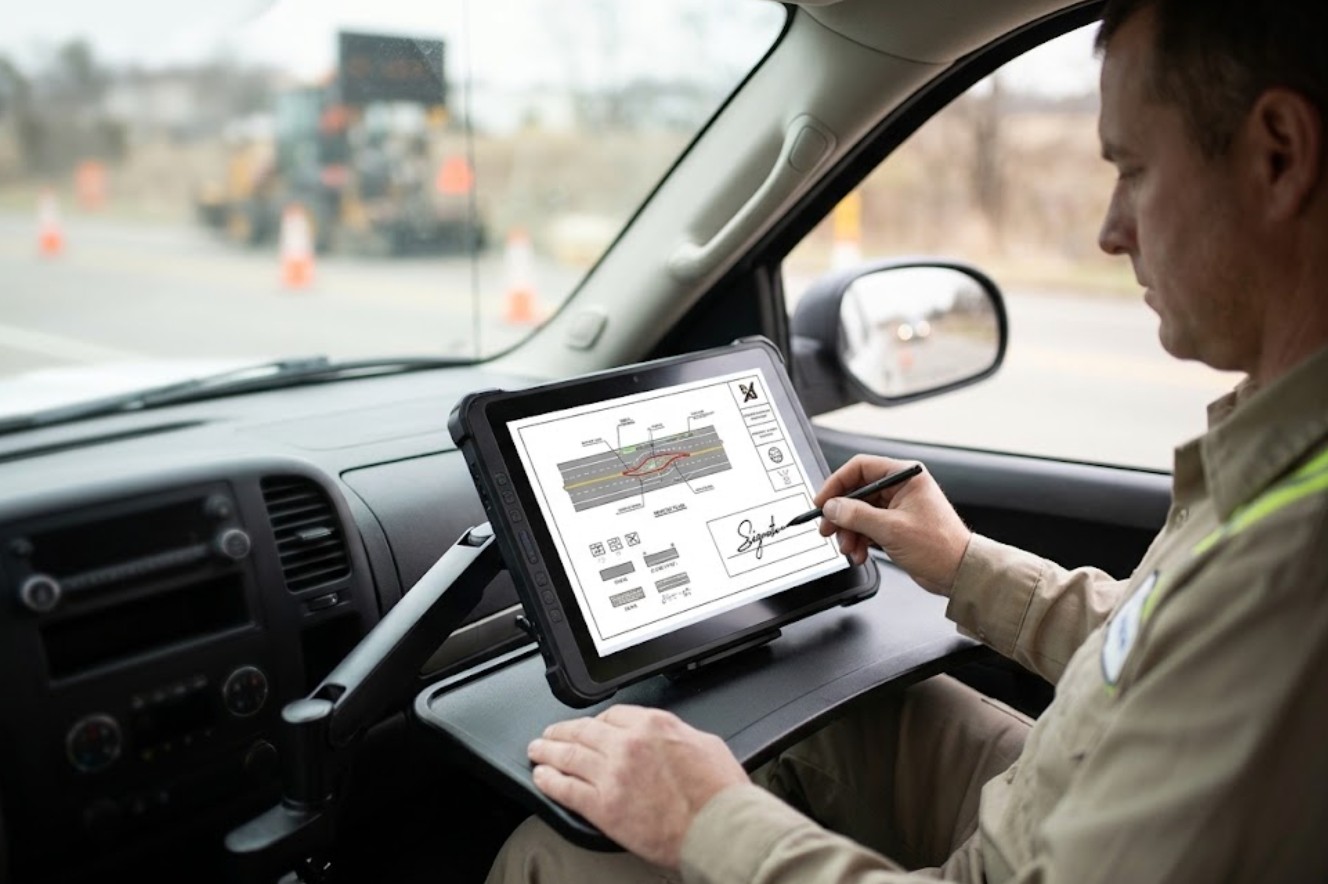
The four latency repeats had a second half: even when records arrived, the office review waited for a desk. The district put an 13.3 windows(ST13-U)Rugged Industrial Tablet in the lead survey truck. The 13.3-inch 1920 x 1080 touchscreen at up to 450 nits is the difference between reviewing a defect record and squinting at one — the crew chief opens the day's resurfacing drawings full-width, marks the correction against the RT80's uploaded fix, and signs the closure while both trucks are still parked at the same lay-by. The i5-1235U, with ten cores at up to 4.4 GHz, handles the drawing files and the season spreadsheet together, which the 10-inch units never managed without swapping windows.
The 7.6 V 8000 mAh removable battery is the quiet ROI line: the office bought two per unit, so a truck that started at 05:30 hands the swap to the afternoon block without stopping, and the 60.8 Wh per pack covers the review workload with margin. IP65 sealing and the 1.2-metre drop rating earned their keep in week two, when the truck-mounted unit slid off the tailgate onto gravel and kept its screen. Wet-hand and stylus touch matter on the days the chief signs closure forms in rain. On the ledger, same-day closures went from 9 of 22 records to 18 of 22, which is what actually collapsed the reopen-window repeats.
🔌 HTYJ10A: When the Survey Has to Talk to the Test Van
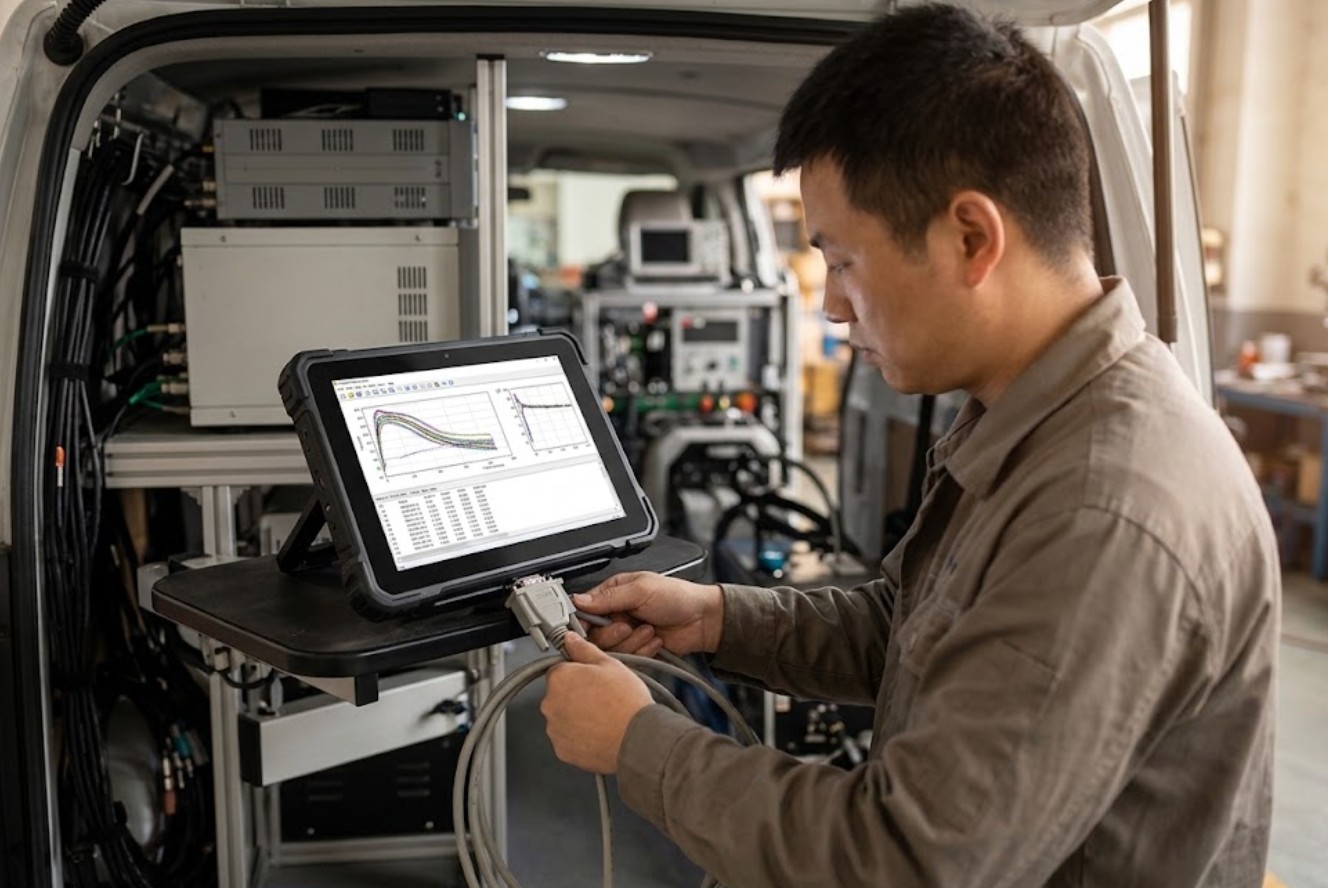
The two transcription repeats died with the HTYJ10A Rugged Tablet, the unit that lives with the falling-weight deflectometer van. The reason it won the job is on its edge: an RJ45 gigabit port, a COM serial port, a Mini HDMI and a full-size USB alongside Type-C. The deflectometer's logging laptop is a machine of cables, and the HTYJ10A is the only tablet in the district's fleet that plugs into it directly. Measurement runs now land on the tablet over the serial link, ride to the office over Wi-Fi 5, and the retyping step — forty minutes a day, two errors a season — is gone from the process entirely.
The 10-inch 1920 x 1200 panel at 560 nits is readable in the van at noon, the 7.6 V 6000 mAh battery covers a full deflectometer shift at roughly seven working hours, and IP67 sealing plus the 1.22-metre drop rating match the way equipment actually gets loaded at a lay-by. Its i5-10210Y with up to 16 GB of memory runs the van's vendor software without the compatibility fights a newer Windows build caused in last year's trial. On the ledger: transcription time removed, transcription errors removed, and the deflectometer's measurement days no longer generate an office backlog of their own.
| Ledger Line | Before | Device Assigned | After One Season |
|---|---|---|---|
| Field-verified records | 89% of points | RT80 (BeiDou+RTK, 5G upload) | 98% |
| Measurement-to-office time | ~2 days (notebook) | RT80 + ST13-U review desk | Under 1 hour |
| Same-day record closures | 9 of 22 | ST13-U (13.3" truck desk) | 18 of 22 |
| Van data retyping | 40 min/day, 2 errors/season | HTYJ10A (RJ45 + COM link) | Removed |
| Repeated survey visits | 11 per season (~€24,000) | All three | 2 per season |
🔋 The Payback Table, Line by Line
The district's finance sheet does not compare tablets; it compares the rework ledger with and without the kit. Eleven repeated visits at €2,200 each filled one column. The rebuilt kit cut them to two in the following season — both from a culvert that flooded mid-measurement, which no tablet prevents. Nine prevented re-visits is €19,800 in a single season against three devices, their spare batteries, and the mounting hardware, with the RT80's three-year warranty removing the replacement line from the following two years' budget. The district now prices any proposed equipment purchase the same way: name the ledger line it touches, and the repeat visits it prevents.
Two secondary lines showed up without being asked for. Closure permits are now requested once, because reopenings dropped with the repeat visits — a small administrative saving the office noticed in the fee summaries. And the resurfacing contractor invoicing disputes fell to zero for the season, because both sides work from the same uploaded RTK fixes rather than competing field notes. Neither saving justified the purchase; both made the payback table shorter.
📊 What Changed After the First Season
The second season's plan did not need an equipment meeting. The district ordered one more RT80 for the second crew, a second battery set for each ST13-U, and nothing else — the HTYJ10A stays van-bound because its value is the cable it replaces, not the work it adds. The season sheet now opens with three numbers anyone in the office can recite: median measurement-to-inbox time, same-day closure count, and repeat visits. Every other statistic, the office has learned, is commentary on those three.
FAQ: The Questions the Crew Asked Before Signing
1. Why three different tablets instead of three of the same?
Because each repeats a different ledger line. The RT80 kills unverifiable records with BeiDou+RTK and 5G upload, the ST13-U kills review latency with a truck-desk screen, and the HTYJ10A kills transcription with its RJ45 and COM ports. One model repeated three times would fix one line and leave the other two open.2. What happens when the RT80 cannot get a 5G signal on a rural stretch?
The record queues on the device and uploads when the crew reaches coverage — the 4G full-Netcom fallback carried most rural stretches in this district anyway. The office's weekly check is on measurement-to-inbox time, and even queued records beat the old two-day notebook.3. Is a 13.3-inch tablet practical in a truck cab?
It is mounted, not handheld — the ST13-U lives on the lead survey truck's passenger-side mount, opens drawings full-width, and travels only between trucks. The 1.45-kilogram weight is a non-issue because nobody carries it down the road; the crew on foot carries the RT80.4. Does the HTYJ10A work with the deflectometer's own software?
Yes — that is why it was chosen. Its i5-10210Y on Windows 10 runs the van vendor's logging software without the driver fights the district hit when it trialled a newer build, and the serial link removes the retyping step the two transcription repeats came from.5. How is the payback measured at season end?
One line: repeated survey visits, priced at €2,200 each from the district's own re-issue, remobilisation and material costs. Nine prevented re-visits in the first season covered the kit with room to spare, and the two that remained were weather, not equipment.🏭 🛒 Get the Spec Sheet, MOQ and a Factory-Direct Quote
The rework arithmetic is the district's, but the three roles transfer to any road maintenance survey programme: a position-integrity field unit, a truck-desk review screen, and a cable-native van unit. For the hardware, the three units in this article are listed with full spec sheets and factory-direct quotes on their product pages. For comparisons between the rugged lines, the district's notes are summarised on the comparison hub, and the full product range covers the models this article leaves out.