Industry data reveals a striking gap: healthcare organizations pour resources into core clinical operations but consistently underinvest in the supporting tools that make those operations run smoothly. This disconnect explains why devices like the HTYJ10A Rugged Tablet, ST13-U, and WTR PRO AMD are rapidly becoming essential components in modern Mini PC and medical workstation deployments. The numbers back it up. Hospitals and clinics are waking up to the reality that robust, mobile computing solutions aren't optional add-ons—they're critical infrastructure for delivering quality patient care in an increasingly digital world.
The convergence of rugged hardware and intelligent software is fundamentally changing how medical professionals interact with data. Whether in busy hospital wards, crowded outpatient clinics, or remote telemedicine setups, the demand for durable, portable, and powerful computing platforms has never been higher. This report dives into the market dynamics, technological shifts, and real-world benefits of deploying these advanced systems in medical workstation environments, offering a practical guide for decision-makers evaluating their next healthcare technology investment.
Solution Benefits and Key Outcomes
Deploying the WTR PRO AMD, HTYJ10A Rugged Tablet, and ST13-U in medical workstation settings delivers measurable improvements across the board. Medical staff get equipment that's straightforward to set up, operate, and maintain—cutting down on time wasted troubleshooting technical issues and freeing up more time for patient care. The WTR PRO AMD serves as a powerful central computing hub, handling demanding medical imaging and data analysis tasks with ease. The HTYJ10A Rugged Tablet provides a portable, bedside-friendly interface for charting and medication administration. And the ST13-U offers a larger screen format ideal for detailed diagnostic reviews and patient education sessions.
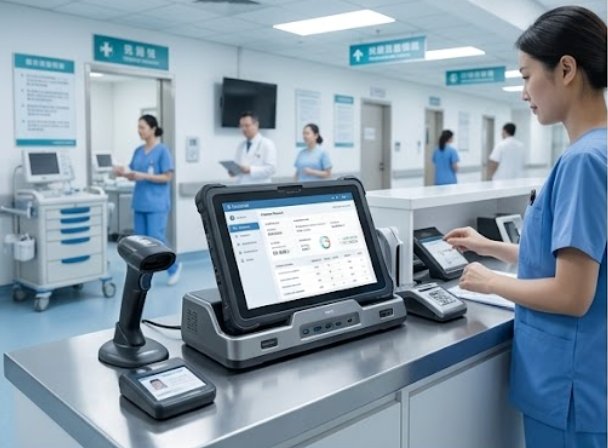
Management gains real-time visibility into operations through usage analytics, enabling smarter resource allocation and workflow optimization. The combined effect is a more professional, efficient, and reliable medical workstation environment. Facilities report fewer data entry errors, faster patient throughput, and higher staff satisfaction scores. For organizations seeking a comprehensive industrial solution for Medical Workstation environments, this trio of devices delivers a scalable, proven approach to modernizing clinical workflows.
📈 Technology Evolution
The evolution of medical workstation technology can be broken down into three distinct generations. The first generation relied on stationary desktop computers—functional but severely limited by their lack of mobility and vulnerability to spills, drops, and dust. The second generation introduced early digital tablets and laptops, offering better portability but often plagued by complex operating procedures, short battery life, and inadequate durability for clinical settings. These systems frequently required extensive IT support and created bottlenecks in fast-paced medical environments.
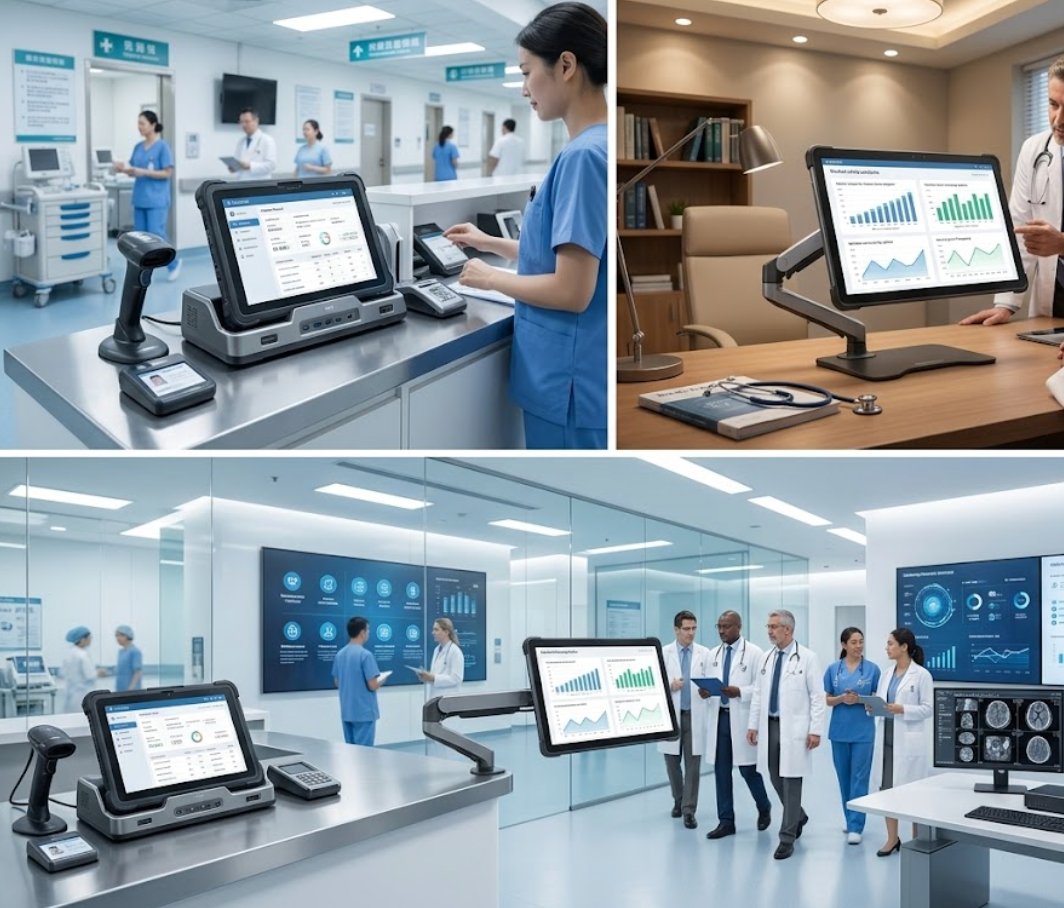
The third generation, represented by modern intelligent systems like the WTR PRO AMD, HTYJ10A Rugged Tablet, and ST13-U, delivers professional-grade quality and effortless operation. These devices are engineered specifically for healthcare, featuring antimicrobial casings, high-brightness displays readable under bright surgical lights, and hot-swappable batteries for uninterrupted operation. The 13.3 windows(ST13-U)Rugged Industrial Tablet, for example, provides a large, high-resolution screen perfect for viewing radiology images and complex patient data, while maintaining the rugged characteristics required for daily clinical use. This generation also integrates seamlessly with electronic health record systems, enabling real-time data synchronization and significantly reducing manual transcription errors.
Market Data and Industry Trends
Industry research indicates that over 65% of medical workstation operators plan to upgrade their mobile computing equipment within the next two years. The primary drivers? Better processing performance, longer battery life, and systems intuitive enough for temporary staff to operate without extensive training. The global market for rugged medical tablets is projected to grow at a compound annual growth rate of 7.2% through 2028, fueled by the expansion of outpatient care centers, aging populations, and the increasing complexity of medical data management.
Another significant trend is the integration of artificial intelligence and machine learning capabilities directly into these devices. The WTR PRO AMD, with its advanced processor architecture, is well-positioned to handle AI-assisted diagnostic tools and predictive analytics at the point of care. Meanwhile, the shift toward value-based care models is driving demand for devices that can improve both operational efficiency and patient outcomes simultaneously. Hospitals are moving away from consumer-grade tablets that fail under heavy use and toward purpose-built rugged mini PC solutions that offer a lower total cost of ownership over their lifecycle.
Product Specifications Comparison
| Model | Position | Weight | Product URL |
|---|---|---|---|
| WTR PRO AMD | High-performance mini PC for central medical workstation computing | Approximately 1.5 kg | View Product |
| HTYJ10A Rugged Tablet | Portable 10-inch rugged tablet for bedside and mobile clinical use | Approximately 0.9 kg | View Product |
| ST13-U | Large-screen 13.3-inch rugged tablet for diagnostic review and patient interaction | Approximately 1.2 kg | View Product |
Conclusion and Strategic Recommendations
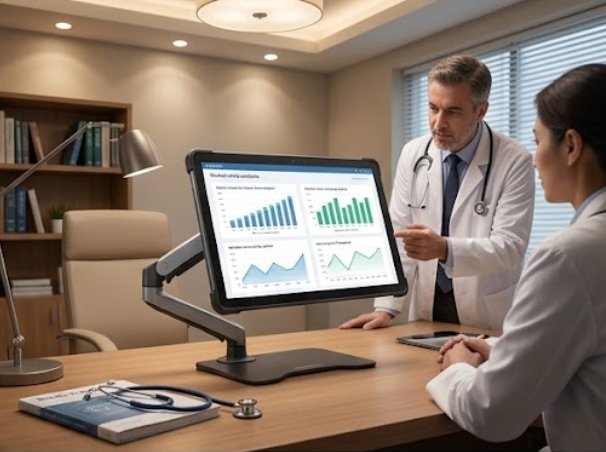
The data is clear: investing in modern rugged computing solutions is no longer a luxury but a strategic necessity for healthcare providers aiming to improve patient care and operational efficiency. The WTR PRO AMD, HTYJ10A Rugged Tablet, and ST13-U form a cohesive ecosystem that addresses the unique challenges of medical workstation environments. From the raw processing power of the WTR PRO AMD to the portability of the HTYJ10A and the large-screen clarity of the ST13-U, these devices cover the full spectrum of clinical computing needs.
Healthcare organizations should prioritize devices offering IP65 or higher ingress protection, drop resistance, and compatibility with existing medical software. The trend toward decentralized care and telemedicine will only accelerate, making rugged, reliable mobile computing a cornerstone of future healthcare delivery. To learn more about how these systems can transform your facility, explore our mini PC solutions and discover the full range of medical-grade computing options available for your organization.